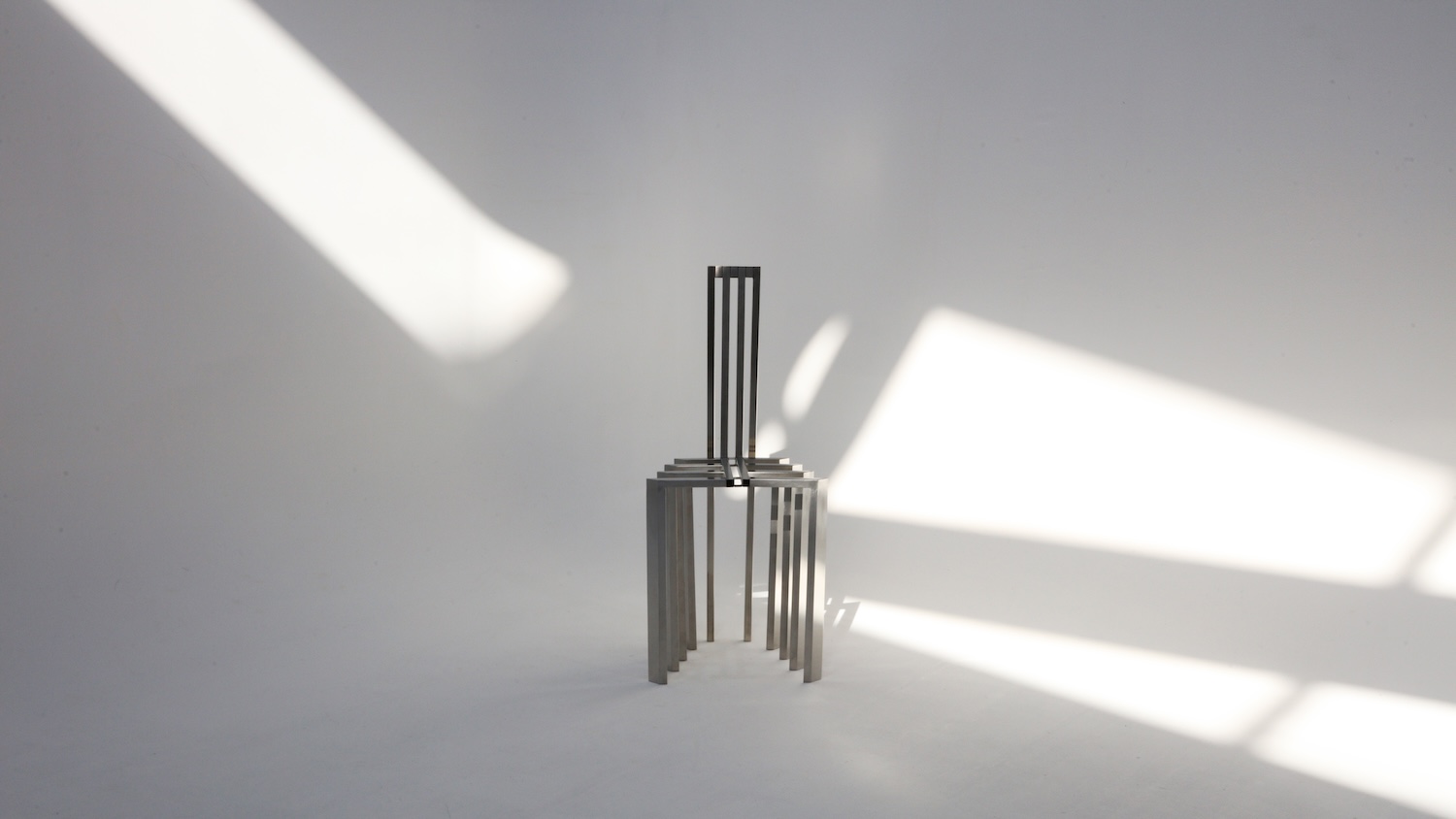
Foln Chair is a minimalist chair located in Seoul, South Korea, designed by Jiyun Lee. The structural logic of outdoor architecture rarely translates intact to furniture – the proportions shift, the materials resist, the relationship between human scale and architectural rhythm demands recalibration. Jiyun Lee’s Foln Chair addresses this translation directly, drawing from the repetitive vertical elements of pergolas to create a seating form where architectural principles of rhythm and spatial division operate at an intimate scale. The result is a chair that functions simultaneously as furniture and as a study in how linear structure can define negative space.
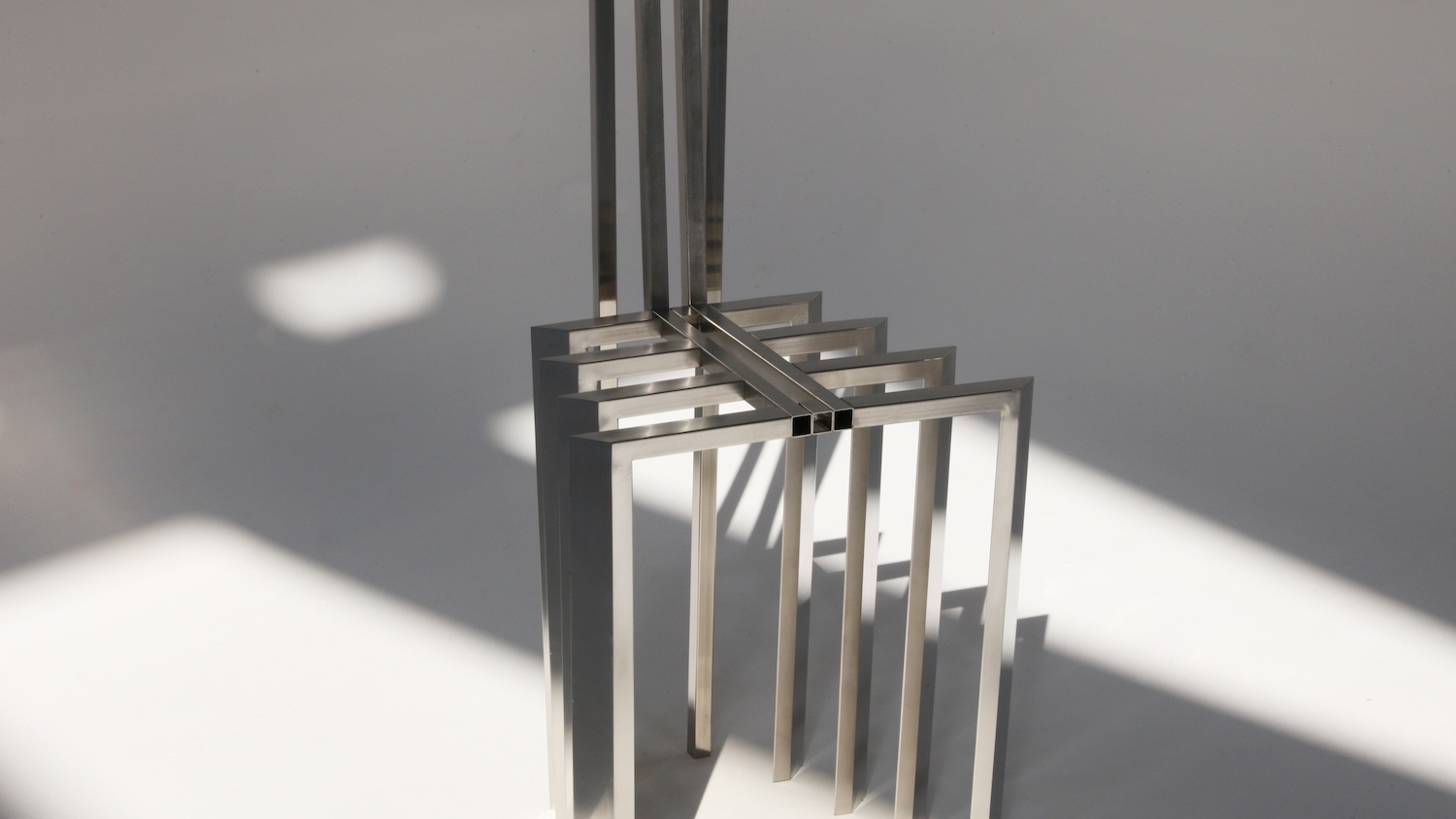
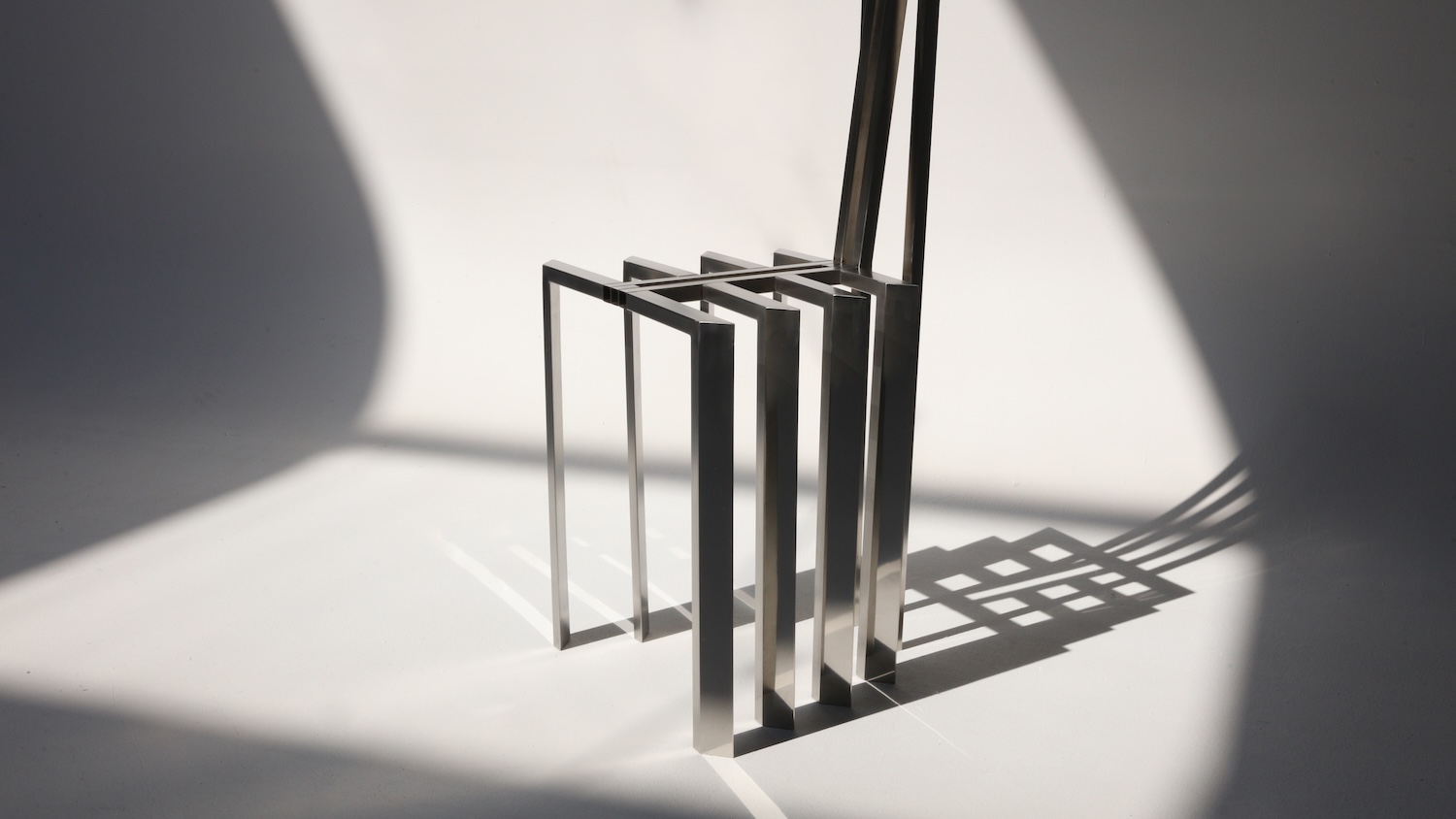
Folded stainless steel forms the entirety of the piece, with each vertical element precisely bent to create both the structural frame and the visual rhythm. The choice of folding over welding separate components is significant – it produces continuous lines that flow from seat to back without interruption, maintaining the clarity of form that defines pergola architecture. This fabrication approach also introduces a subtle formal tension. Where pergolas rely on the spacing between vertical posts to create their characteristic rhythm, the Foln Chair uses the angles and planes of folded metal to establish similar cadences. The material becomes both structure and surface, with each fold creating a new facet that catches or deflects light.
The interaction between solid form and void operates differently depending on viewing angle. From certain perspectives, the vertical elements align to create visual density – the chair reads as a substantial metal volume. Shift position slightly, and the gaps between folds open, revealing the empty space that the structure contains and defines. This perceptual flexibility recalls the experience of moving through pergola-covered walkways, where the same architectural elements appear alternately dense or transparent based on the viewer’s relationship to them. Lee has compressed this architectural phenomenon into a portable domestic object.