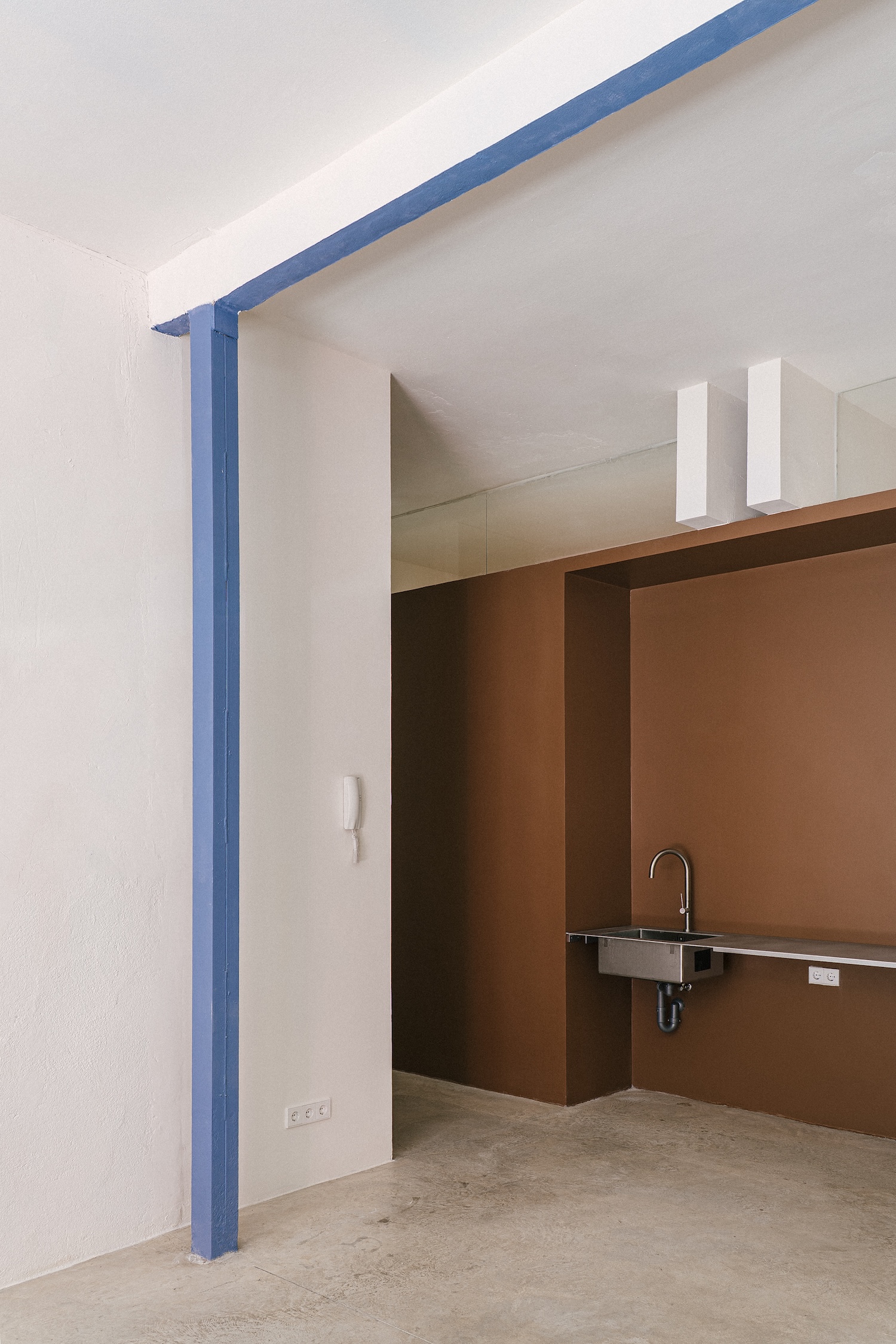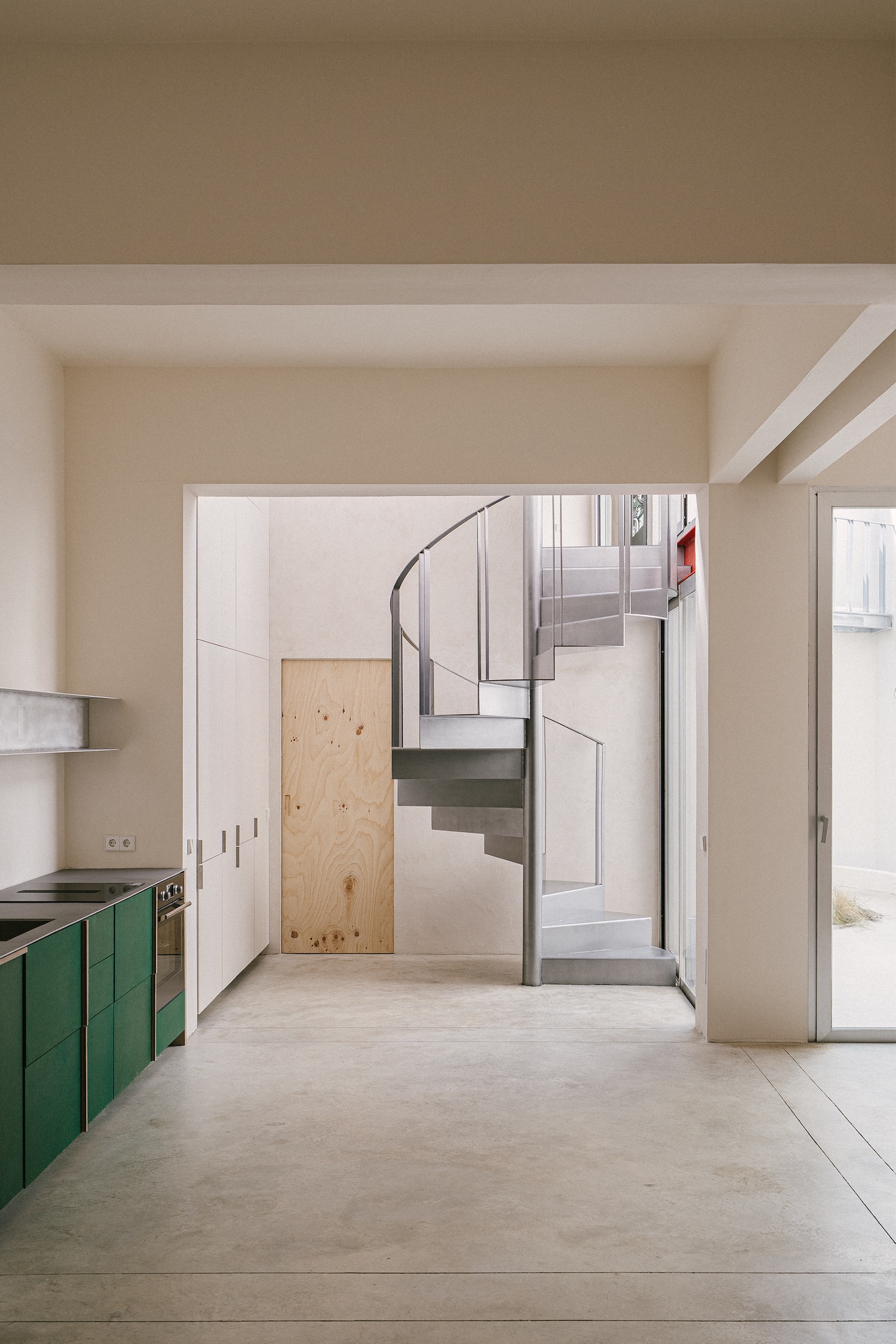
DRZ is a minimalist residence located in Madrid, Spain, designed by ba-rro. The conversion of industrial structures into domestic space typically follows a predictable script – stripped brick, exposed beams, carefully curated vintage furnishings that telegraph authenticity. This renovation of a former car wash in Carabanchel refuses that familiar choreography. Instead, it proposes something more conceptually ambitious: a dwelling that questions the very boundary between private life and urban participation. The project does not simply adapt a neglected building to contemporary residential needs but uses the transformation as an argument for how domestic space might engage its surrounding social and economic context rather than retreat from it.
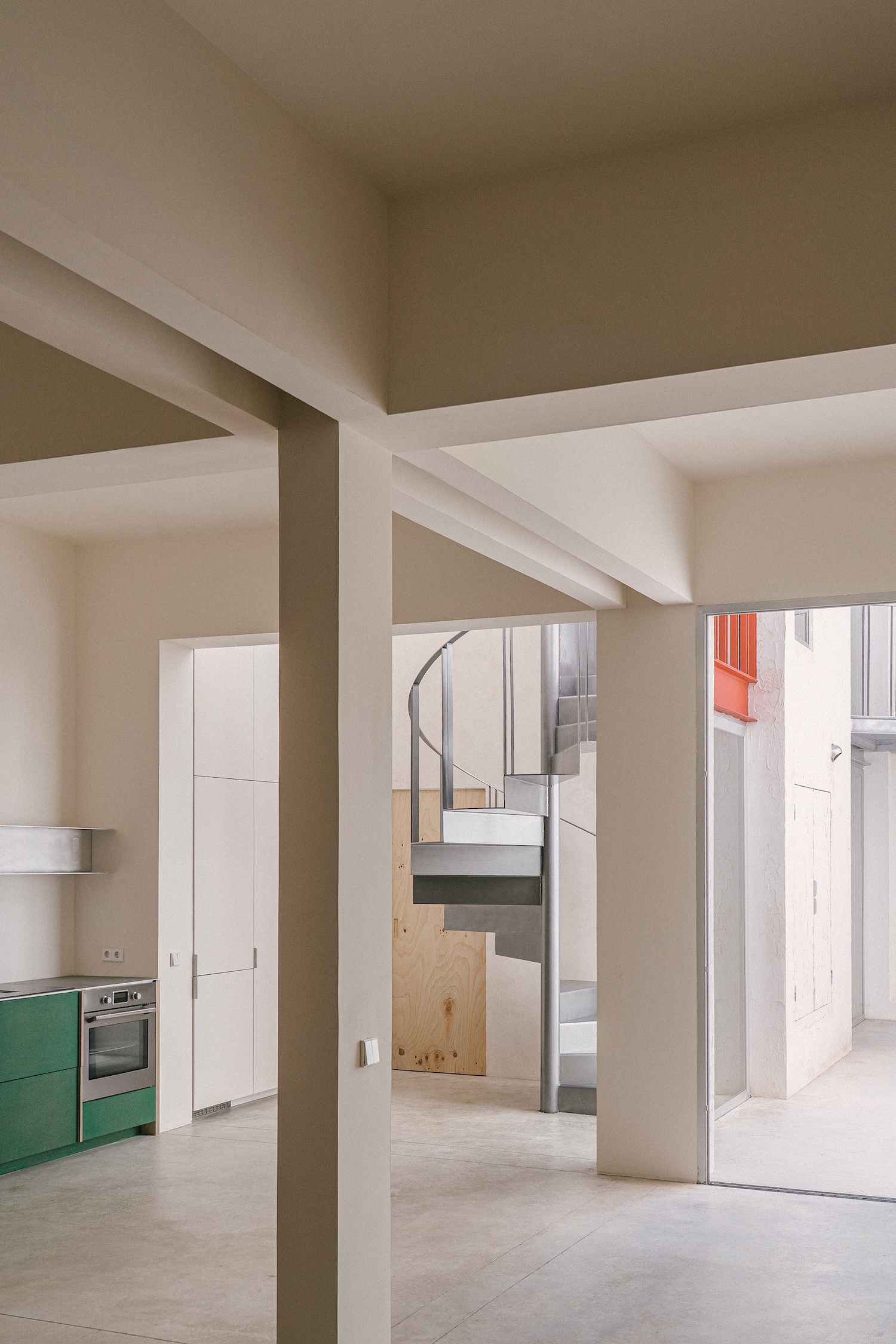
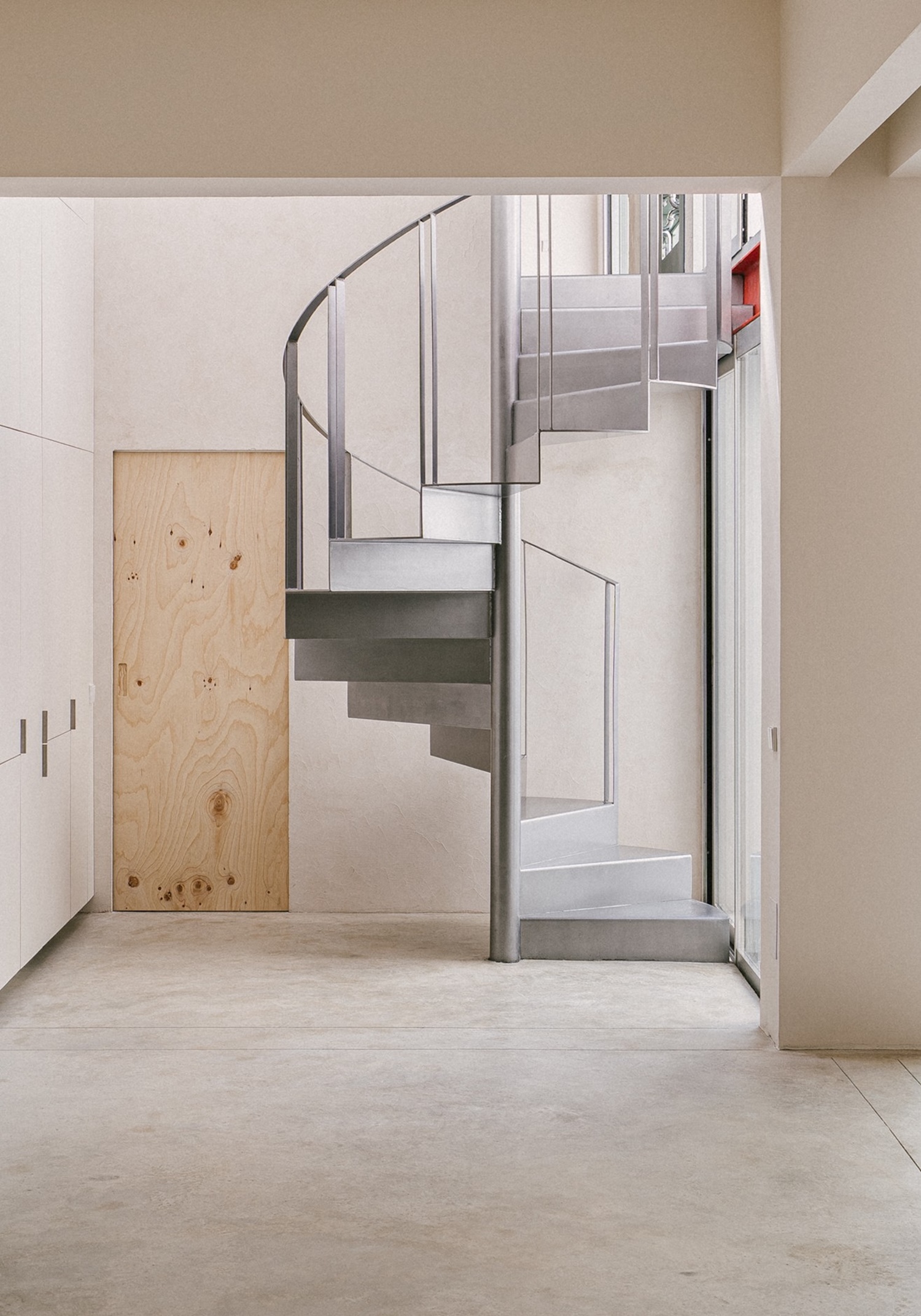
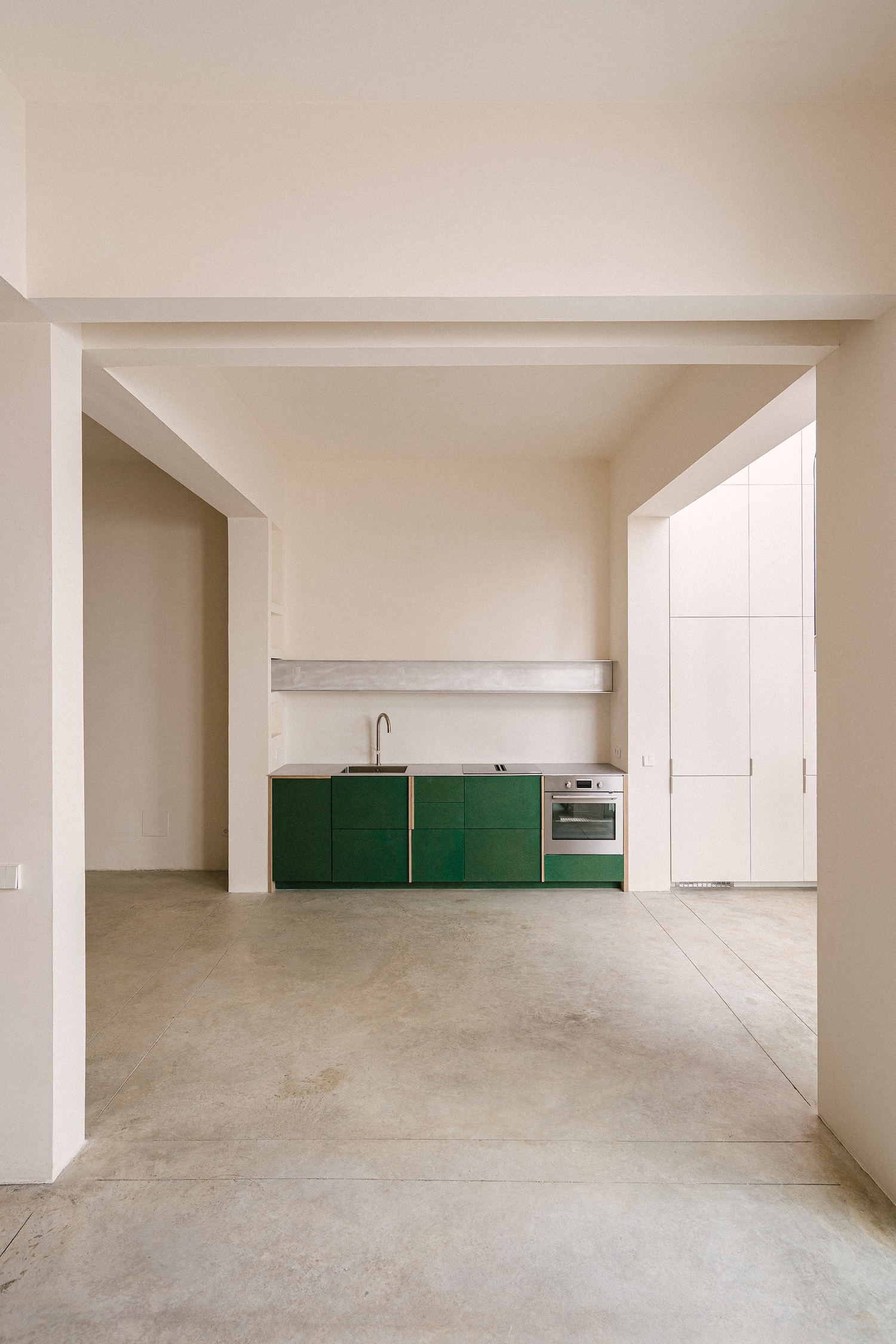
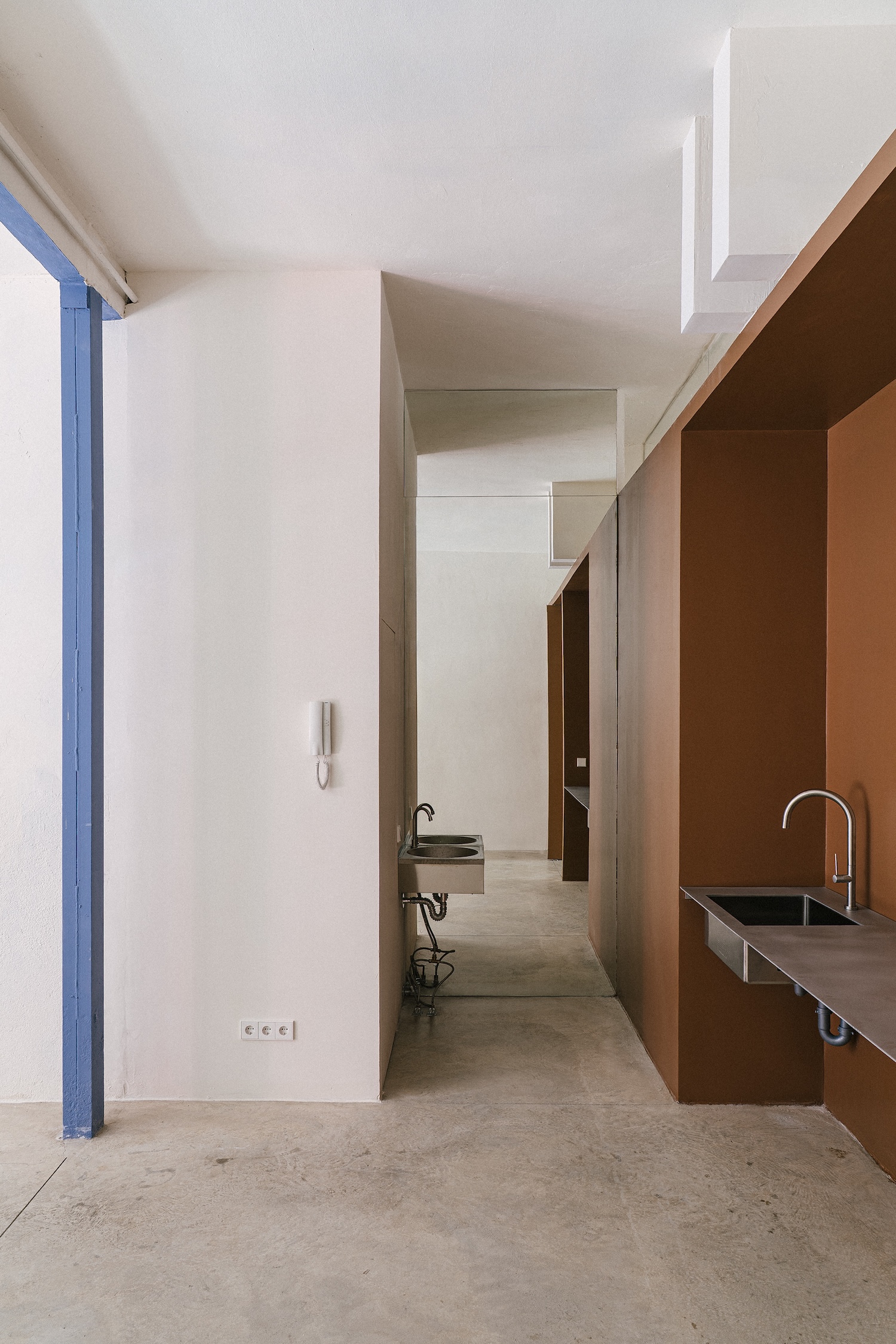
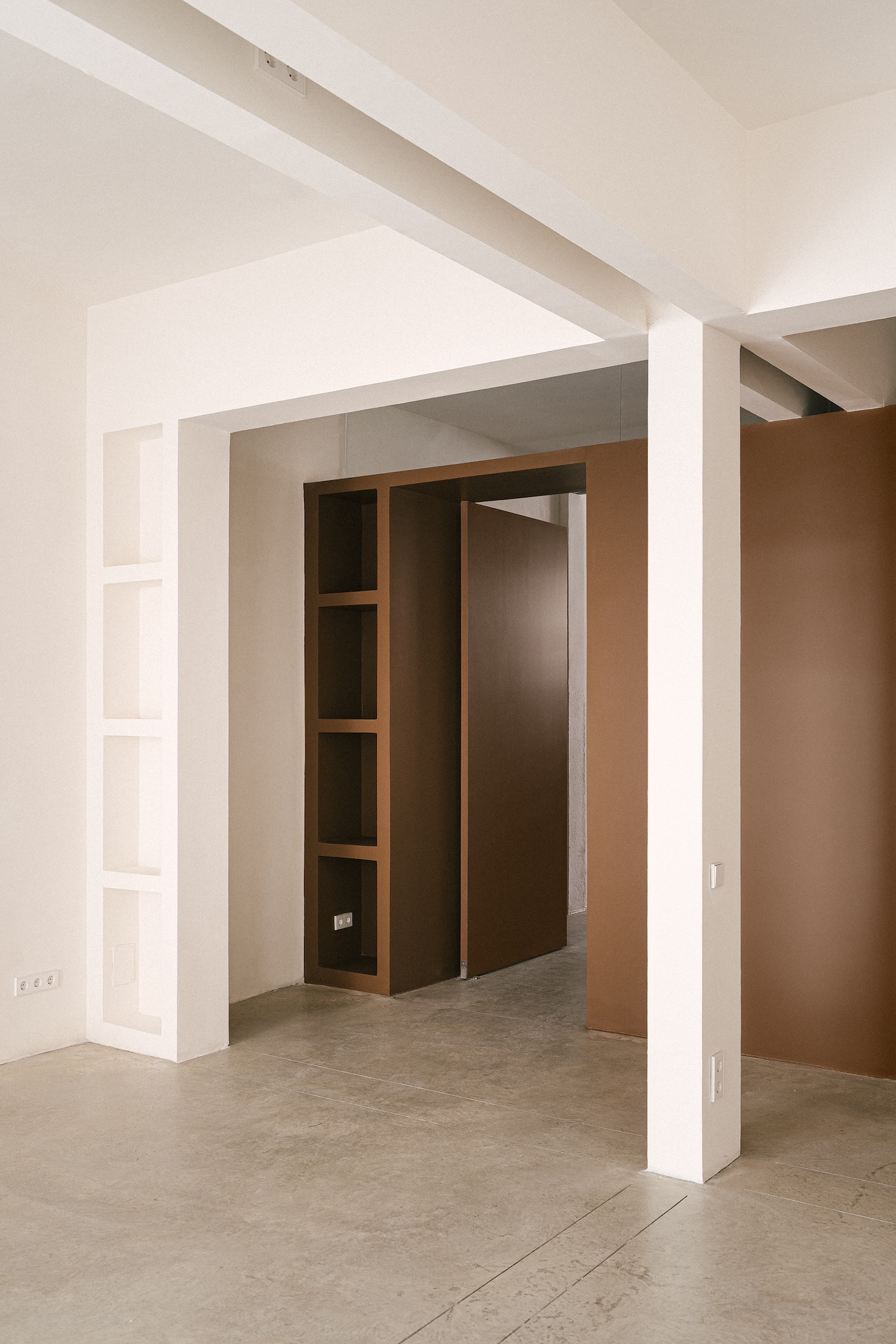
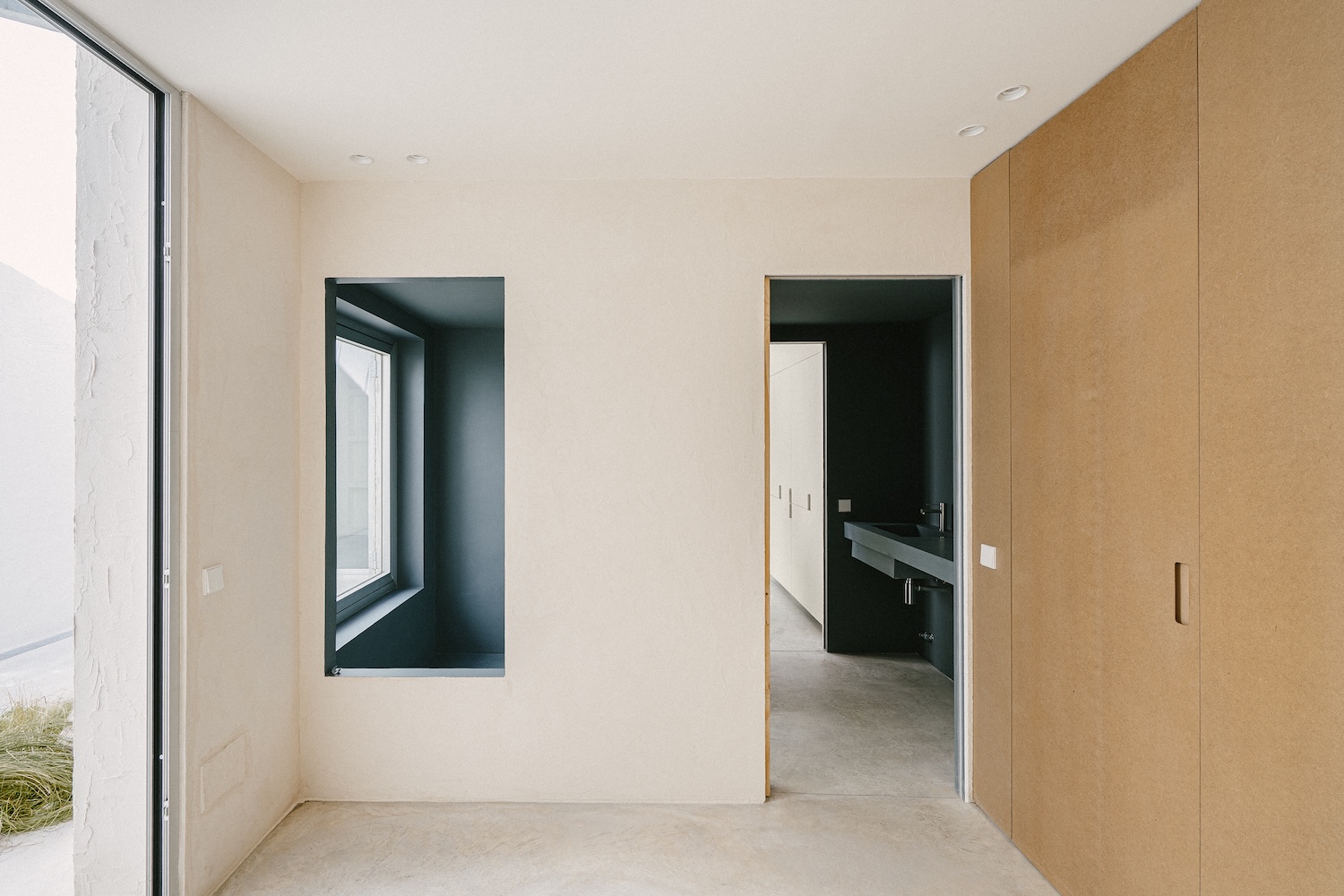
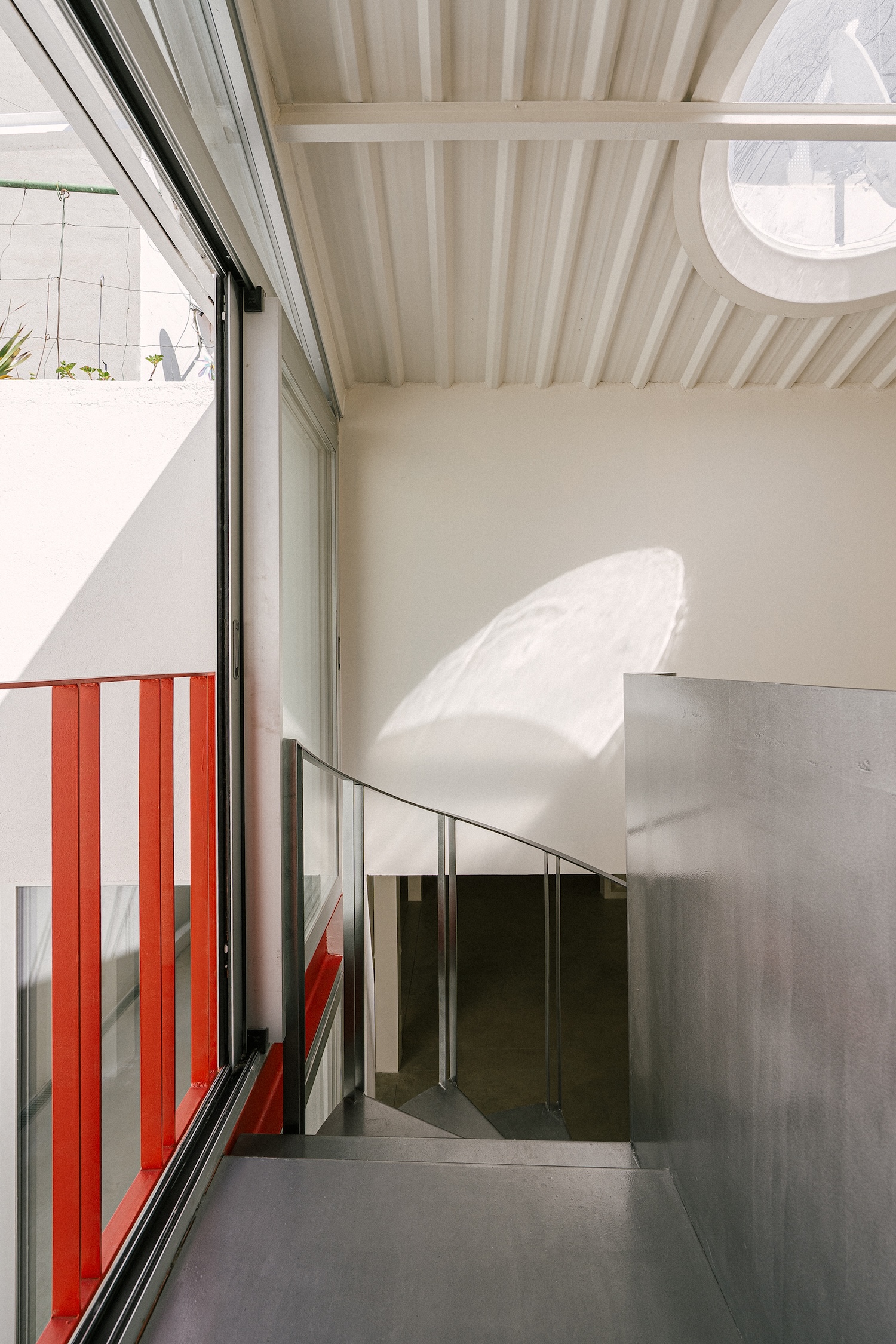
The formal language draws explicitly from the phenomenology of New York lofts in the 1960s and 70s, those raw volumes defined primarily by air and possibility rather than prescribed function. But where those lofts emerged from postindustrial abandonment and bohemian colonization, this Madrid intervention arrives with deliberate intention. The interior unfolds as a series of spatial interruptions – walls, doors, balconies, railings – elements that appear less like permanent architectural gestures and more like temporary markings in an ongoing process of spatial appropriation. This apparent disorder masks a functional logic beneath, creating a domestic landscape that remains perpetually open to reinterpretation.
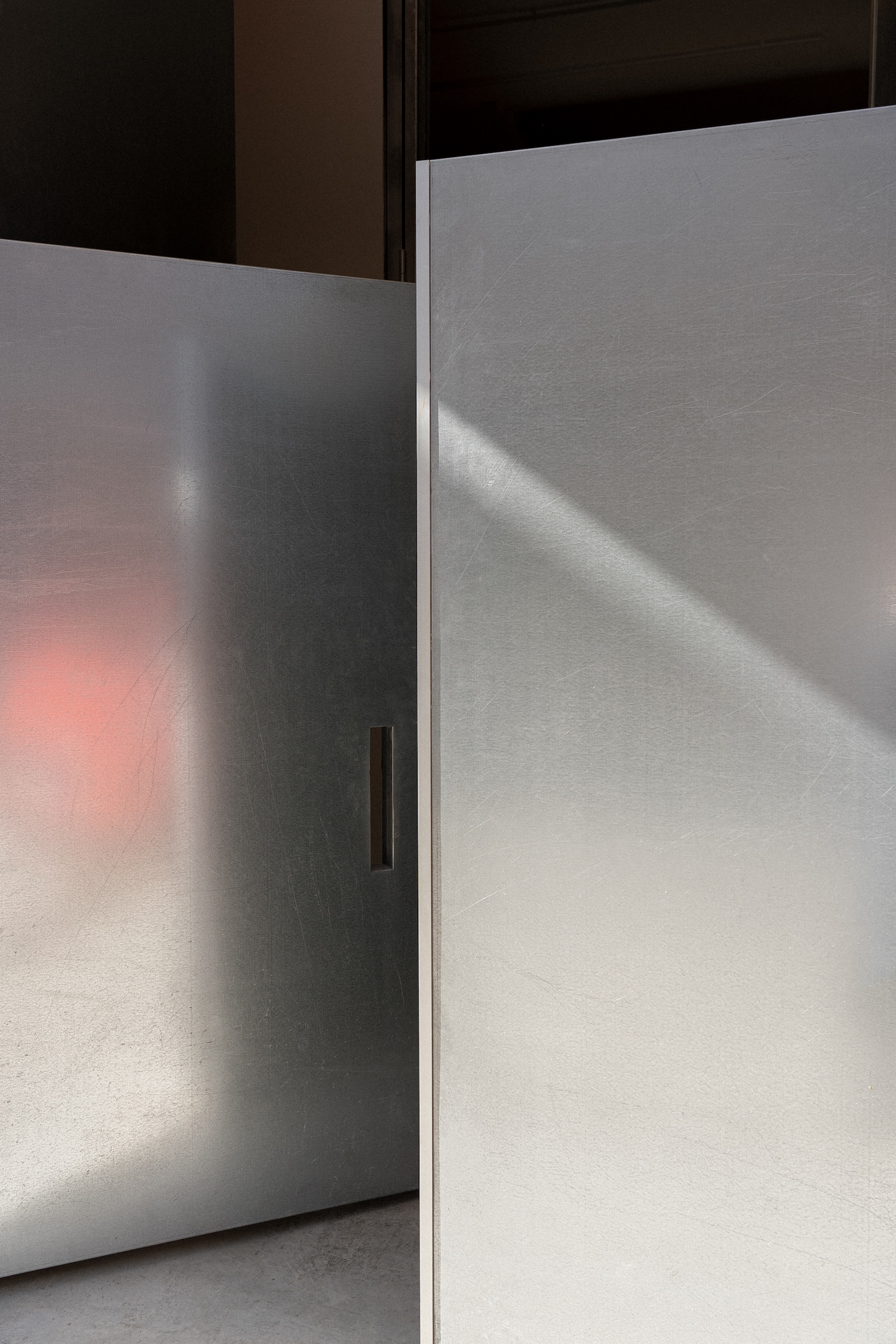
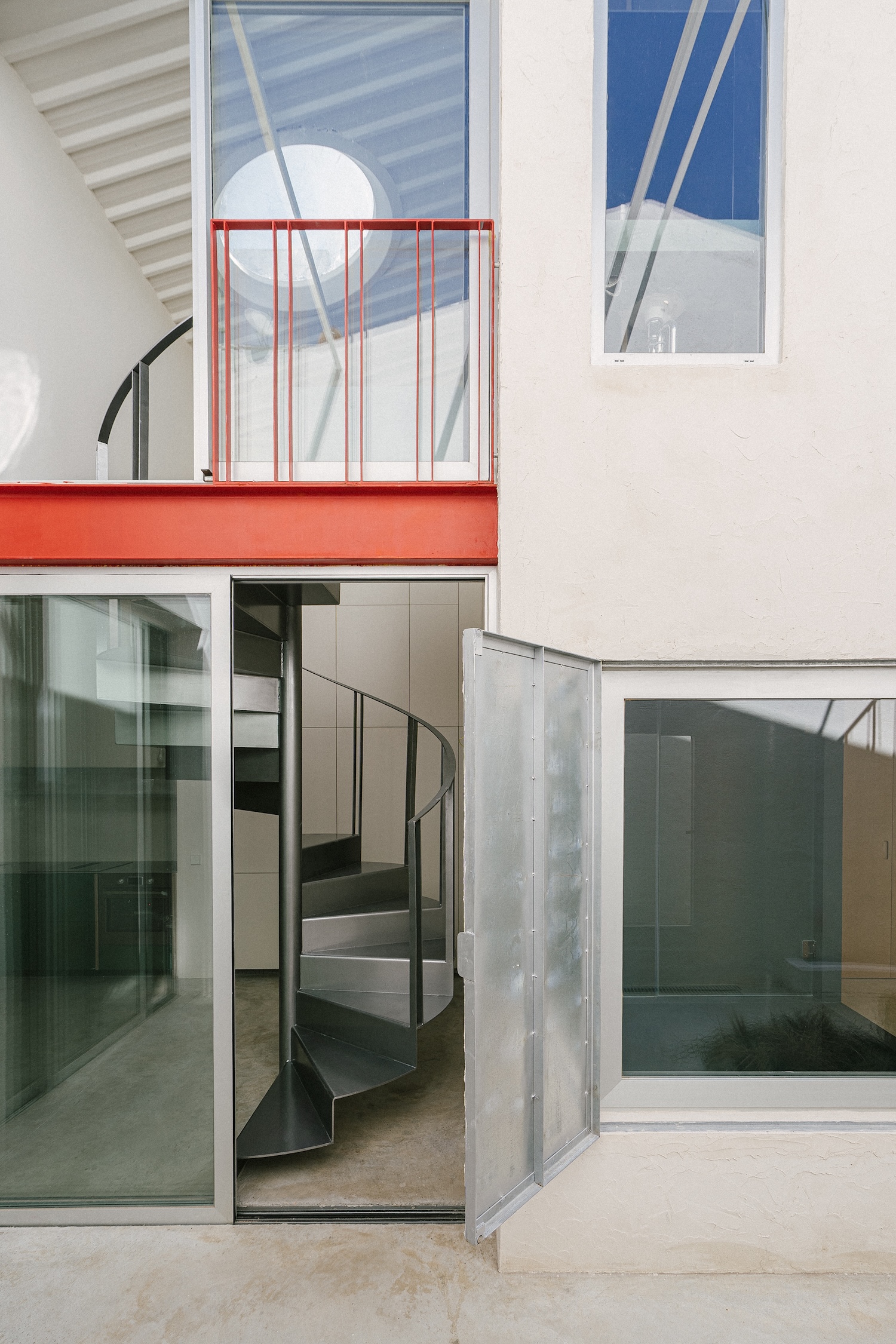
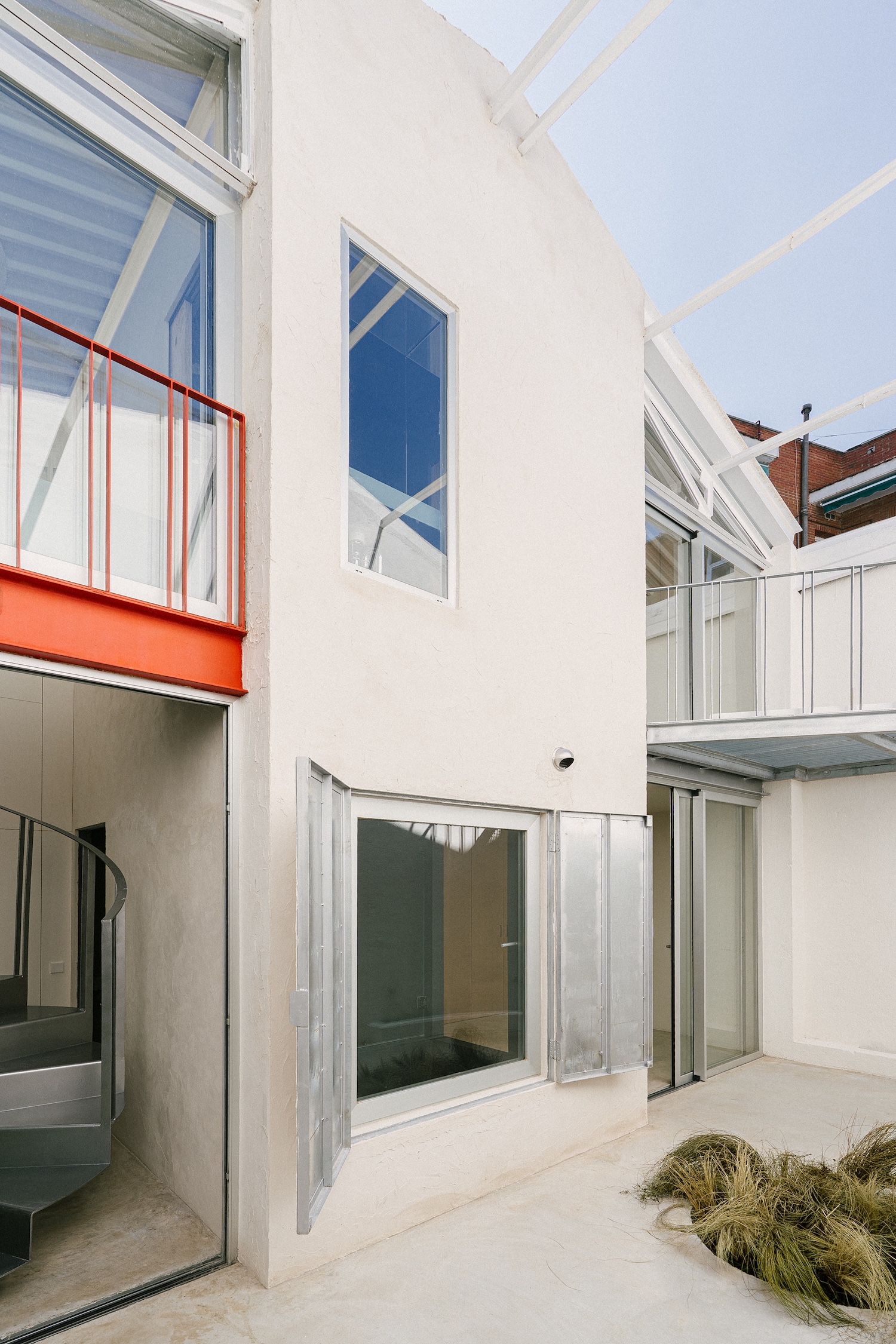
The building’s relationship to the street reveals the project’s most provocative proposition. Rather than the conventional window that frames a view while maintaining separation, ba-rro installs what they term an “ephemeral façade” – a metal door salvaged from the surrounding neighborhood that folds entirely open or closes back on itself. This industrial element, familiar to the street’s existing material vocabulary, becomes a calibrated instrument for regulating exposure. Behind it sits a glass door, creating a layered epidermis through which the dwelling negotiates its visibility. The façade can open completely to urban life or close its lower portion to admit only light, transforming the threshold into an adjustable membrane rather than a fixed barrier.
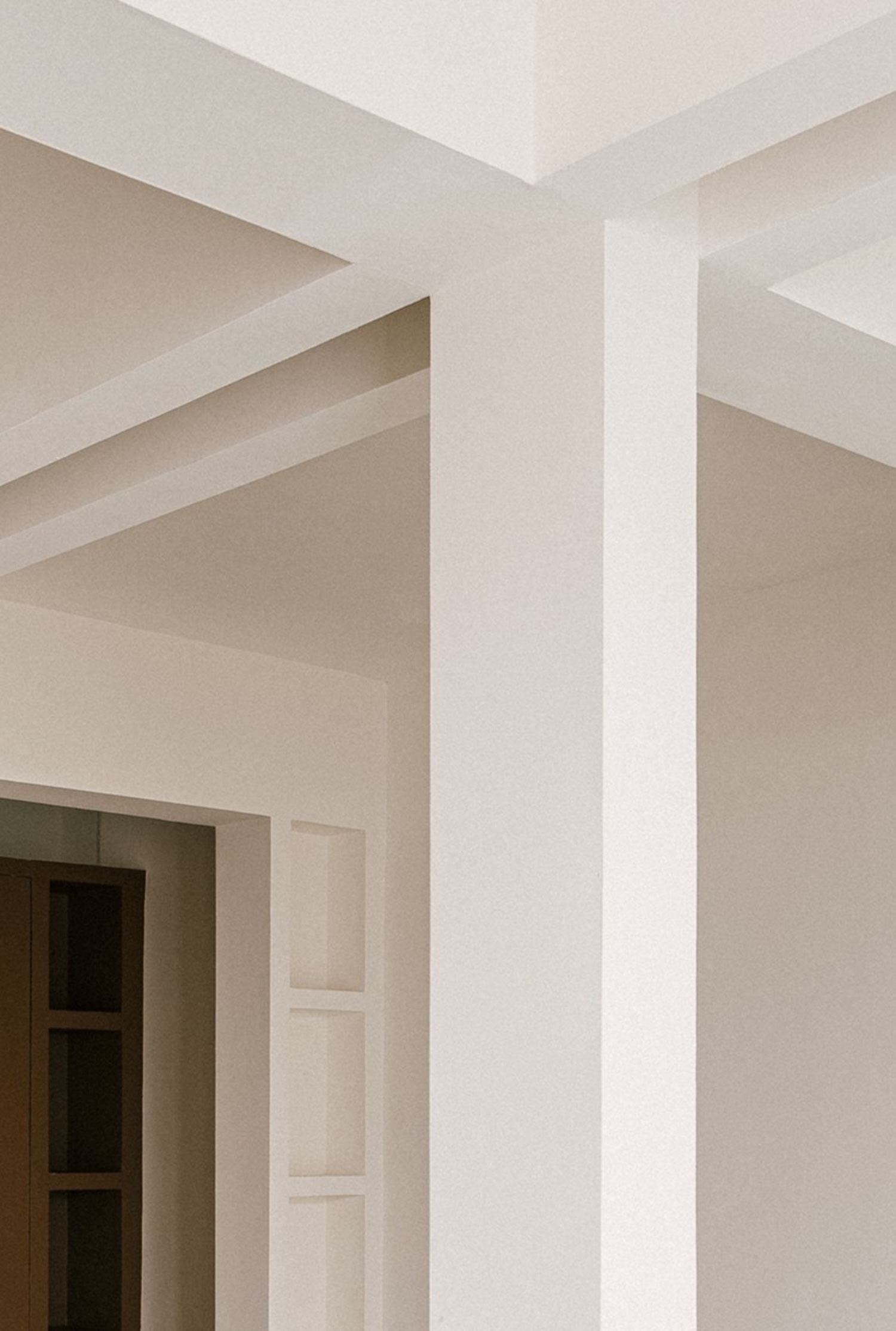
The interior courtyard presents a contrasting strategy – a classical façade composition with windows and shutters that control privacy for the dwelling’s more intimate spaces. Between these two conditions, a sequence of false structural frames conceals irregularities in the existing structure while establishing a subtle rhythm through the open plan. These frames neither divide nor fully unite the space but create what the architects describe as “undefined territories waiting to be inhabited” – zones that blur conventional domestic categorization.