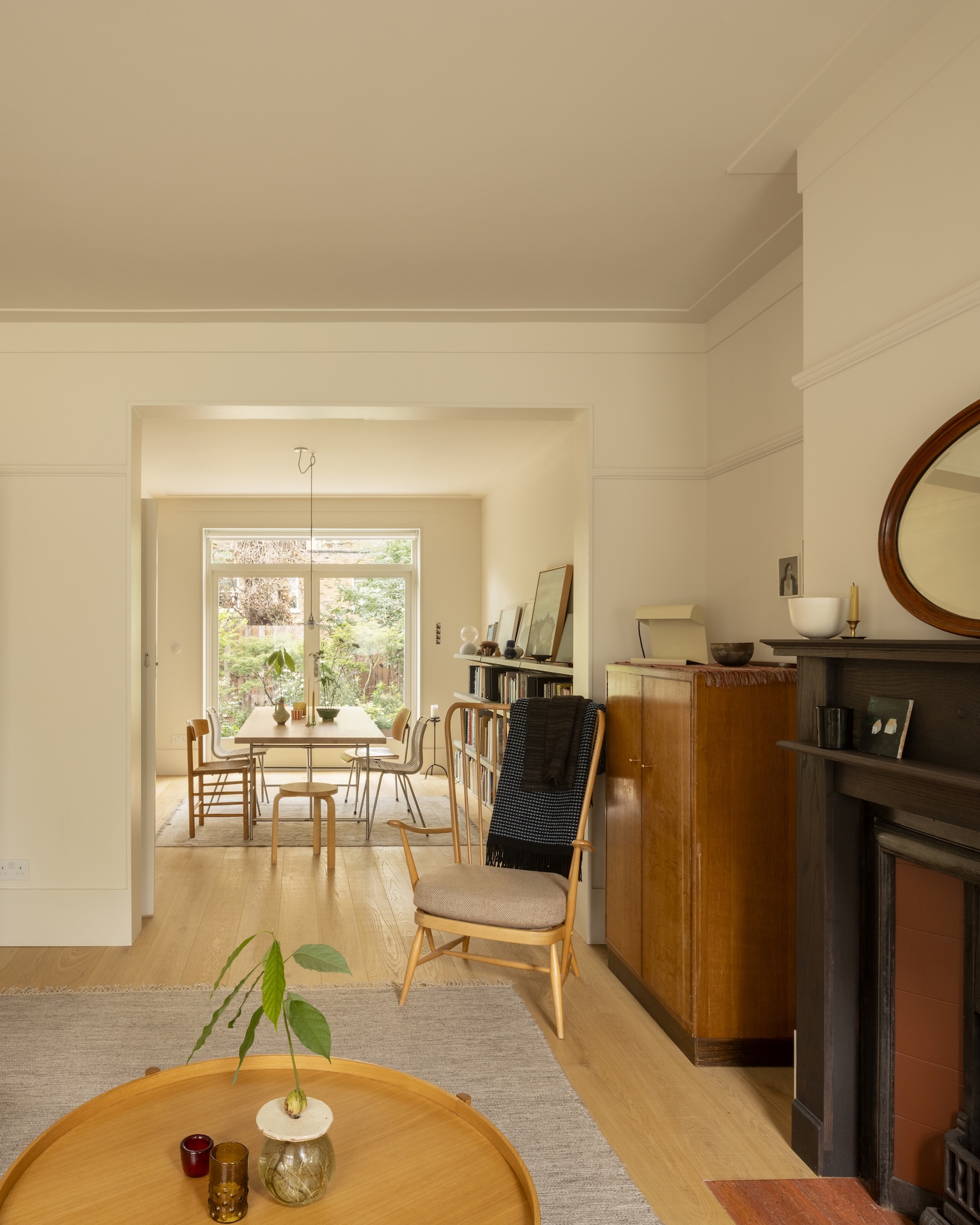
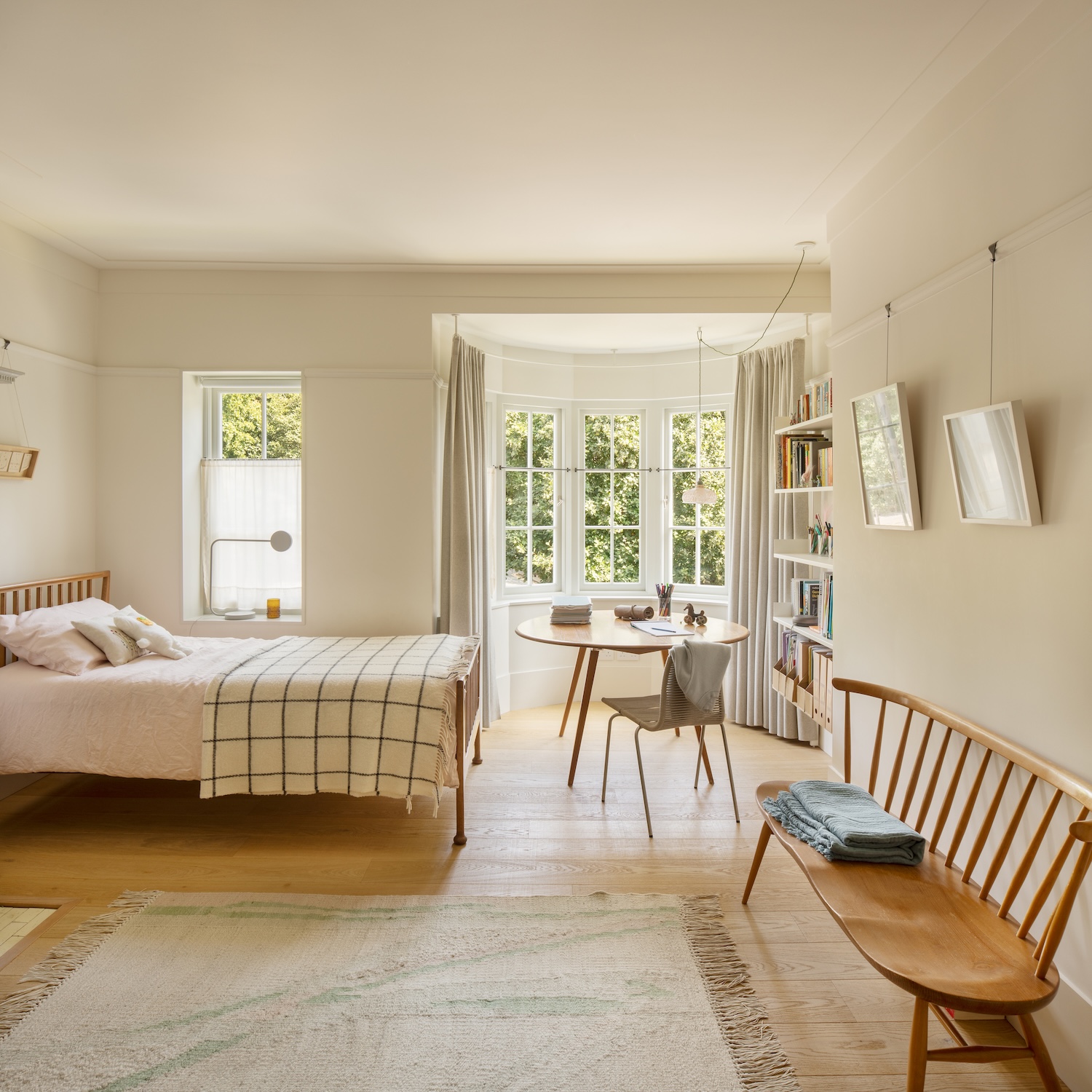
Elmhurst is a minimalist residential and studio renovation located in Canonbury, London, designed by O’Sullivan Skoufoglou Architects. The project’s central premise – that constraint can be a form of generosity – runs through every decision. Rather than extending the footprint of a 1930s terraced house in Canonbury, London, the architects chose to edit it, uncovering what a century of careful inhabitation had quietly preserved. The previous owner had lived in the house his entire life, leaving behind original doors, fireplaces, cornices, picture rails, and the accumulated material trace of decades. O’Sullivan Skoufoglou treated this as a design brief in itself.
The lower floors retain their original proportions and layout. New openings between the kitchen and dining room improve light and movement without disrupting the domestic logic already embedded in the plan. Kitchen joinery is conceived as freestanding furniture rather than fixed units, a reference to Arts and Crafts principles that positions storage as object rather than infrastructure. Appliances and cabinetry are proportioned to echo the scale of existing doors – small gestures of continuity that accumulate into a coherent interior register.
The most concentrated act of invention occurs in the attic, previously dormant and inaccessible. O’Sullivan Skoufoglou converted it into a combined master bedroom and studio, bringing in a large new window that frames views to the garden. A new timber stair connects the floors, clarifying the building’s vertical logic. The roof structure is made legible through a dual-layer system: existing rafters were extended and lined with wood-wool insulation, leaving the original construction visible. Plywood wall linings and floors establish a tactile, pared-back environment suited to both work and rest – an interior language closer to Sverre Fehn’s timber-lined cabins than to the polished minimalism common in London renovations.
Bricks from a removed chimney breast became garden paving. Original floorboards became fencing. Terracotta roof tiles, laid on edge, form the front patio. These are not decorative gestures – they build a material continuity between inside and outside, and they reduce embodied carbon by keeping existing resources in circulation. New structural elements, including the dormer, stair, and reinforcements, are executed almost entirely in timber. Wood-fibre insulation, vapour-permeable membranes, and double-glazed timber windows complete an environmental strategy that prioritises longevity over intervention.