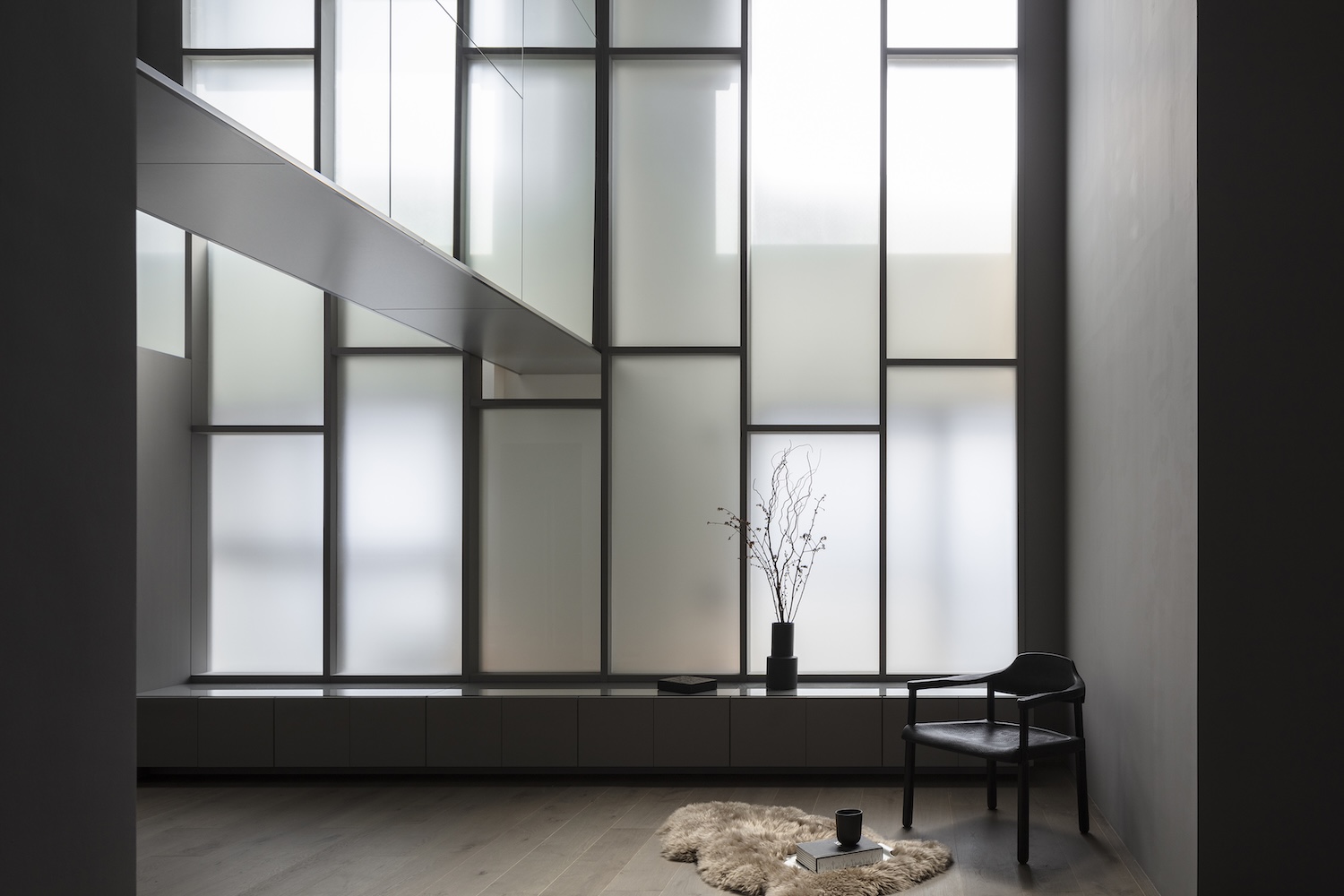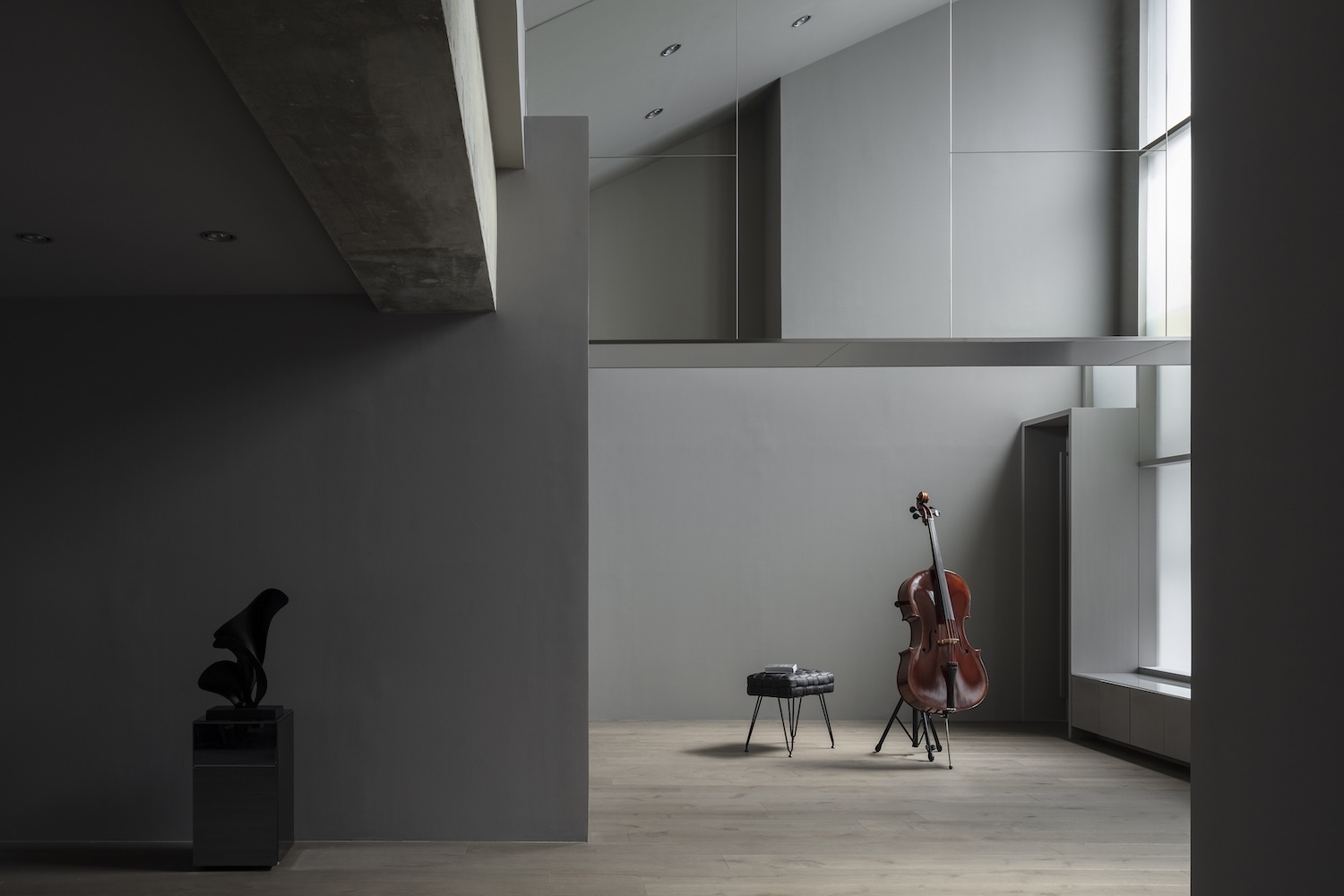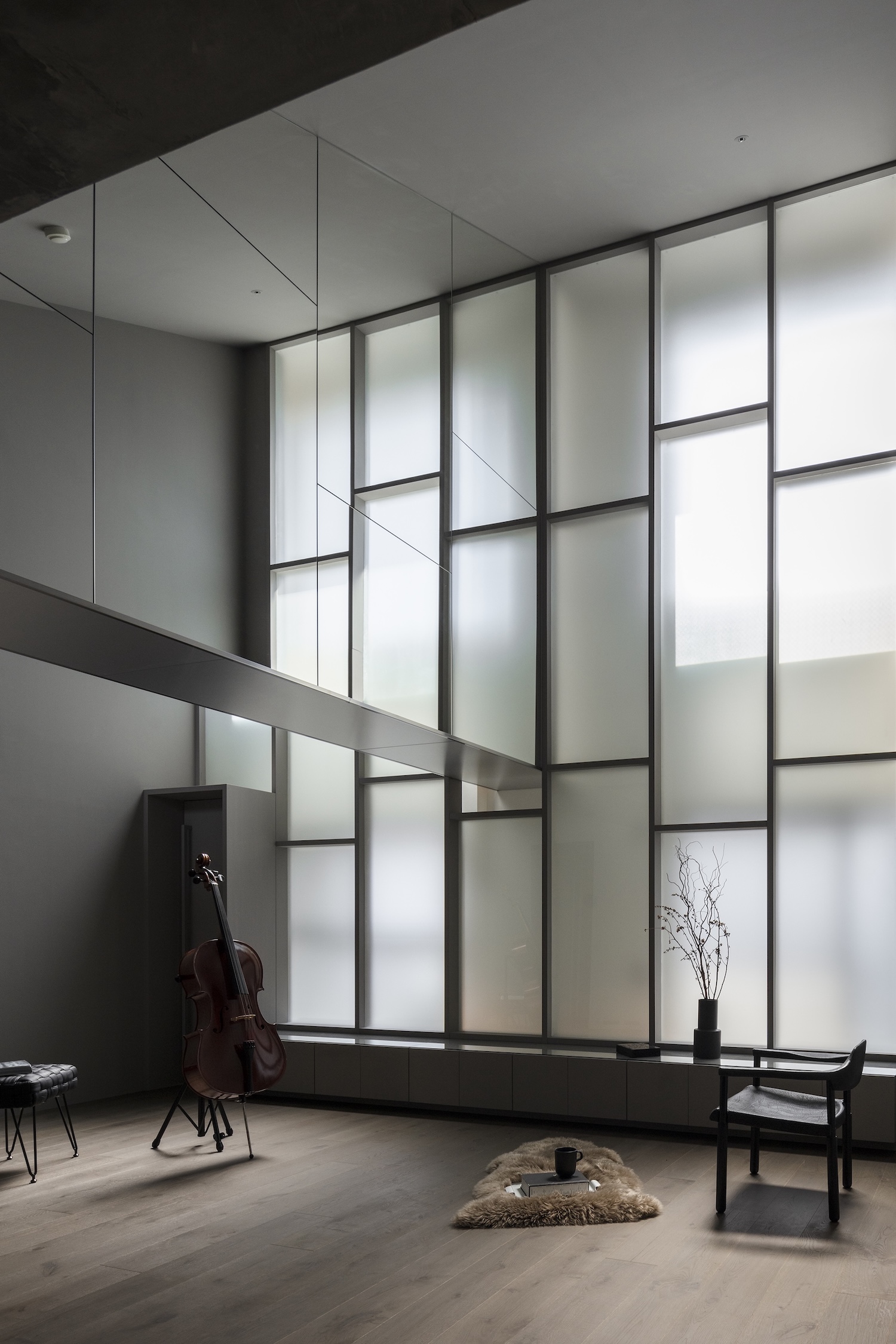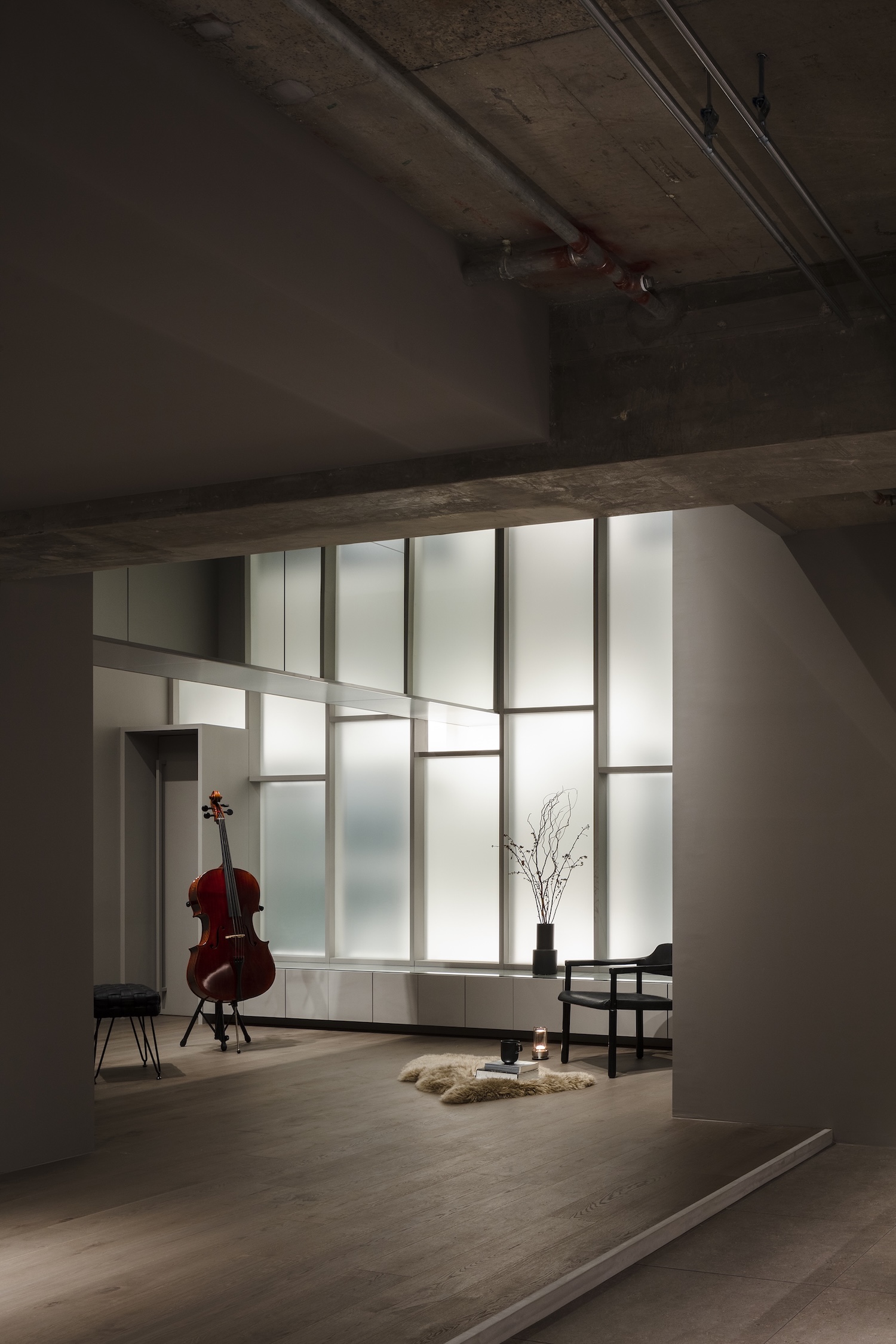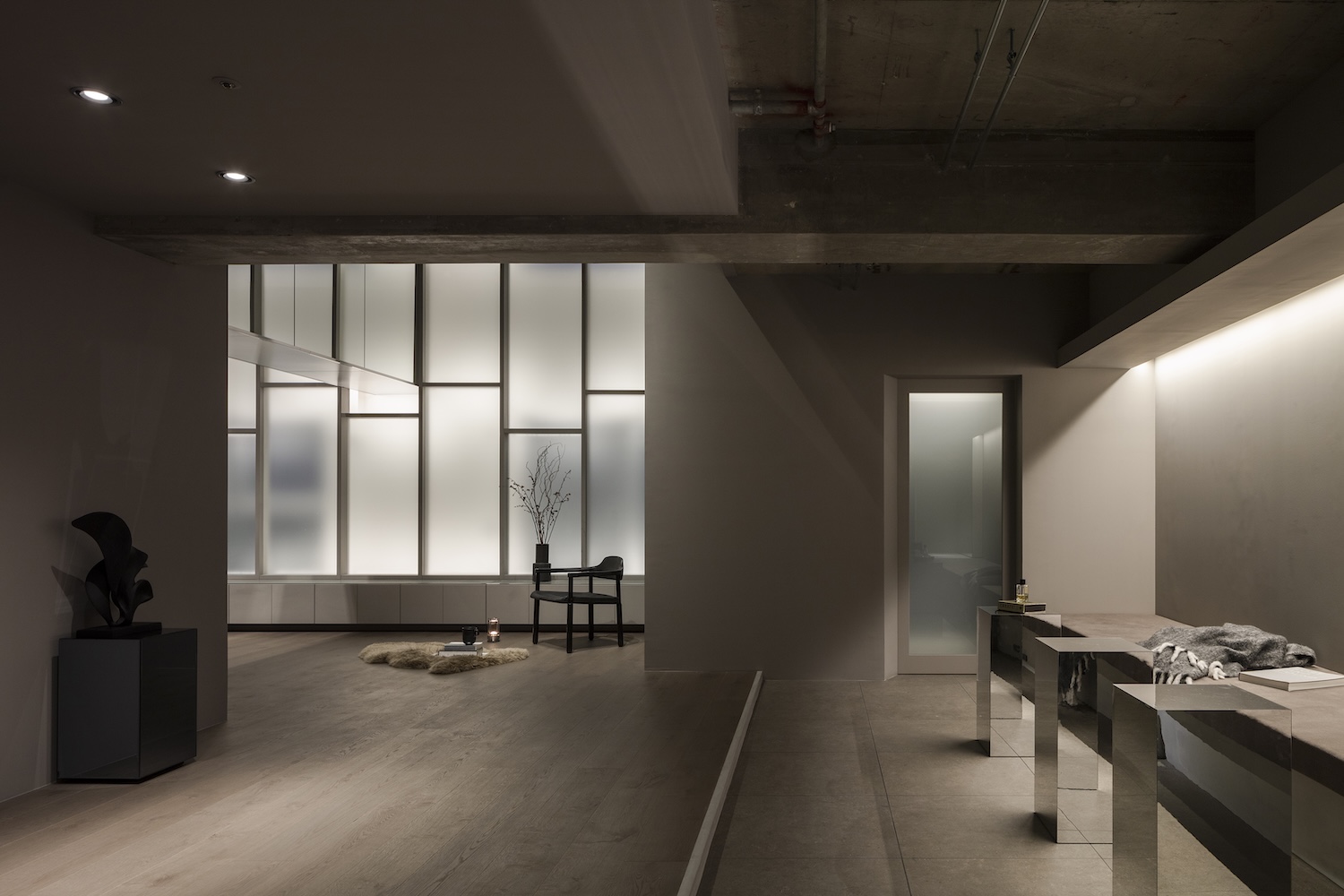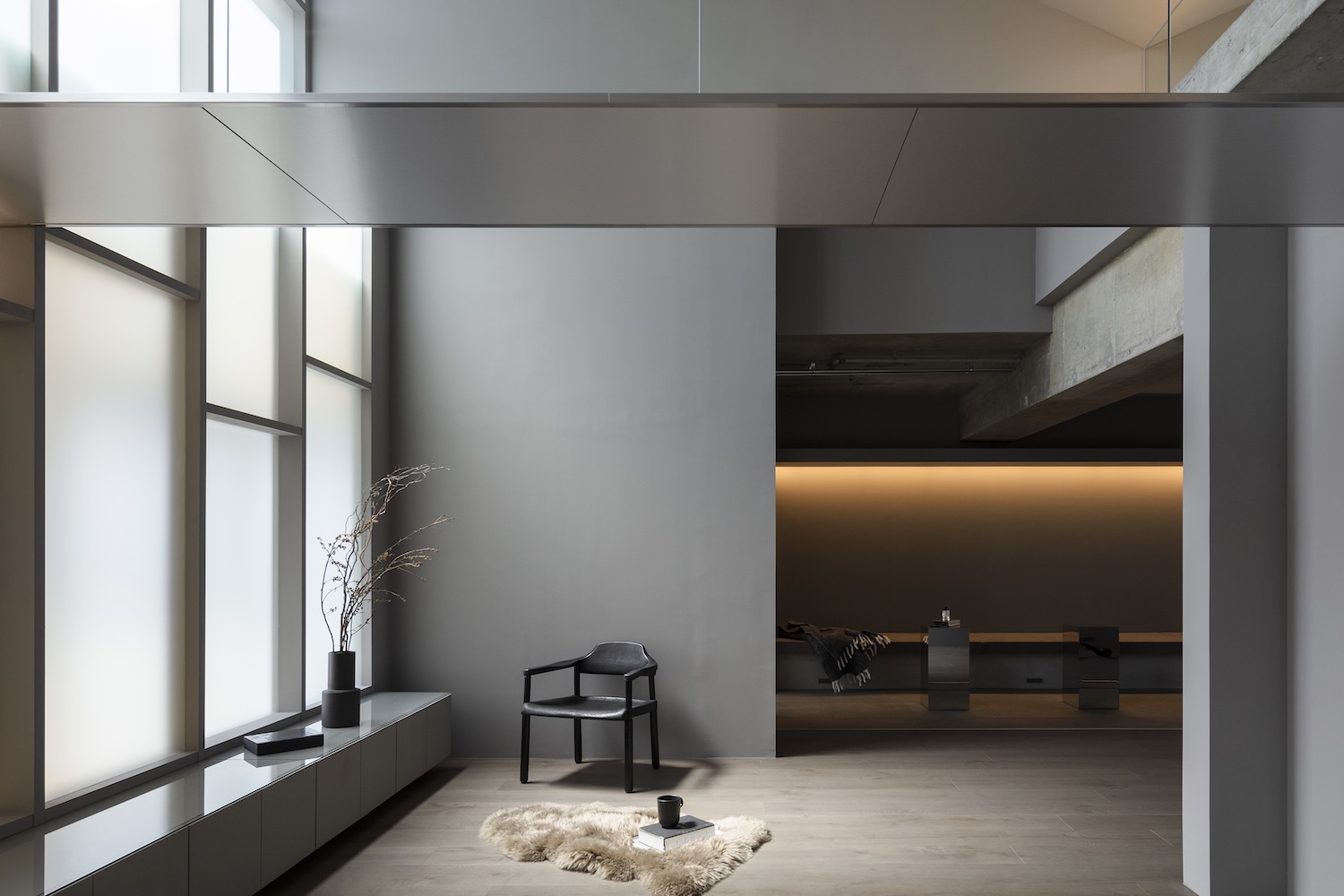
Room 1101 is a minimalist apartment renovation located in Osaka, Japan, designed by FORM/Kouichi Kimura Architects. Occupying the uppermost floor of its building, the project confronts a rare spatial condition – a 5-meter-high atrium punctuated by irregularly arranged windows of varying shapes and proportions. Rather than treating these openings as fixed architectural features, Kimura reimagines them as raw material for an entirely new relationship between interior space and natural light. The result is a studio apartment that functions less as a conventional dwelling and more as an instrument for mediating the passage of daylight and shadow across hours and seasons.
The central strategy is deceptively simple. Frosted glass screens, positioned 40 centimeters off the existing walls, effectively dissolve the windows behind them. The gap transforms each screen into what might be called a wall of light – a luminous surface whose glow shifts in intensity and warmth as the sun moves across the facade. The windows themselves become invisible presences, their energy absorbed and redistributed through layers of translucent material. This approach recalls the spatial sensibility of traditional Japanese shoji screens, where the boundary between interior and exterior is not a hard edge but a graduated zone of filtered atmosphere. Kimura updates this principle through industrial materiality, replacing paper and timber with glass and steel while preserving the same phenomenological effect.
Depth and visual complexity multiply through carefully placed mirrors applied to the hanging walls that separate the screen panels. These reflective surfaces catch and repeat the rhythm of the frosted frames, generating an illusion of spatial expansion that belies the apartment’s actual footprint. The effect is cinematic – a sequence of overlapping planes that shift in apparent depth depending on the viewer’s position and the quality of available light.
Circulation through the studio apartment is handled with quiet precision. A secondary path connects the entrance to the wet area, with floor level changes and material transitions providing spatial definition without the need for conventional partitions. At the entrance hall, a wall of embedded frosted glass sits in front of a glass block partition, creating a double-layered diffusion effect. The grid pattern of the glass block bleeds softly through the frosted surface, introducing geometric texture that reads as ornament born entirely from structure and light transmission rather than applied decoration.