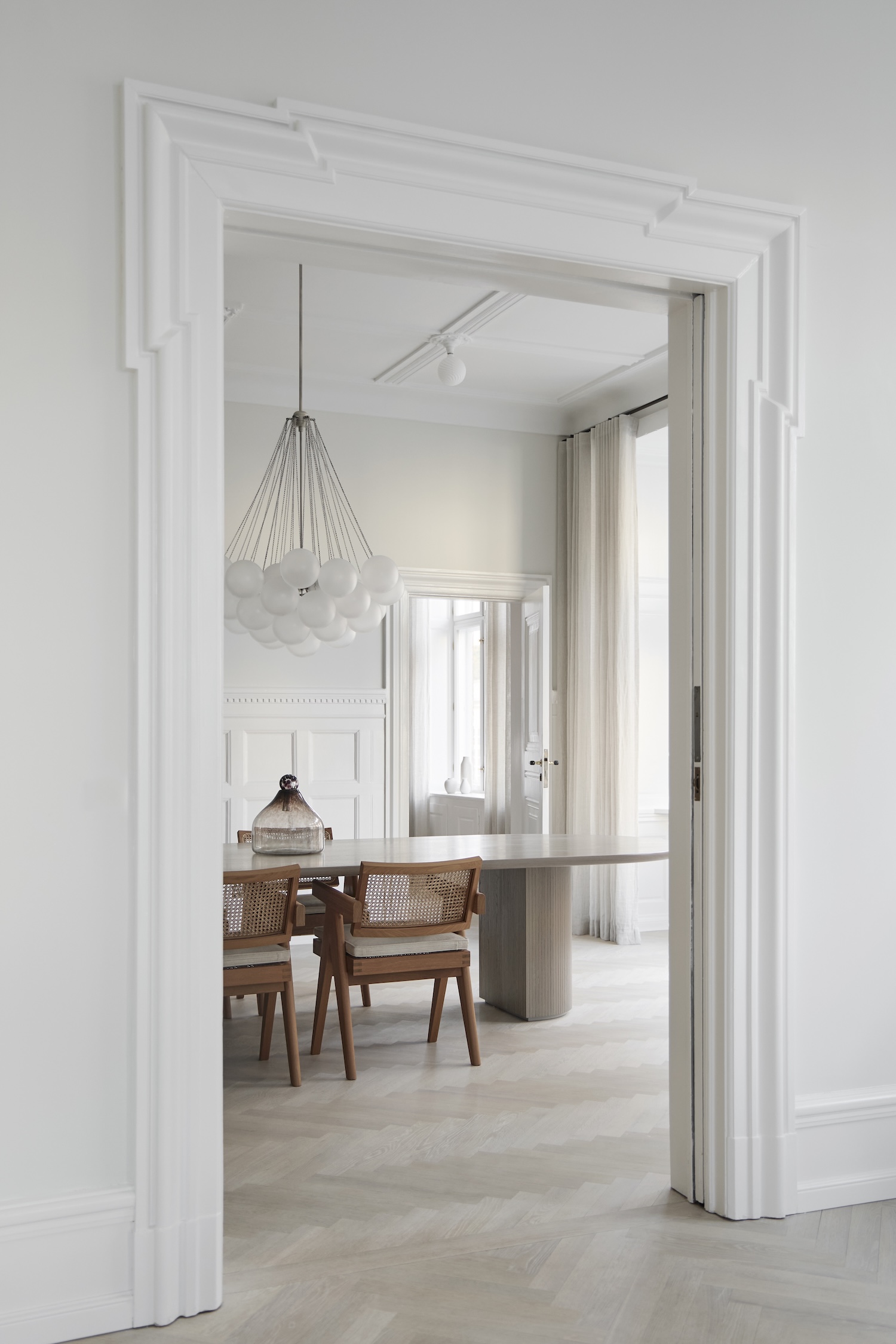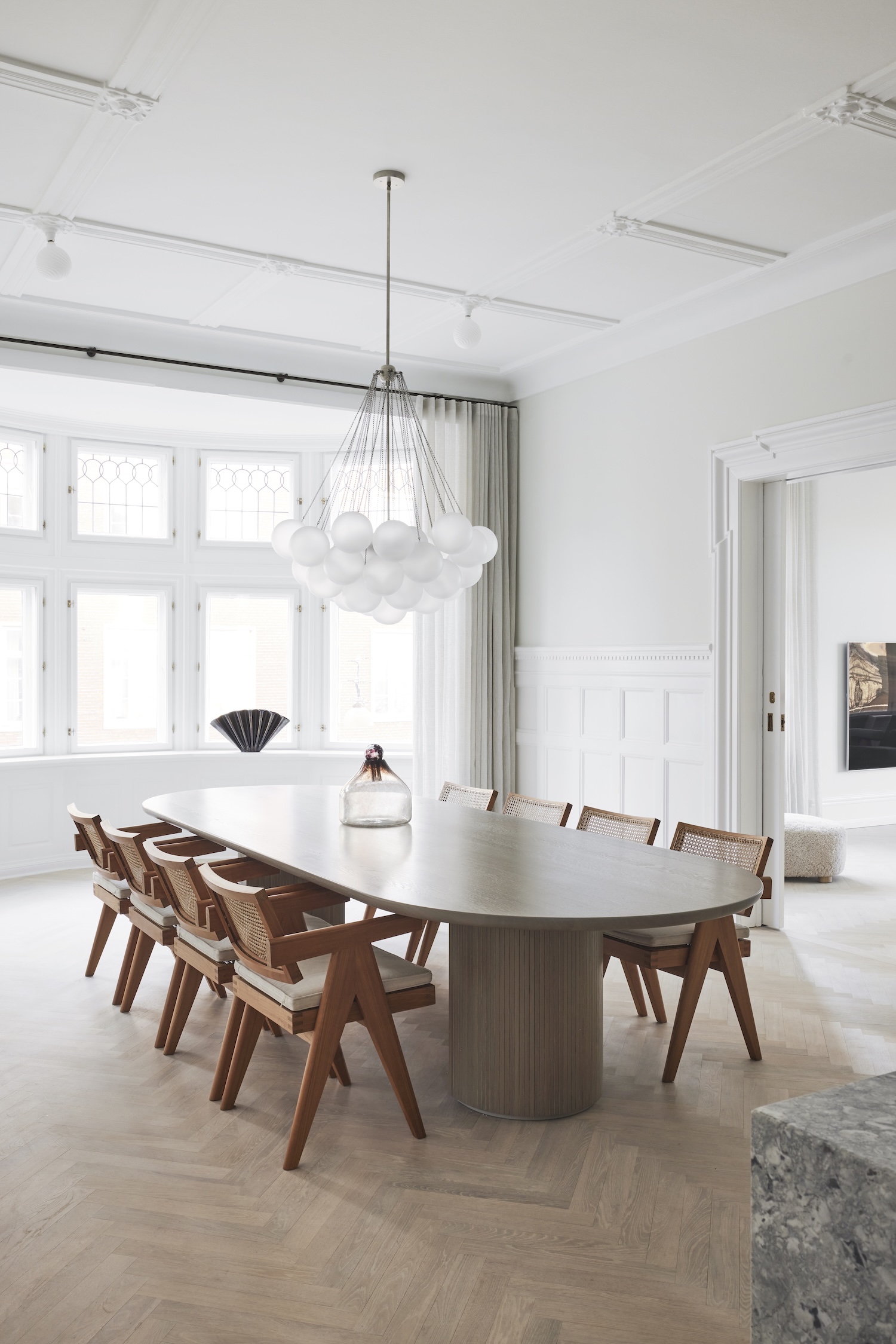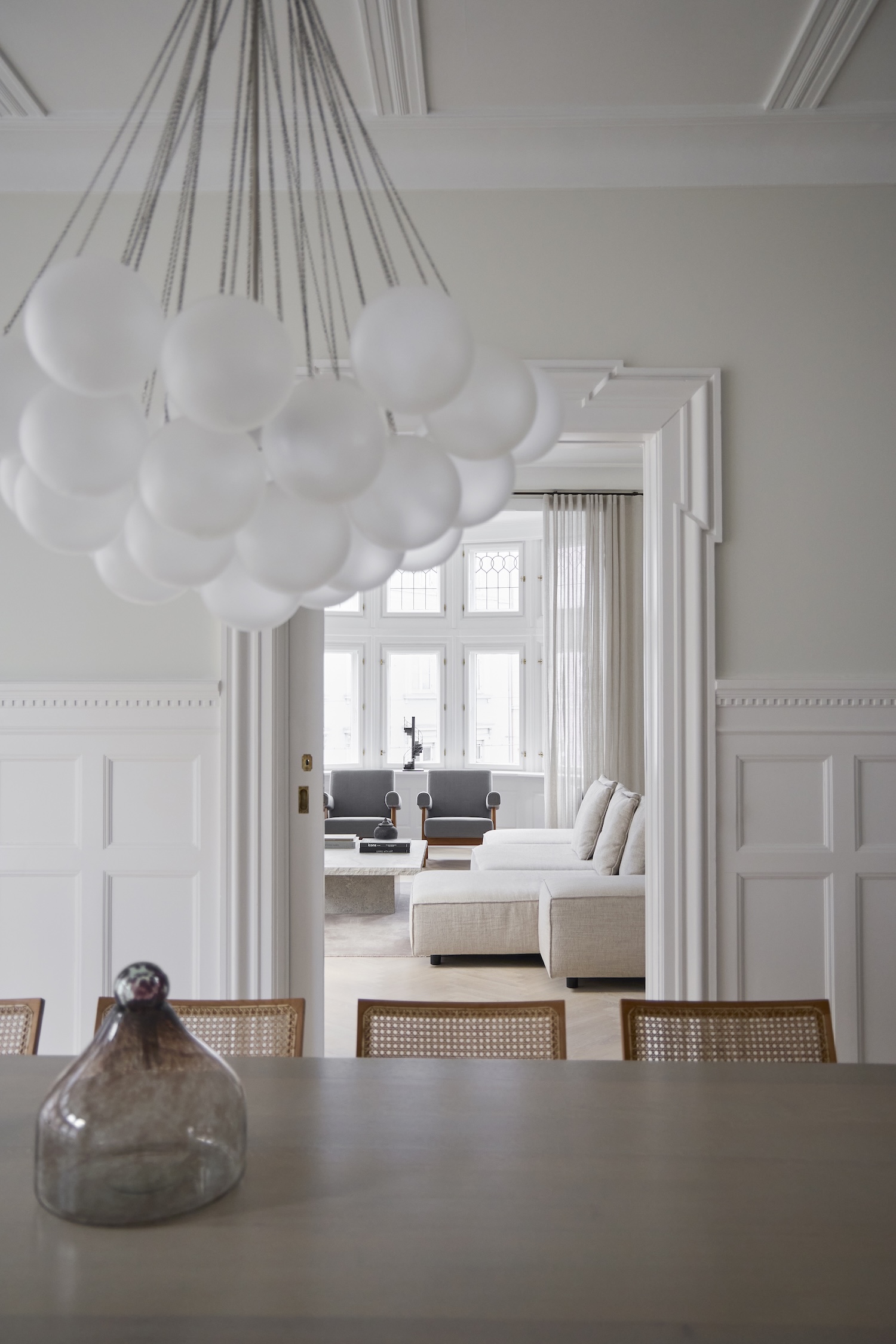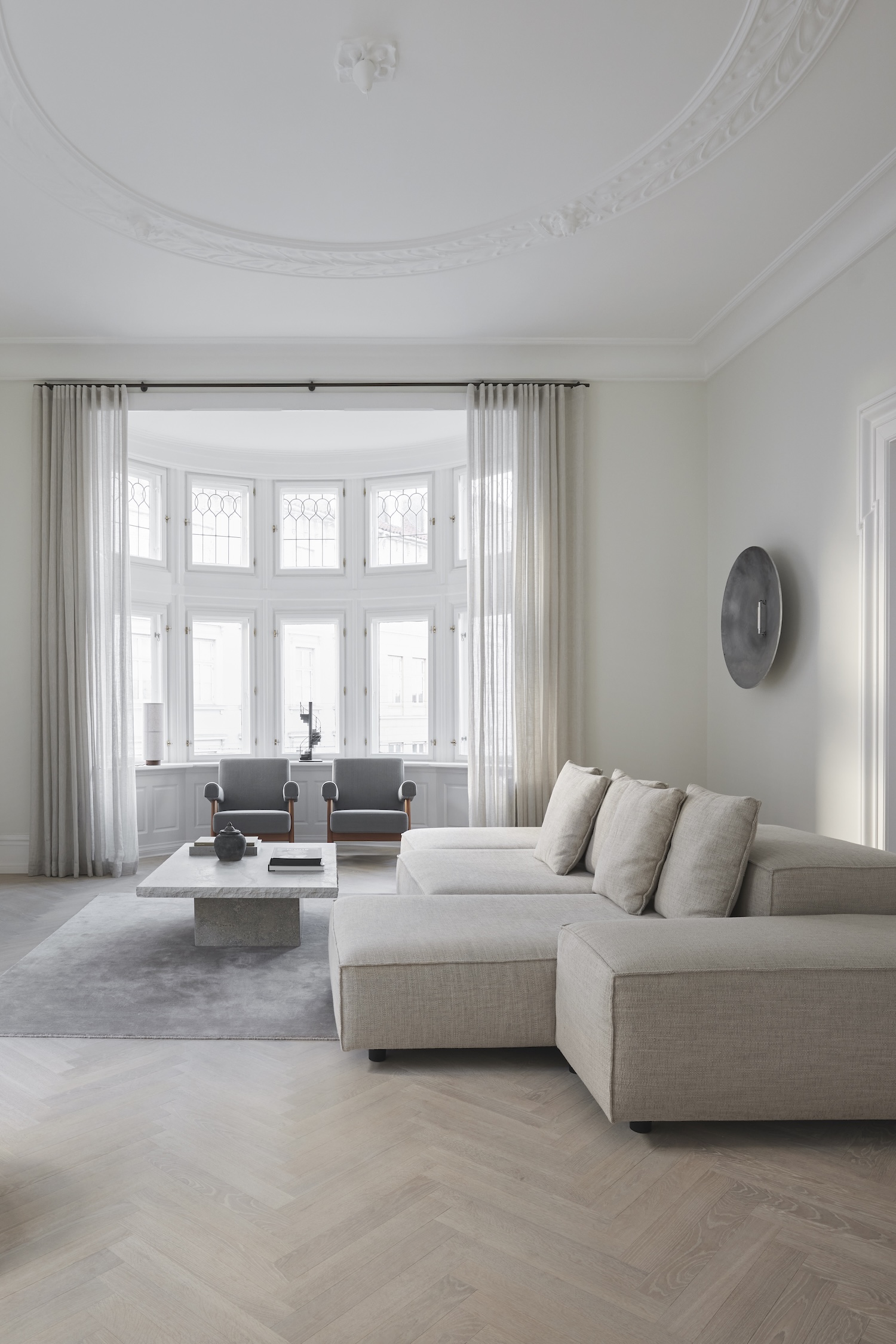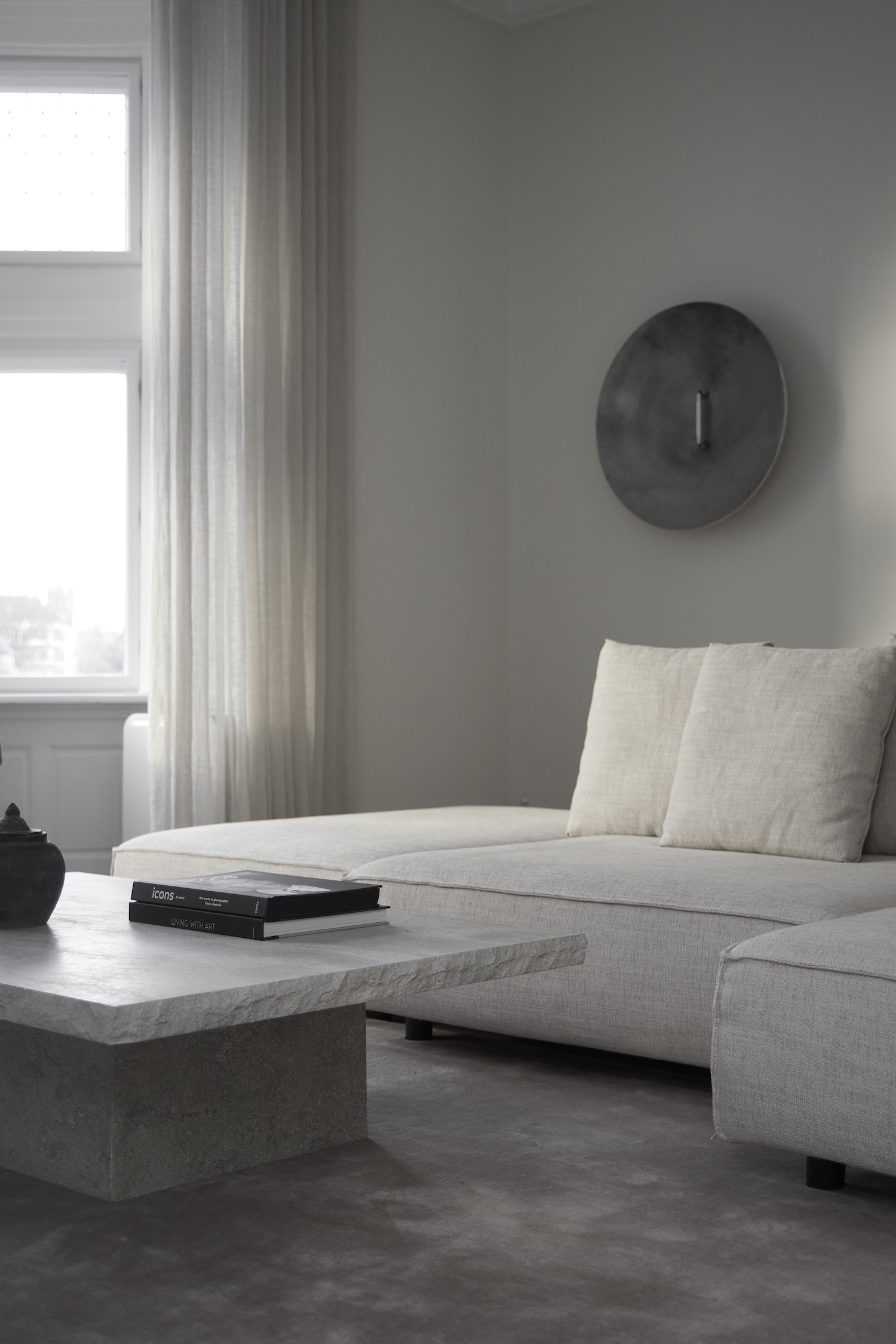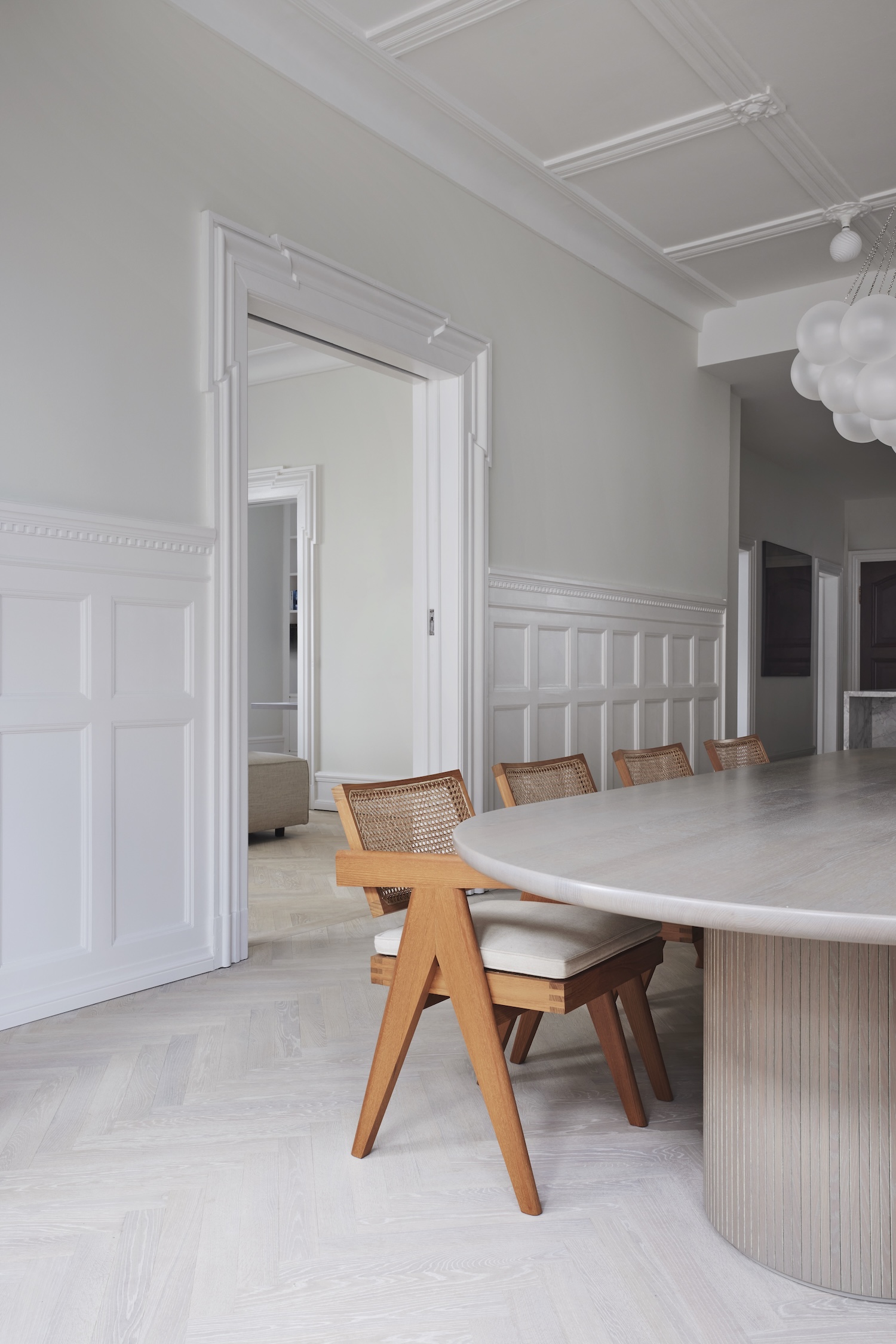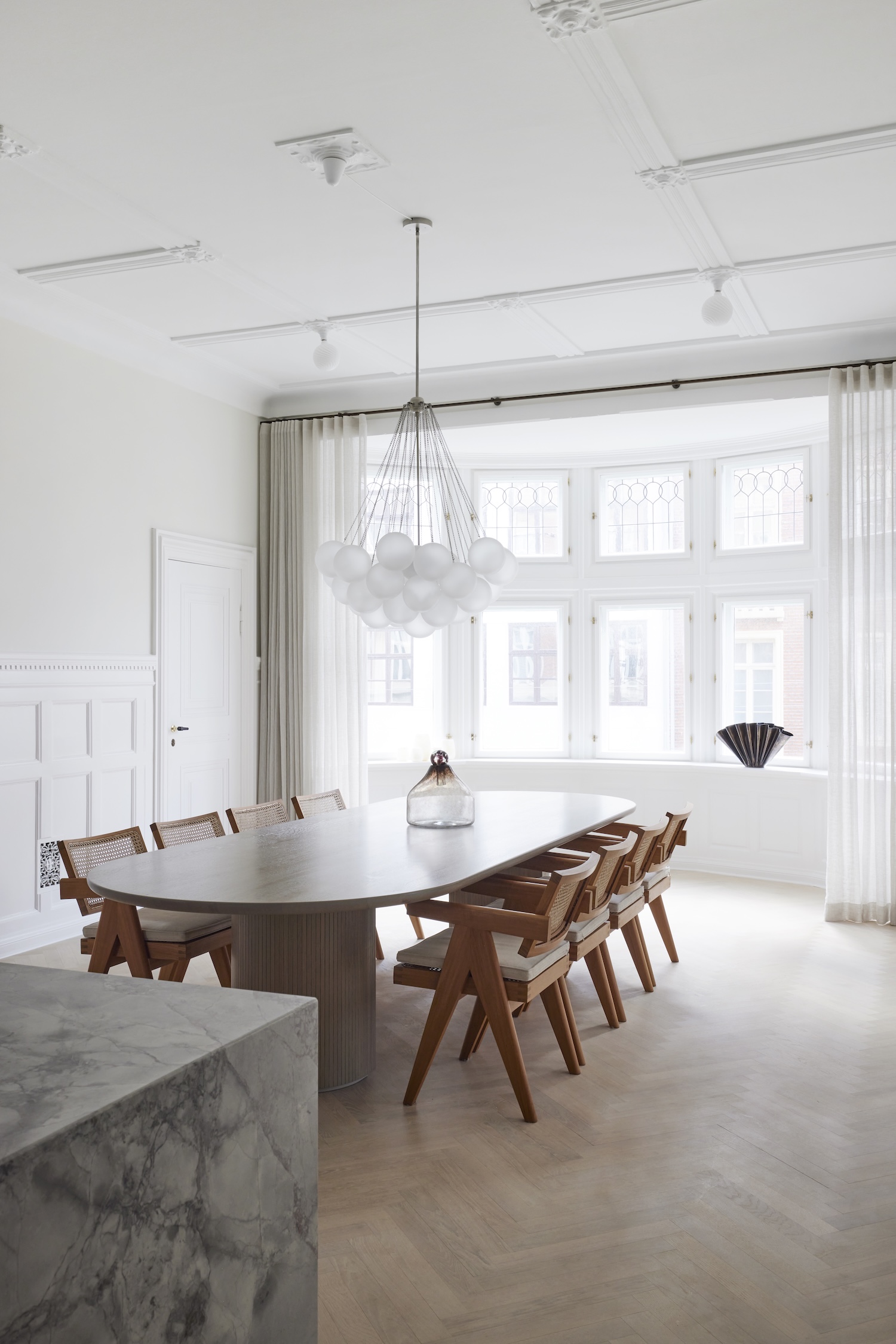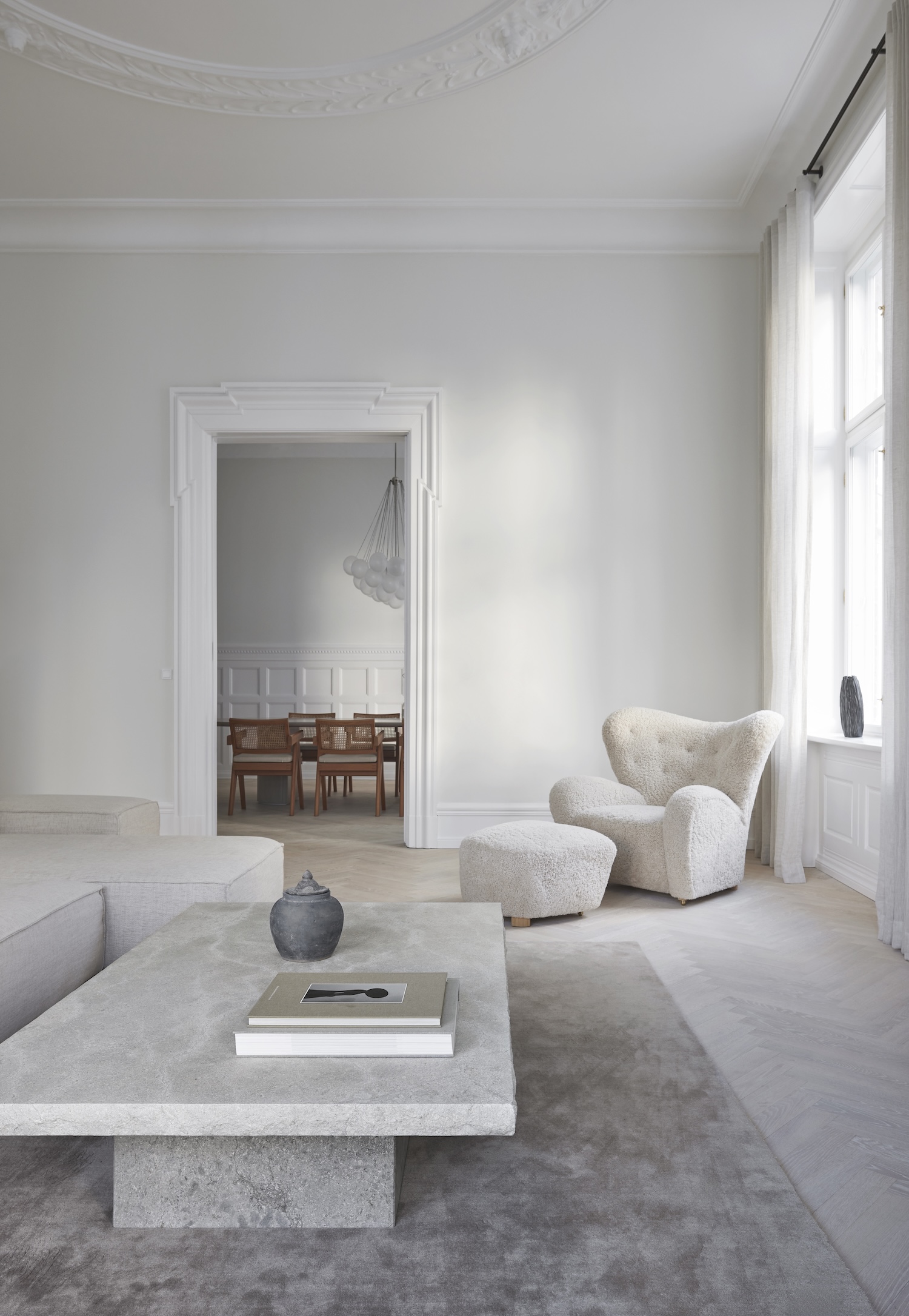
St Kongensgade is a minimalist residence located in Copenhagen, Denmark, designed by Space Copenhagen. The graceful curves of a chandelier cast gentle shadows across restored crown molding, marking the intersection of past and present in this remarkable Copenhagen apartment. This interplay of light and architectural detail serves as a fitting metaphor for Space Copenhagen’s masterful transformation of a historic 267-square-meter residence into a contemporary haven for its empty-nest owners.
At its heart, this project represents more than just a change of address for Berit and Peter—it embodies a profound shift from suburban tranquility to urban vitality. The design narrative unfolds as a thoughtful dialogue between the building’s nineteenth-century architectural heritage and modern Danish design sensibilities. Space Copenhagen’s intervention demonstrates an acute understanding of how domestic spaces must evolve alongside their inhabitants’ life stages.
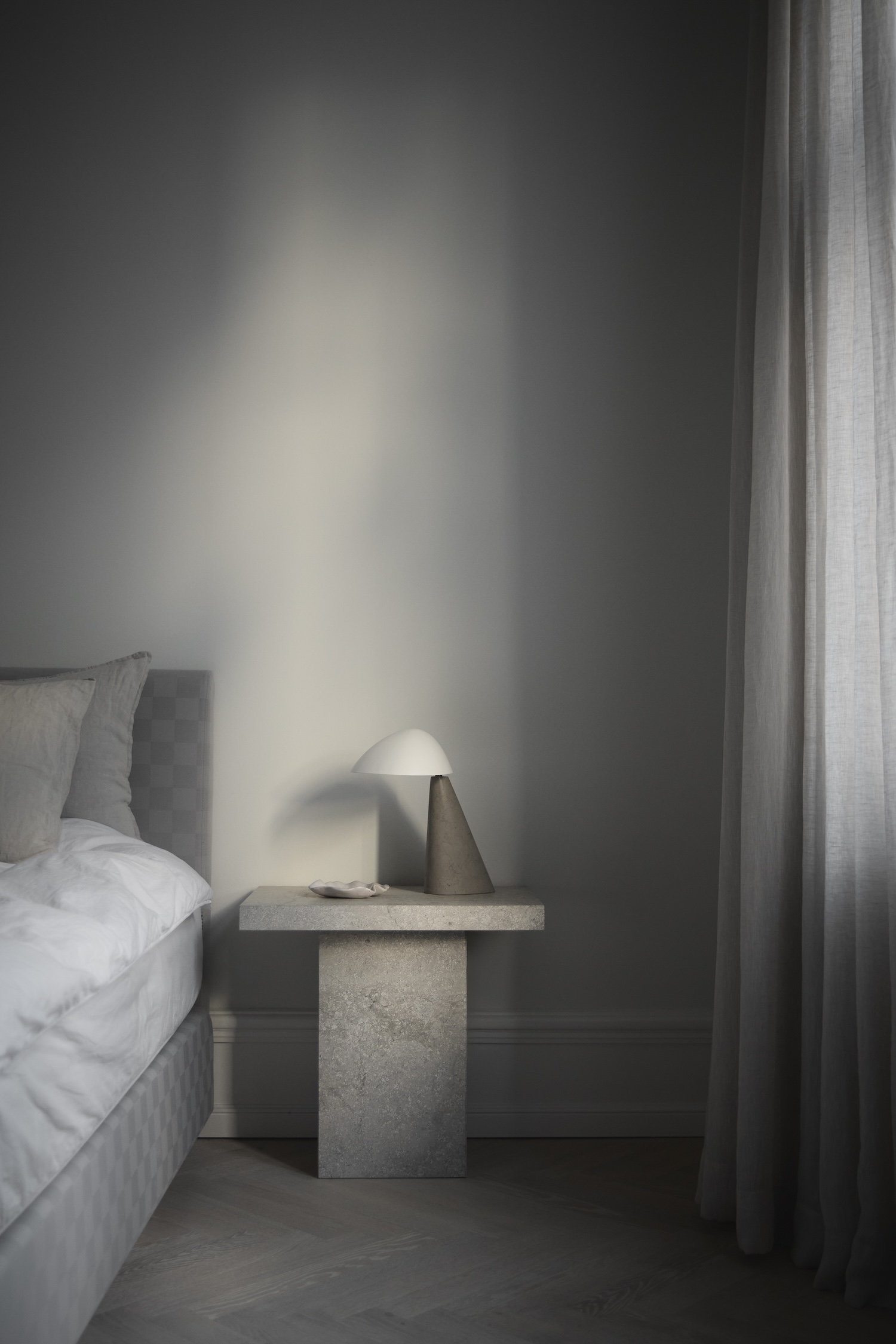
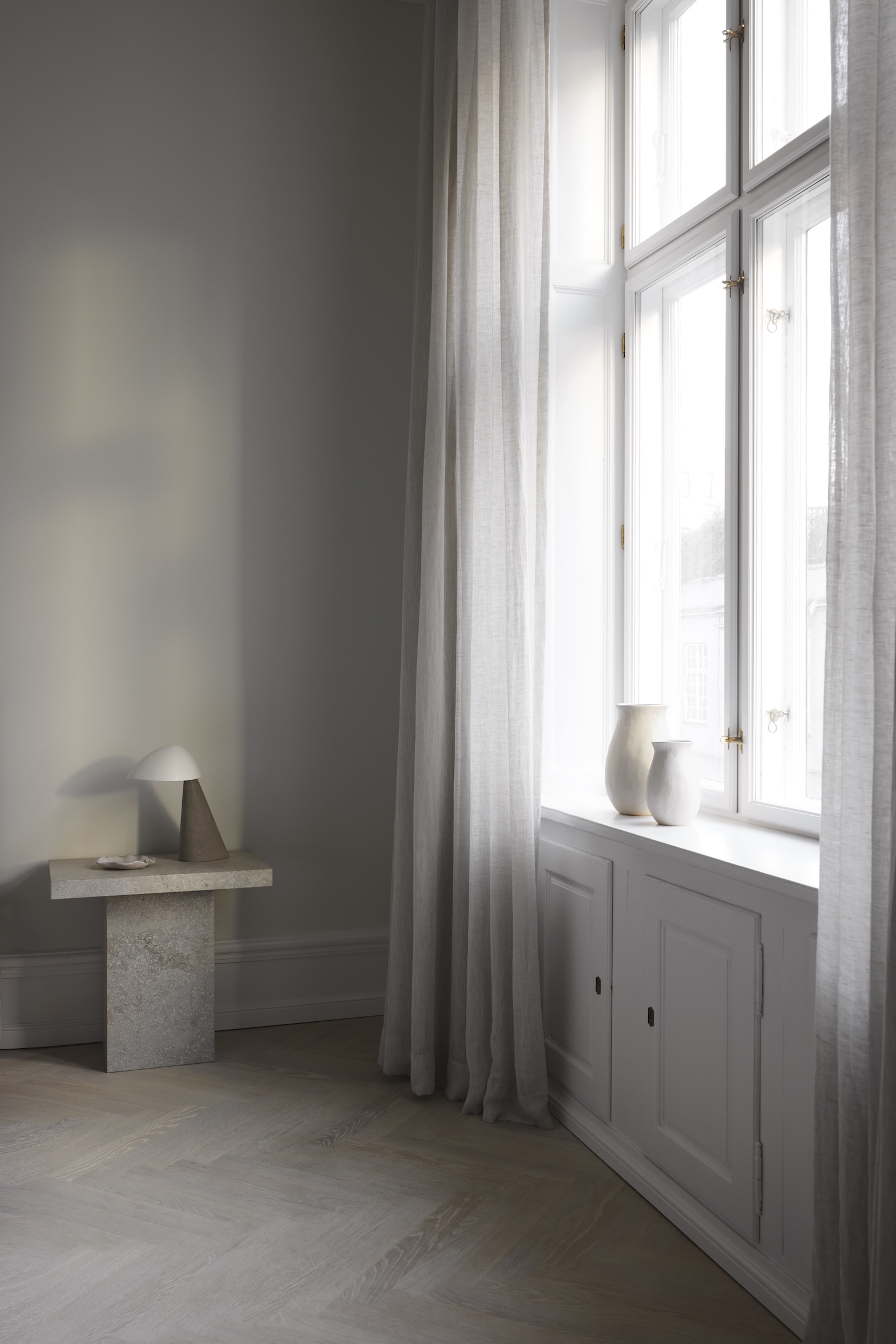
The studio’s “slow aesthetics” philosophy manifests in every carefully considered detail. Natural materials ground the space in authenticity—warm woods dialogue with cool natural stone, while handcrafted tiles add subtle textural depth. This material palette doesn’t merely serve aesthetic purposes; it creates a sensory landscape that honors Danish craft traditions while embracing contemporary comfort.
What distinguishes this project is its temporal awareness. While many residential renovations focus solely on immediate needs, Space Copenhagen has orchestrated a design that anticipates future chapters. The generous, fluid layout creates adaptable spaces that can accommodate both intimate daily routines and larger social gatherings. This forward-thinking approach reflects a deeper understanding of how homes must breathe and grow with their inhabitants.
The original architectural elements—ornate moldings, tall windows, and classic proportions—are treated not as constraints but as opportunities. Rather than competing with these historic features, the introduced contemporary elements enhance them through careful contrast. A subdued color palette serves as a sophisticated canvas that allows both the historic details and carefully selected furniture pieces to shine.
This project exemplifies how thoughtful interior design can bridge personal transition and architectural preservation. It’s a masterclass in creating spaces that honor both heritage and contemporary life—where every material choice and spatial decision serves the dual purpose of aesthetic refinement and practical functionality.