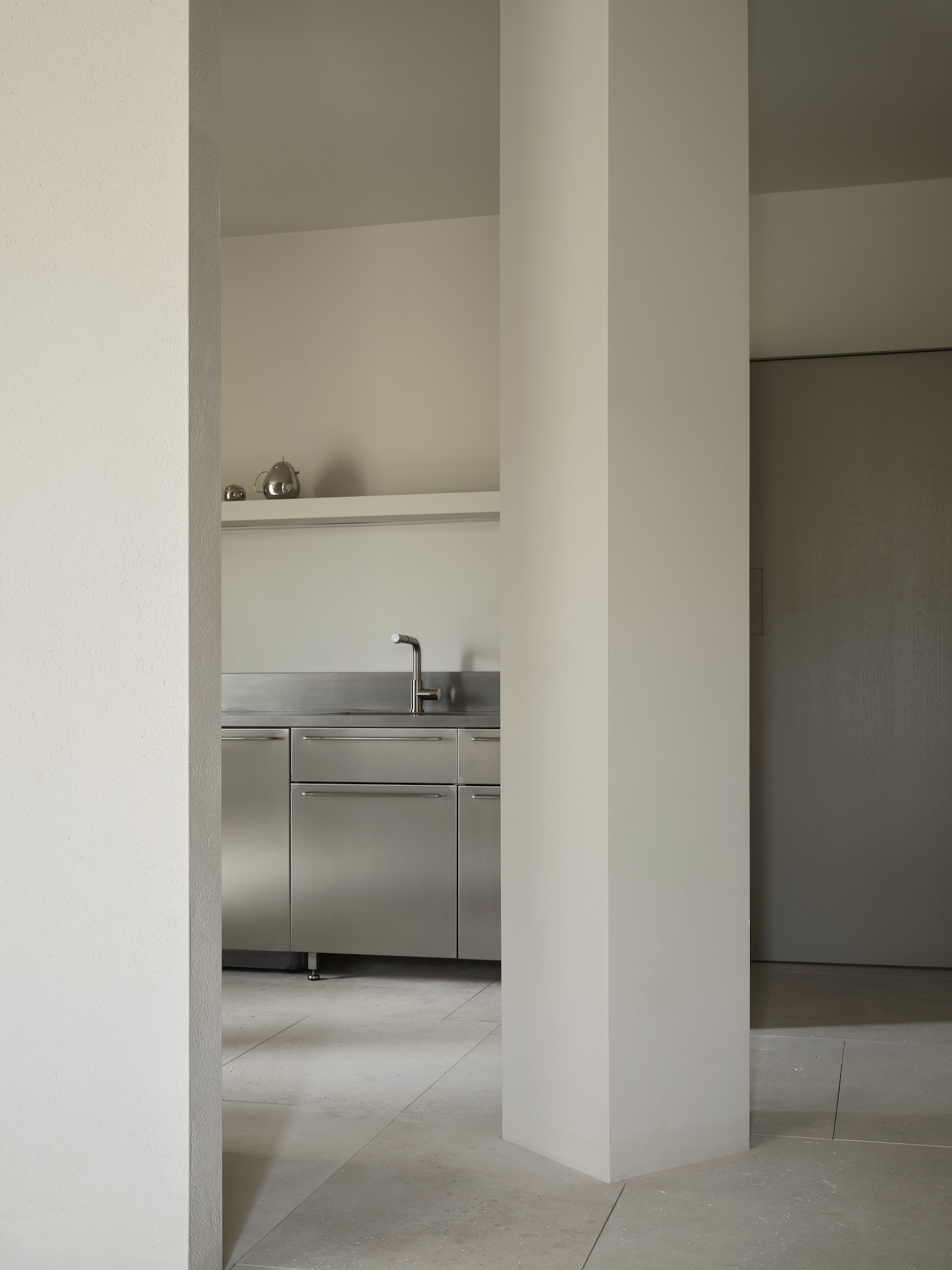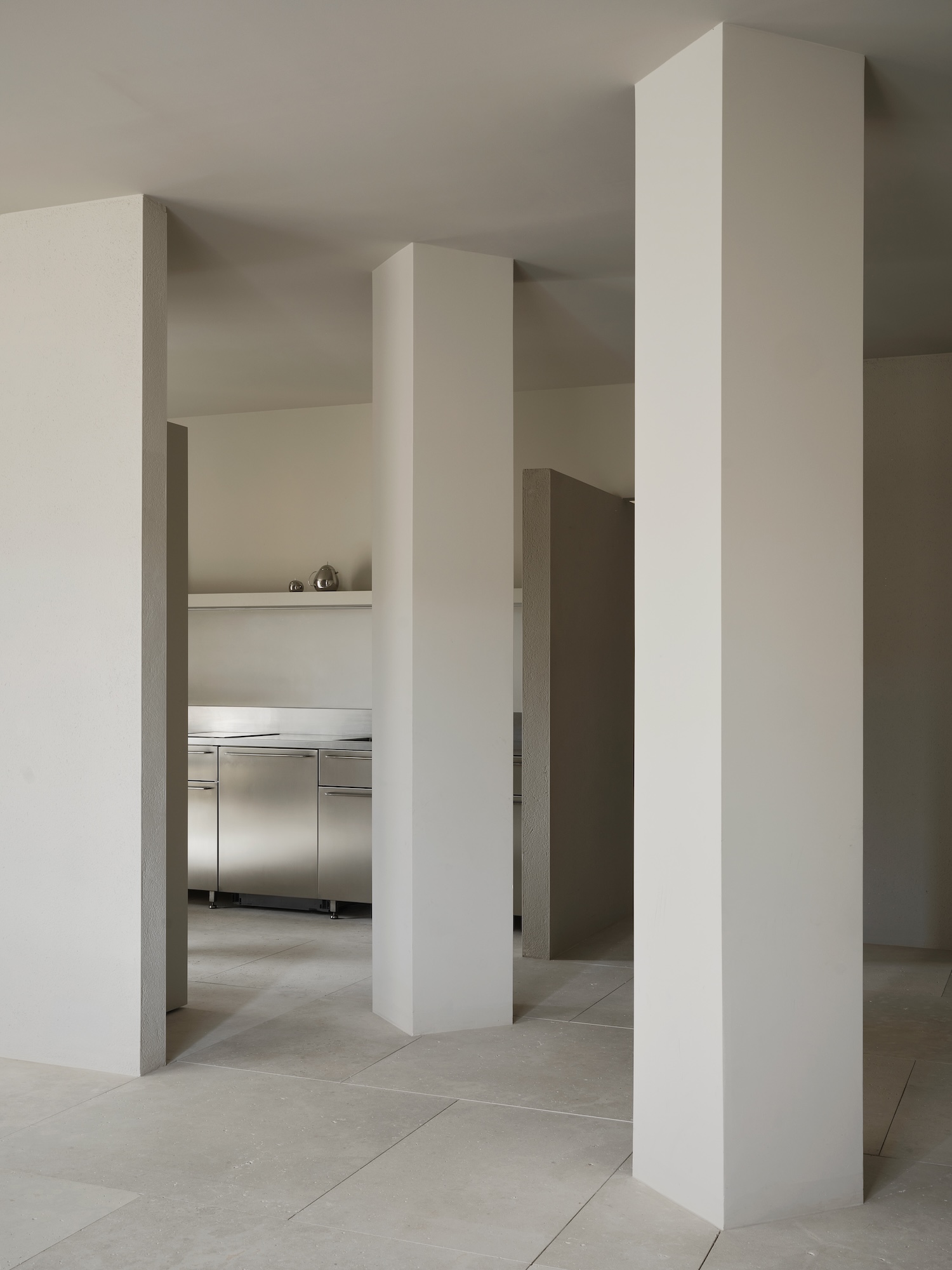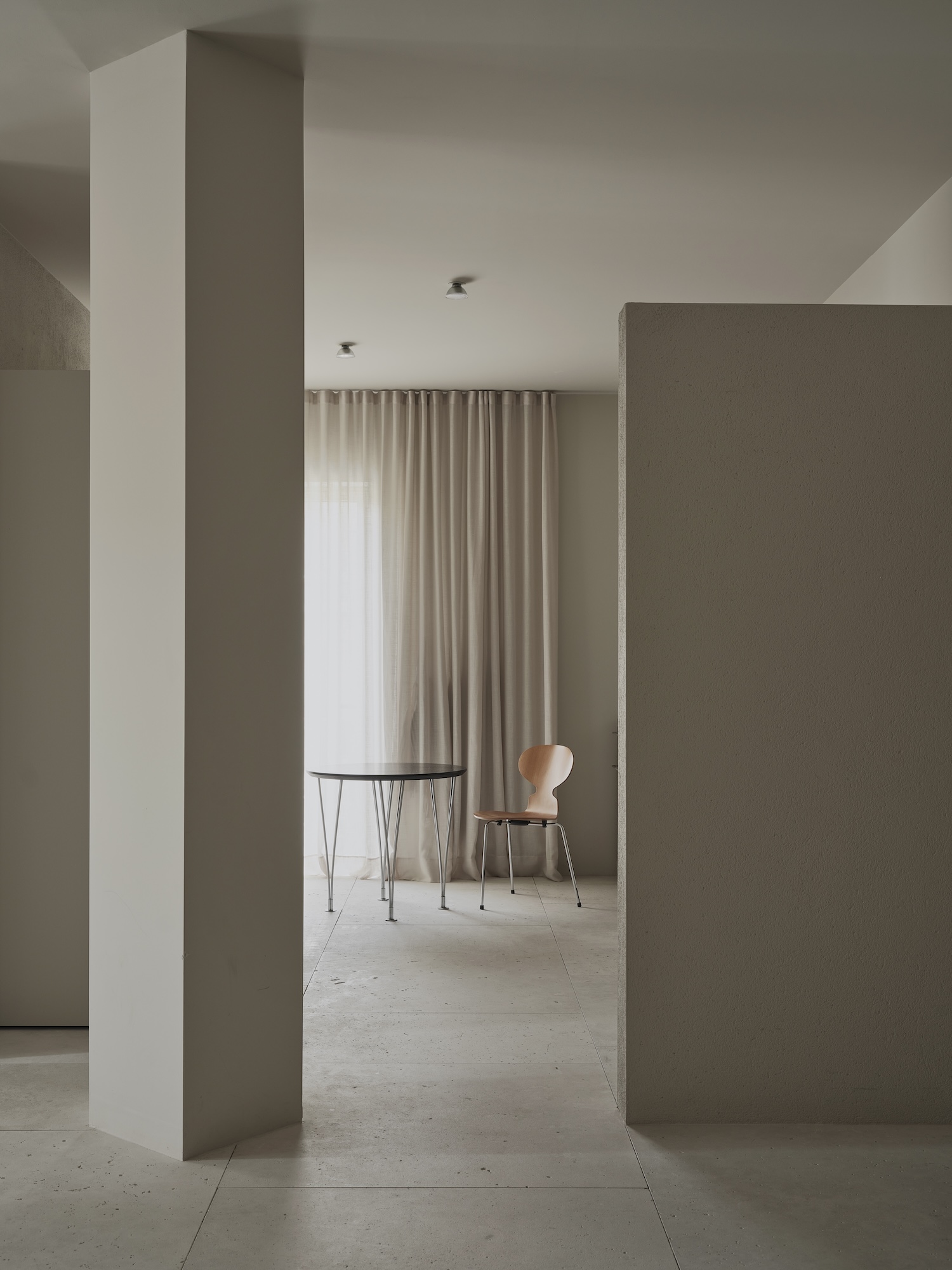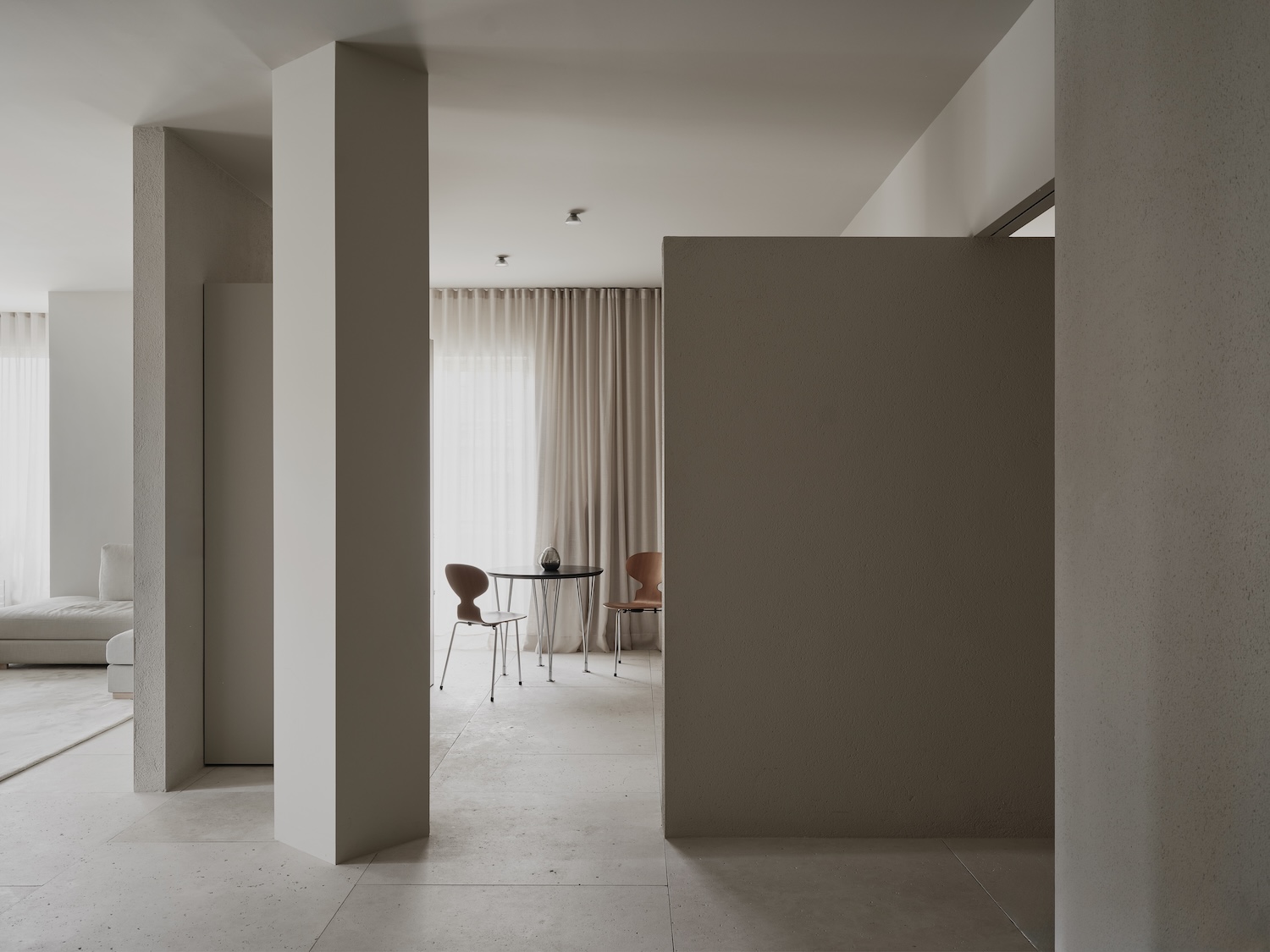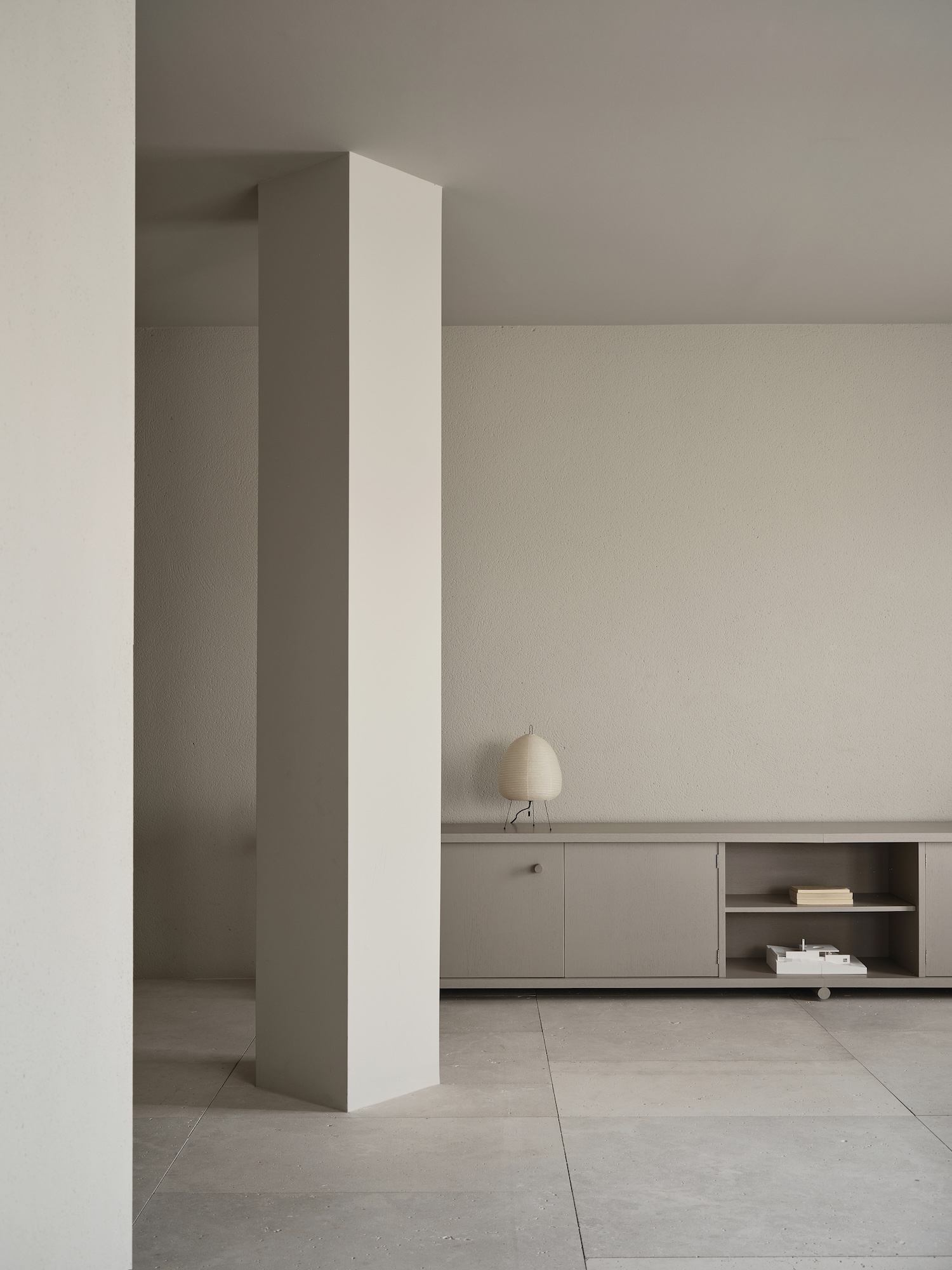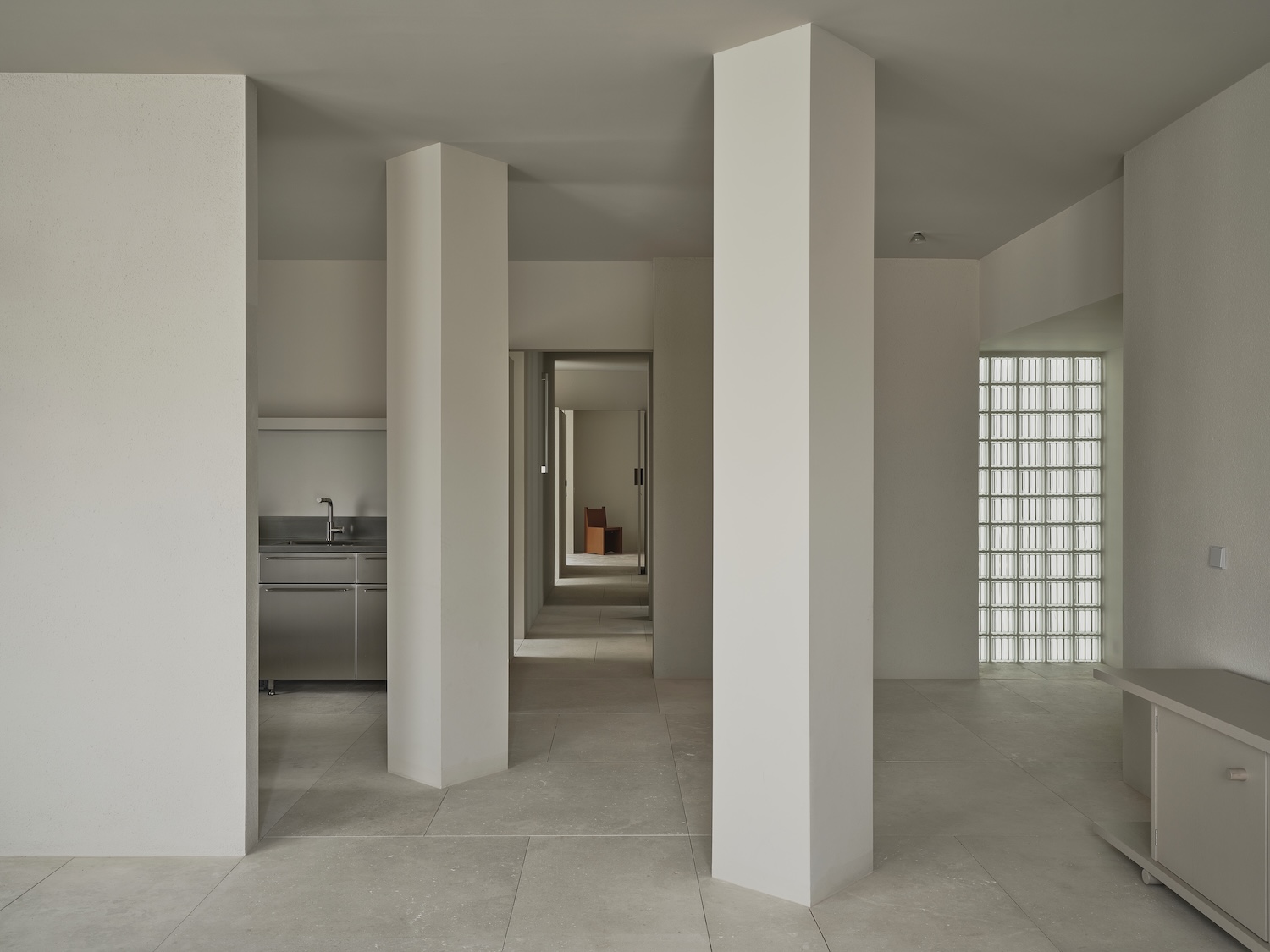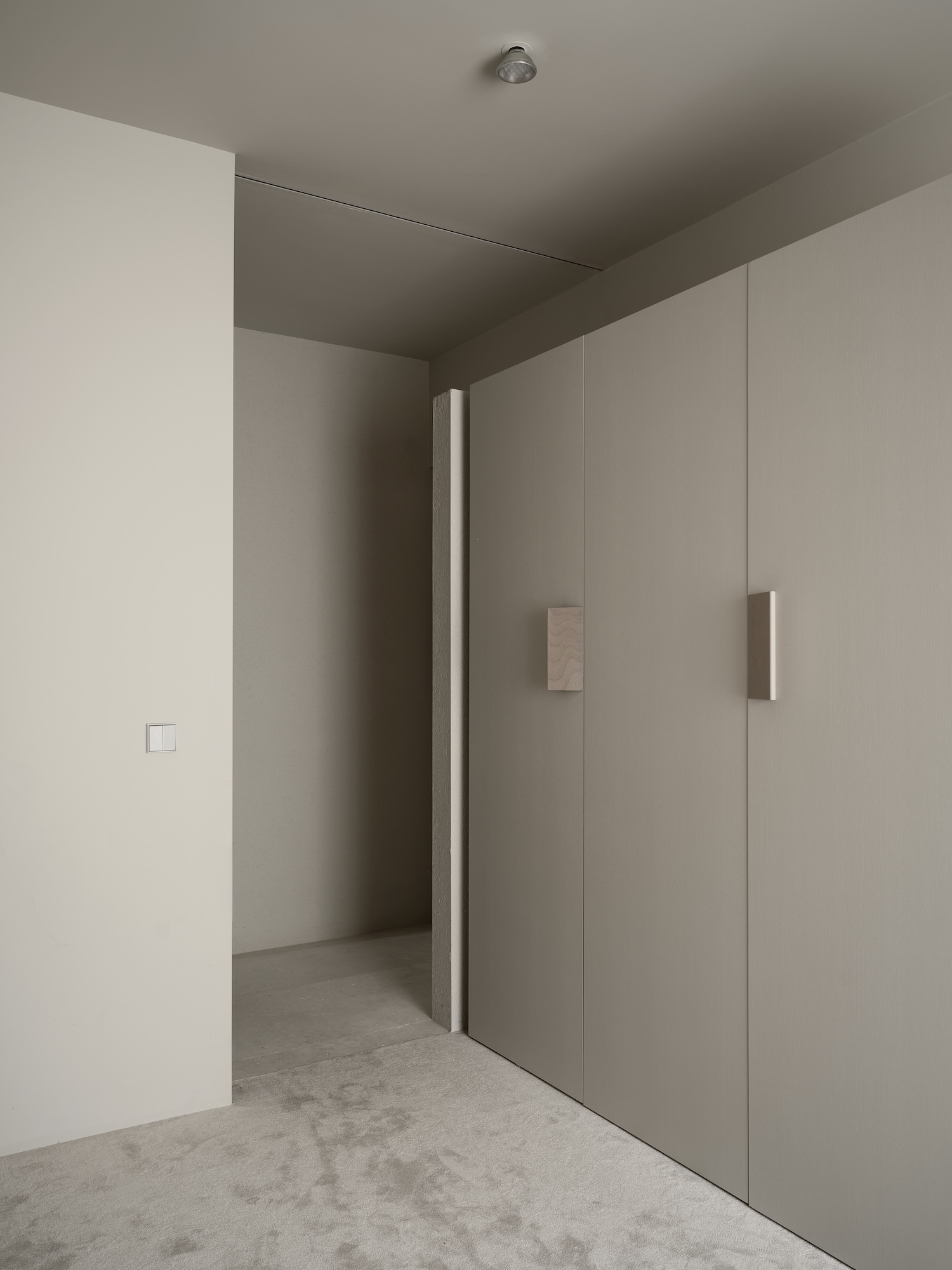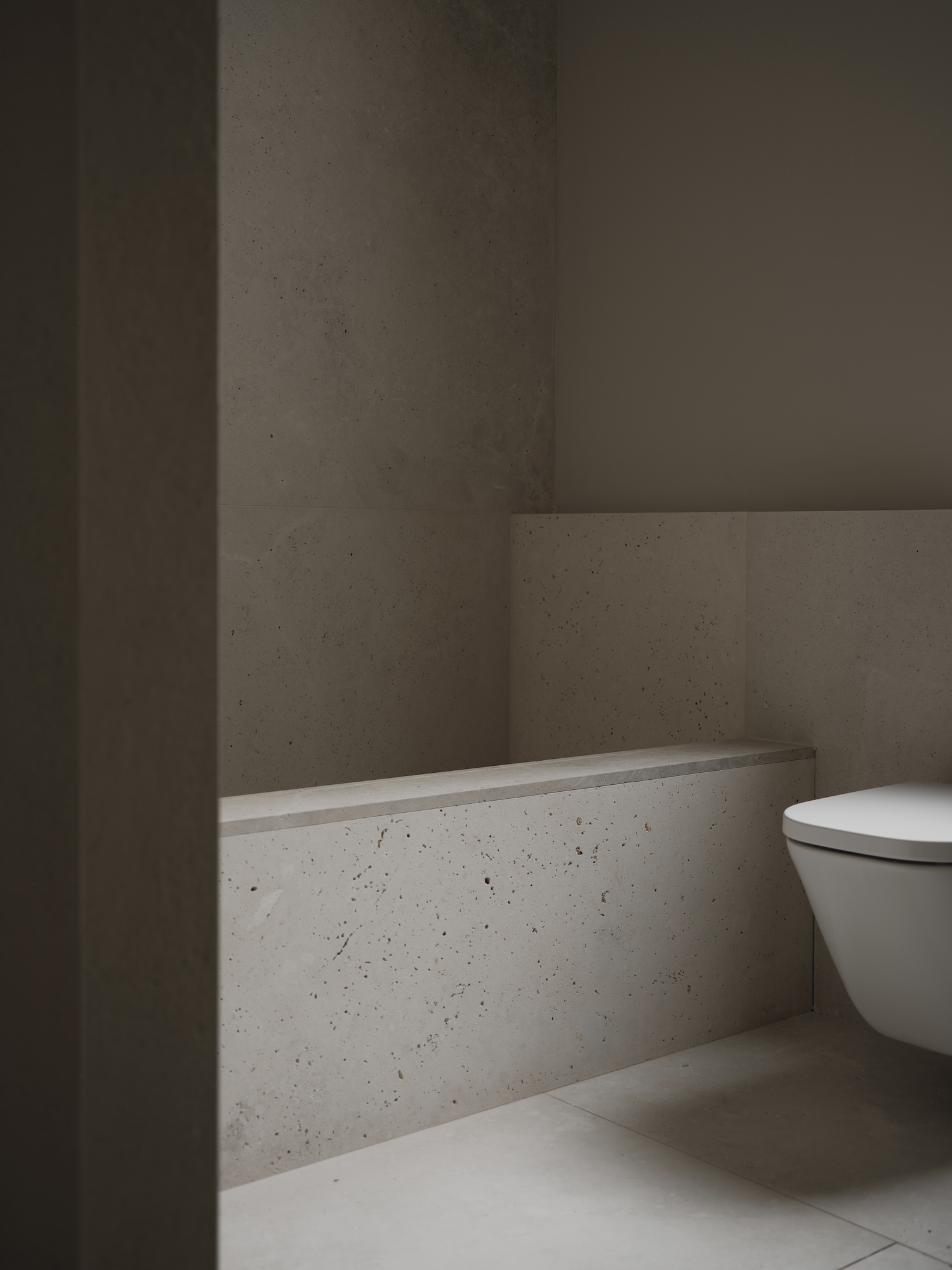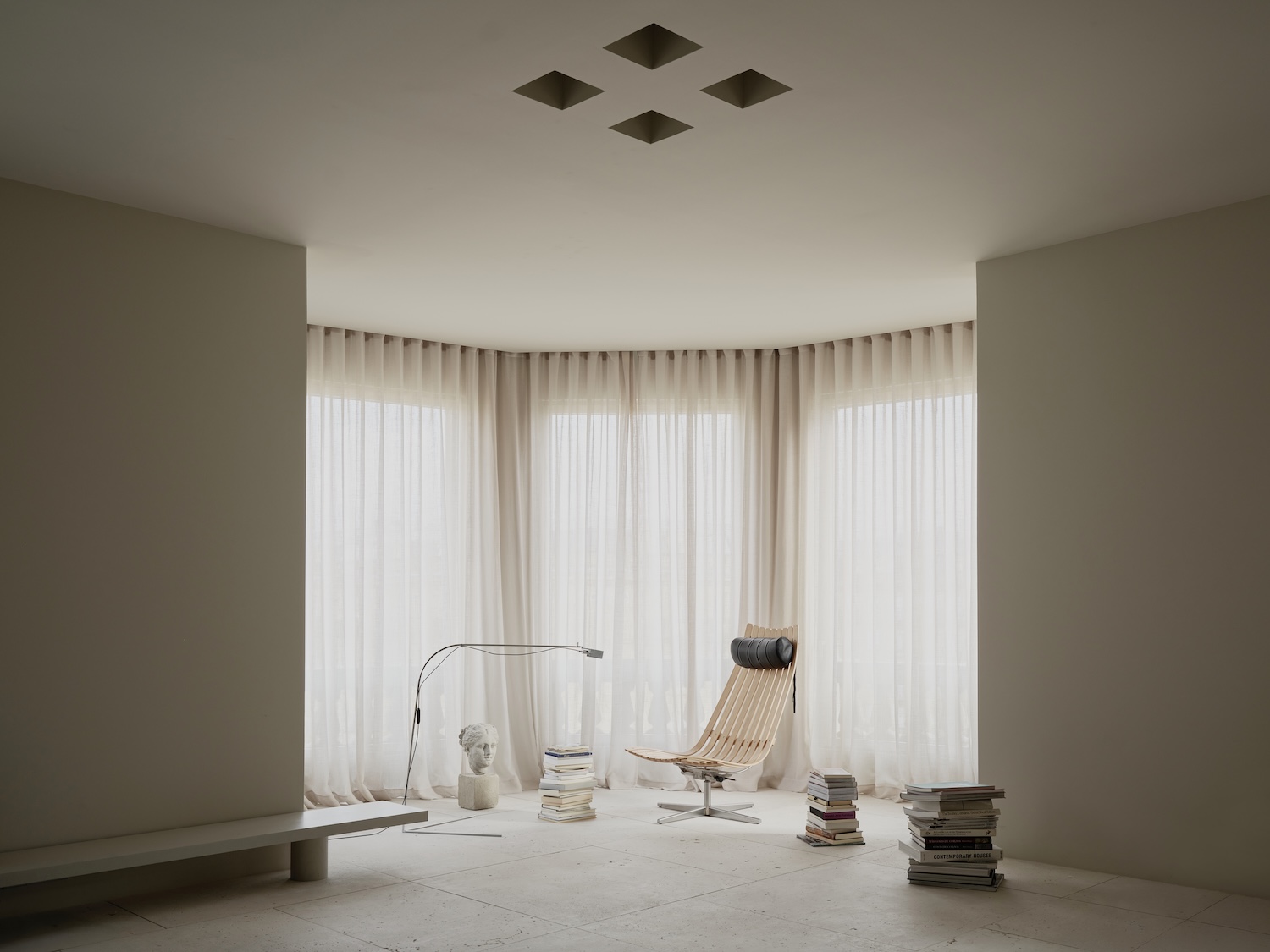
Casa Kendo is a minimalist residential renovation located in San Sebastián, Spain, designed by Ortega Diago. The seventh floor of a late 19th-century building presents a particular kind of light – elevated, unobstructed, and directional in ways that ground-floor apartments rarely experience. Ortega Diago, the studio founded by Gonzalo Sánchez Ortega and Armando Diago, recognized this condition not as a backdrop but as the primary architectural material of Casa Kendo. Rather than engaging in historical reconstruction or surface-level restoration, the 170-square-meter intervention turns entirely inward, treating the inhabitant’s movement through space as the central design problem.
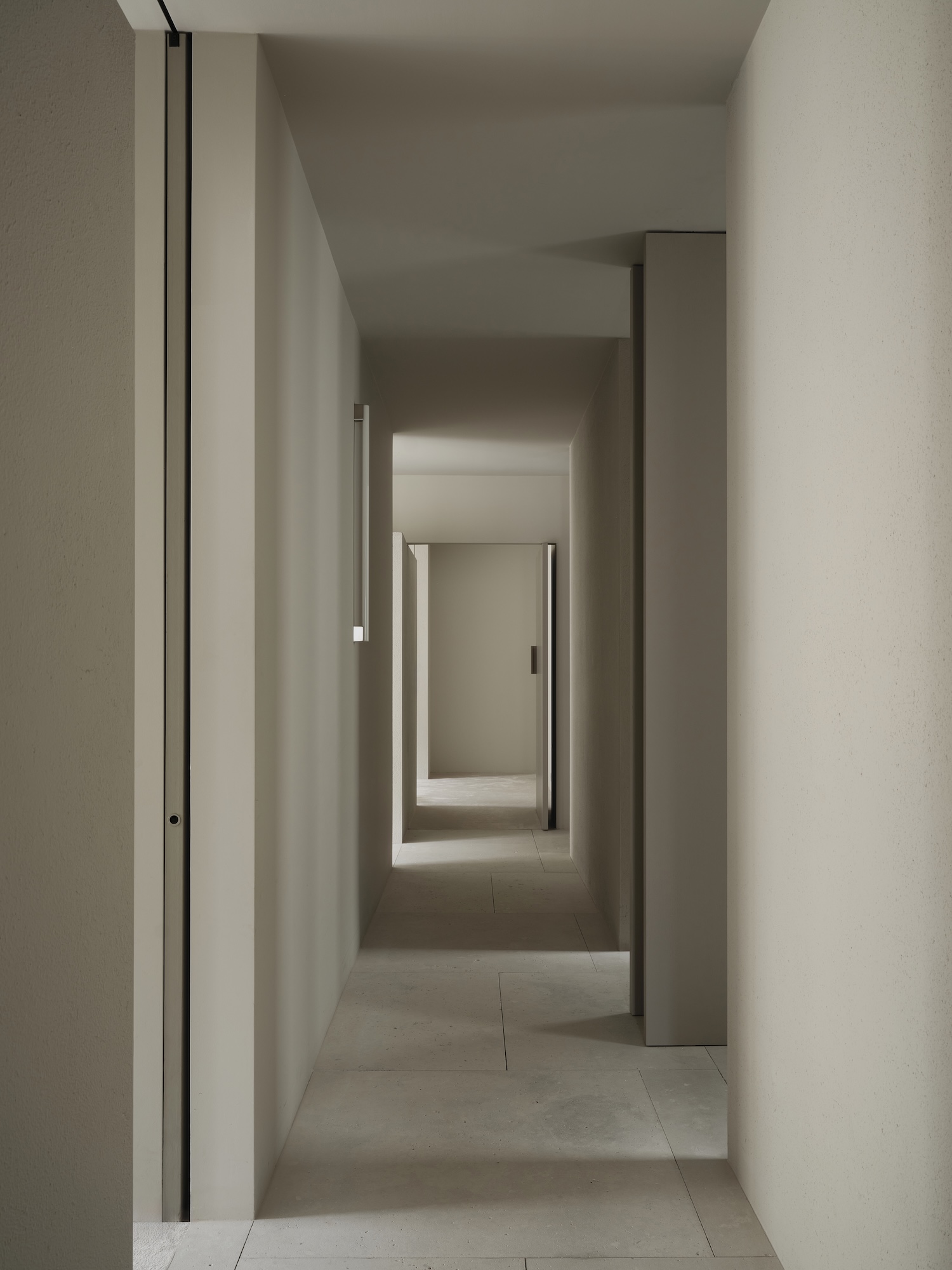
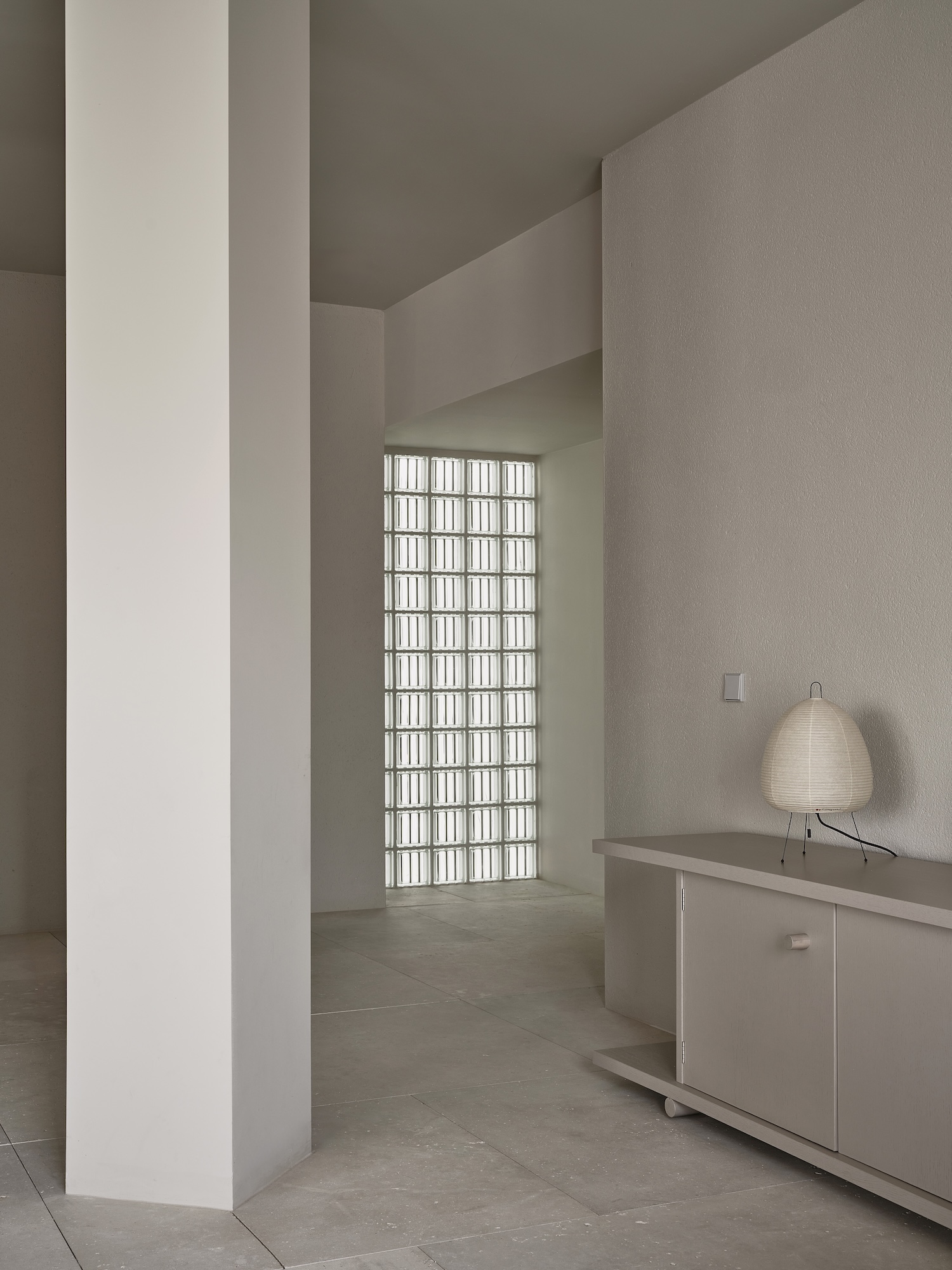
The hallway has long occupied an ambiguous position in domestic architecture – functional necessity rendered as afterthought. Here, it is reconsidered as a structural element with genuine spatial weight. The circulation spine widens at deliberate points, pressing toward adjacent rooms and drawing them into its volume. This thickening of the transitional zone recalls the sectional thinking of architects like Caruso St John, where in-between spaces are treated as architecturally productive rather than residual. Punctuating this sequence, glass block screens introduce filtered light at key intervals – a material choice that disrupts wall solidity without sacrificing enclosure, and one that carries quiet references to Luis Barragán’s use of translucent planes to modulate interior luminosity.
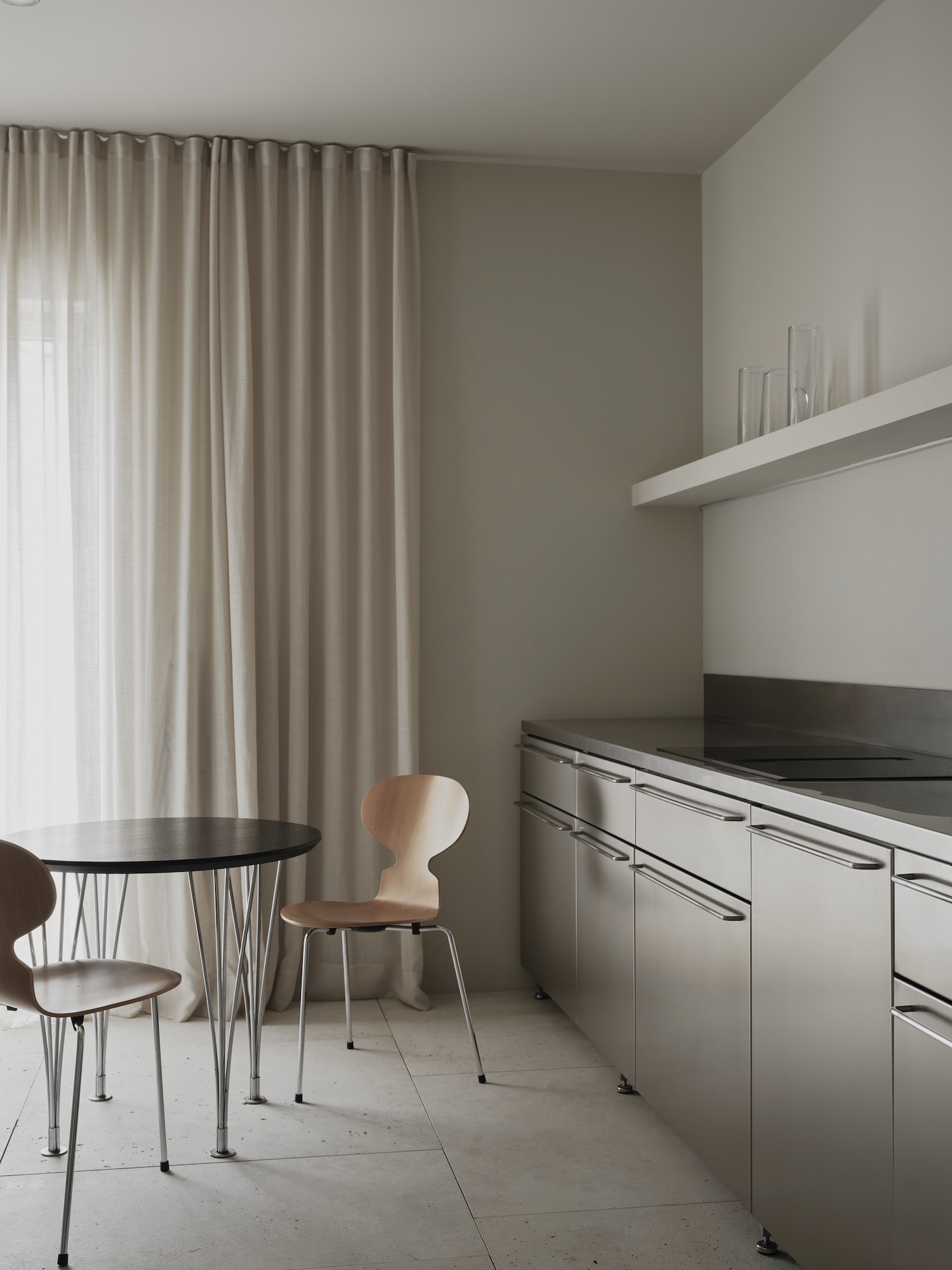
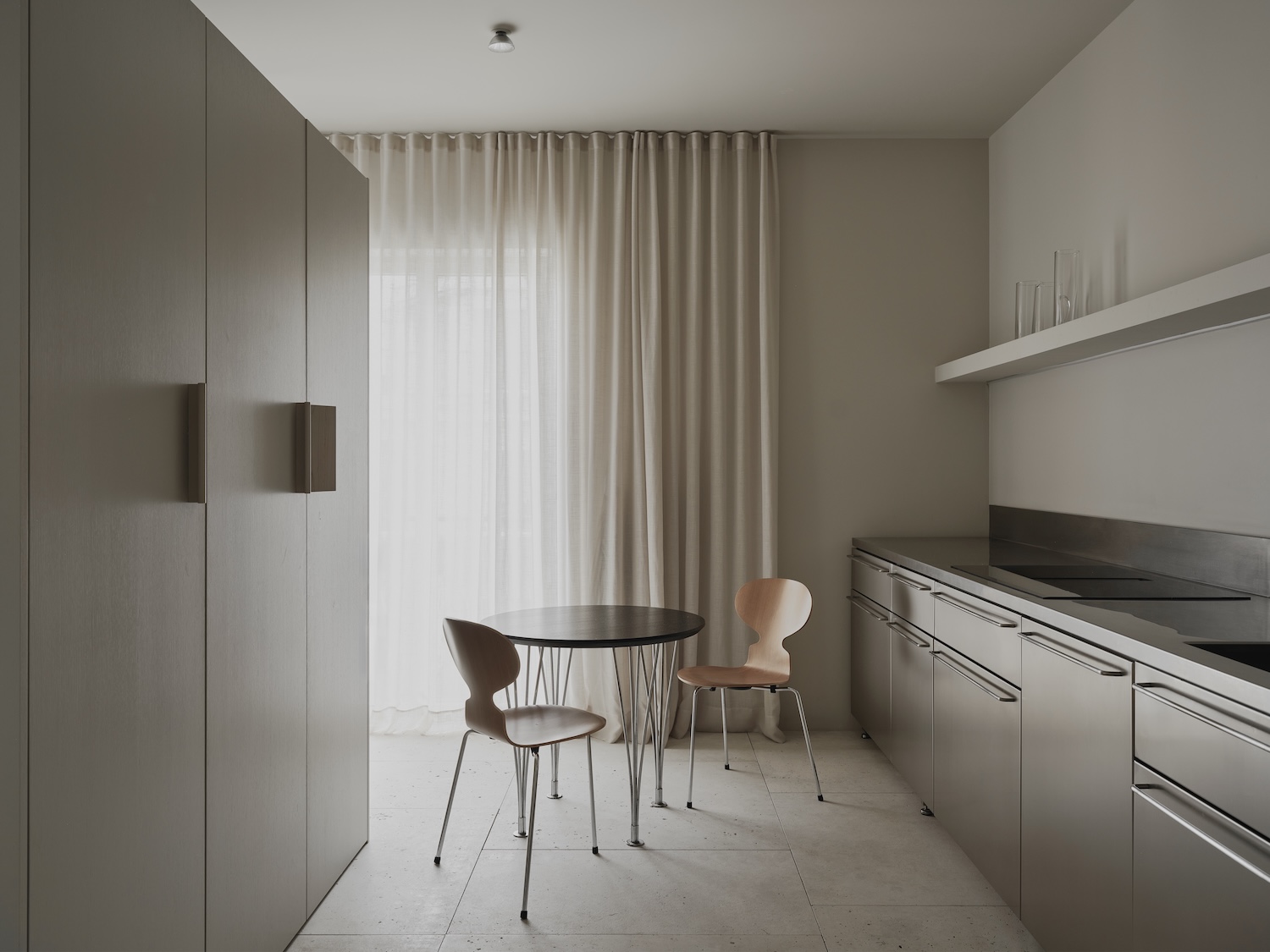
Sandblasted Campaspero stone – a pale limestone quarried in Castilla y León – unfolds across both flooring and vertical cladding as a single continuous plane. The sandblasting process opens the stone’s surface slightly, reducing its reflectivity and giving it a quality closer to fabric than mineral. At the seventh floor, where afternoon light arrives at low angles and with considerable intensity, this surface behavior becomes the project’s primary atmospheric instrument. The stone absorbs and redistributes light rather than bouncing it, producing an interior warmth that shifts perceptibly through the day and reaches a particular density toward evening.
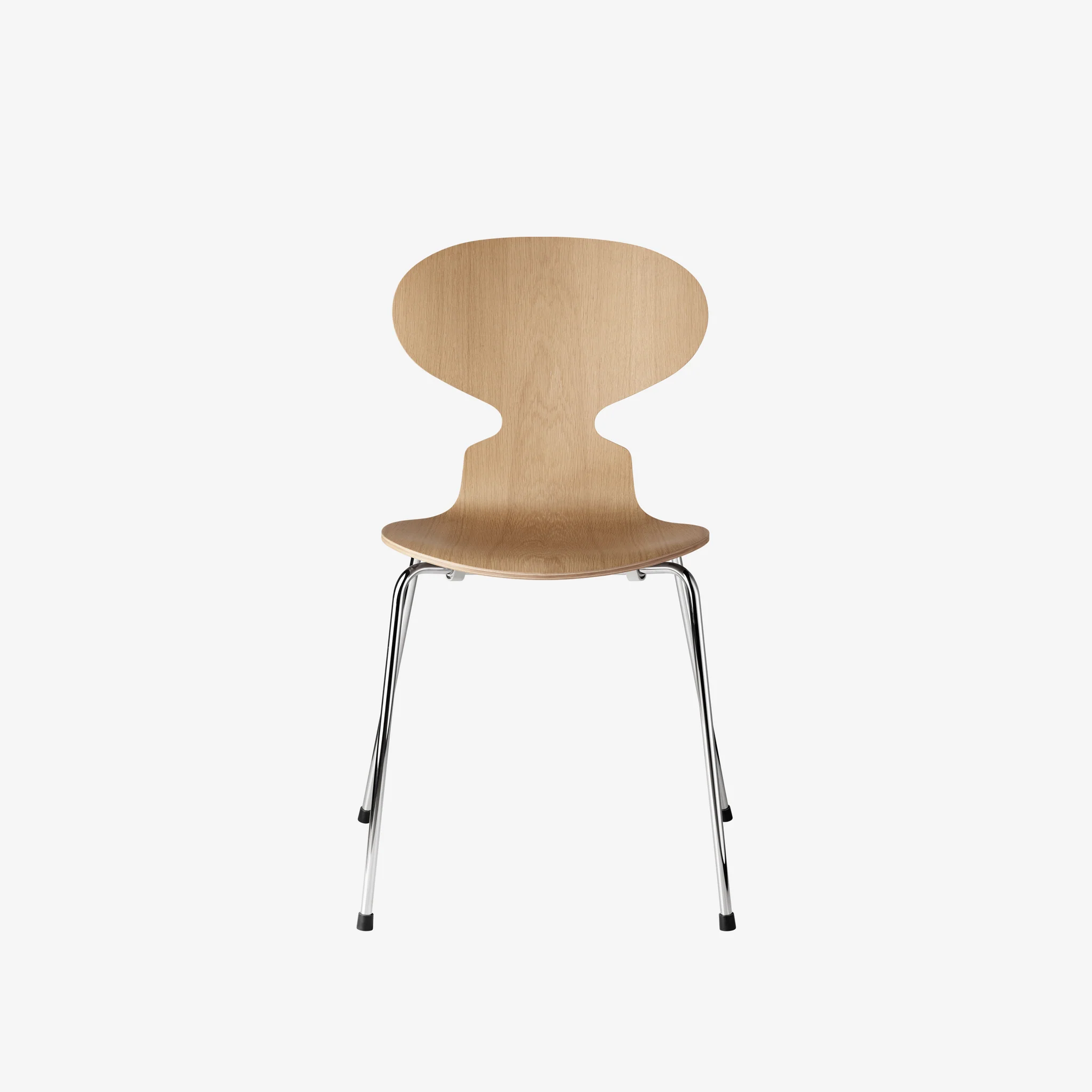
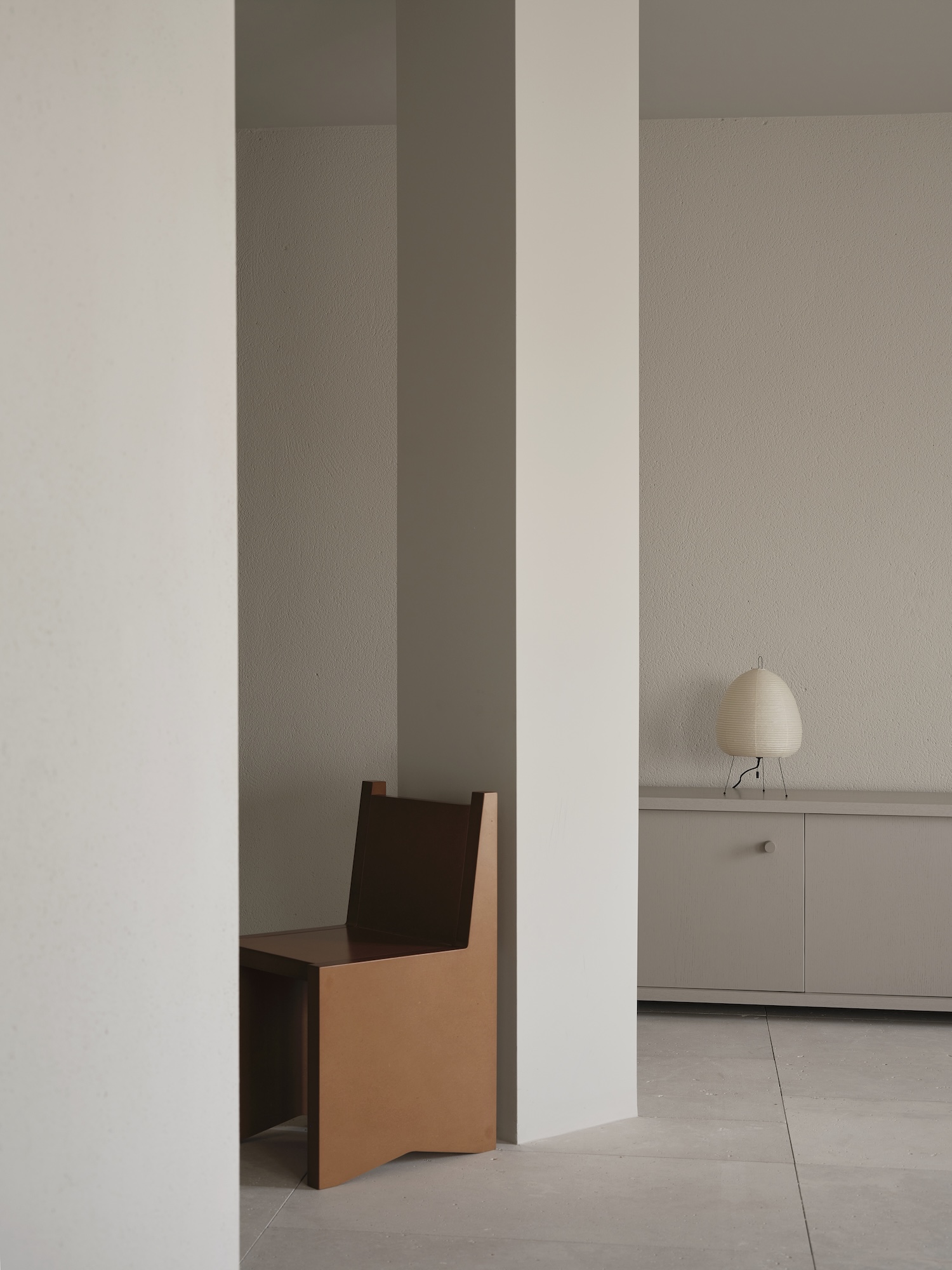
Fritz Hansen’s Ant chairs and Fjordfiesta’s Scandia chair – both mid-century Scandinavian pieces defined by their economy of form – sit alongside the Akari lamp, Isamu Noguchi’s meditation on light as object. Technical and decorative lighting by Álvaro Siza reinforces a curatorial sensibility that favors work where the object recedes in favor of its effect. Ortega Diago’s own Tarugo Chair, integrated into the ensemble, demonstrates a consistent design language between the studio’s architectural thinking and its furniture practice – a coherence that gives the interior a sense of authorship without tipping into self-referential excess.