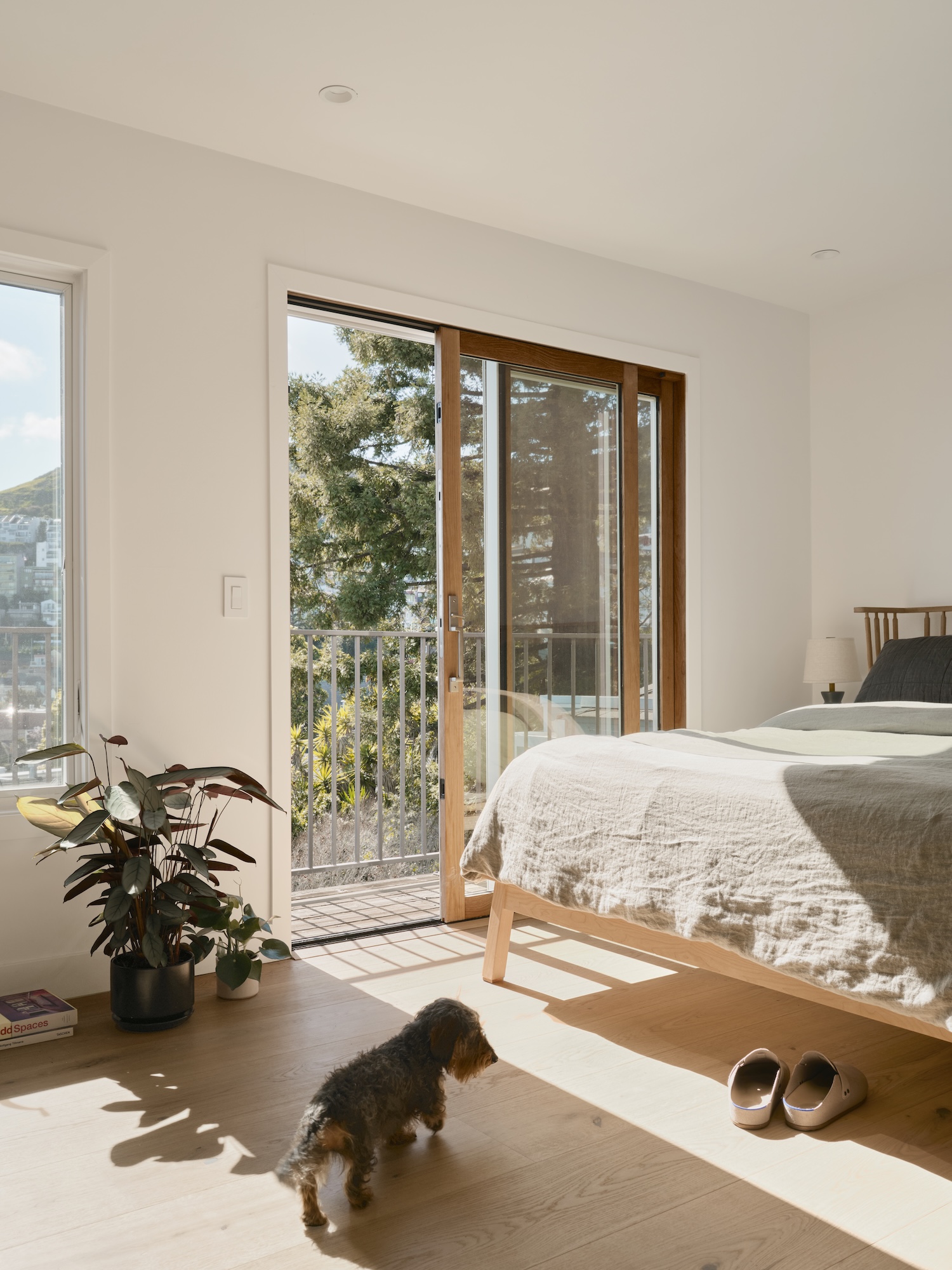
Home for an Art Director is a minimalist residential renovation located in San Francisco, United States, designed by Figure. The most compelling tension in this Corona Heights penthouse is not spatial but philosophical – how do you renovate a home for someone whose profession is the cultivation of visual experience? The answer Figure arrived at with their client draws directly from Kettle’s Yard, Jim Ede’s Cambridge house-turned-gallery, where art and domestic life were never treated as separate categories. That reference does considerable work here. It shifts the project’s ambition away from mere interior refinement toward something more structural: the reordering of a home so that living within it becomes an act of sustained looking.
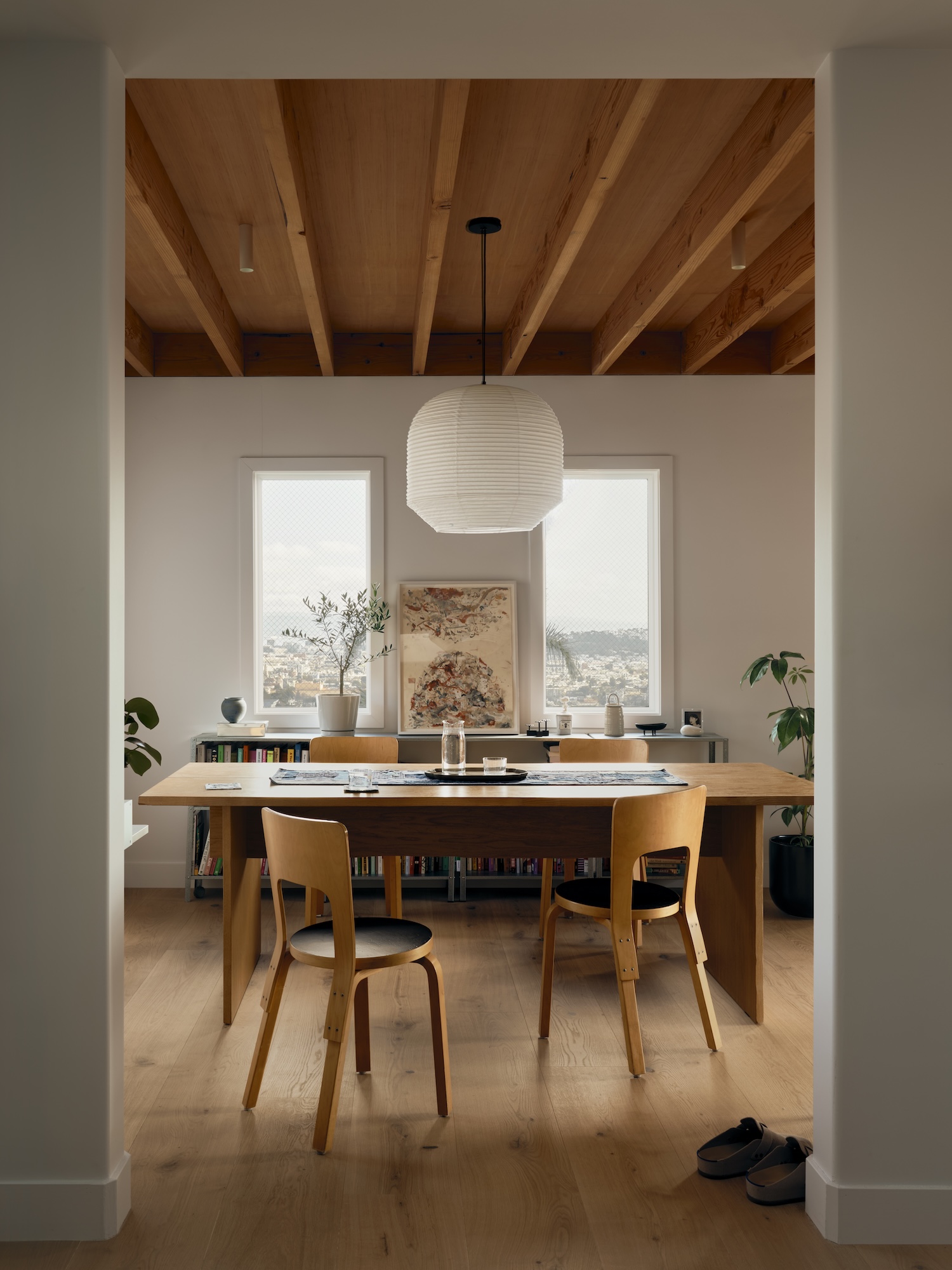
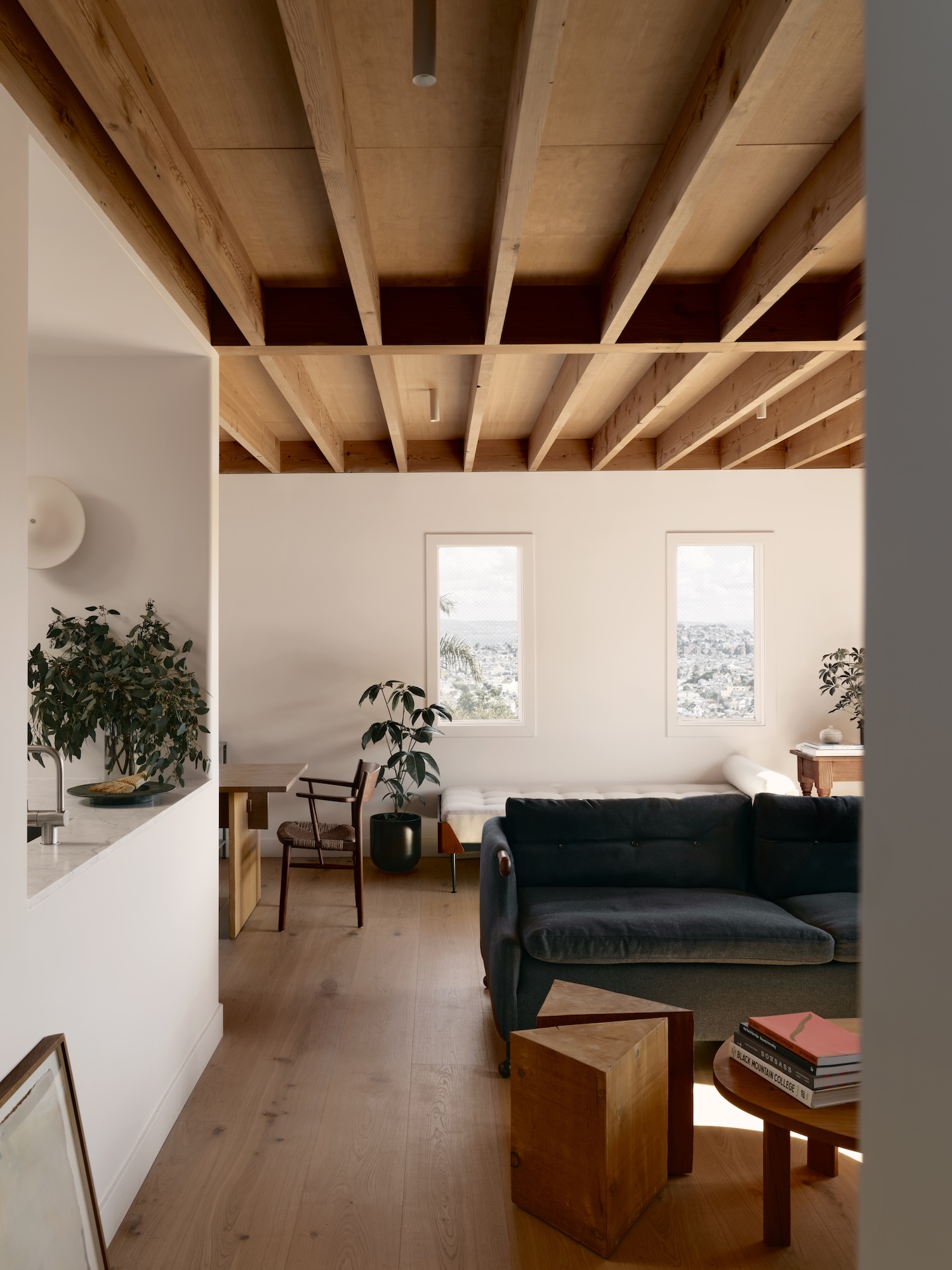
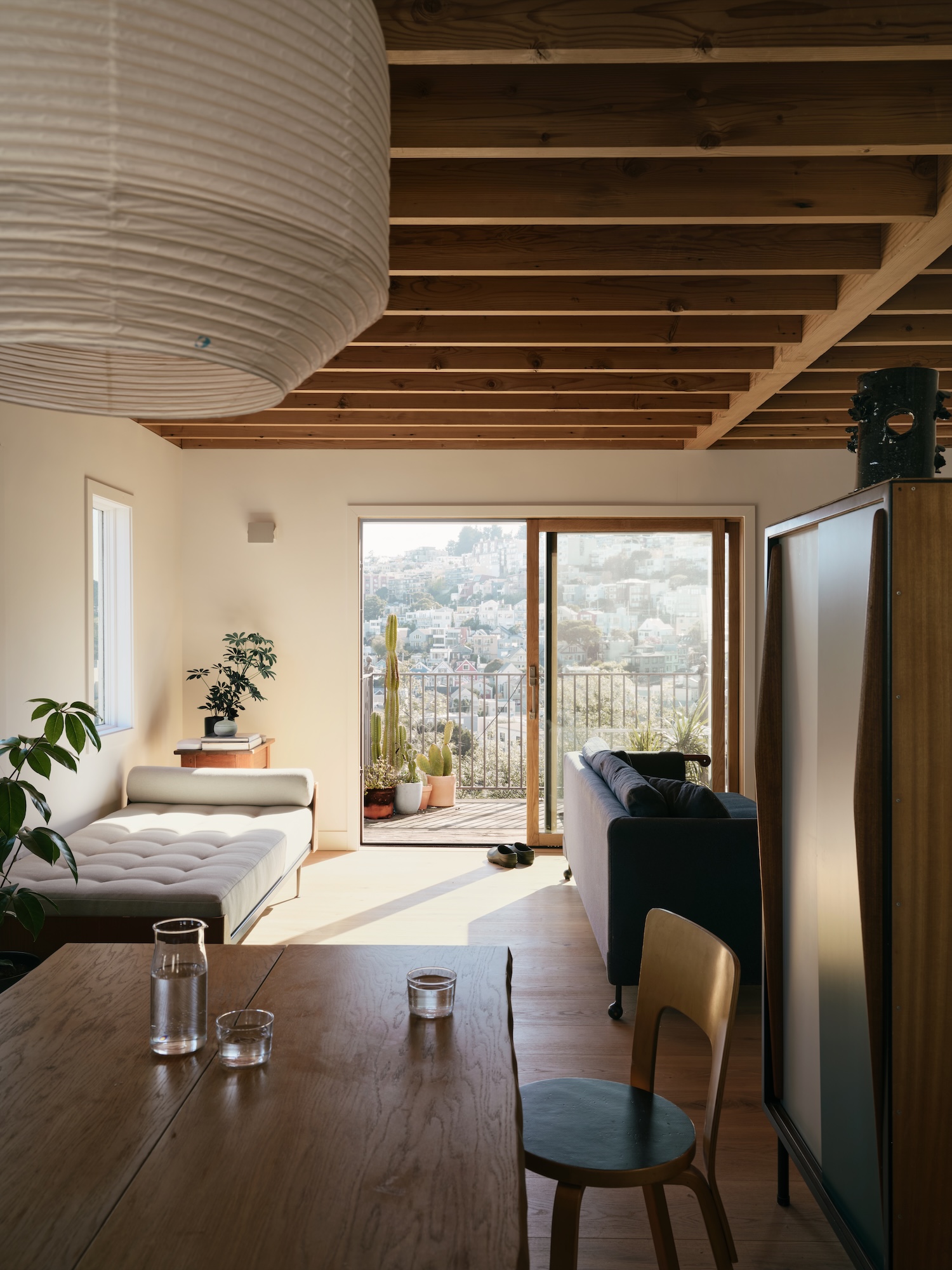
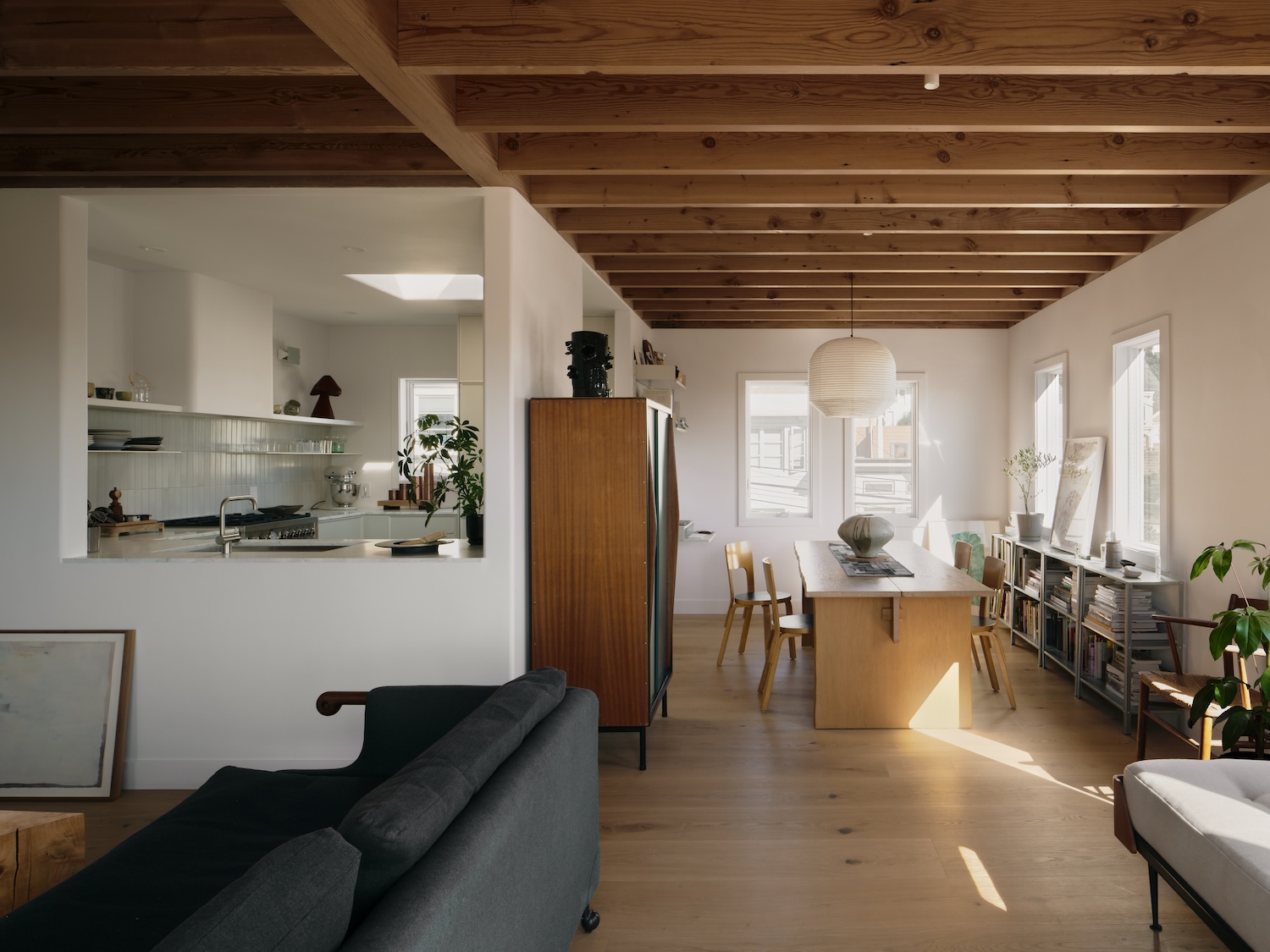
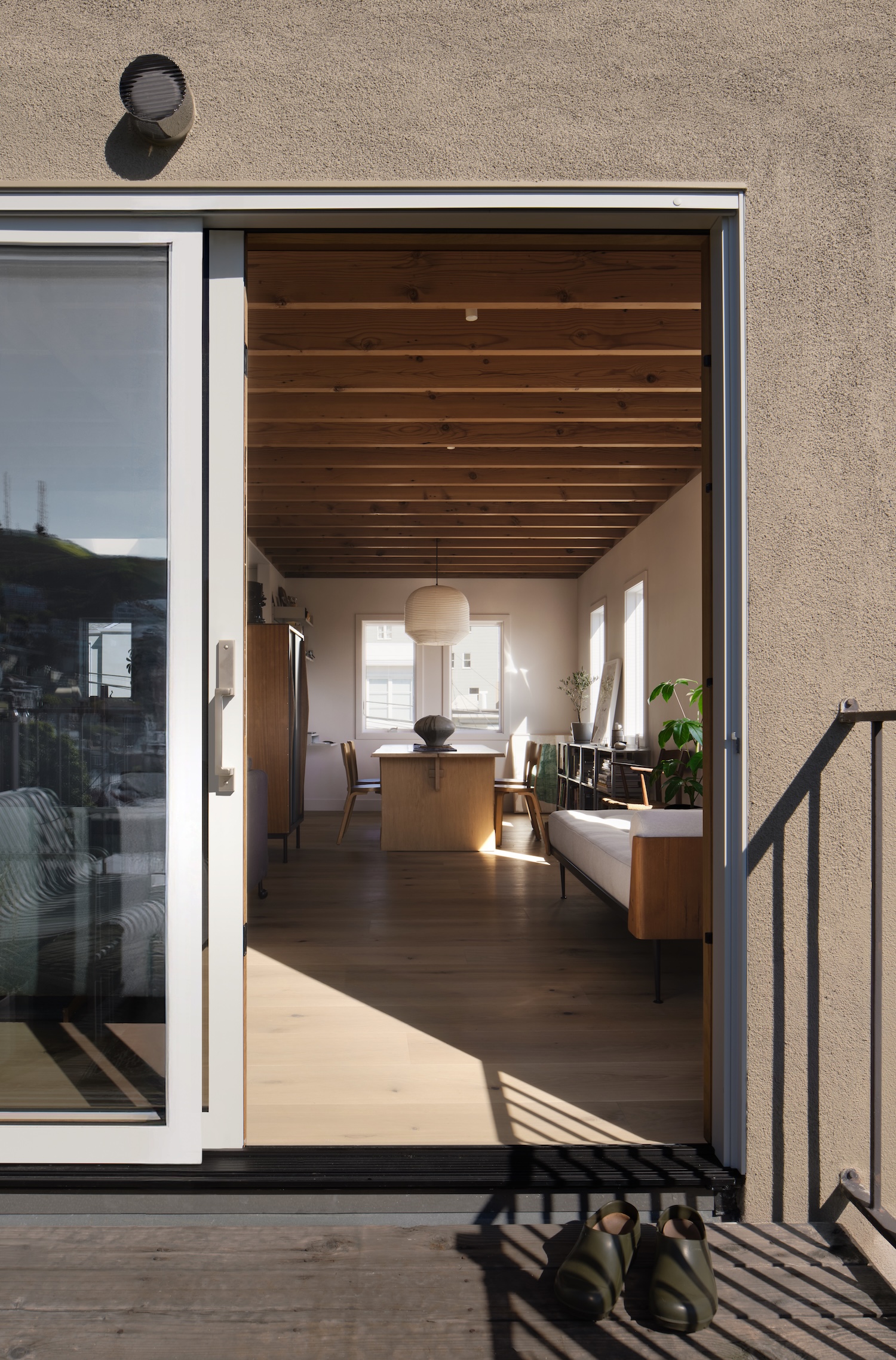
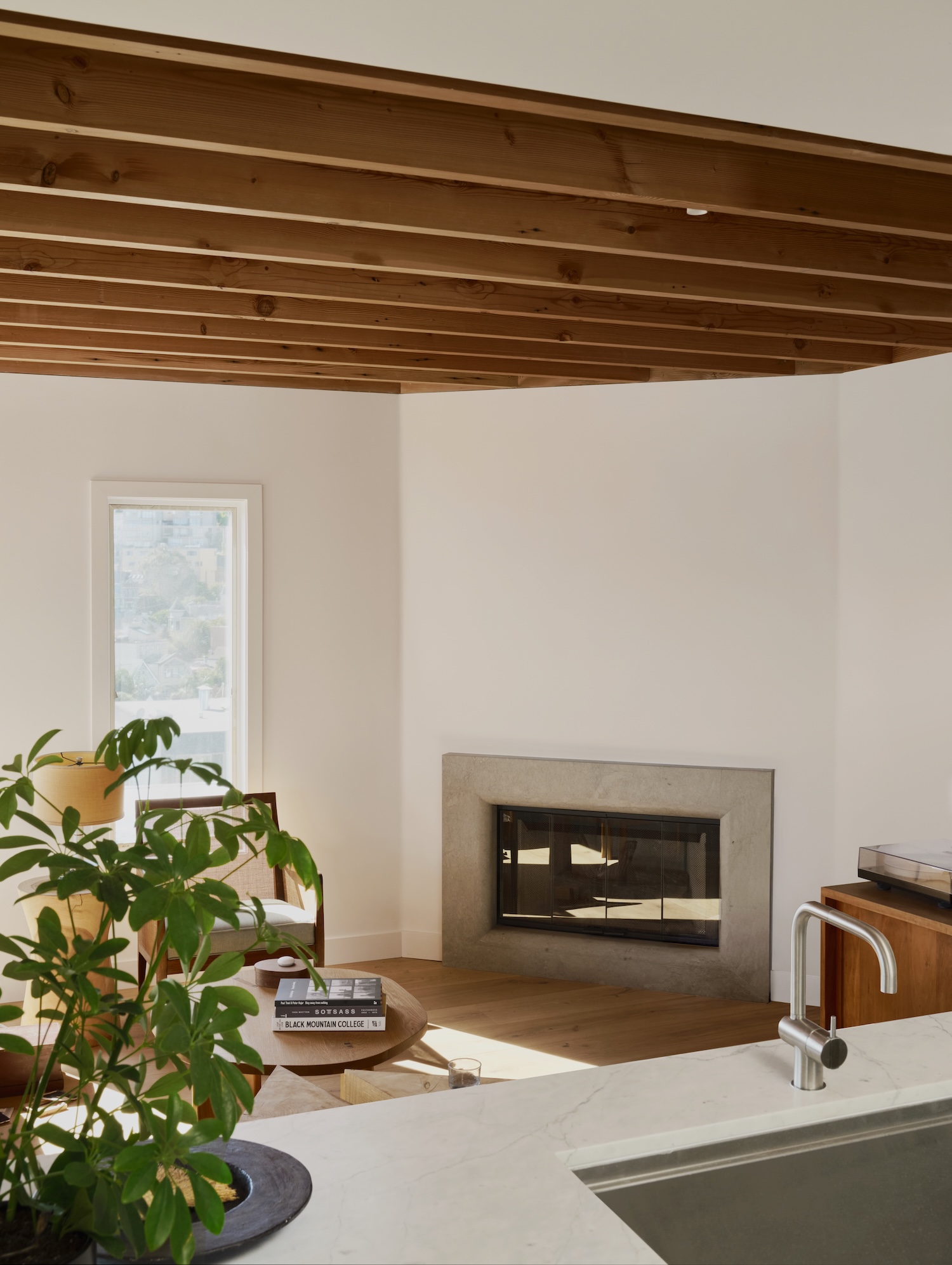
The most structurally significant intervention was the removal of the original low painted drywall ceiling, replaced with locally sourced reclaimed douglas fir joists left exposed and capped with riftsawn douglas fir plywood. Because the reclaimed beams were milled from old growth timber, they carry a notably tighter grain than contemporary lumber – the wood reads as both material and record, its density a visible index of age. The ceiling does not merely raise the room; it recontextualizes everything beneath it, giving the white plaster walls and wide-plank European oak floor from Madera a warm chromatic anchor against which the owner’s collection of objects can register with clarity.
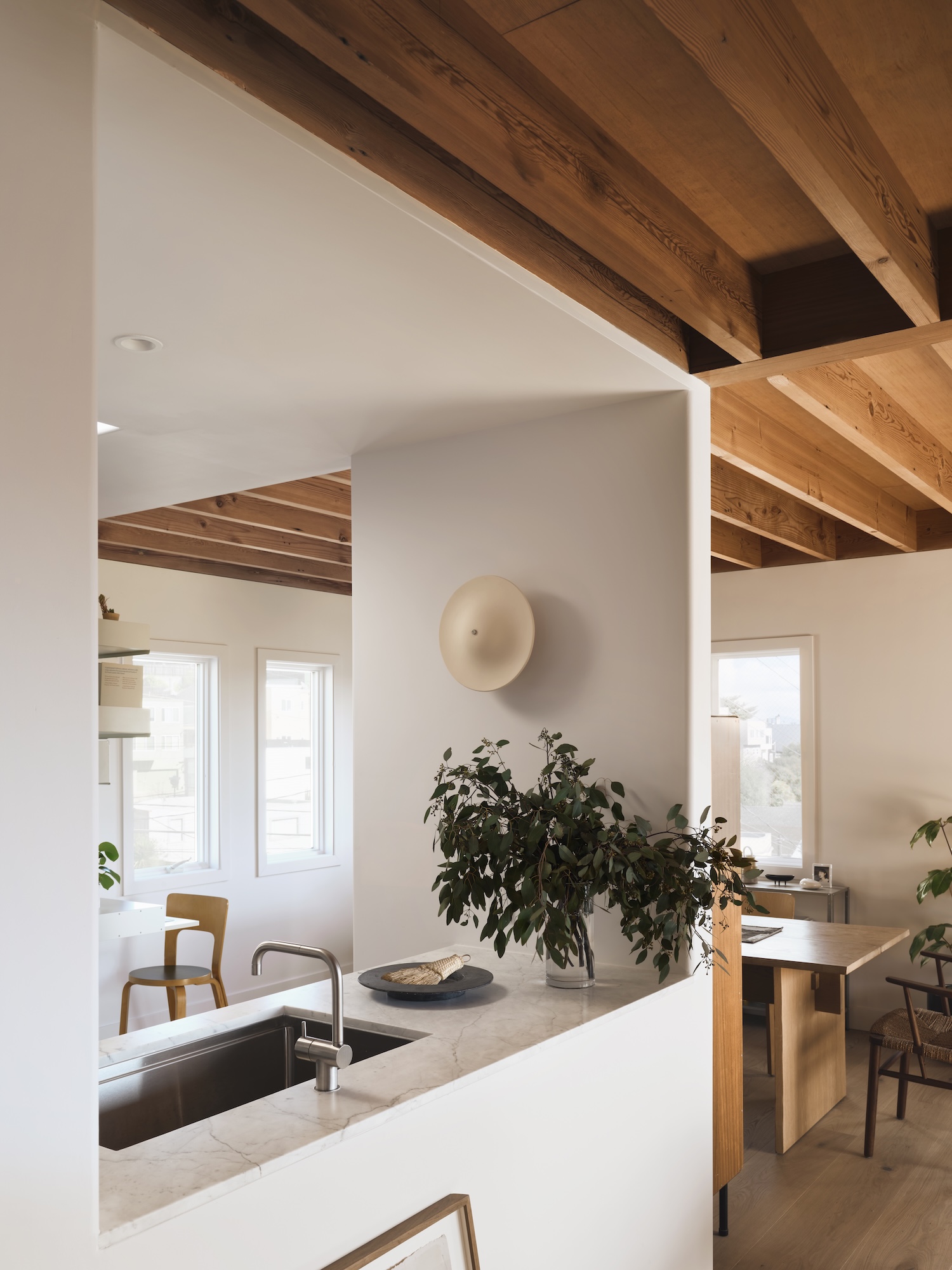
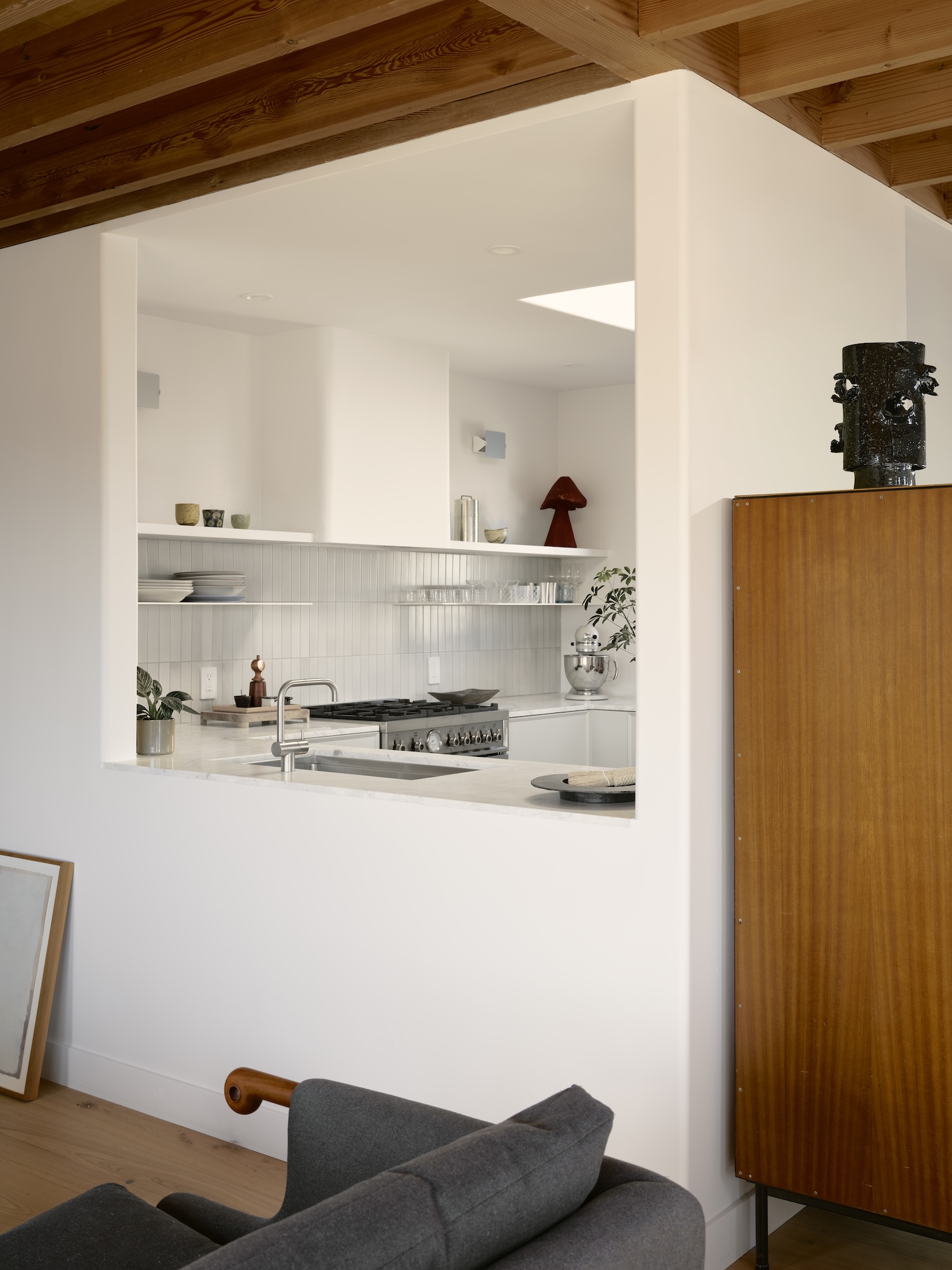
With the new wooden ceiling wrapping the living and dining space, the kitchen becomes a room within a room – a jewel box set apart by lowered walls and enlarged openings. The refresh included Reform Kitchen Cabinets, Bertazzoni and Fisher and Paykel appliances, Vola fixtures, Heath tile backsplash, and decorative sconces by Charlotte Perriand and InCommon. The kitchen’s self-containment is not about isolation but calibration – it recedes just enough to allow the collection-laden living spaces to hold primary visual authority.
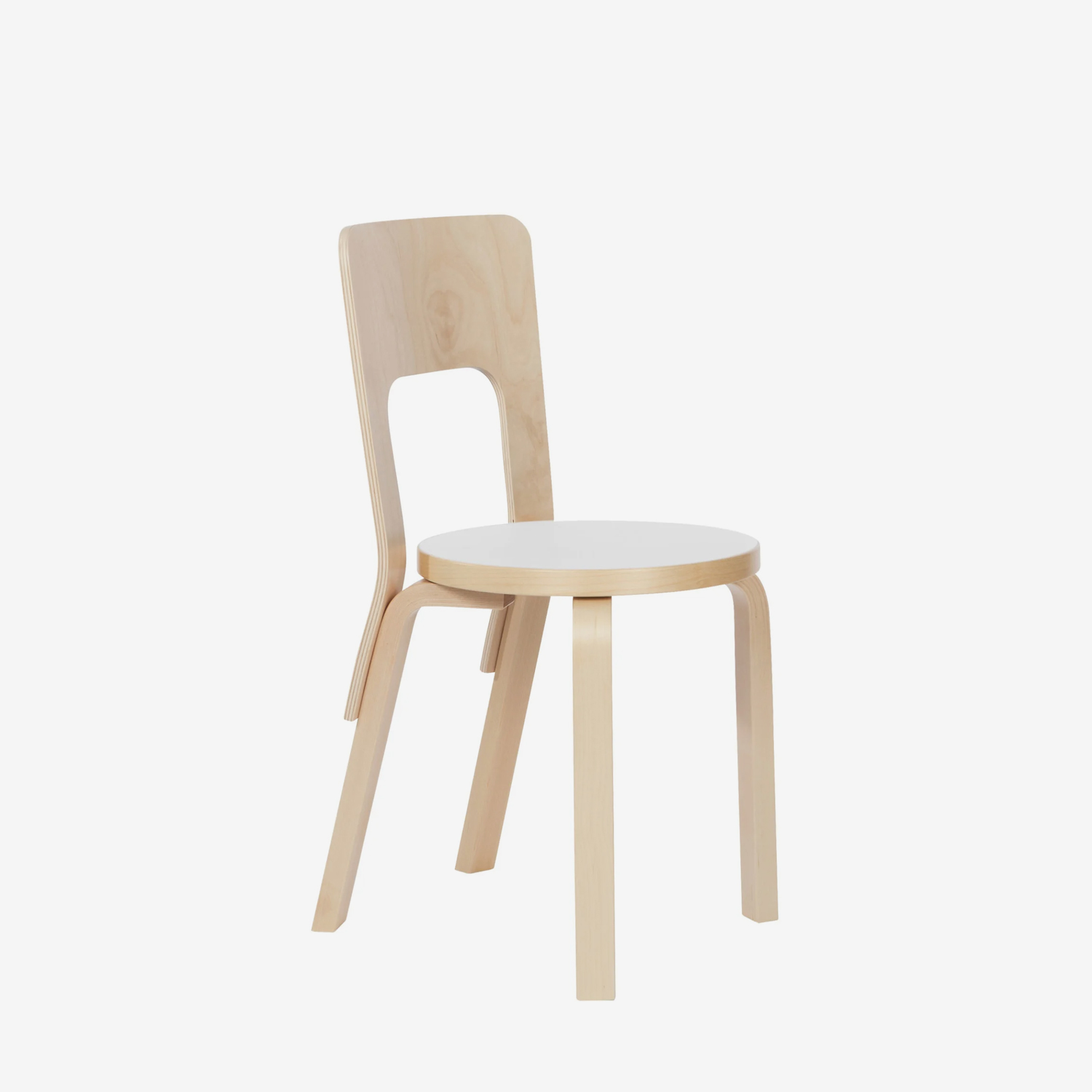
The owner’s furniture collection spans Alvar Aalto’s Chair 66, a freestanding cabinet by Willy Vander Meeren, an accent chair by Borge Mogensen, a Friso Kramer daybed, a BDDW Abel sofa, an Akron Street coffee table, a Studioisle Companions bed, and triangular stools by a local woodworker. Against this warmth of wood, metal, ceramic, and stone pieces create deliberate contrast – a Trevor Goosen ceramic sculpture, Vitsoe metal shelves, and a custom granite fireplace surround fabricated by Fox Marble. The collection reads less as accumulation than as an argument about material relationships, one the architecture supports without overwhelming.