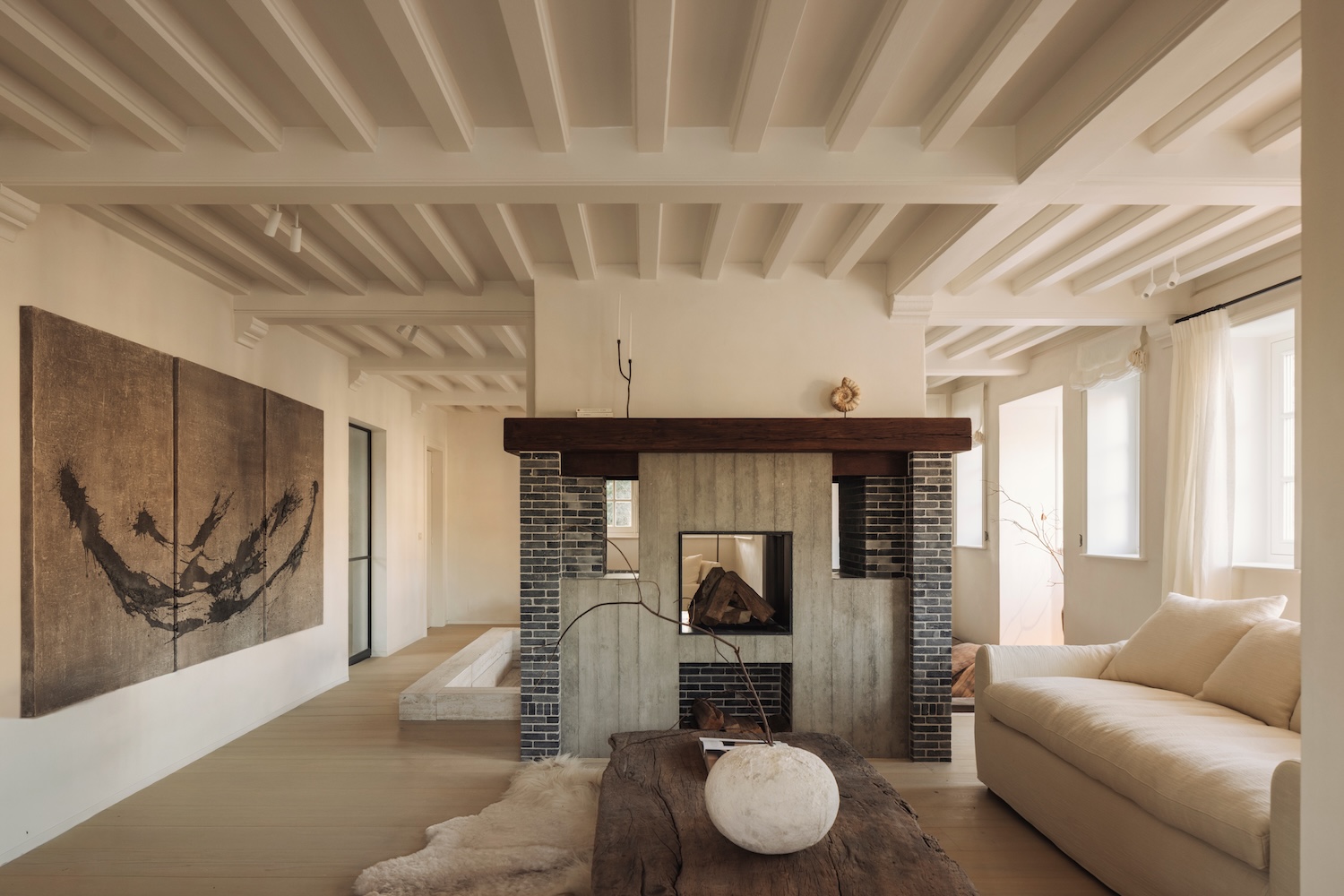
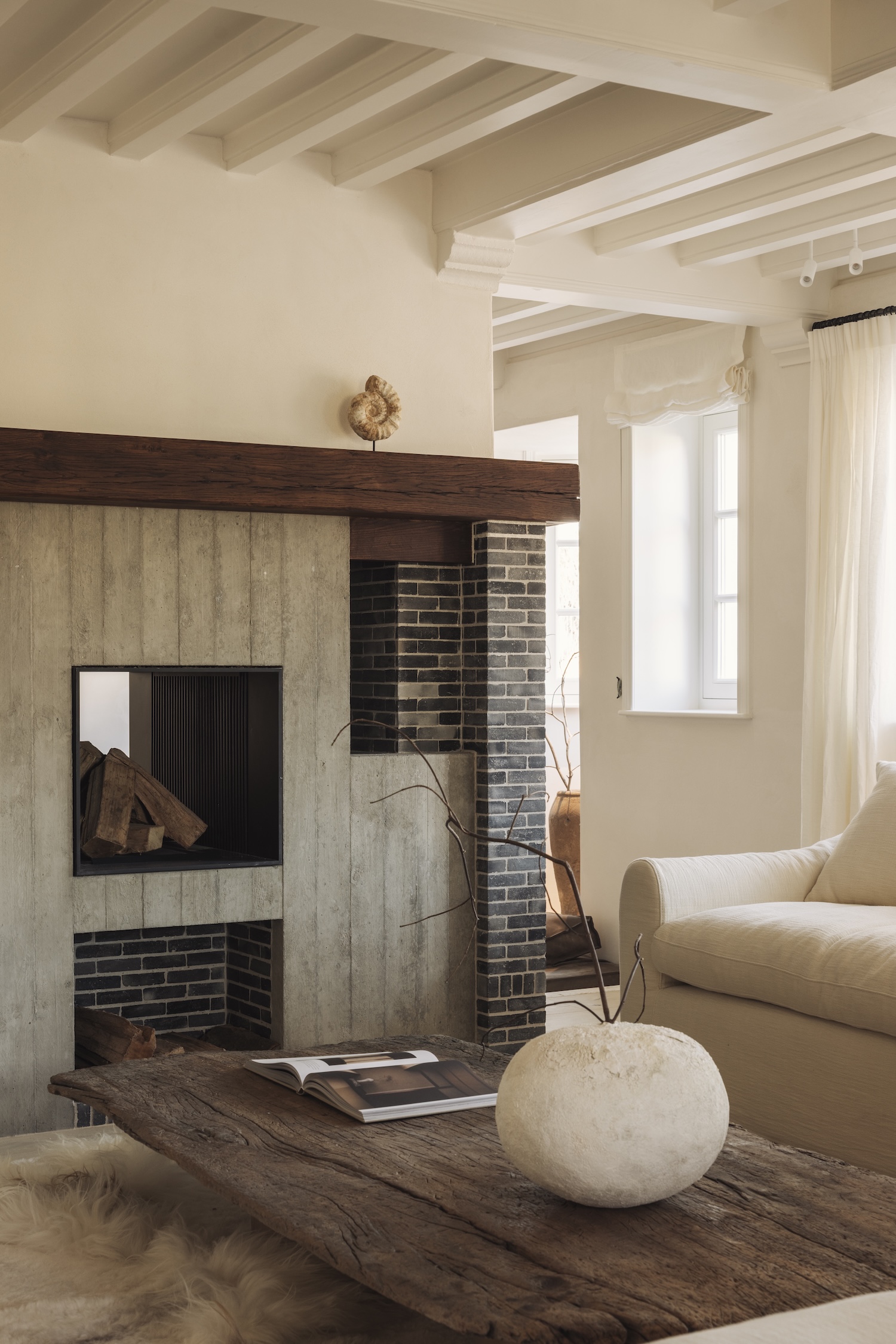
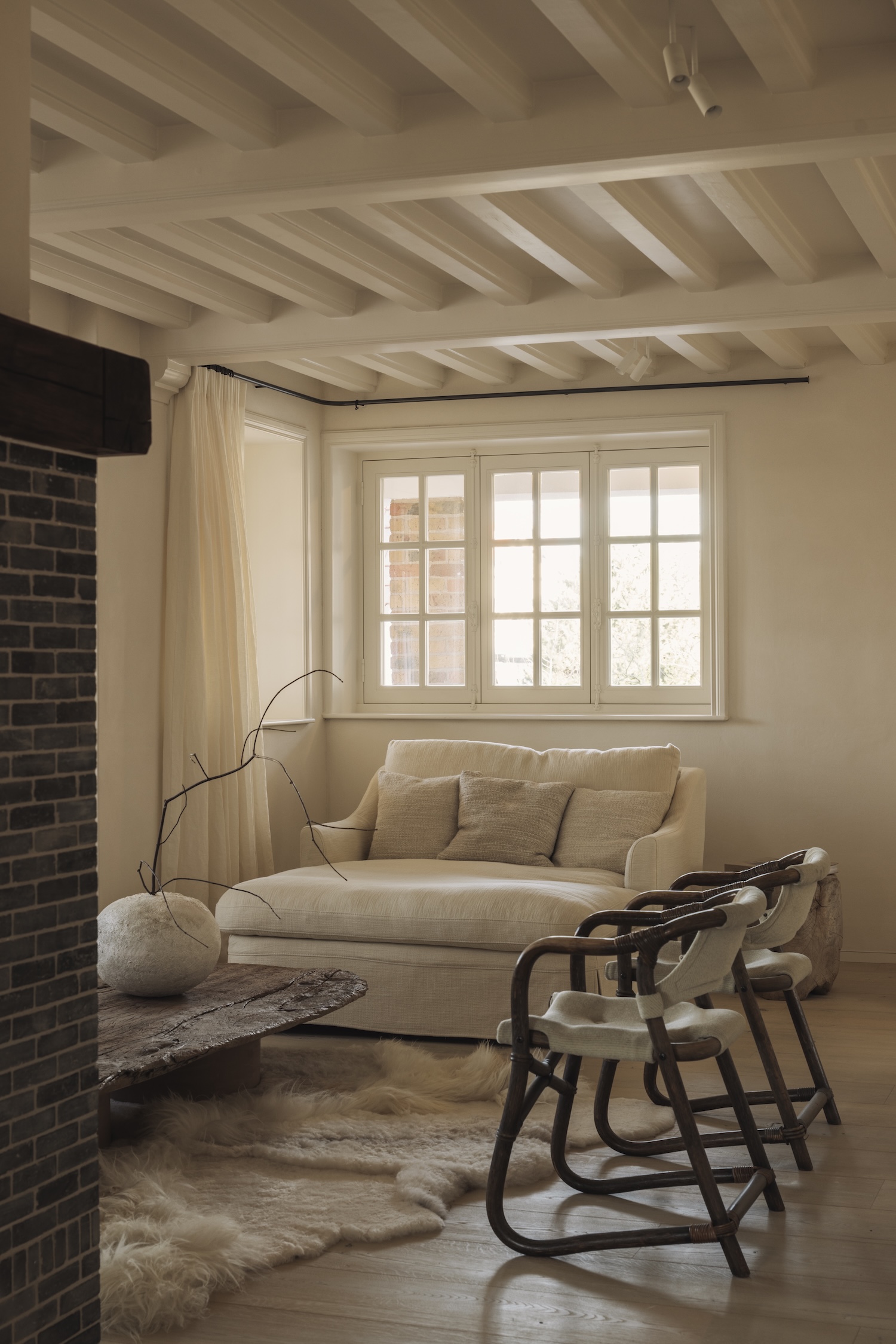
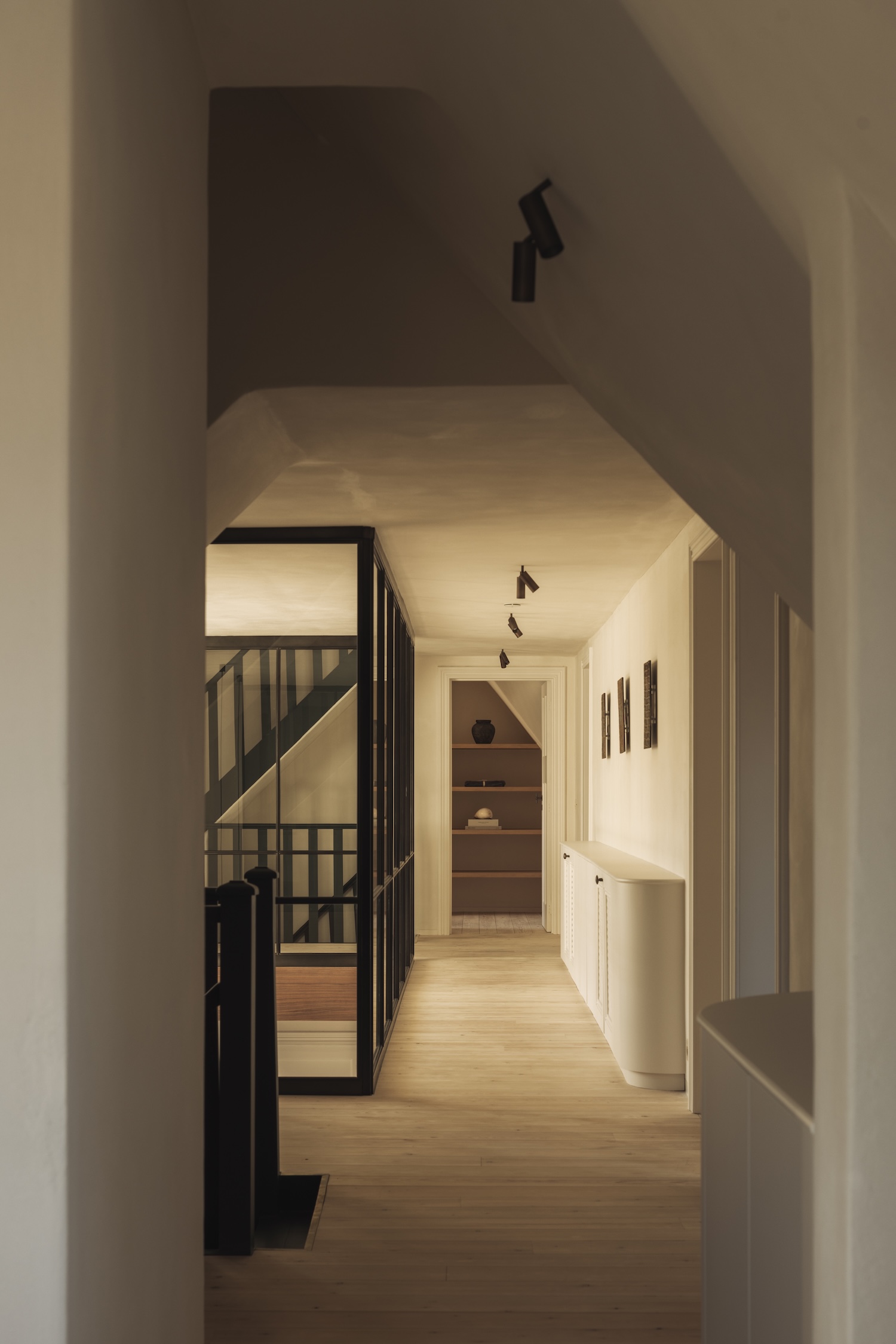
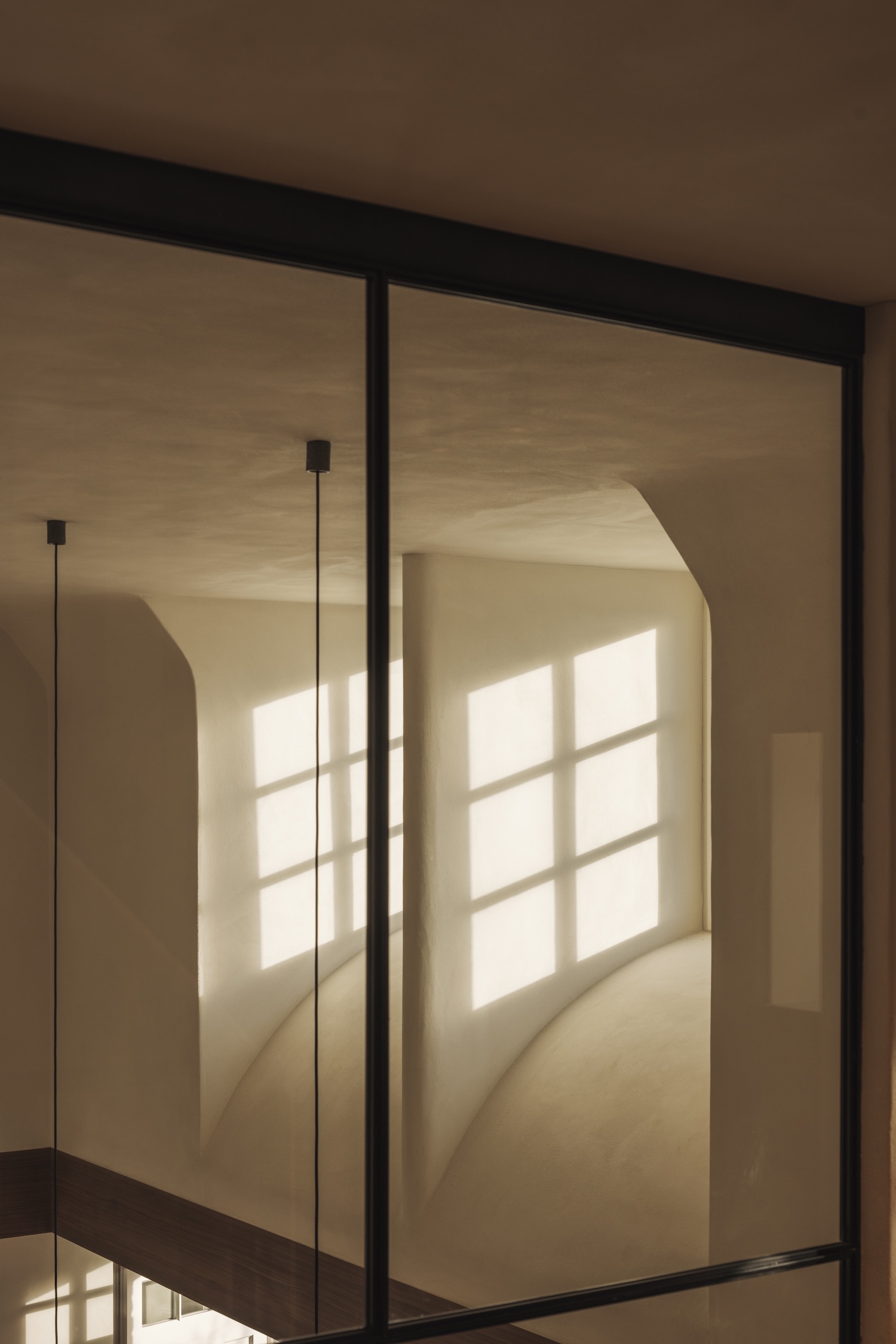
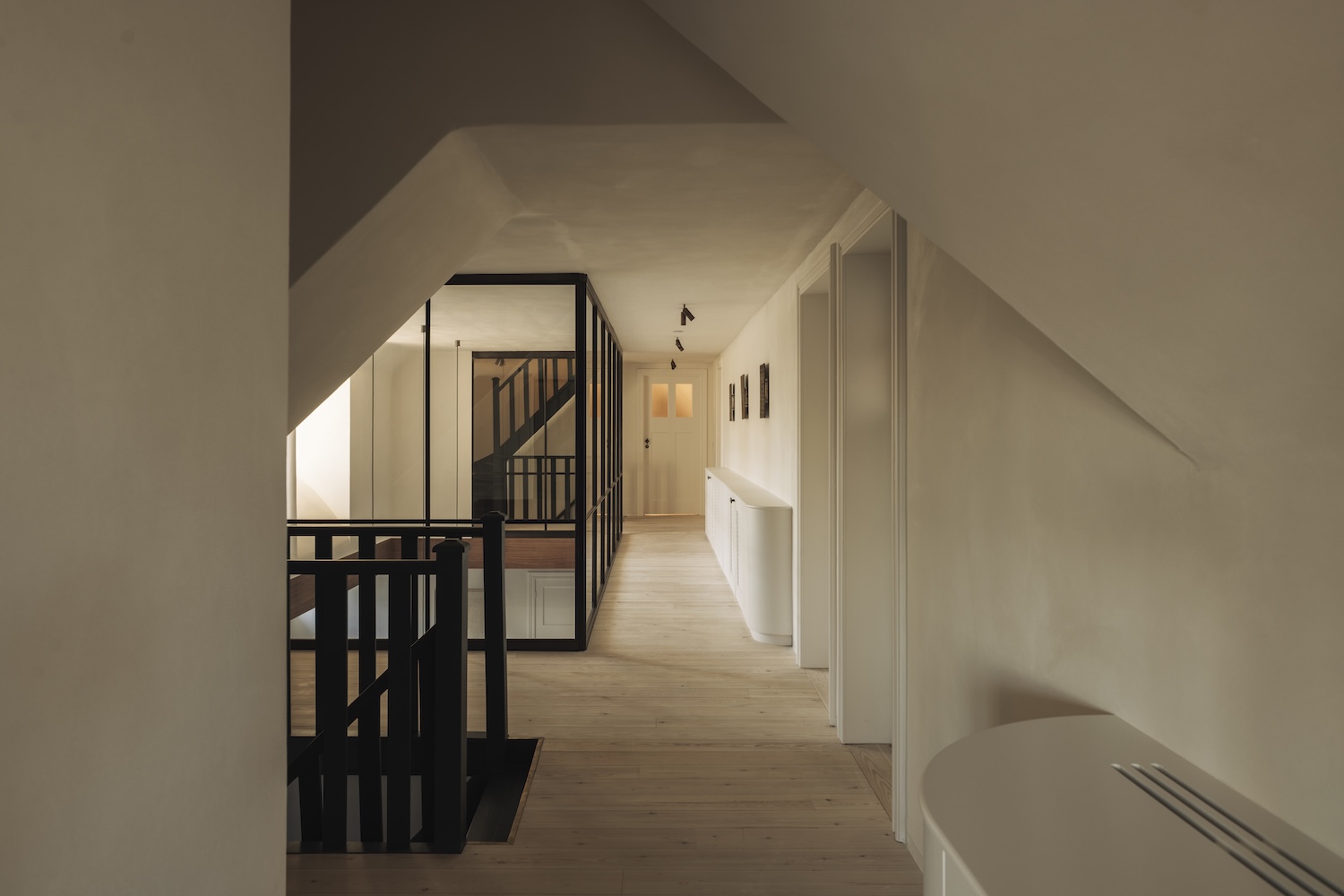
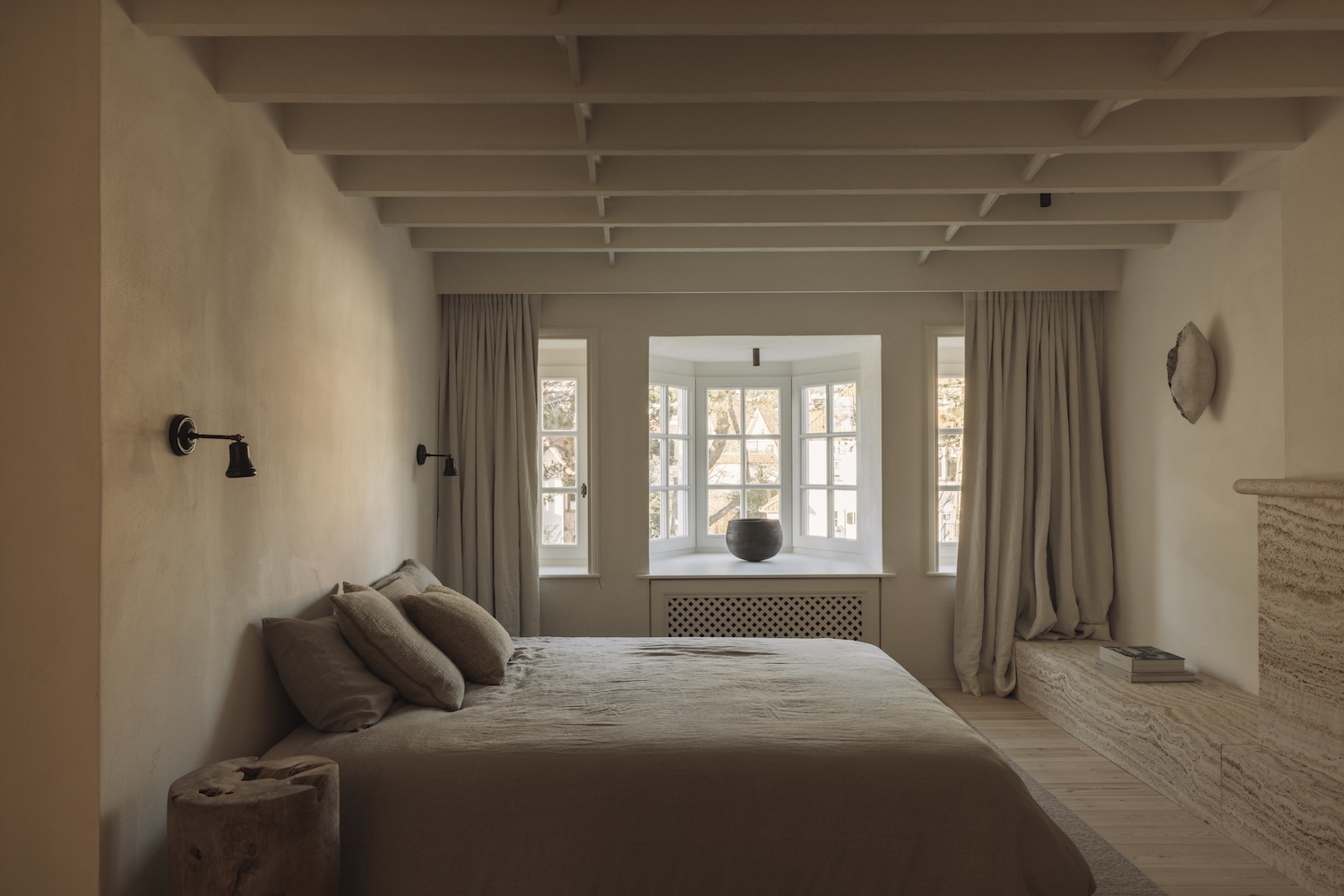
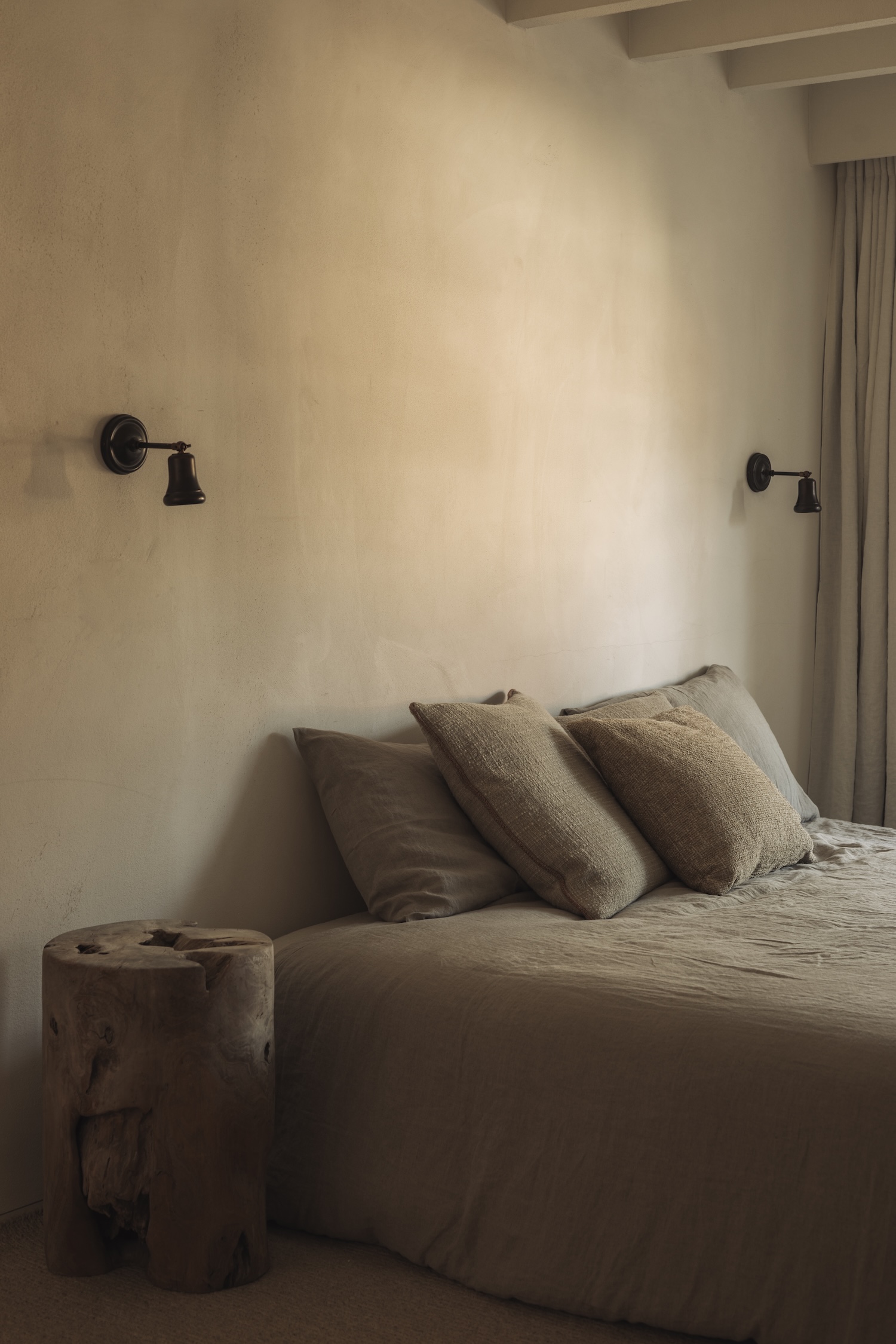
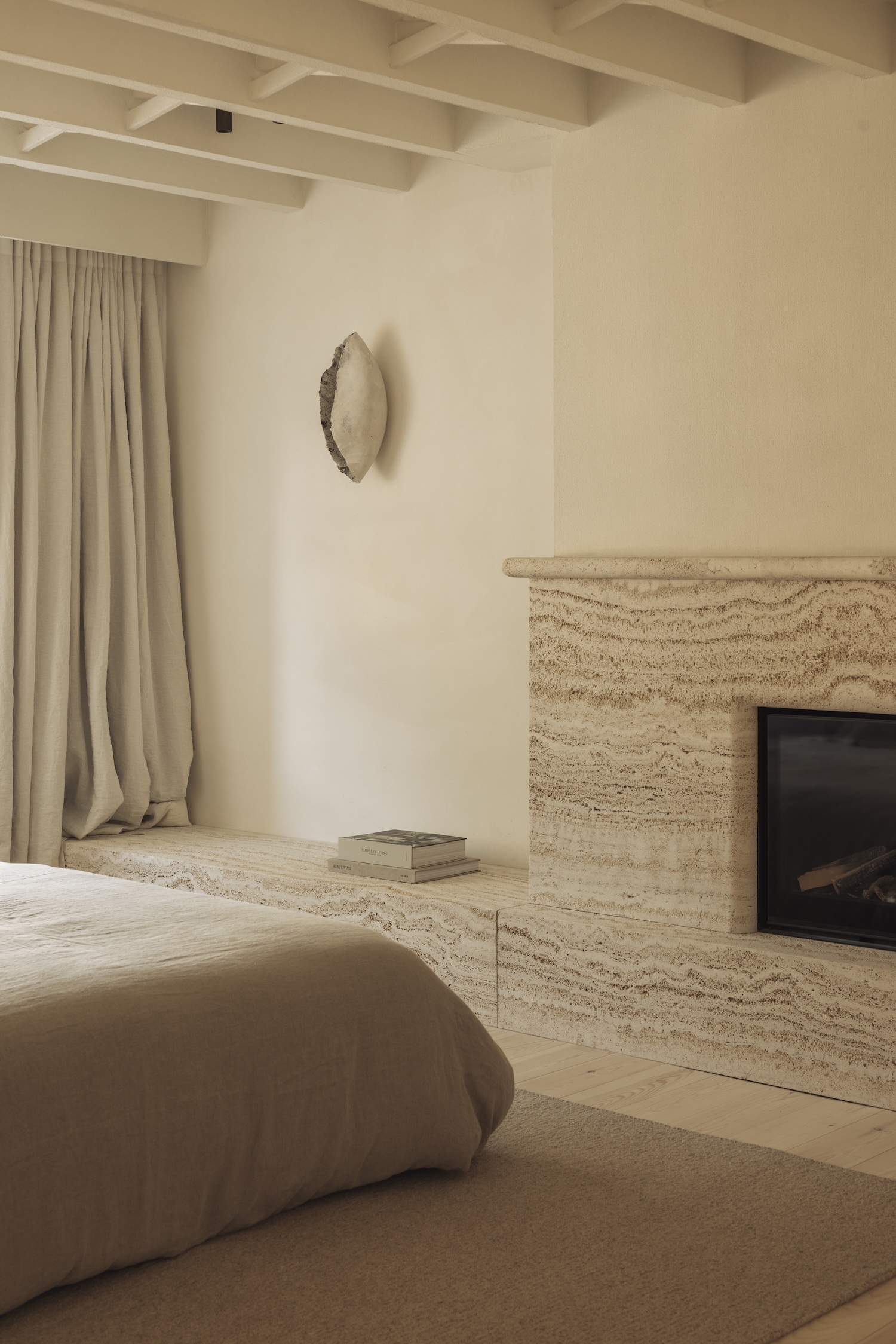
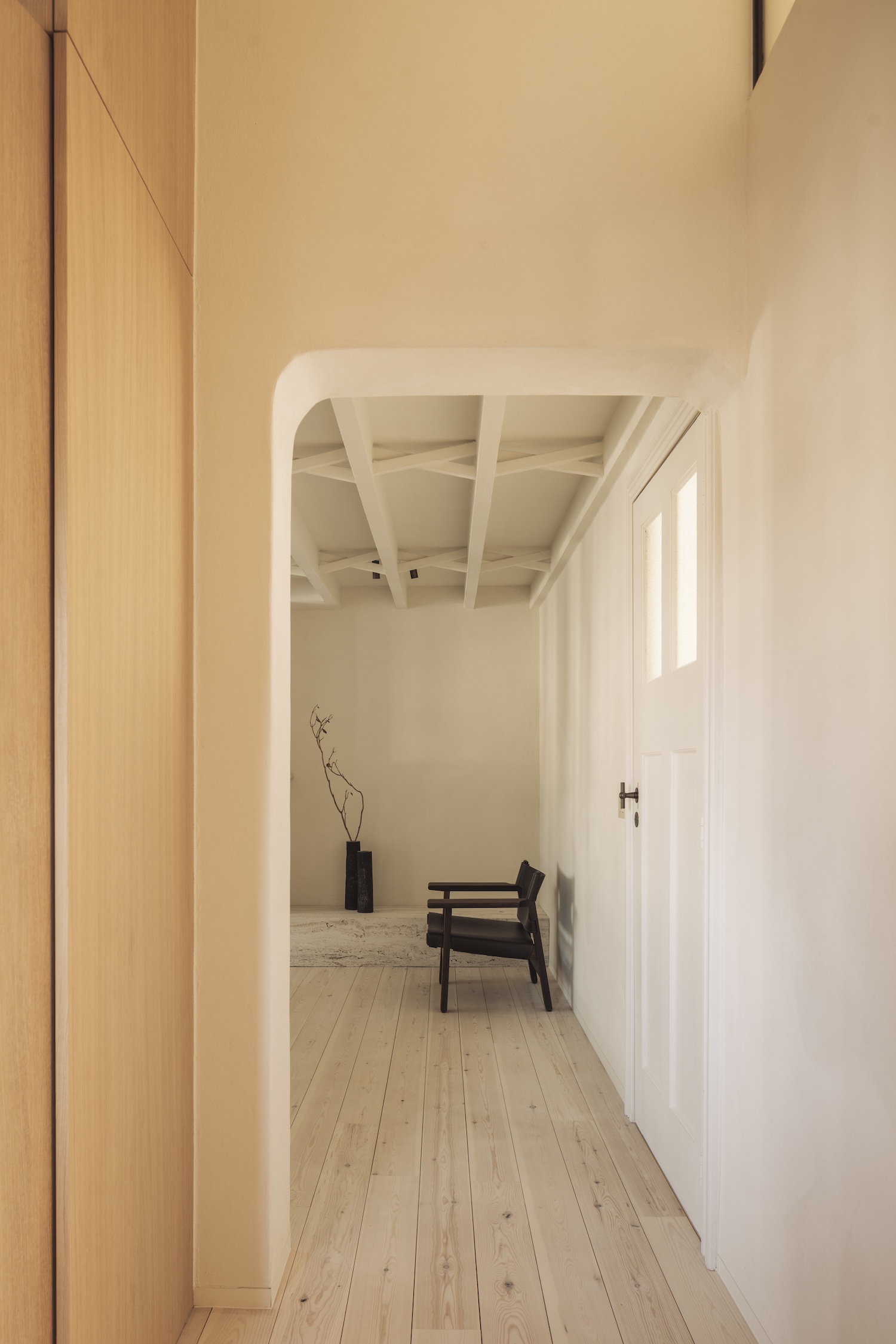
Villa Sous Tous Vent is a minimalist residence located in Knokke, Belgium, designed by Maison Osaïn. Built in 1926 by Ghent architect Valentin Vaerwyck and occupied for decades by the painter Albert Saverys, the listed villa stands in Le Zoute a short walk from the North Sea, facing one of the town’s largest parks. Maison Osaïn has taken on its complete renovation alongside landscape designer Piet Oudolf and the Volterra-based curatorial platform KALPA.
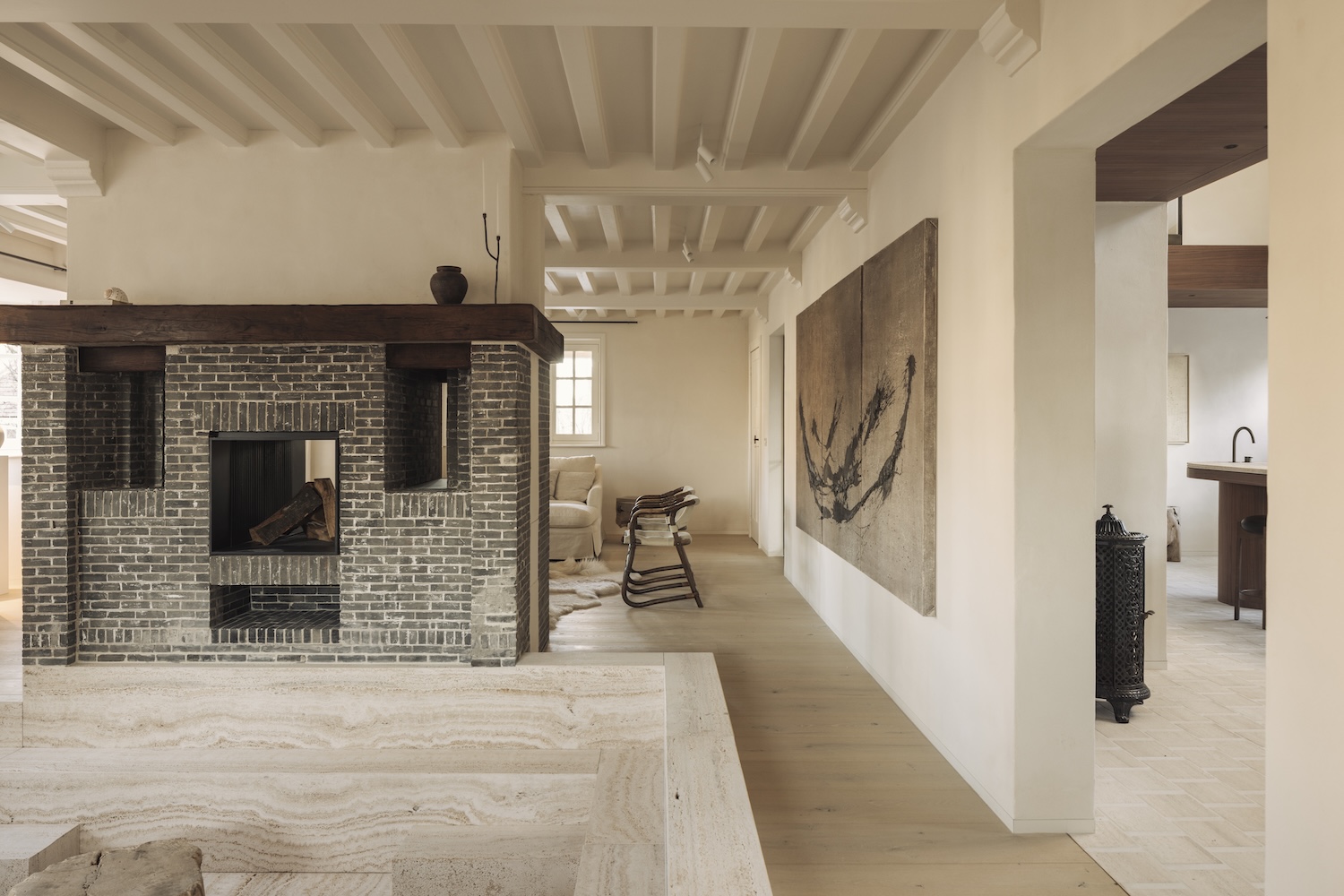
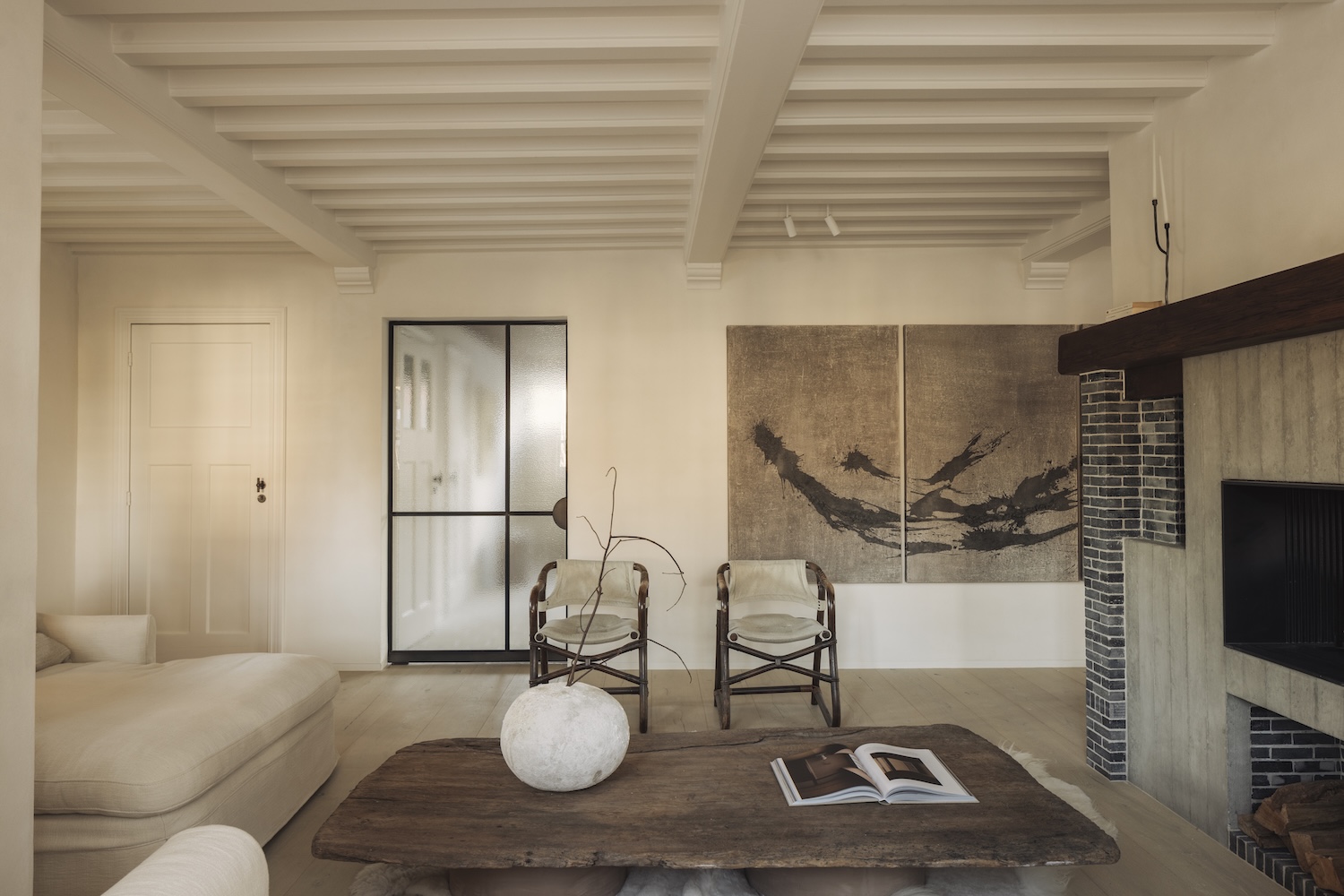
Vaerwyck worked in the regionalist idiom that dominated Flemish building between the wars, the same sensibility behind his Flemish Village pavilion at the 1913 Ghent World’s Fair, where vernacular brick, steep roof pitches, and hand-scaled detailing were deployed as a corrective to industrial uniformity. Saverys, a member of the second Latem group and a painter of the Leie landscape in broad, high-keyed strokes, brought a different discipline to the house. Both histories set a real constraint on the renovation, since a protected structure of this type resists the open plan almost by construction, its load-bearing masonry organized around compartmentalized rooms and modest apertures.
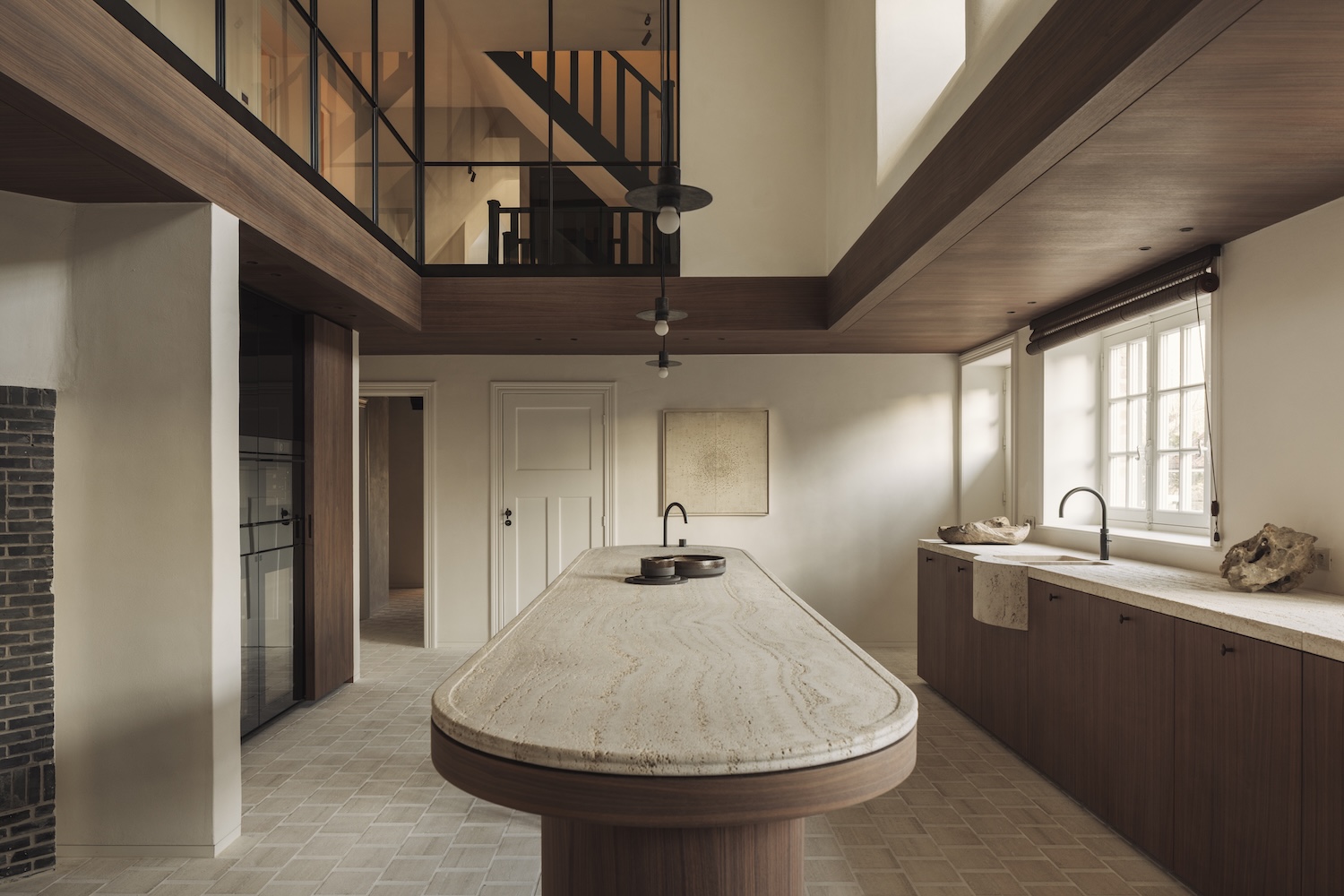
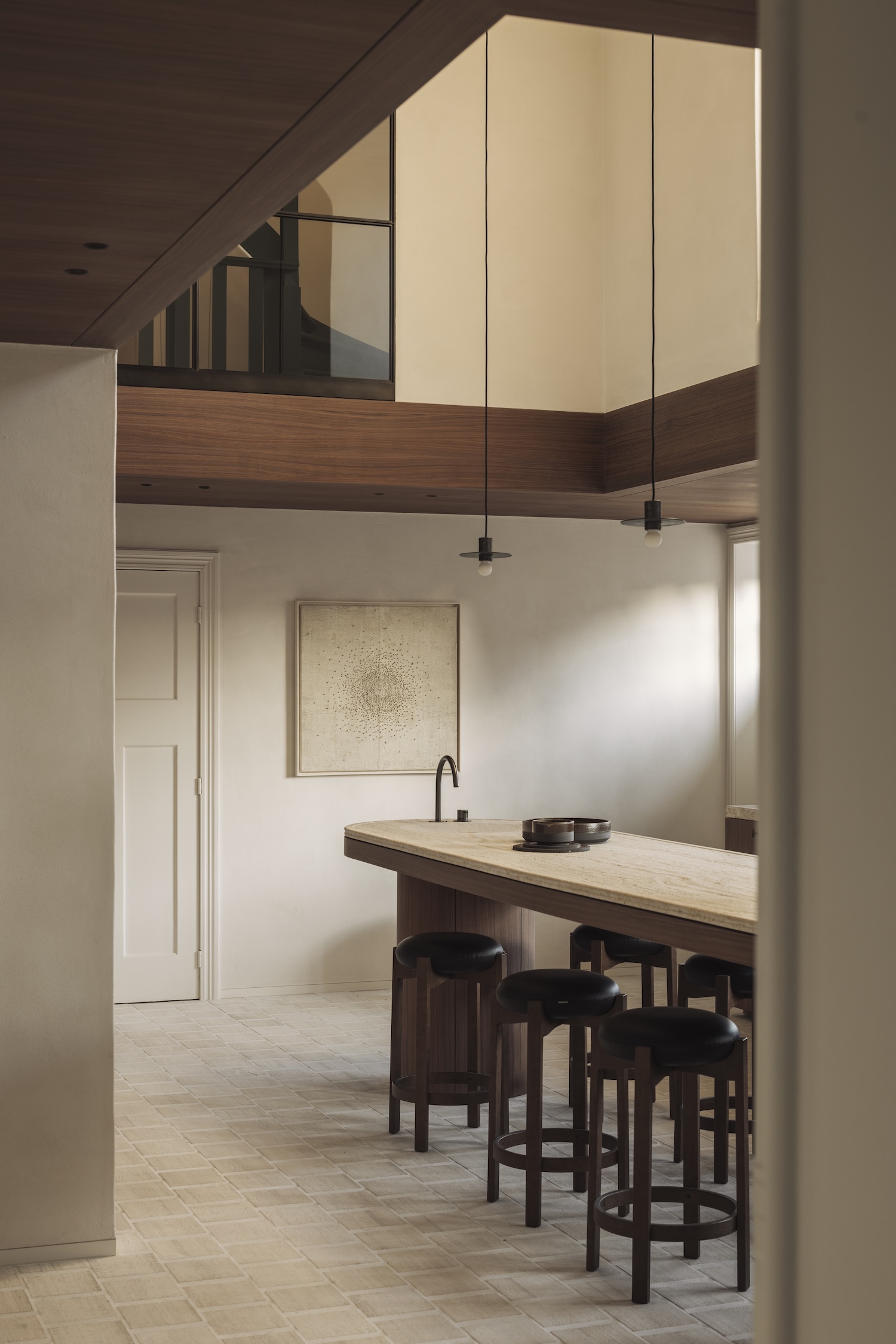
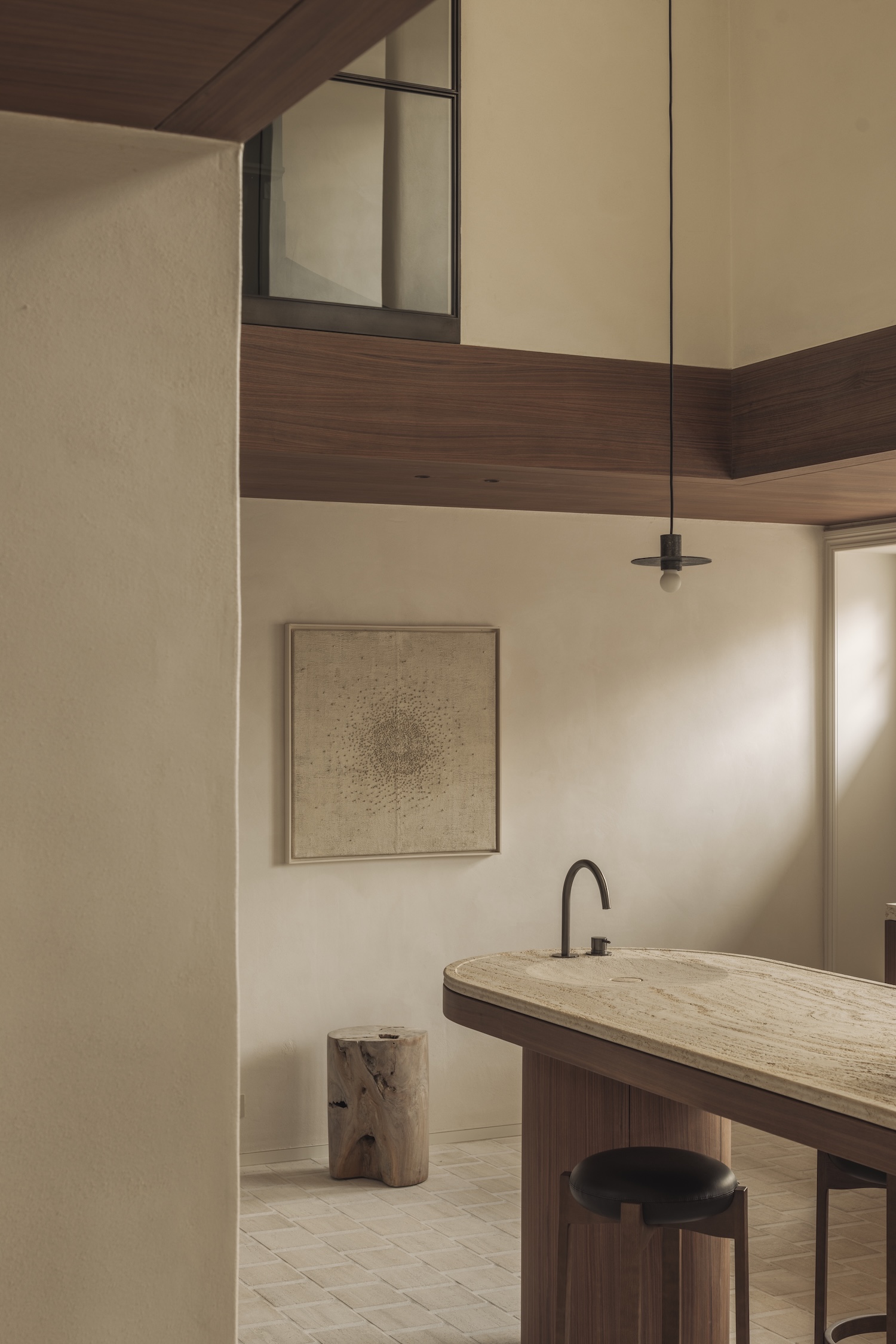
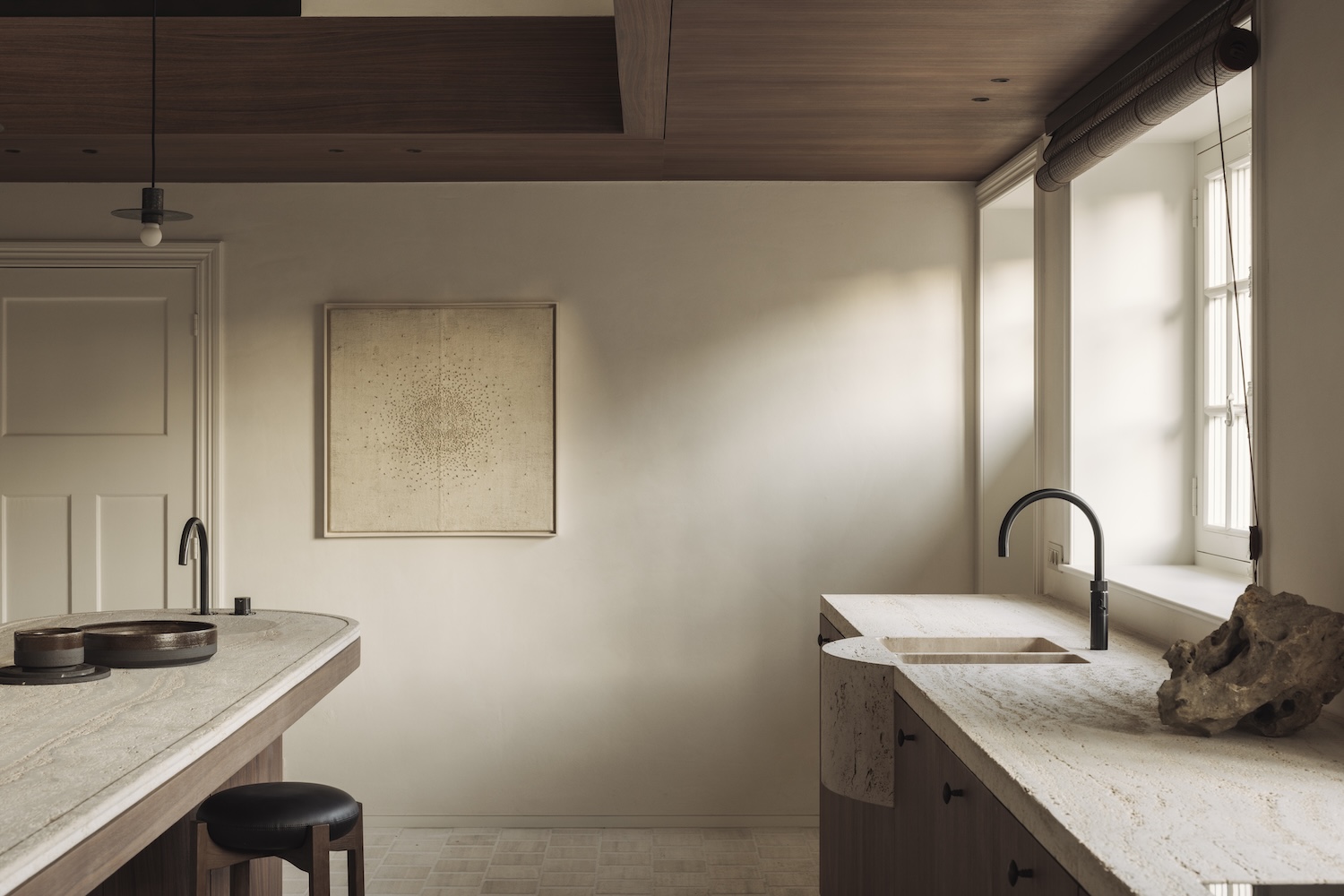
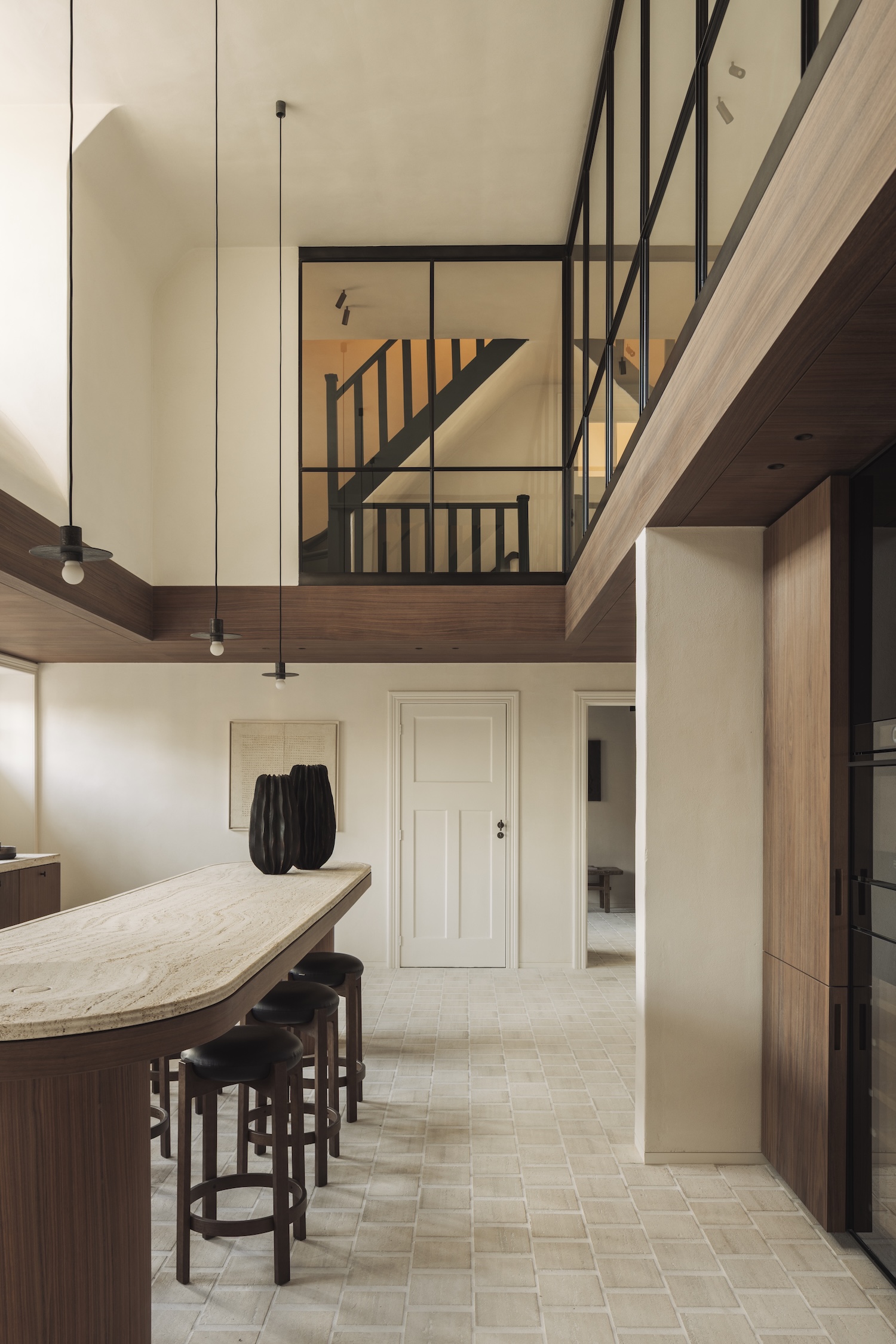
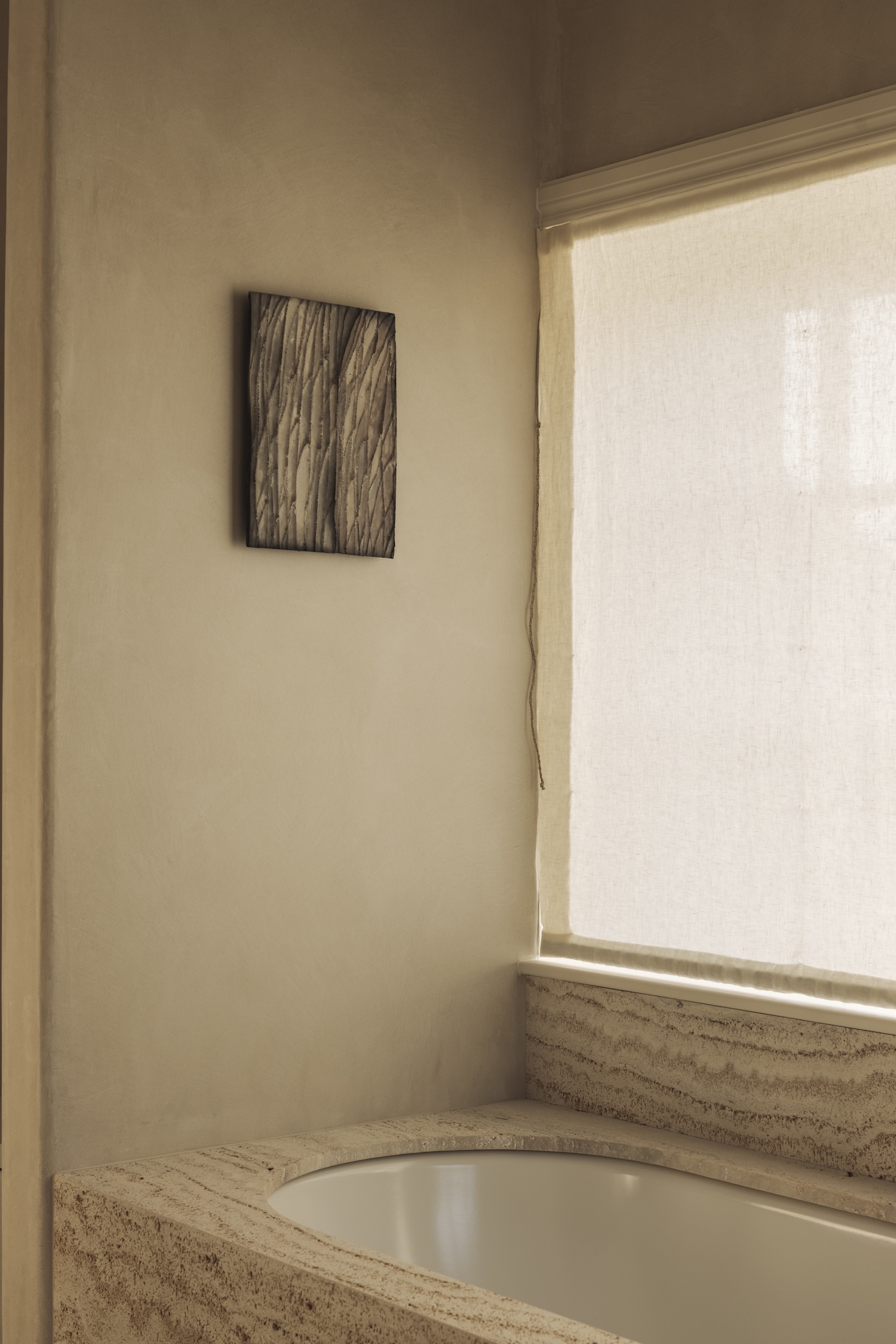
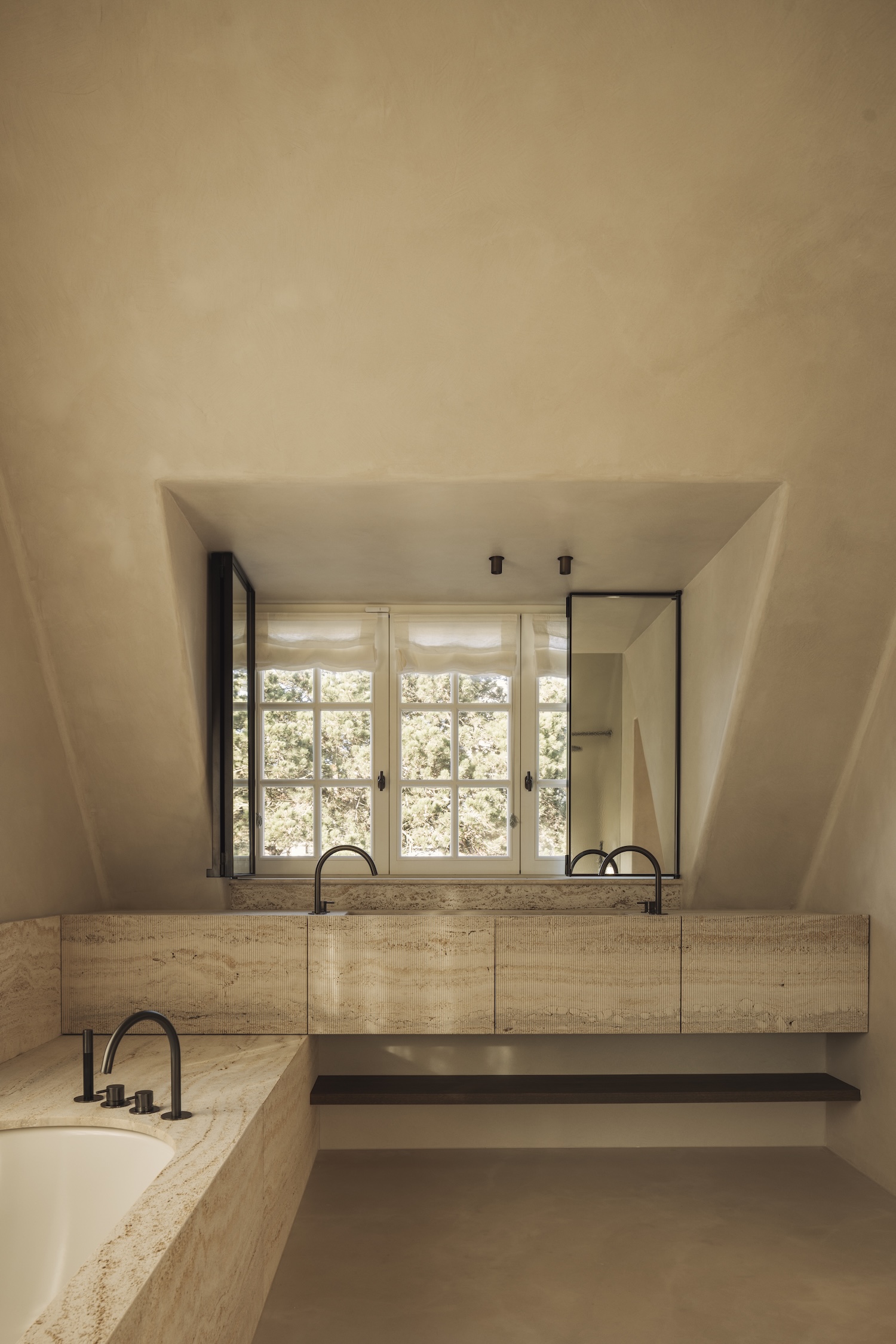
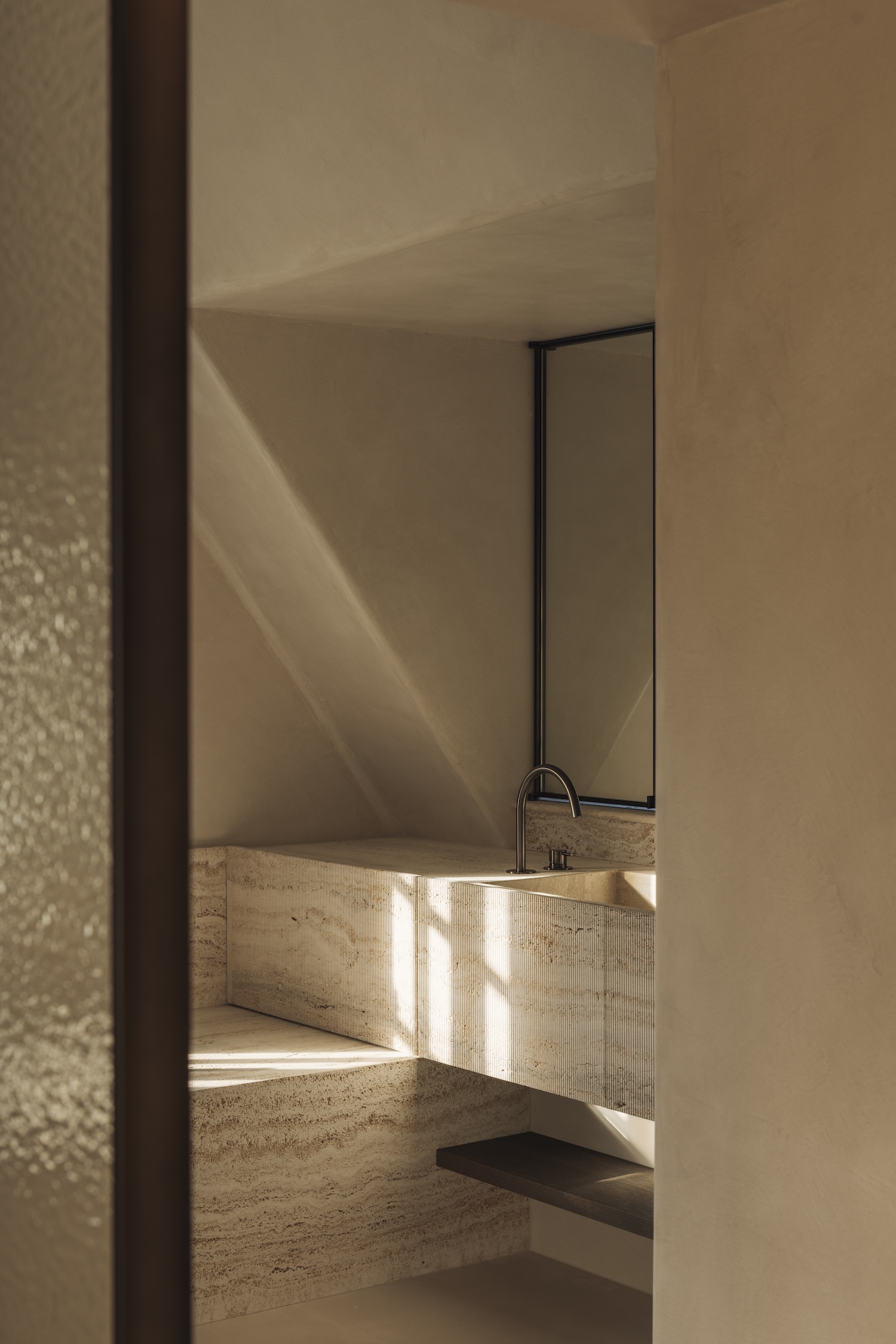
The response has been to leave the original fabric legible while reworking circulation and daylight. Rooms are opened toward the park rather than dissolved into one another, and glazing is enlarged where the structure permits. The kitchen carries the clearest version of this logic, framed by wide glass openings and detailed with the reduction associated with contemporary Belgian practice, though it holds onto the proportional generosity of a traditional working kitchen rather than compressing itself into a galley of concealed appliances. The bathroom follows a bathhouse model, with stone and unlacquered surfaces intended to register water and age visibly.
Oudolf’s garden is the element that most complicates a straightforward reading of the project. His New Perennial method, developed at Hummelo and later scaled up at the High Line and Lurie Garden, builds compositions around structure and decay rather than flowering peak, favoring grasses and seed heads that hold their silhouettes into winter. On a coastal site with salt-laden wind and sandy soil, that palette becomes something closer to a dune ecology, and the garden shifts continuously against a house whose masonry does not move.
KALPA, founded by artist Olga Niescier, handles the artistic curation, placing works by Eleanor Herbosch, Annelies Toussaint, and Sabine Pagliarulo throughout the villa. The gallery’s own restoration of Palazzo Bonomini used pietra panchina, the porous Tuscan limestone quarried near Volterra, and that preference for locally sourced, geologically specific material aligns with the approach taken here. Art functions as part of the architectural fabric rather than as applied decoration.