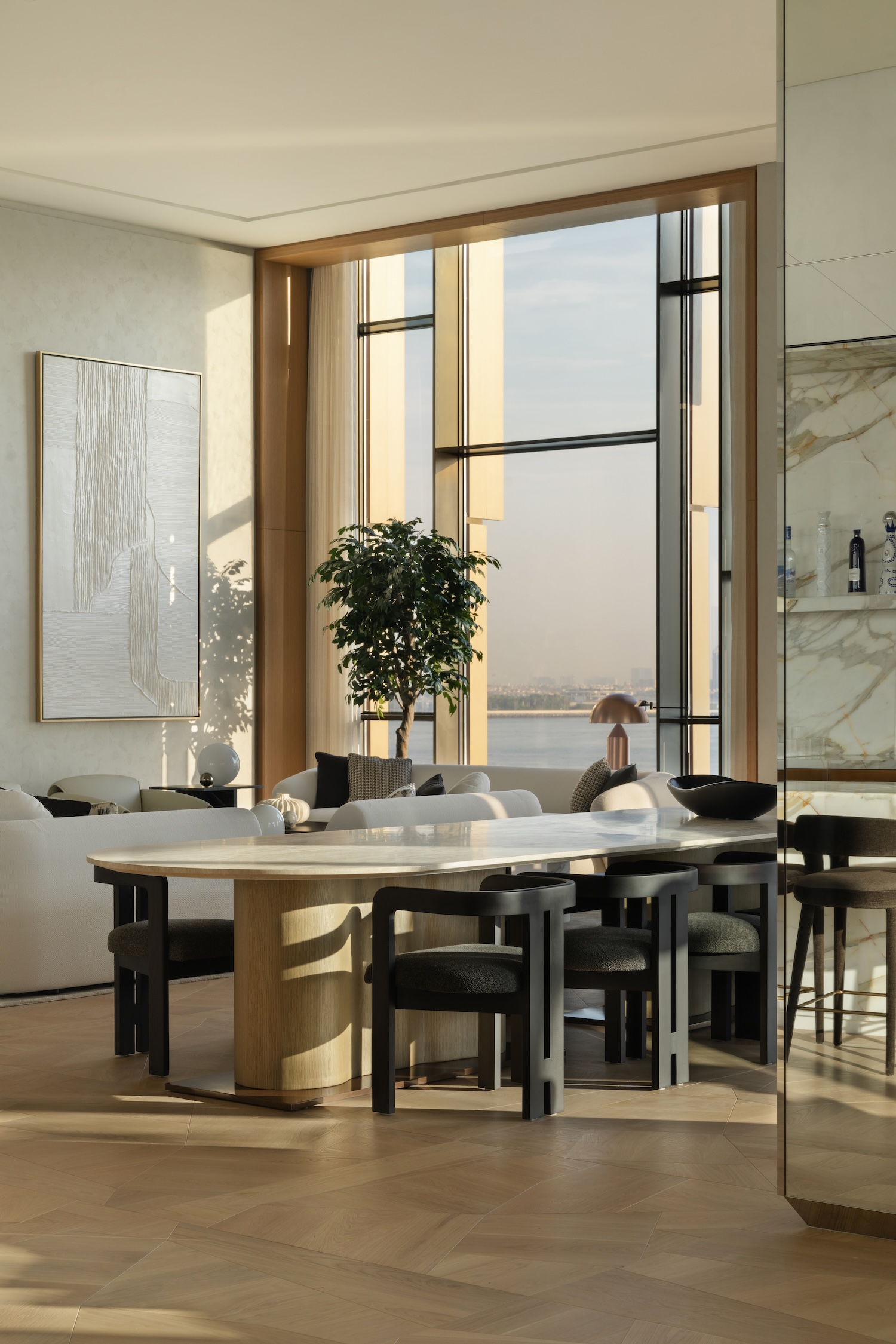
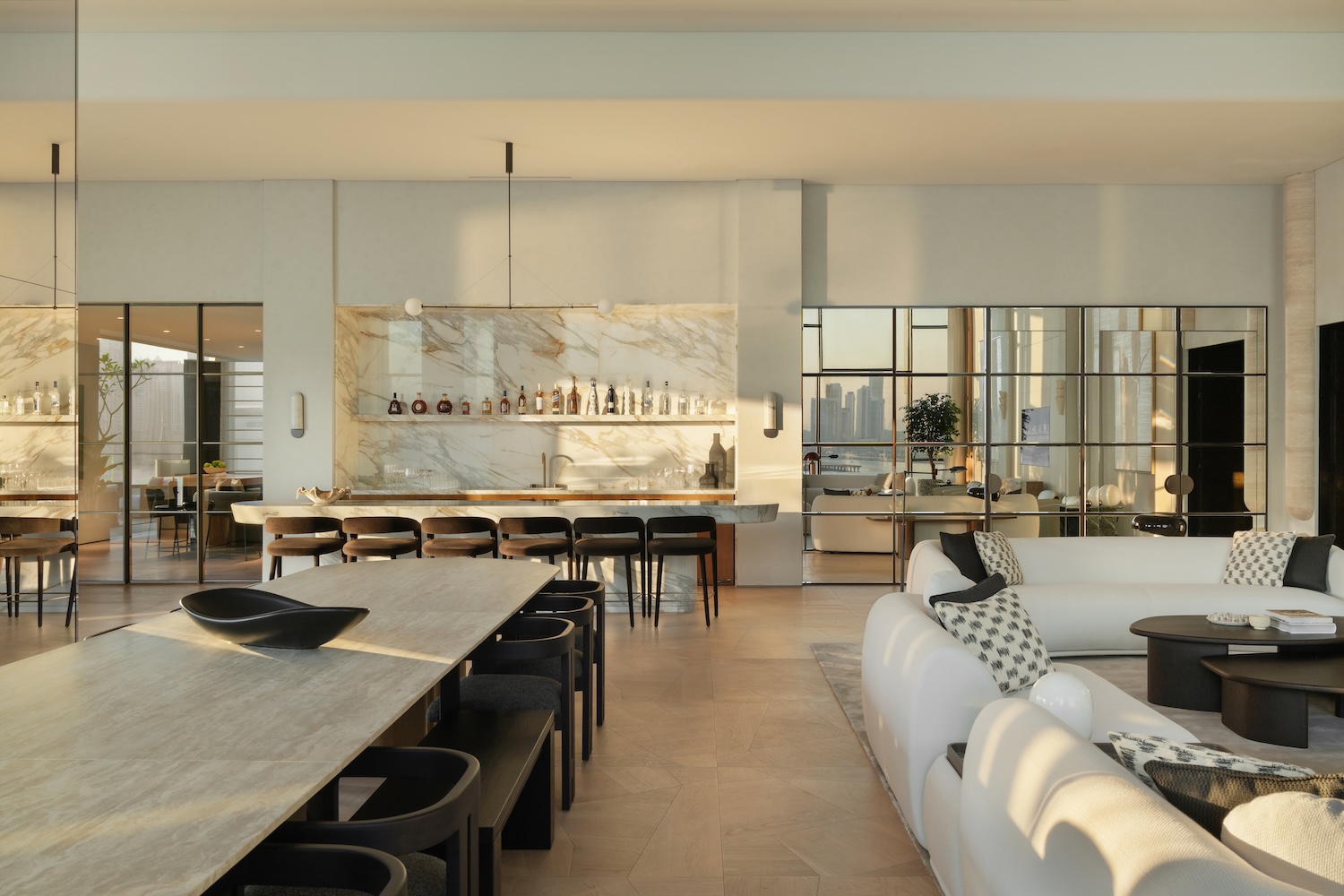
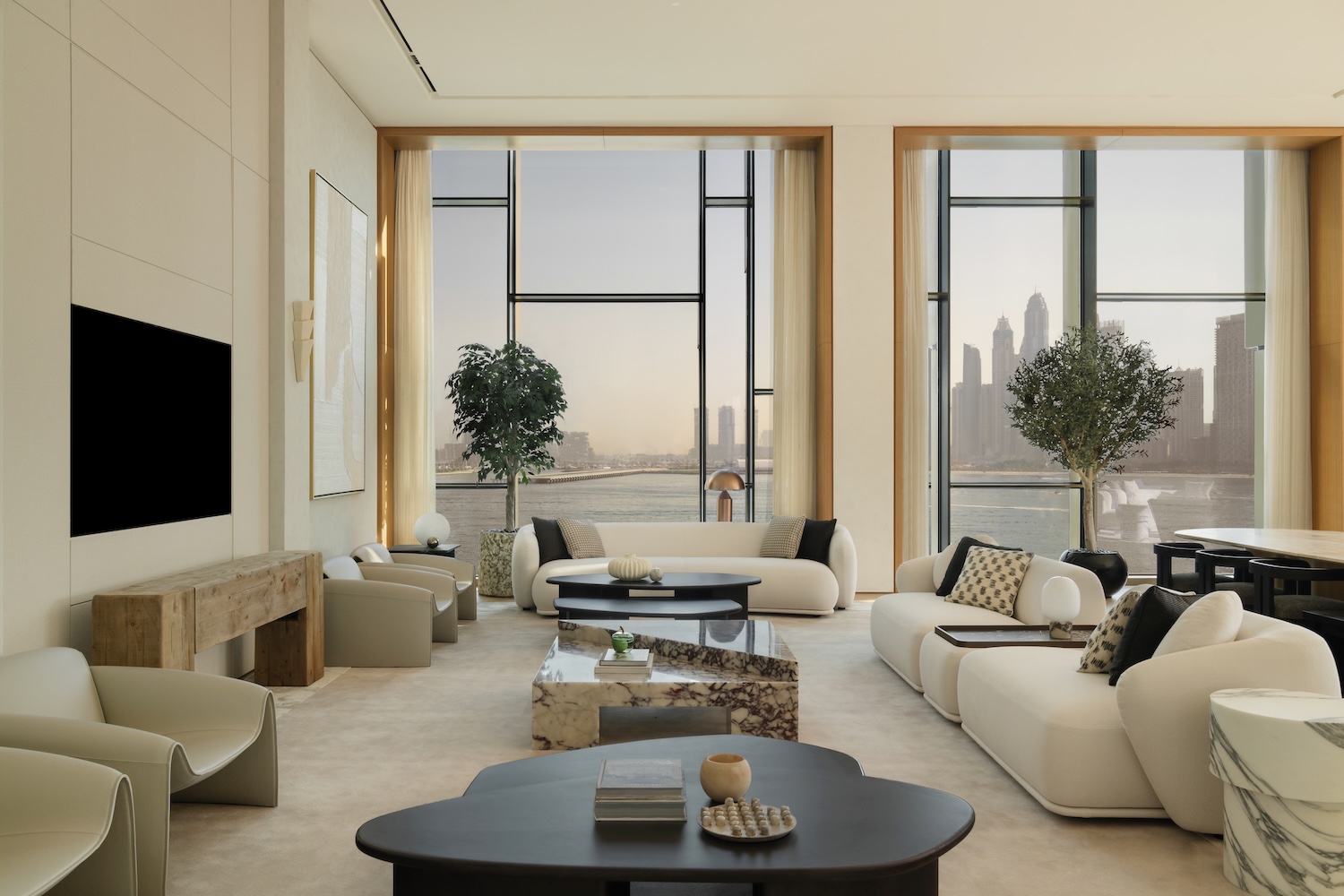
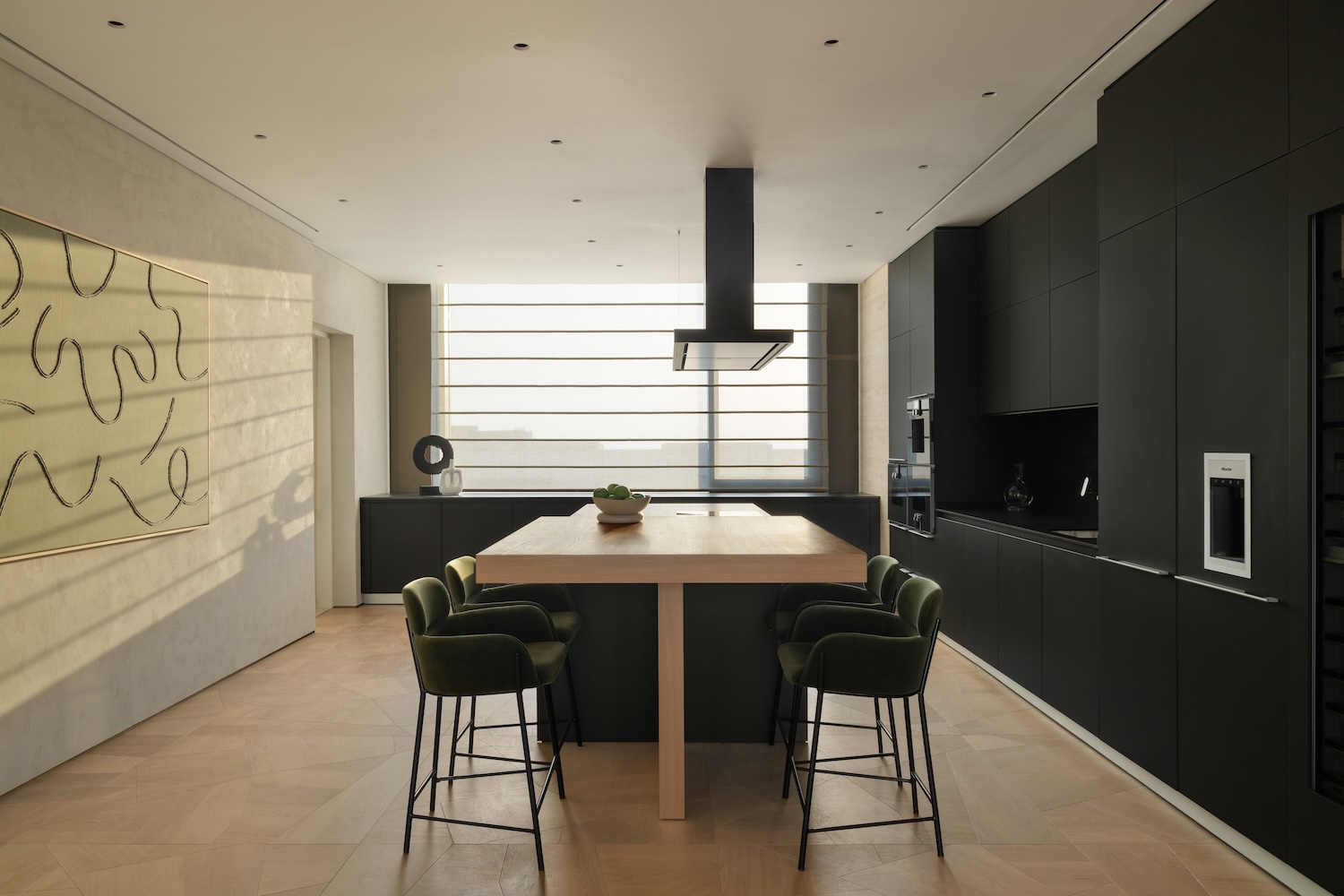
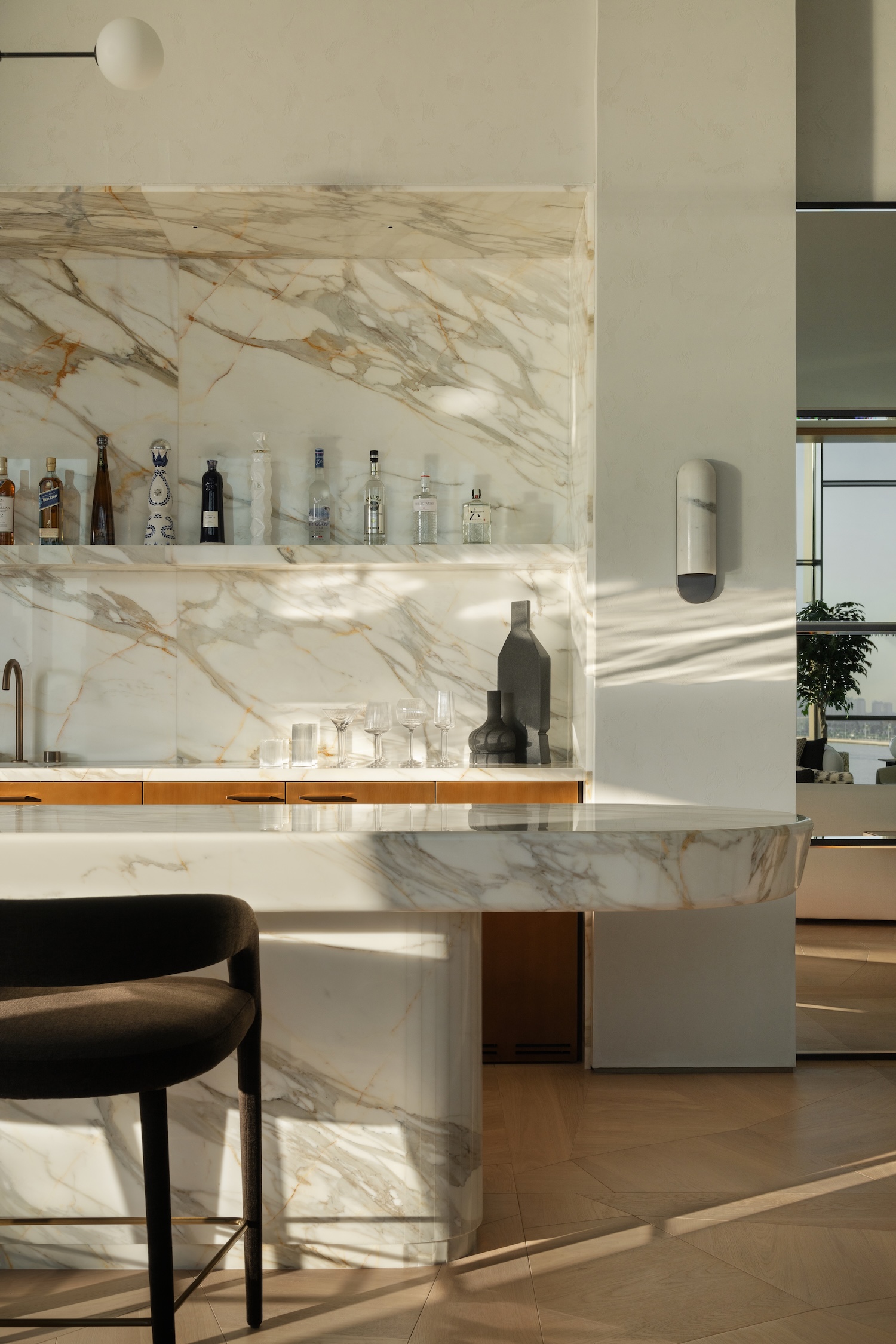
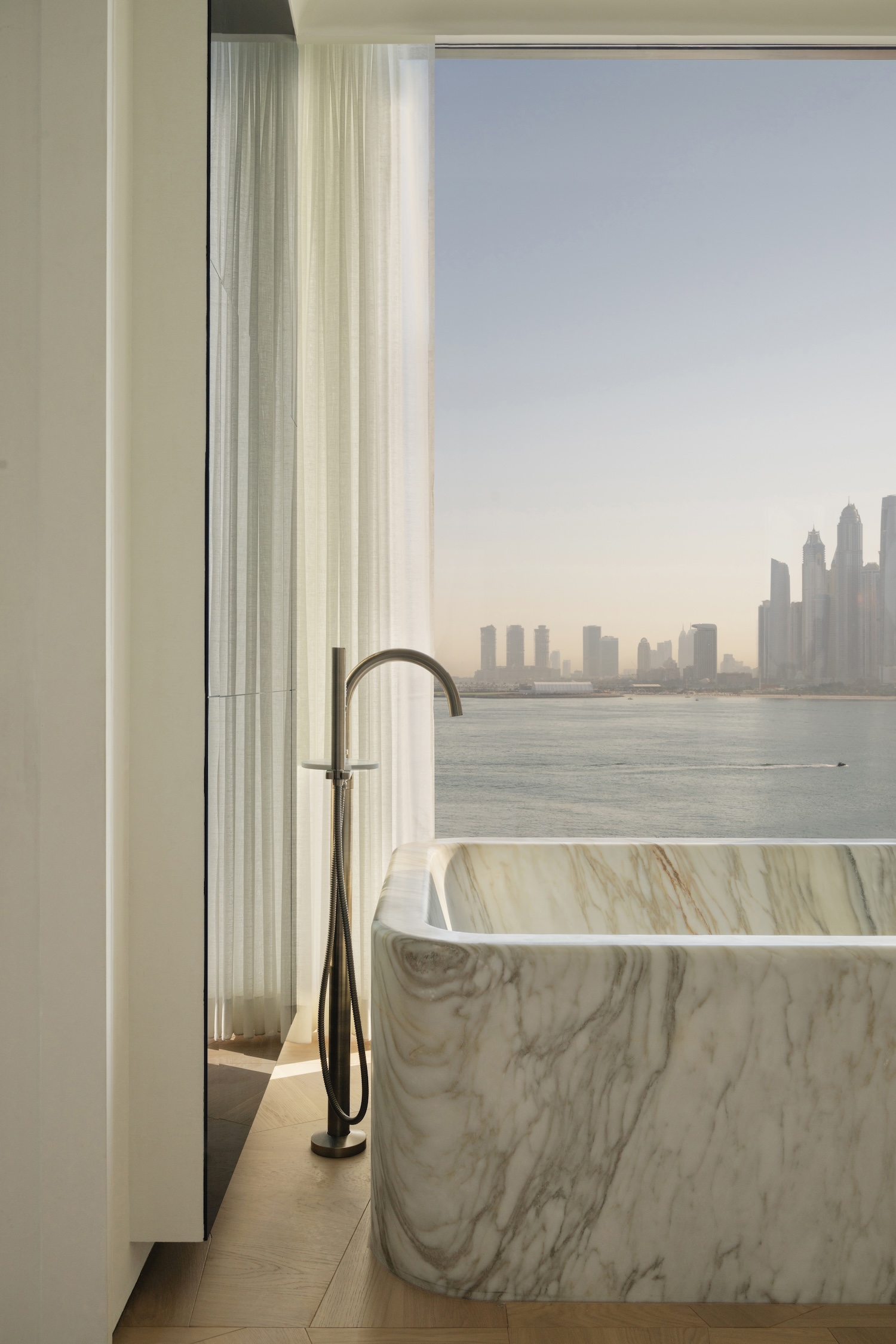
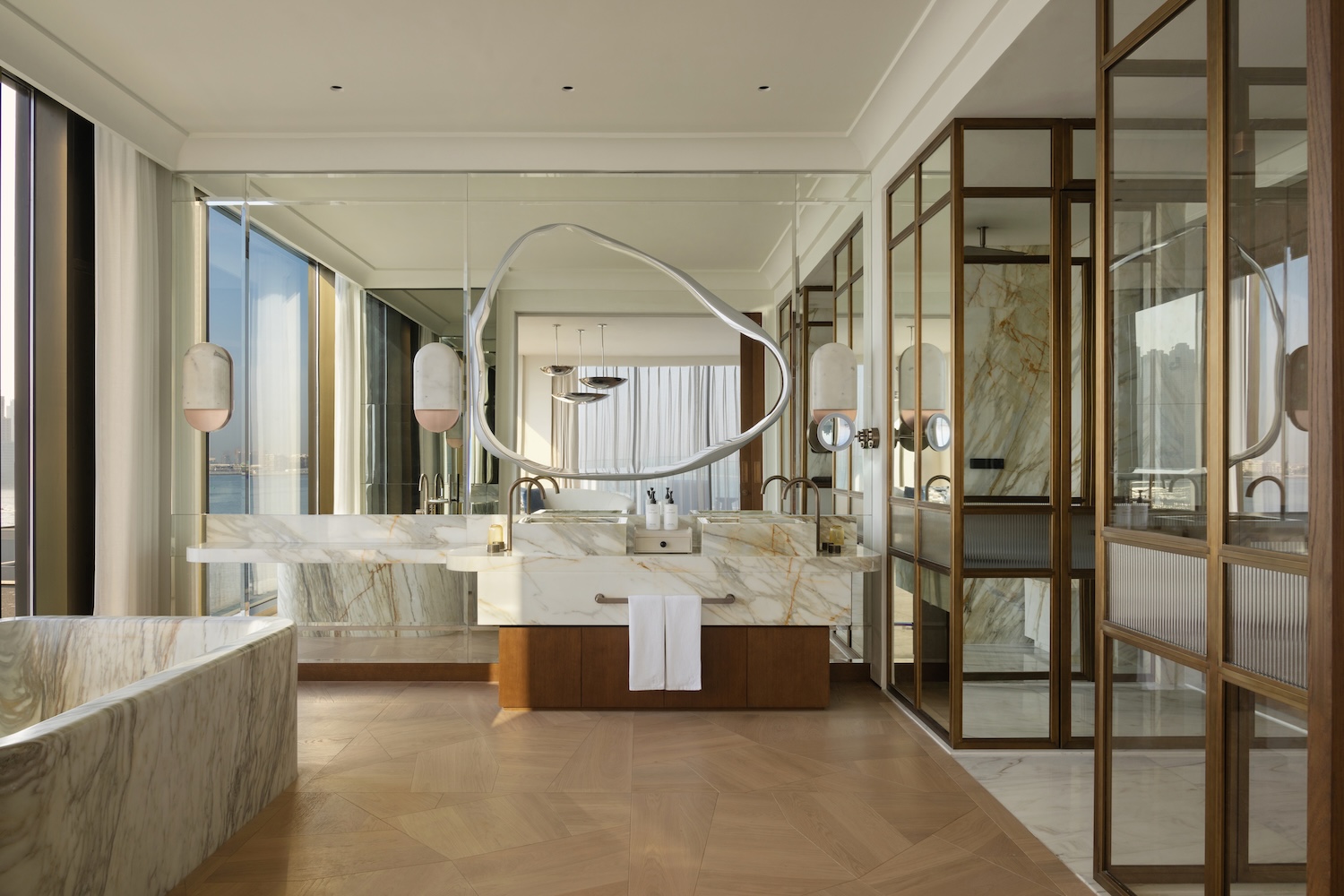
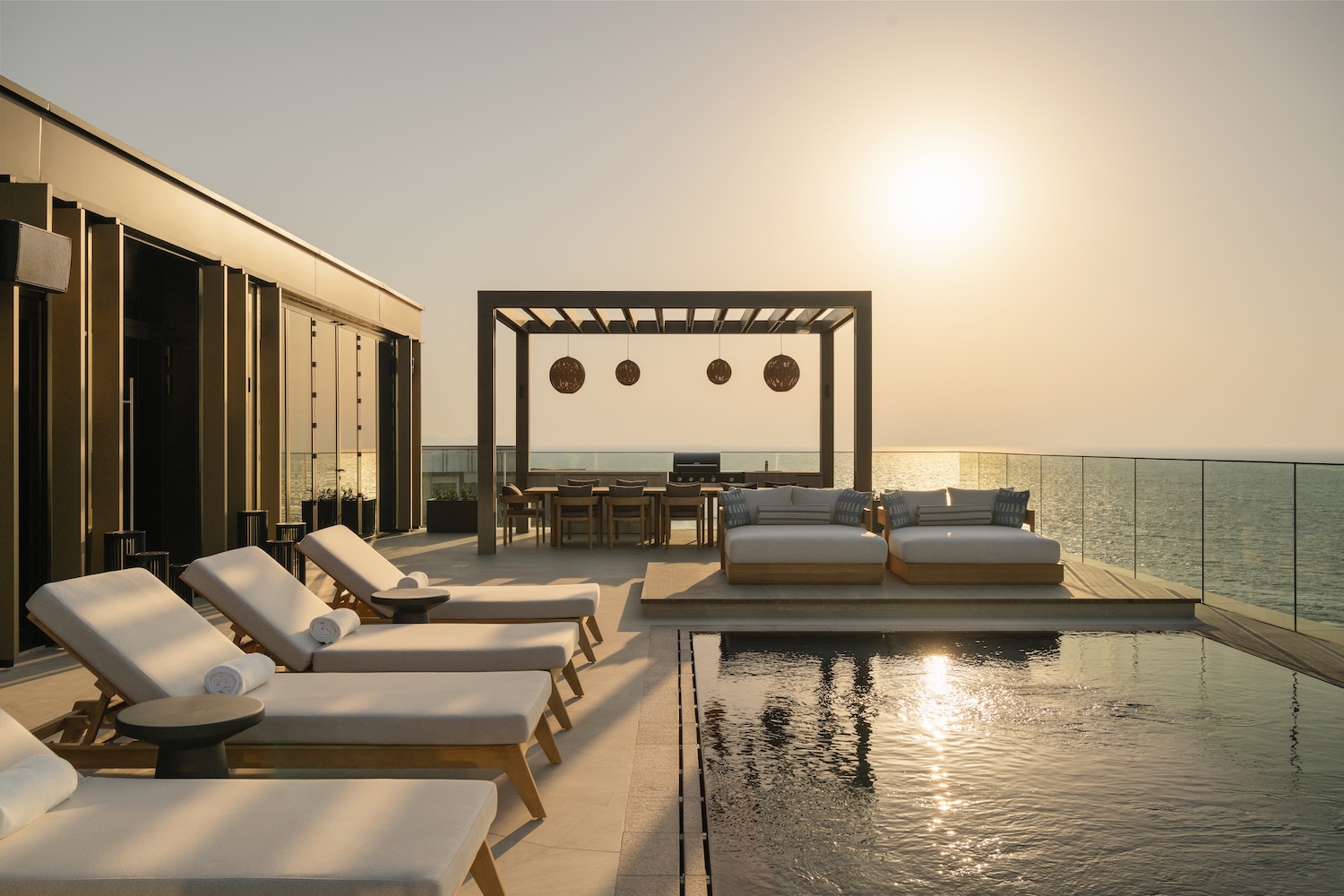
Delano Dubai is a luxury hotel located in Dubai, United Arab Emirates designed by lead designer Elastic Architects, in collaboration with SA Consultants, La Bottega Interiors and Ennismore’s in-house design team. There’s a moment, just before entering Delano Dubai, when you encounter a manicured hedge that whispers of South Beach – an architectural tease that both conceals and invites. This verdant threshold is not mere landscaping but a deliberate nod to Delano’s Miami origins, transformed for a new context while maintaining its essence of playful exclusivity. “The hedge is up, care to take a peek over?” the designers seem to ask, establishing from the very outset that this space traffics in curiosity and revelation.
The signature white curtains that greet guests function as both literal and metaphorical veils – physical textile that transforms lighting while symbolizing the transition from exterior world to curated interior sanctuary. The lobby’s apparent simplicity reveals itself as intentional restraint, where the materiality speaks through contrast rather than ornament. Hussain Jamil’s reflective art piece doesn’t merely decorate but actively participates in the space, creating fluid reflections that mirror the Arabian Gulf waters visible beyond. The juxtaposition of “Delano White” walls against dark wide-board timber flooring establishes a rhythm that continues throughout the property – a visual pendulum swinging between light and shadow.
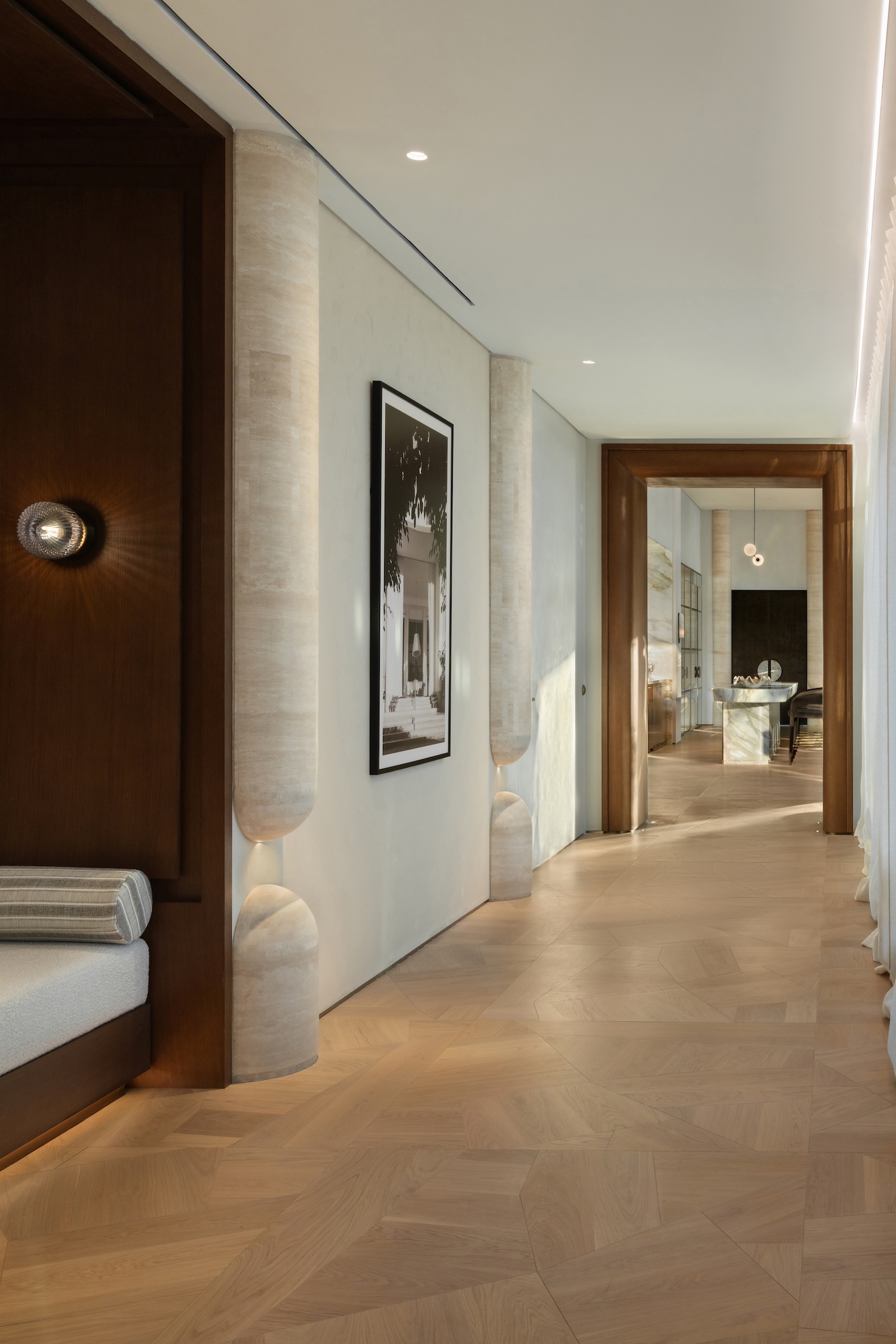
This deliberate tension between opposites becomes a defining characteristic, with monochrome corridors serving as liminal spaces that transition guests from public to private realms. The interior architecture employs phenomenological principles – recognition of how spaces are experienced through time rather than merely viewed in static moments. Suite names like “Rising Light” and “Waking Eclipse” reveal this attention to temporal experience, acknowledging how natural illumination transforms these environments throughout the day.
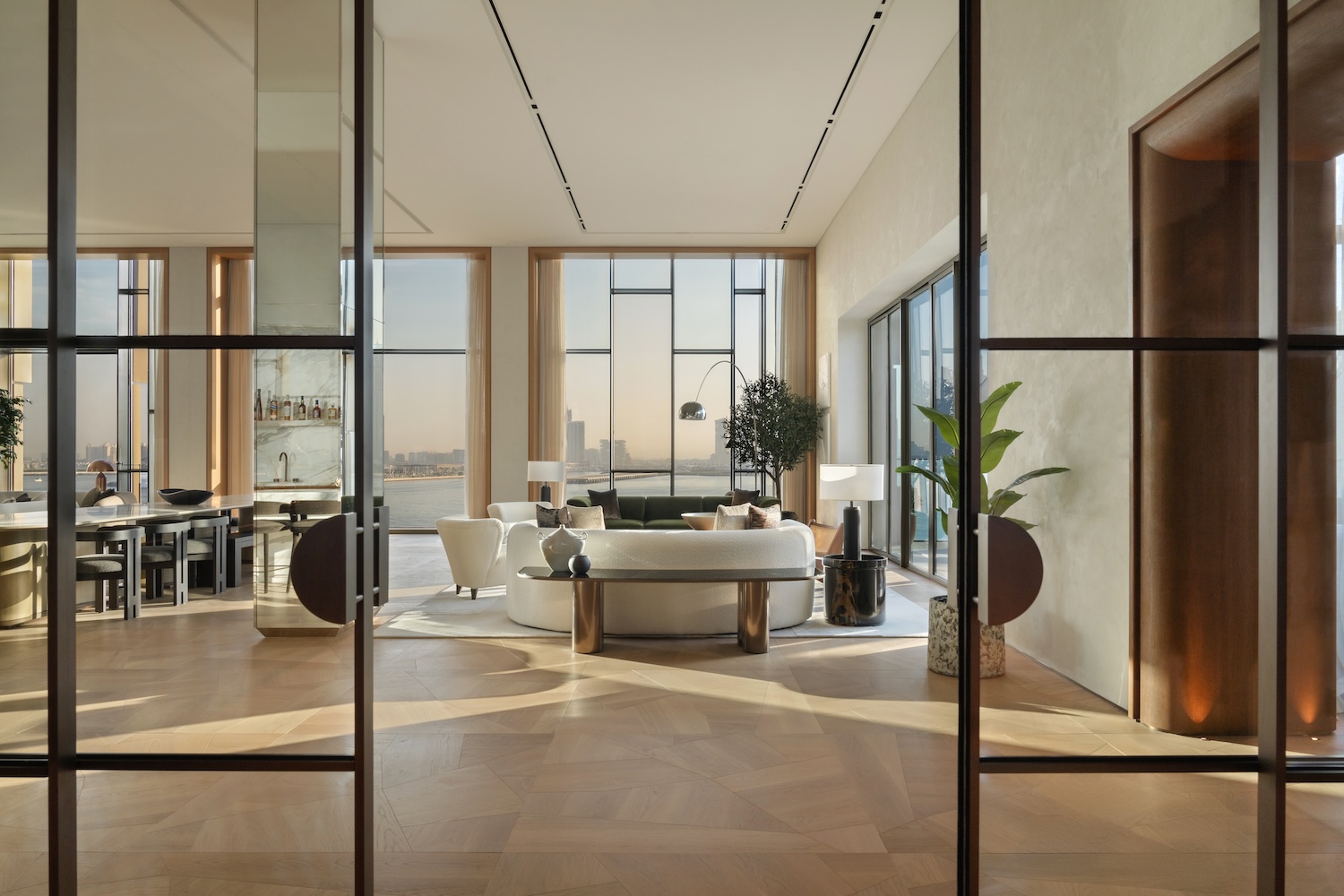
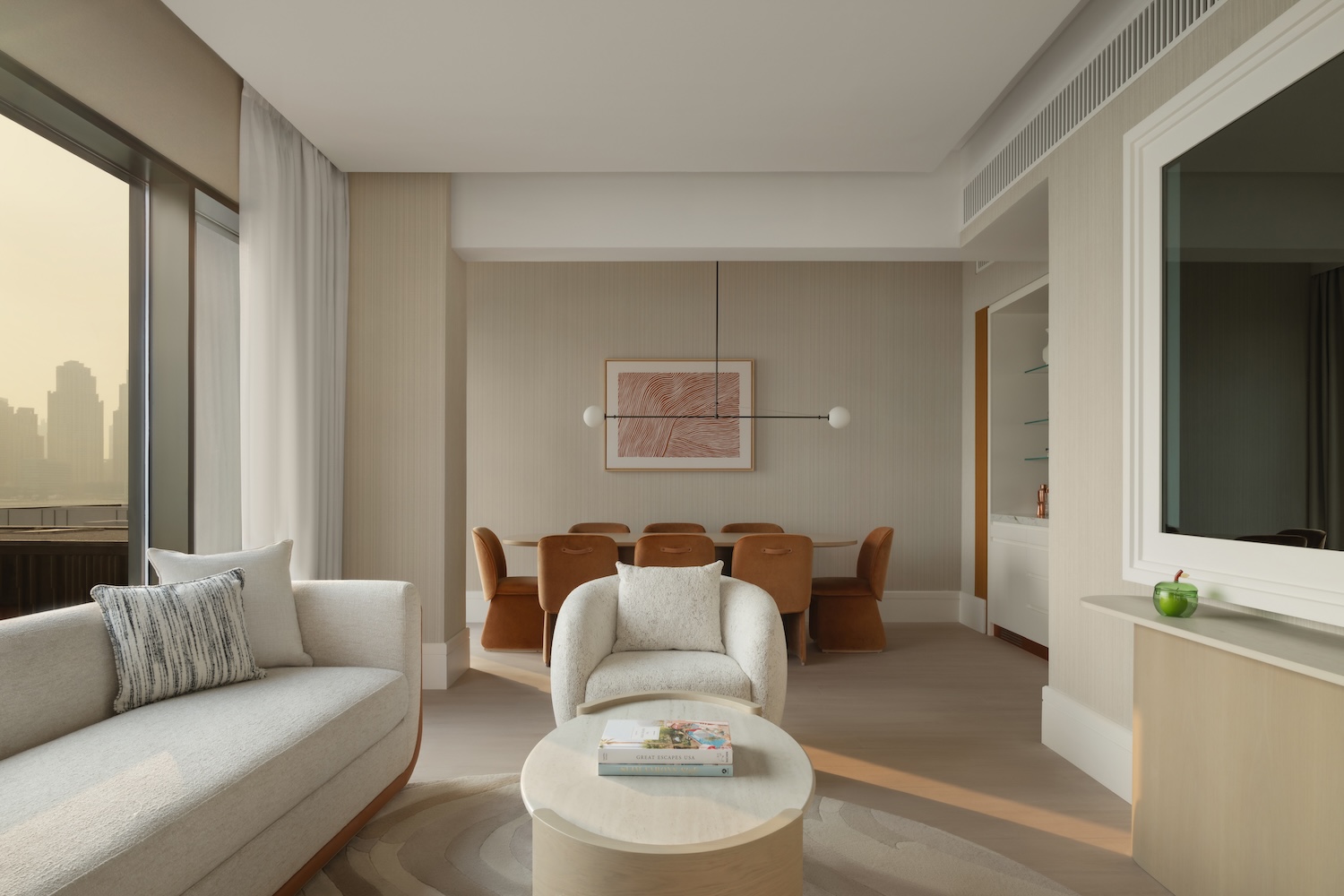
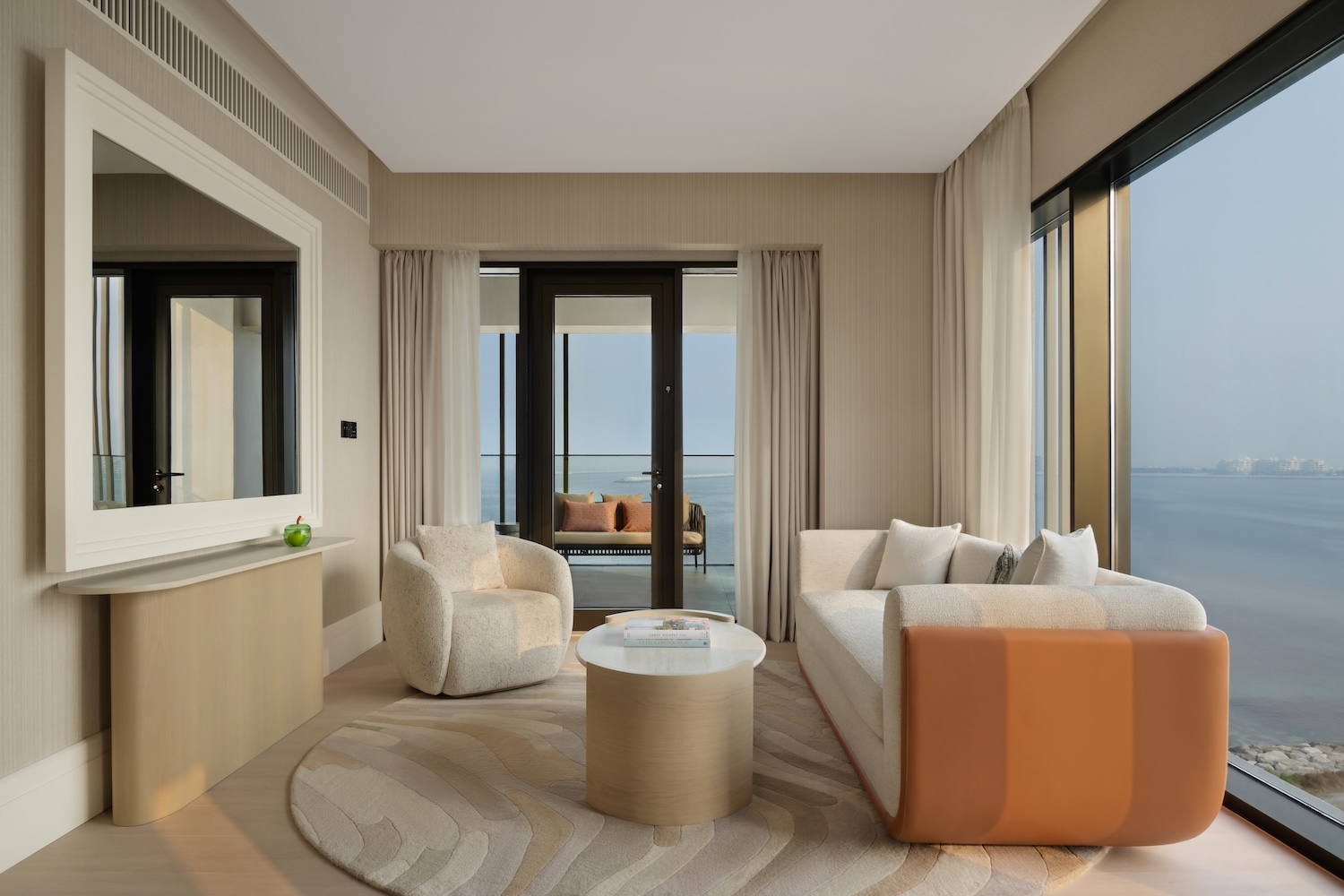
The furniture design deserves particular attention, with seating arrangements that eschew sharp angles for what the designers describe as “soft, curved silhouettes.” This organic approach to form reflects broader movements in contemporary furniture design that prioritize comfort and human-centered ergonomics while maintaining visual sophistication. The custom wool rugs punctuating white oak floors create tactile islands, reinforcing the sense that these spaces are meant to be experienced physically rather than merely appreciated visually.