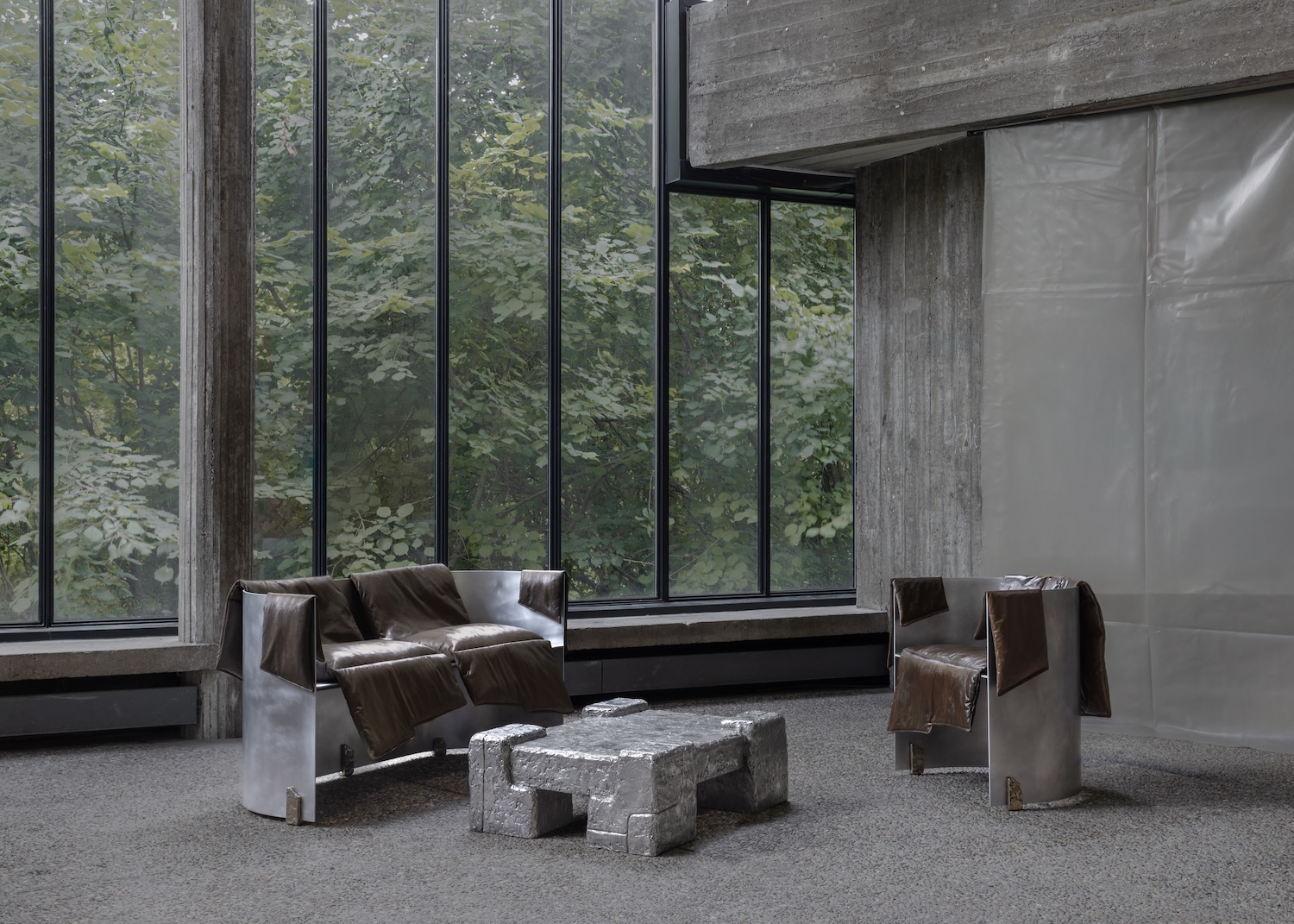
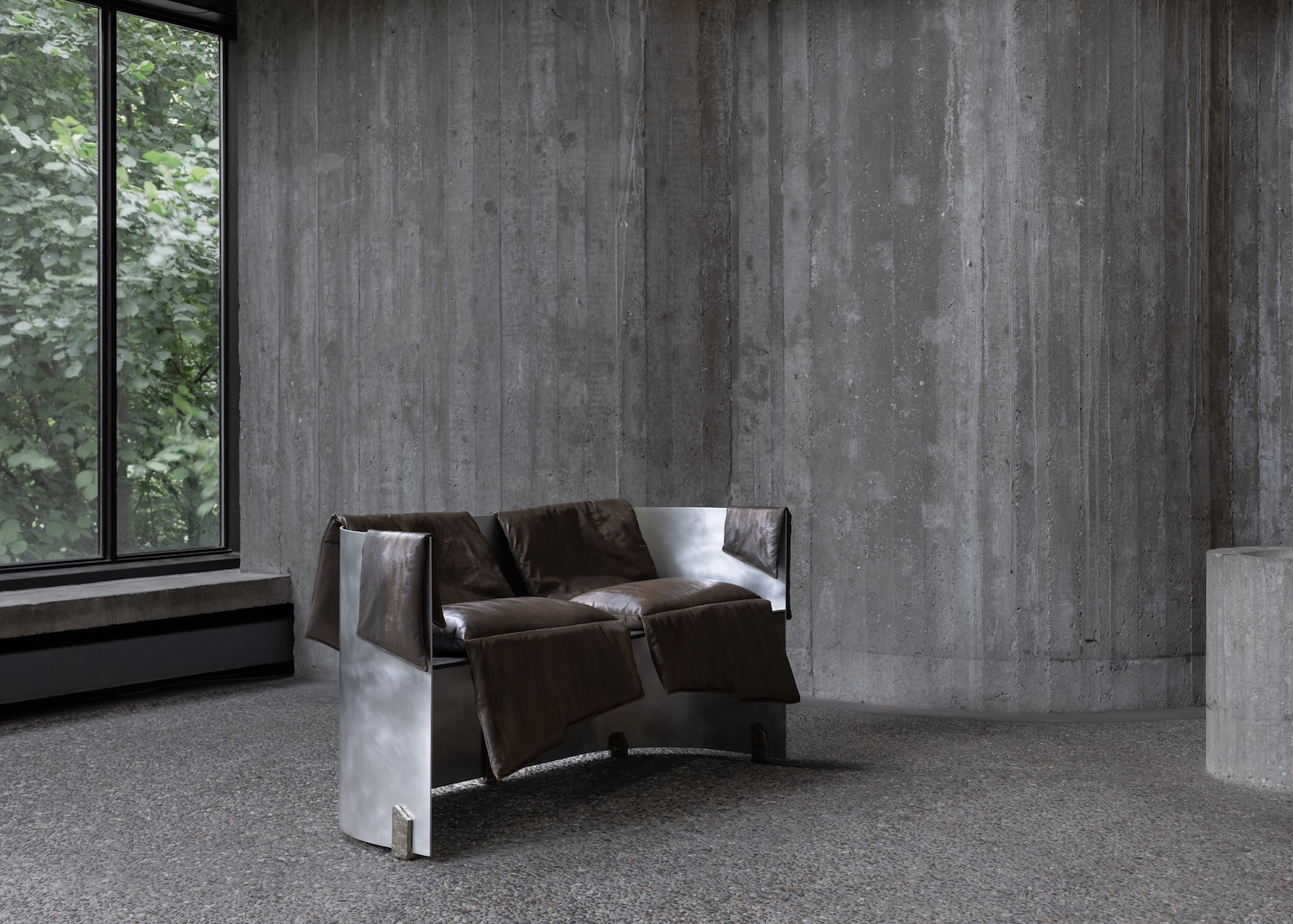
Reworked Series is a minimalist chair and bench created by Belgium-based designer Linde Freya Tangelder for Uppercut. This body of work establishes a compelling dialogue between architectural thinking and furniture making, where the designer’s exploration of shelter and protection manifests through carefully orchestrated material contrasts. Freya’s conceptual framework extends beyond conventional furniture typologies to examine how humans continuously seek layers of protection, from clothing to seating to architectural enclosure.
The material palette reveals sophisticated thinking about how different substances can embody temporal and cultural narratives simultaneously. Brushed aluminum provides the structural foundation, its industrial precision contrasting deliberately with hand-lacquered cotton components that introduce tactile warmth and visual softness. This juxtaposition speaks to broader conversations in contemporary design about reconciling technological capability with human-scaled intimacy, a balance increasingly relevant as digital fabrication becomes more prevalent in furniture production.
Freya’s technique of translating architectural floor plans into asymmetrical fabric forms demonstrates how historical spatial arrangements can inform contemporary material exploration. By fragmenting and reducing original building plans to residual parts, she creates a method for abstracting architectural logic into textile patterns. This process reflects growing interest among furniture makers in cross-disciplinary research, where insights from urbanism, architecture, and material culture can inform object-scale interventions.
The hand-painting approach applied to natural cotton establishes another layer of temporal complexity within the work. While the aluminum shell speaks to industrial efficiency and reproducibility, the painted fabric elements insist on the irreplaceable value of manual skill and individual gesture. This tension between standardization and customization reflects broader questions facing contemporary furniture production, where digital tools enable both mass customization and return to craft-based making.