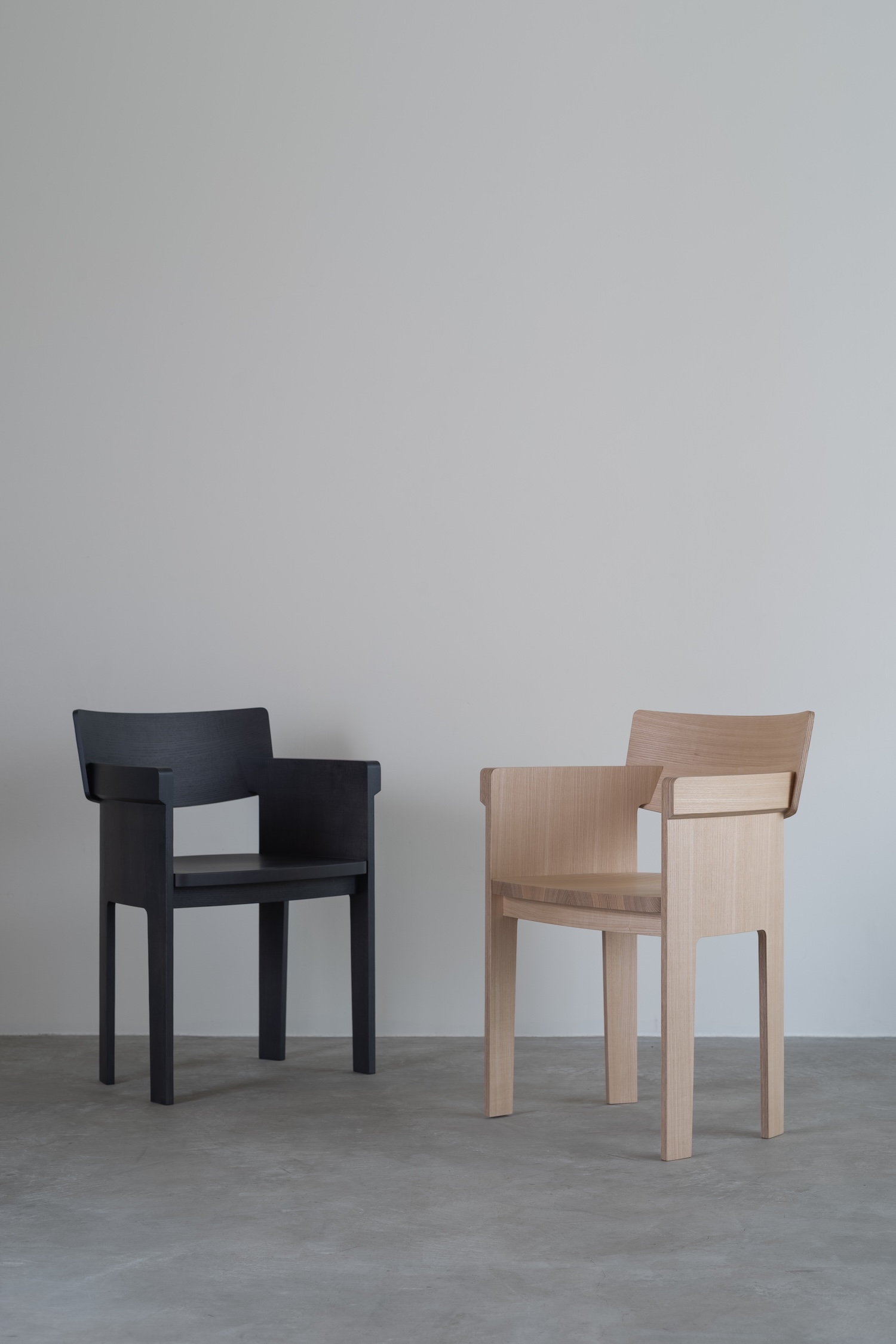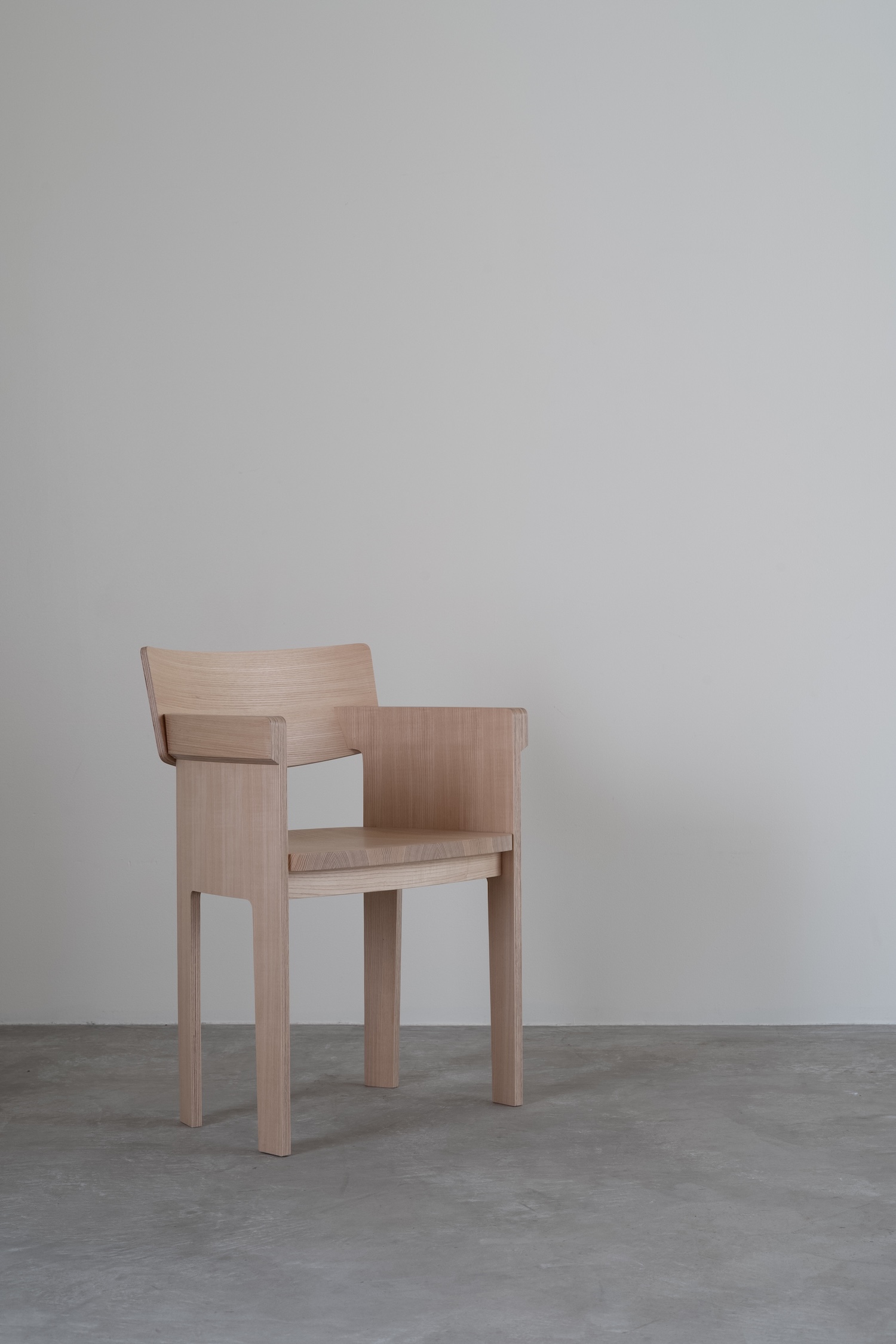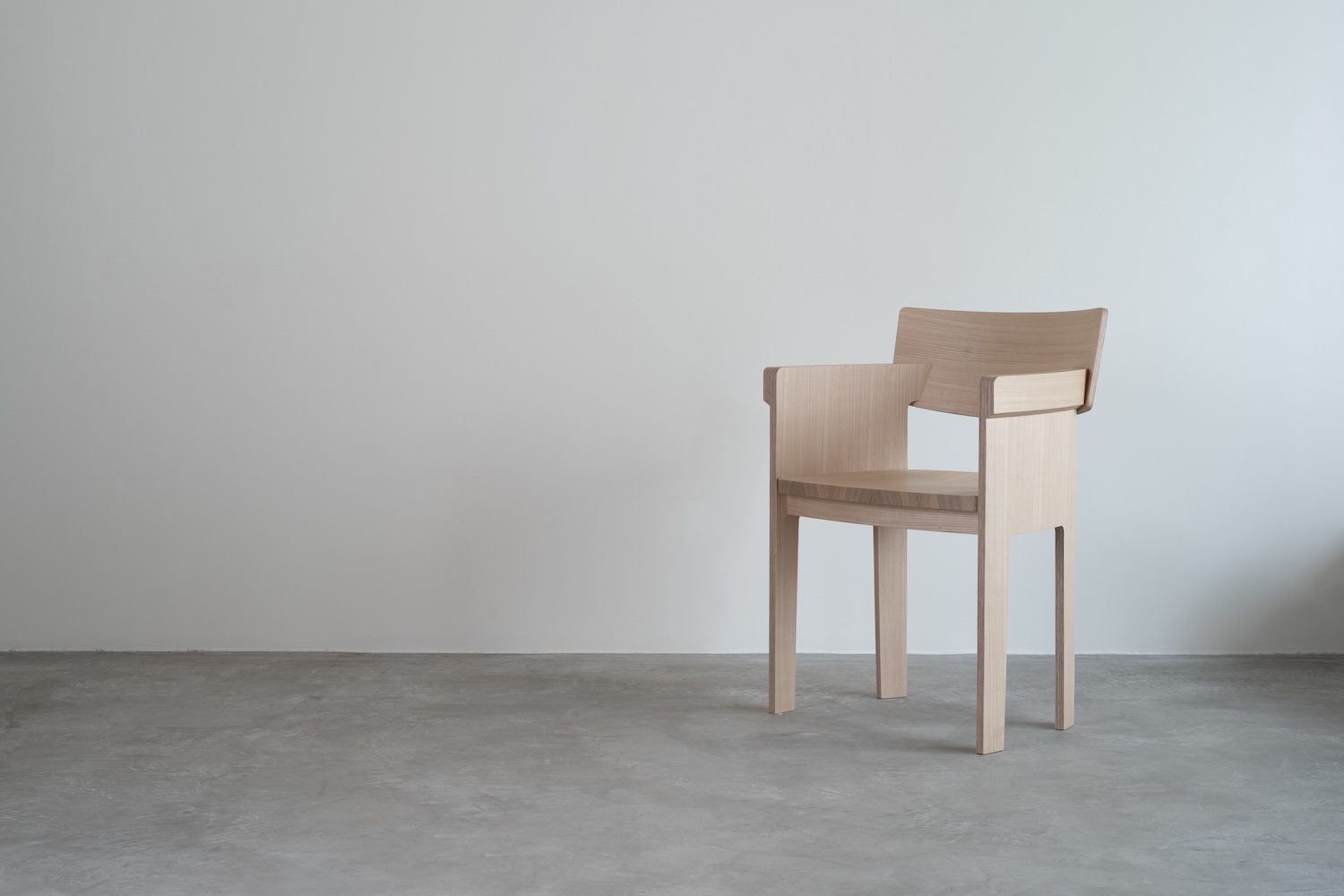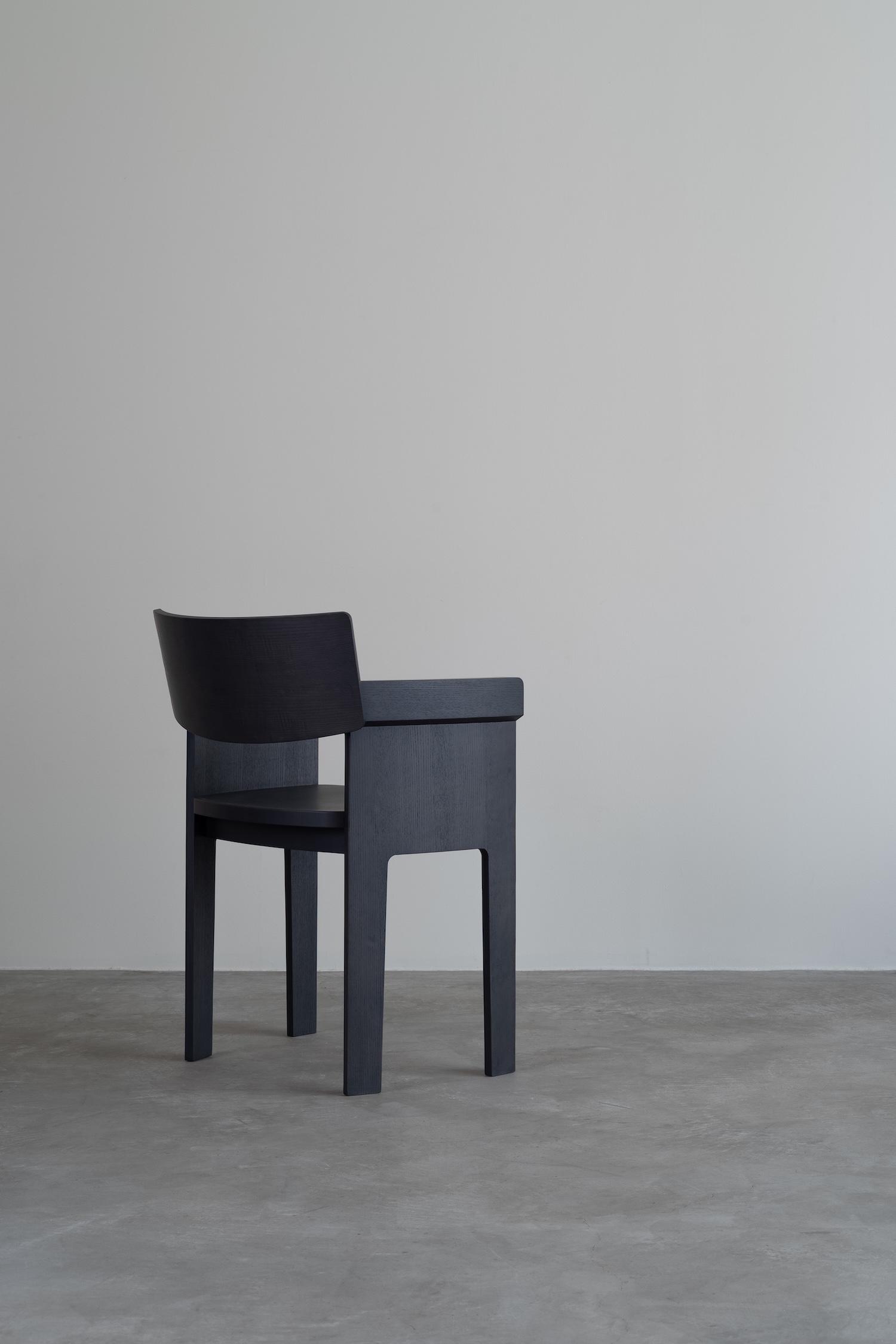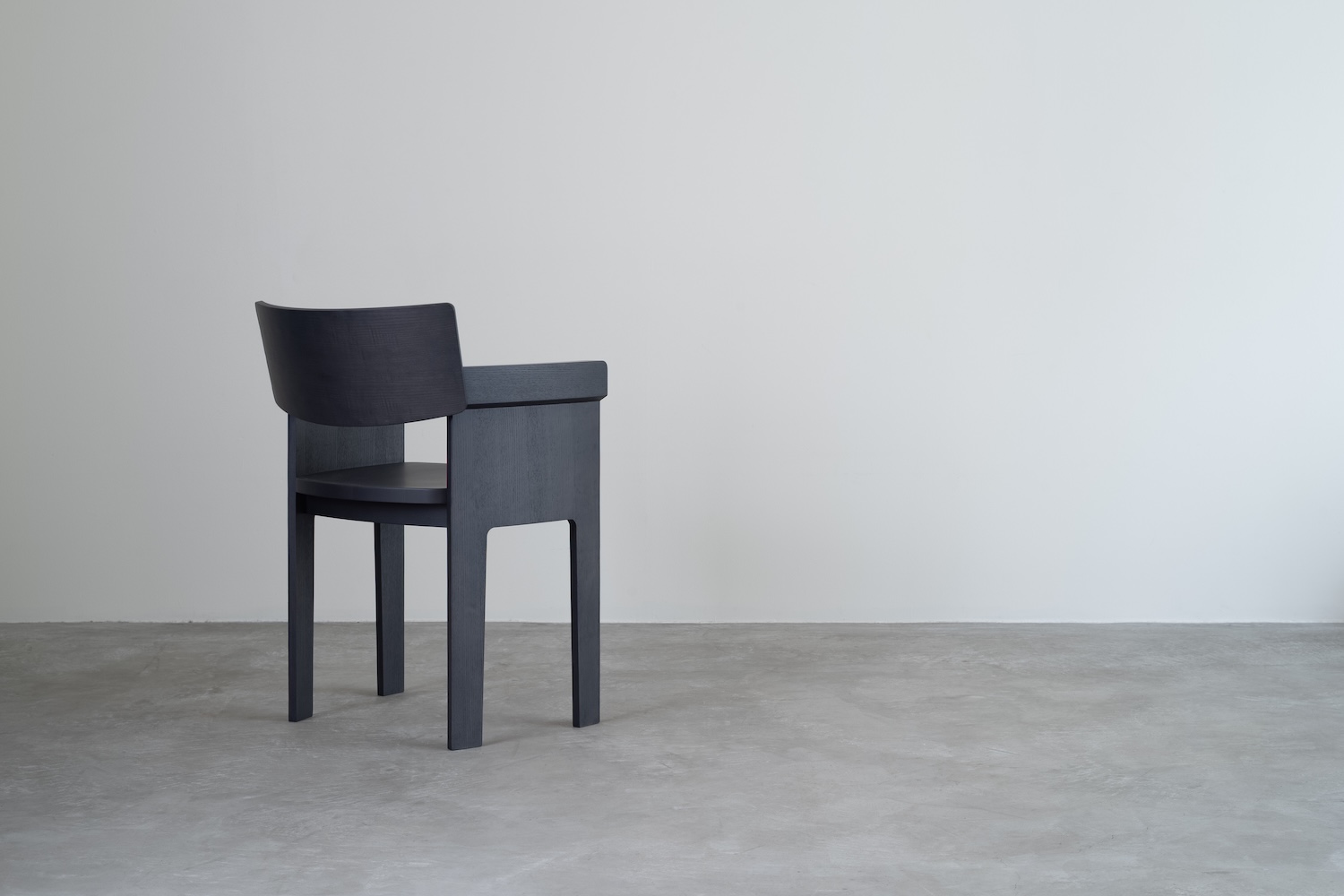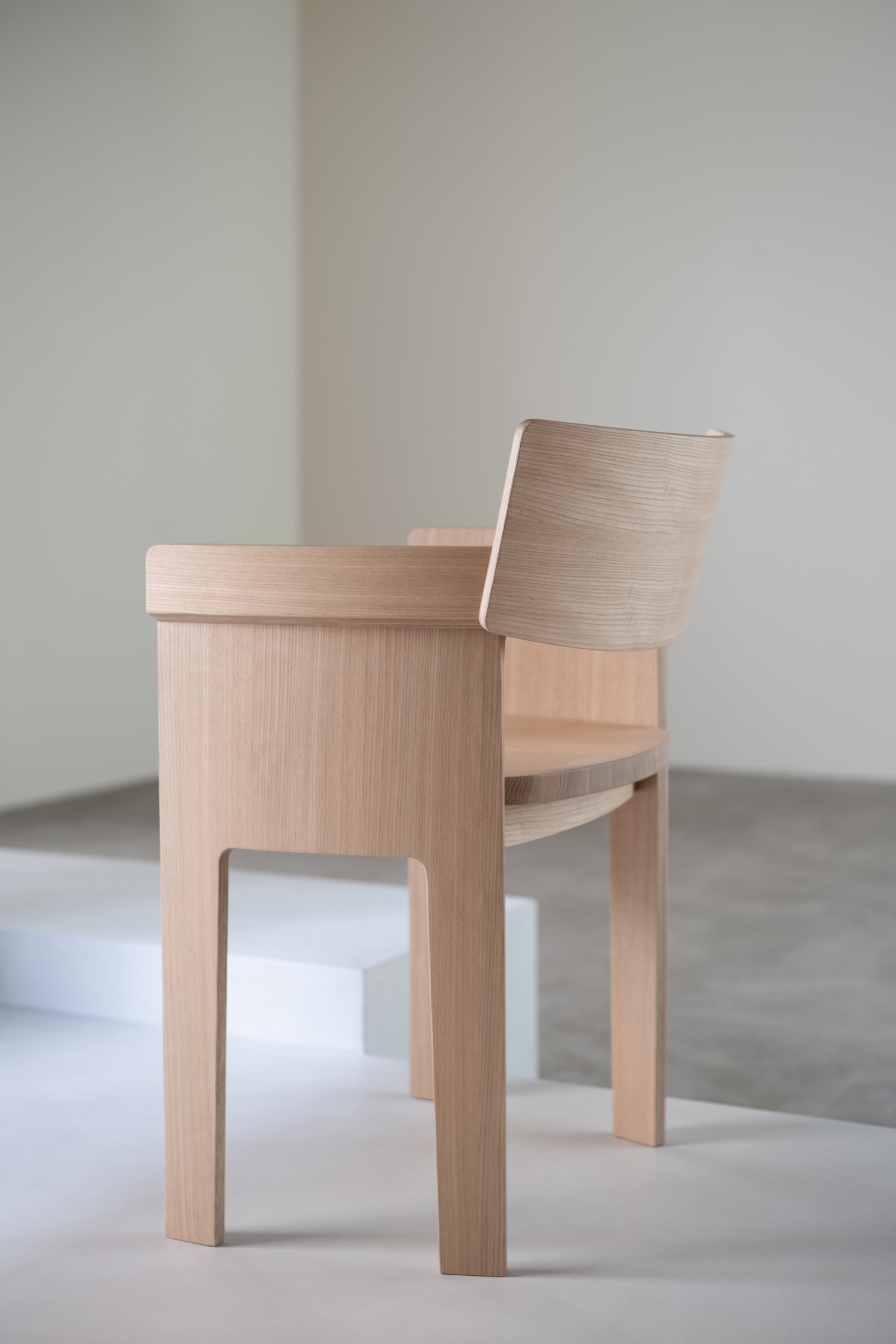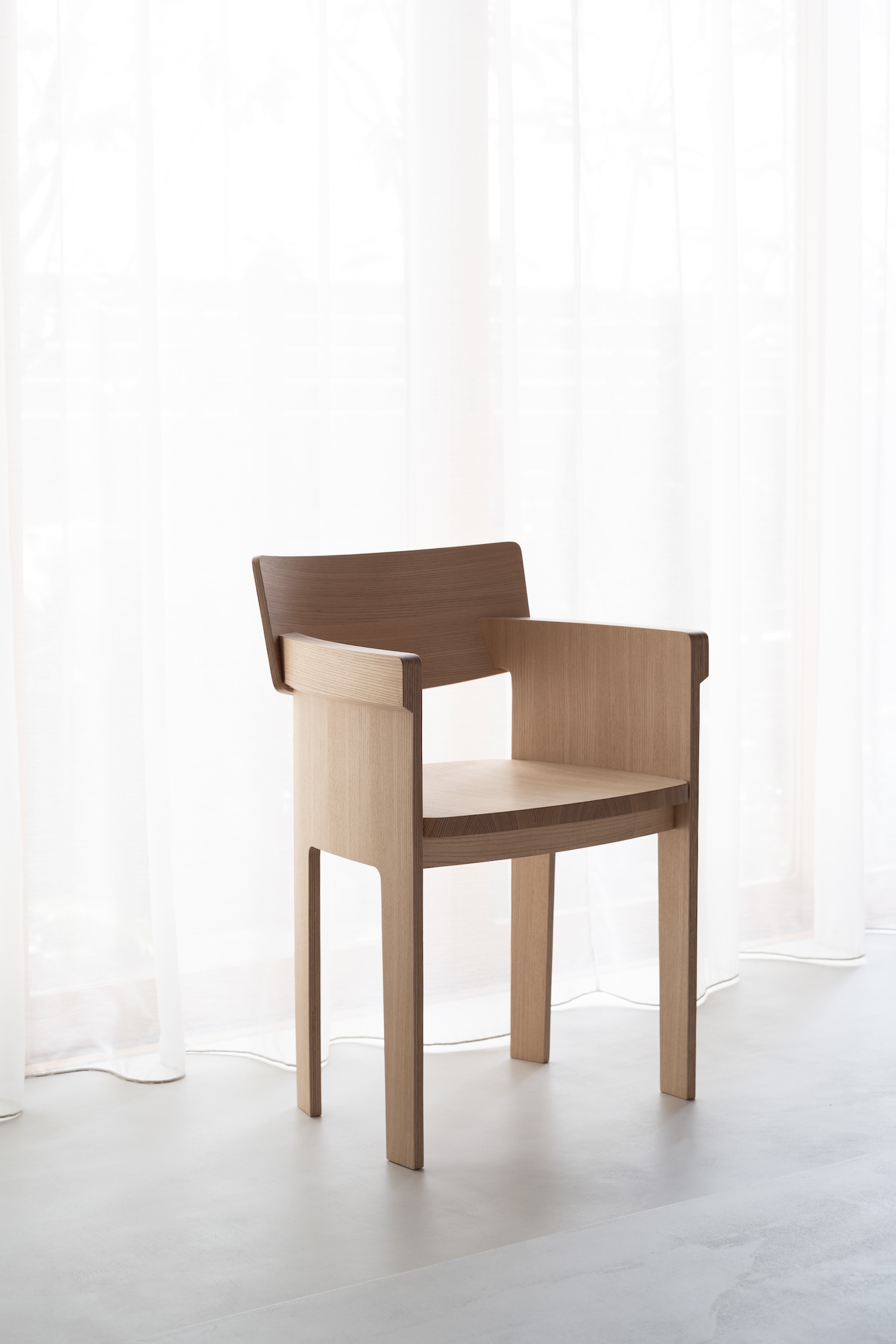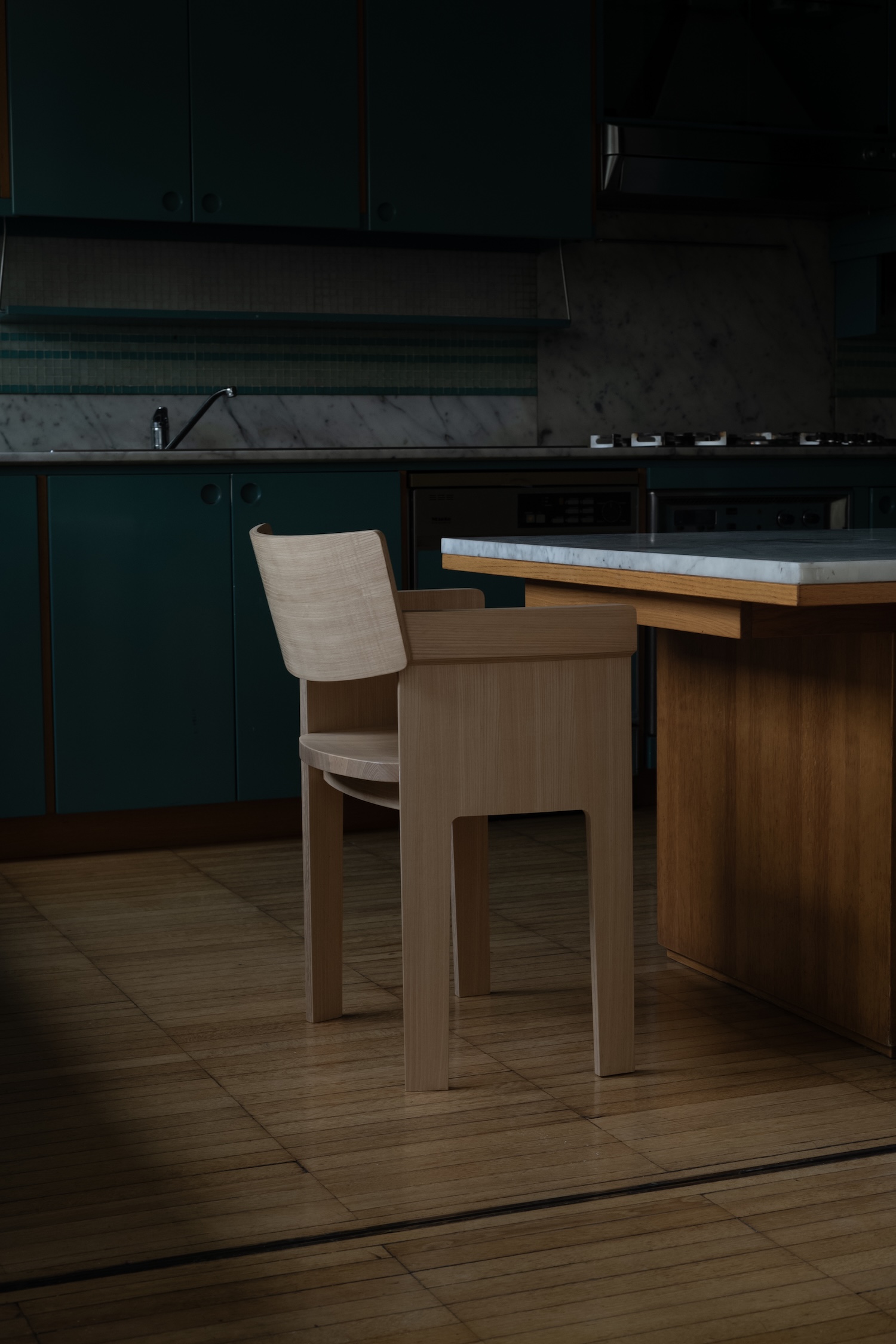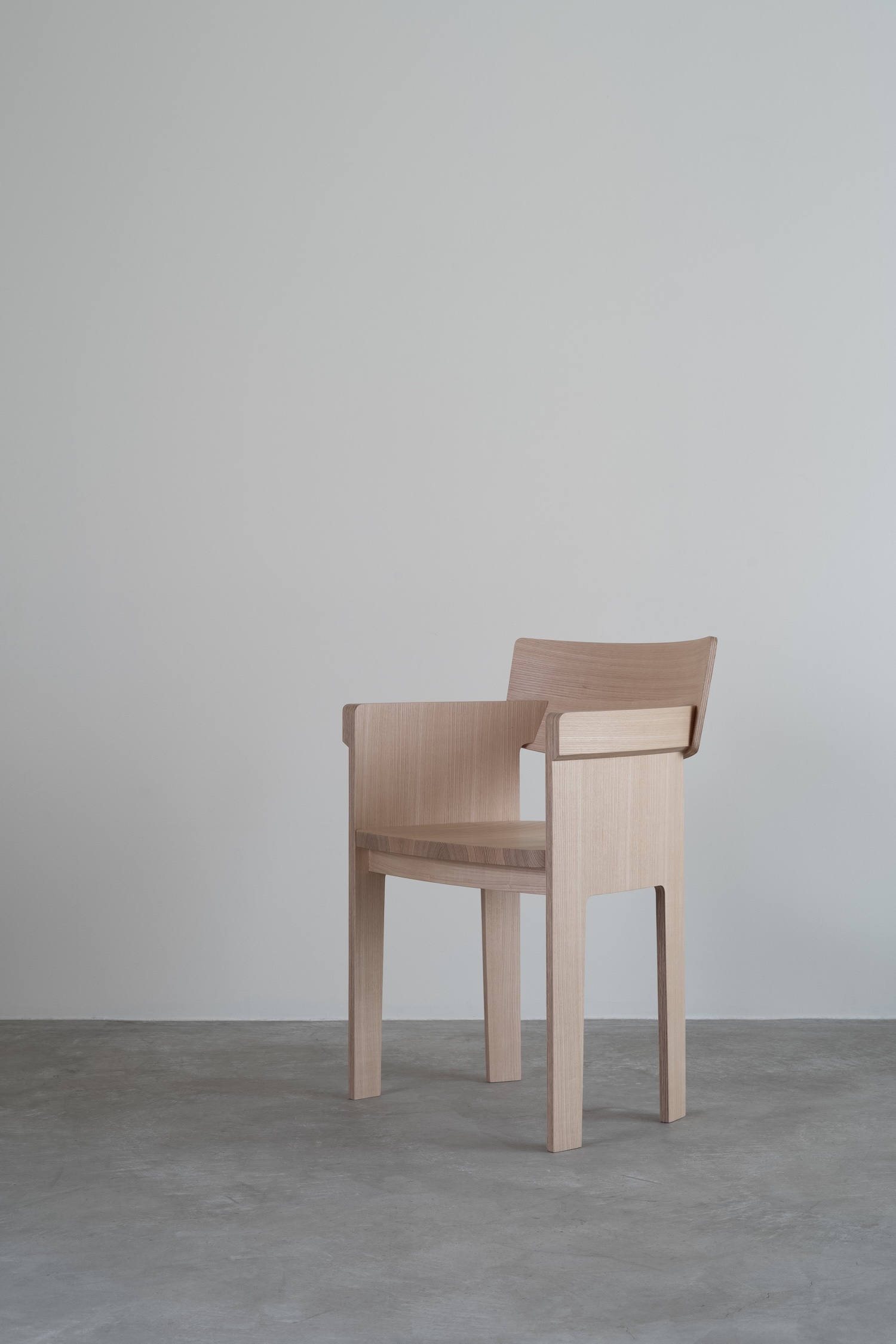
Armchair Parens is a minimalist armchair created by Tokyo-based designer Ryuichi Kozeki, presented at Alcova Milano 2026 as part of his two-part exhibition titled () <>. The chair takes its name and structural logic from the parenthesis symbol – a curved line that, through the simple act of bending, shifts from a mark on a page to a load-bearing form. Kozeki extends this observation into furniture: sheets of molded plywood bent into () curves distribute vertical loads while gaining resistance to lateral torsion, a structural behavior well understood in architecture but less commonly foregrounded in seating design. The analogy between typographic symbol and physical structure is not decorative; it is the generative principle from which the entire composition follows.
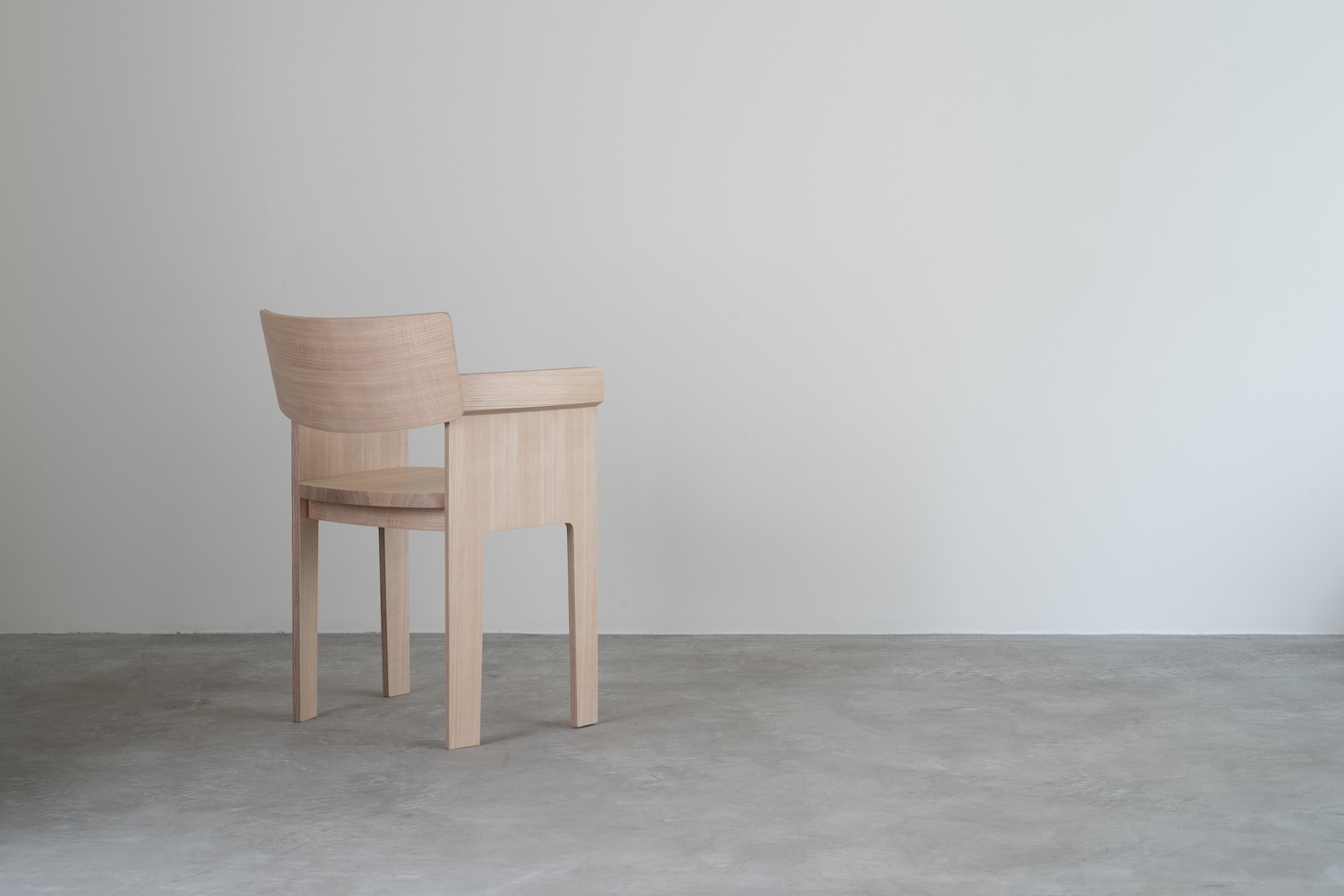
Ash veneer plywood forms the chair’s side panels as continuous single sheets, curved in broad arcs that rise from the floor, meet the seat plane, and extend outward as armrests. The arms are not added components – they are the natural consequence of the material changing direction. This conflation of part and function gives Parens an unusually spare component count for an armchair: there is no separate arm structure, no transition piece, no visual seam where arm meets body. The backrest, by contrast, holds a simpler curve and meets the side panels with an intentional misalignment. Kozeki lets the joint read rather than resolving it. The offset reveals the distinction between the two curves and, in doing so, produces a detail of real visual tension – the chair’s most expressive moment.
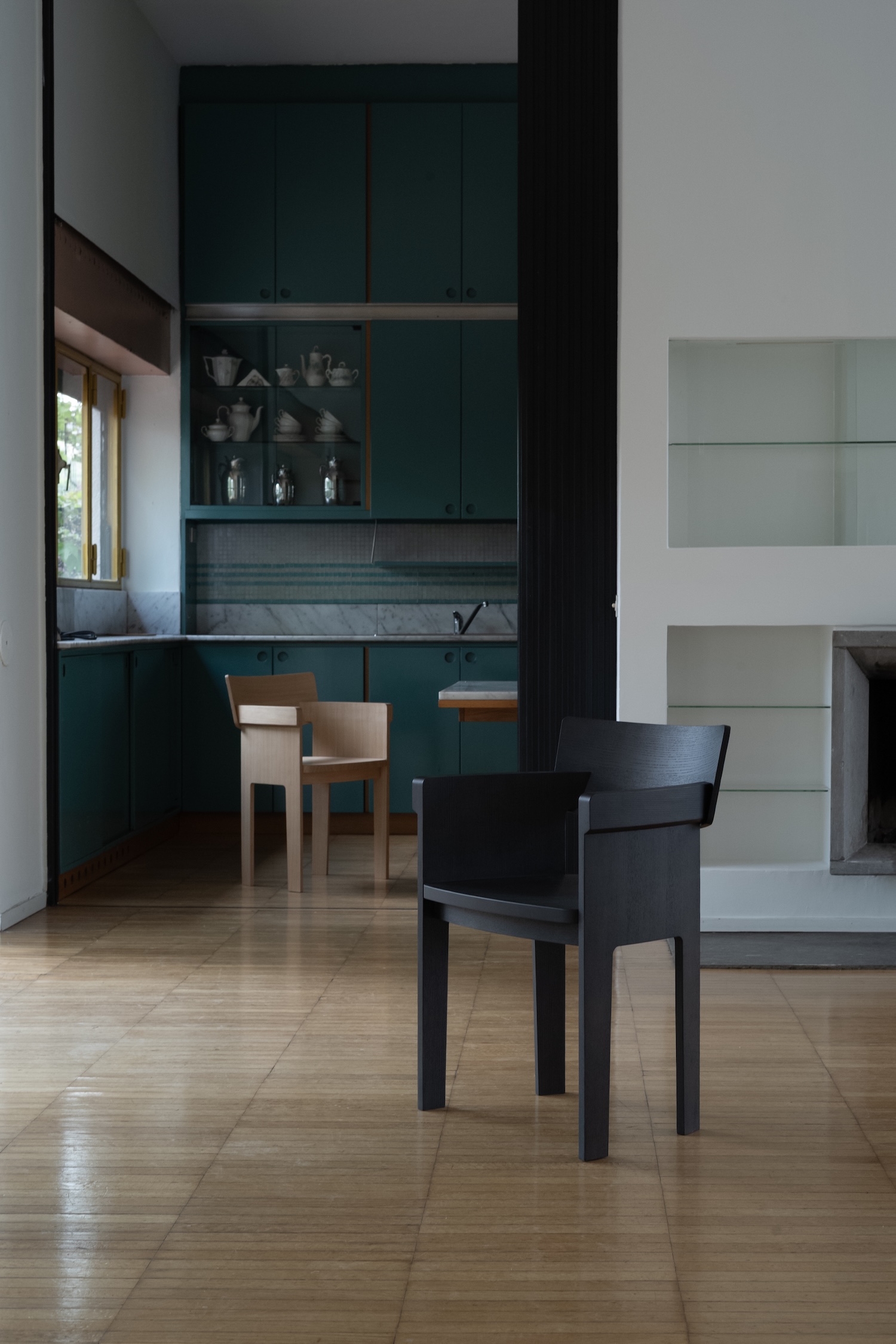
The work sits comfortably alongside postwar experiments in molded plywood seating, particularly the formal investigations carried out at Knoll and Herman Miller during the 1940s and 50s, but Kozeki’s approach is more structural than ergonomic in its orientation. Where designers like Charles and Ray Eames used compound curves to cradle the body, Kozeki works primarily in single-axis bends, keeping the geometry legible and the fabrication reproducible – a deliberate alignment with industrial design’s core condition. The chair’s two available finishes, natural ash and black-stained ash, do not alter the reading of the form, but the darker version flattens the grain and draws the eye more firmly to silhouette, sharpening the typographic quality of the profile.