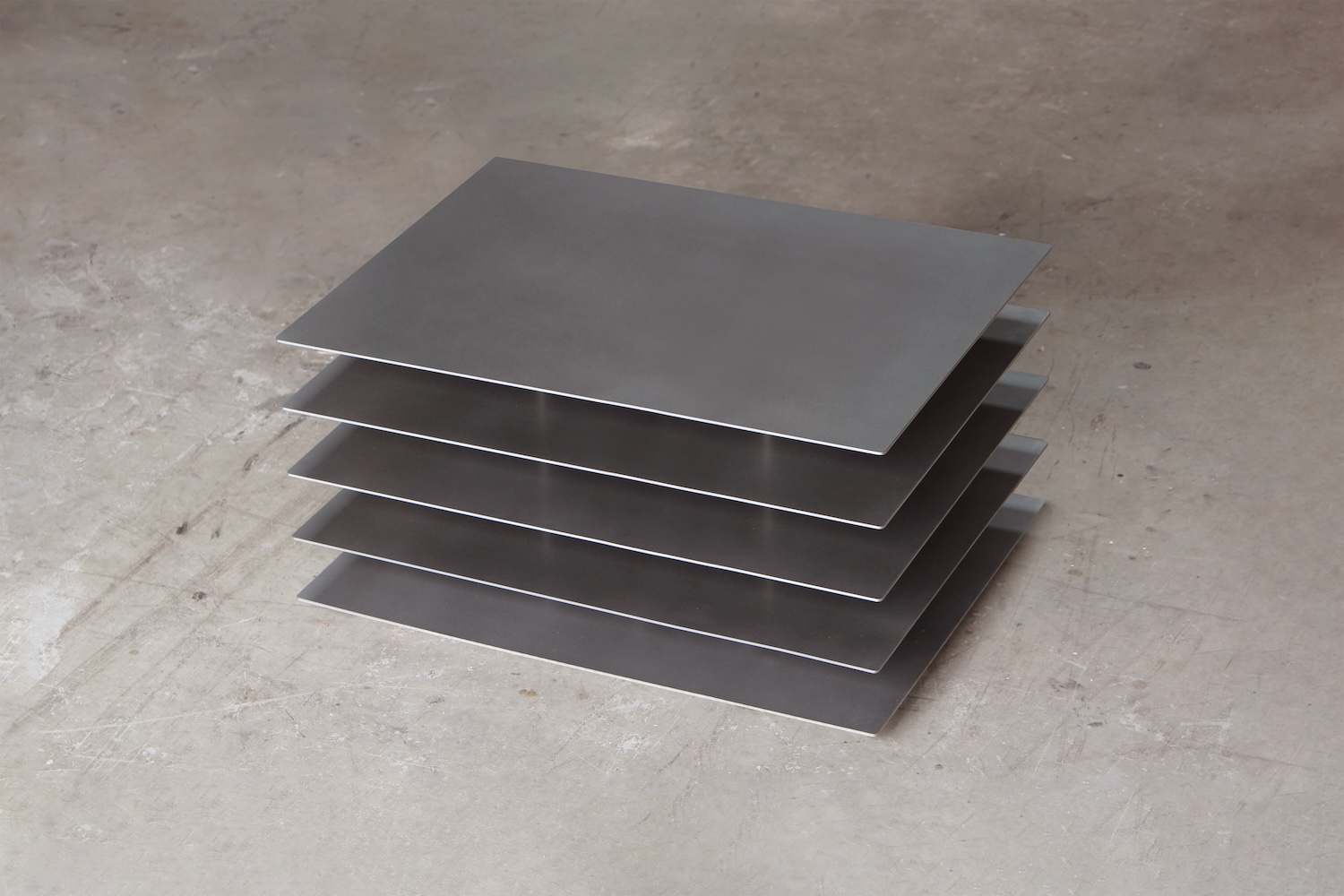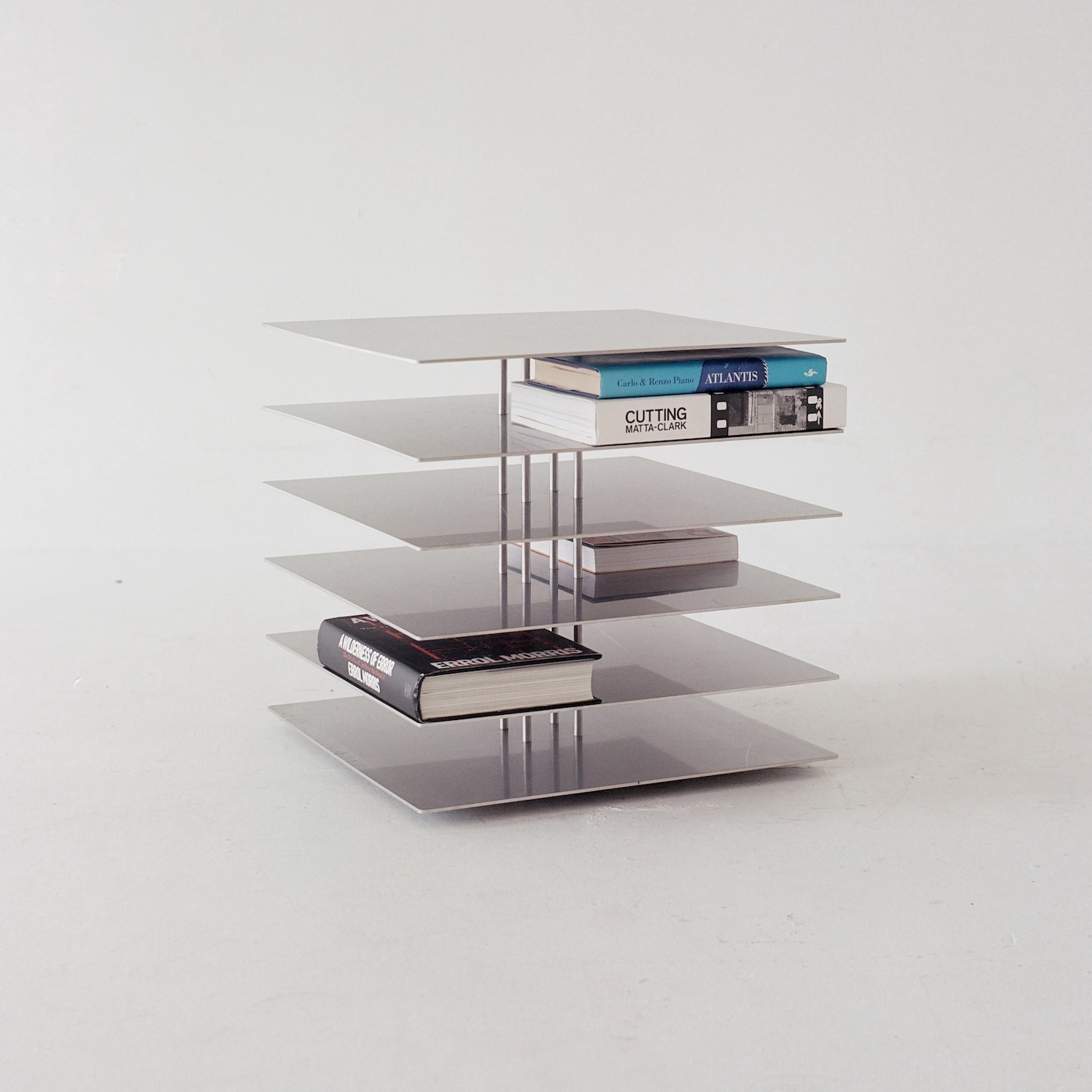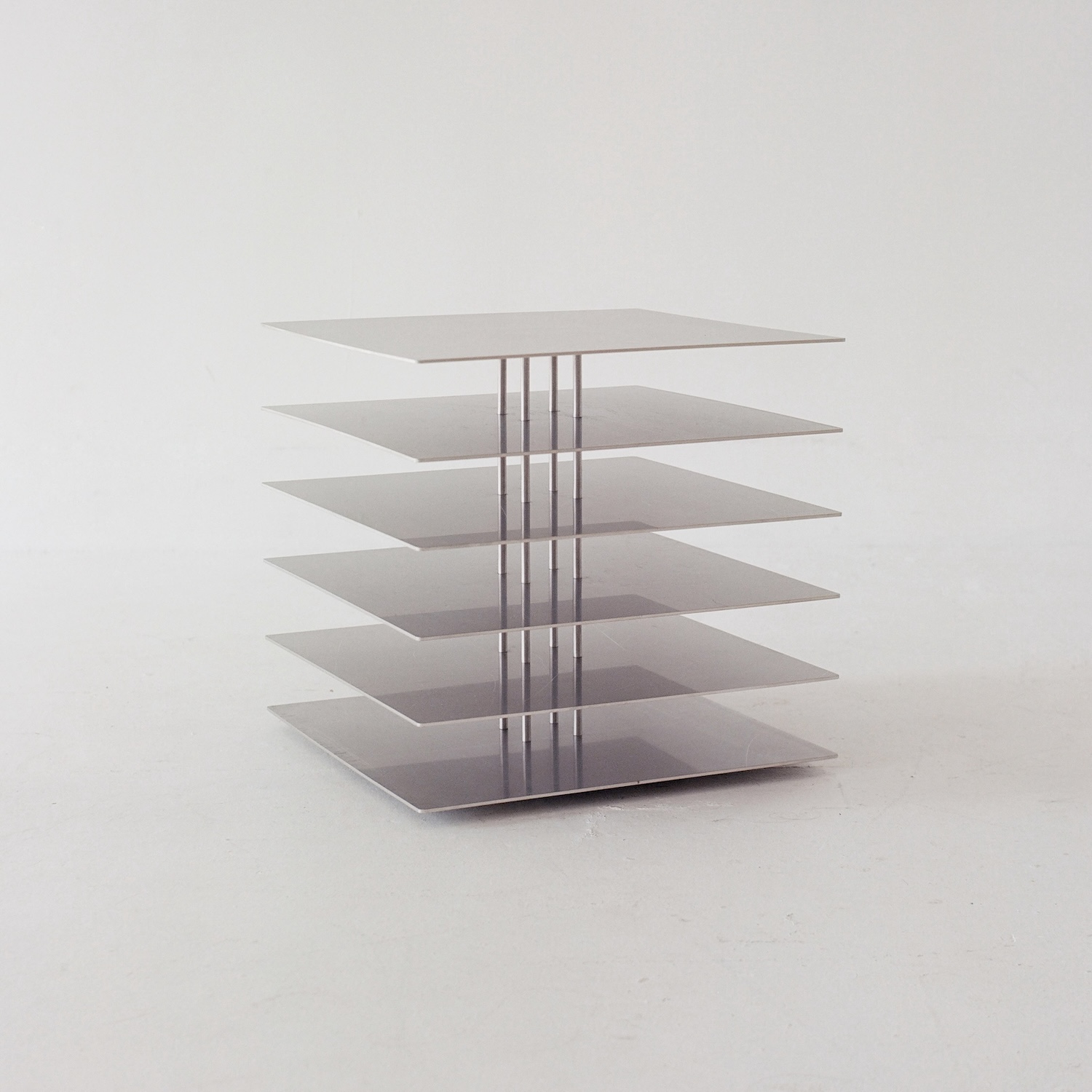
Domino Table is a minimalist table created by Brooklyn-based designer Ford Bostwick. In a small Brooklyn studio, a table seems to defy gravity – its metal planes appearing to float in space, held aloft by impossibly delicate columns. This is Ford Bostwick’s Domino table, a piece that transforms Le Corbusier’s revolutionary architectural principles into an intimate scale, while asking profound questions about structure, transparency, and the boundaries between furniture and sculpture.
The table’s name and form directly reference Le Corbusier’s 1914 Dom-Ino House concept, which reduced architecture to its essential elements of horizontal planes supported by slender columns. But where Le Corbusier’s innovation was in concrete, Bostwick pushes the limits of stainless steel, creating surfaces so thin they seem to disappear from certain angles. The hand-brushed satin finish further dematerializes the piece, allowing it to capture and softly reflect its surroundings rather than dominate them.
What makes the Domino table particularly remarkable is its structural ingenuity. The engineering relies on a careful balance of tension and compression forces, eliminating the need for visible hardware or welds. This technical achievement serves the aesthetic goal – the table appears to be composed purely of geometric planes, its construction method remaining deliberately enigmatic. As Bostwick notes through his work, “I’m interested in that moment when something familiar becomes strange, when you have to look twice to understand how it works.”
The piece sits within a lineage of modernist furniture that celebrates structural honesty while pushing material limitations. It recalls Mies van der Rohe’s Barcelona table with its emphasis on planar elements, yet takes the concept further by seemingly eliminating all evidence of joinery. This approach aligns with contemporary minimalist designers like Jonathan Muecke and Max Lamb, who similarly explore how to reduce furniture to its absolute essentials while maintaining visual intrigue.
But perhaps most importantly, the Domino table demonstrates how historical architectural principles can be reinterpreted for contemporary domestic spaces. By translating Le Corbusier’s massive structural concept into an intimate piece of furniture, Bostwick creates a dialogue between architecture and design that spans more than a century. The result is both a functional table and a meditation on modernism’s enduring influence on how we think about structure, space, and material.