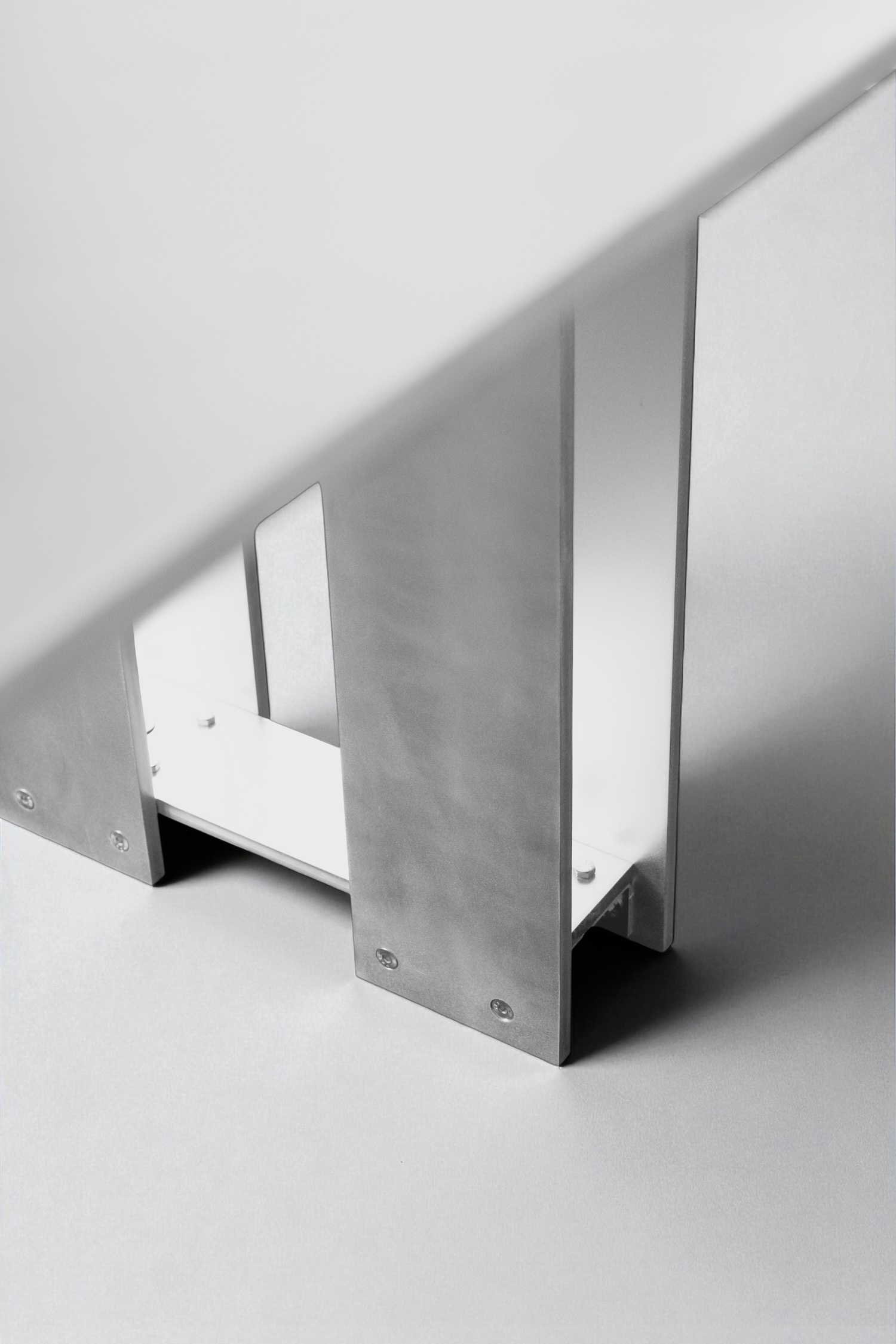
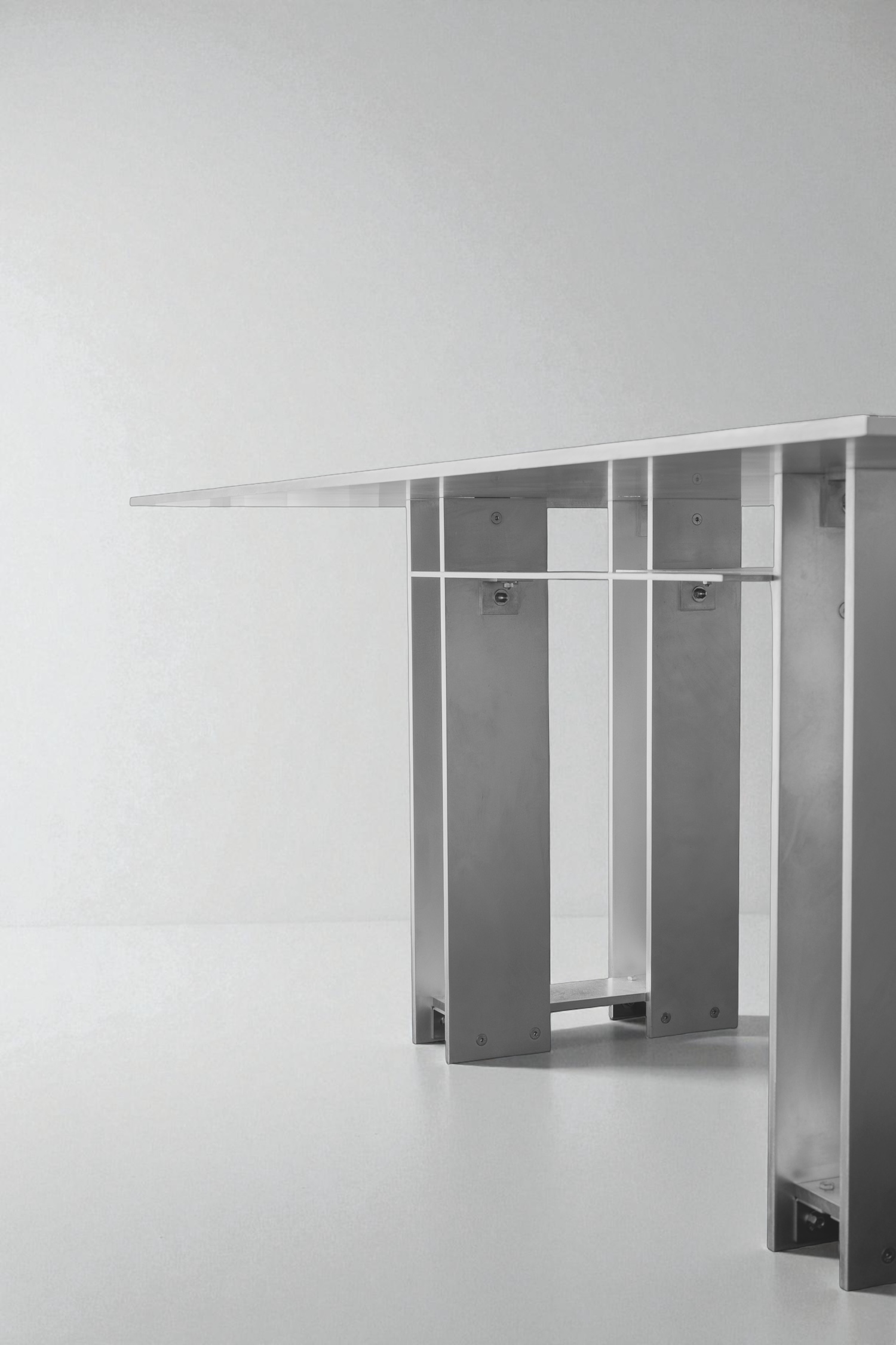
First Desk is a minimalist work table created by Brooklyn-based studio Haven. Industrial aluminum carries a particular set of expectations: precision milling, anodized finishes, engineered joints that conceal their mechanics. First Desk deliberately refuses these conventions, treating the material not as something to be refined into technological perfection but as a found substance with inherent qualities worth preserving. The entire structure is built from solid aluminum plates left in their extruded dimensions, edges raw and unfinished, each surface a direct expression of the material as it arrives from the supplier.
This approach recalls the material honesty of Donald Judd’s furniture, where industrial fabrication methods were celebrated rather than disguised, and construction logic became integral to the object’s visual language. Haven extends this philosophy through assembly: exposed nuts and bolts organize the desk’s components without attempting to hide their function. The fasteners are not decorative gestures toward industrial aesthetics but genuine structural necessities, allowing the entire piece to be disassembled and shipped flat. What appears as permanence is actually provisional, a quality increasingly relevant as work spaces become more fluid and impermanent.
The desk is substantial enough to establish presence without overwhelming smaller studios or home offices. Two aluminum shelves beneath the primary surface create storage for laptops and daily tools, clearing the work plane while maintaining material consistency throughout. Cable ports cut into the tabletop acknowledge the reality of contemporary work, where multiple devices require power and connectivity. These practical interventions are treated with the same directness as the structural elements – necessary accommodations rather than afterthoughts.
At 300 pounds, the desk possesses considerable mass, yet concealed casters allow it to move freely across a space. This combination of weight and mobility creates an interesting tension: the object reads as grounded and permanent while remaining fundamentally relocatable. The reflective quality of aluminum amplifies ambient light, and the material’s neutral tones create what Haven describes as a background for work rather than a focal point. This is furniture that aims to recede in service of what happens on its surface.