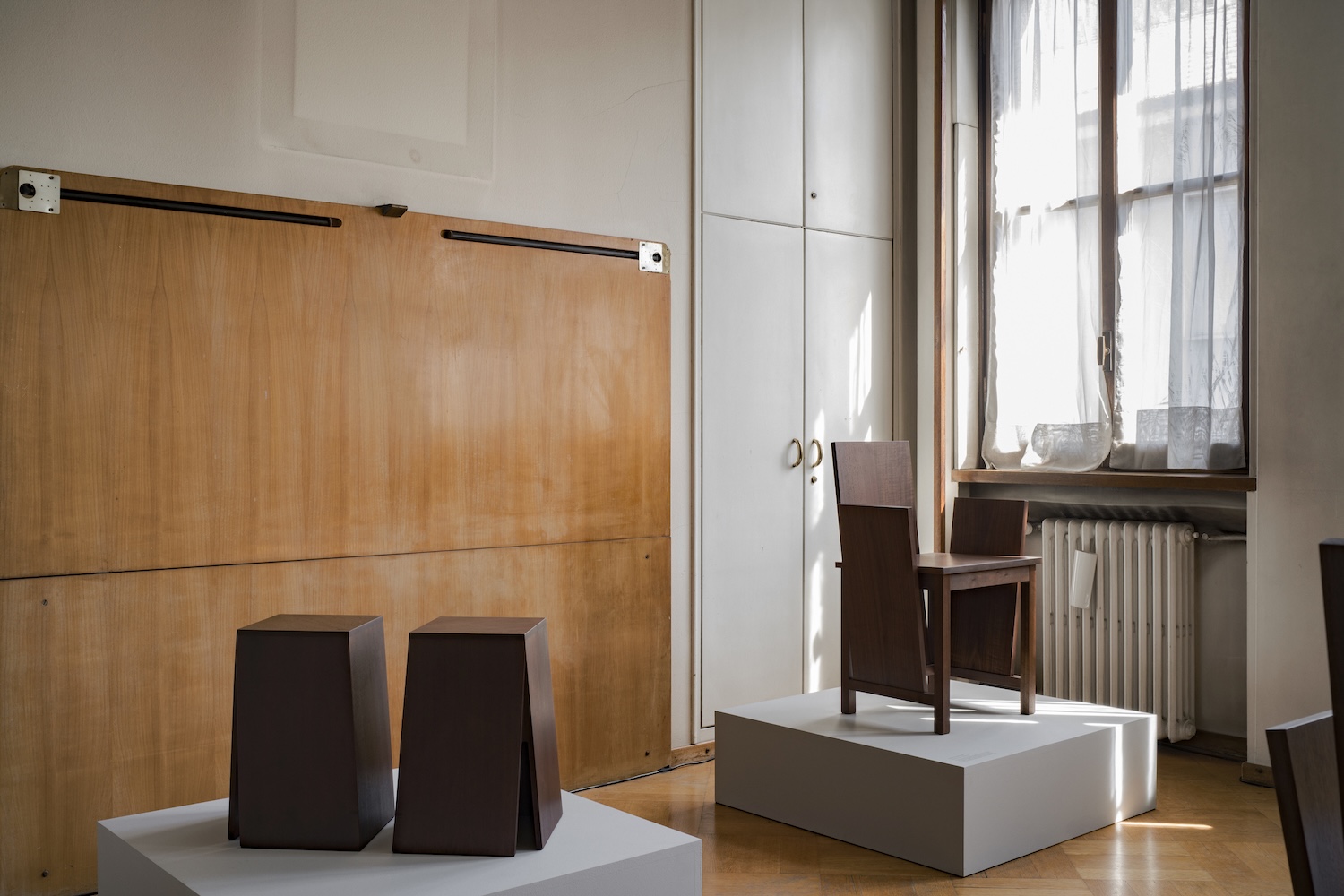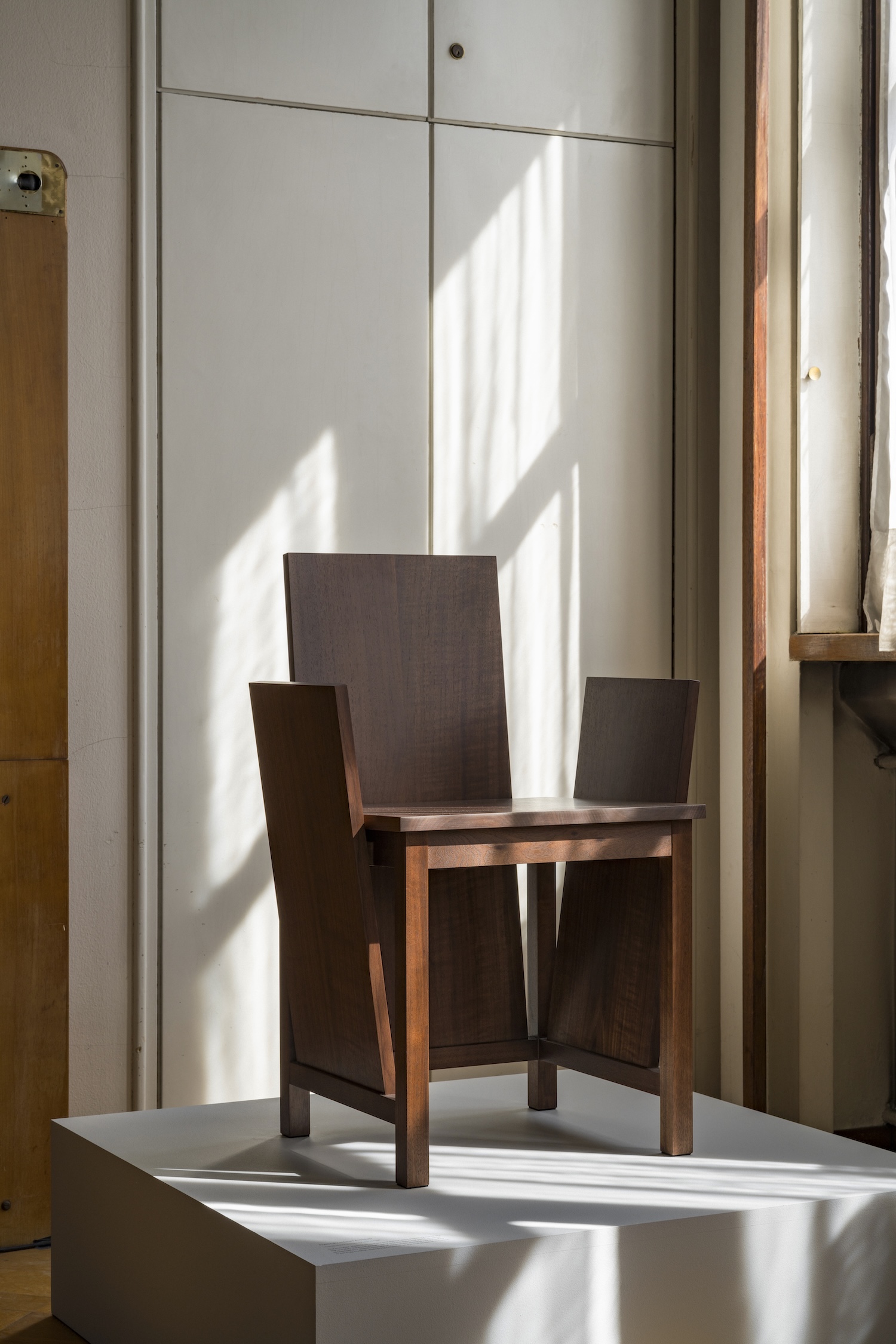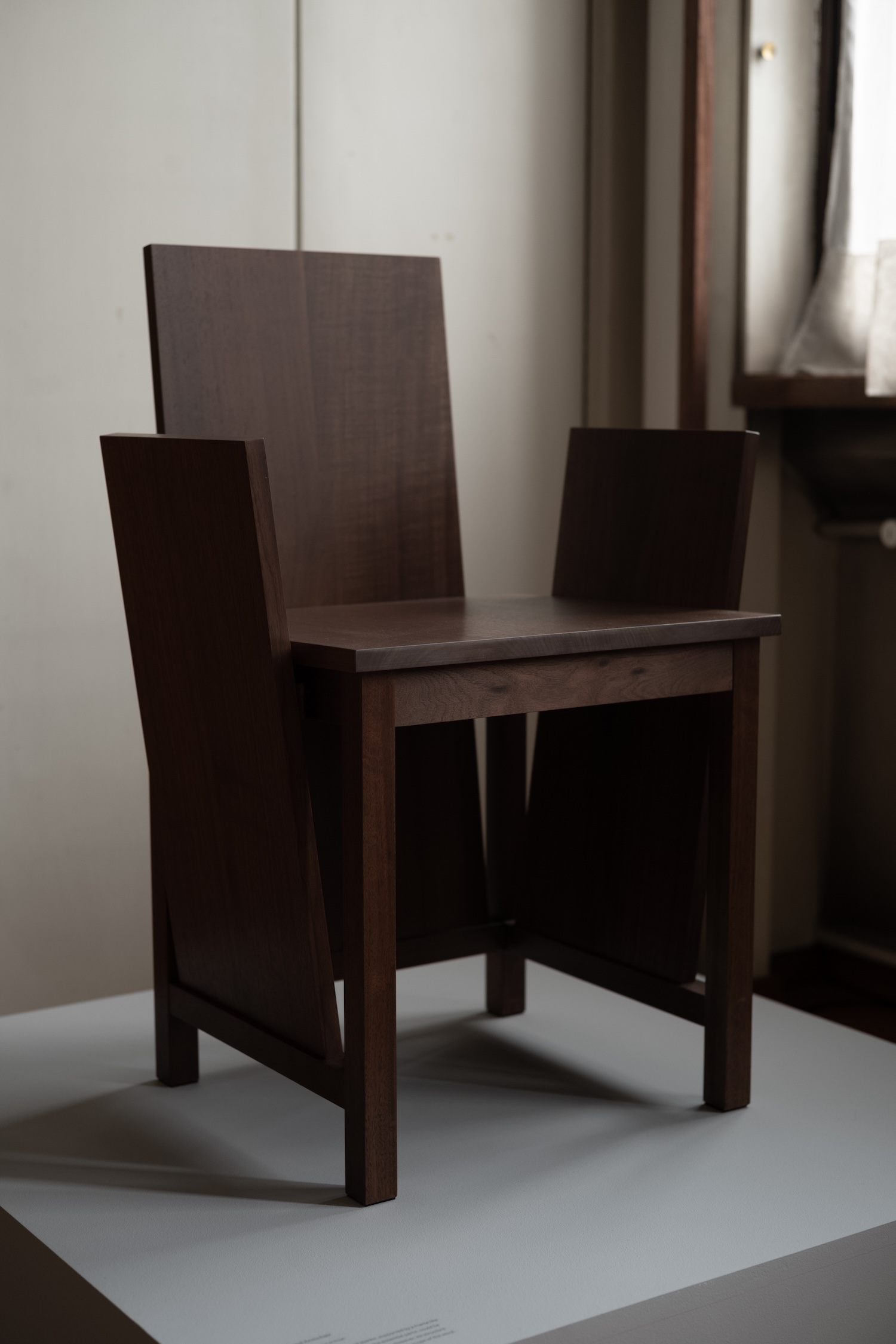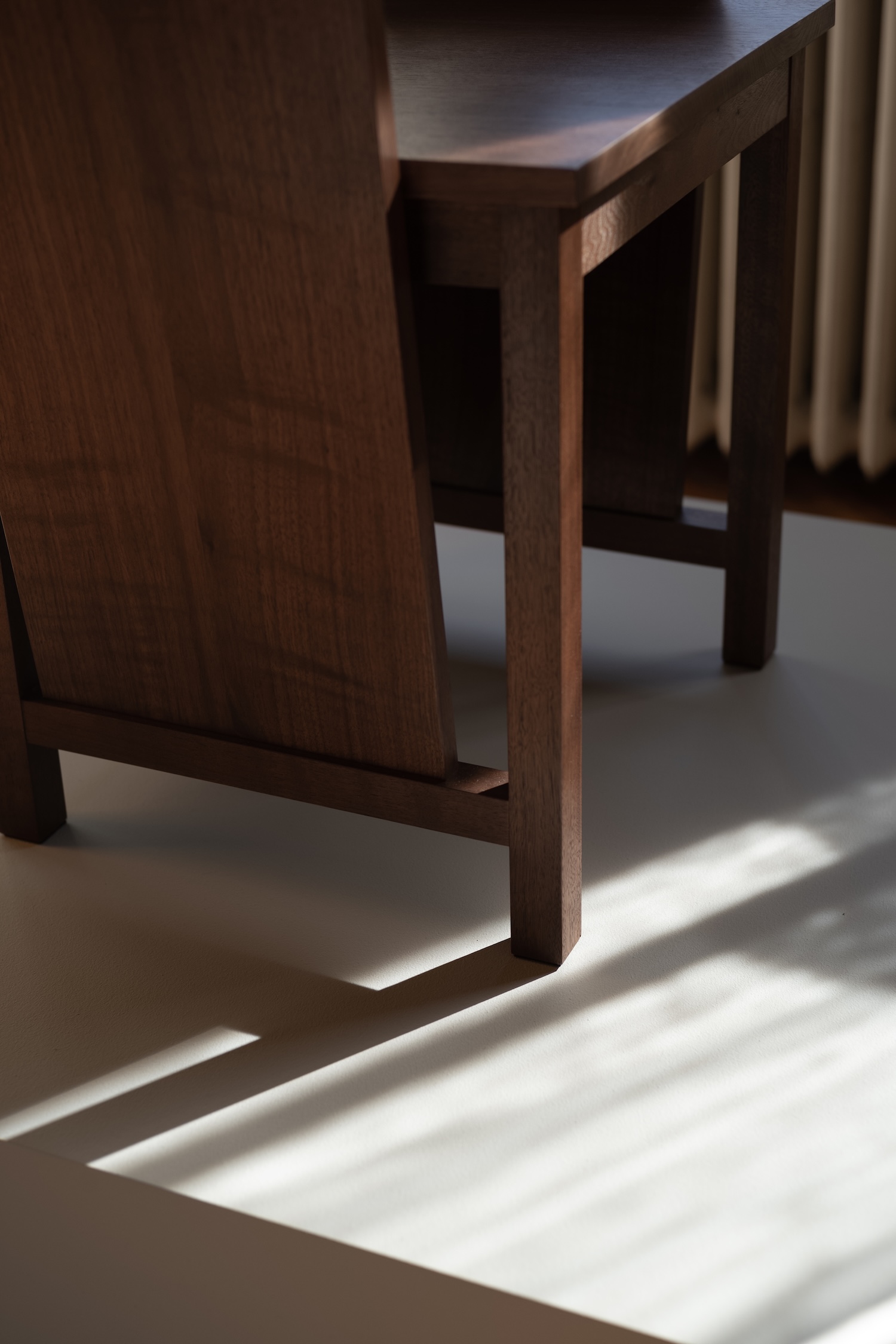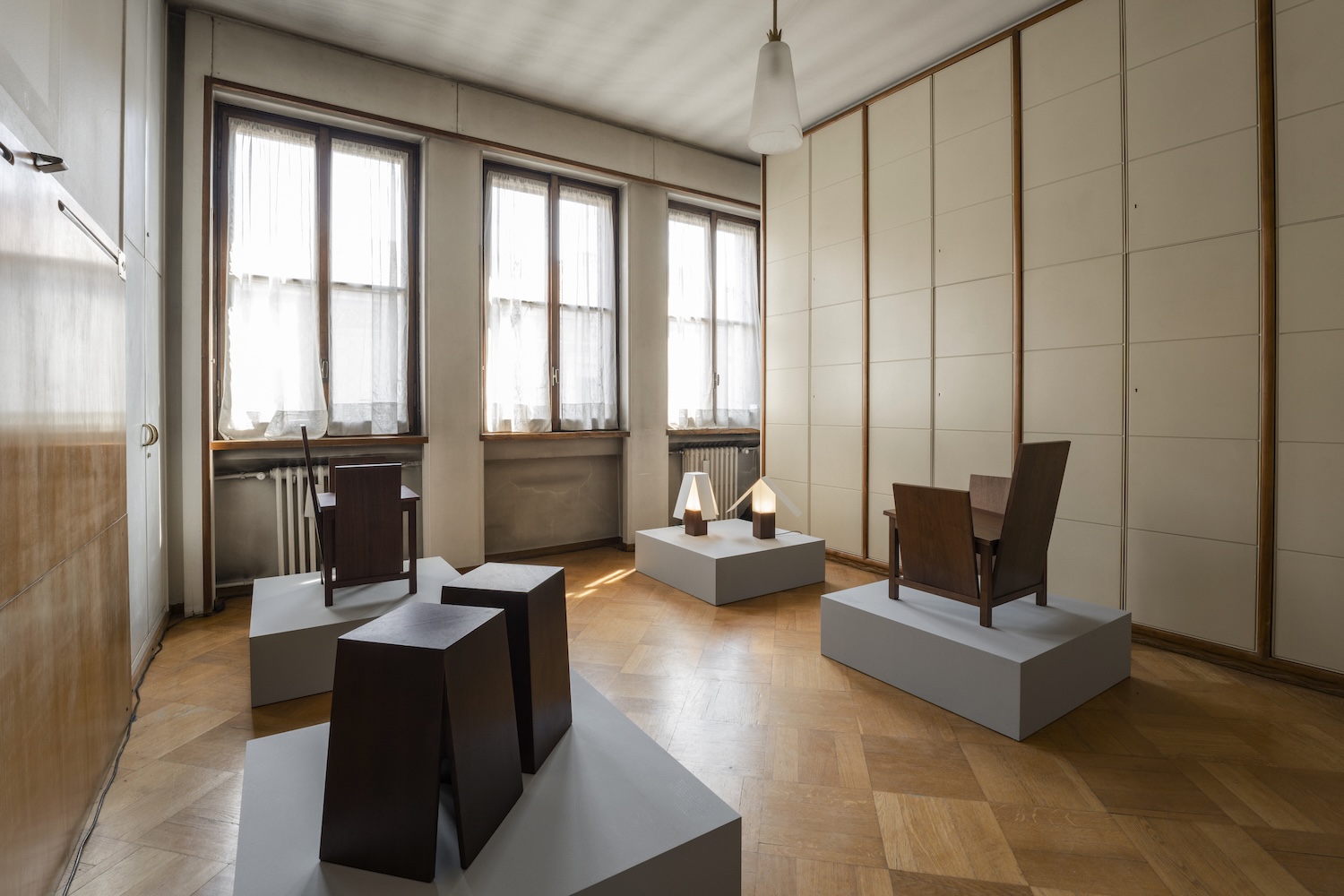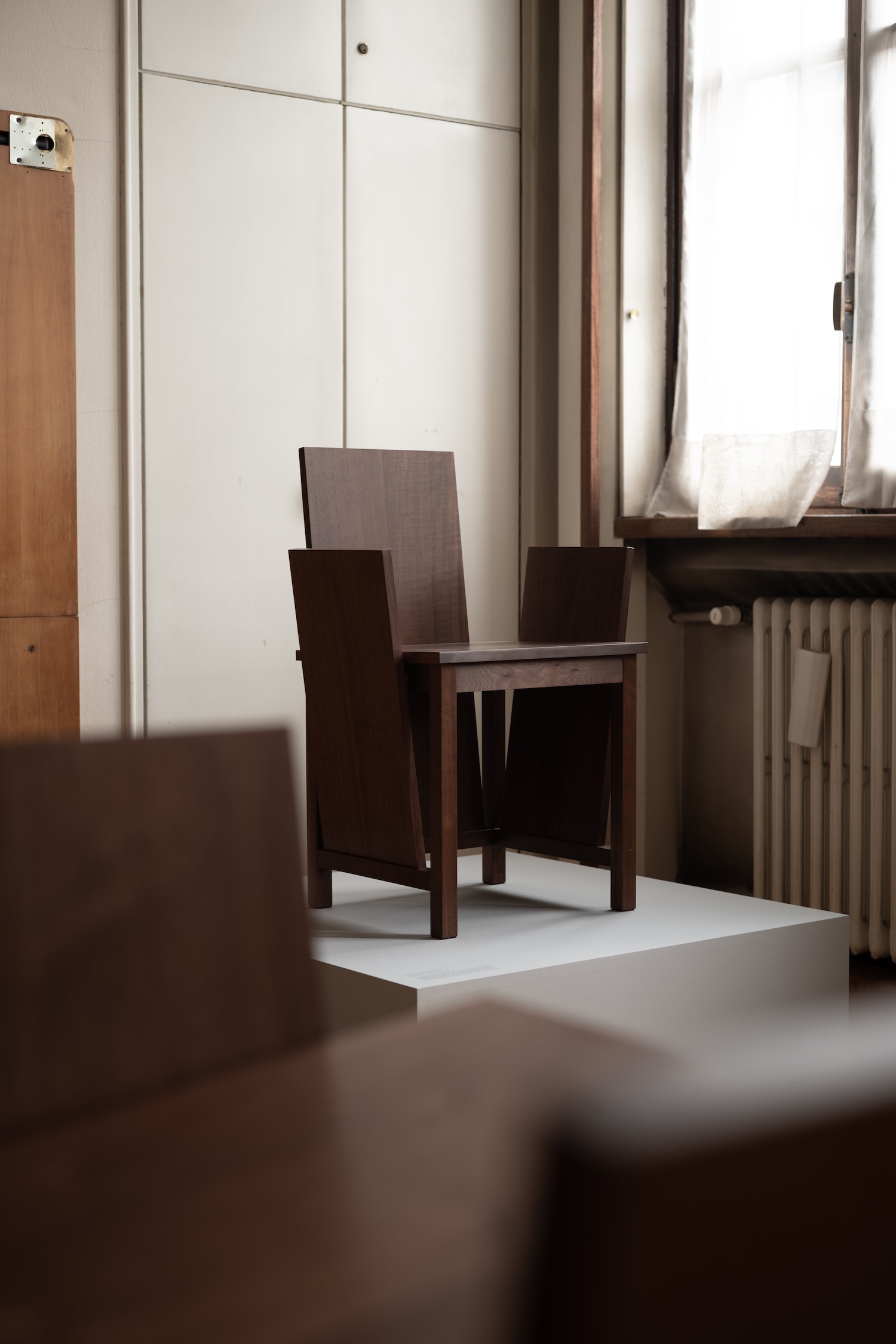
Frame Structured Armchair is a minimalist chair created by Tokyo-based designer Ryuichi Kozeki. A single piece of furniture can reveal worlds of meaning. In the low chair before us, we find not merely a place to sit, but a visual manifesto – a declaration that challenges our assumptions about structural integrity and rational design. The chair’s composition hinges on a fascinating contradiction: components that appear to float in space, never touching one another directly, yet forming a cohesive whole through the mediating presence of a central frame.
The dynamic positioning of the timbers and boards creates a visual tension that immediately recalls the work of Dutch pioneer Gerrit Rietveld, whose experiments with the De Stijl movement similarly explored spatial relationships between discrete elements. But where Rietveld’s famous Red and Blue Chair embraced stark primary colors and pronounced joints, this design strips away such obvious visual cues, forcing us to contemplate the essential relationship between structure and space.
What makes this chair particularly compelling is its seeming simplicity that belies a complex structural logic. From most angles, one might categorize it as minimalist – a term often carelessly applied to anything visually spare. Yet a diagonal view from behind reveals the sophisticated tension system at work, with the backrest and arms being literally pulled into position by the frame. This is minimalism not as aesthetic shorthand but as philosophical inquiry: what is truly essential to a chair’s function and identity?
The designer has created a visual paradox – a form that simultaneously embodies both stability and instability. This tension mirrors our contemporary condition, where we constantly negotiate between order and chaos, tradition and innovation. In this way, the chair becomes not just functional but metaphorical, a physical manifestation of modern life’s inherent contradictions.