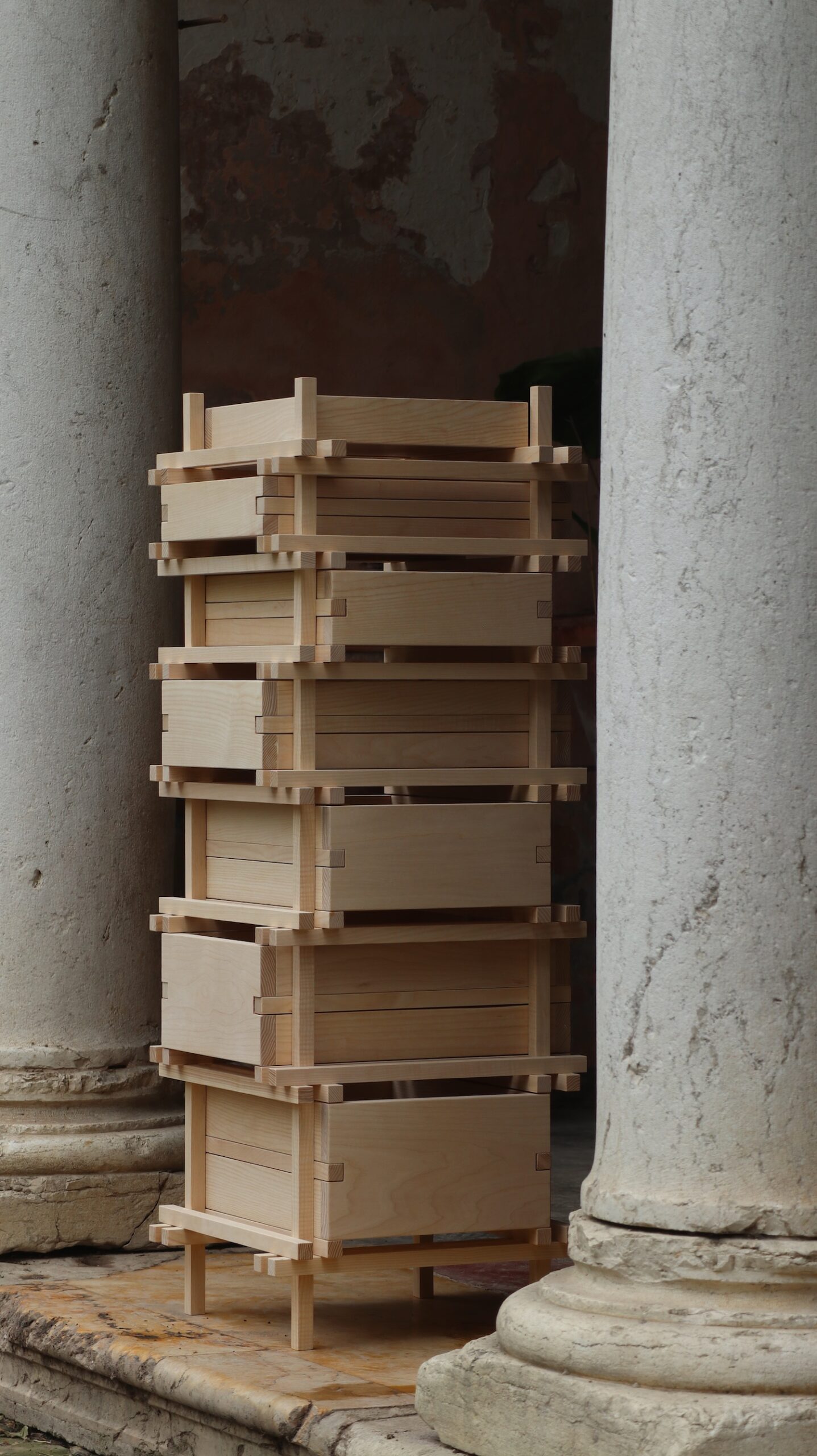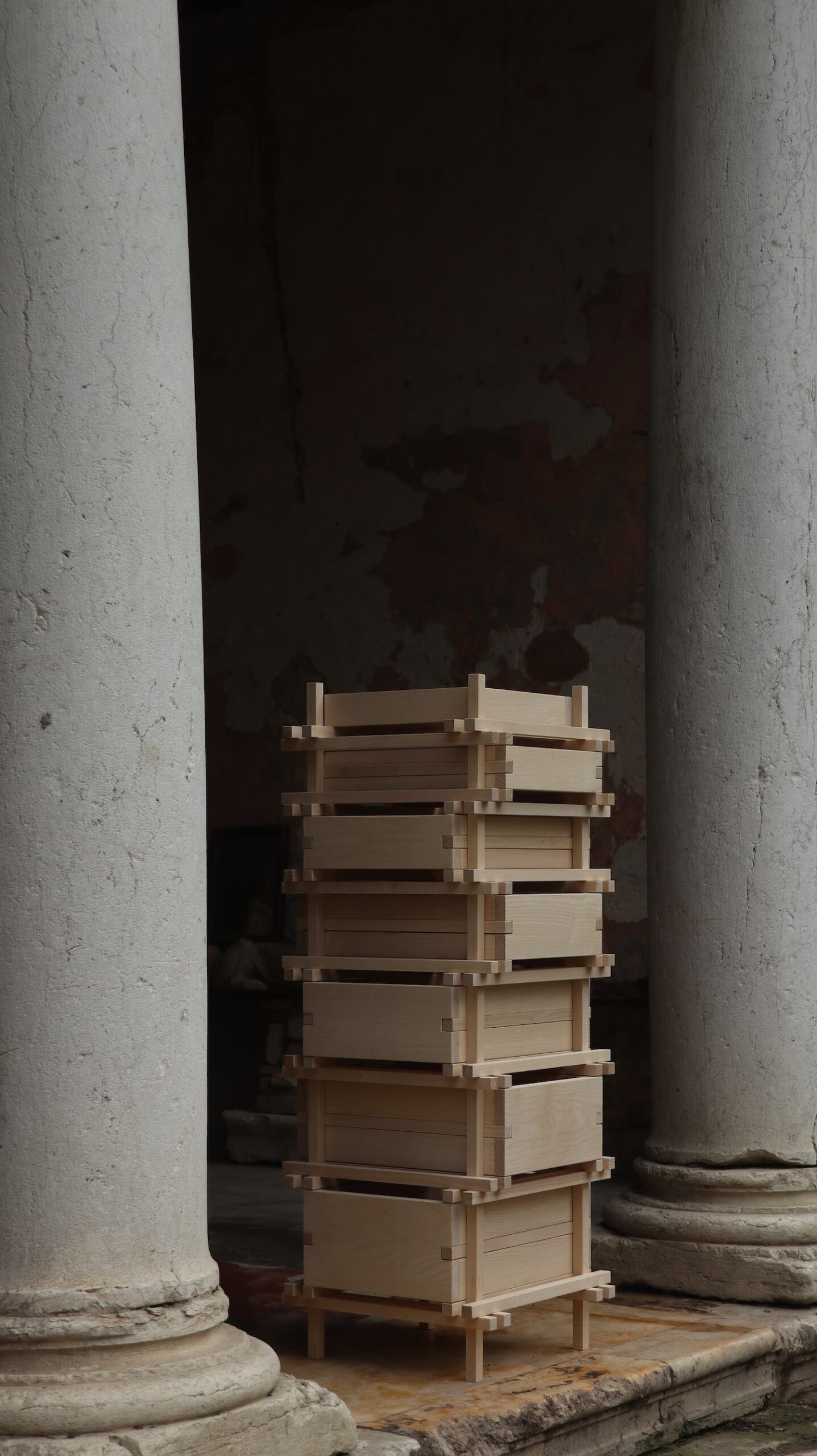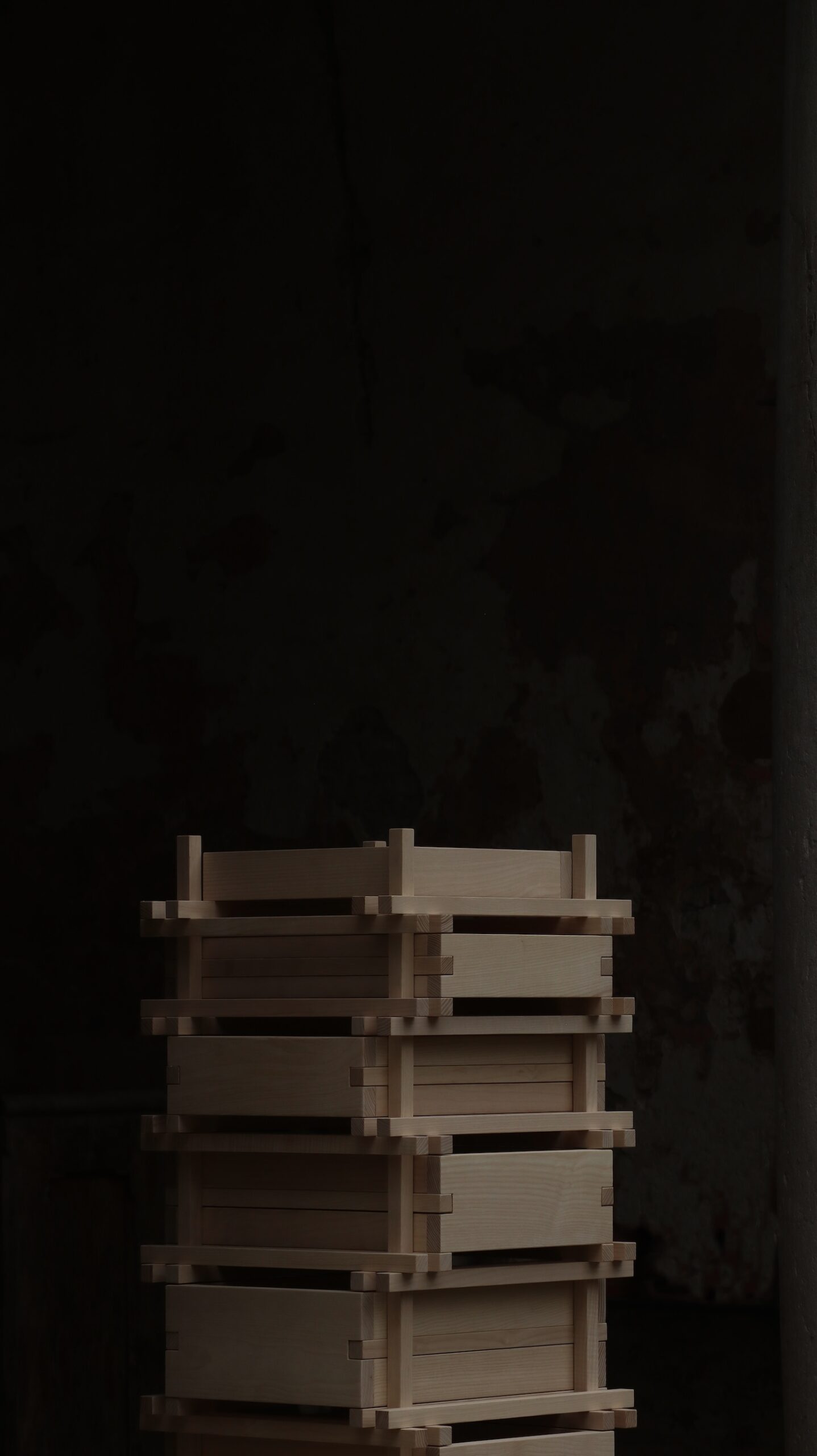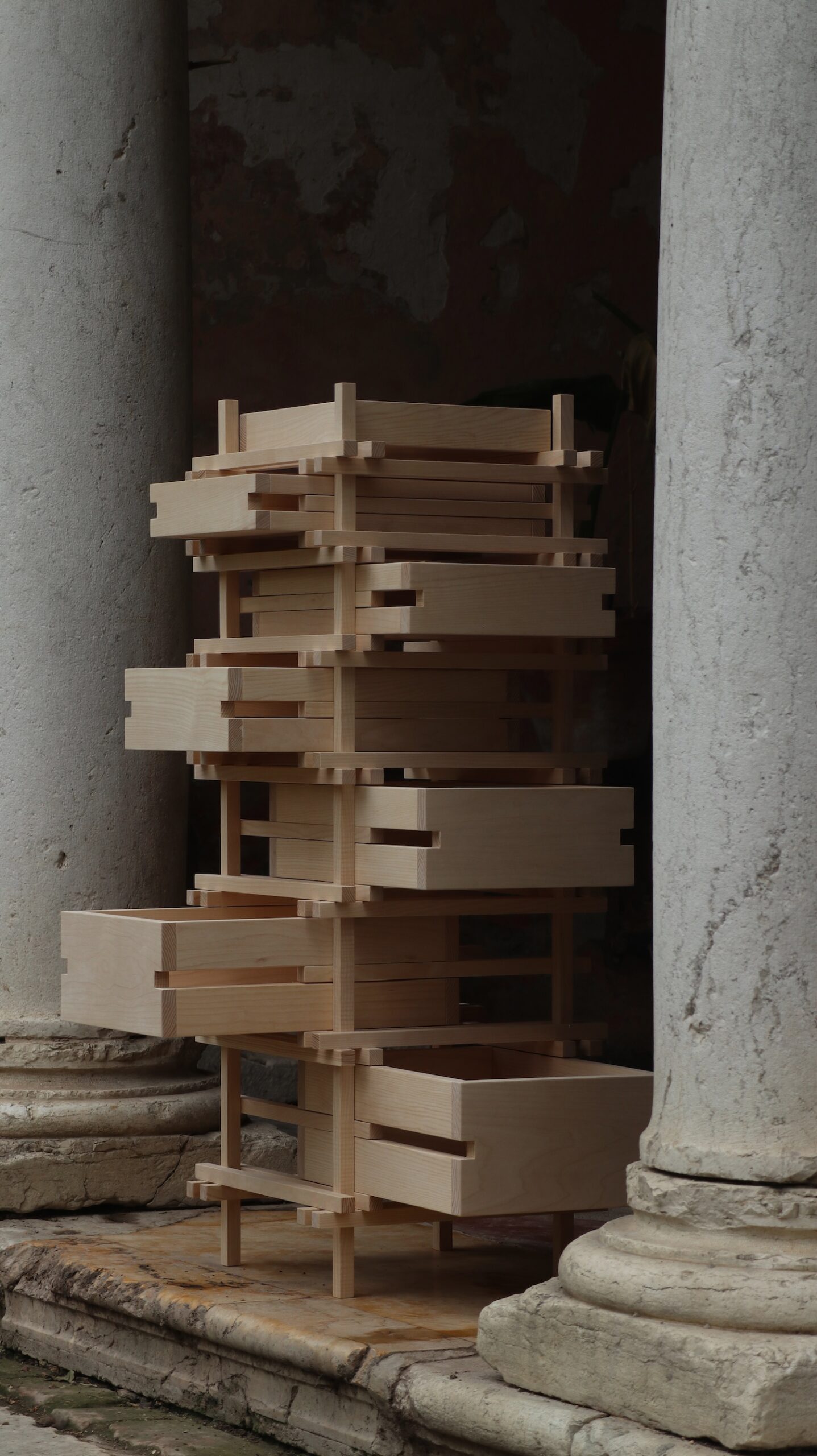
JENGA Drawer is a minimalist cabinet created by Denmark and Italy-based designer Filippo Andrighetto. This cabinet embodies a distinctly contemporary approach to space-making, one that acknowledges the compressed reality of urban living while refusing to sacrifice visual delight. The six drawers, each opening in alternating directions – front, side, front, side – create a rhythmic dance of accessibility that speaks to our nomadic relationship with objects. Like the apartment dweller who views furniture from multiple angles throughout the day, the Jenga drawer offers itself to be discovered from every vantage point.
The absence of back panels in each drawer represents more than mere structural economy. This deliberate void transforms the piece into what might be called a “breathing” cabinet, where light and air move through the form as freely as the hands that reach into its compartments. The exposed rails supporting each drawer become the design’s most honest gesture, revealing the mechanics of movement while serving as integrated handles. This transparency of function recalls the radical honesty of early modernist furniture, yet here it carries a lighter touch, less manifesto than invitation.
The removable top tray – that wonderfully Italian “svuota tasche” for emptying one’s pockets – crowns the composition with domestic poetry. It acknowledges the small rituals that punctuate our days: the nightly deposit of keys, coins, and accumulated ephemera. This gesture connects the Jenga drawer to a lineage of Italian design that finds profound meaning in quotidian moments, from Achille Castiglioni’s everyday object transformations to the Memphis Group’s celebration of the domestic stage.
Standing nearly as tall as it is wide, the Jenga drawer occupies space with sculptural confidence. Its modular sensibility echoes the stacking systems that have defined storage design since the 1960s, yet here the modules appear to shift and breathe, as if caught in a moment of architectural choreography. This is furniture that understands the contemporary interior not as a static tableau but as a constantly evolving composition of needs, moods, and spatial relationships.