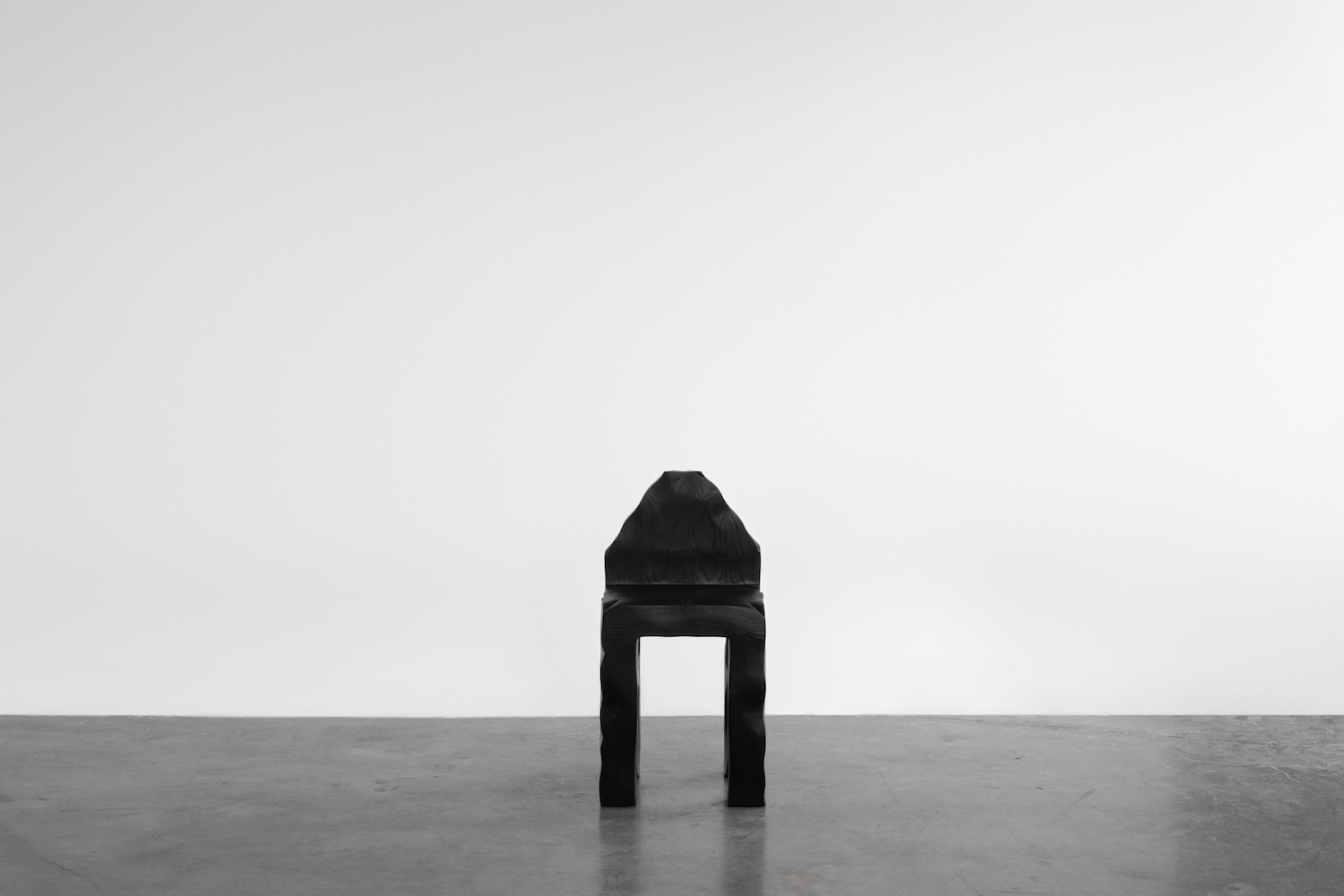
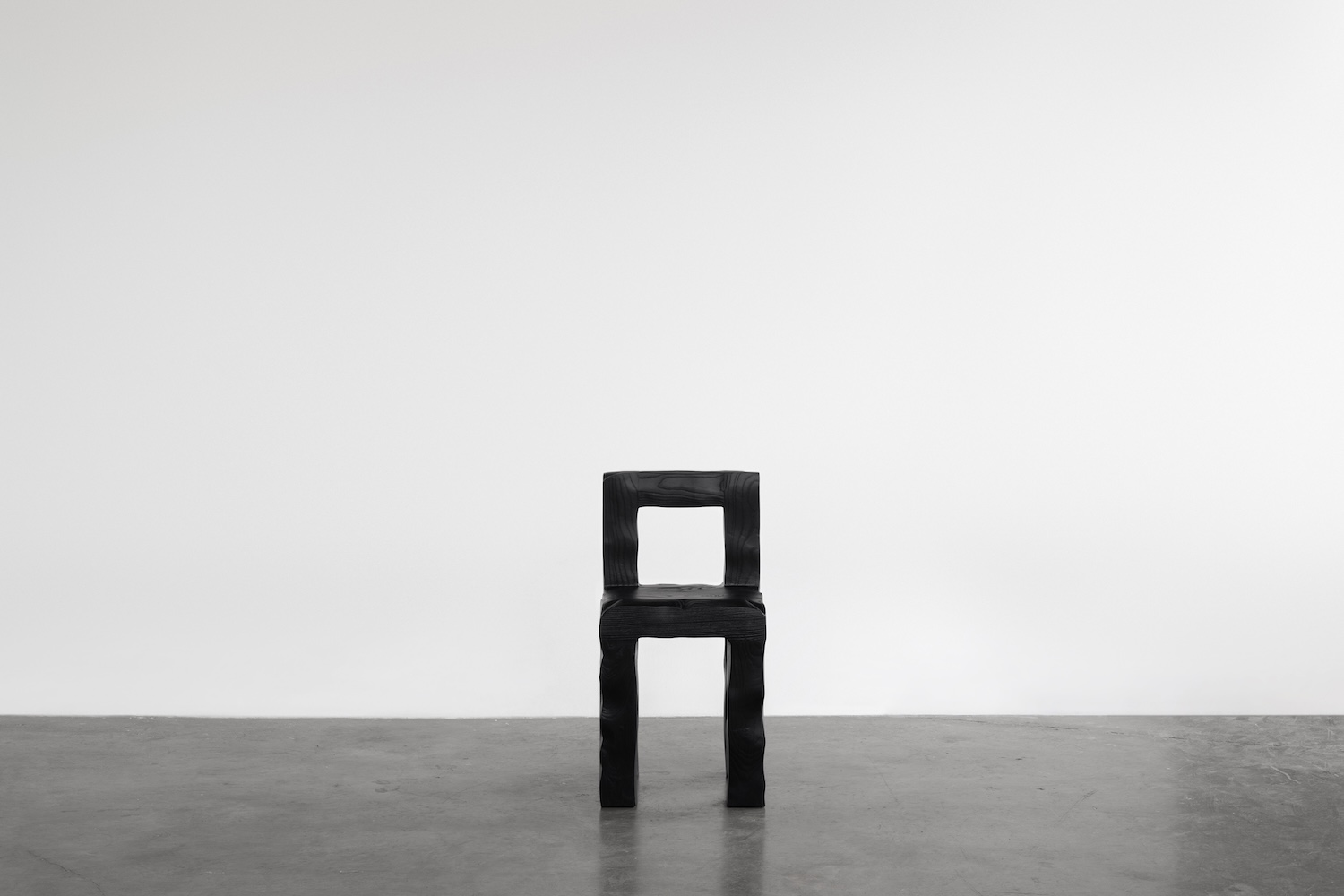
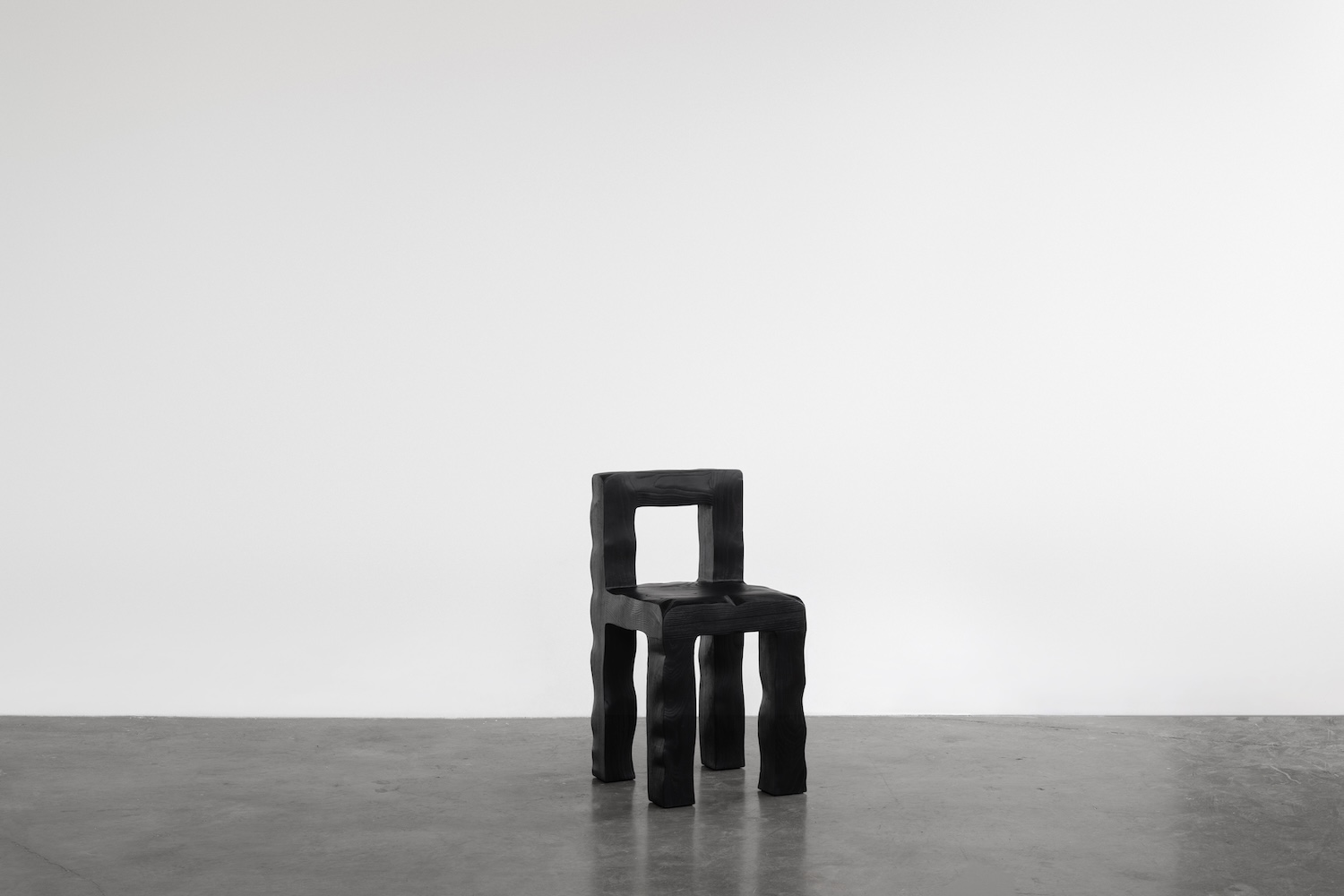
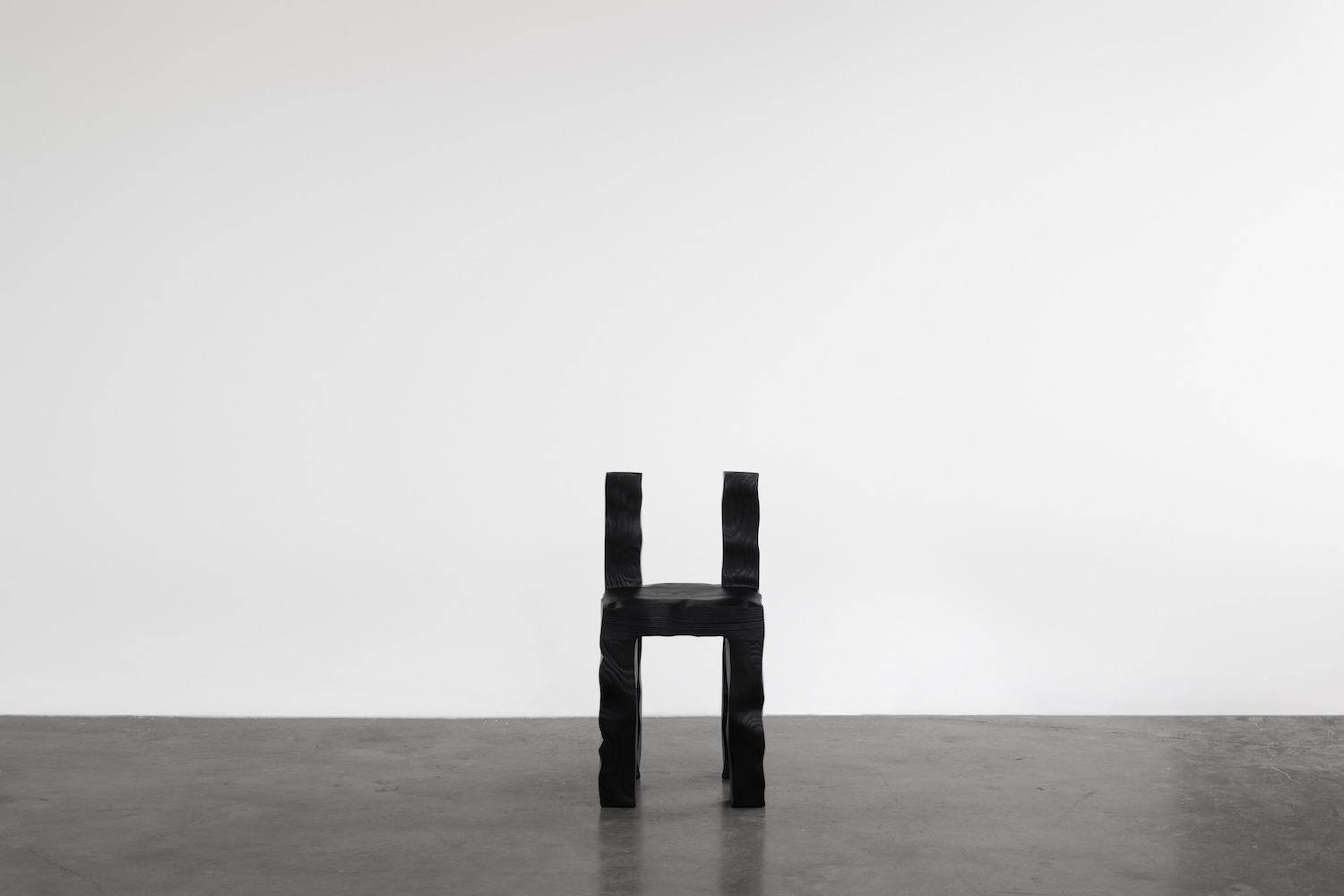
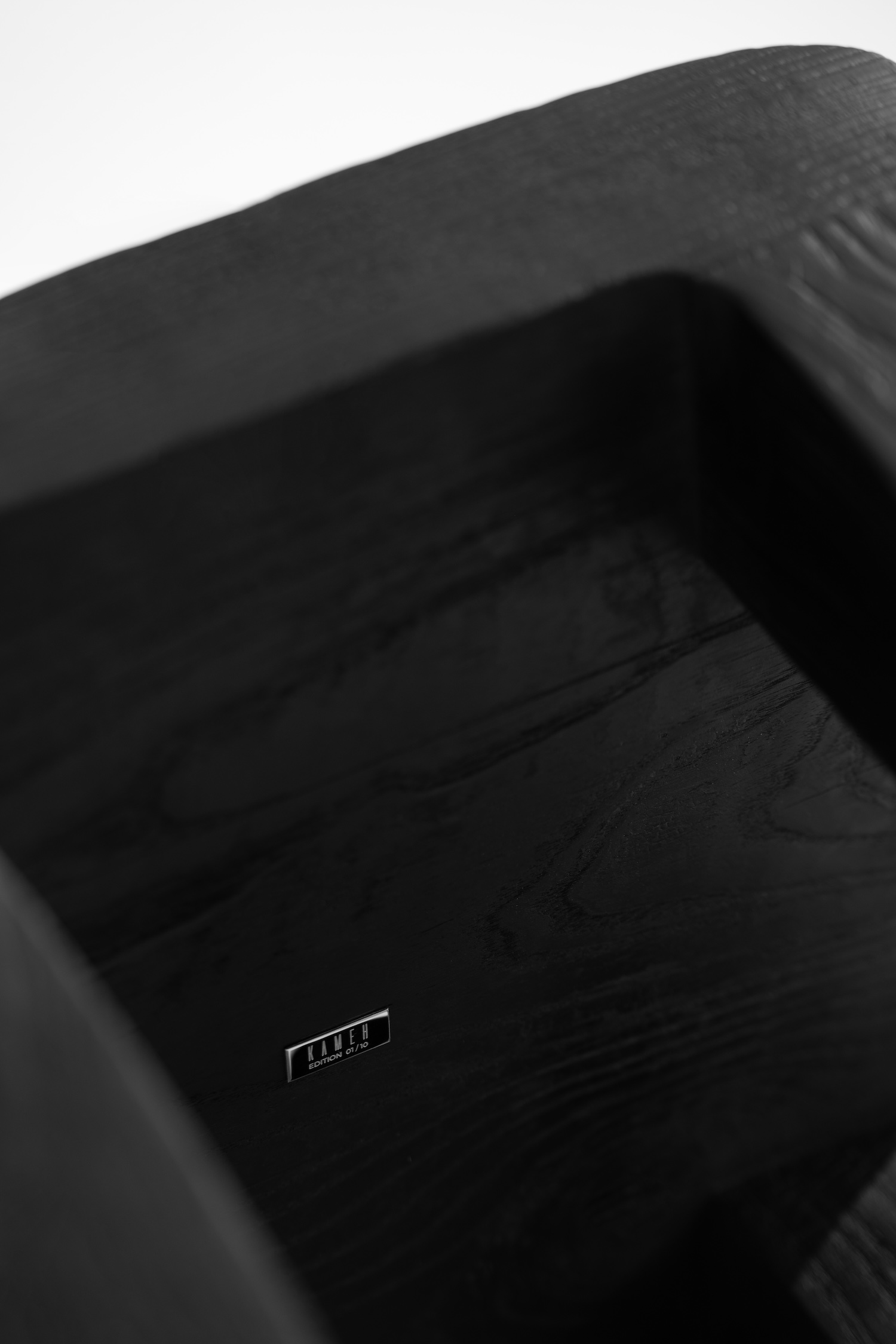
KAMEH 0.5 Collection is a minimalist chair series located in Dubai, UAE, designed by KAMEH. This limited edition collection of five hand-sculpted ash wood chairs marks the first UAE representation at Collectible New York Fair, demonstrating how Emirati designers can engage international collectible design markets through material experimentation and cultural synthesis. Each design limited to ten pieces employs traditional Japanese Shou Sugi Ban wood burning techniques that enhance longevity while creating distinctive charred aesthetic.
The collection draws conceptual inspiration from John Muir’s forest philosophy, translating the designer’s personal experiences of burnout and renewal through material treatment that literally burns wood surfaces. This metaphorical connection between psychological state and material transformation creates narrative framework for understanding the aesthetic choices, though the direct correlation between personal burnout and charred wood surfaces risks appearing overly literal as design concept.
The exploration of what forests might look like in desert landscapes addresses the designer’s position within UAE contexts where forested environments remain largely absent. This cultural geography informs the collection’s synthesis of Eastern and Western design traditions through Japanese surface treatment applied to ash wood furniture forms, though the specific formal characteristics distinguishing these chairs from other contemporary wood furniture remain unclear from the provided description.
The environmental concern regarding 255 million hectares of forest lost to wildfires positions the collection within broader ecological conversations, though the relationship between celebrating wood burning techniques and advocating for wildfire prevention presents potential conceptual tension. The Shou Sugi Ban process, while traditional and functional, involves controlled burning that some audiences might find contradictory when paired with wildfire preservation messaging.
The hand-sculpted production ensures each piece achieves one-of-a-kind status within the limited edition framework, appealing to collectors seeking unique objects rather than reproductions. This artisanal approach differentiates the work from industrial furniture production while acknowledging contemporary collectible design market preferences for singular pieces with maker provenance.