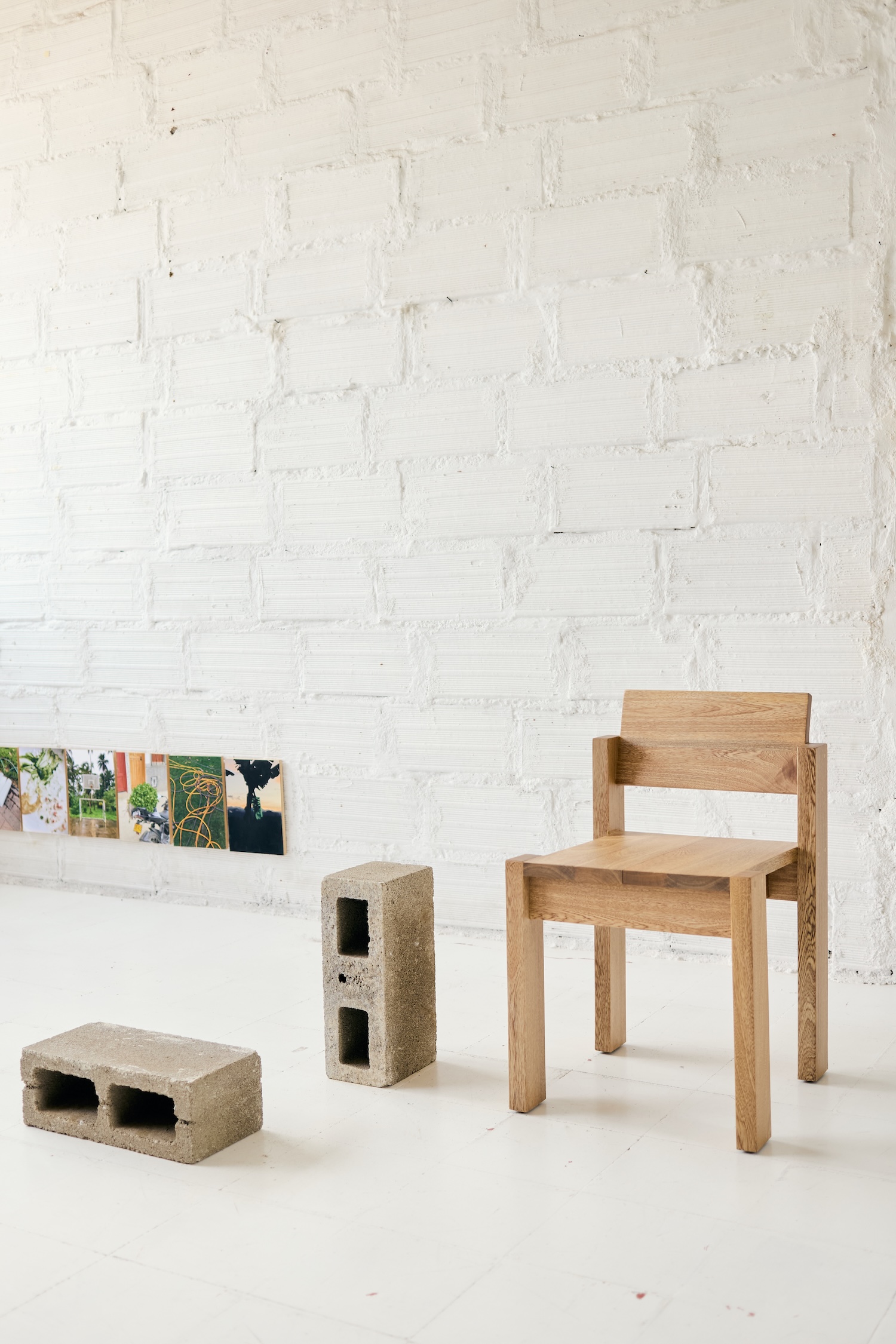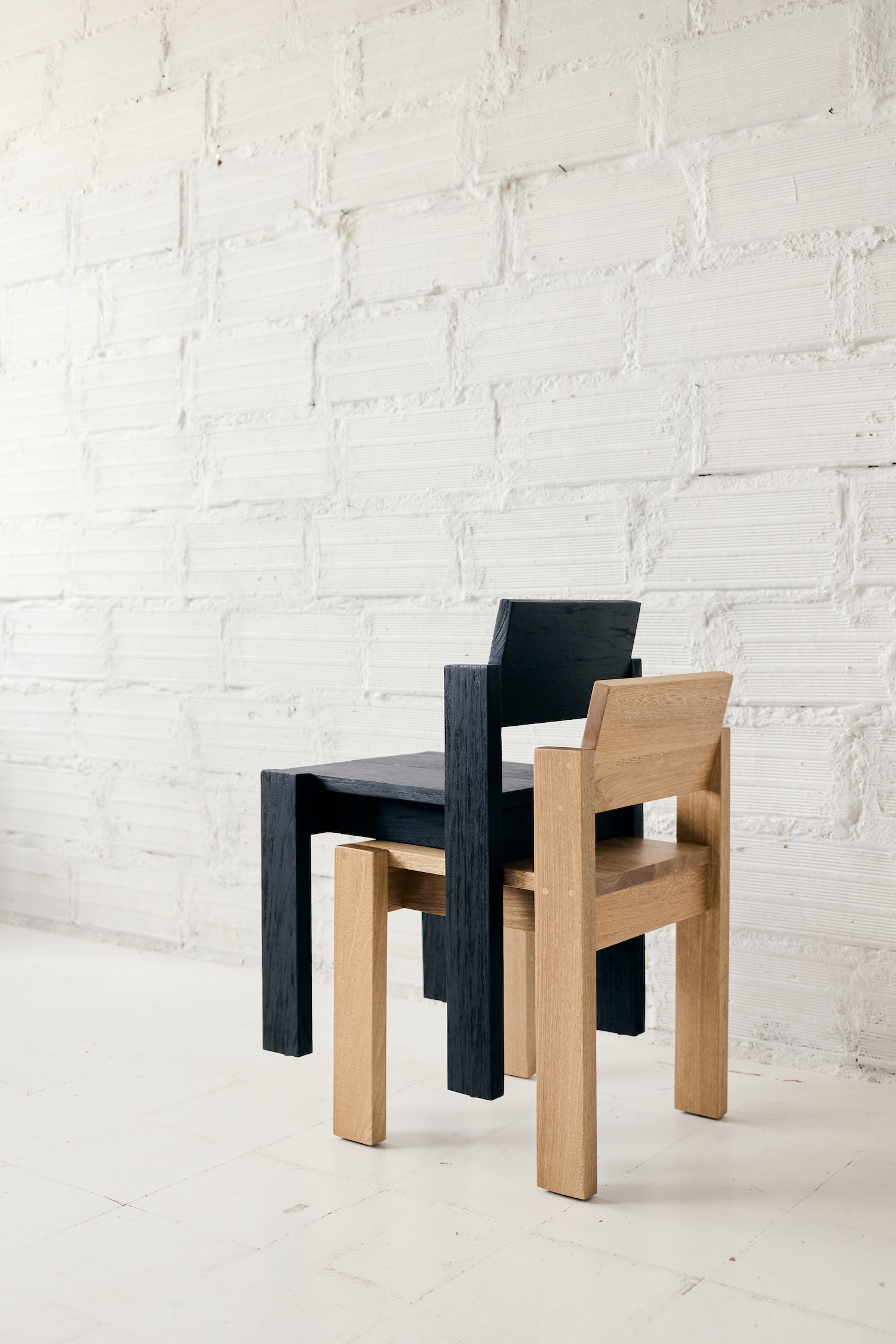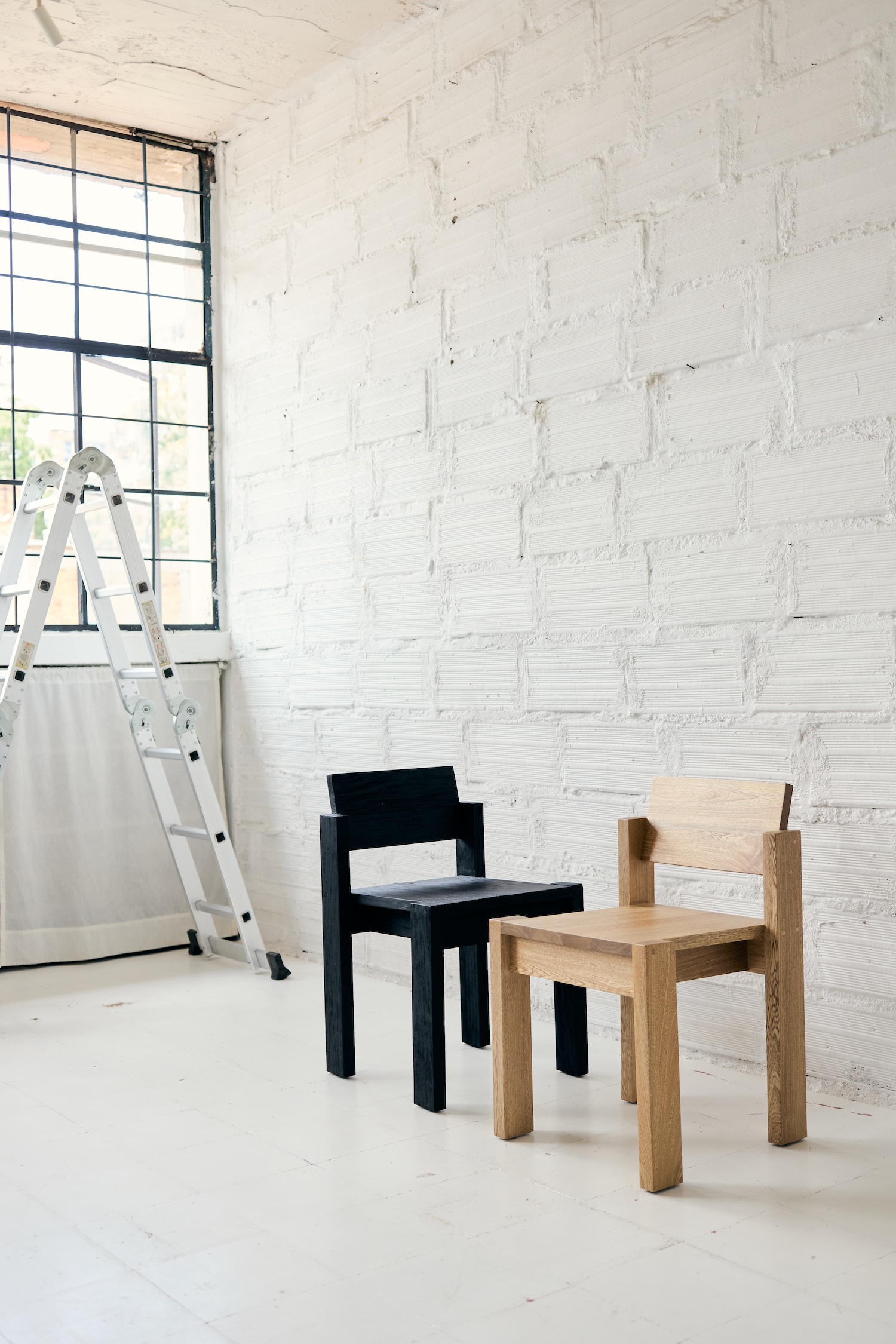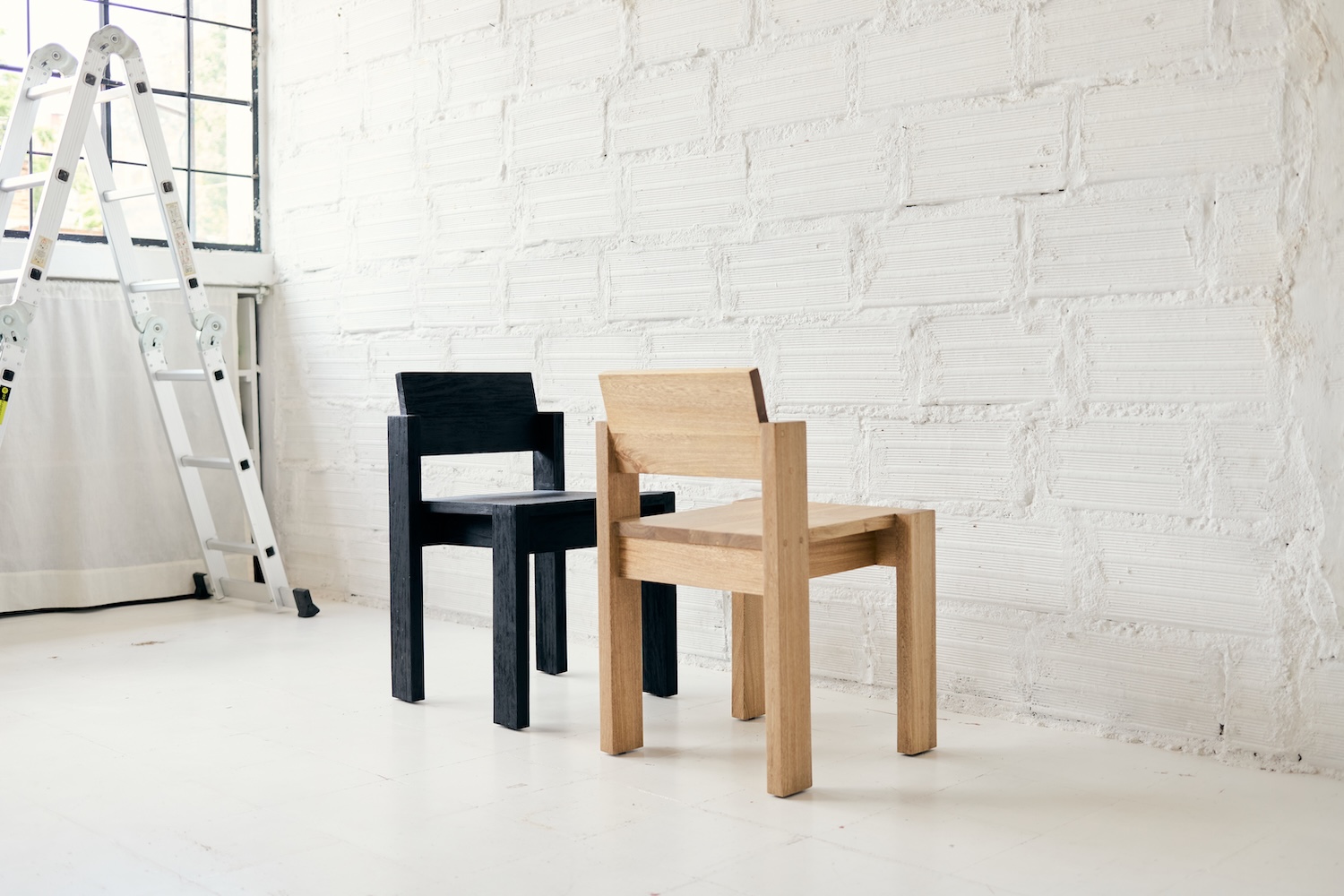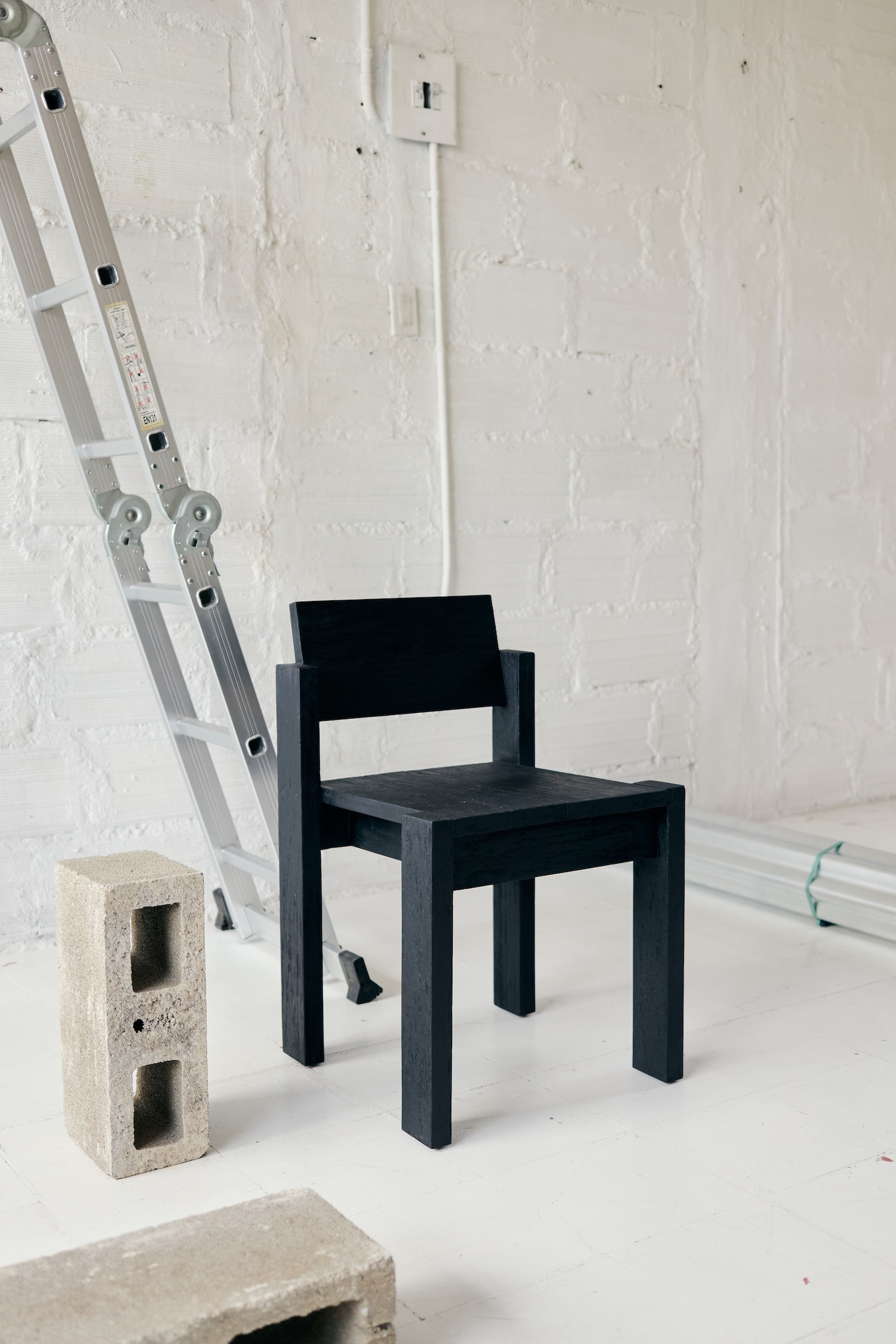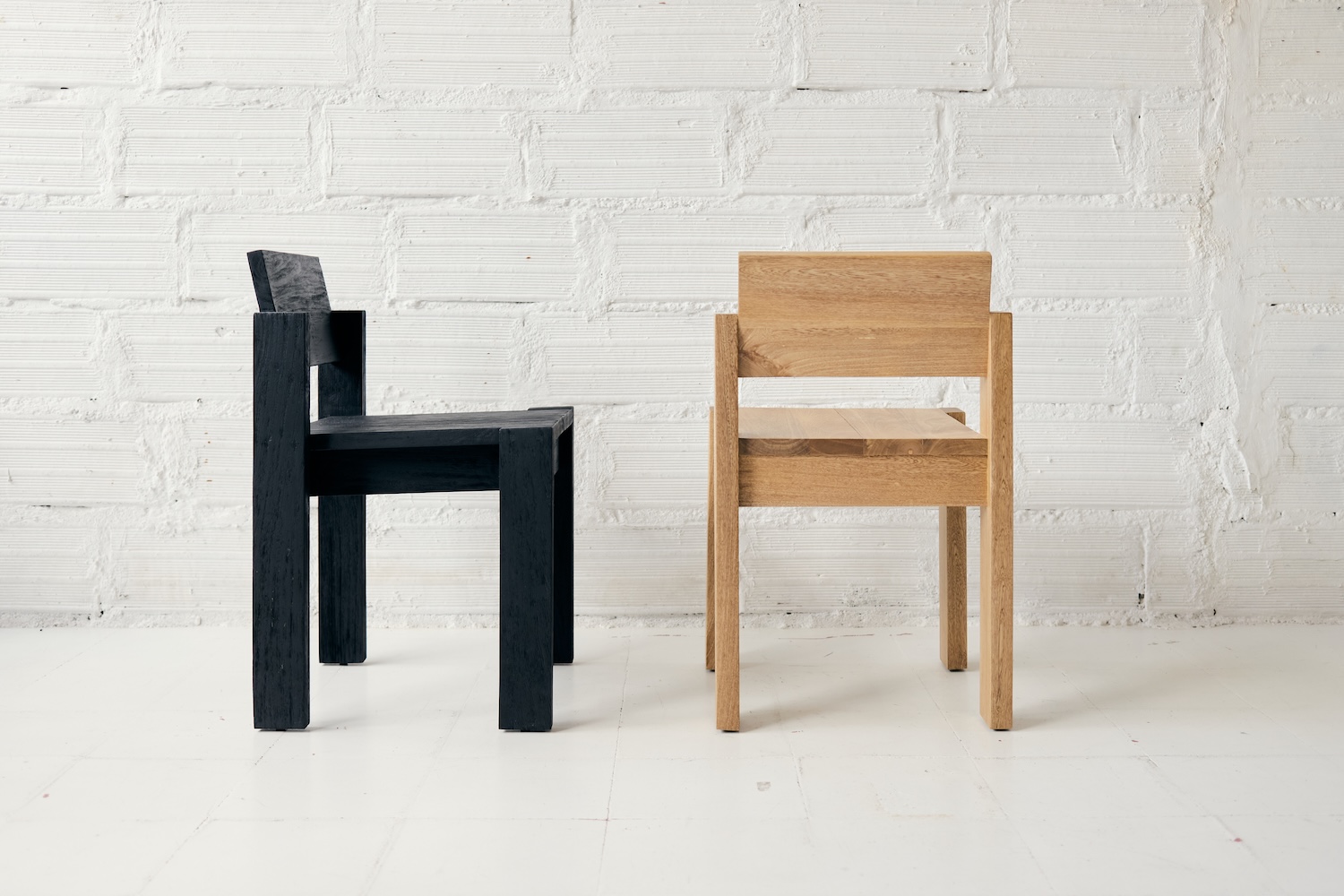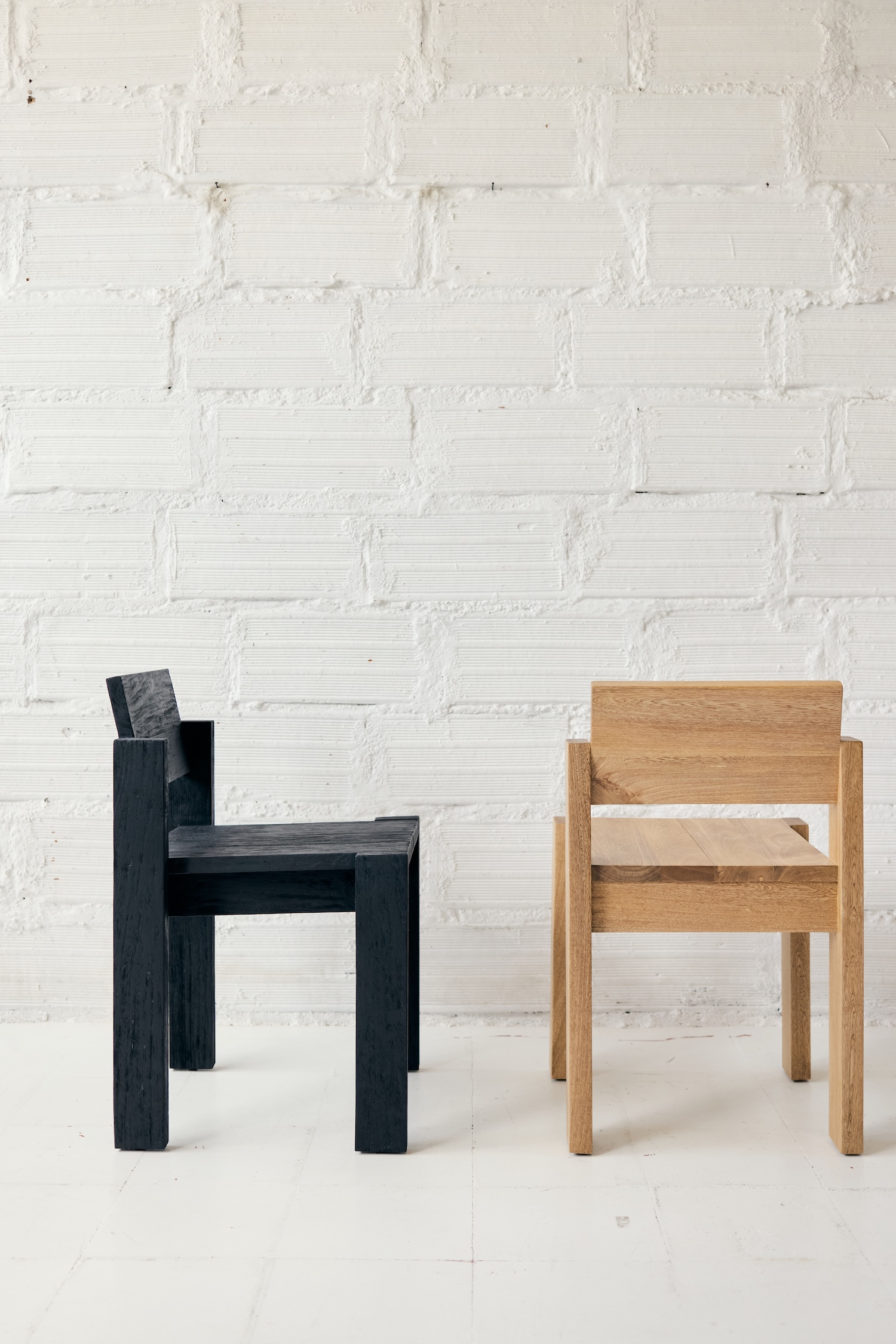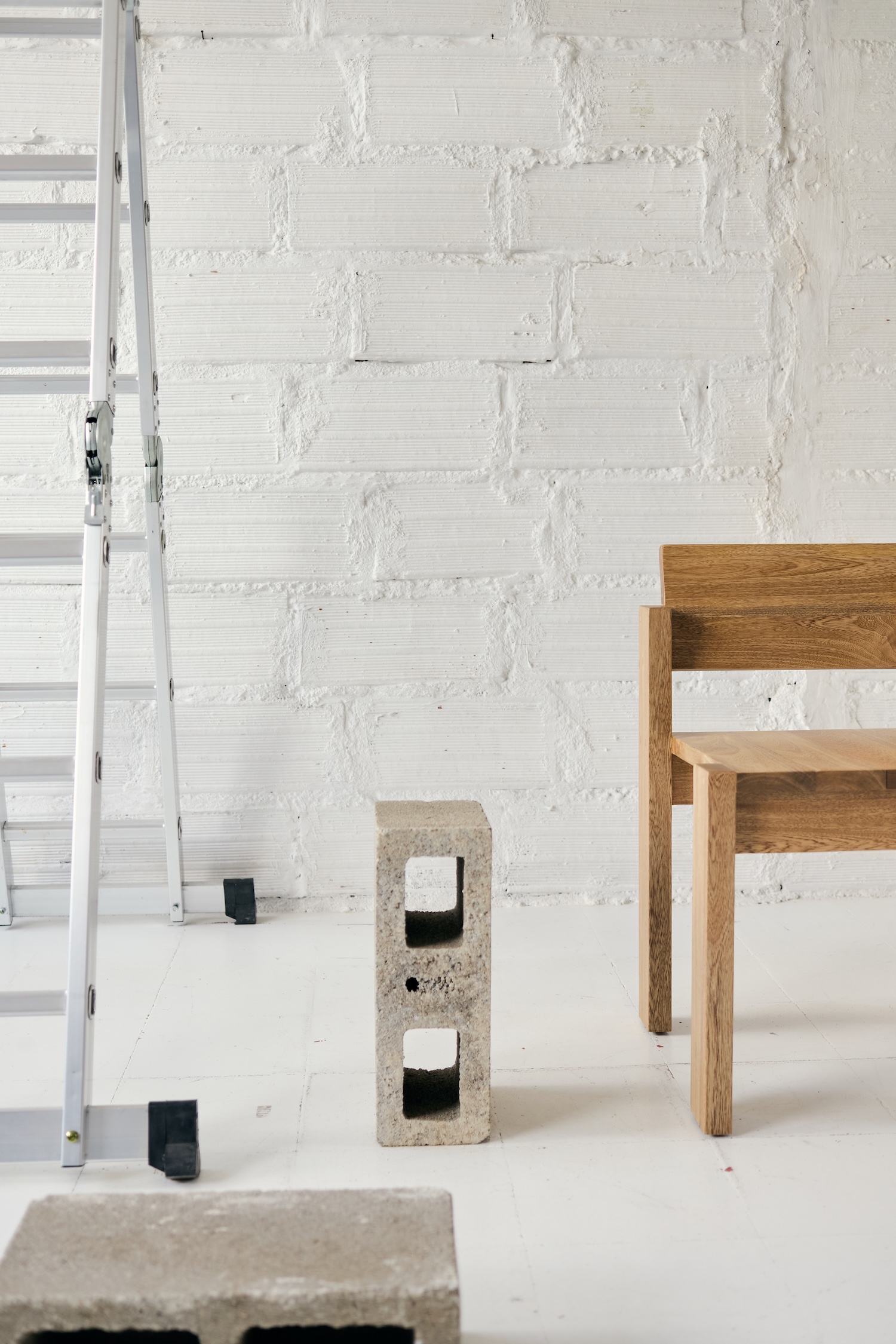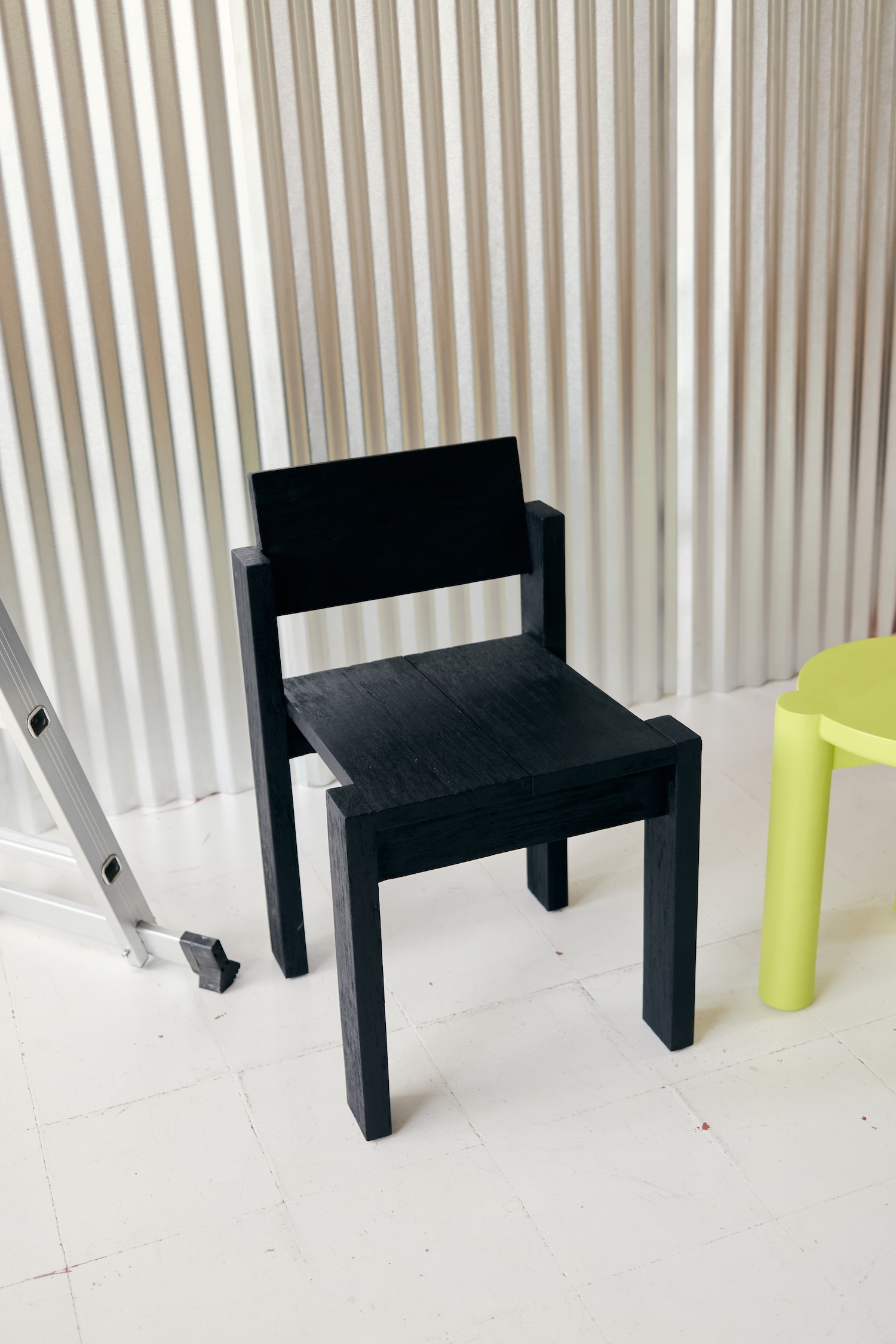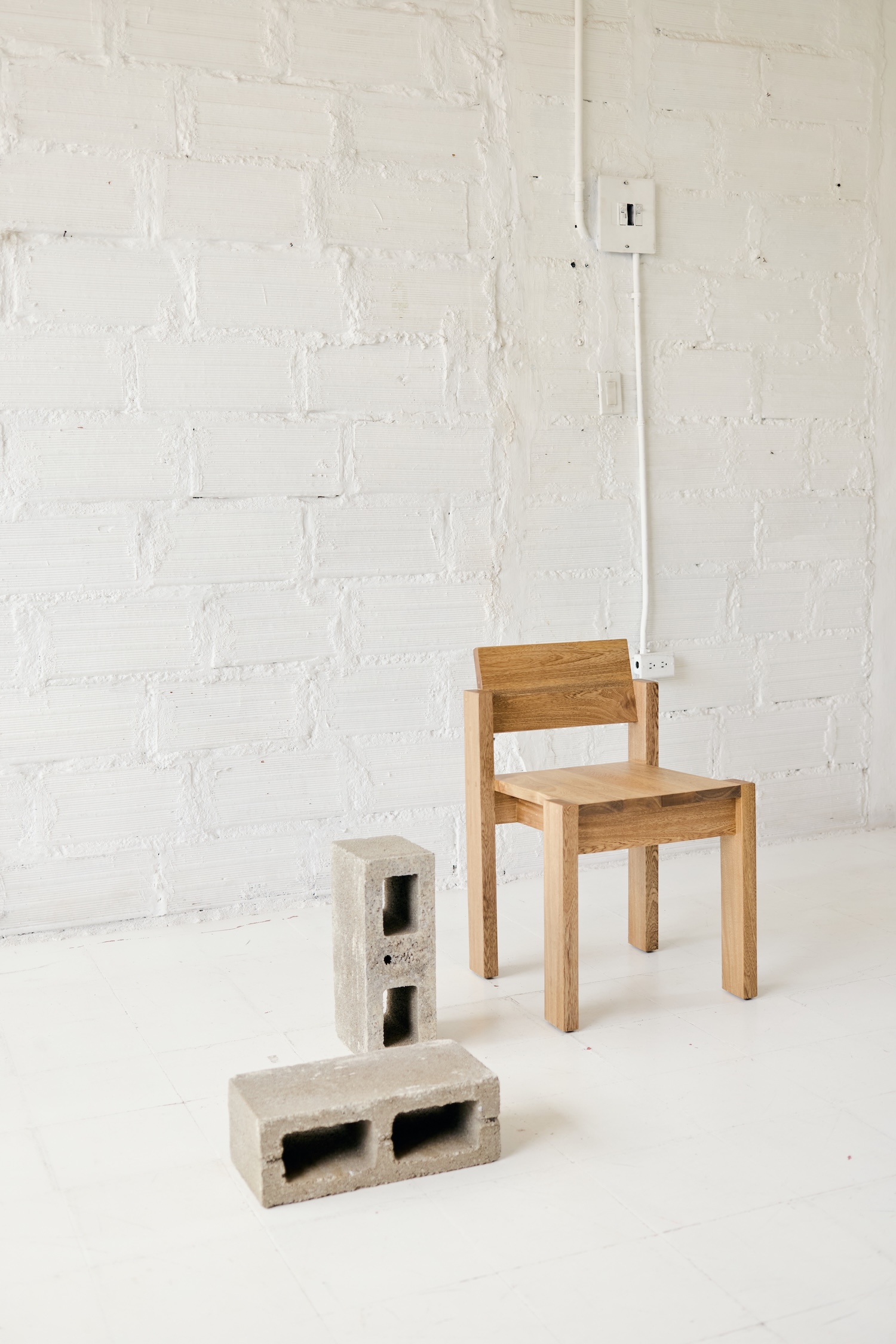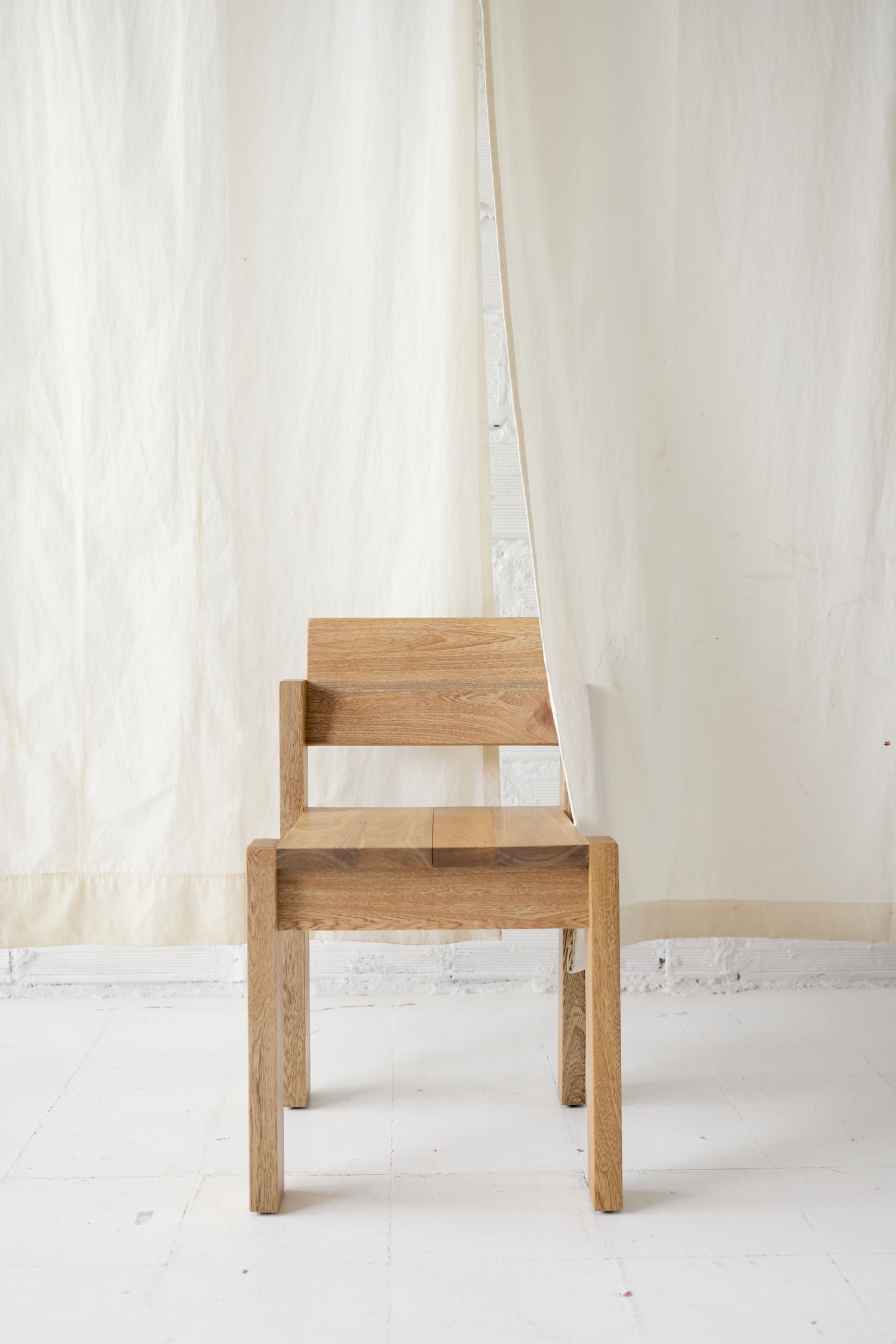
Maestro is a minimalist dining chair created by Colombia-based studio Tópico Taller. The project treats design as an instinctive act, shaped less by research protocol than by accumulated hours spent building furniture, with intuition continually checked against reason until every decision resolves into something that can be used without thought.
Working from a single plank of Colombian oak inverts the usual sequence of furniture design. Rather than drawing a chair and then sourcing the timber to build it, the studio let the board set the terms: its width governs the seat, its thickness fixes the section of each leg, and the length available determines how far the back can rise before the material runs out. A chair is among the least efficient objects to cut from sawn lumber, since angled legs and shaped crest rails leave triangular waste between components. Nesting an entire chair into one board forces the geometry toward straight lines and repeated dimensions, which is precisely why the piece looks the way it does. The lineage runs back to Enzo Mari’s Autoprogettazione of 1974, where standard pine boards dictated part sizes and the resulting furniture wore that constraint openly, though Maestro resolves the logic into something considerably more refined than Mari’s deliberately rough prototypes.
The choice of Colombian oak carries regional weight beyond its working properties. Quercus humboldtii is the only oak native to South America, growing in the high-altitude Andean forests that run through the country’s central and eastern ranges. It is slow growing and ecologically significant, which makes a design premised on extracting maximum value from one board read as an ethic rather than a formal exercise. The wood is dense and tight grained, holding crisp arrises where softer species would bruise, and it takes the sharp transitions between surfaces that a chair built without ornament depends on.