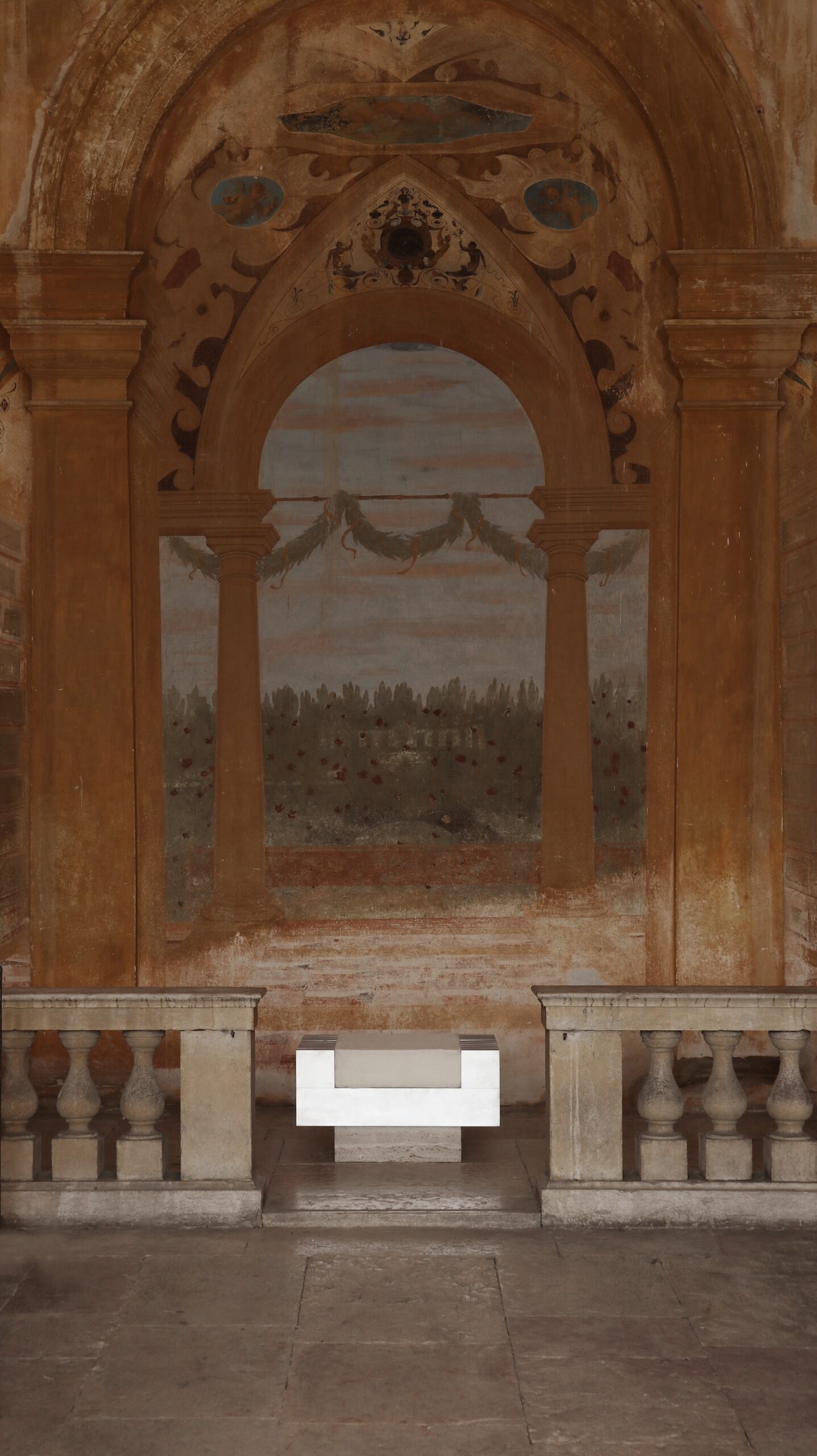
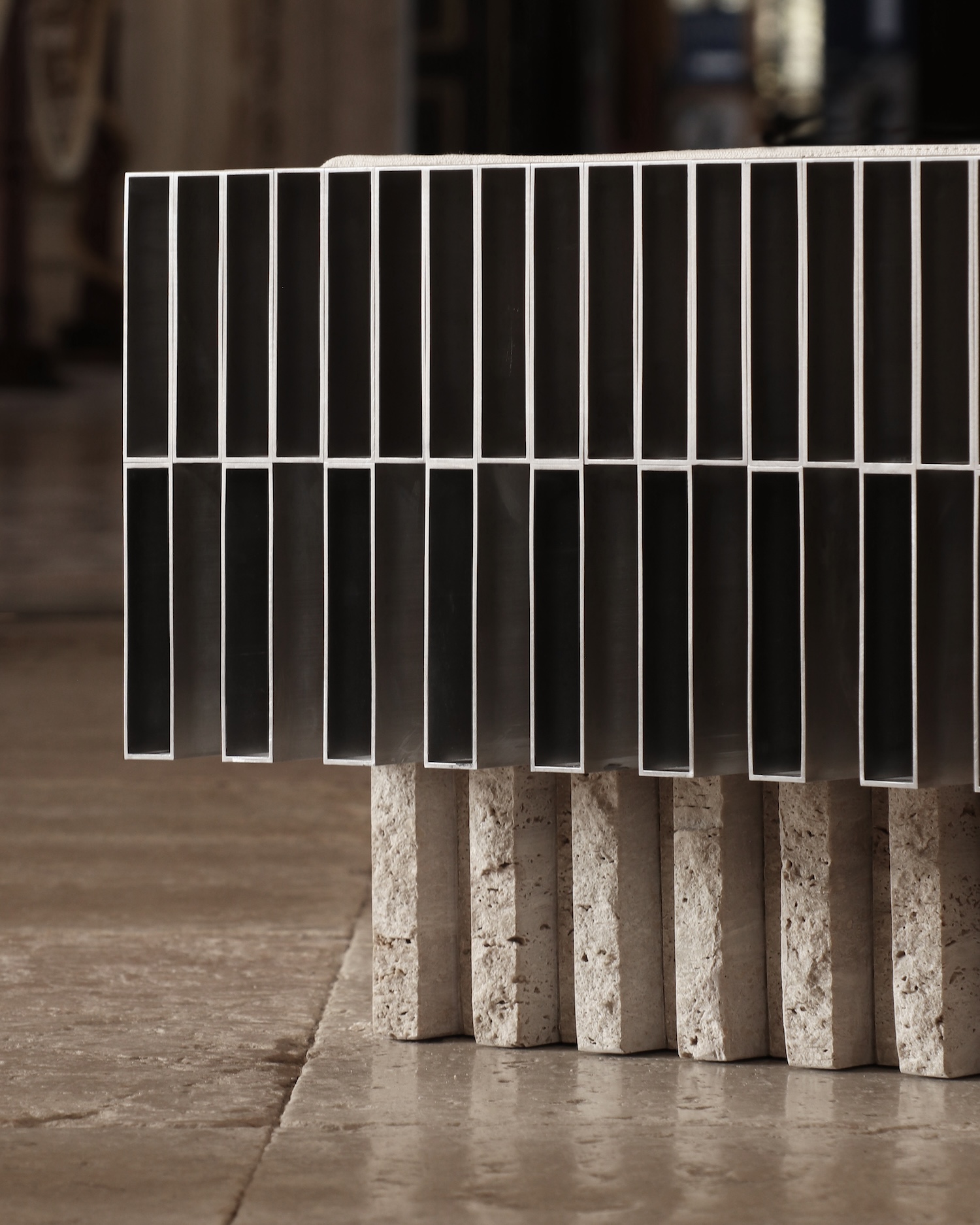
PIANO Ottoman is a minimalist table created by Denmark and Italy-based designer Filippo Andrighetto. This piece emerges from a design philosophy that treats materiality as a form of composition. The travertine base operates like a musical staff, each vertical slab a note waiting to be played. Yet this is no mere metaphorical gesture – the stone carries its own sonic properties, its density promising the kind of resonant depth that only comes from geological time. Travertine, formed in the mineral springs of ancient Rome, brings millennia of history to bear on a single domestic moment.
Above this geological foundation, the welded aluminum profiles assert a distinctly different temporal register. Where the marble speaks of deep time, the metal announces the industrial present. These rectangular forms, precision-engineered and deliberately repetitive, recall the structural honesty of mid-century modernism while pushing toward something more architecturally ambitious. The aluminum’s cool precision creates a dialogue with the stone’s organic variations, much like how Bach’s mathematical structures gave form to emotional expression.
The true genius lies in the joinery system that marries these disparate elements. Like the interlocking teeth of a comb, the aluminum body slots into the marble base with mechanical precision that would make a Swiss watchmaker proud. This connection method speaks to a broader evolution in contemporary furniture making, where traditional joinery techniques merge with industrial fabrication to create hybrid forms previously unimaginable.
Crowning this material symphony, the high-density linen cushion introduces the essential human element. Against the cool hardness of metal and stone, the textile provides not just physical comfort but sensory relief. This layering of experiences – visual, tactile, even acoustic – reflects our contemporary hunger for objects that engage multiple senses simultaneously.