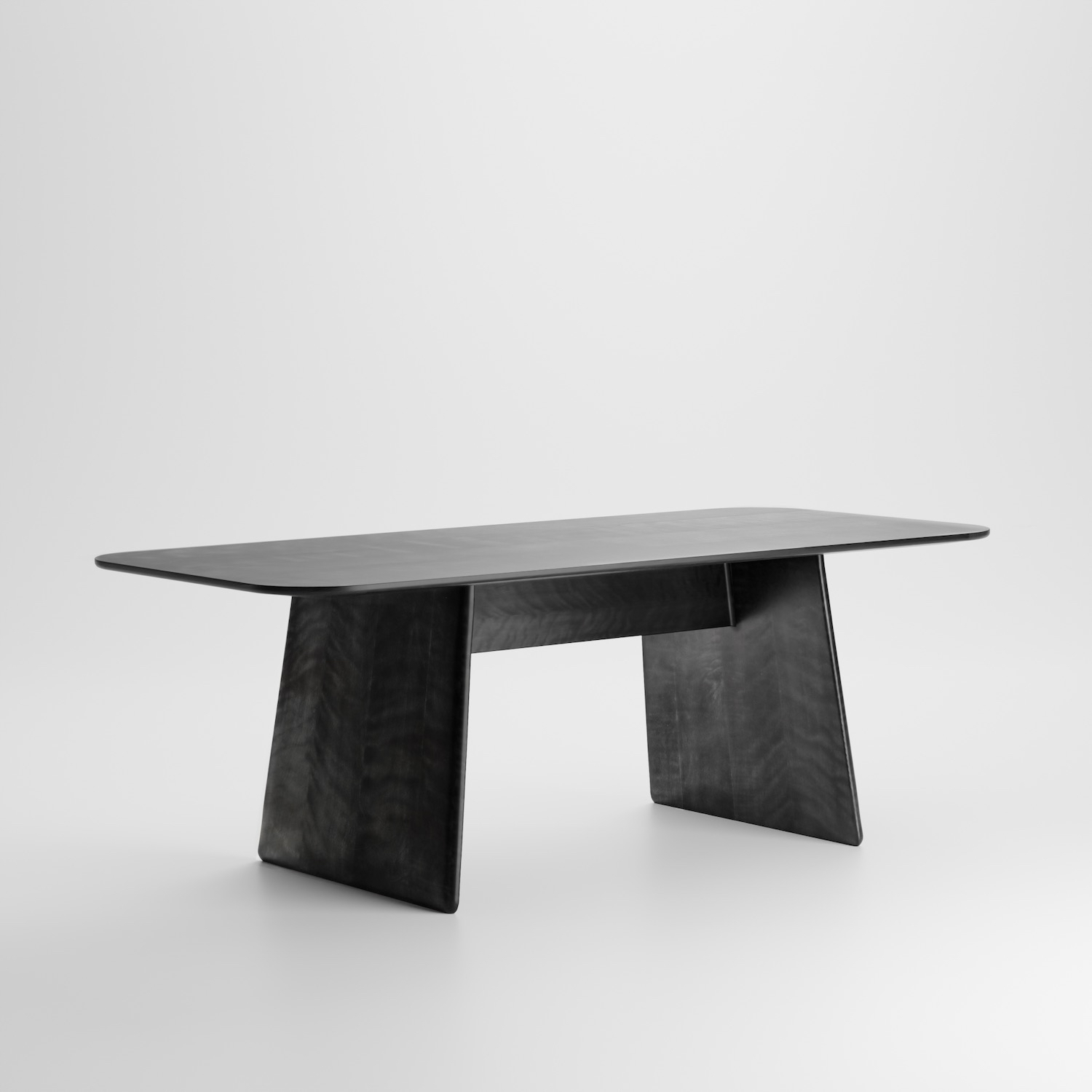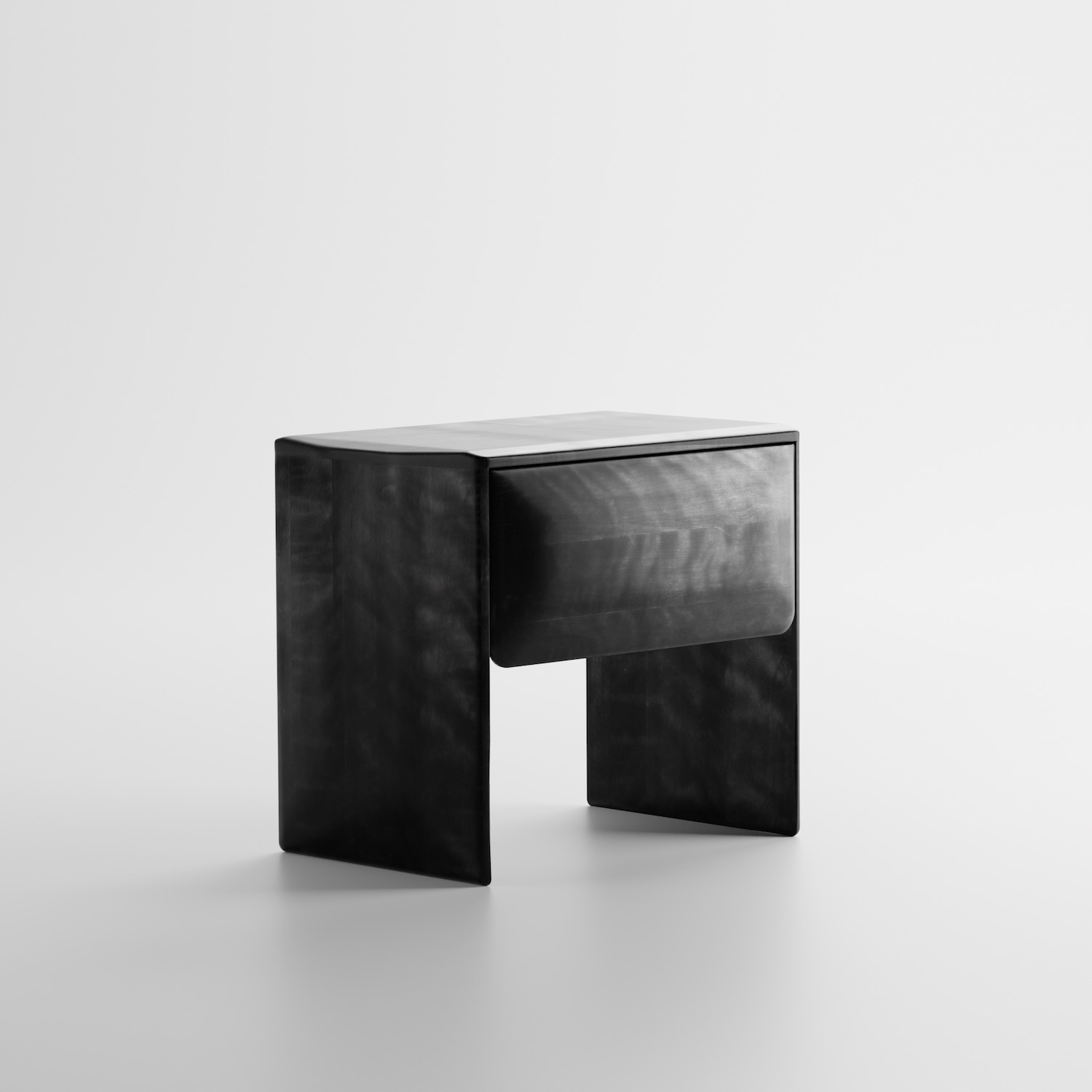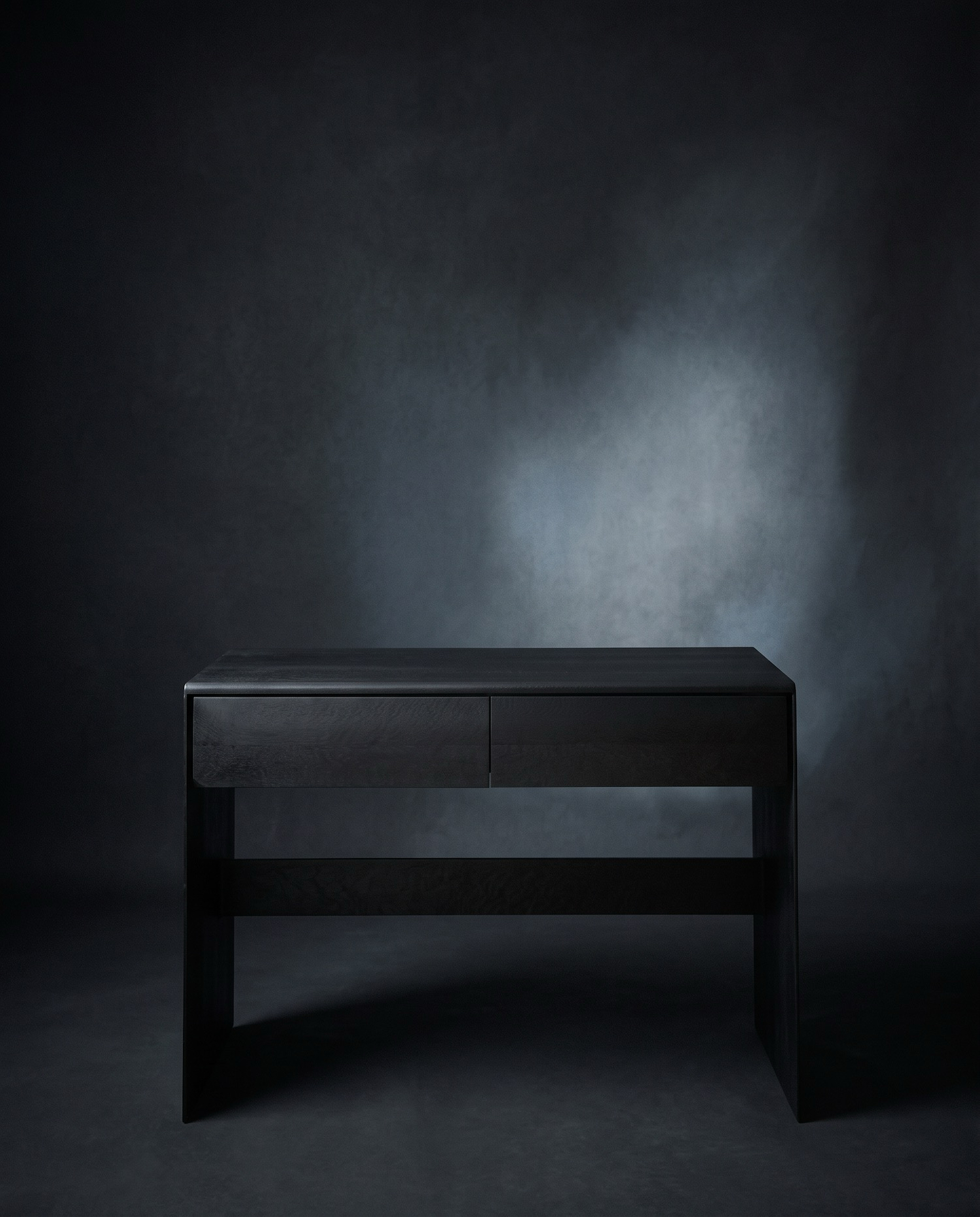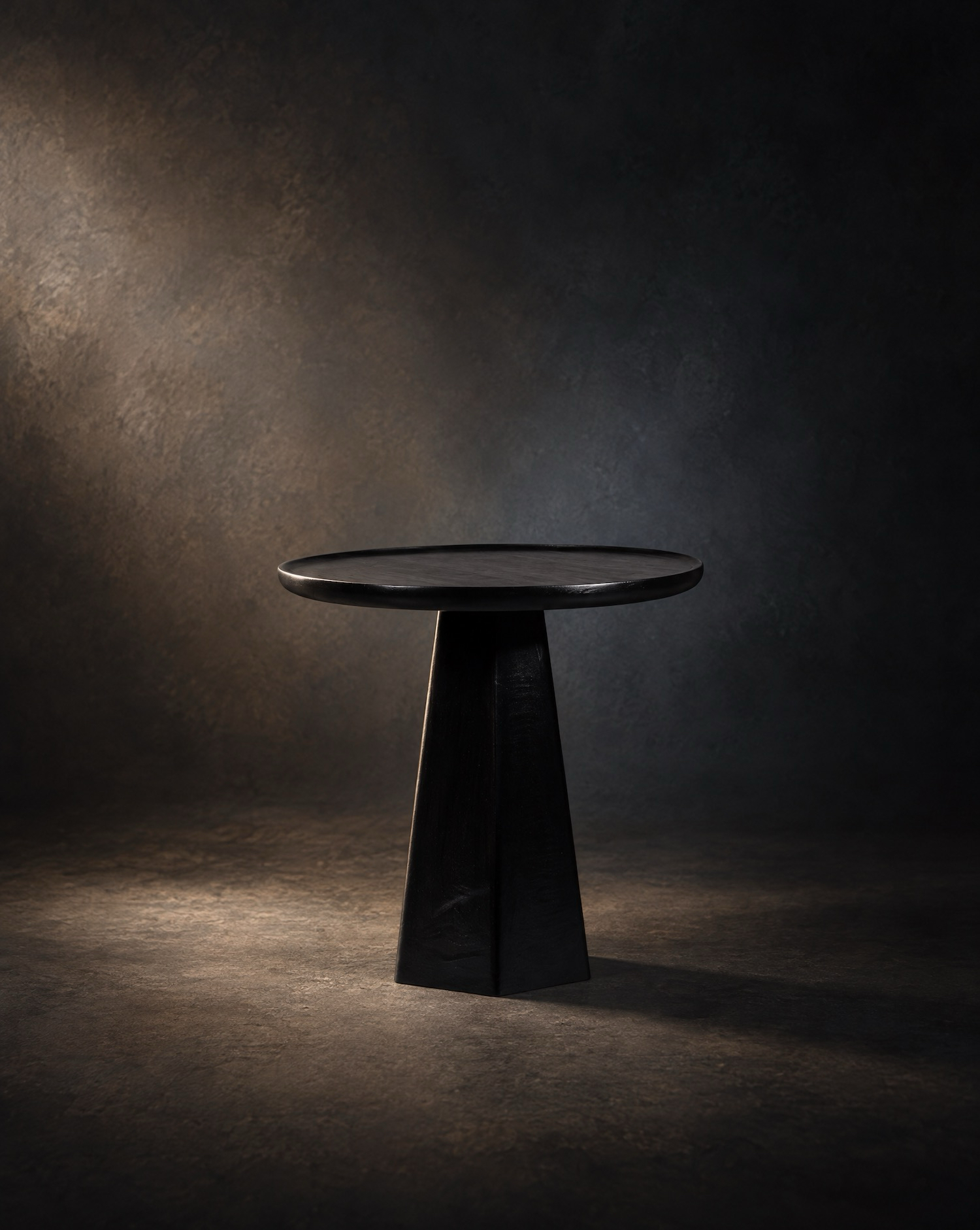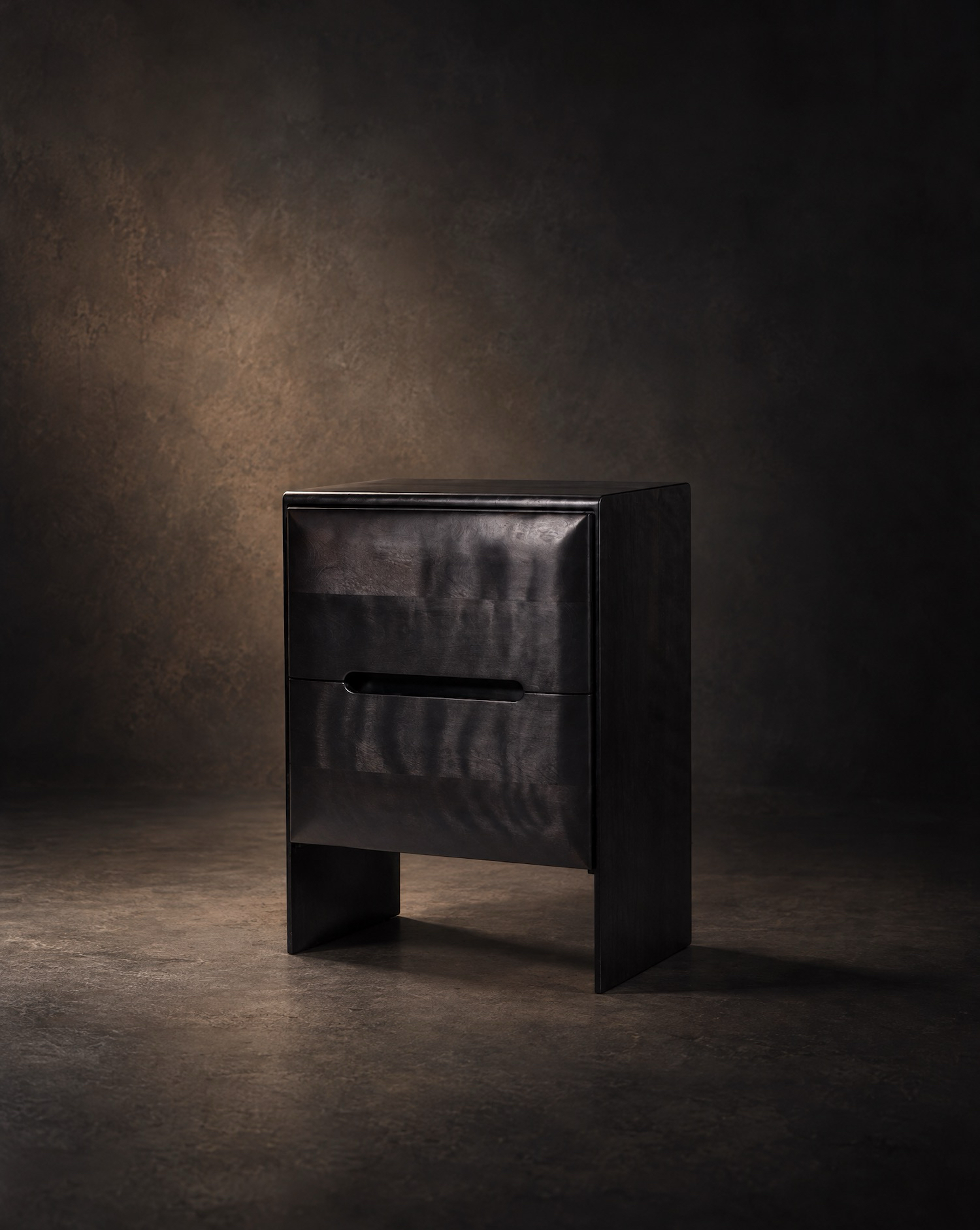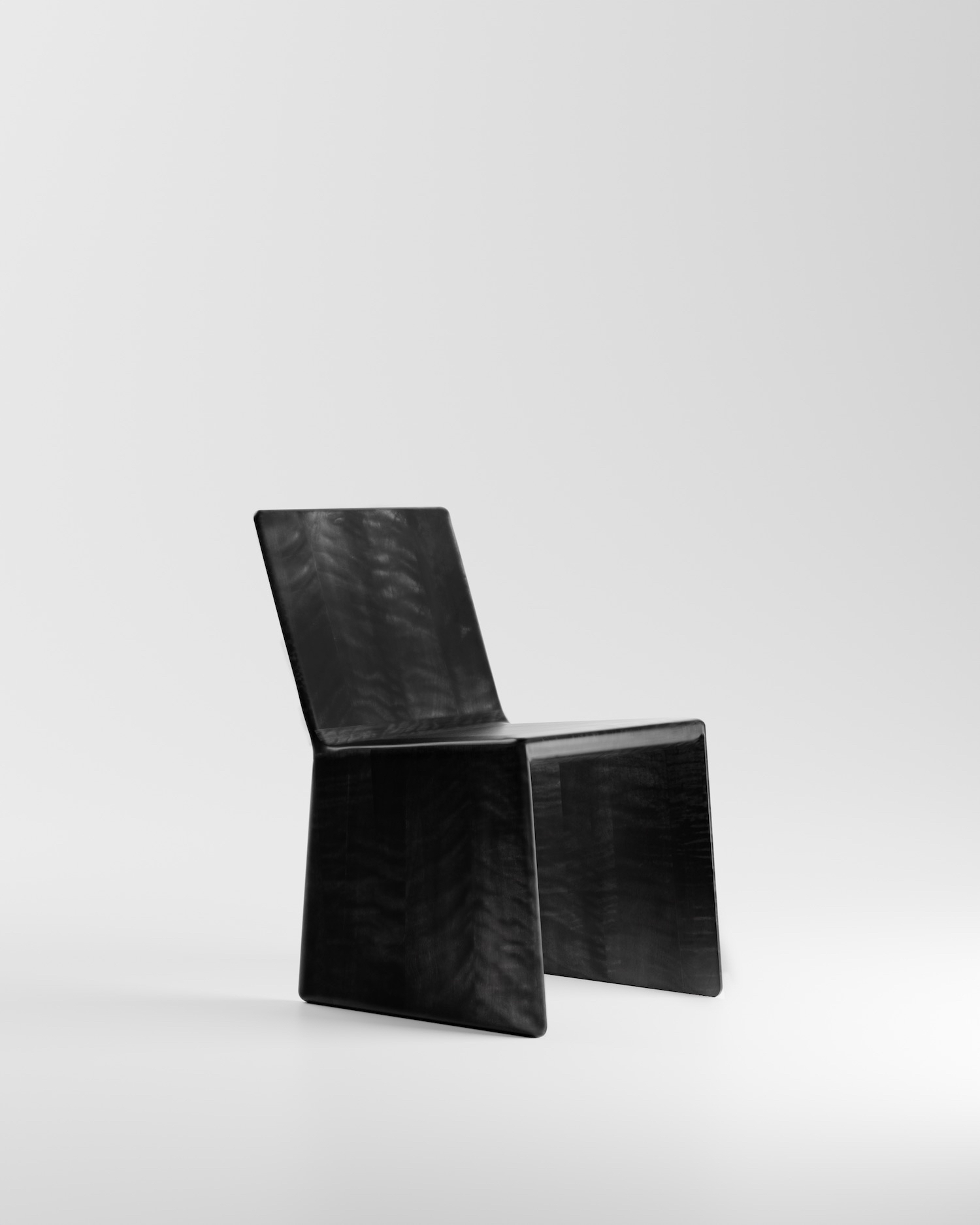
Gabriel Page chars solid maple until it is regularly mistaken for leather. The Montréal, Canada-based furniture designer builds each piece by hand and finishes it with shou sugi ban, the Japanese technique of burning wood to blacken and seal its surface.
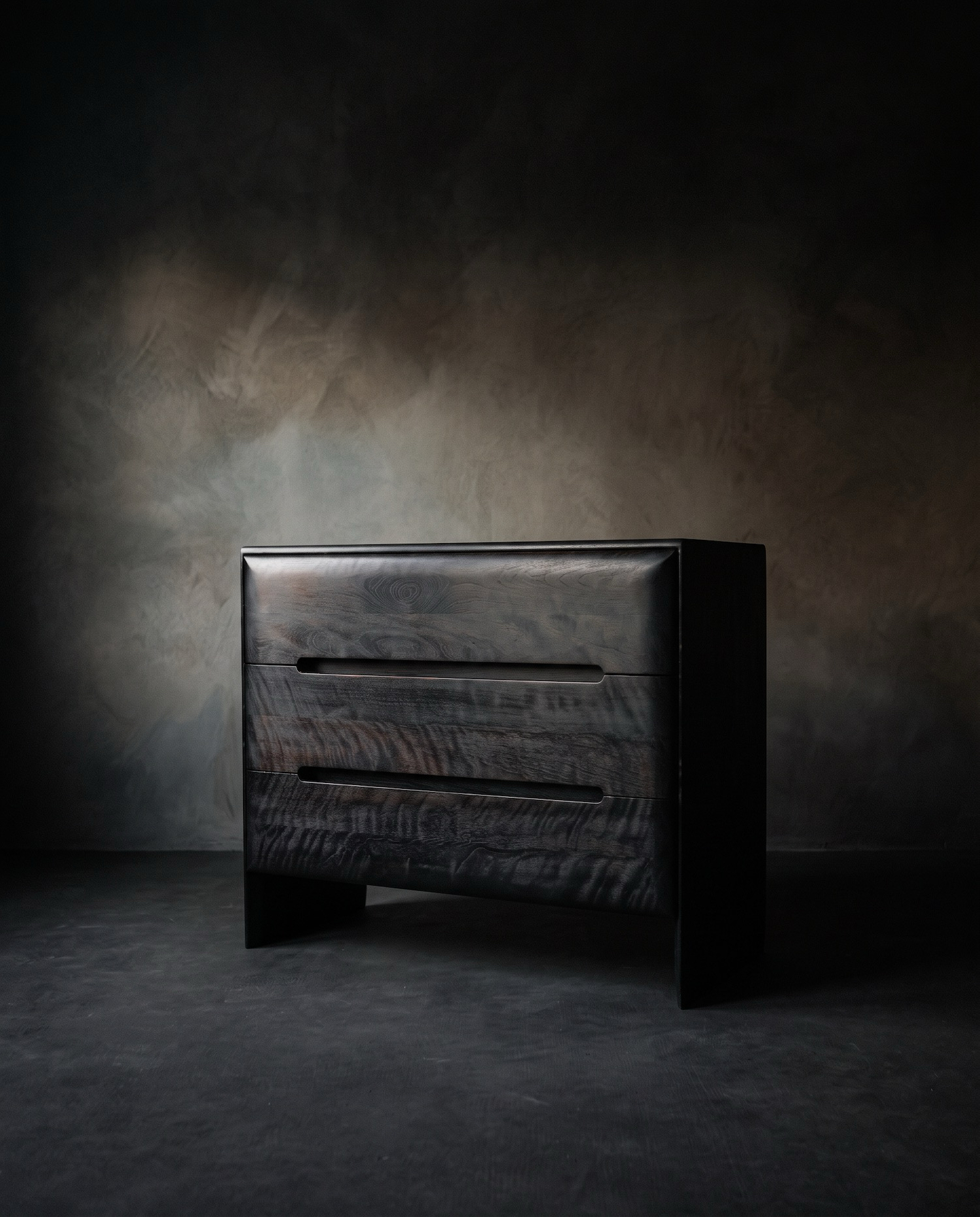
The method developed as a weatherproofing treatment for cedar cladding, where a soft, open grain chars into a deep, cracked crust. Maple behaves differently. Its grain is tight and even, so the fire leaves a thinner, more uniform layer of carbon that can be worked to a smooth, matte finish. That finish is the source of the confusion with leather, and Page treats the ambiguity as deliberate. A viewer who reads the surface as hide has to look closer, and often touch, before the wood beneath becomes evident.
Fire does not erase the material. Charring consumes softer fibers faster than denser ones, so variations within each board register as low relief across the black. Grain patterns, shifts in direction, and the natural irregularities of the timber stay legible in the finished piece, and the texture changes as light moves across it.
Edges are softened into continuous curves, and profiles are shaped as sculptural volumes. Pulls are integrated into the casework, so drawer and door fronts carry no applied hardware. On a uniformly black surface, a metal handle would read as a hard break in the line, and its absence lets each piece hold one unbroken outline.
Page came to the technique after a decade of woodworking, and the collection now covers most domestic typologies. It includes a dining table, console, bench, coffee table, credenza, nightstands, side tables, and chairs. The same charred maple runs through all of them, which leaves proportion and curvature as the main variables between one object and the next.