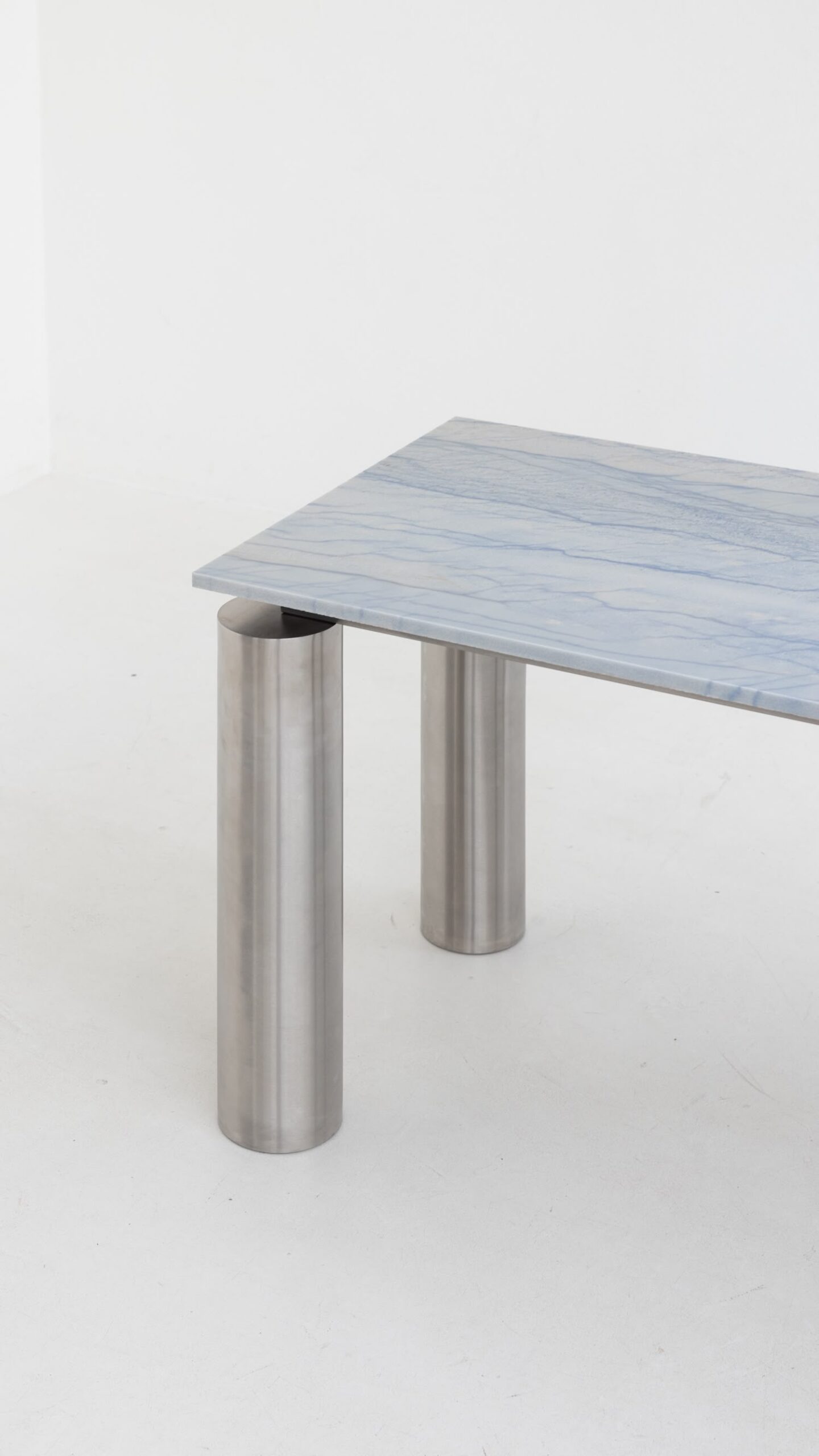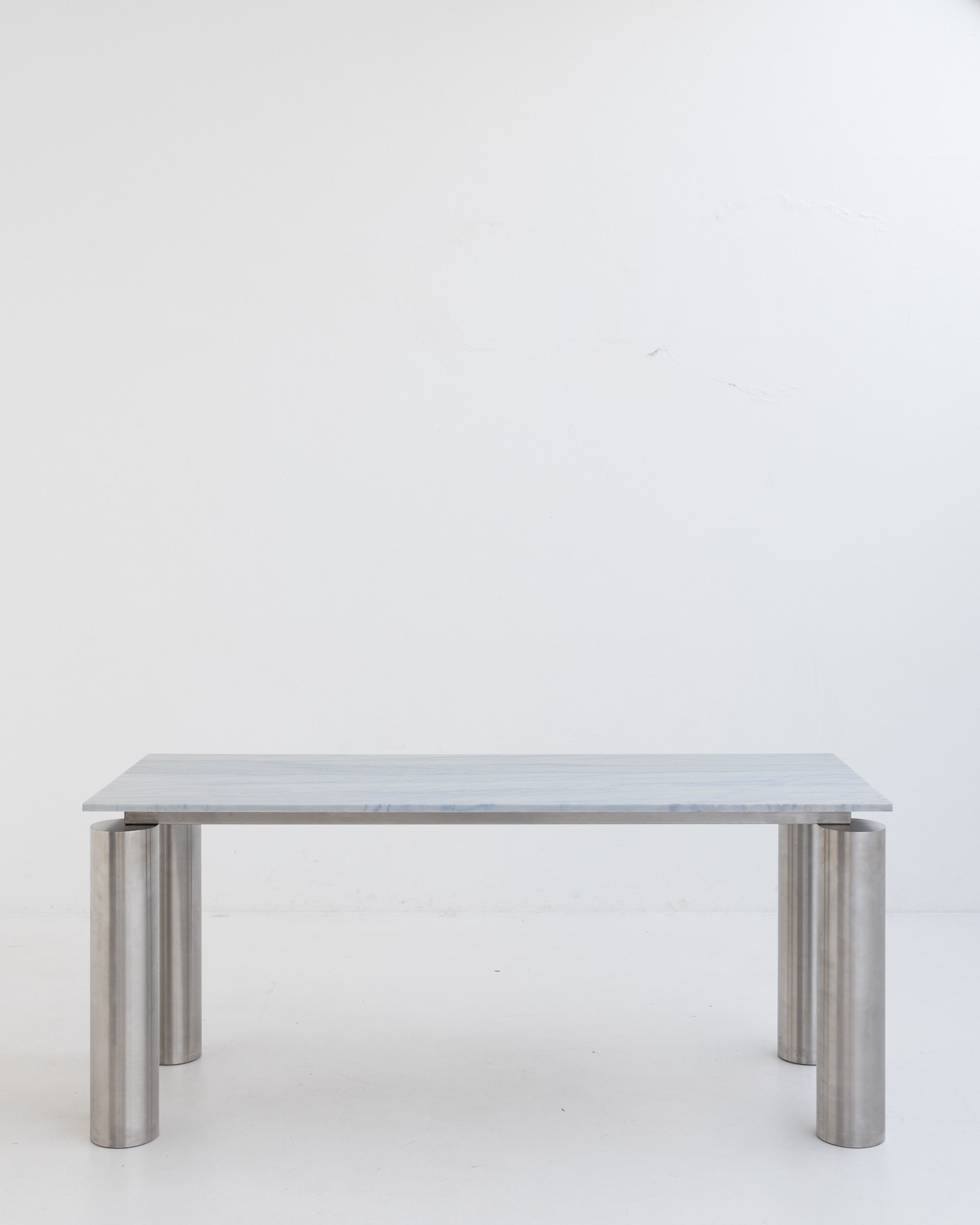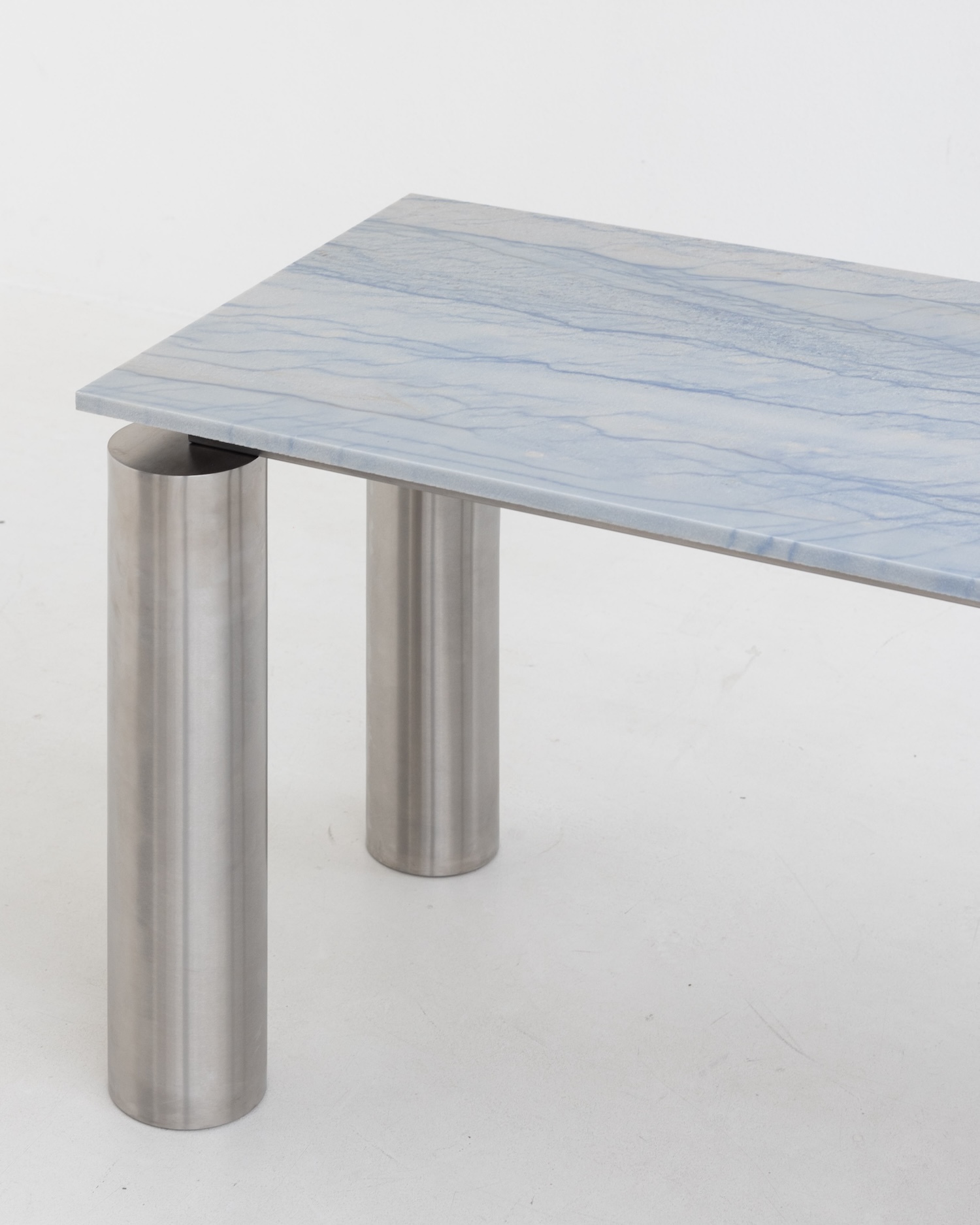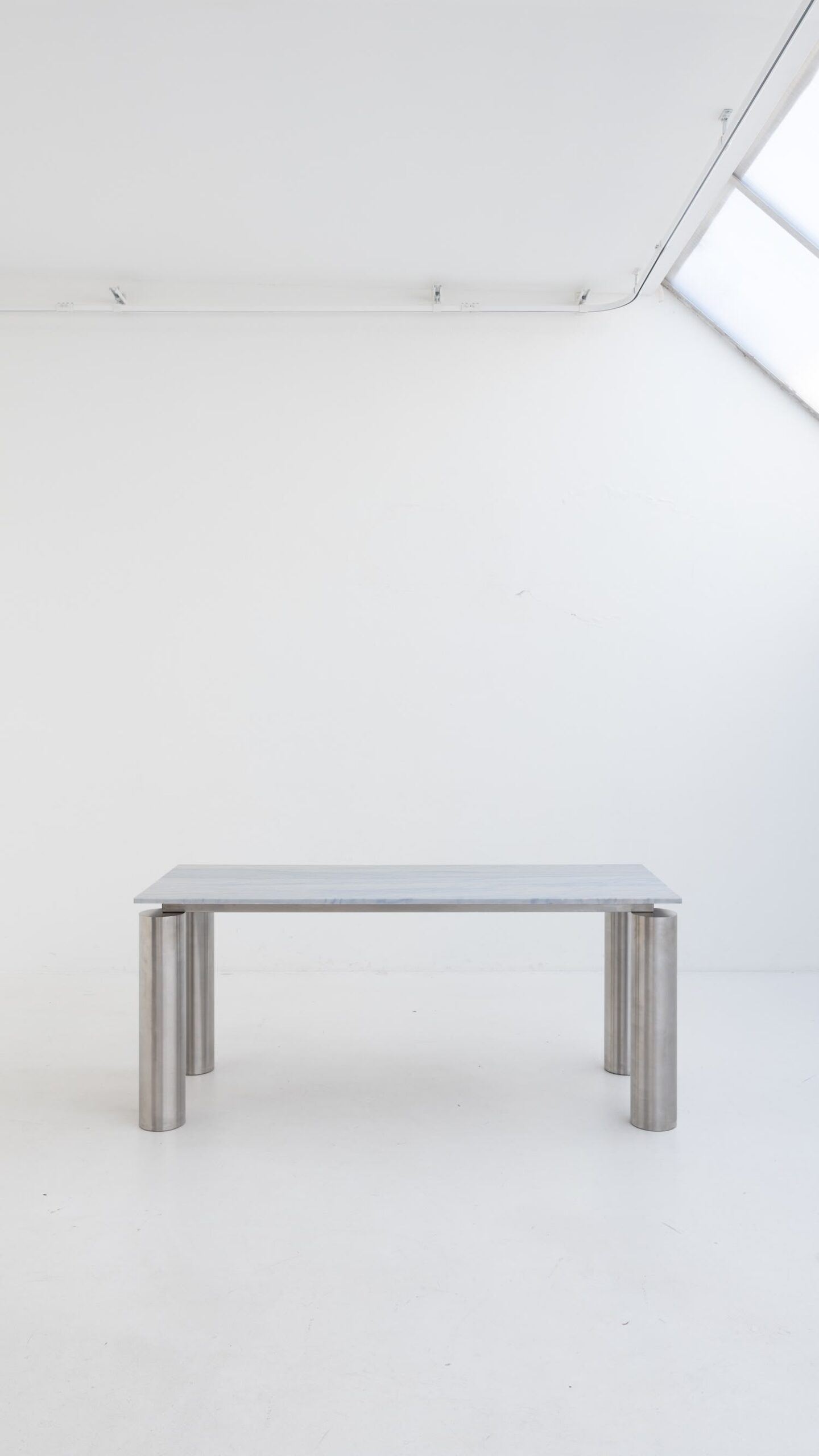
TABLE 154 is a minimalist dining table created by Antwerp-based designer Oskar De Roover. In a small workshop outside Antwerp, a chance encounter between designer Oskar and a retiring stonecutter sparked the creation of a table that eloquently speaks to our time’s pressing questions about consumption, craft, and circular design. The protagonist of this story is an abandoned slab of Azul Macaubas – a stunning Brazilian blue quartzite that, but for fate, might have ended up in a landfill. Instead, it became the genesis of TABLE 154, a dining table that transforms salvaged material into a meditation on sustainability through sophisticated design thinking.
The table’s design narrative unfolds as a thoughtful dialogue between weight and weightlessness. Its substantial quartzite top appears to float, supported by a recessed stainless steel frame that plays a clever visual trick – making the heaviest element seem impossibly light. In counterpoint, the hollow stainless steel legs, despite their actual lightness, project an aura of solidity through their bold 154-millimeter diameter (which lends the piece its name).
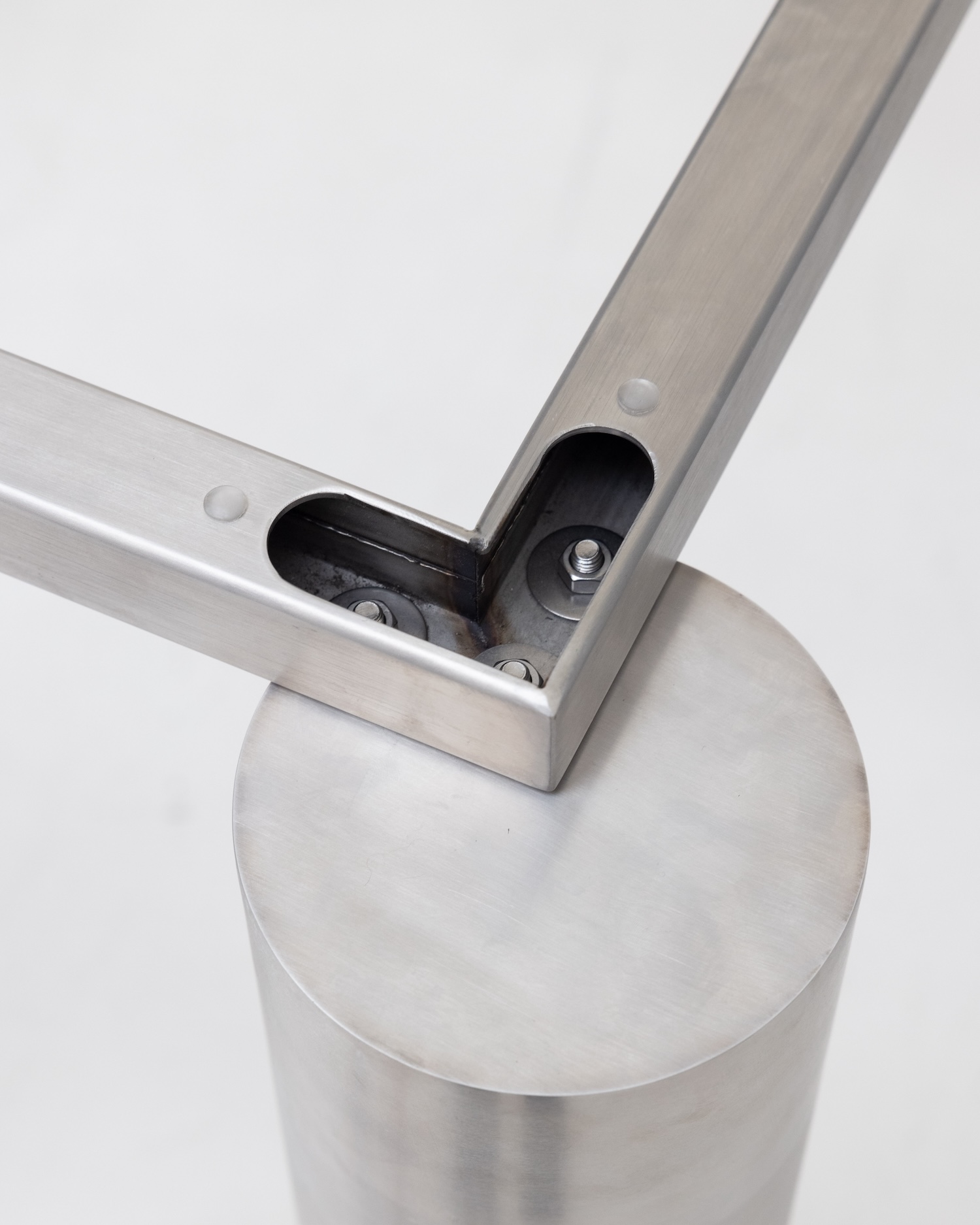
What distinguishes TABLE 154 in contemporary furniture design is its rigorous adherence to circular principles without compromise to aesthetic refinement. The entire piece can be disassembled using simple nuts and bolts, with each component designed for eventual replacement or recycling. This approach harkens back to early modernist ideals of truth to materials and structural honesty, while pointing forward to a future where design must grapple with environmental imperatives.
The materiality tells its own story: the raw, untreated stainless steel base components are left deliberately unadorned, celebrating their inherent qualities and ensuring their future recyclability. The quartzite top, with its deep blue tones and natural patterns, rests unmodified and unbound to its base – a decision that both honors the material’s natural beauty and ensures its potential future reuse.
The assembly details reveal a sophisticated understanding of visual weight and balance. By aligning the frame corners with the legs’ centers and concealing all fasteners, Oskar creates an illusion of components simply resting in perfect equilibrium. This visual serenity belies the careful engineering that makes the table both stable and completely demountable.