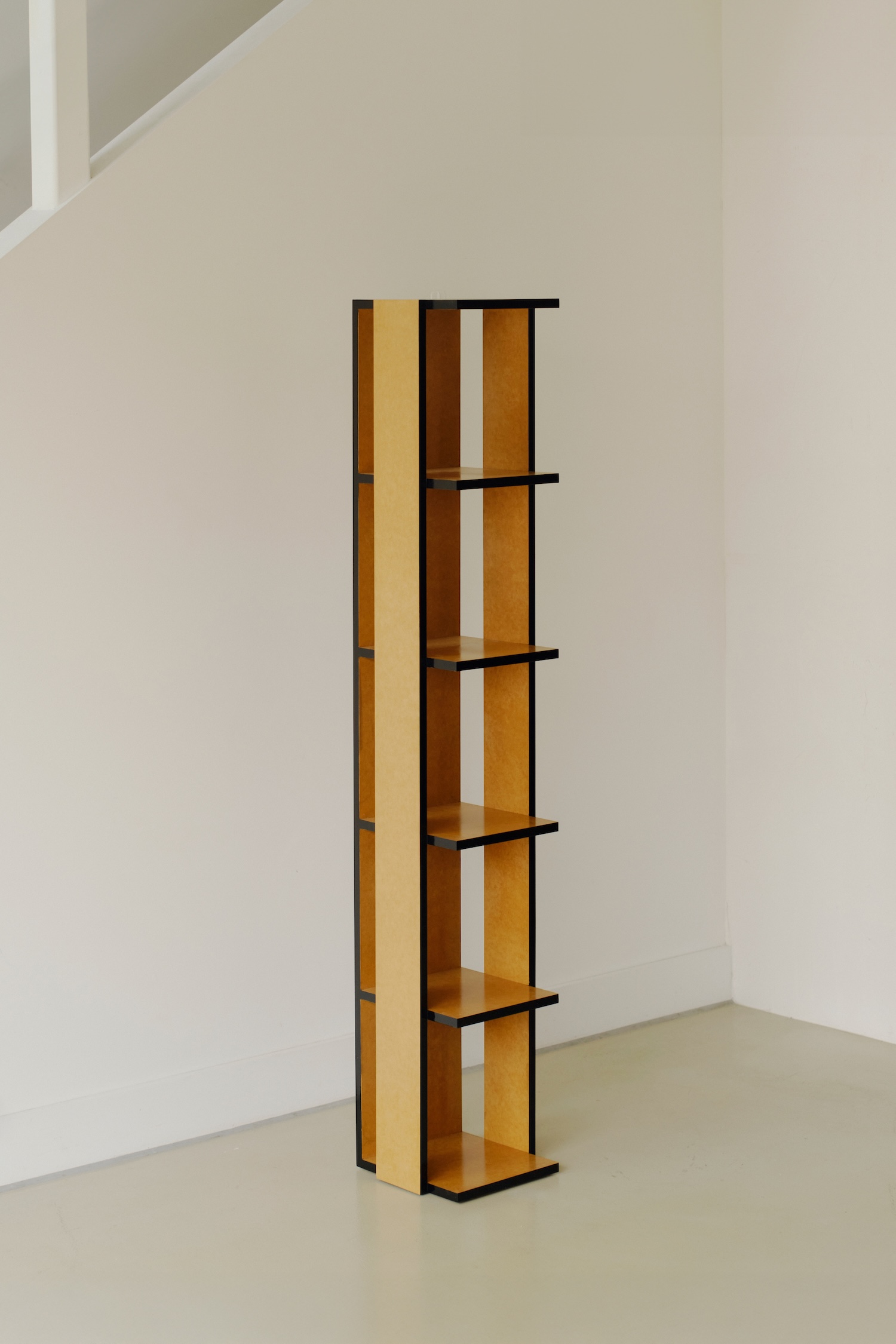
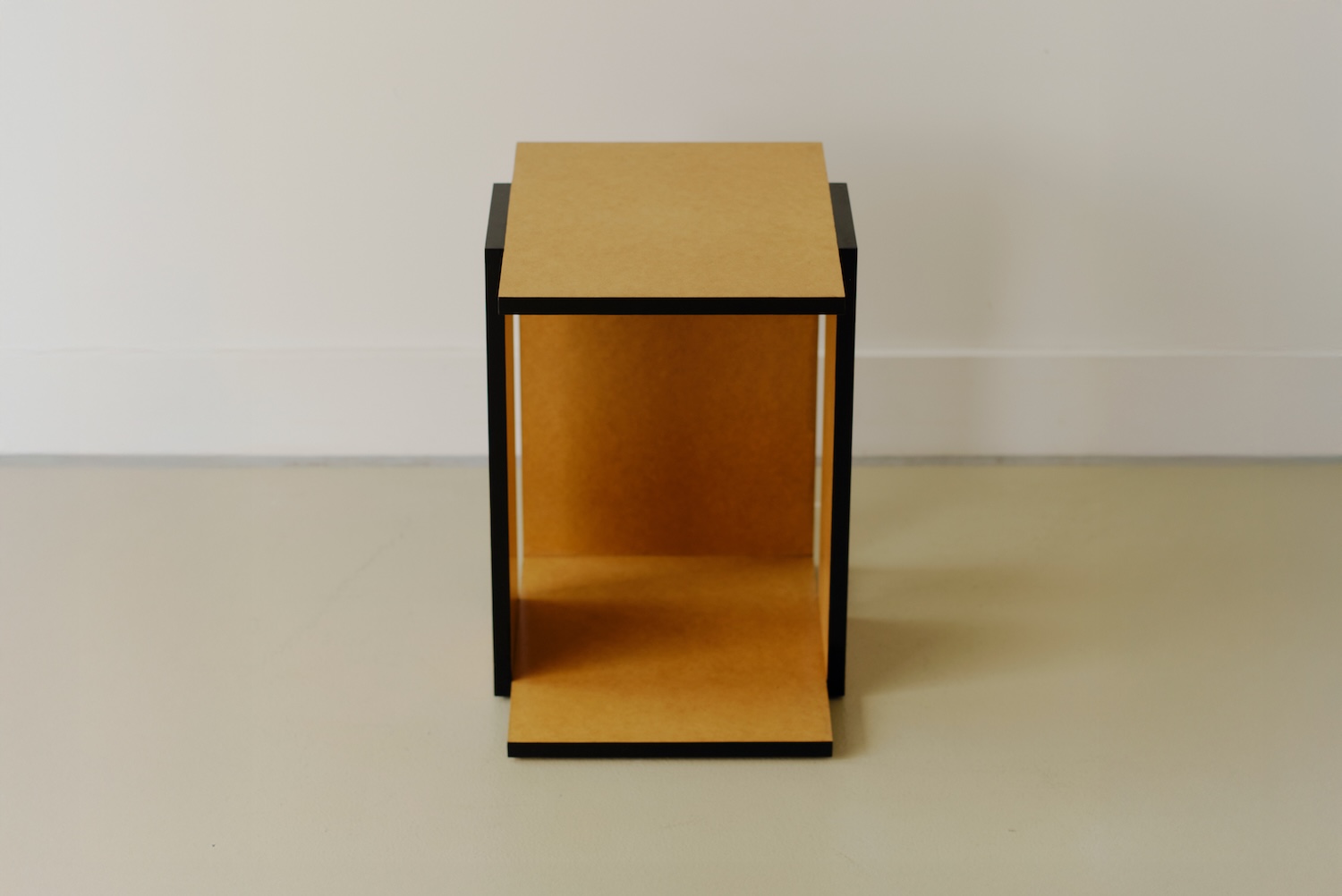
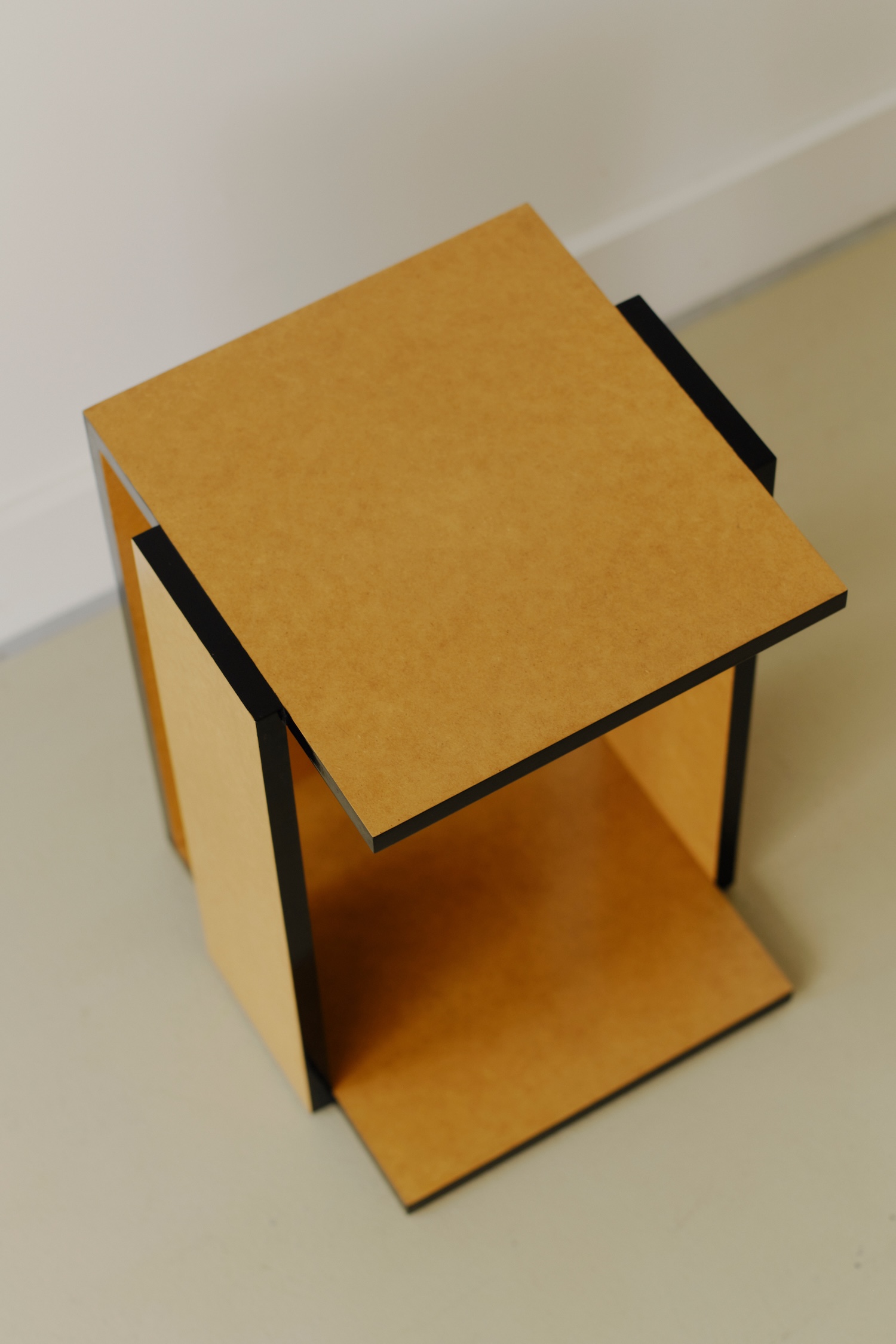
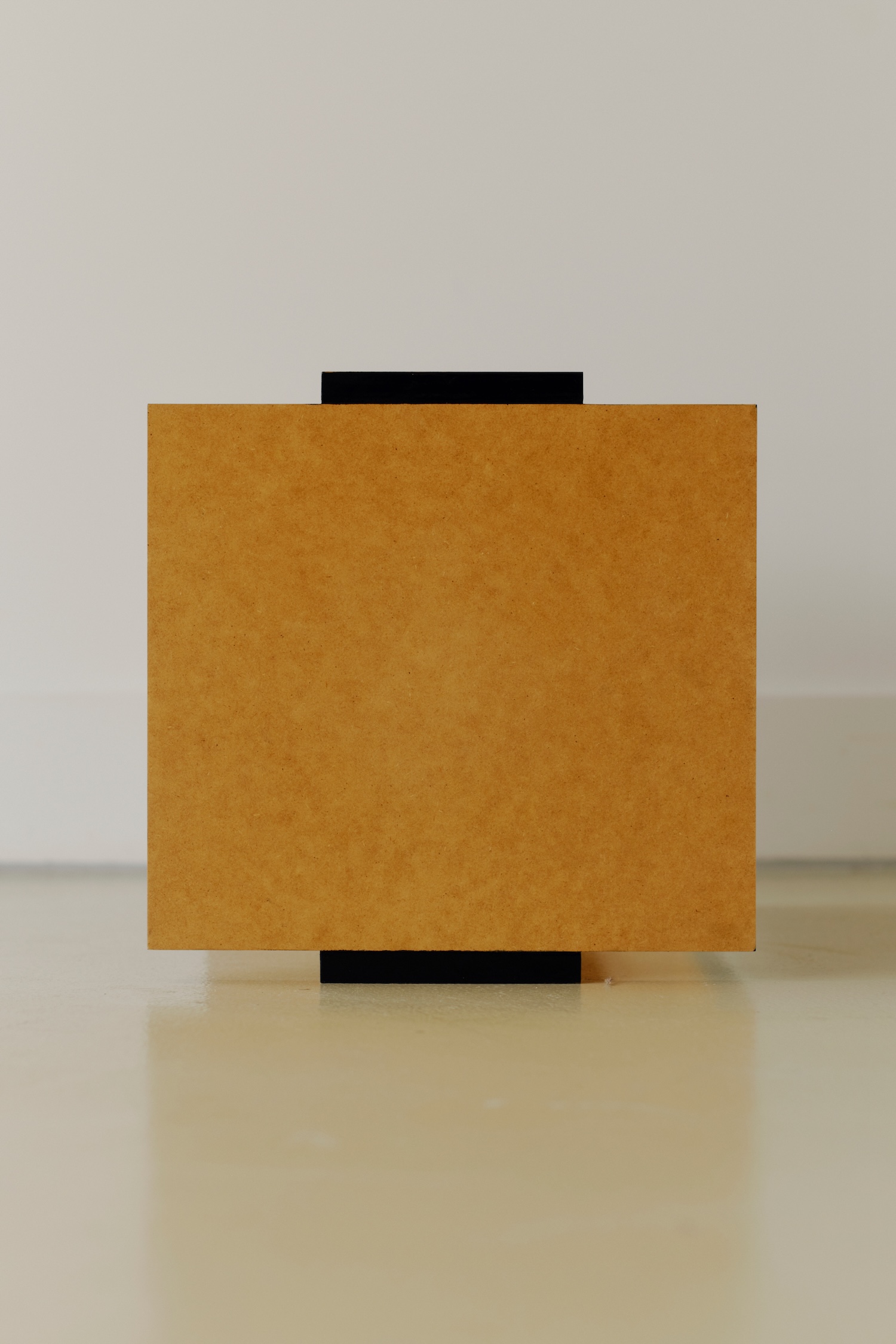
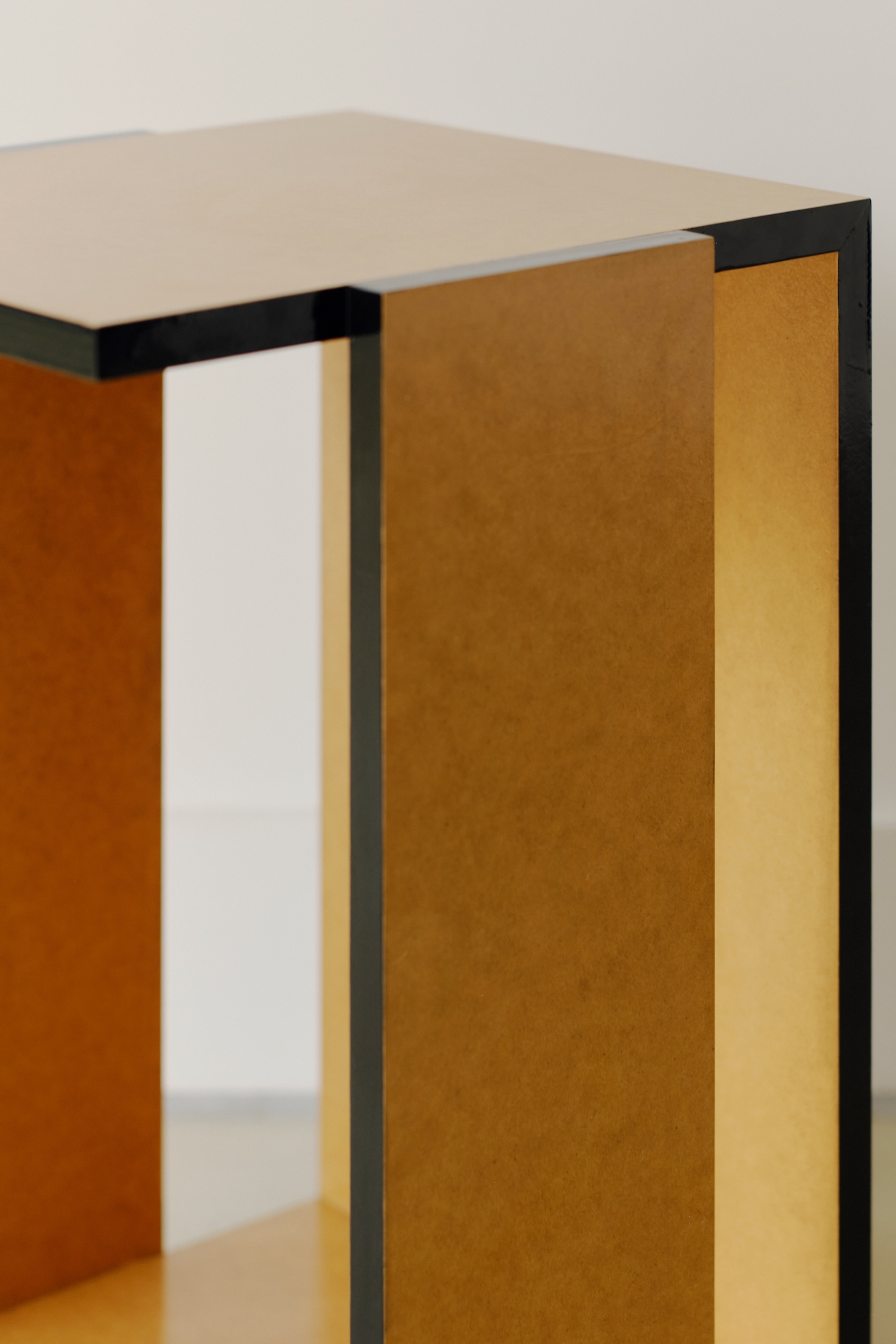
Undressed Collection is a minimalist furniture collection created by Australia-based designer Georgina Davies. MDF occupies a peculiar position in the hierarchy of materials. Born from wood waste and industrial efficiency, it has long served as design’s invisible foundation, the humble substrate hidden beneath veneers and laminates in countless interiors worldwide. Yet here, in this Australian coastal town, MDF steps forward as protagonist rather than supporting player, stripped of disguise and elevated through process into something entirely unexpected.
The transformation begins with technique. Drawing from the centuries-old tradition of French polishing, typically reserved for precious hardwoods, the collection applies this meticulous craft to MDF through multiple thin coats of shellac. The process unfolds through fine spray application and microfibre brush work, each layer building depth and luminosity. This marriage of industrial material and artisanal technique creates what might be called quiet luxury, where value emerges not from material pedigree but from considered attention and time.
The formal language speaks directly to modernist principles, echoing the geometric clarity that defined Bauhaus thinking nearly a century ago. Each piece in the collection maintains architectural precision, whether viewed from front or profile, revealing deliberate proportions that shift between commanding presence and subtle recession depending on spatial context. A console might anchor an entryway with geometric authority, while a side table can disappear into the rhythm of a living space, its form yielding to function without sacrificing visual coherence.
This approach represents more than aesthetic choice; it signals a broader cultural shift toward material honesty in contemporary design. Where previous generations might have concealed MDF beneath more prestigious surfaces, Undressed celebrates the material’s inherent qualities. The collection acknowledges MDF’s democratic nature while refusing to accept its typical relegation to invisibility. Through careful proportion and finish, these pieces challenge preconceptions about value, suggesting that worth emerges from thoughtful design rather than material hierarchy.