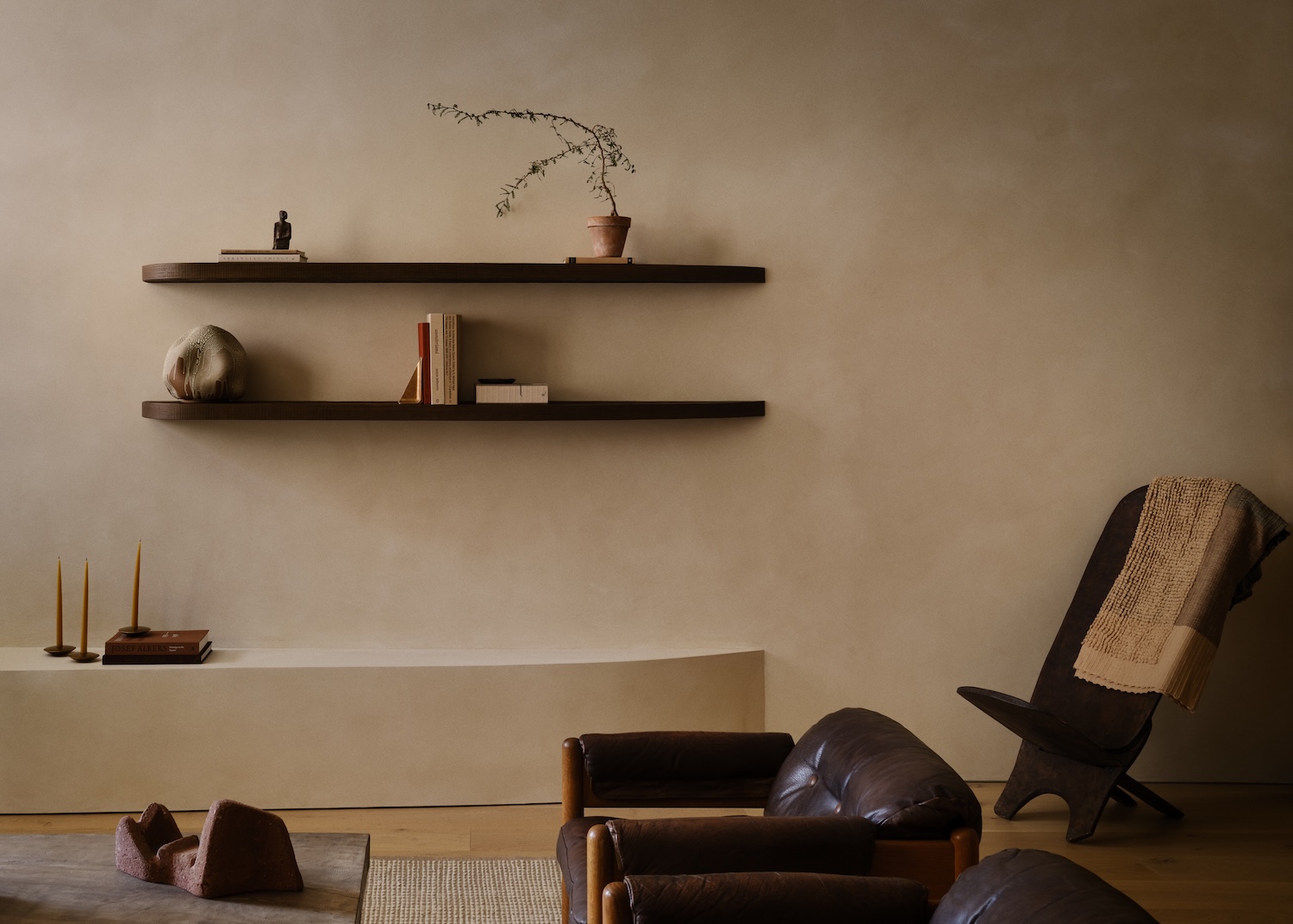
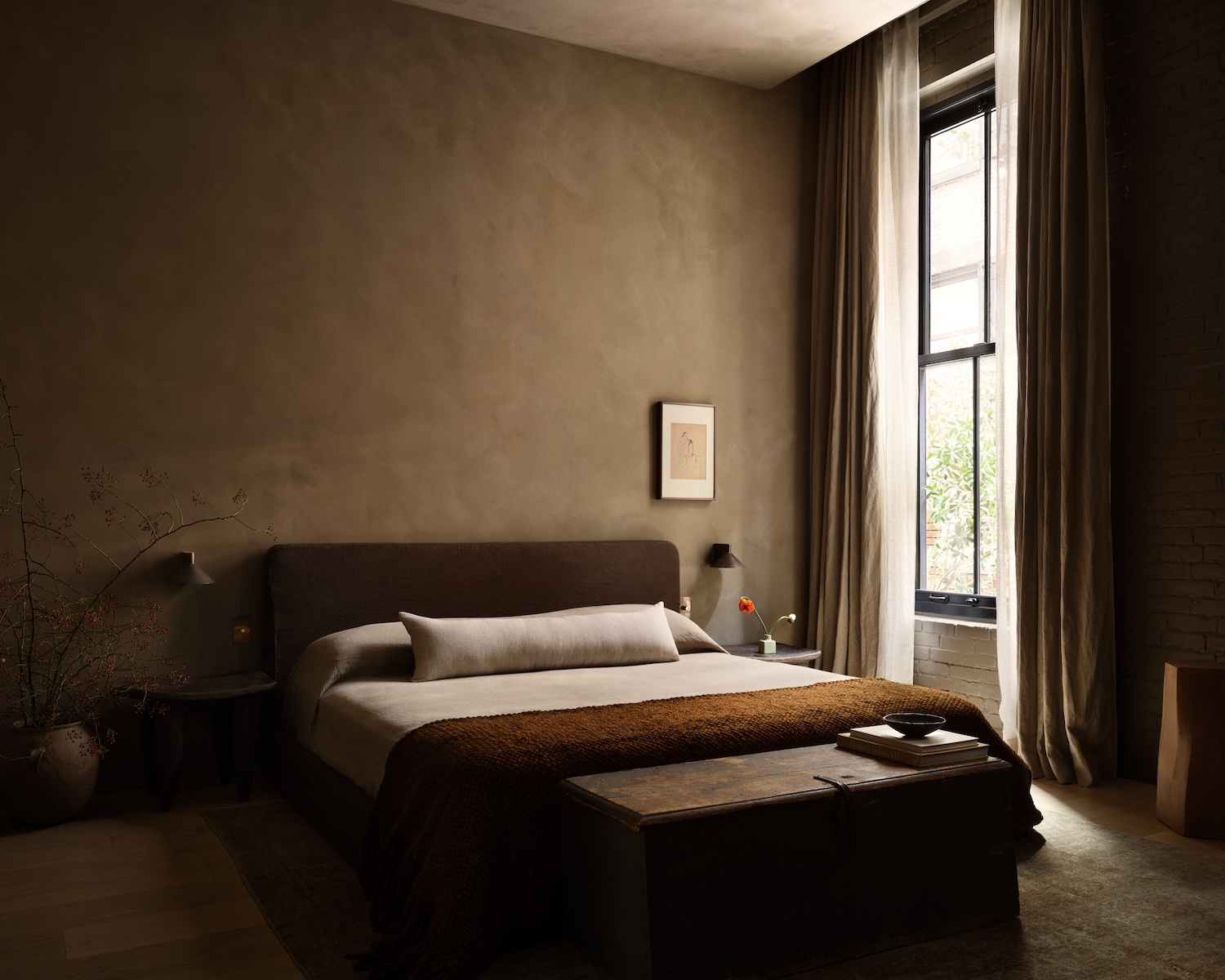
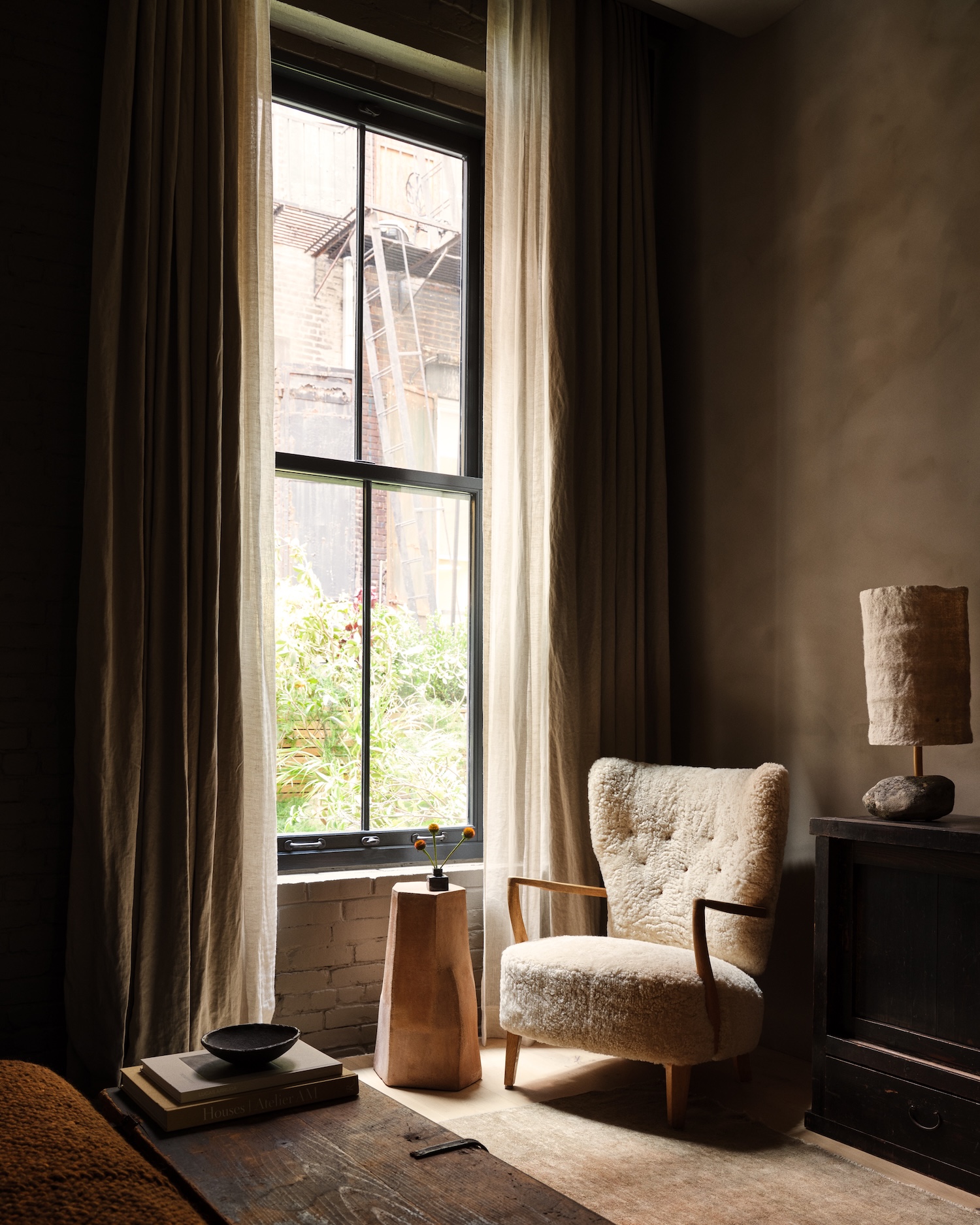
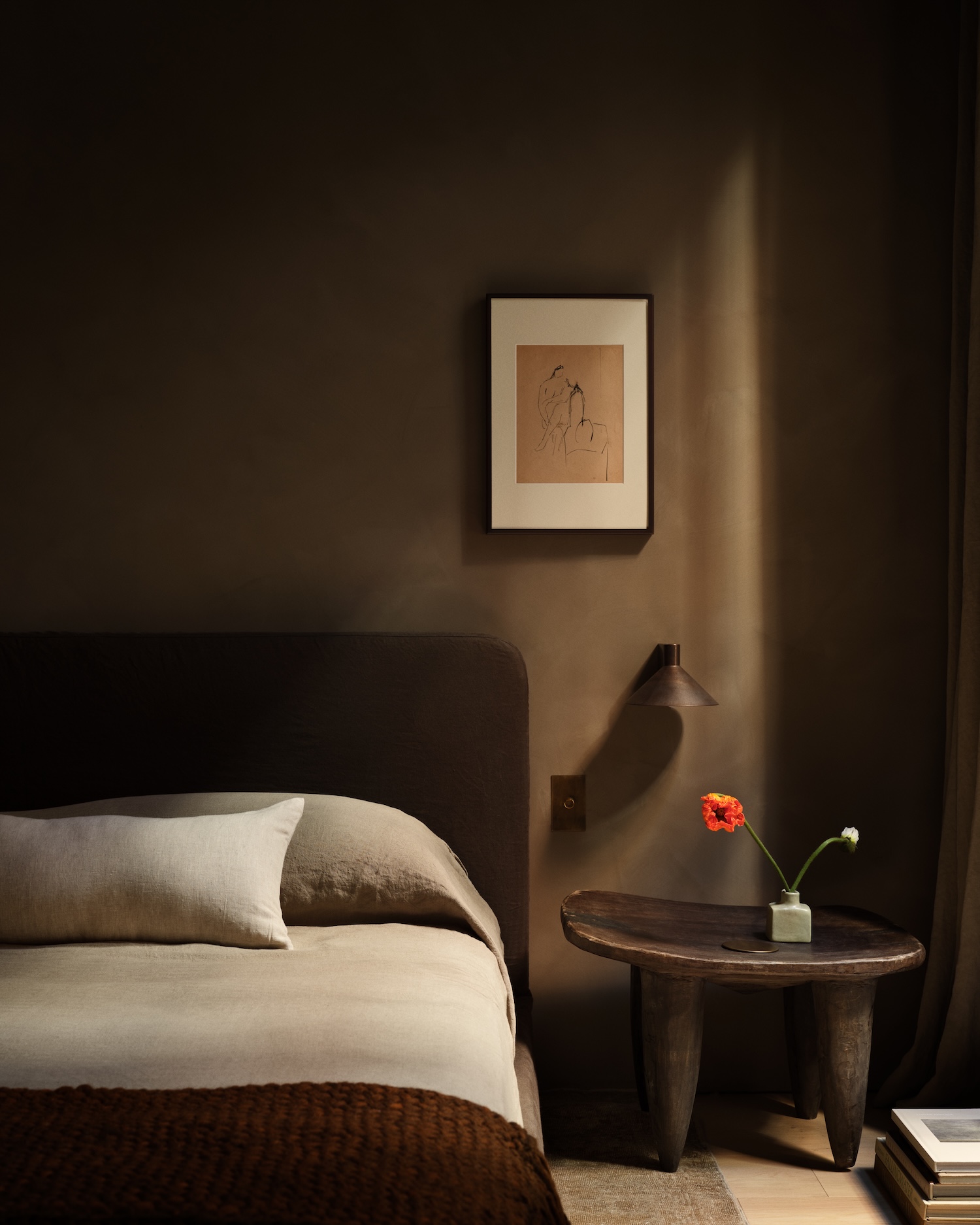
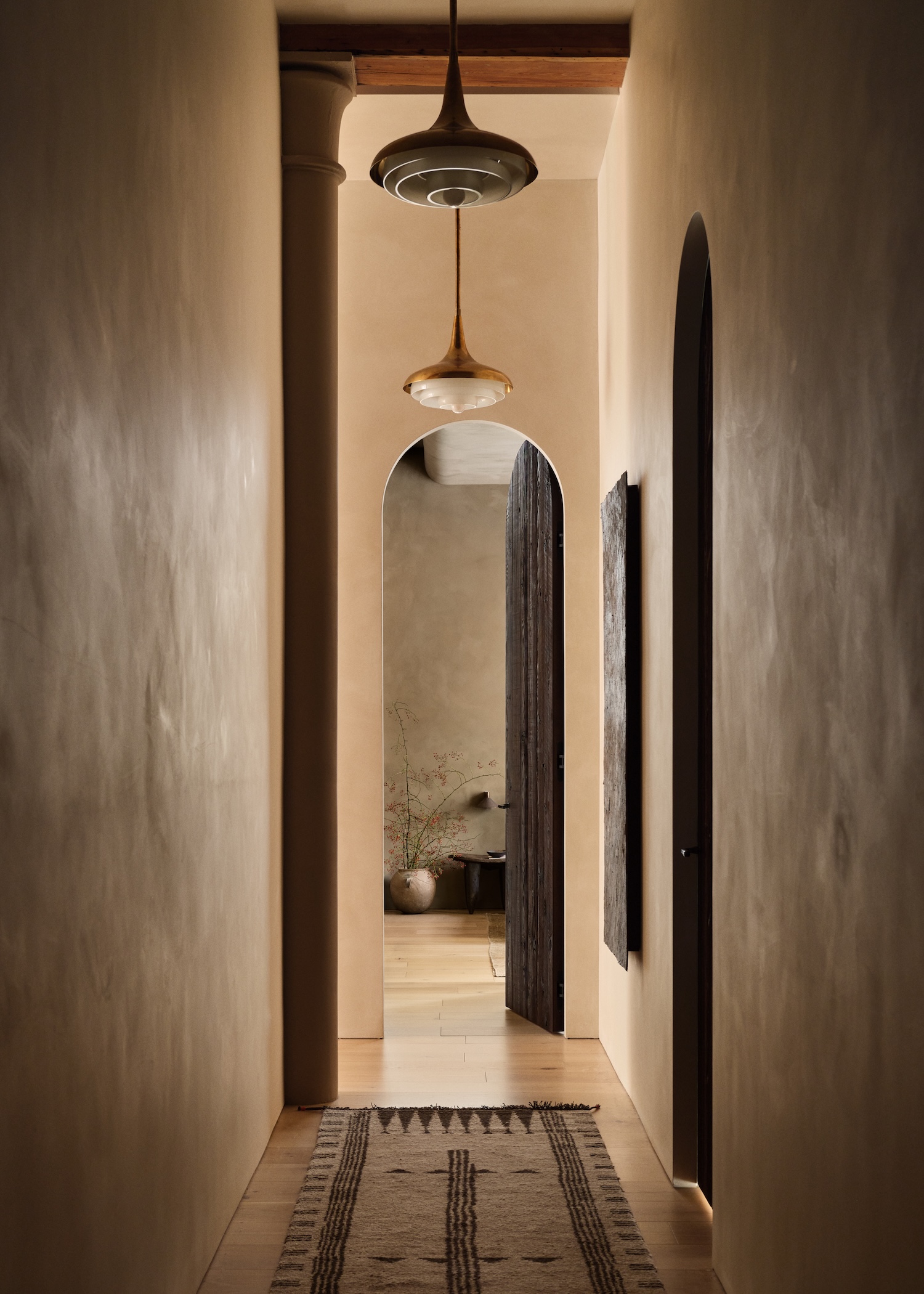
Crosby Street Apartment is a minimalist apartment located in New York, New York, designed by Steph Betesh of Ember Studio. In the heart of Soho, eleven-and-a-half-foot windows frame a quintessential New York streetscape. But it’s what happens at the threshold of this newly renovated loft that reveals the true story. Two massive 250-pound doors of hand-selected reclaimed wood pivot open, their arched forms creating a momentary compression before releasing visitors into an expansive living space.
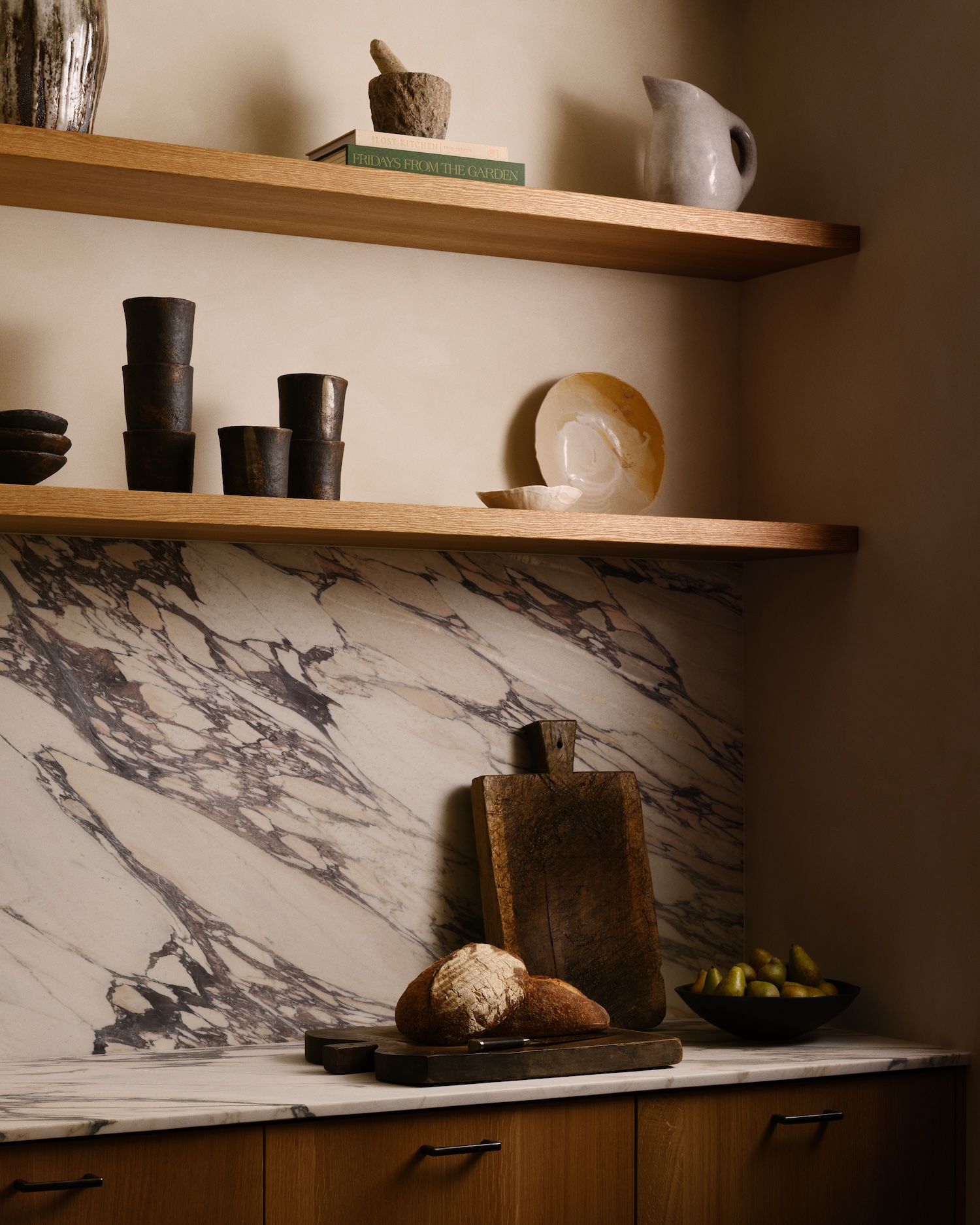
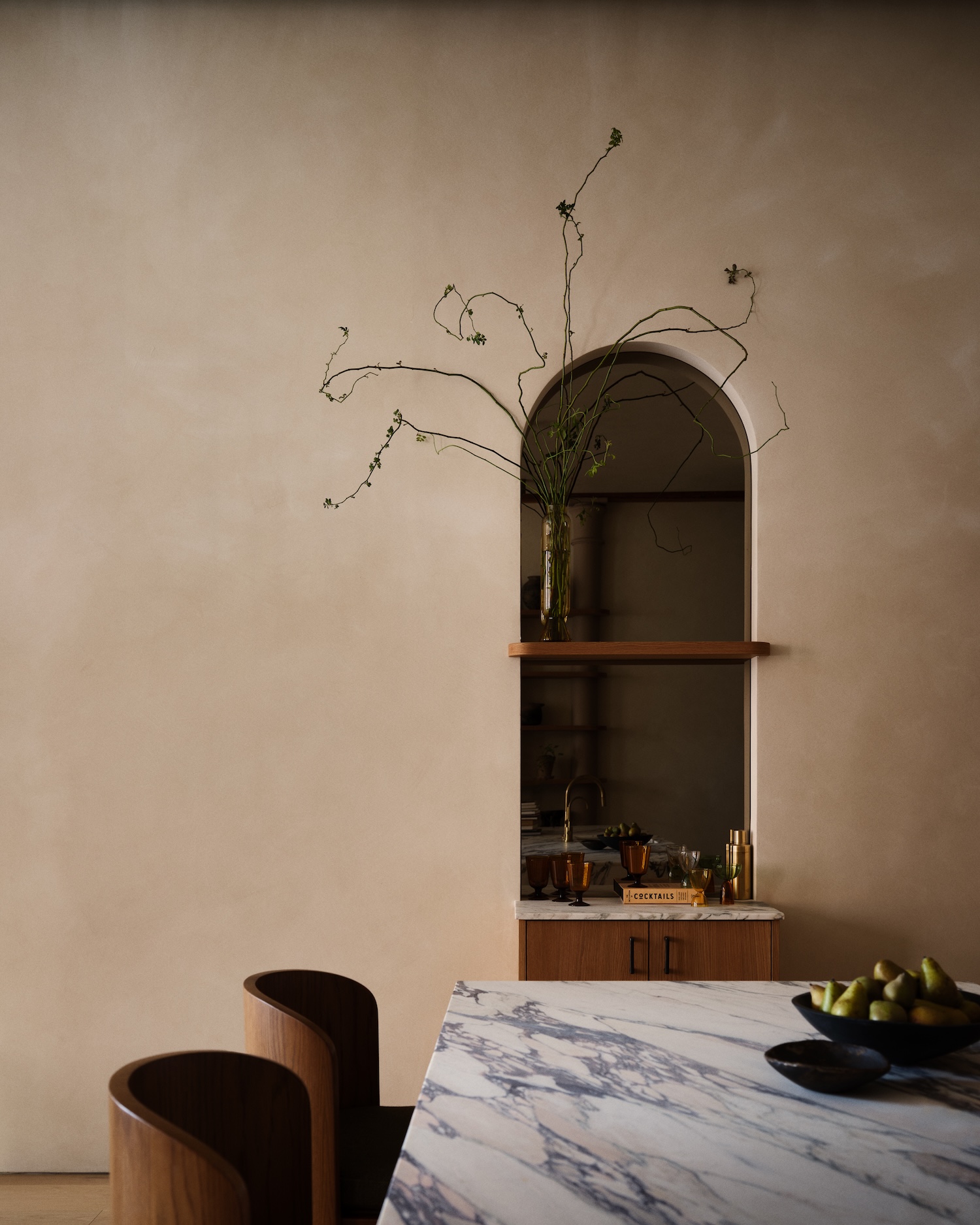
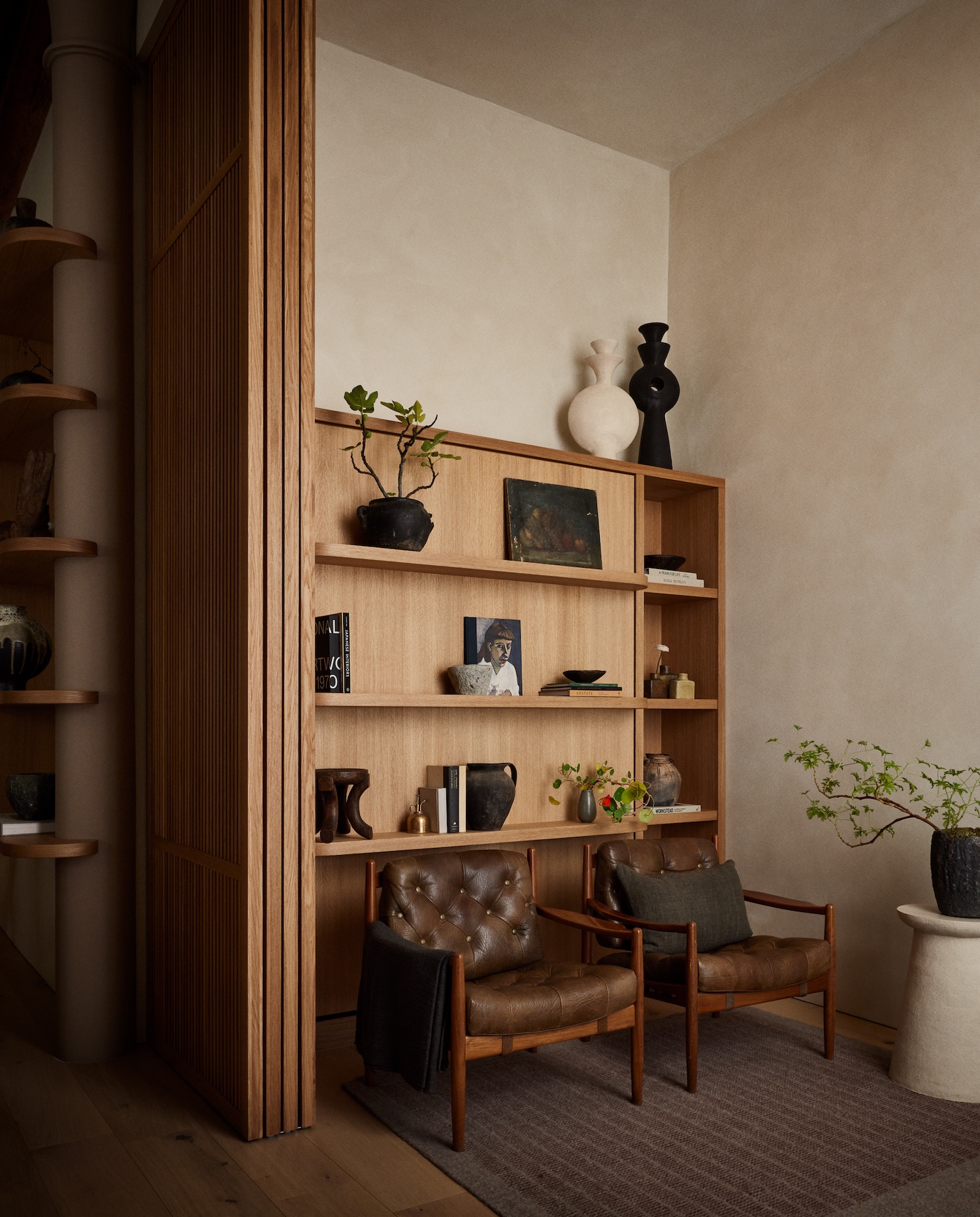
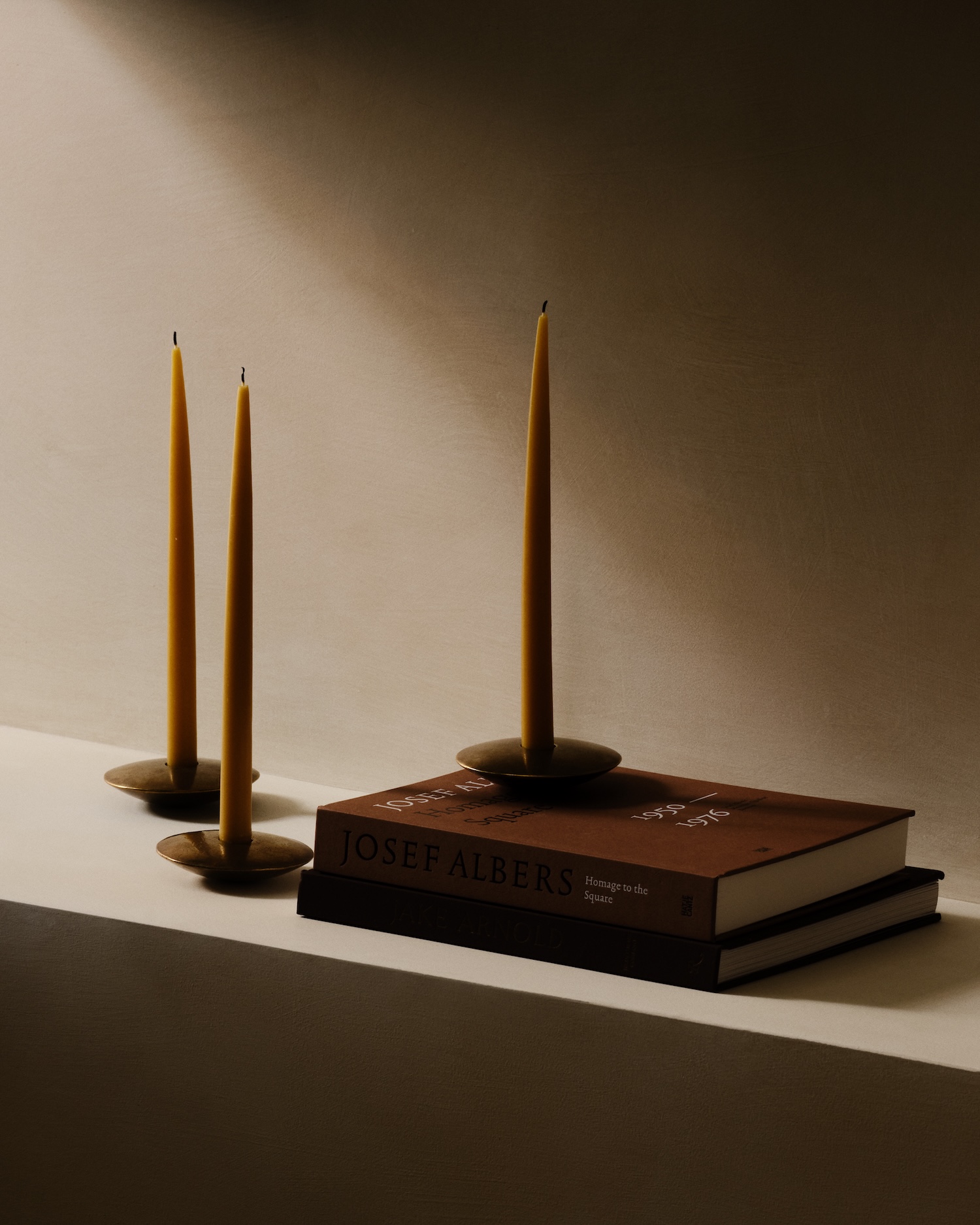
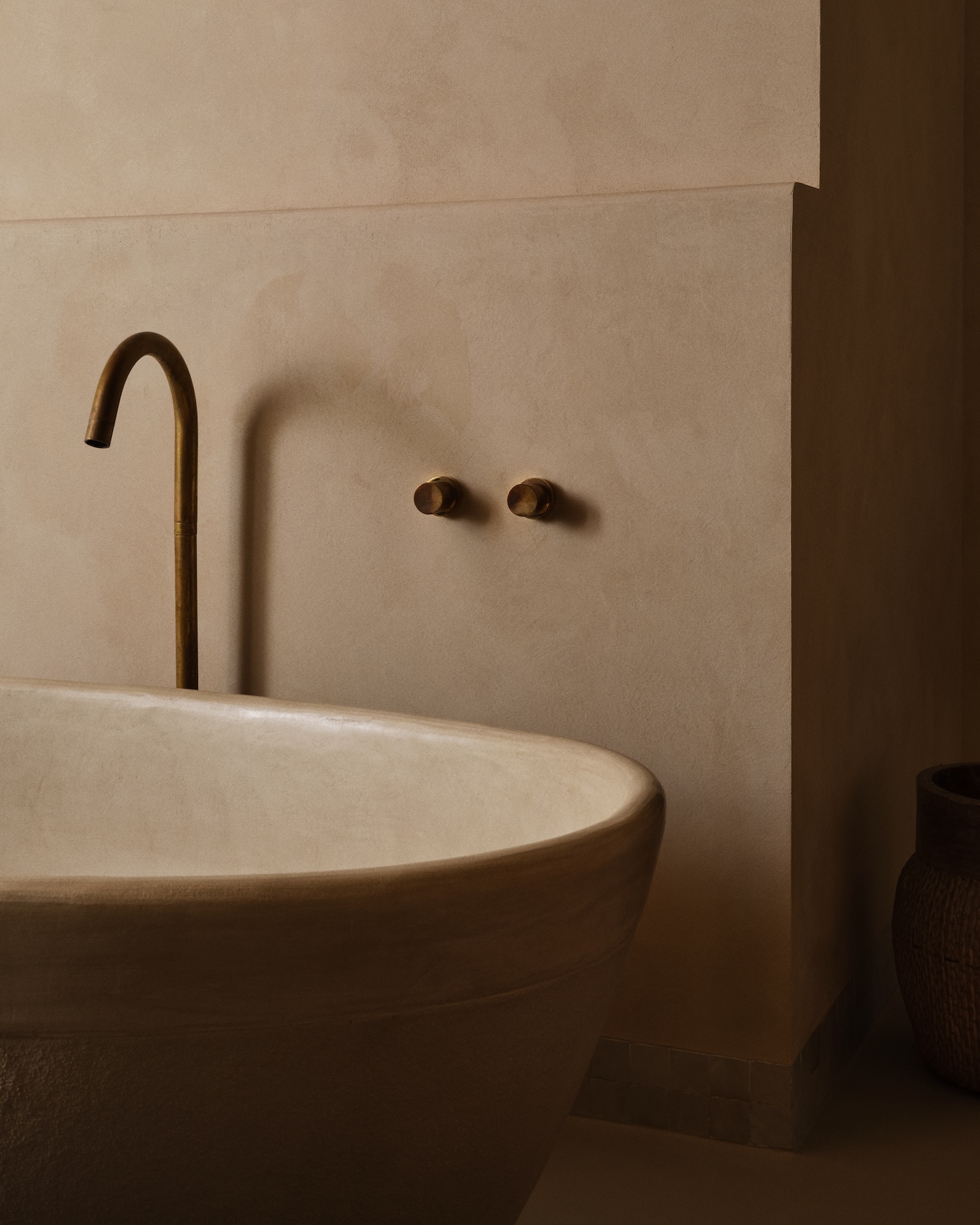
The renovation speaks through its materials. Limewash walls with their subtle imperfections catch light differently throughout the day. Moon Grey limestone, carved from a 1600-pound block and hoisted through windows, presents both polished precision and a deliberately raw, split-face edge in the primary bathroom. White oak millwork creates a continuous material dialogue throughout the apartment. Each surface tells a story of intention, not just decoration.
The project sits within a rich historical context of New York loft renovations, where industrial spaces have been continuously reimagined as domestic environments since the 1960s. Yet Betesh avoids the museum-like sterility that often characterizes contemporary luxury renovations. Instead, she embraces what a design historian might call “the handmade modern”—where evidence of craft processes remains visible and celebrated.
The slatted wood sliding doors—each weighing 300 pounds and engineered to glide silently on hidden tracks—represent a perfect synthesis of craft tradition and contemporary design innovation. These technical achievements serve a deeper purpose: creating spaces that can transform according to the rhythms of daily life. An office becomes a guest bedroom; communal areas flow into more intimate zones.
The project’s material language has evolved into Betesh’s first furniture collection, recently launched through Colony in NYC—objects that explore “the relationship between the individual object and its environment.” Like the loft itself, these pieces celebrate materiality while remaining deeply attuned to human experience and interaction.