B Townhouse is a minimalist residence located in New York City, designed by Nicolas Schuybroek Architects. This Upper East Side former coach house, once owned by art collector Larry Gagosian and renovated decades ago by François de Menil, demonstrates how properties with iconic cultural status can undergo transformation while maintaining social mystique and updating spatial experiences. The three-level residence, featuring 300 square meters per floor, an arched facade window resembling Pierre Chareau’s Glass House, and a ground-floor tiled swimming pool, required comprehensive intervention for another art collector client.
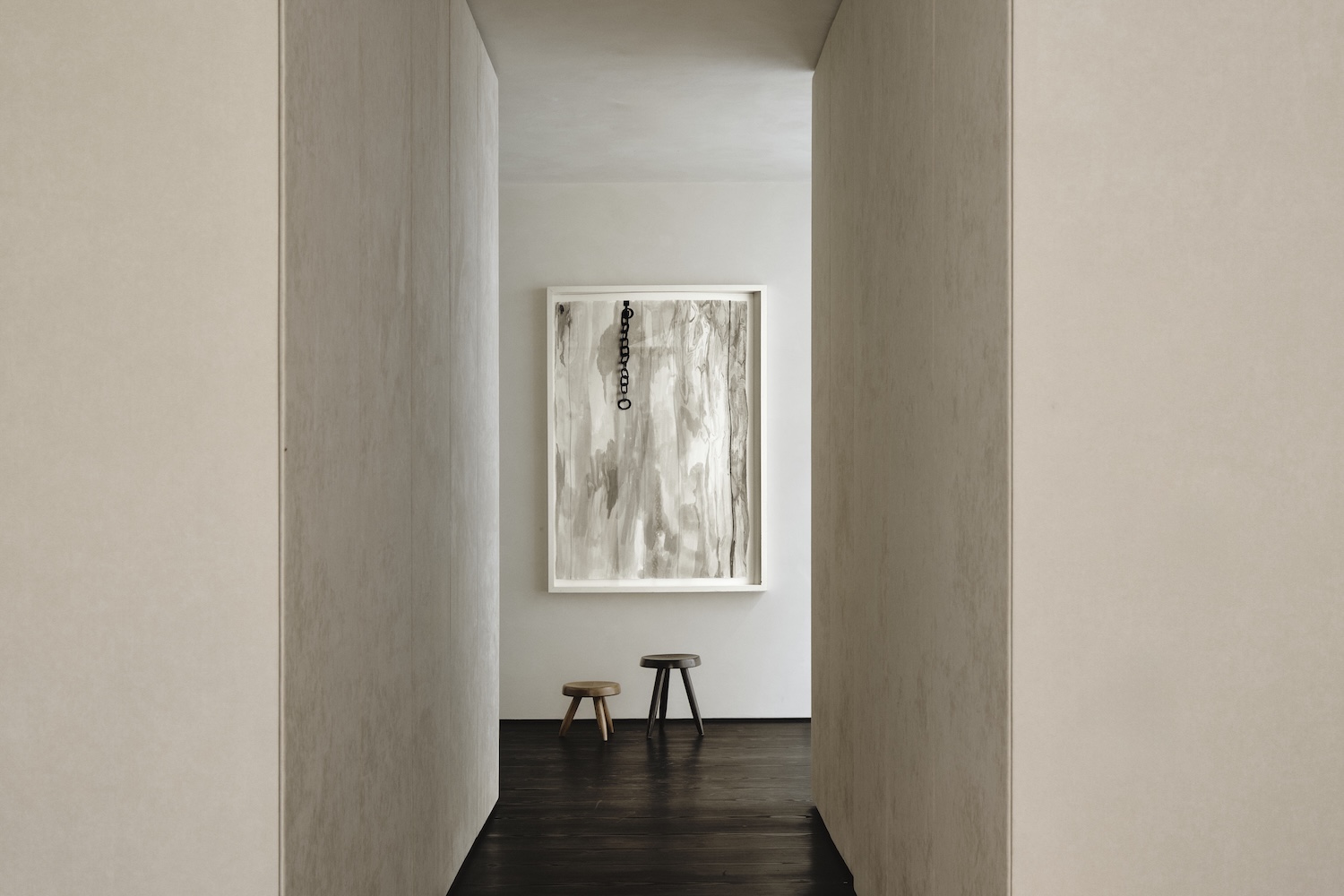
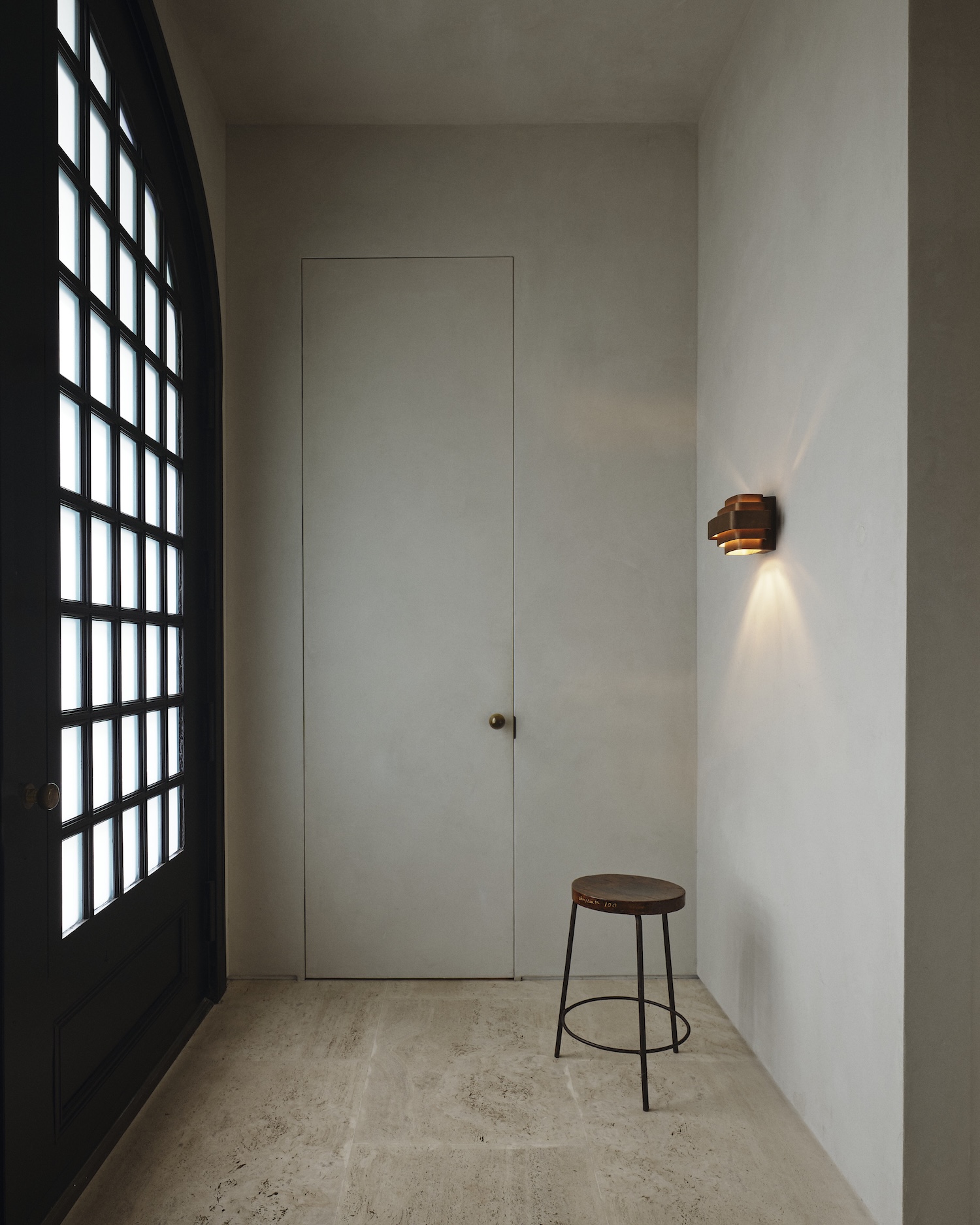
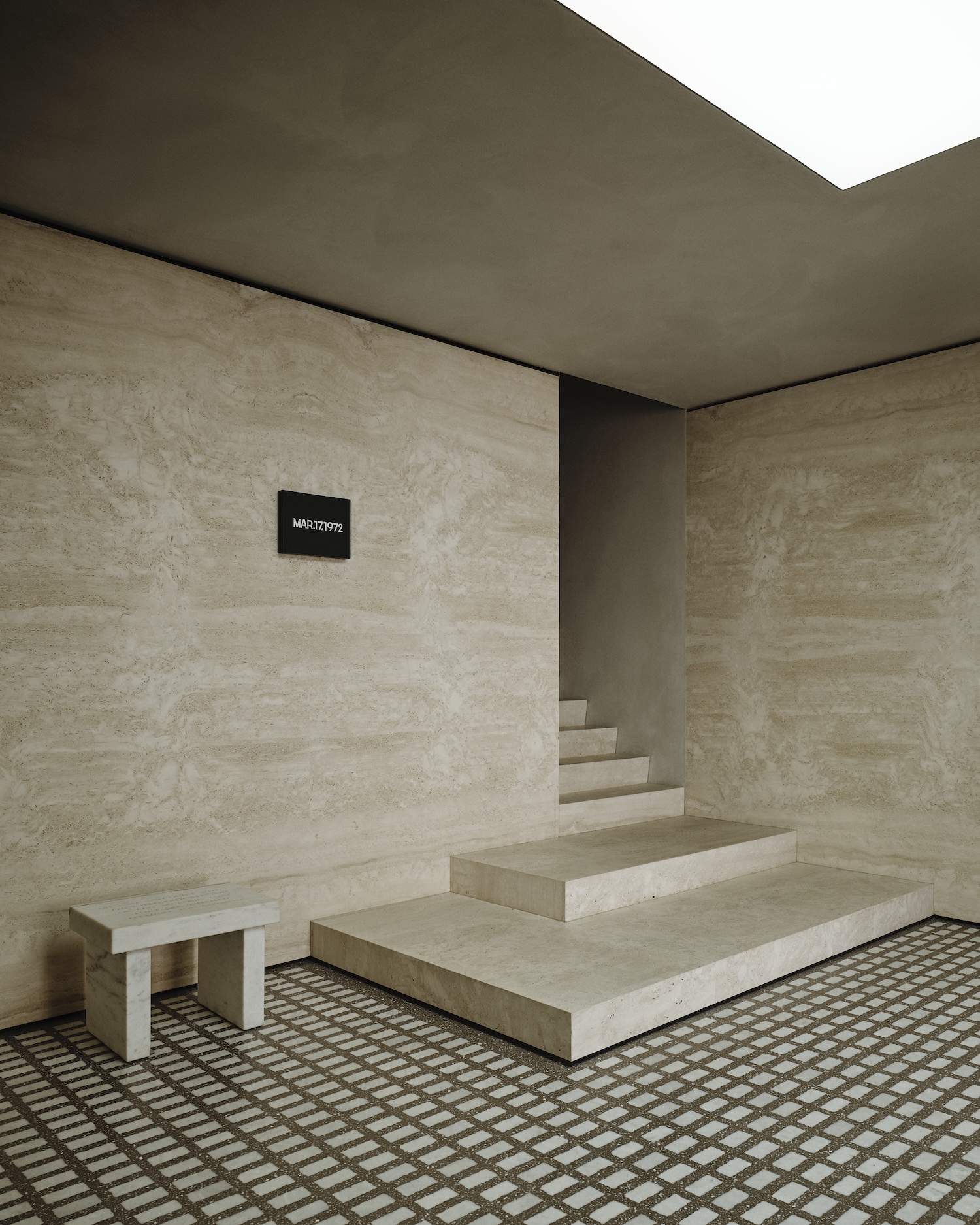
The transformation begins with a reimagined opening moment that replaces the previously narrow, unremarkable entry experience. A square antechamber with terrazzo floors displays rare Chareau sconces alongside artworks by On Kawara and Jenny Holzer beneath a stretch ceiling emitting zenithal light blur. This composition, informed by Carlo Scarpa’s work, marks the start of a dynamic interior sequence across the ground floor, demonstrating how entry spaces can establish architectural narratives through carefully orchestrated material and lighting choreography.
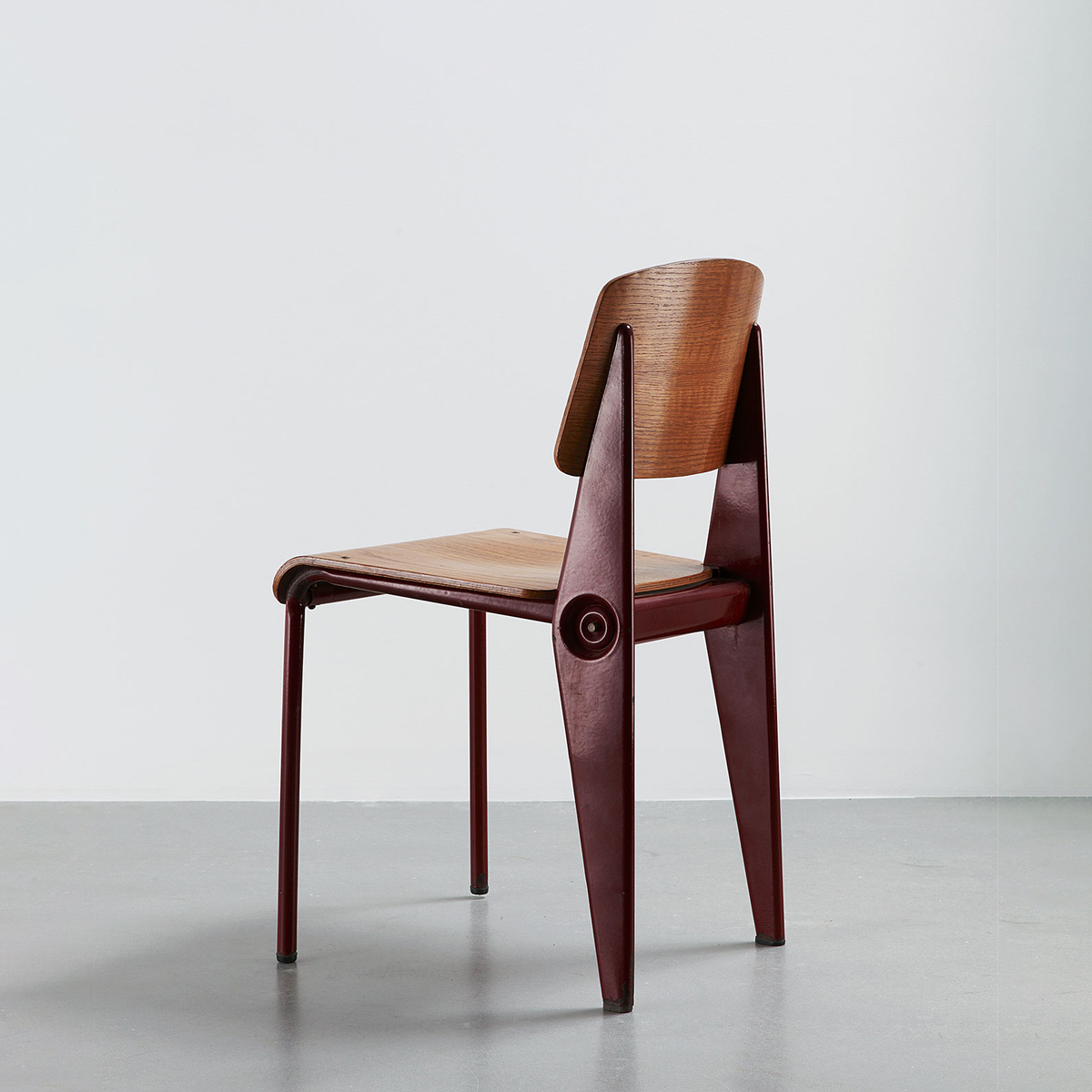
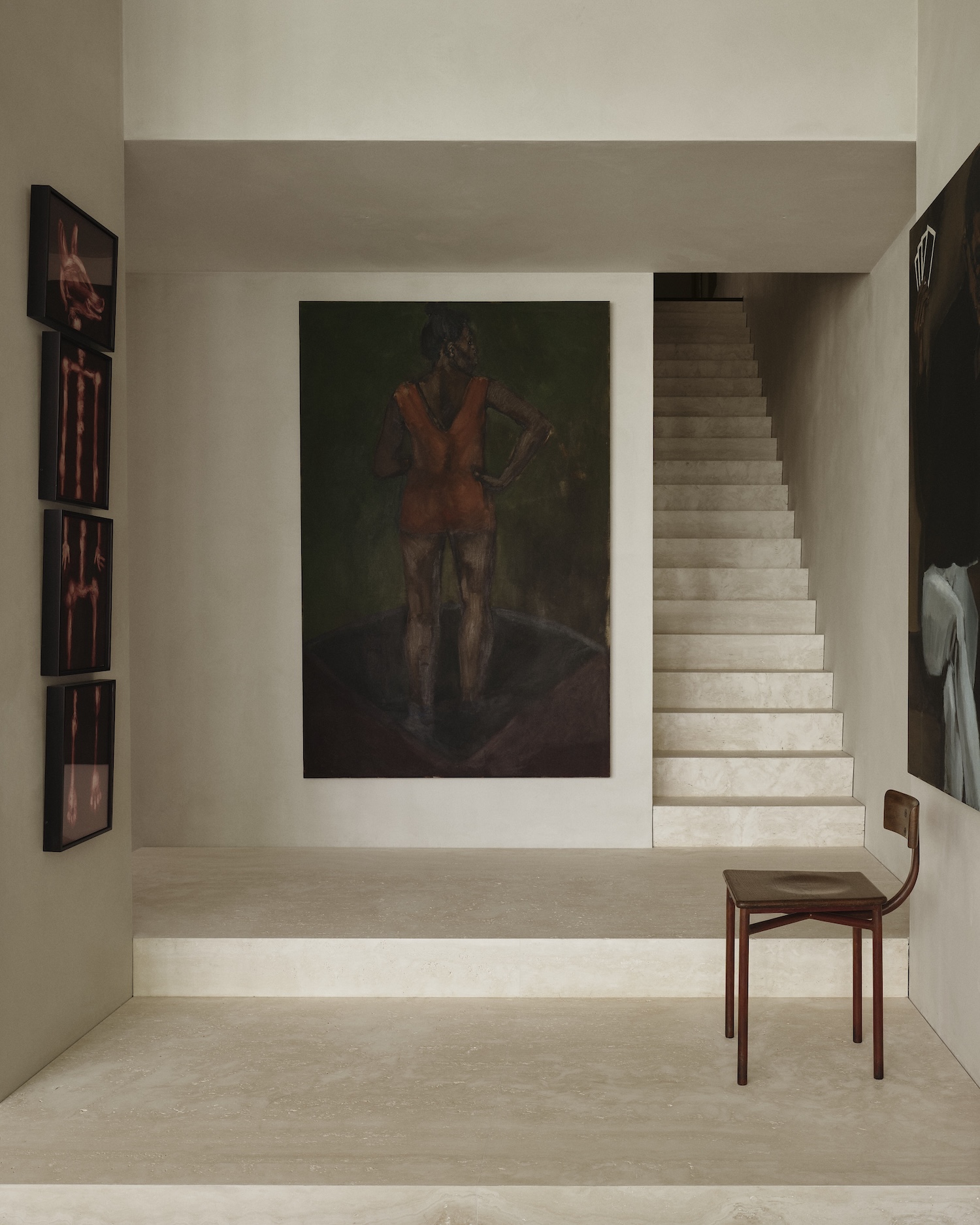
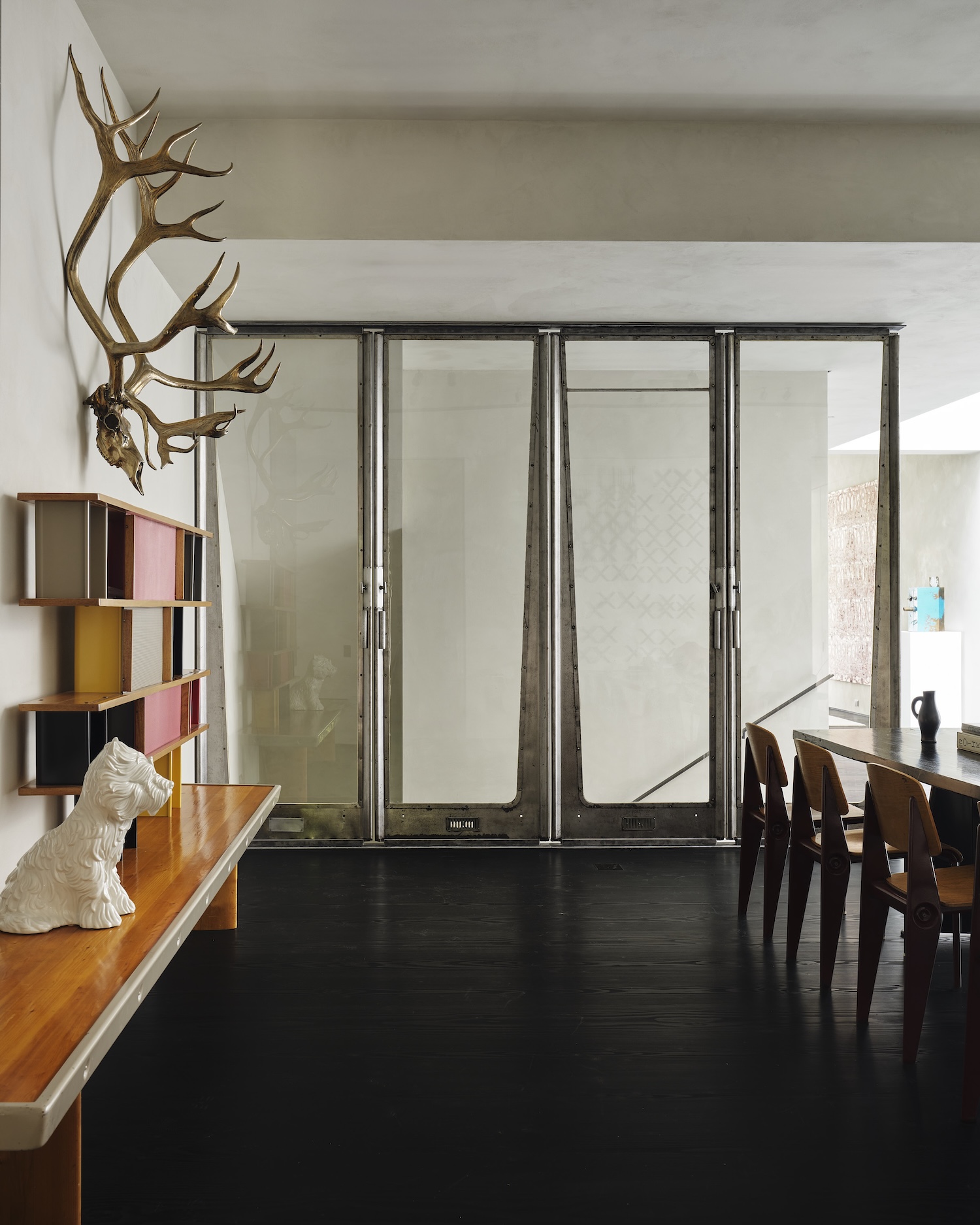
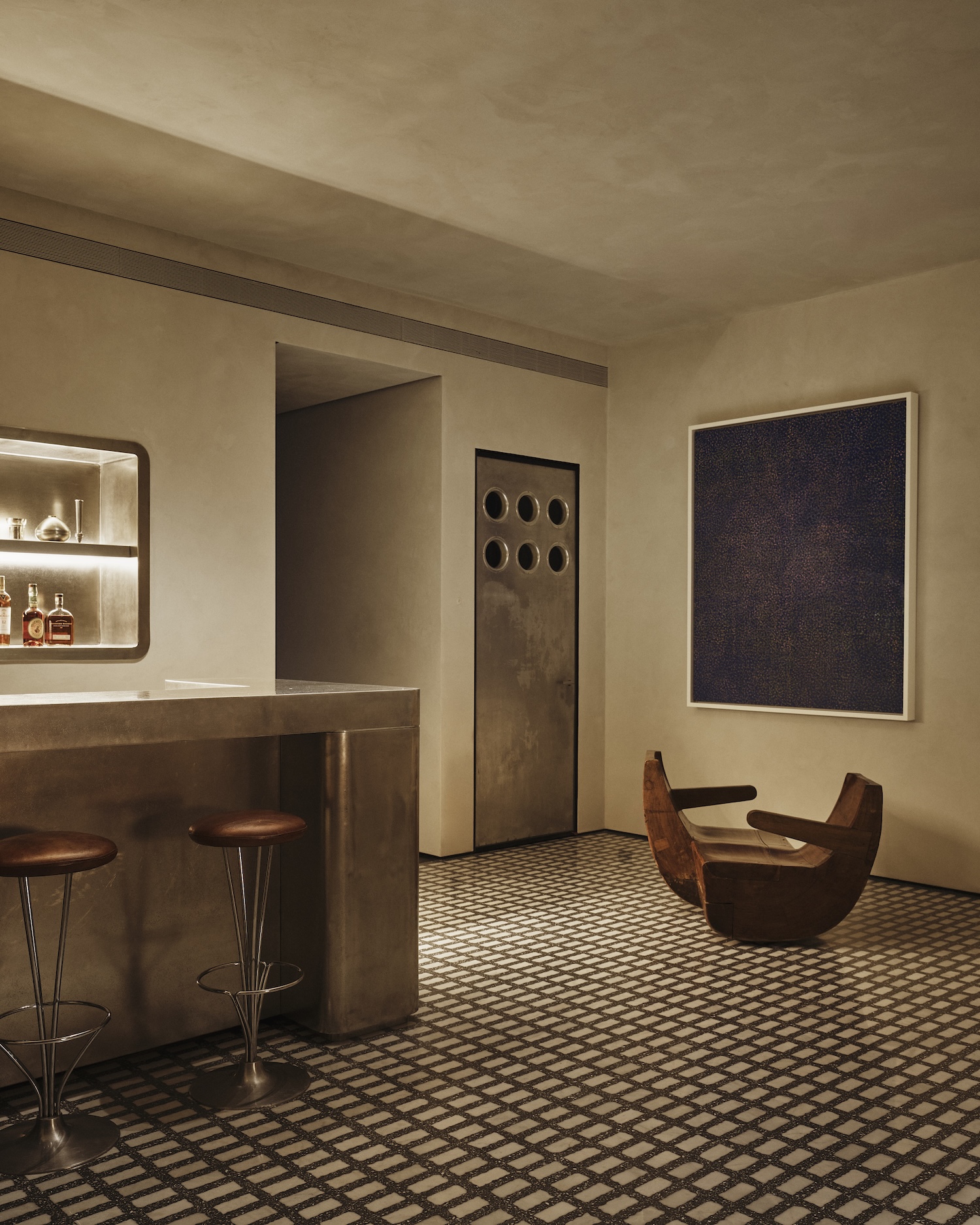
Double travertino doors slide open to reveal a new sculptural travertine staircase leading to the living spaces, while a dark black marble corridor channels into a gallery-style entertaining space for dinners and parties. Materials and furniture cast a playful, dynamic atmosphere including a bold tin bar, white Pierre Paulin Alpha sofa set, Scarpa furniture, and Jean Prouvé architectural integrations, culminating in a small reading room featuring deep dusty grey-colored plaster walls that create an escapist cocoon.
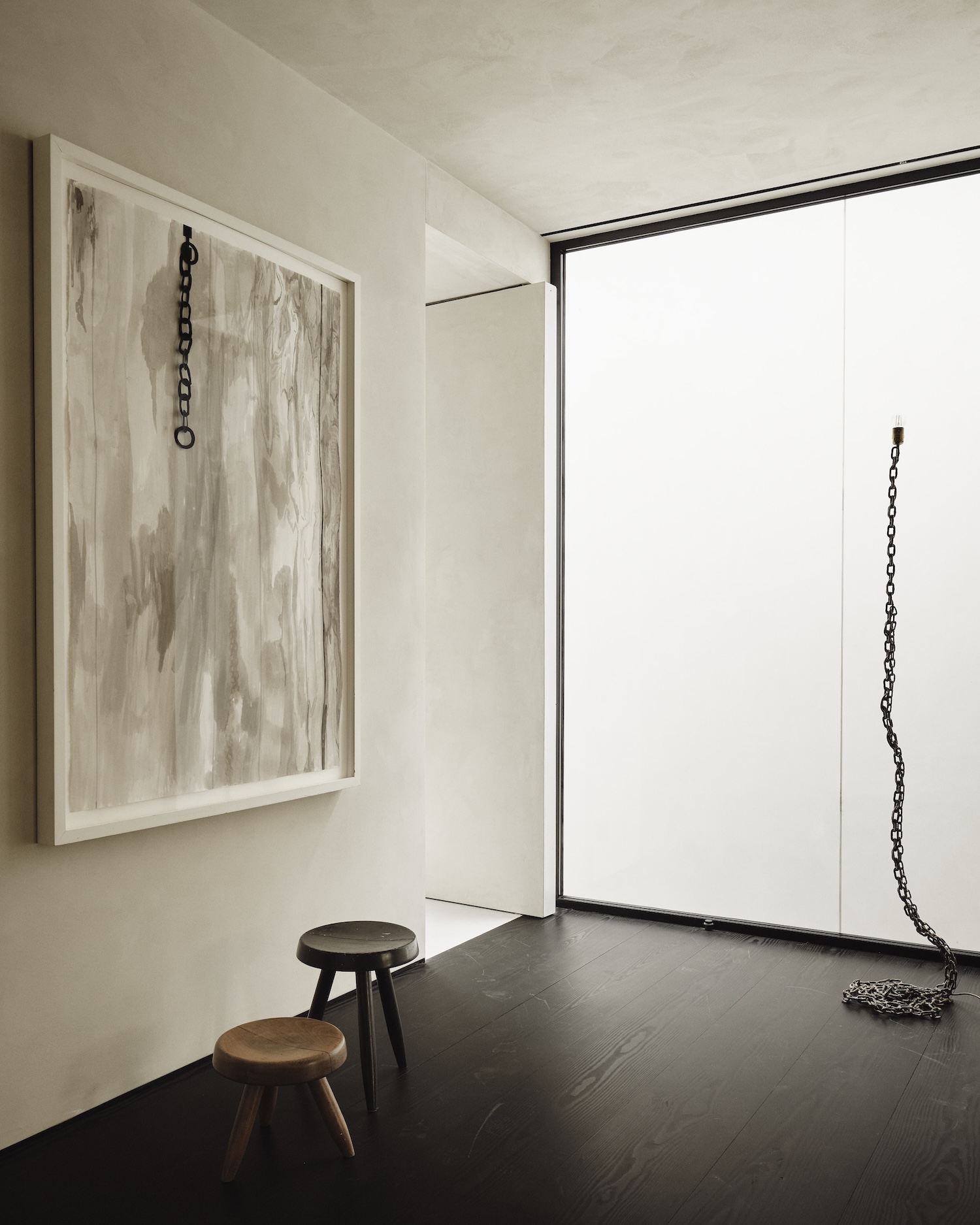
The minimal interior architecture employs travertine, 45-centimeter-wide black douglas fir flooring, and clay-plastered walls interrupted by skylight and floor insert geometries that carve newly vertical light flows. The hollowed-out plan transforms interior relationships to the facade window, while a new penthouse level with master suite and rooftop terrace carefully conceals itself from the street in alignment with local planning rules, demonstrating how vertical expansion can enhance spatial quality while respecting neighborhood character regulations.
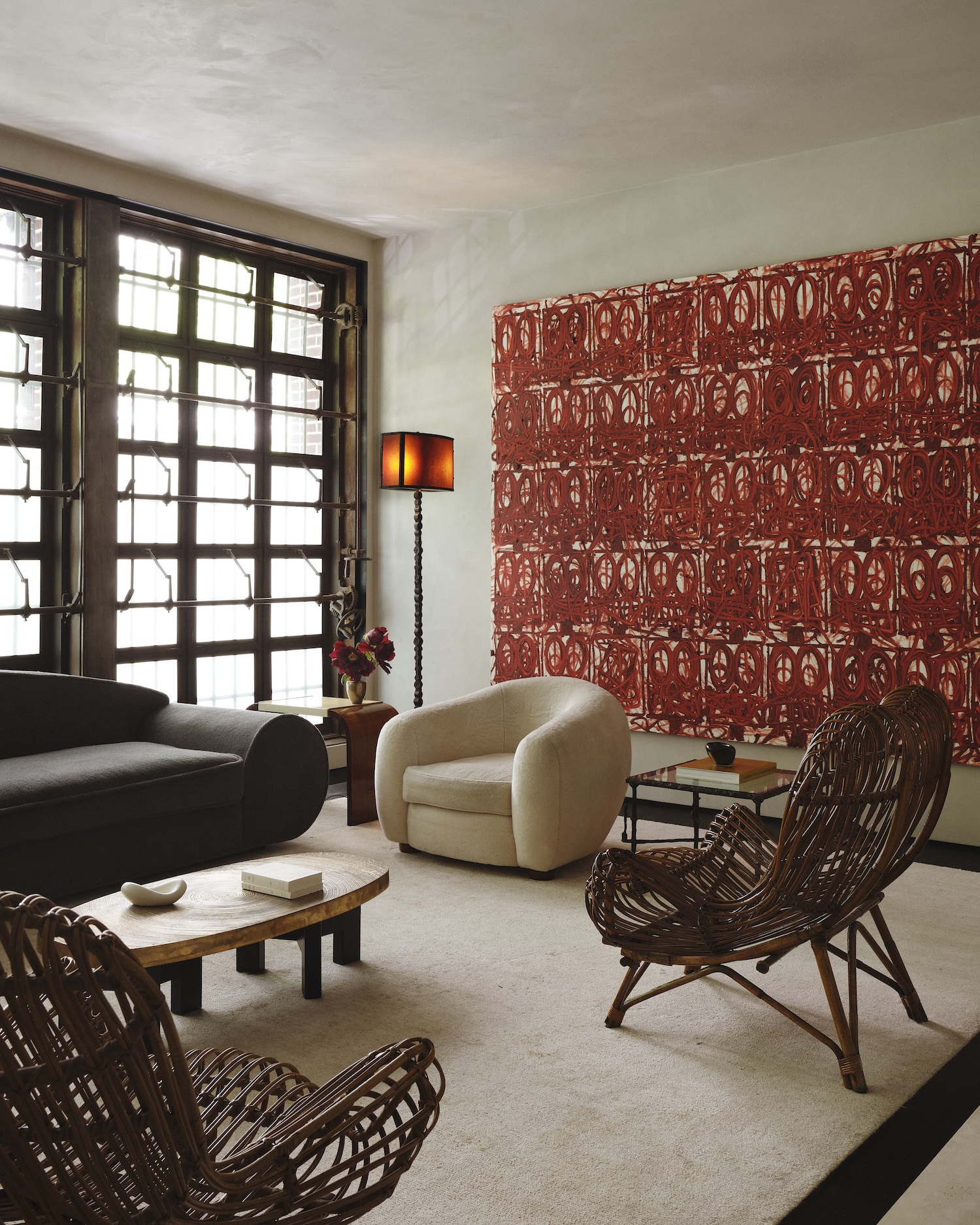
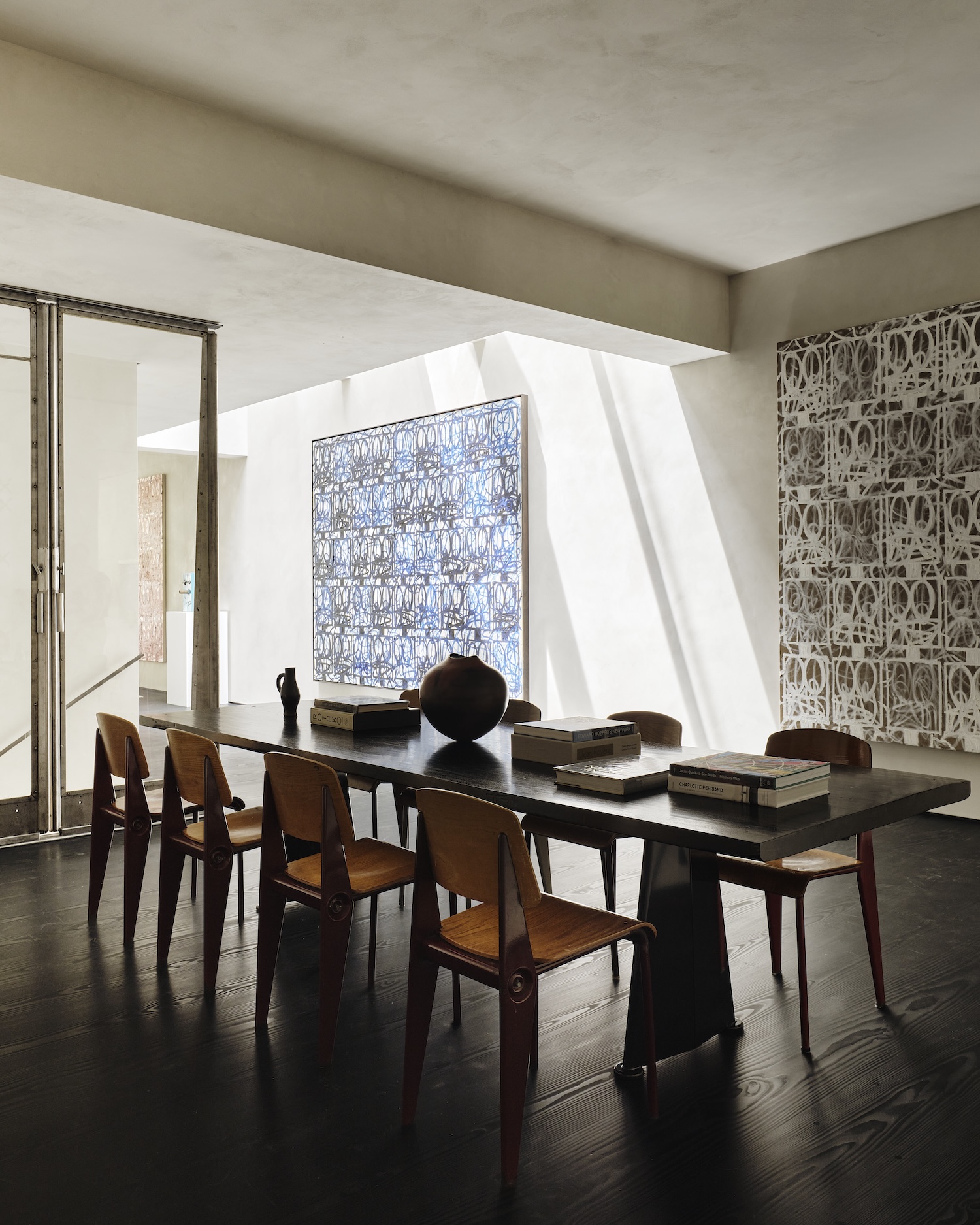
First-floor closed volumes for the kitchen, pantry, elevator, staircase, and fireplace group around the core, leaving perimeter space for living. Three large-scale Rashid Johnson paintings and custom raw metal shelving frame Jean Royère sofas, while the tin-built kitchen connects through a glass door wall to a travertine planter terrace with a Simon Lee sculpture. This spatial organization concentrates service functions, enabling generous open living areas typical of luxury townhouse renovations.
Upper floor bedrooms and the penthouse master suite employ a slightly warmer material palette, with the master bathroom clad entirely in white marble with a water-jet finish that creates a soft matte surface texture. This minimal tactile space catches soft northeast light, while sliding doors lead to his-and-hers dressing rooms clad in pale bone-colored suede fabric so soft that the clay plaster wall transitions become nearly imperceptible. A small study off the bedroom with a Prouvé desk and library enclave catches southwest light, with pocket doors opening onto the terrace.