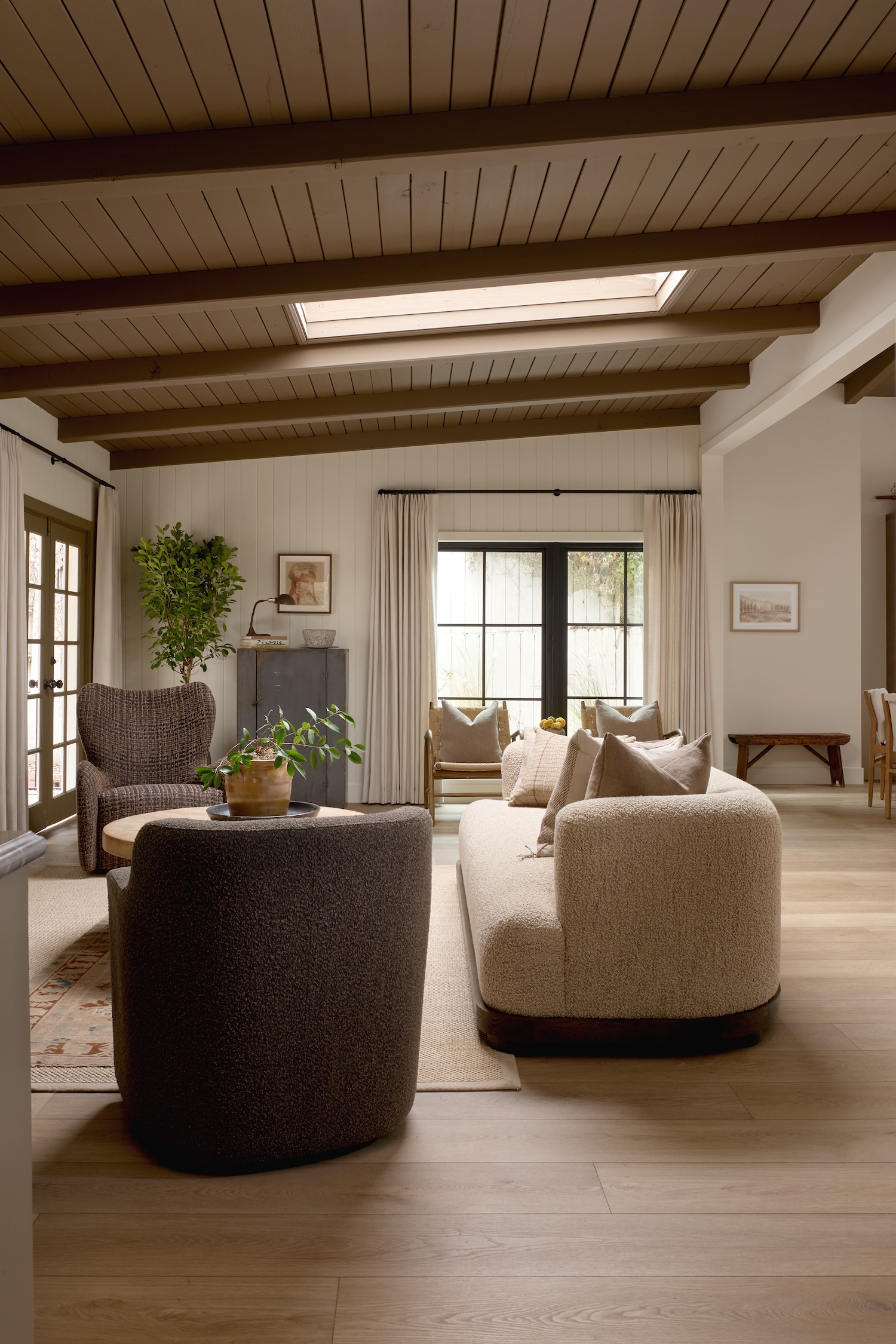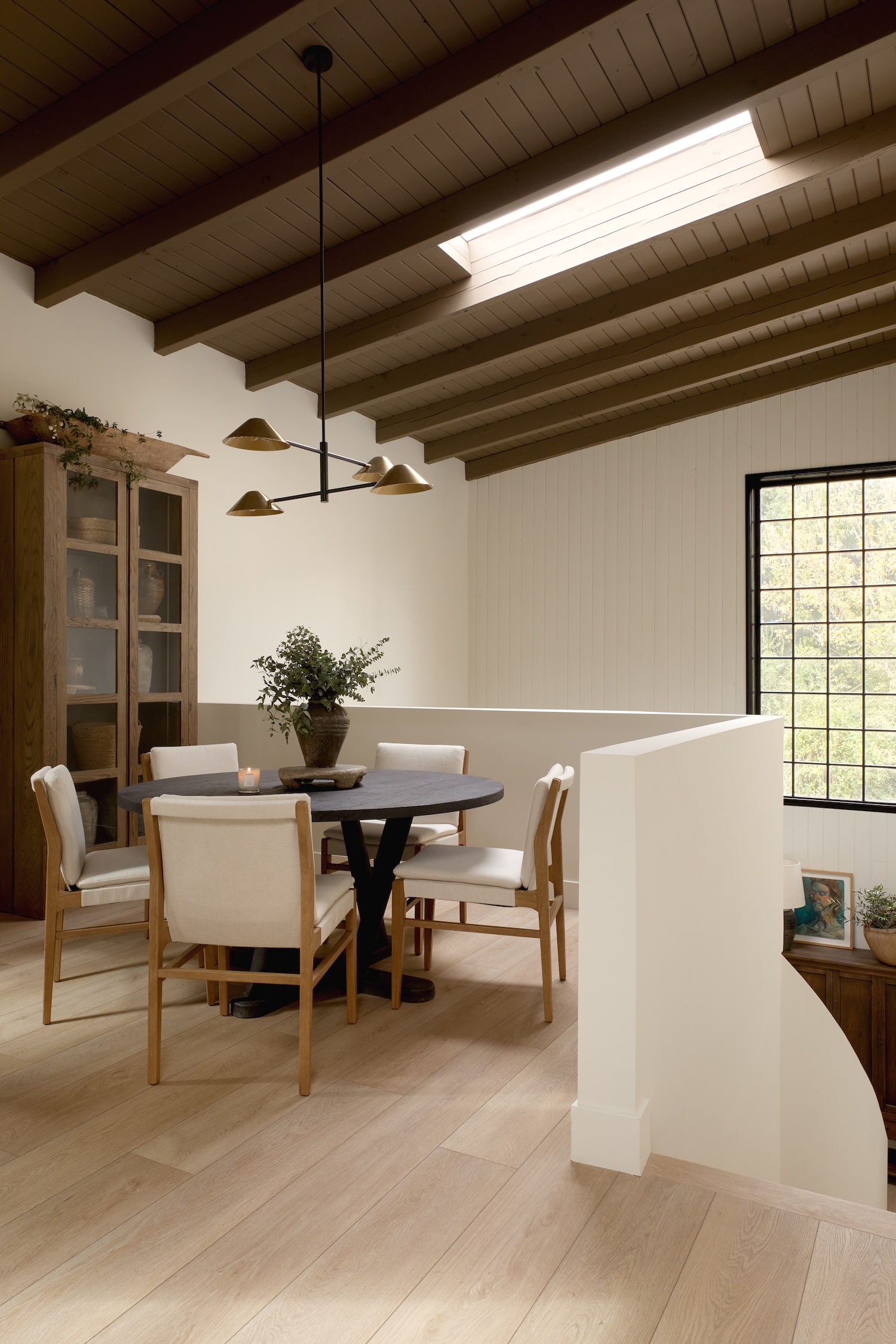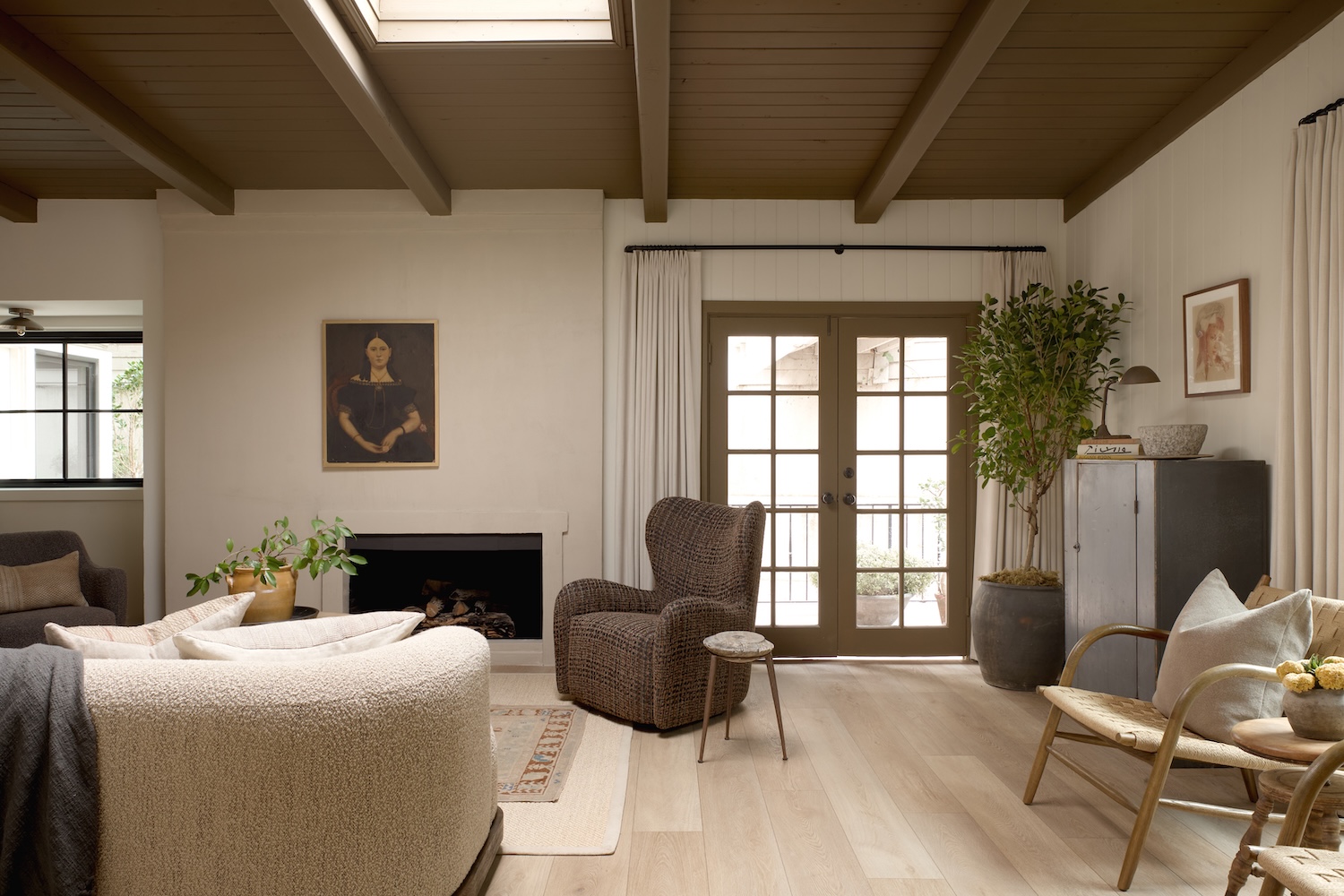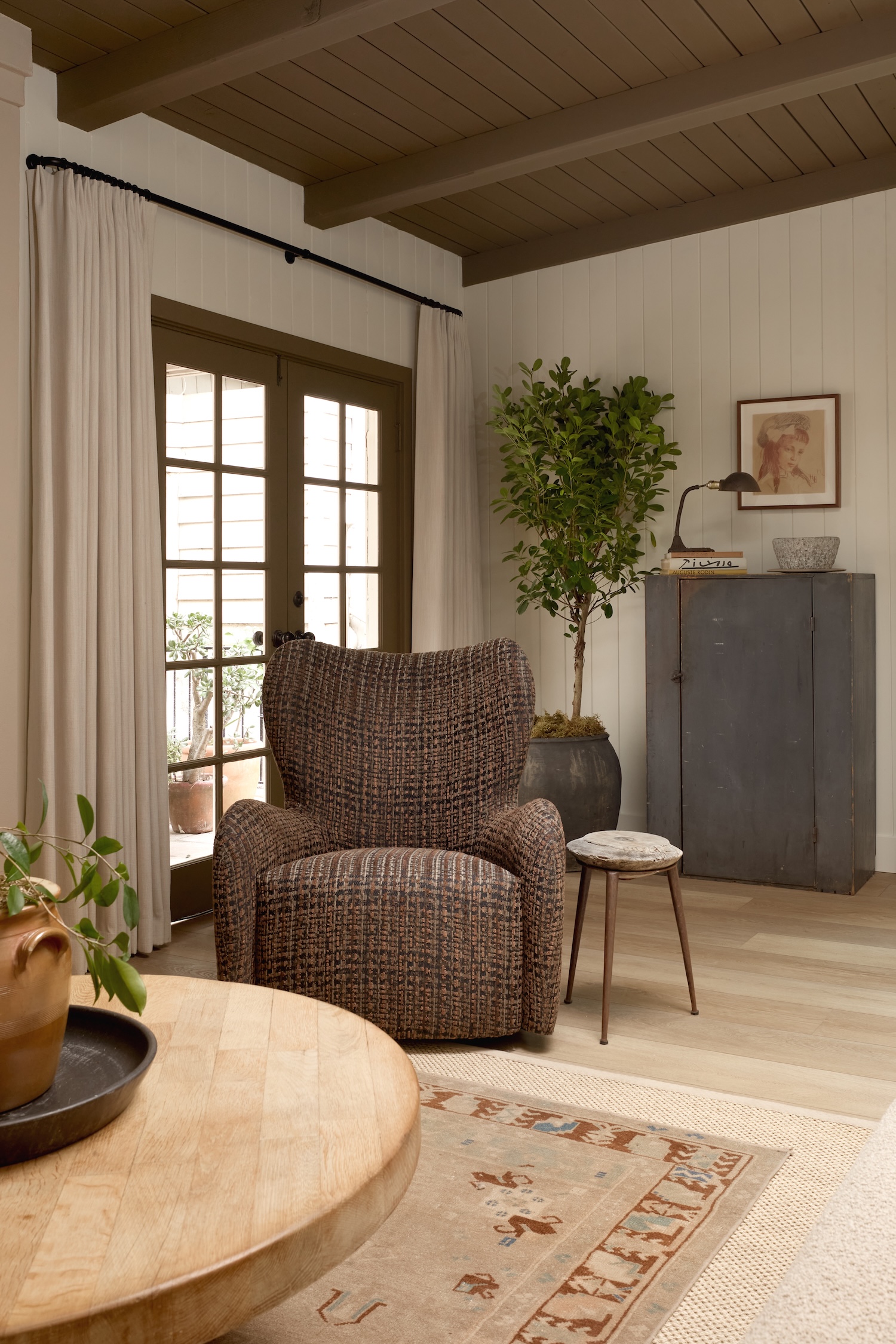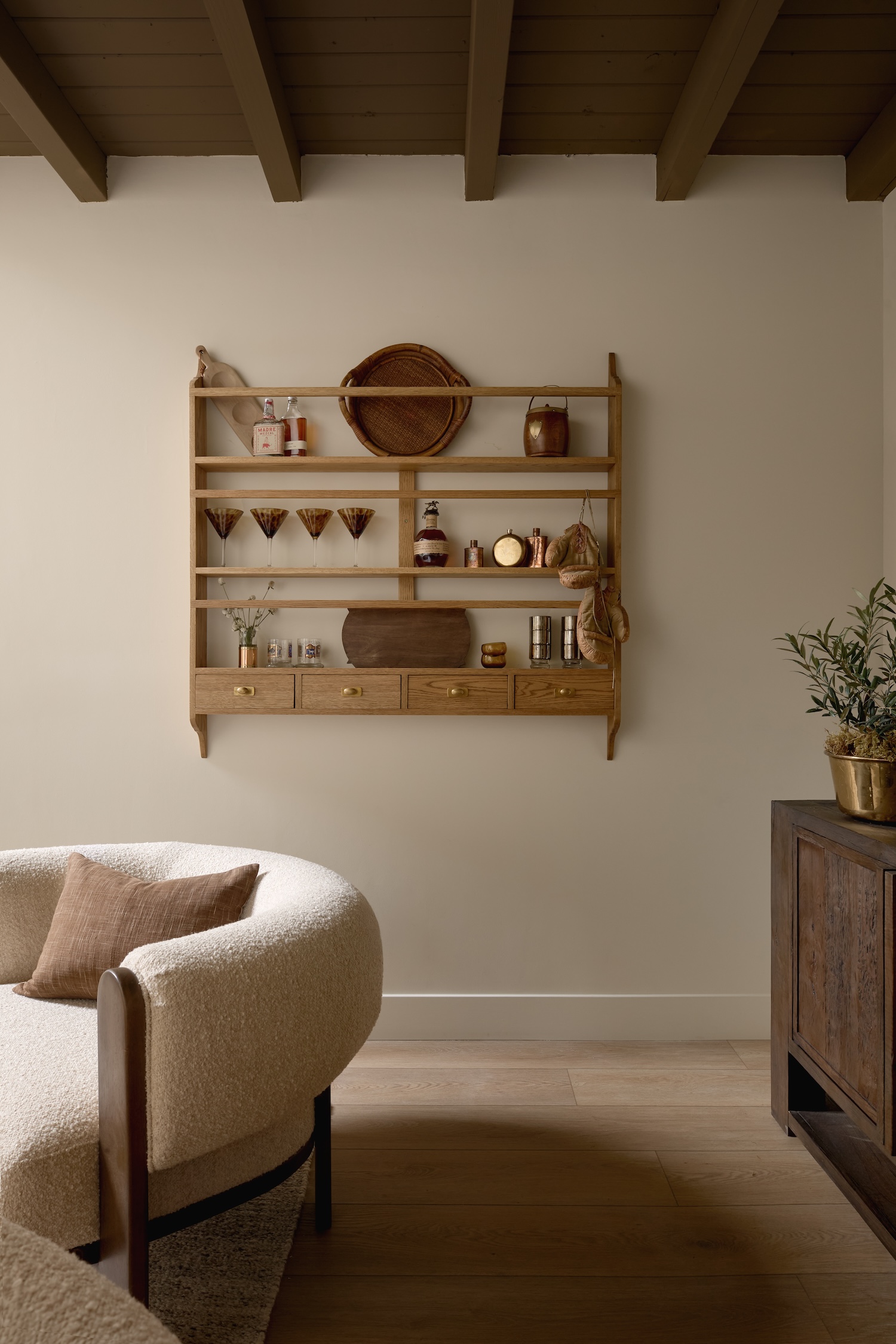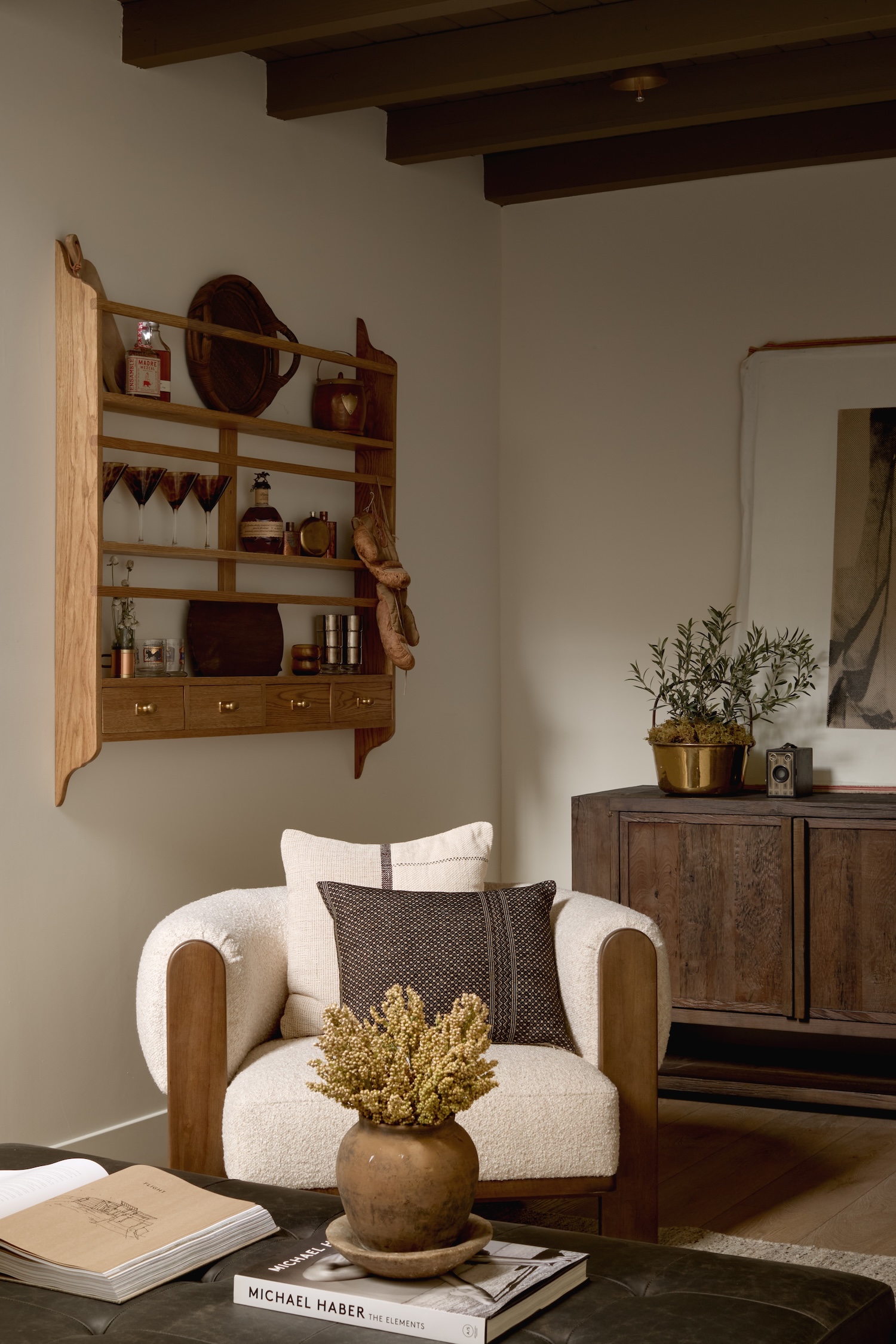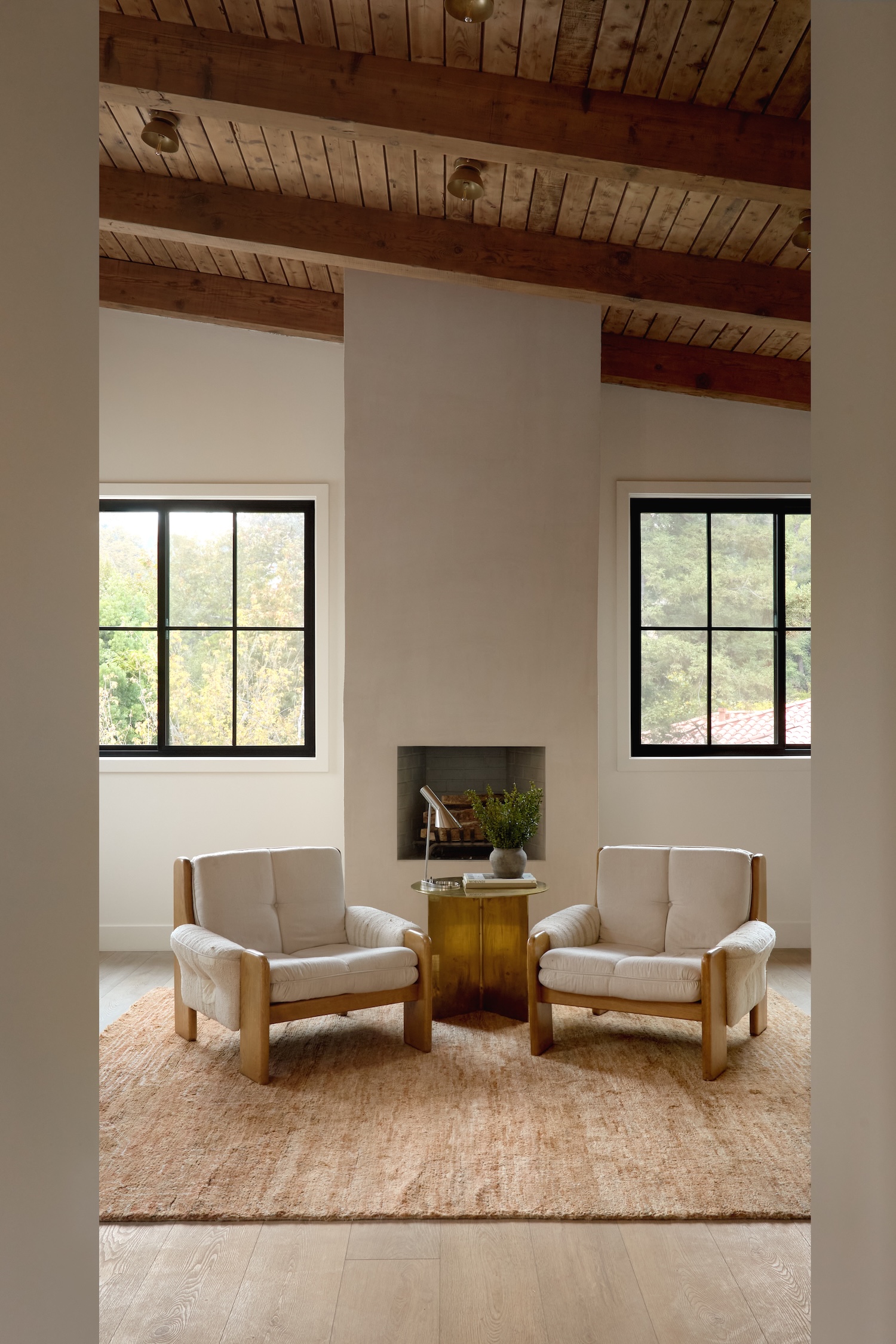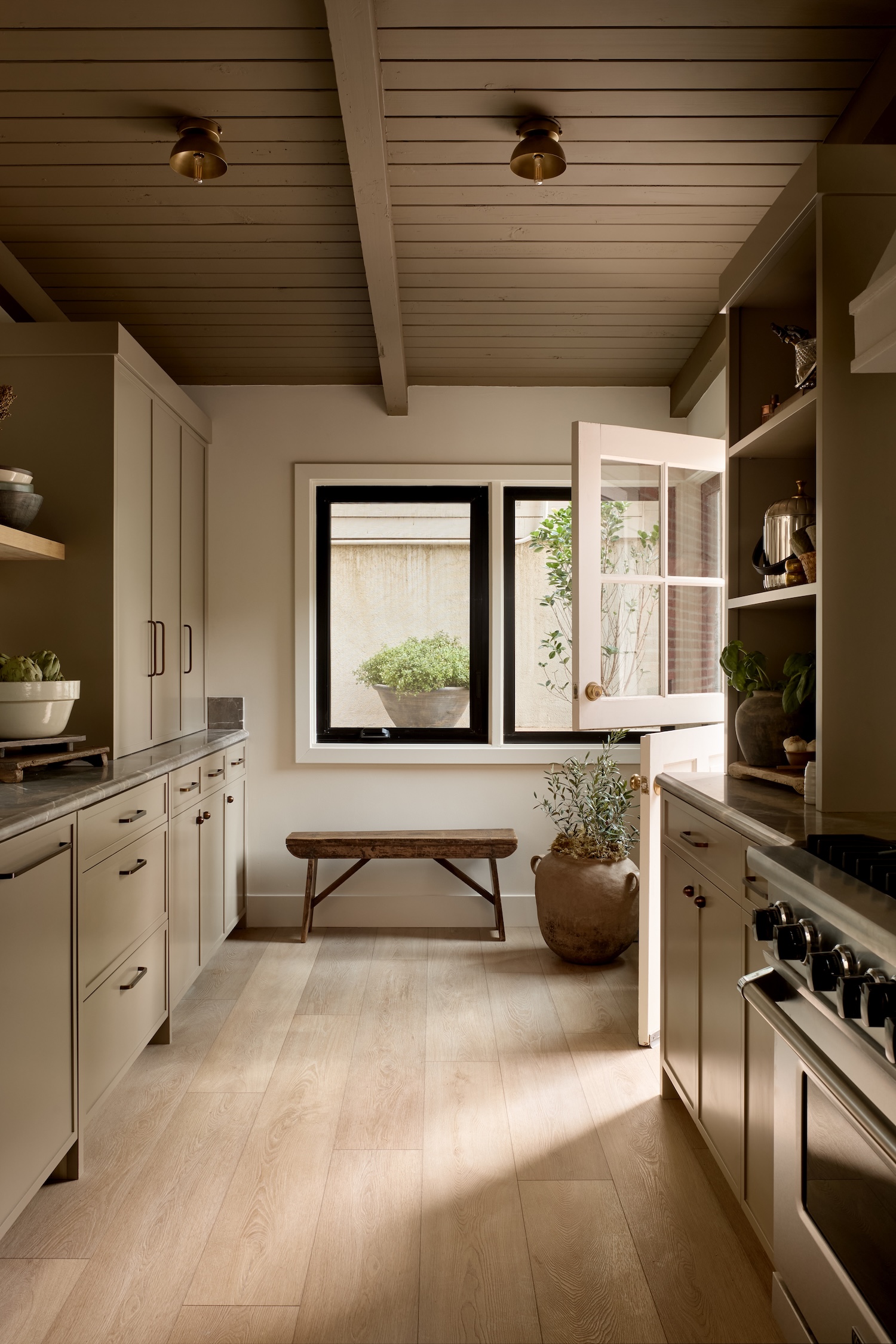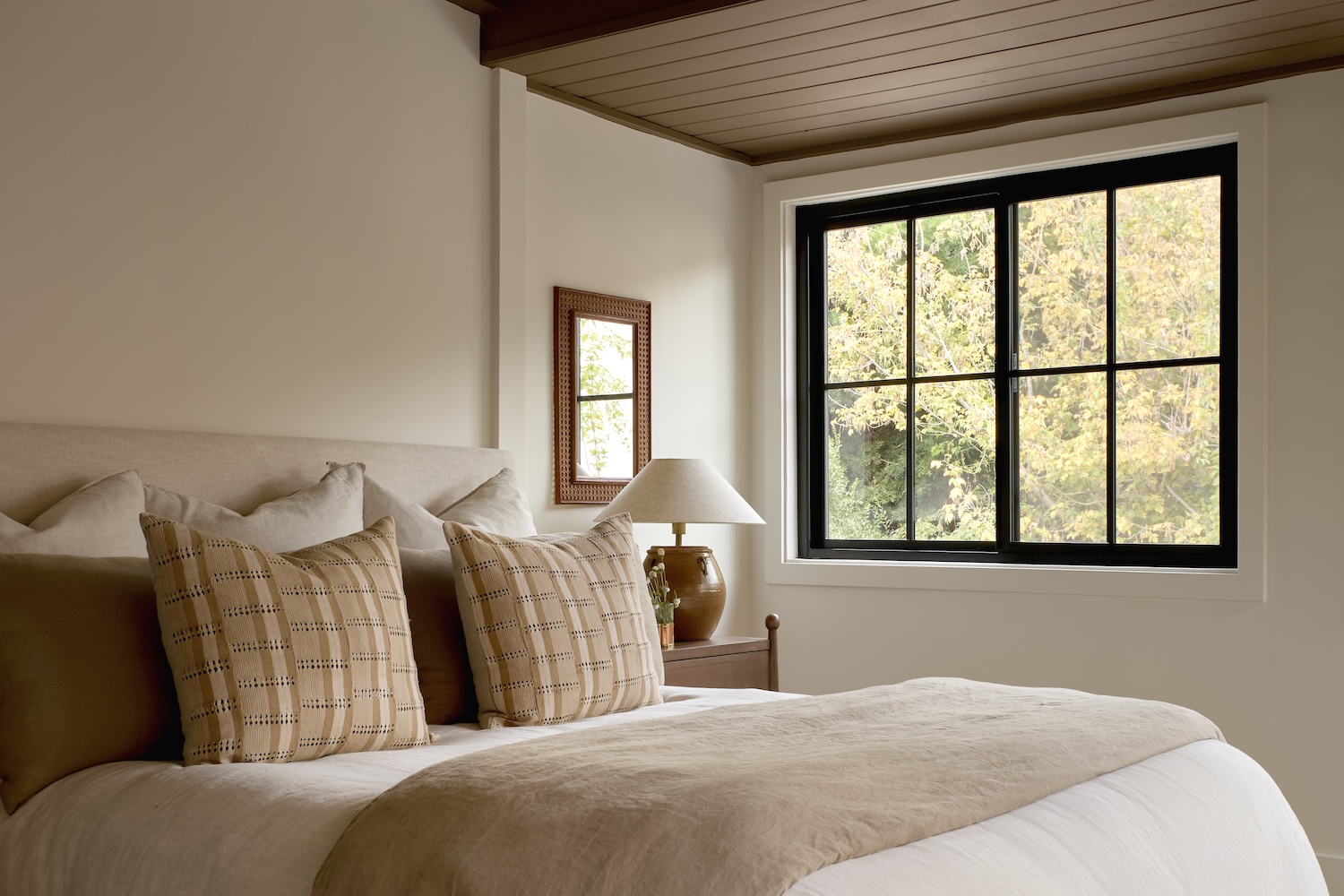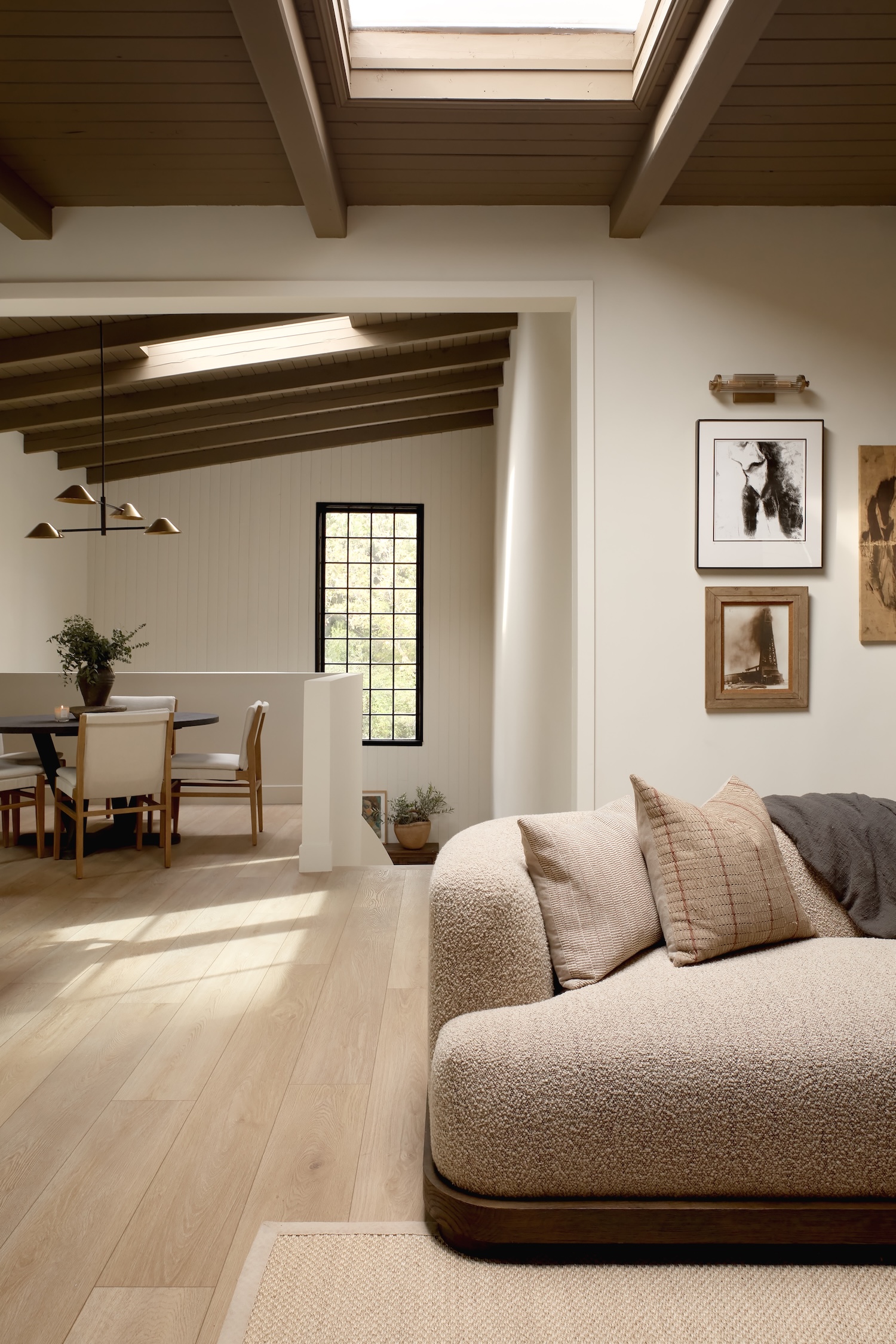
Beverly Hills Residence is a minimalist home located in Beverly Hills, United States, designed by Lindsey Colhoun. The most consequential decision here involved a paintbrush rather than a sander. Faced with heavy red-toned ceiling boards, the kind of warm-cast timber that dates a post-war interior more precisely than any piece of furniture, Colhoun coated them in Farrow and Ball’s Broccoli Brown instead of stripping them back to raw grain. Sanding would have erased the record of the original construction. Paint leaves the boards intact underneath and resets their tonality, a preservation logic closer to limewashing a fresco than to restoration.
The house began in 1947 as a single-story bungalow, part of the developer-built stock that filled the Los Angeles hills while the Case Study program was busy making experimental architecture a few canyons away. Successive additions pushed it down the slope into three levels. That accretion produced the awkward circulation the renovation was hired to correct, and it also produced the layered detail that makes the house worth keeping. At 2,500 square feet across four bedrooms and four and a half bathrooms, the plan runs tight, and the corrections had to be surgical rather than expansive.
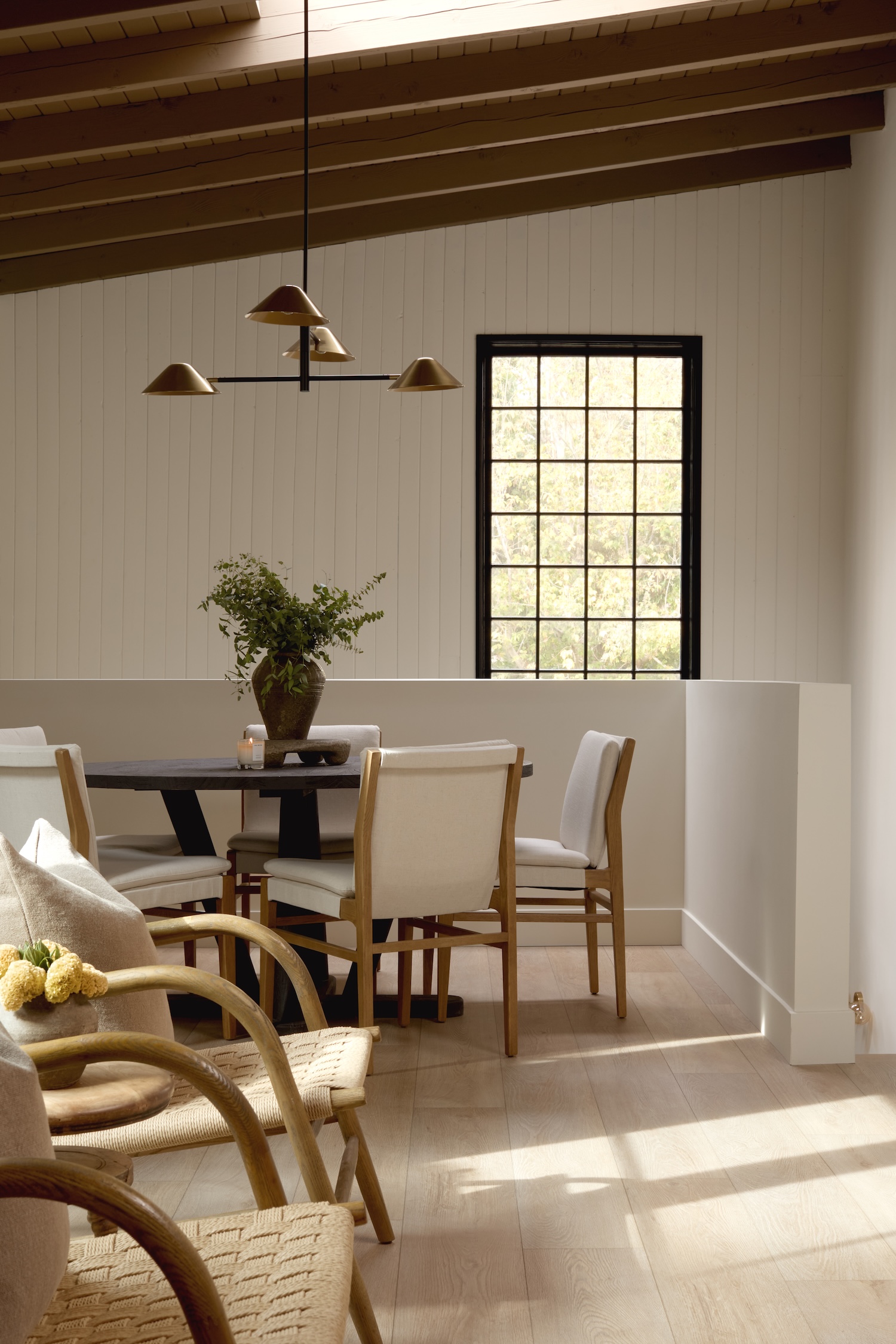
Floors were replaced throughout in a lighter French oak, which inverts the conventional arrangement of dark ground and pale overhead. Ceilings in the house run high, and a high ceiling left white tends to dissolve. The deeper tone gives it edges and mass, pulling the plane back into the room as an architectural element with weight. Soot-darkened cedar in sukiya-zukuri teahouses works on a similar principle, where the darkened overhead compresses and defines a space that would otherwise feel unresolved. The oak below reflects light upward into it, so the two planes read as a deliberate pair.
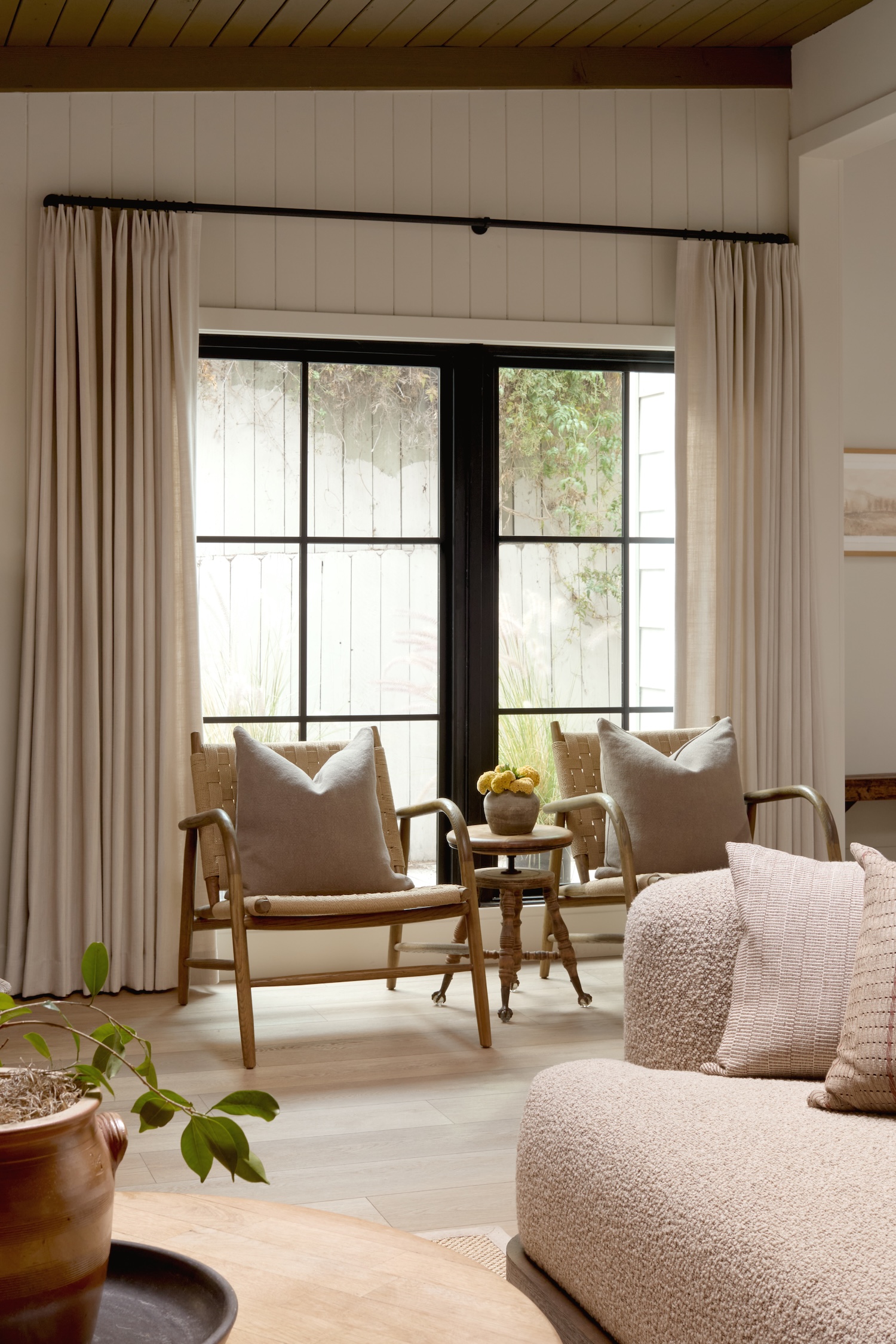
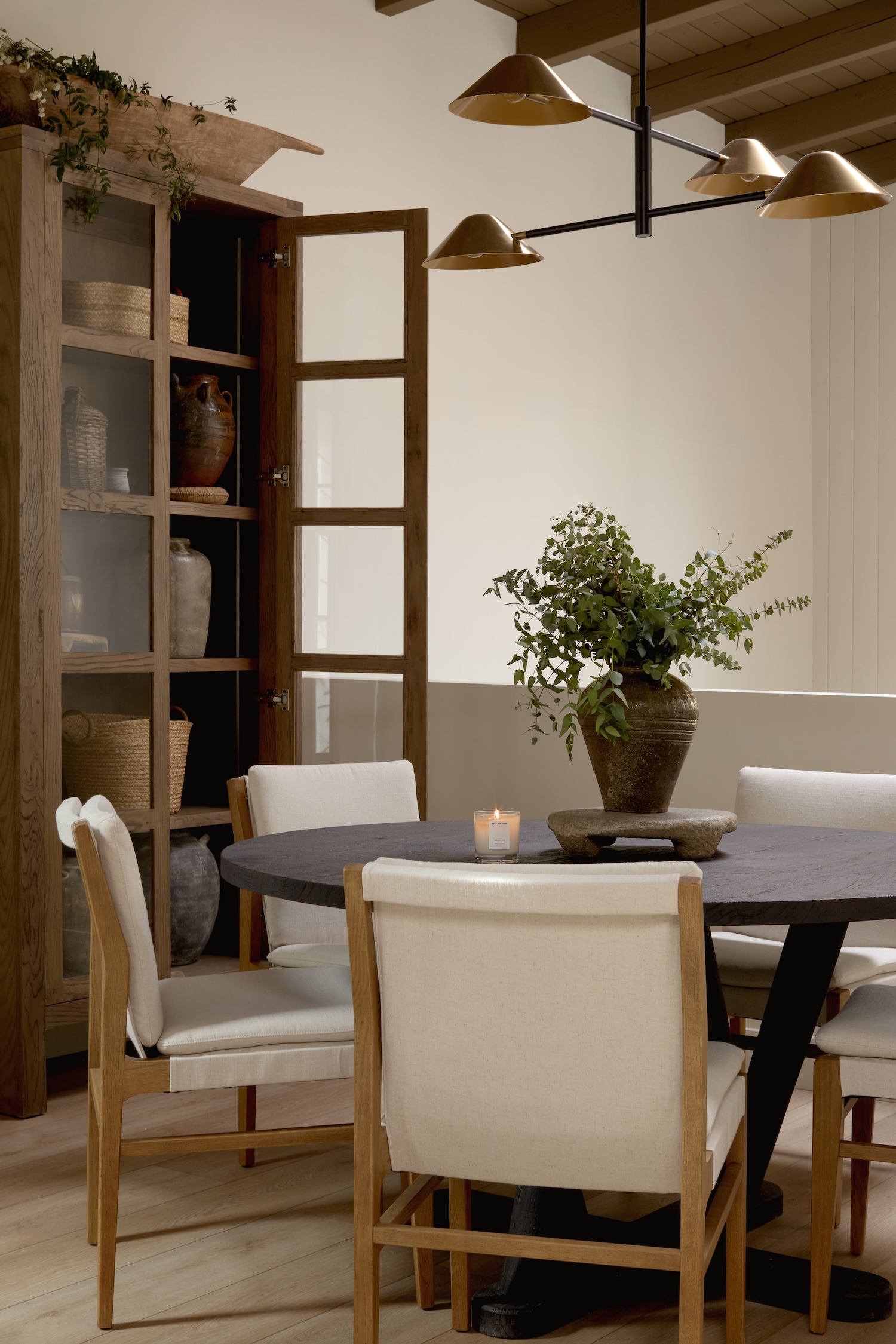
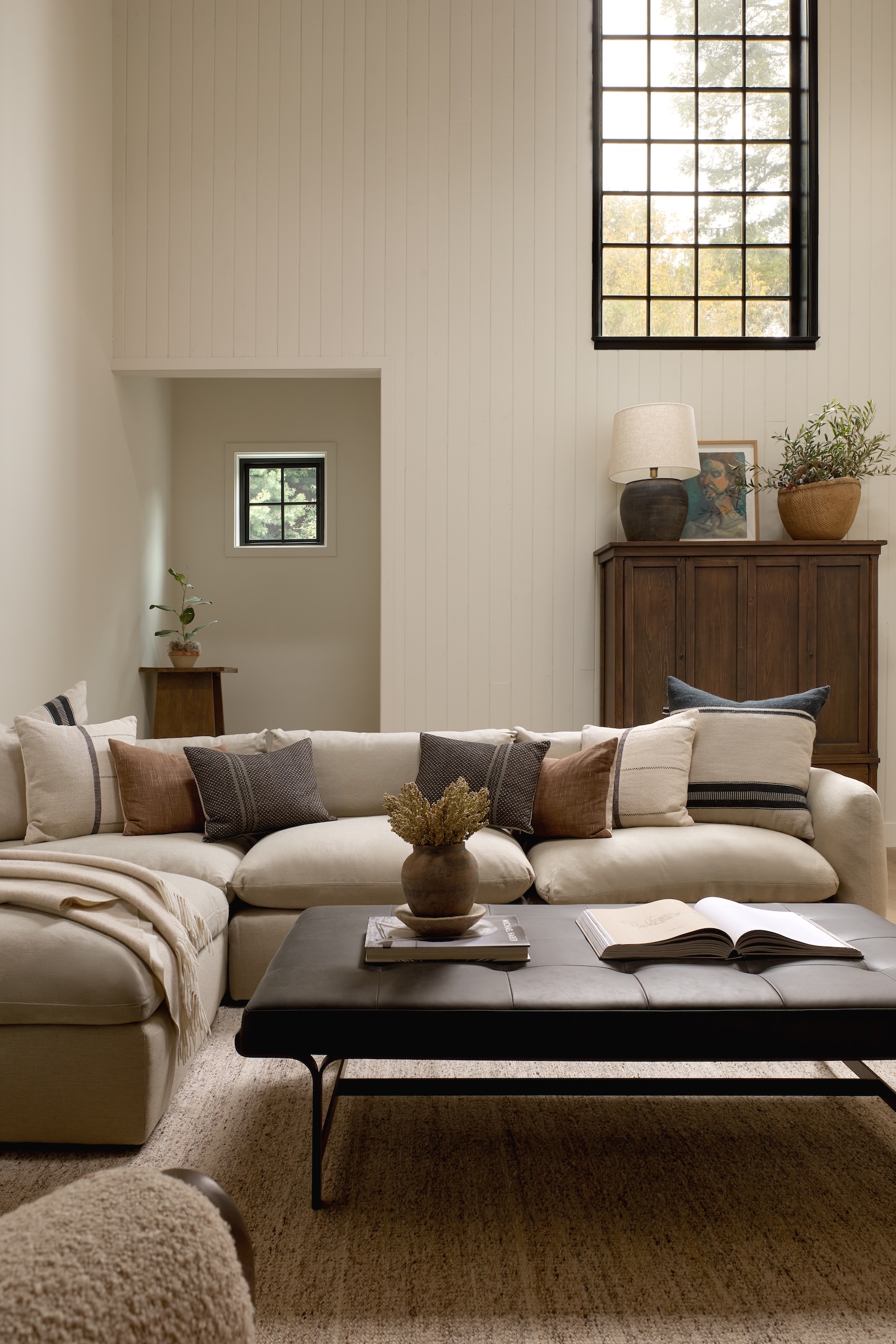
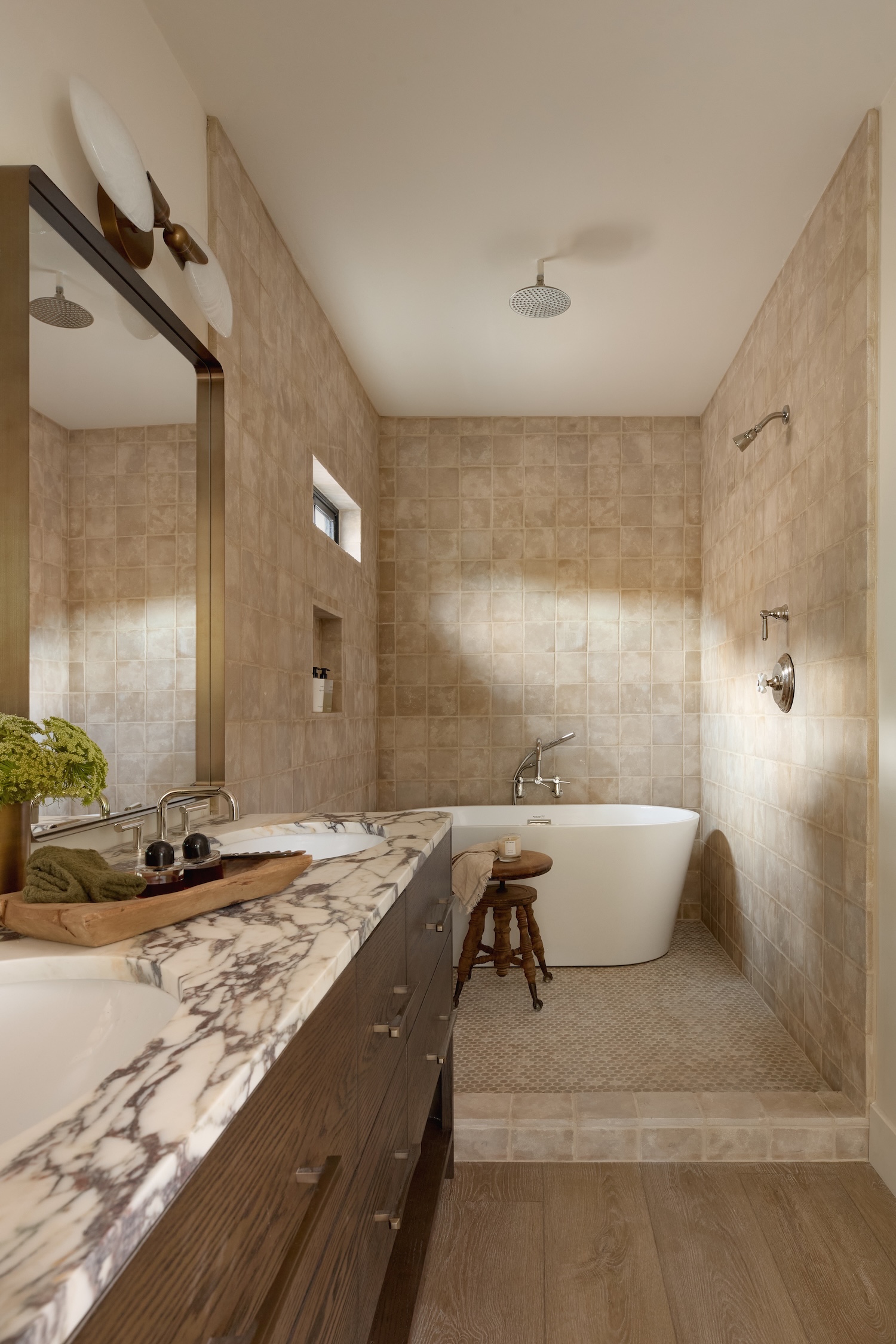
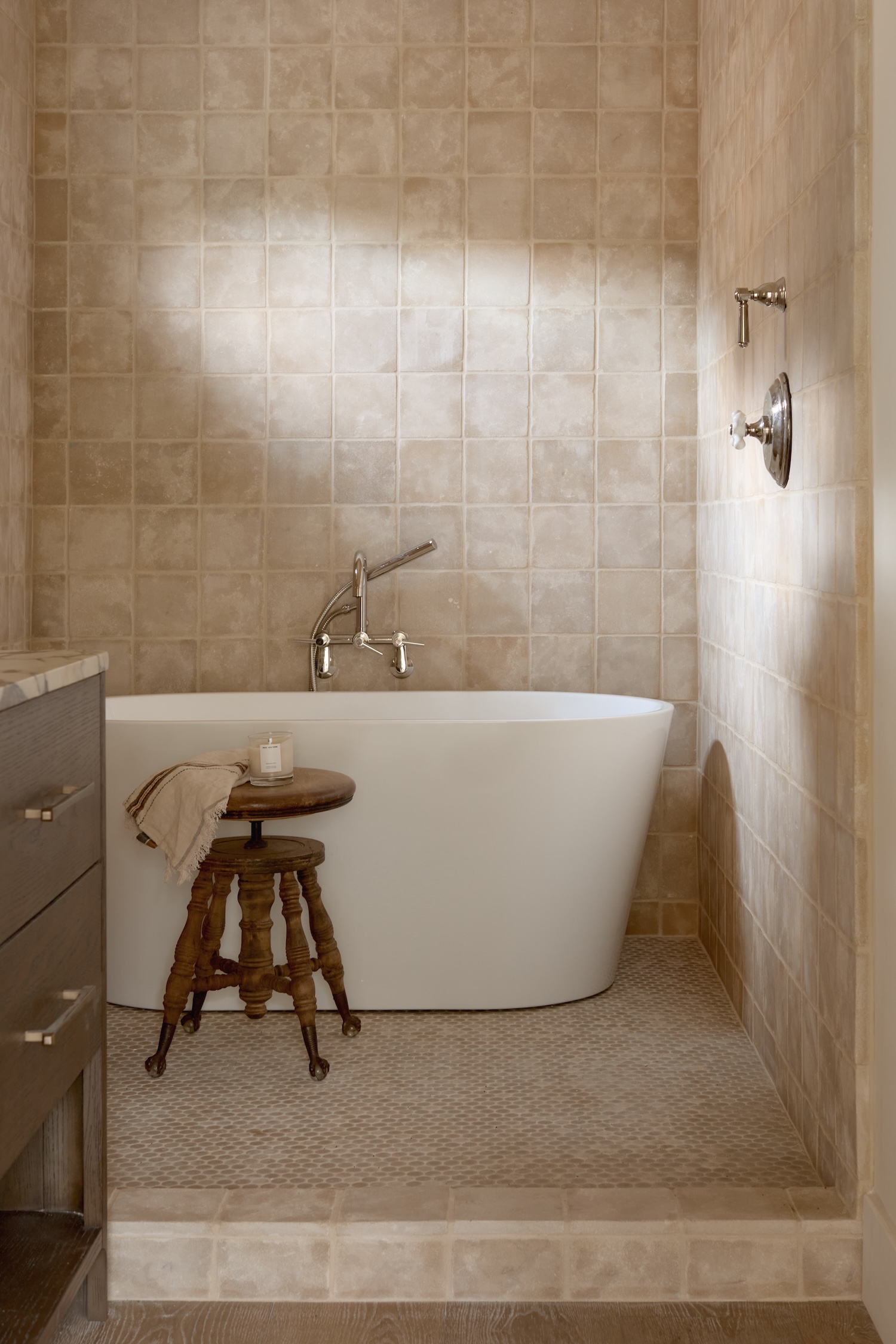
Natural stone appears across surfaces with metal finishes deliberately varied rather than matched, letting brass, nickel, and darker patinas register as separate decisions accumulated over years. Tonal wood accents and warm textiles soften the edges. The furnishing strategy pairs vintage California pieces with contemporary silhouettes, working in the lineage Michael Taylor established in the seventies, when the California Look began treating raw materials and generous scale as the regional alternative to East Coast formality. Nothing in the mix announces a period, which is what allows the rooms to feel collected instead of specified.
Brands used within the home include furniture from Arhaus, lighting from Louis Poulsen from Lightology, paint by Farrow & Ball, furniture from Article, hardware from Lo & Co, plumbing from Watermark, tiles from Villa Lagoon Tile.