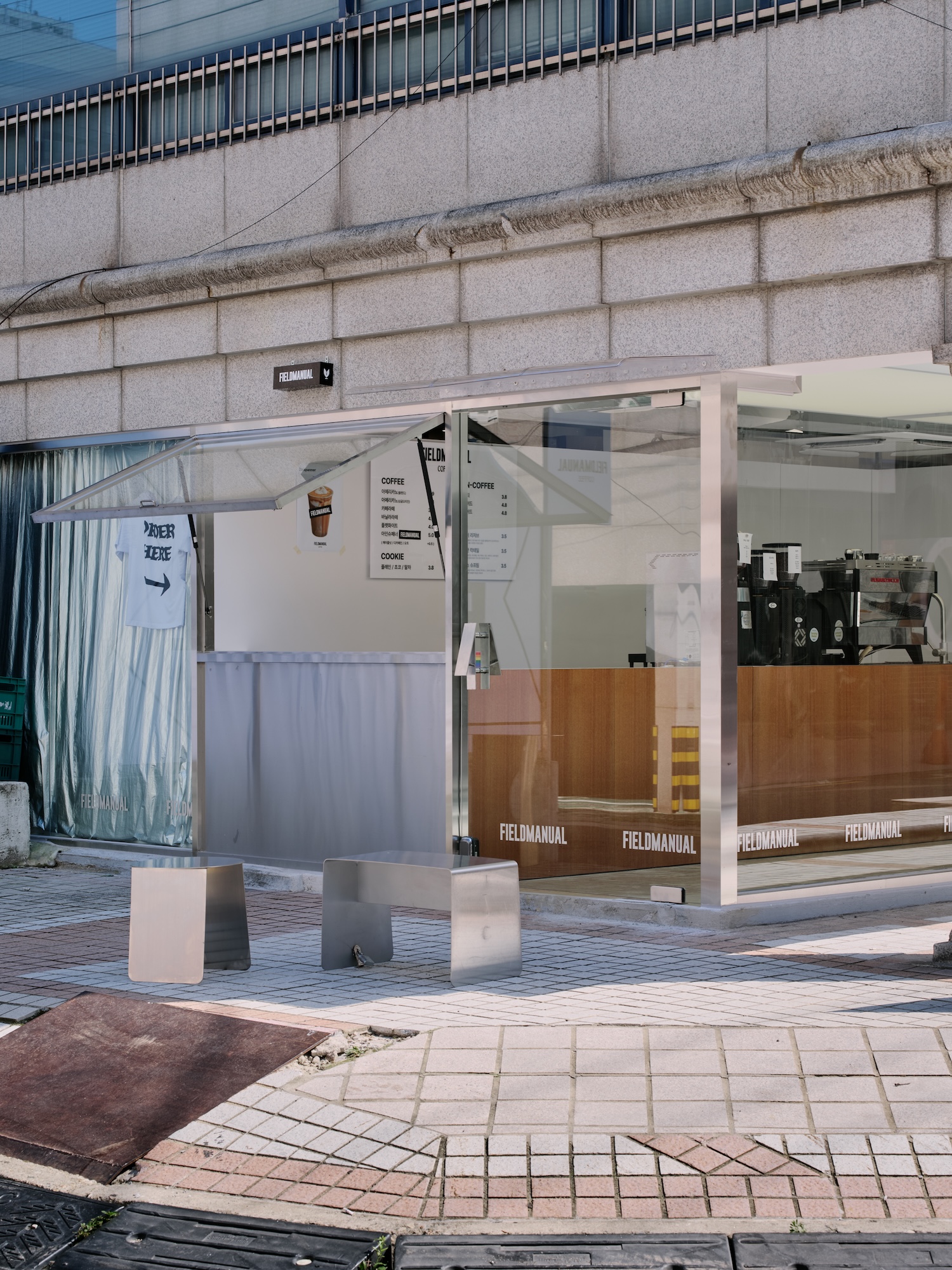
cafe Fieldmanual is a minimalist cafe and showroom located in Seoul, South Korea, designed by Atelier OA. This 56-square-meter space in Seocho-gu serves the dual function of office and cafe for clothing brand Fieldmanual, creating what the designers describe as a place where work and rest, brand and everyday life, production and consumption coexist. The project demonstrates how contemporary commercial spaces can blur traditional boundaries between retail, hospitality, and workspace functions within compact urban footprints.
Atelier OA’s design strategy employs transparency and restraint as primary principles to express the space’s dual character as both clothing brand headquarters and public cafe. The glass facade creates visual connection between interior activities and street life while allowing natural light to define spatial quality throughout the day. Simple wooden volumes and exposed concrete flooring strip away decorative elements to reveal spatial essence while reflecting what the designers characterize as the brand’s honesty and clarity.
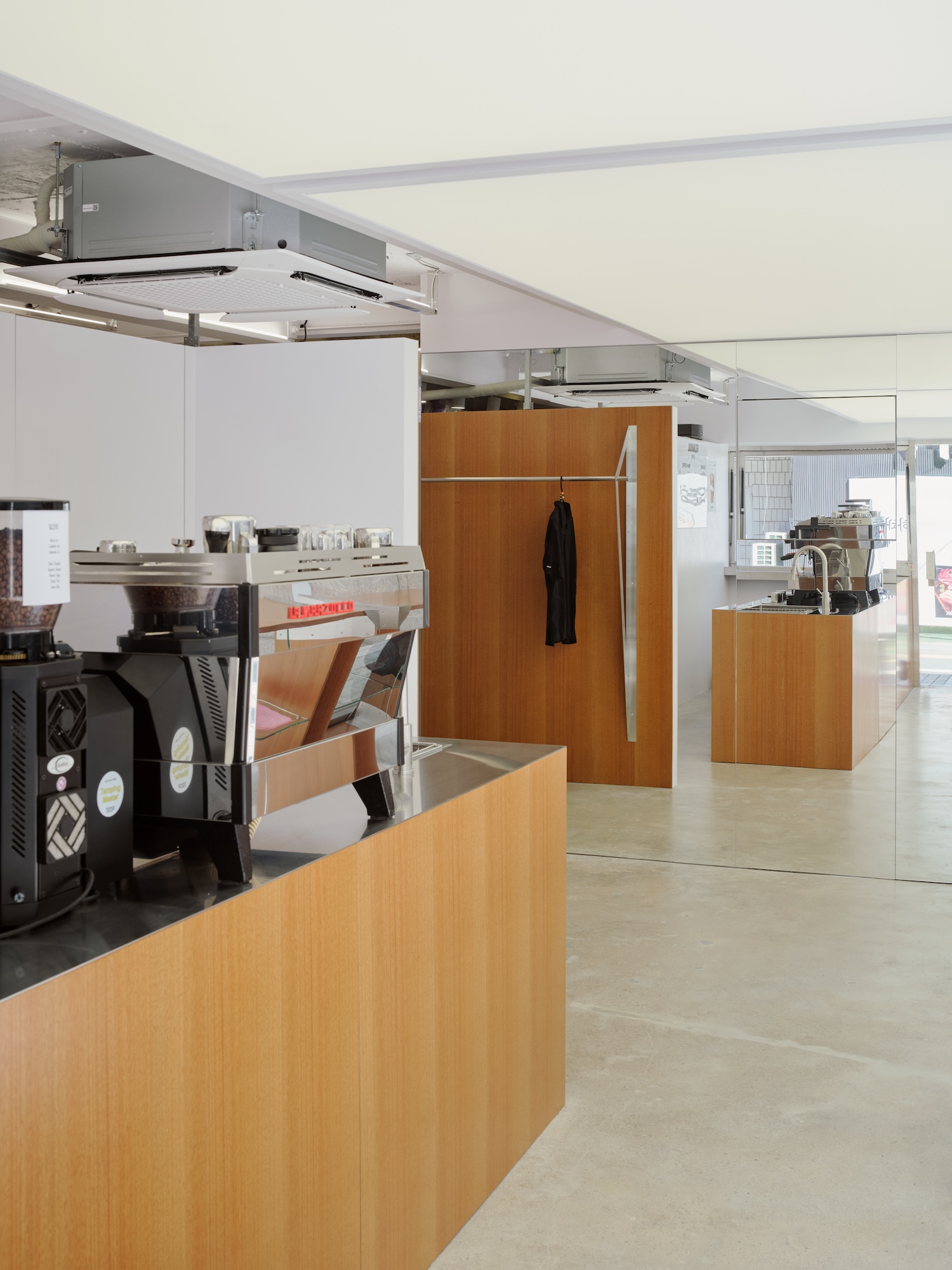
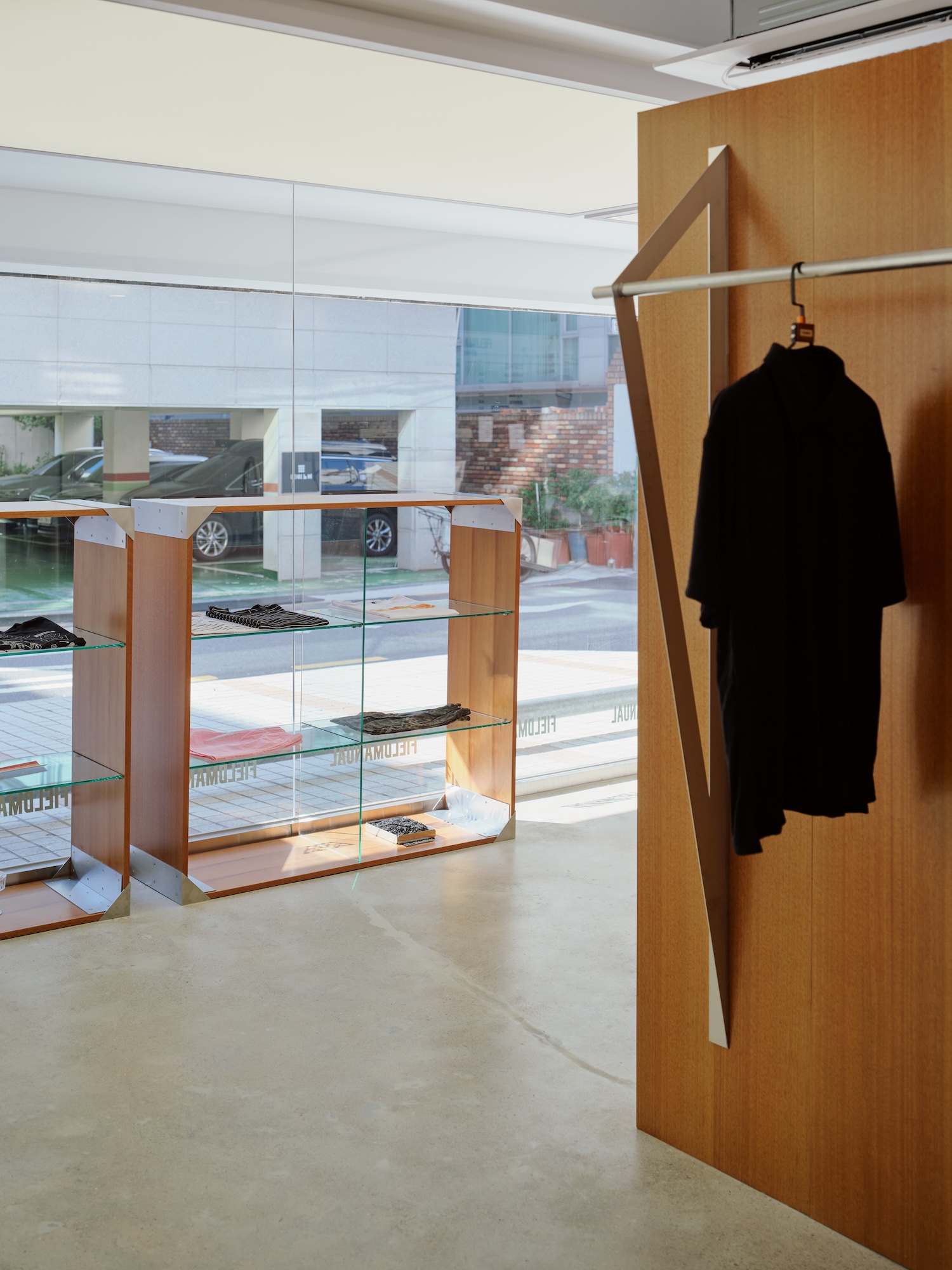
The spatial organization places the cafe bar and clothing rack along the same line but oriented in different directions, creating subtle arrangement that allows coffee brewing and garment display activities to meet naturally. This positioning makes the space’s dual identity immediately legible to visitors while enabling efficient workflow for staff managing both retail and hospitality functions. The parallel placement creates visual rhythm while acknowledging the different operational requirements of each program.
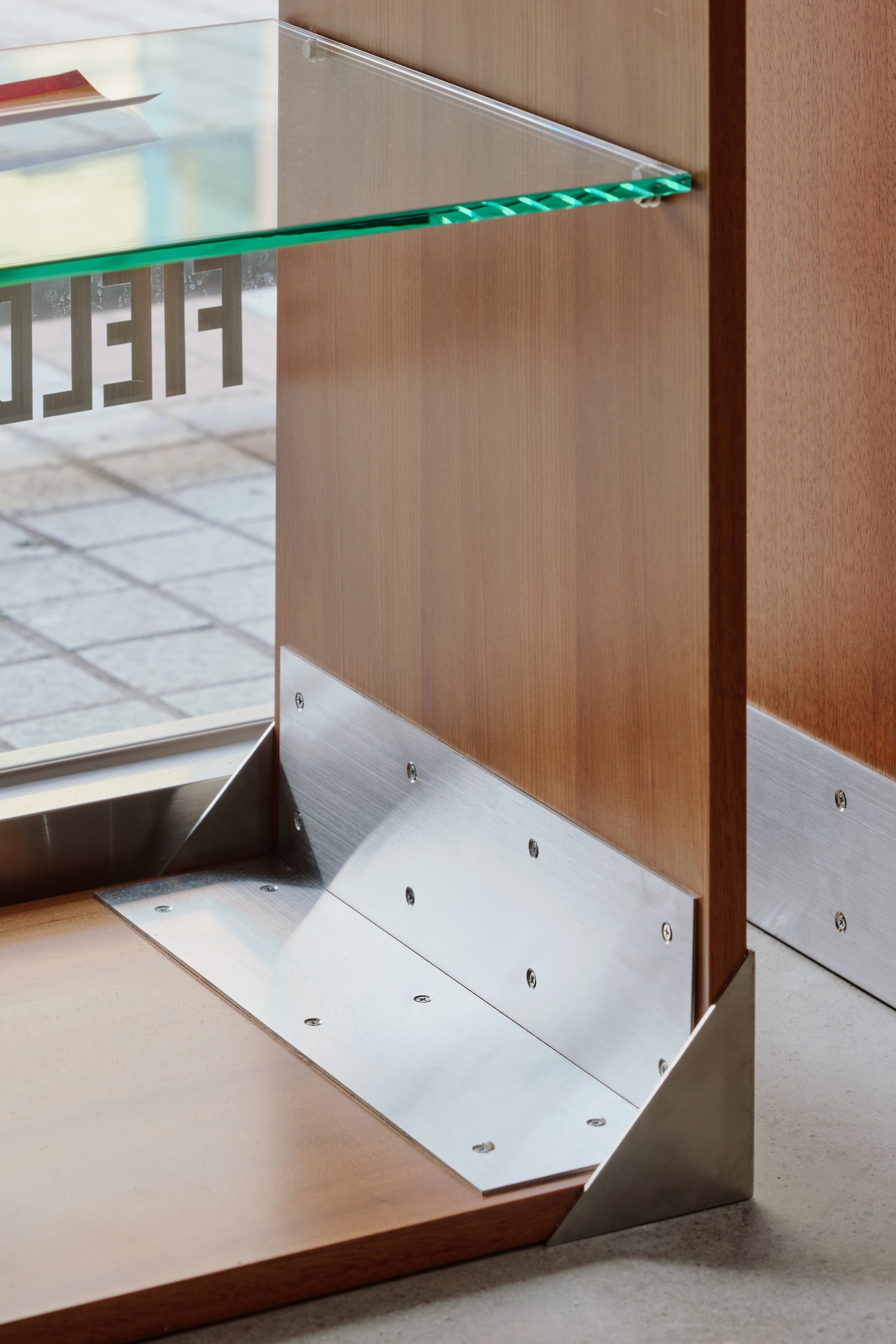
Material selection emphasizes wood, glass, and concrete combinations that reduce visual distractions while maintaining tactile warmth appropriate for both commercial functions. The exposed concrete flooring provides durable surface suitable for high-traffic retail and cafe use while contributing industrial aesthetic that aligns with contemporary Seoul design culture. Wooden elements introduce organic warmth that balances the harder concrete and glass surfaces.
The clean lines throughout the design create visual framework that allows visitors to focus on brand products and overall atmosphere rather than competing architectural details. This restraint reflects broader trends in Korean commercial design where minimal interventions create maximum impact through careful material coordination and spatial proportion. The approach demonstrates how architectural simplicity can support rather than compete with product display and customer experience.