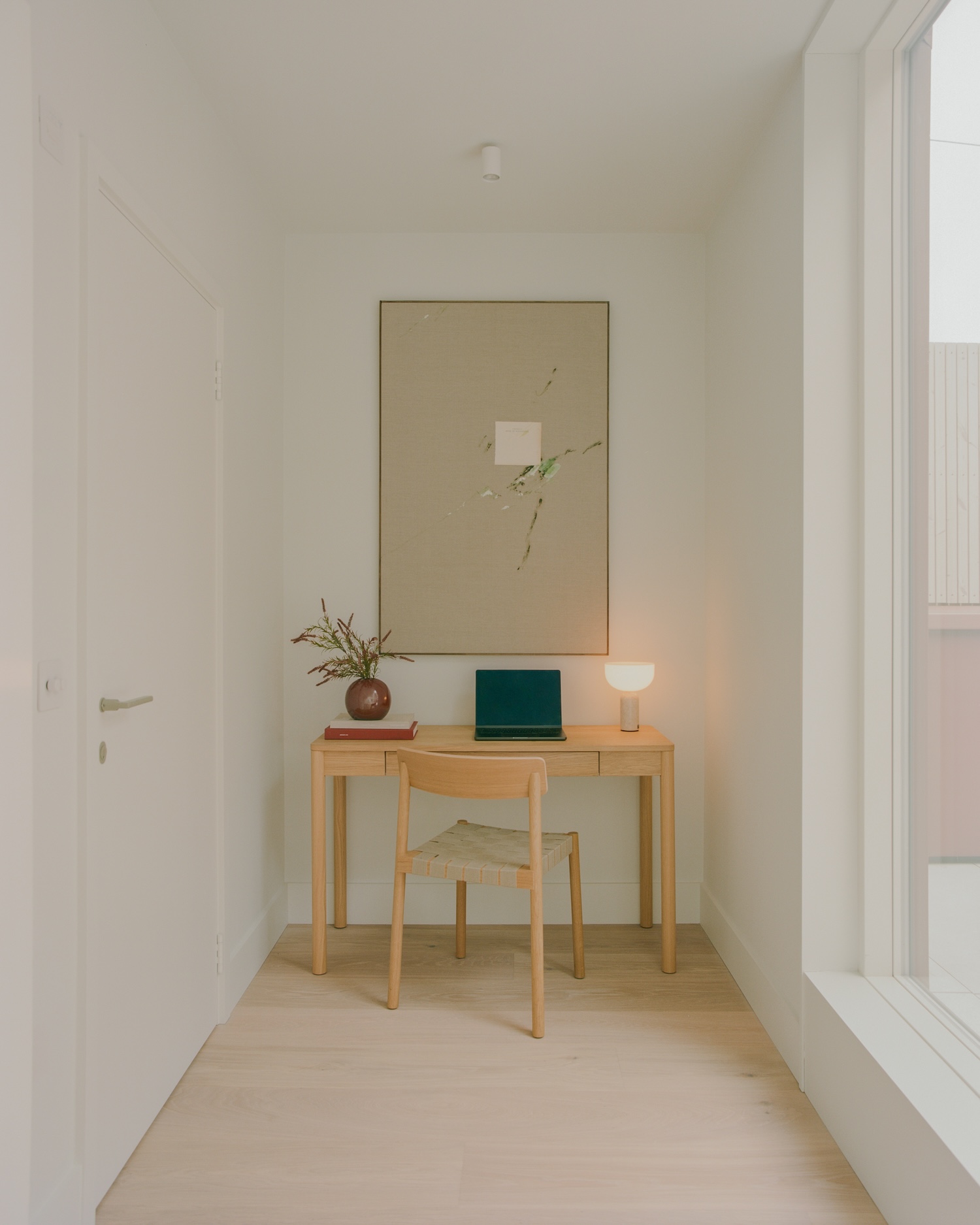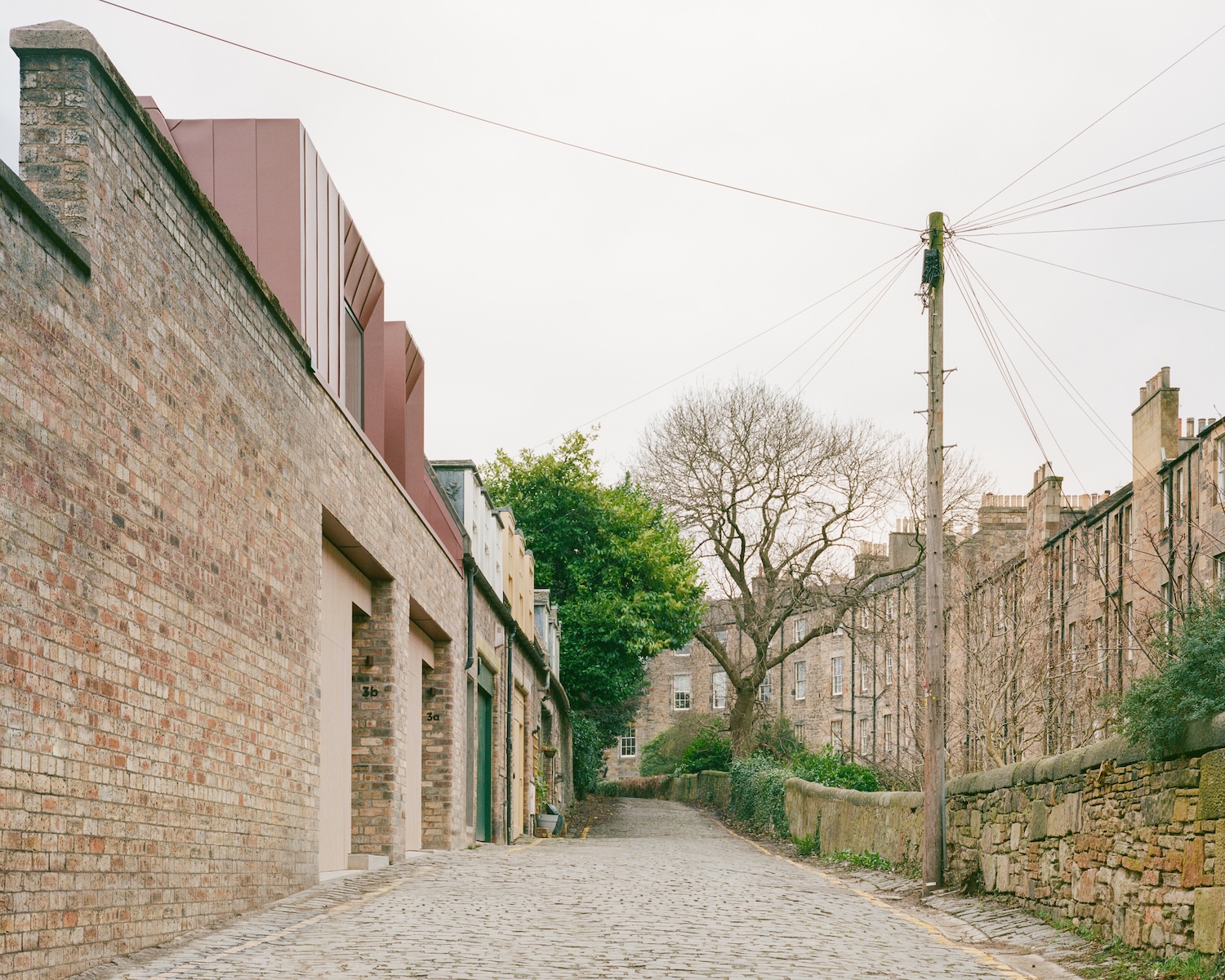
Canon Mews is a minimalist residential development located in Edinburgh, Scotland, designed by Pend Architects. The mews typology carries a particular tension in dense historic cities – beloved for its human scale and tactile materiality, yet often compromised by poor light, absent outdoor space, and the accumulated compromises of adaptive reuse. Pend’s debut development in Canonmills confronts this tension directly, treating a constrained brownfield infill not as a limitation to overcome but as a design problem to be solved from within.
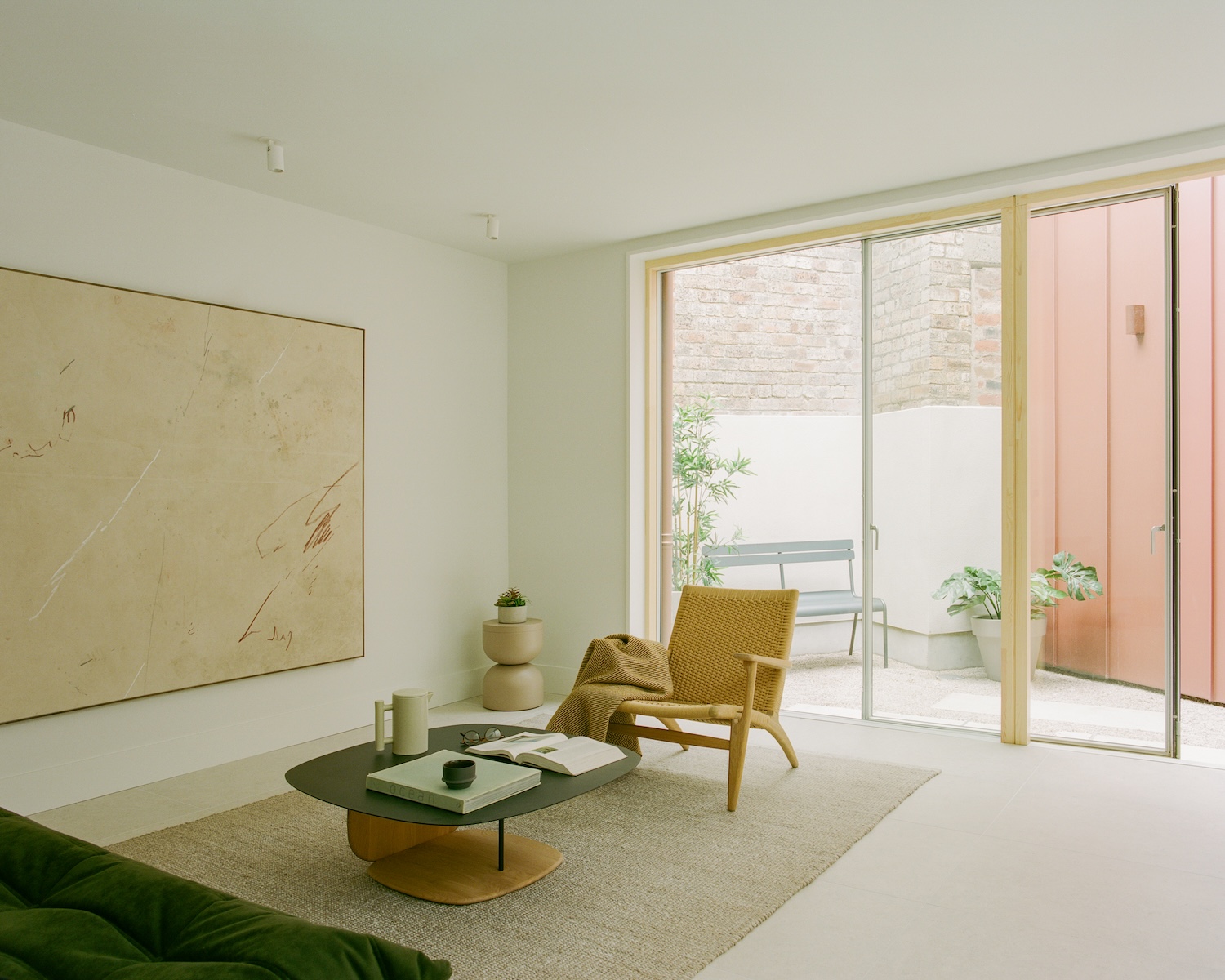
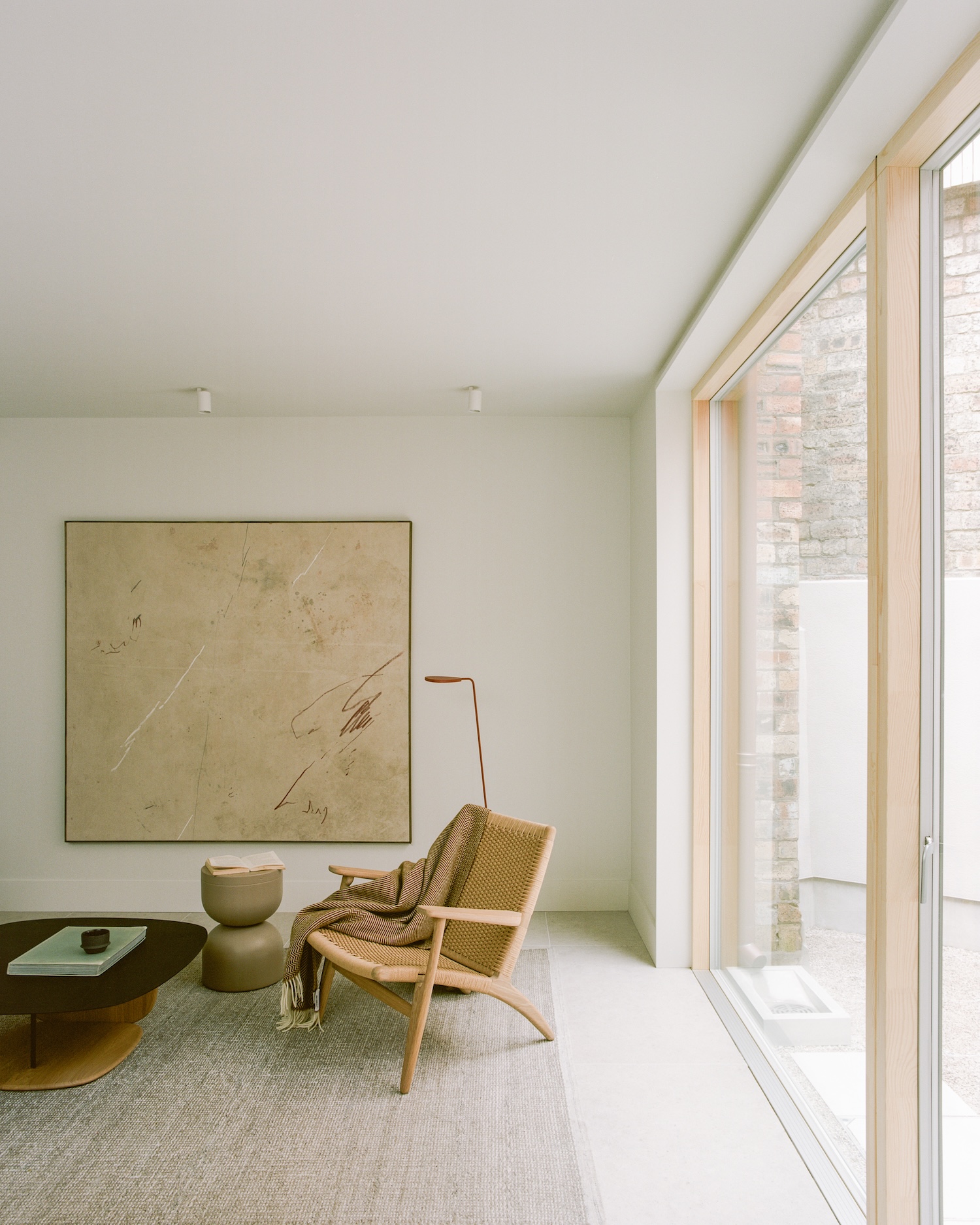
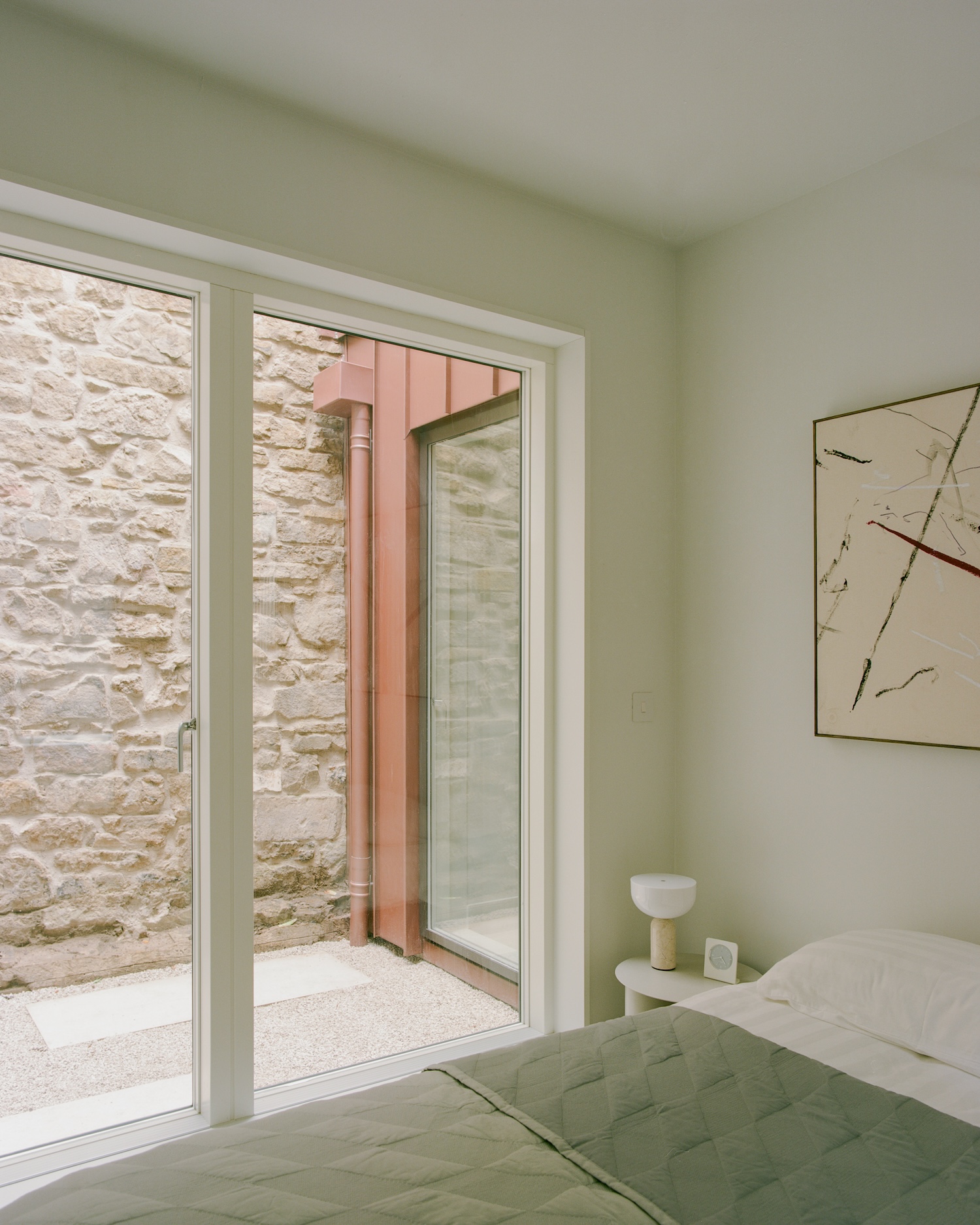
The formal strategy draws a clear lineage from Tadao Ando’s celebrated Row House in Sumiyoshi, where a courtyard inserted into a terrace house became the primary architectural gesture – sacrificing enclosed floor area to claim light, sky, and an intense awareness of the natural world. At Canon Mews, each of the two three-bedroom homes is organized around a private internal courtyard that channels daylight into the living spaces and creates framed views across the brick and zinc palette. In a dense historic grain where privacy is typically subordinated to proximity, this move delivers something genuinely unusual: outdoor space that feels genuinely withdrawn from the city.
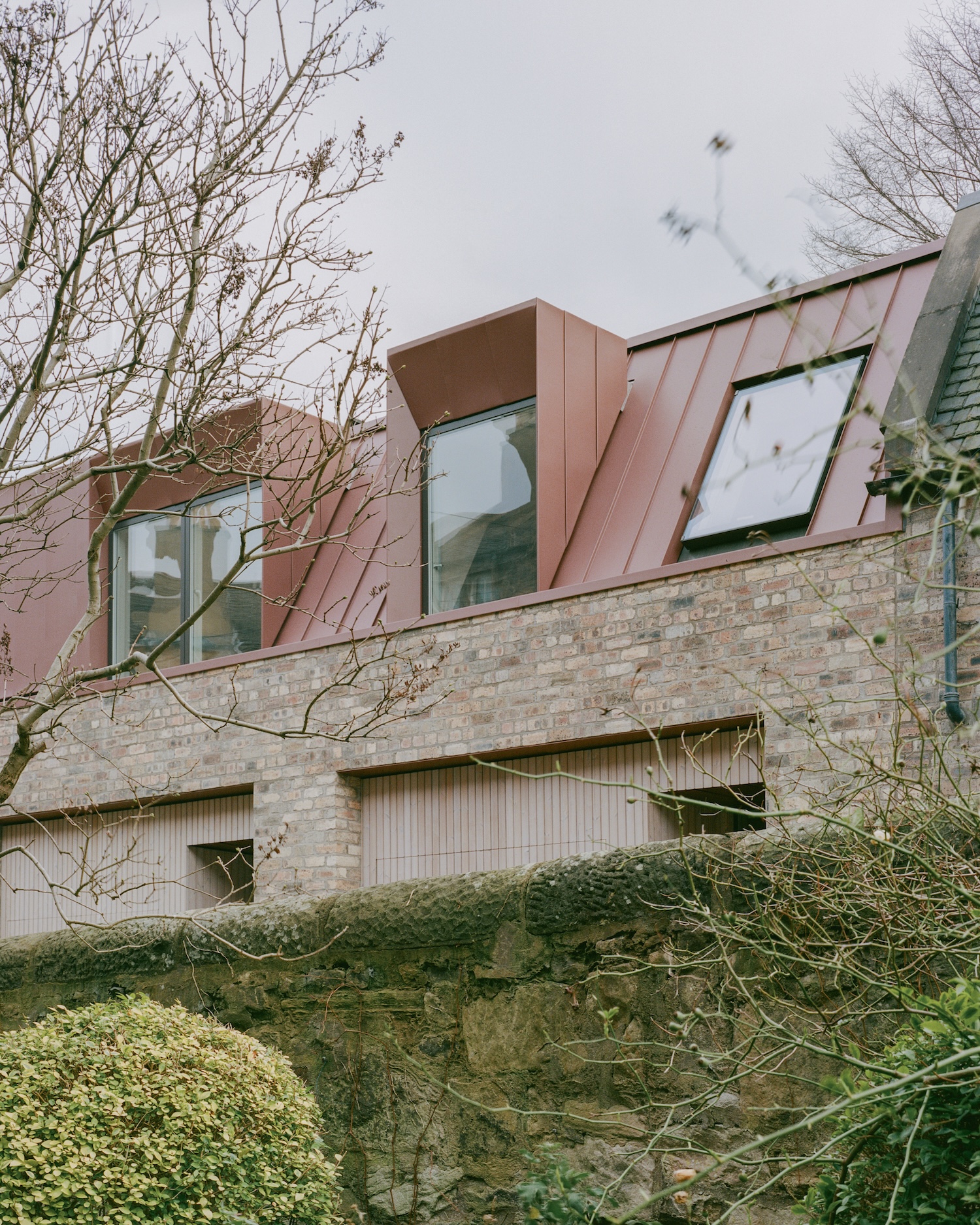
Material choices reflect the same deliberate thinking. The envelope is built from reclaimed brick recovered from the site itself – carefully removed, cleaned, and reassembled – a process that grounds the new construction in the specific material history of its location rather than importing a neutral contemporary finish. A curved bullnose brick detail marks each entrance threshold, softening the corner and signaling the level of craft attention brought to the whole. Red zinc defines the upper storey and roofline, introducing a warm contemporary register against the reclaimed masonry below, while timber cladding on the garages and entrance vestibules maintains a material conversation with the existing mews lane.
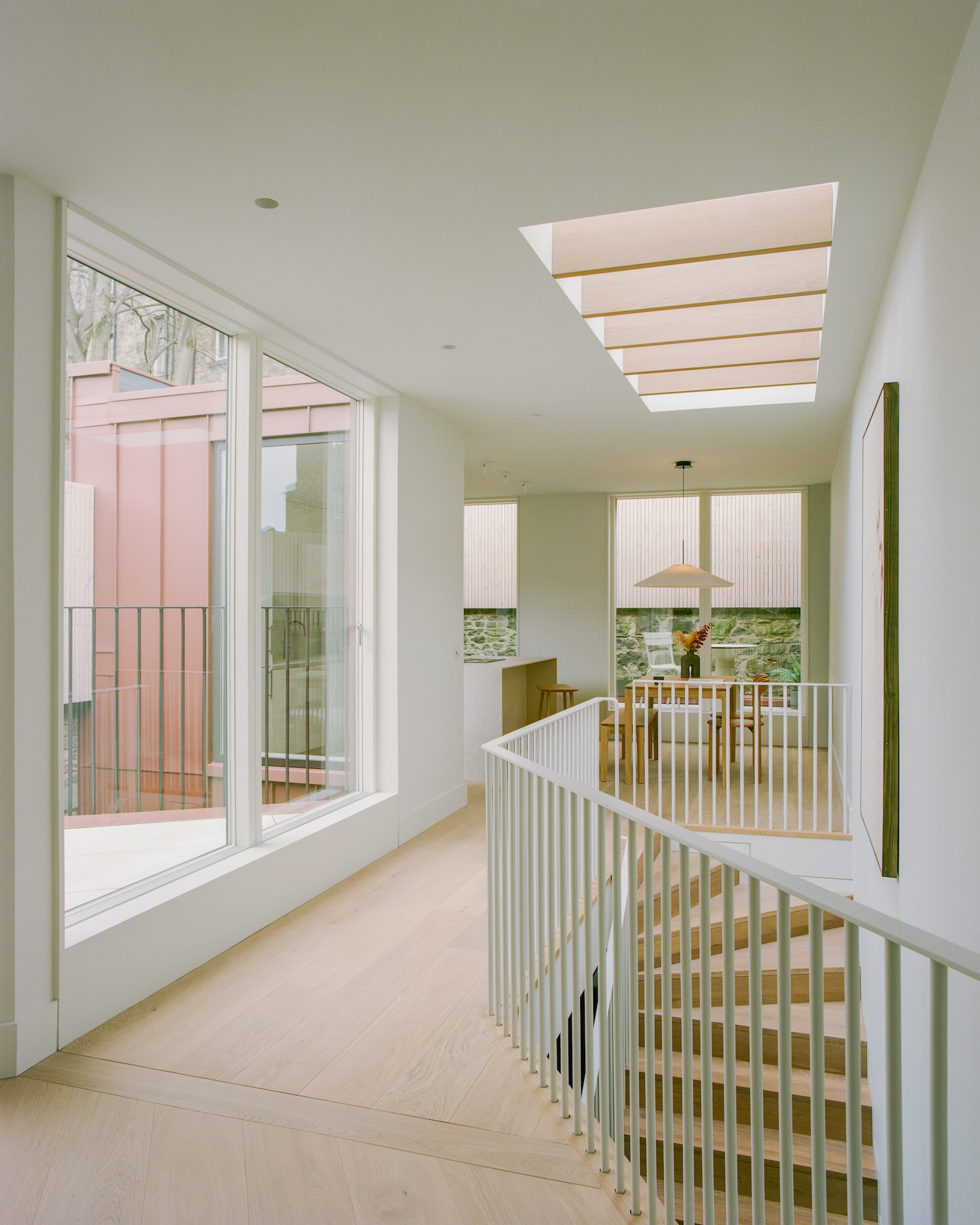
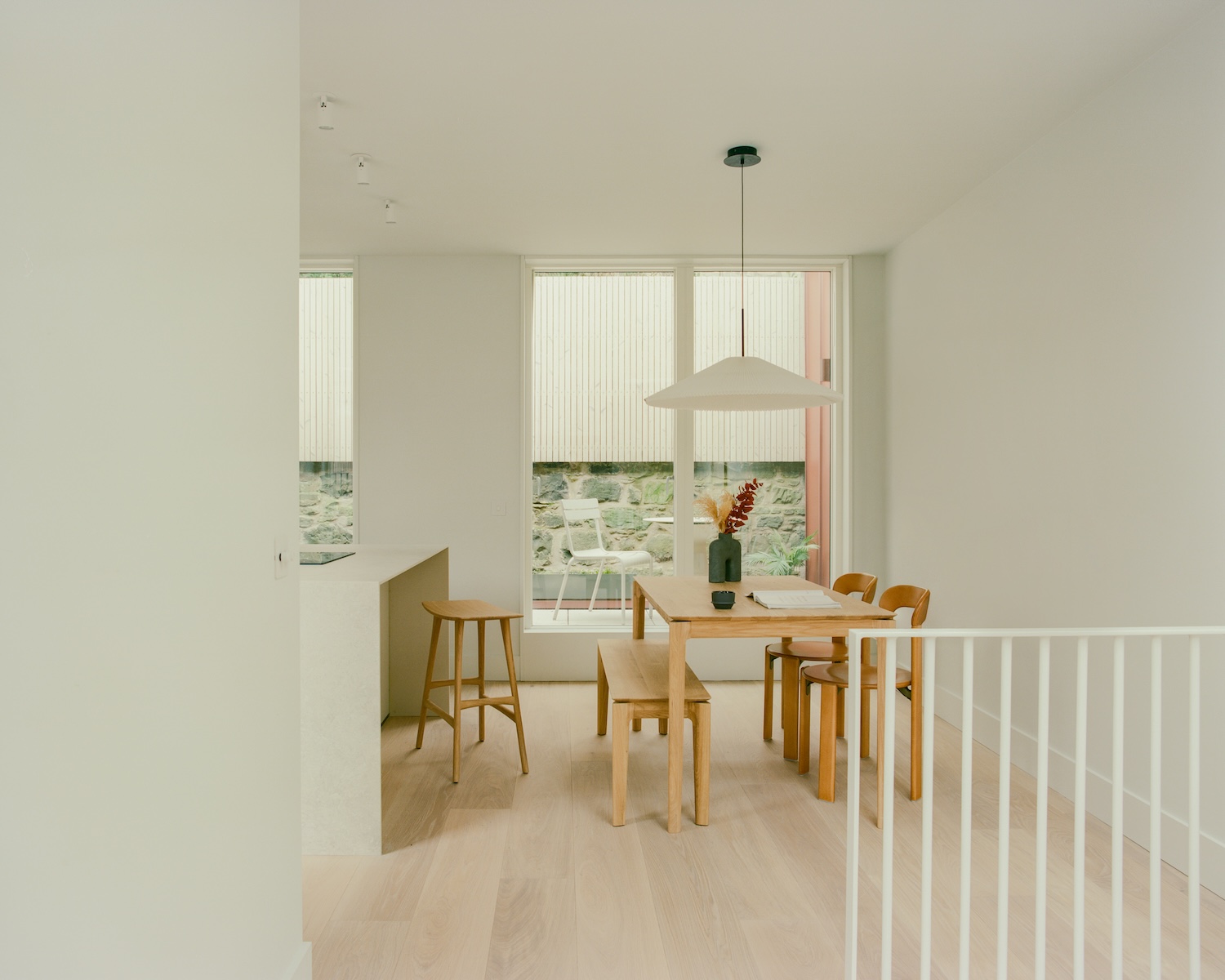
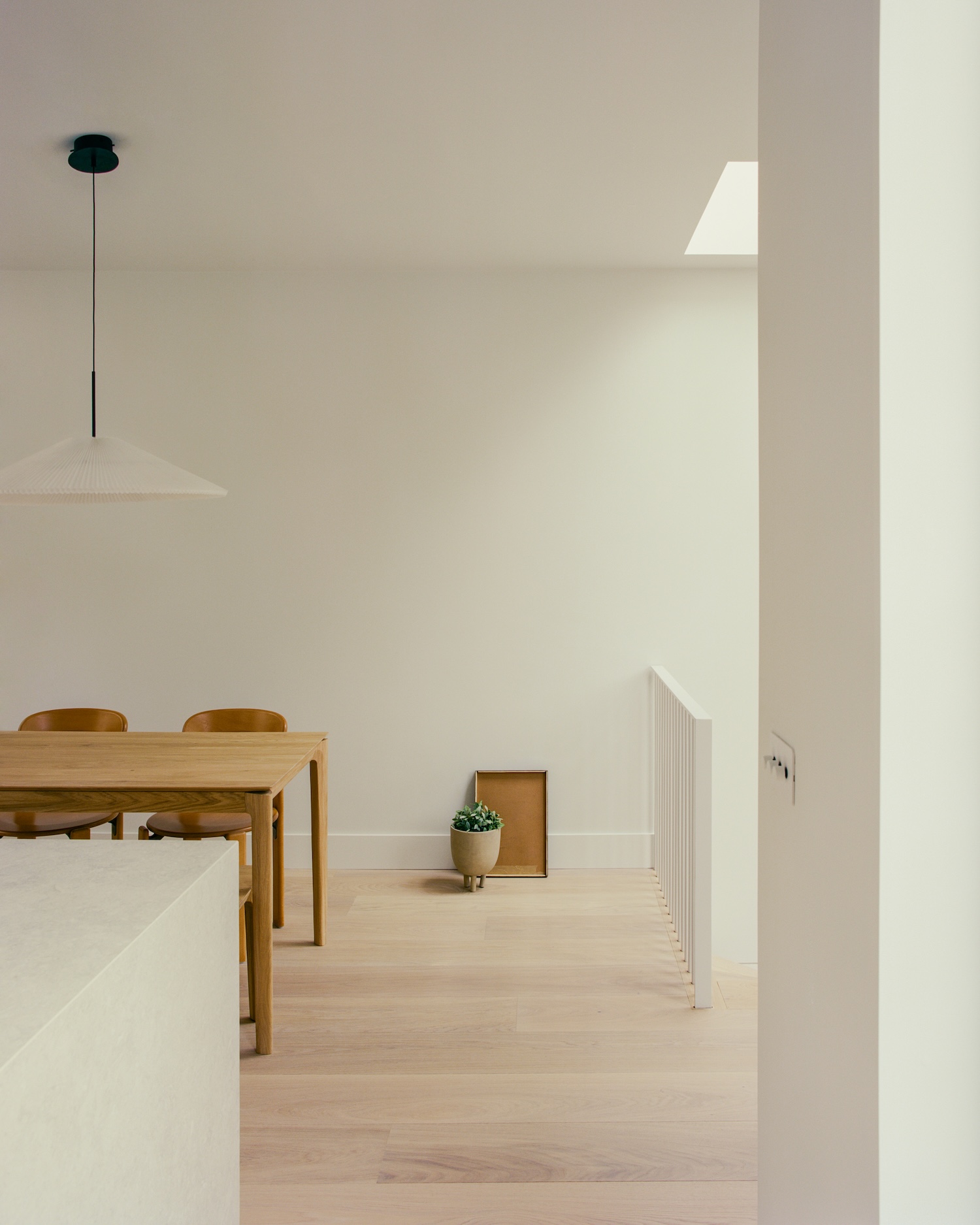
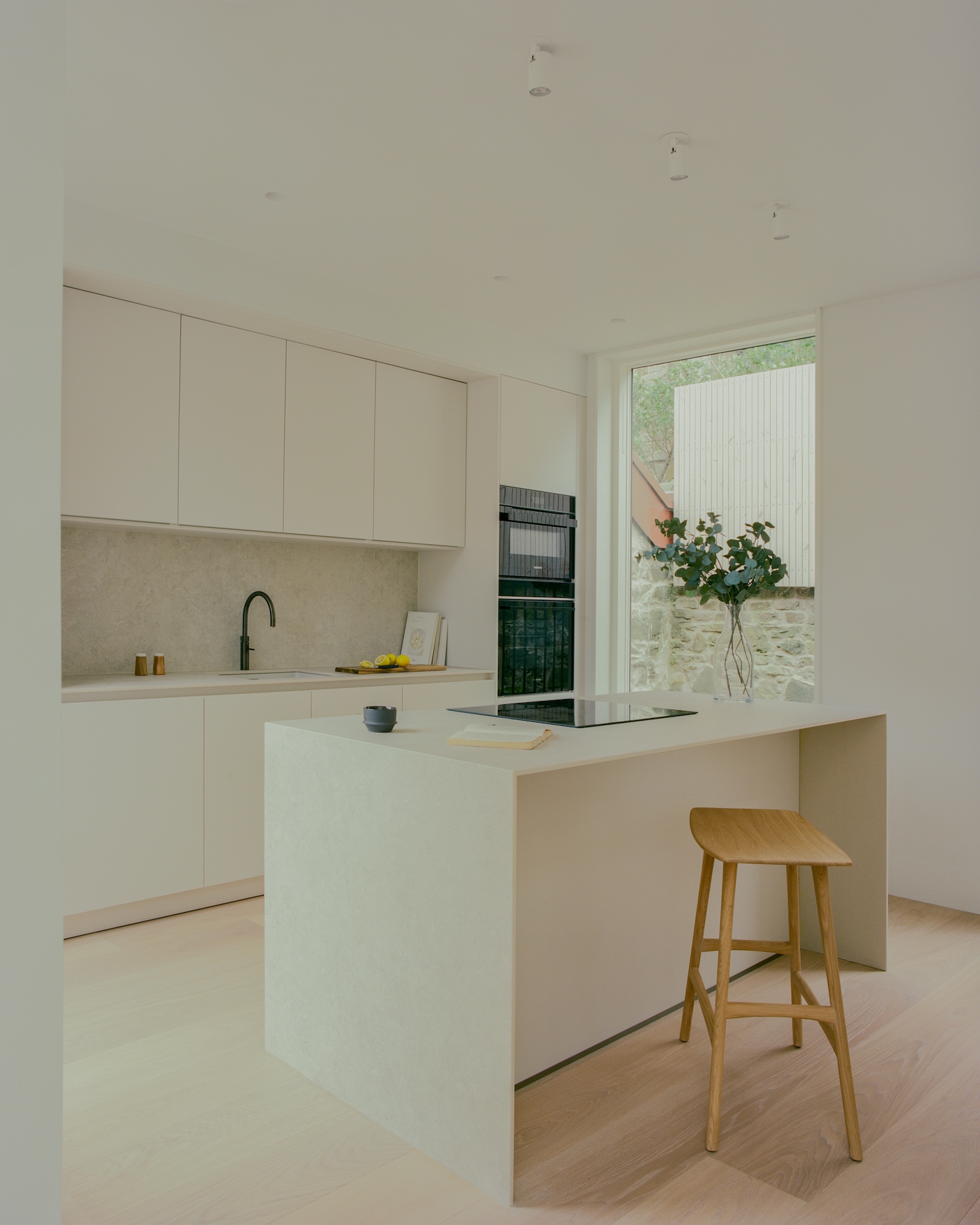
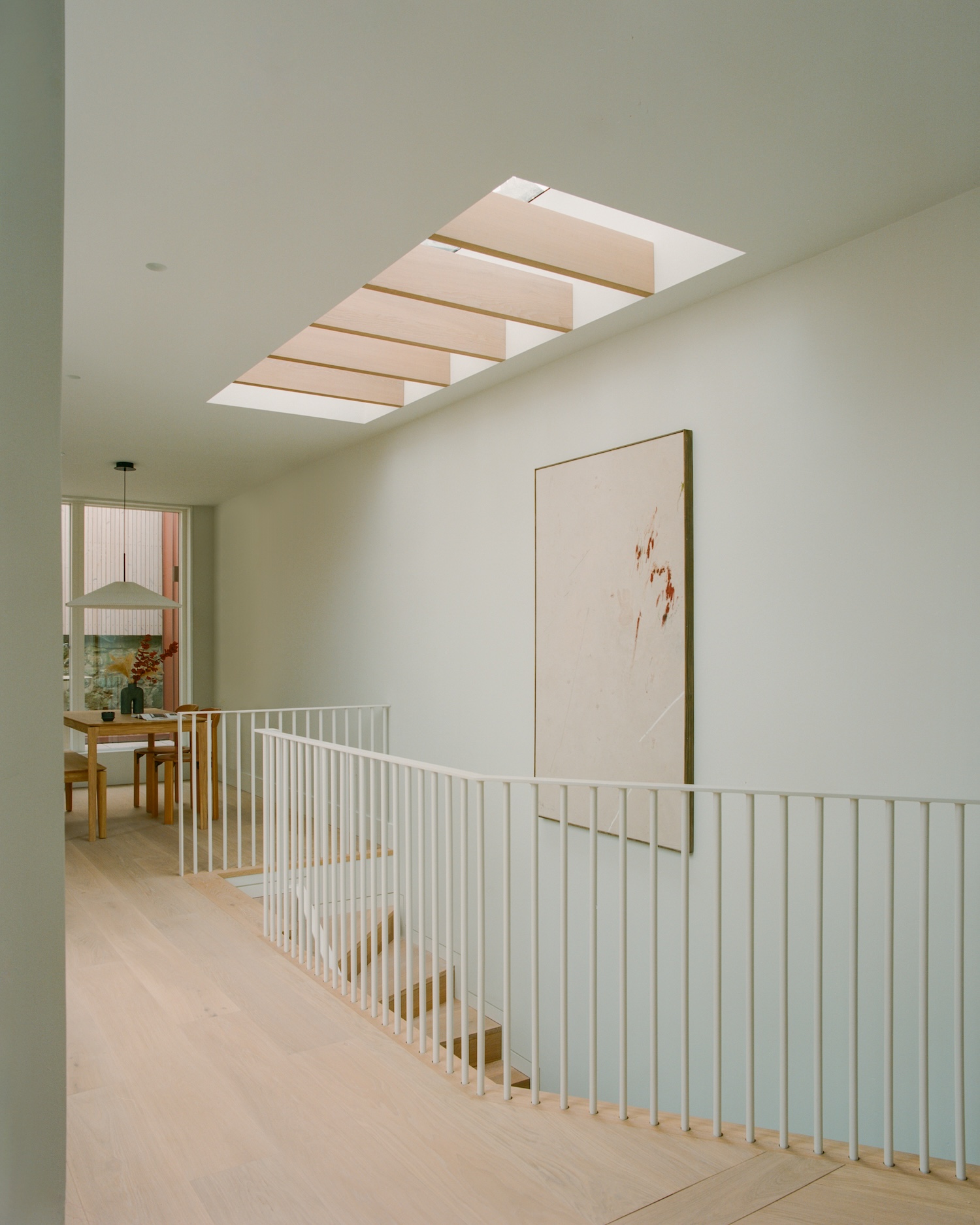
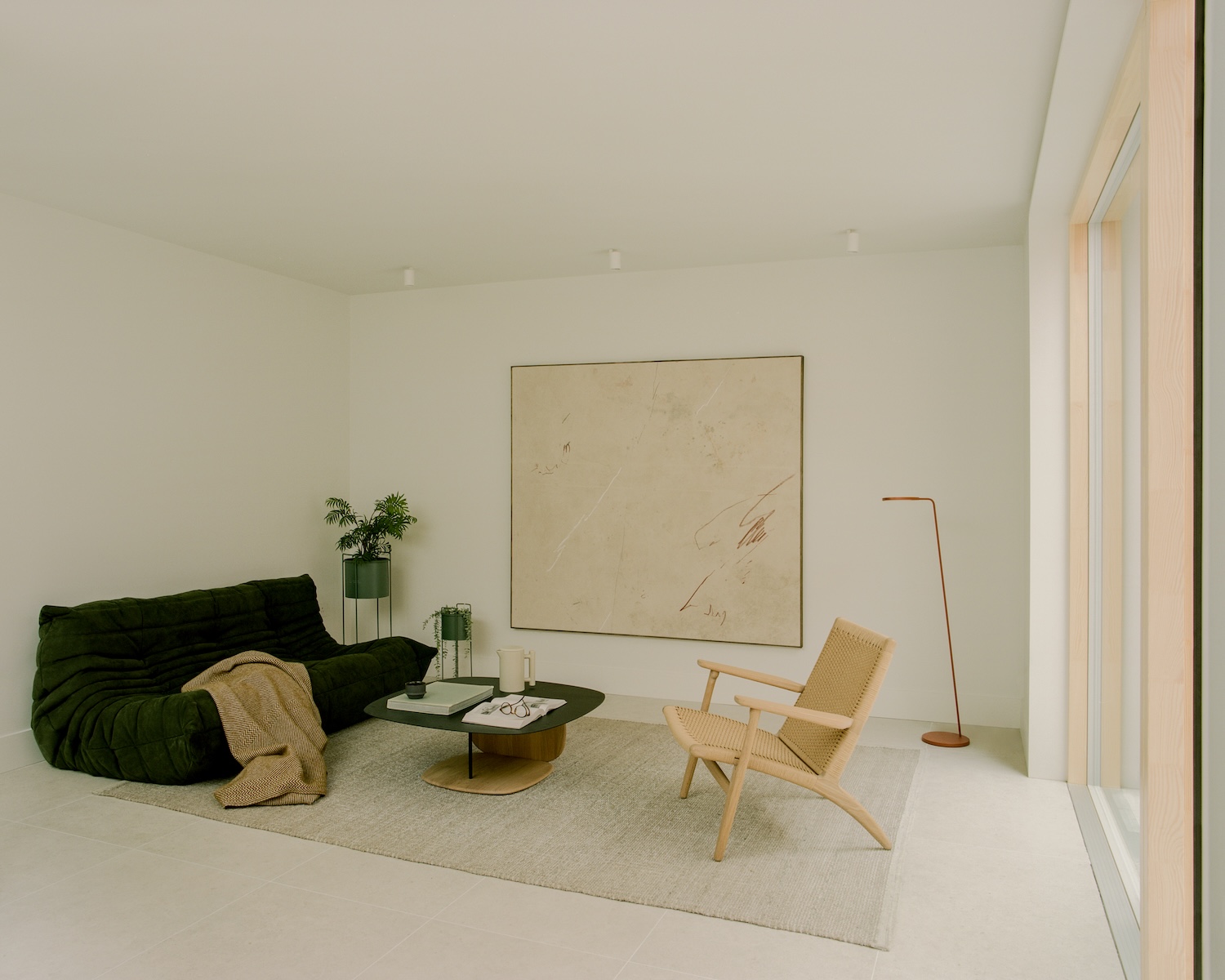
Internally, the organization is direct and generous: ground-floor living across porcelain tile with underfloor heating, a sculptural stair with solid timber treads and bespoke metal balustrade ascending to an open kitchen-dining level with roof terrace. The courtyards are finished in exposed existing brick and masonry, integrating found material with the red zinc to build a layered interior palette that reads as discovered rather than designed – a quality difficult to achieve and easily undermined by over-resolution.