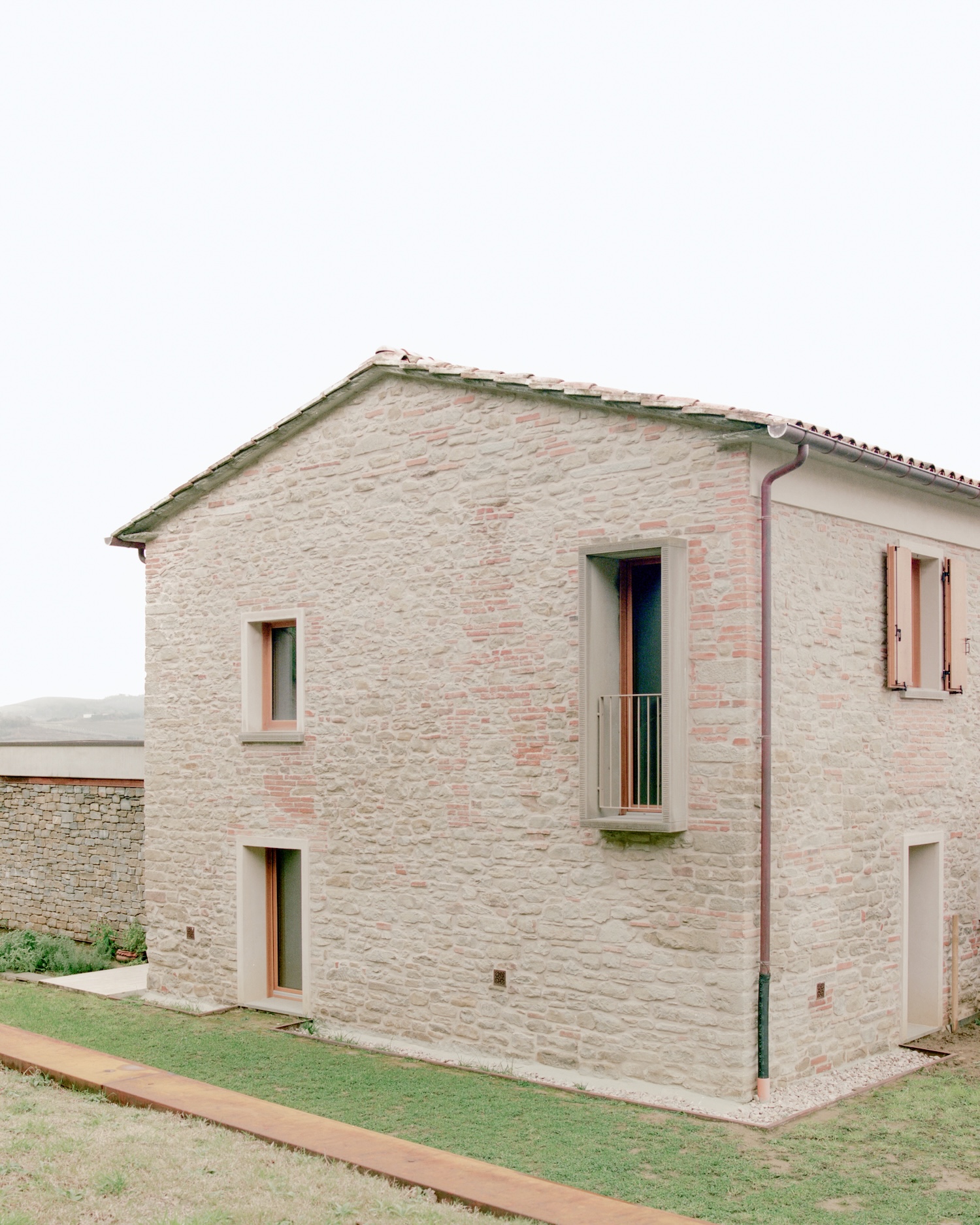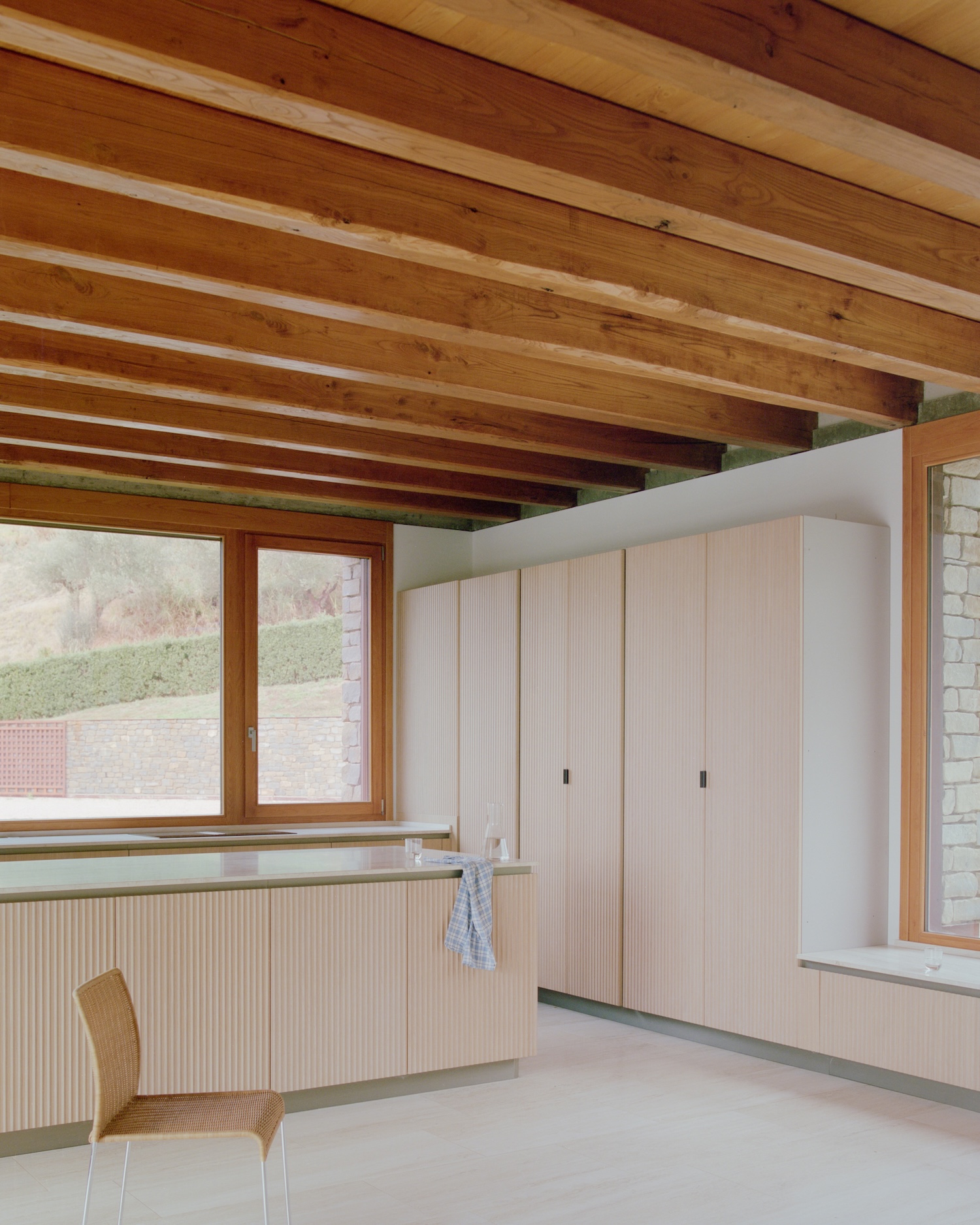
Casa Effevu is a minimalist residential renovation located in Modigliana, Italy, designed by ellevuelle architetti. Rural architecture in the Italian Apennines carries a particular kind of intelligence – one measured not in formal ambition but in the slow accumulation of material logic. A stone farmhouse and its adjacent barn, built across generations, encode knowledge about slope, weather, and the economy of means. When ellevuelle architetti were tasked with connecting and extending these two structures, the challenge was not simply spatial but temporal: how to insert a contemporary volume into a landscape already thick with constructive memory without collapsing the distance between old and new.
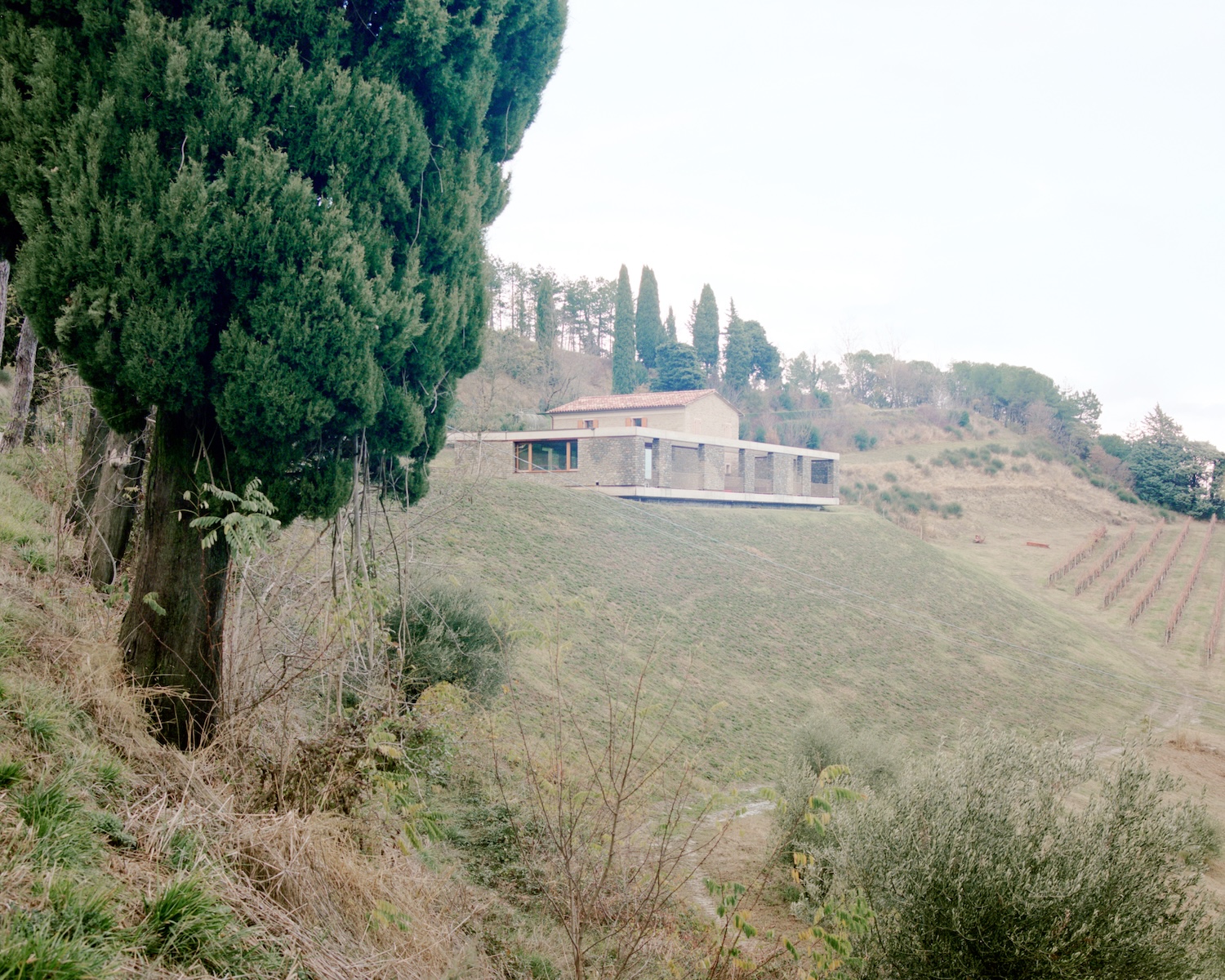
The answer lies in what the architects describe as critical continuity – a strategy that refuses both imitation and rupture. The new body stretches along the hillside as a linear stone-clad base, positioned between the existing house and barn like a threshold made habitable. It borrows the material palette of its neighbors, local stone worked into load-bearing walls, but deploys it through a distinctly contemporary grammar. Where the original structures accumulated their character through decades of pragmatic adjustment, the extension achieves its presence through deliberate restraint and geometric precision.
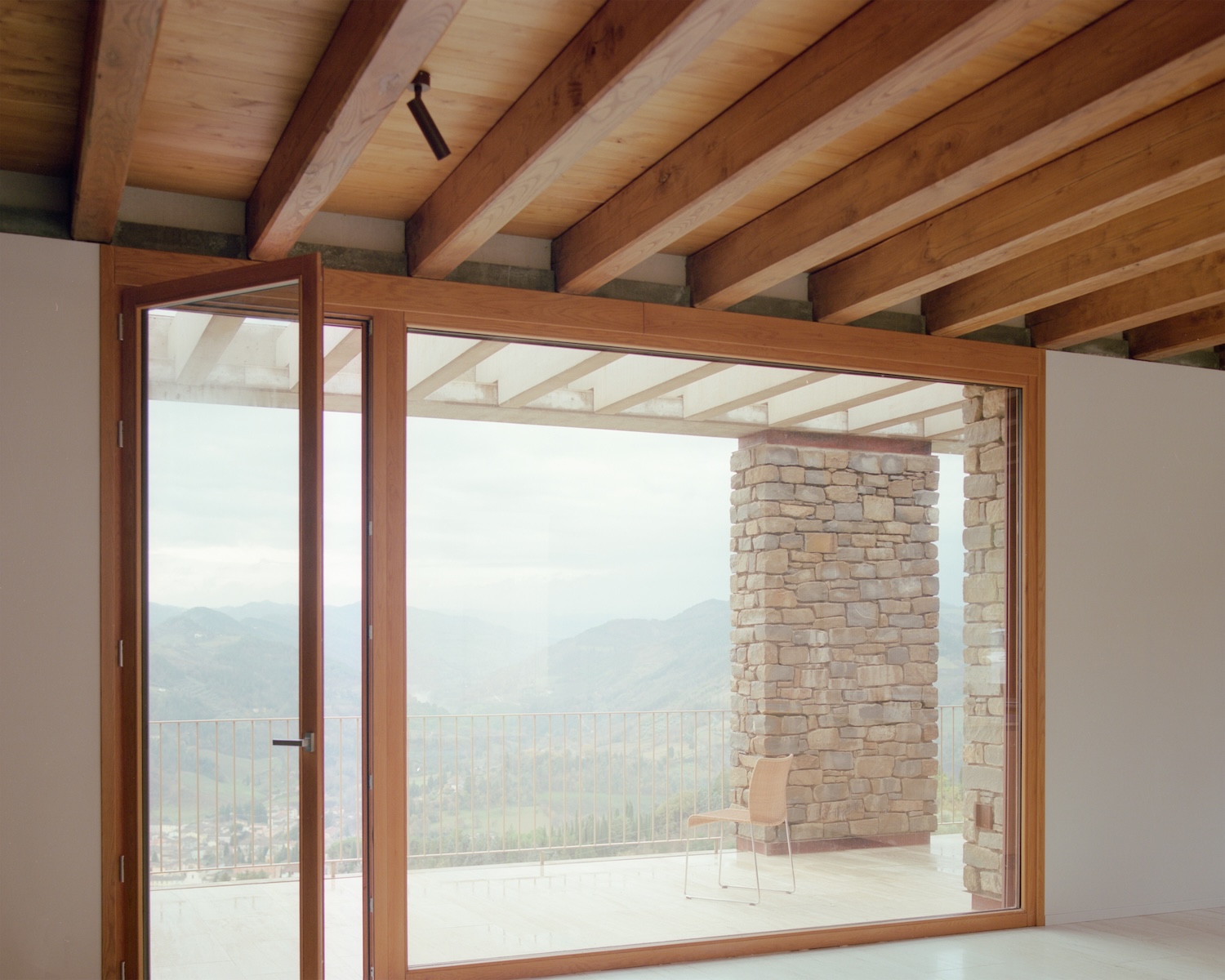
A system of masonry piers and open porticoes establishes the primary rhythm of the intervention, creating a measured alternation of solid and void that governs both structure and experience. These piers do more than carry loads. They frame the Apennine valley in controlled sequences, transforming the facade into a series of apertures that actively mediate between landscape and dwelling. The effect recalls the calculated openness of Catalan farmhouse renovations by practices like Harquitectes, where heavy masonry walls are punctuated to choreograph light and air rather than simply admit them.
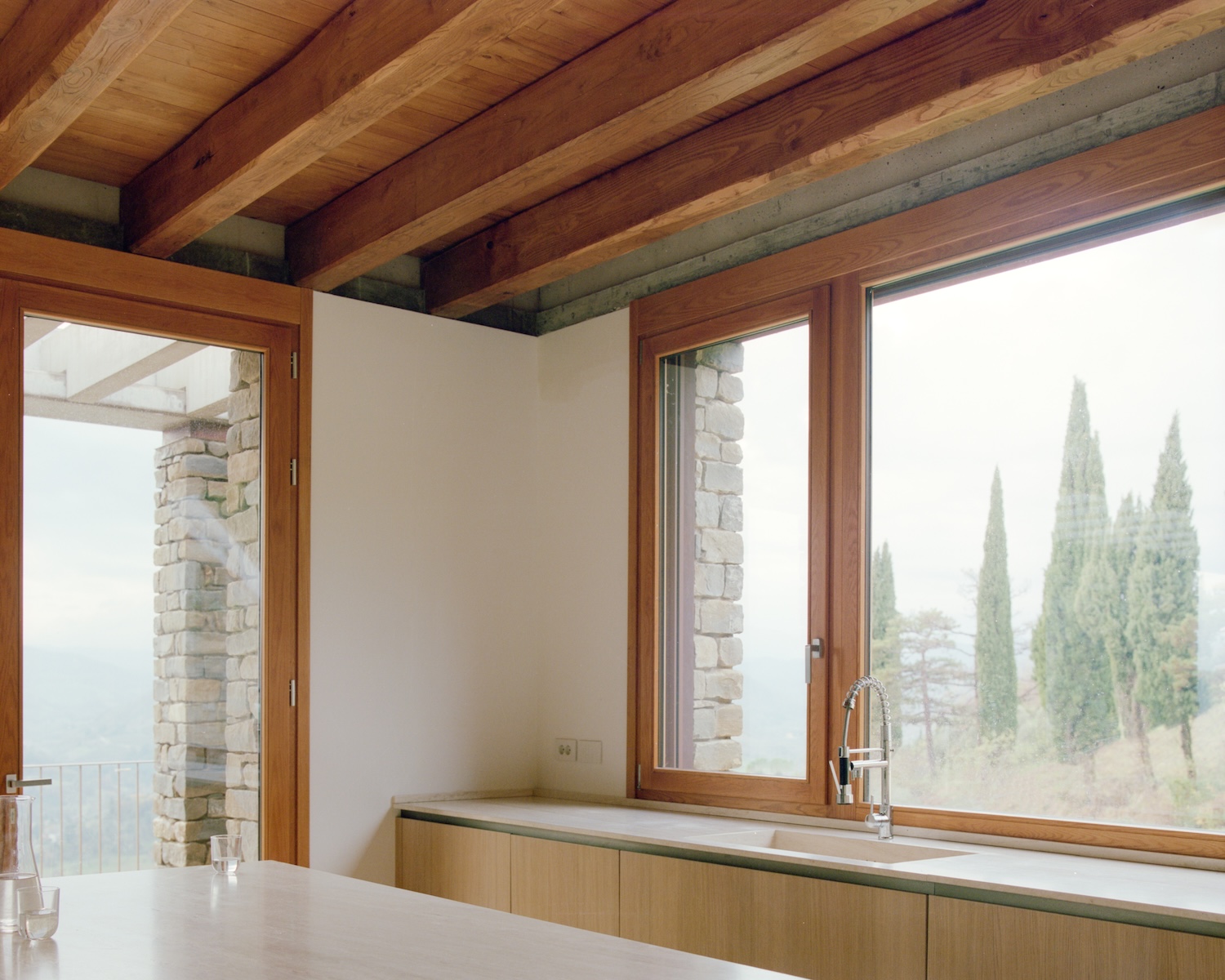
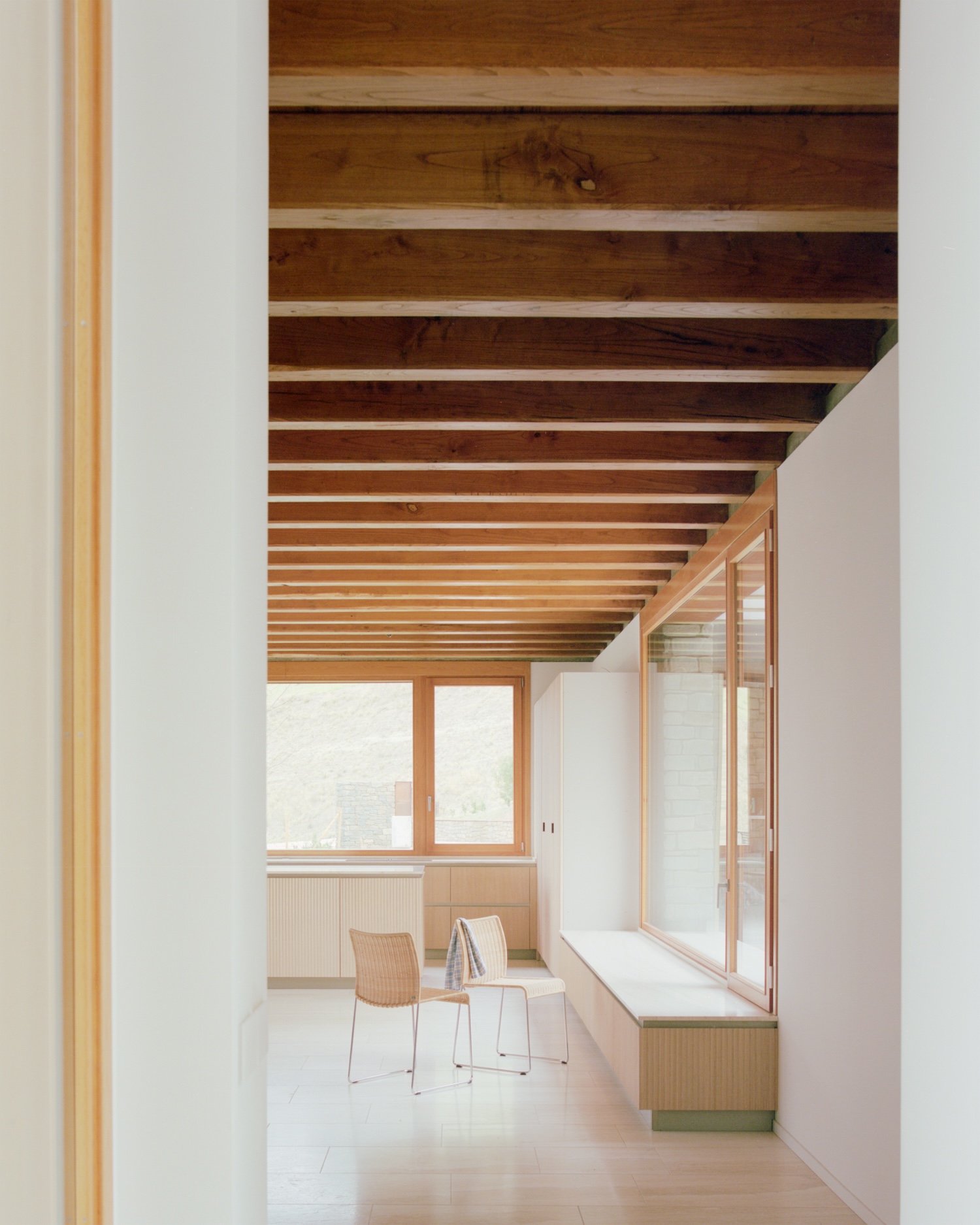
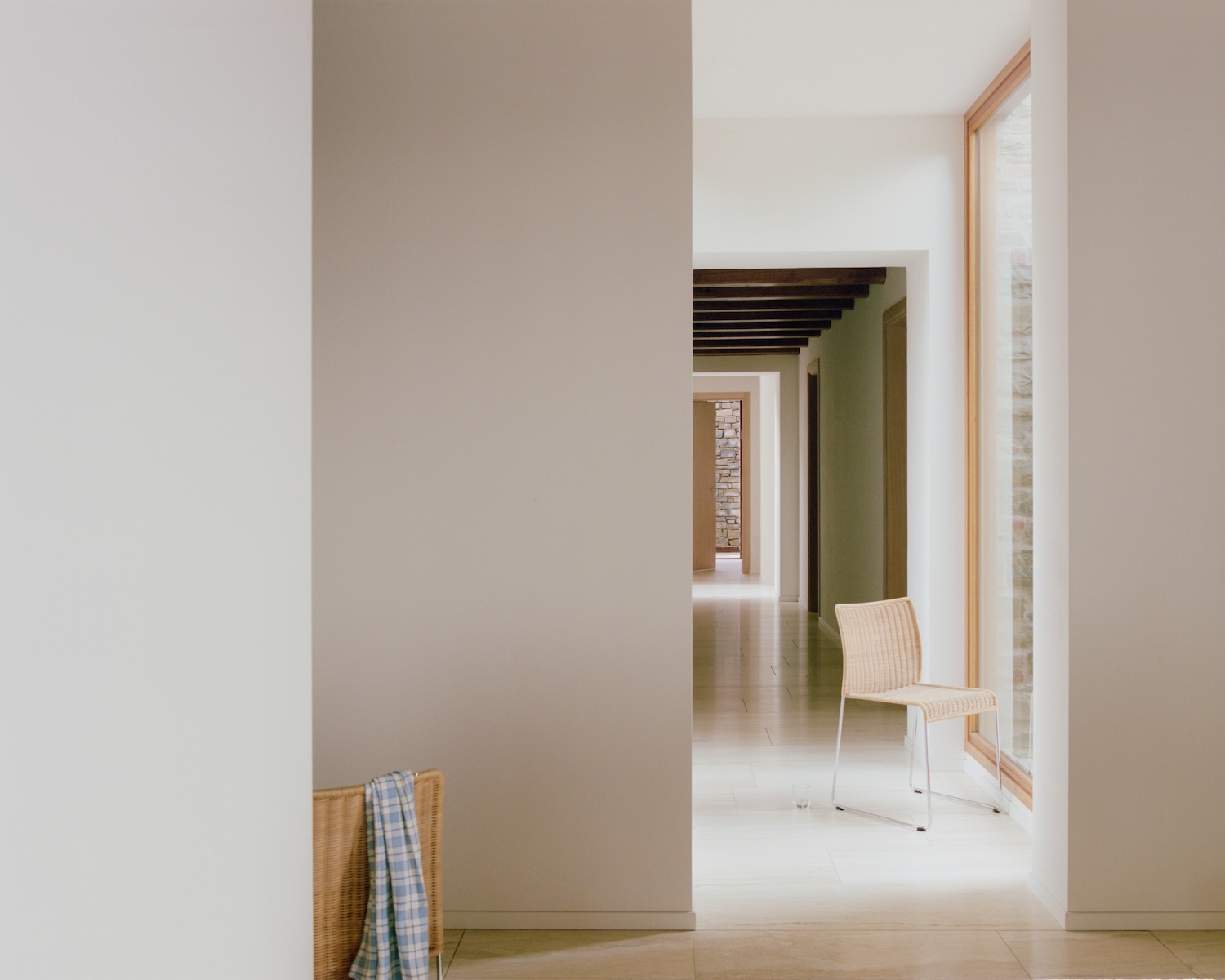
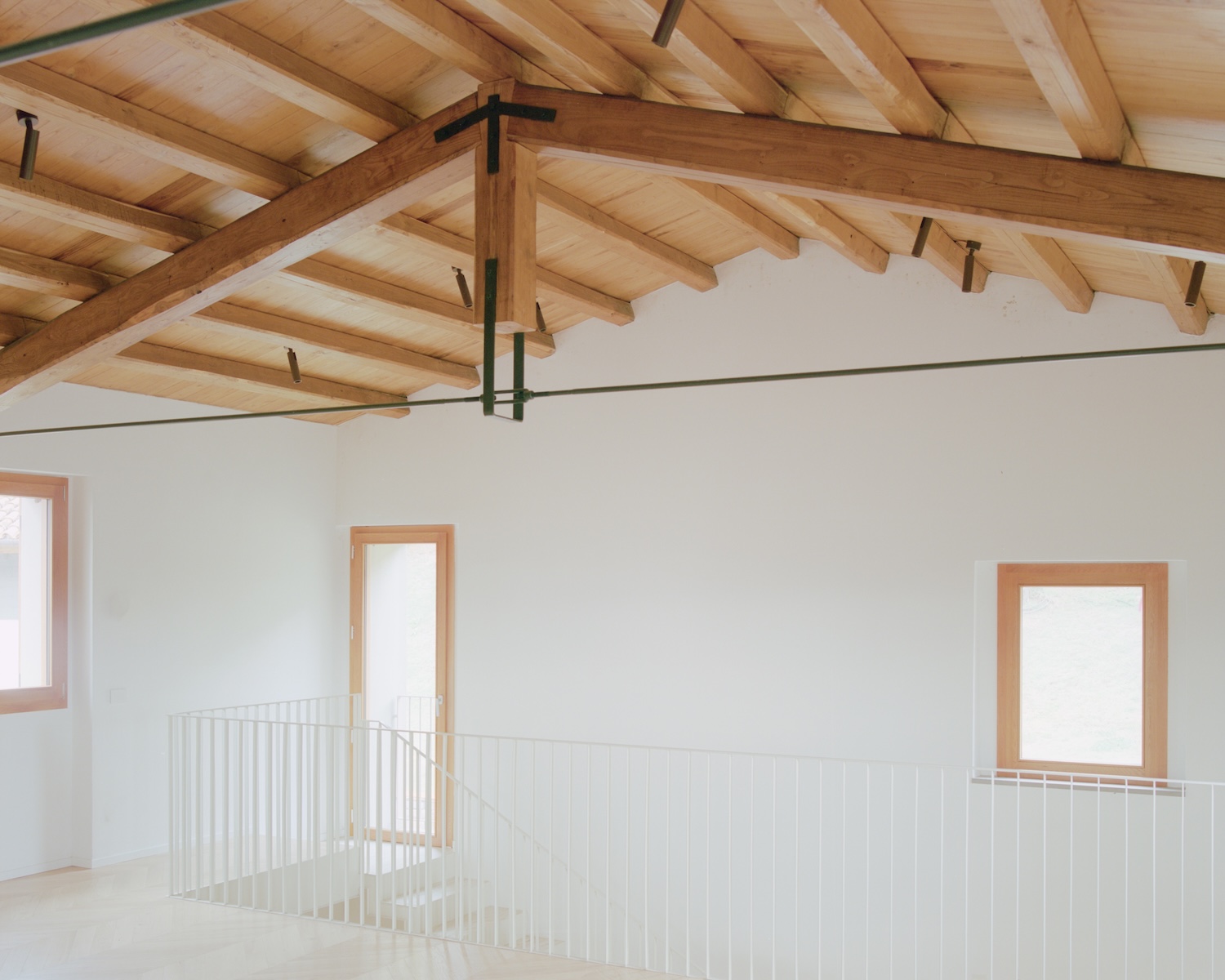
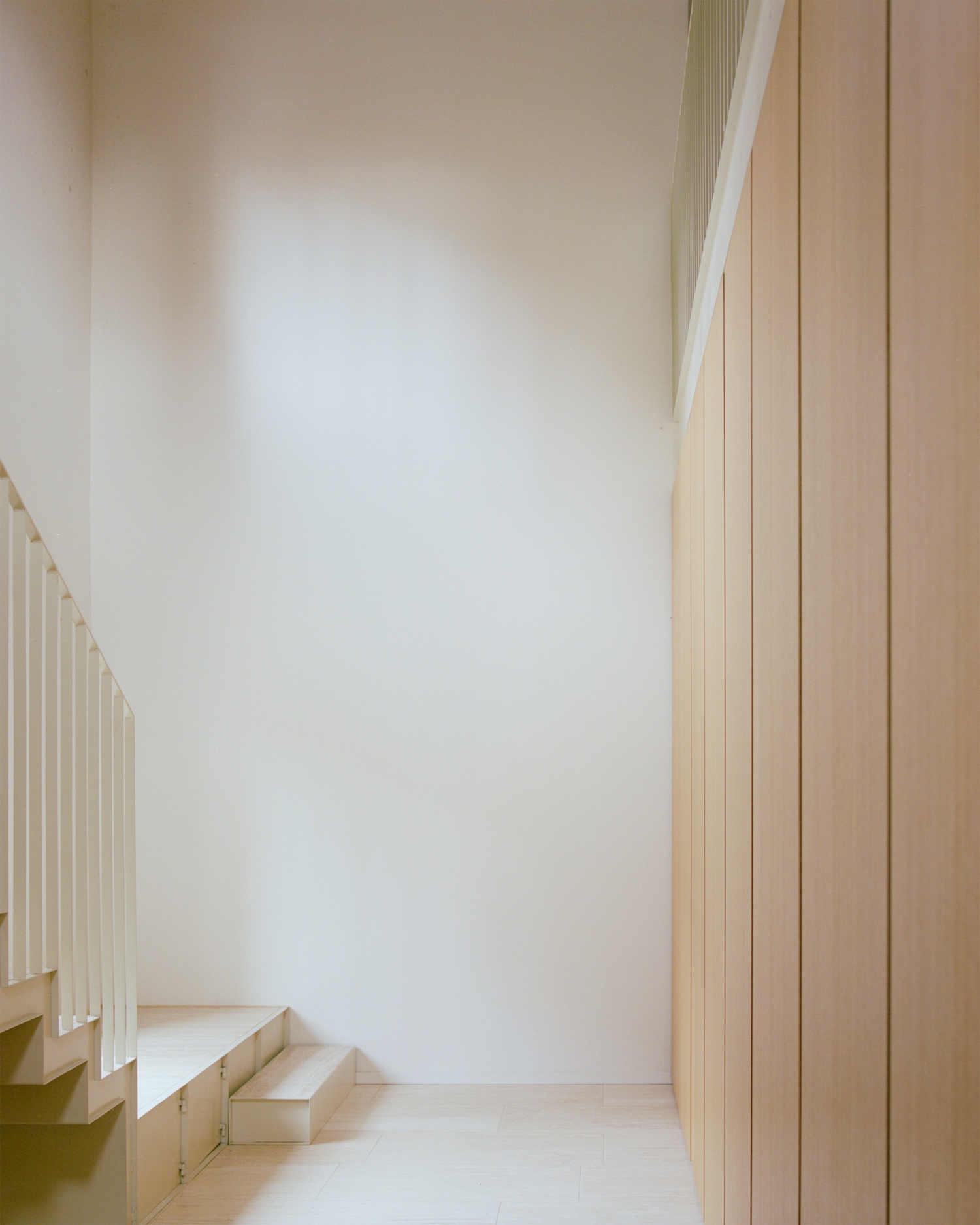
Inside, the spatial organization resists the conventional hierarchy of rooms arranged along corridors. Instead, the plan unfolds as a continuous progression, each space flowing into the next with a fluidity that belies the apparent solidity of the stone envelope. Exposed timber floor structures overhead provide warmth and a clear tectonic legibility – you can read exactly how the building is made at every point. This transparency of construction is not decorative. It serves as a constant reminder that you are inhabiting something new, even as the stone walls around you carry the weight of an older material tradition.