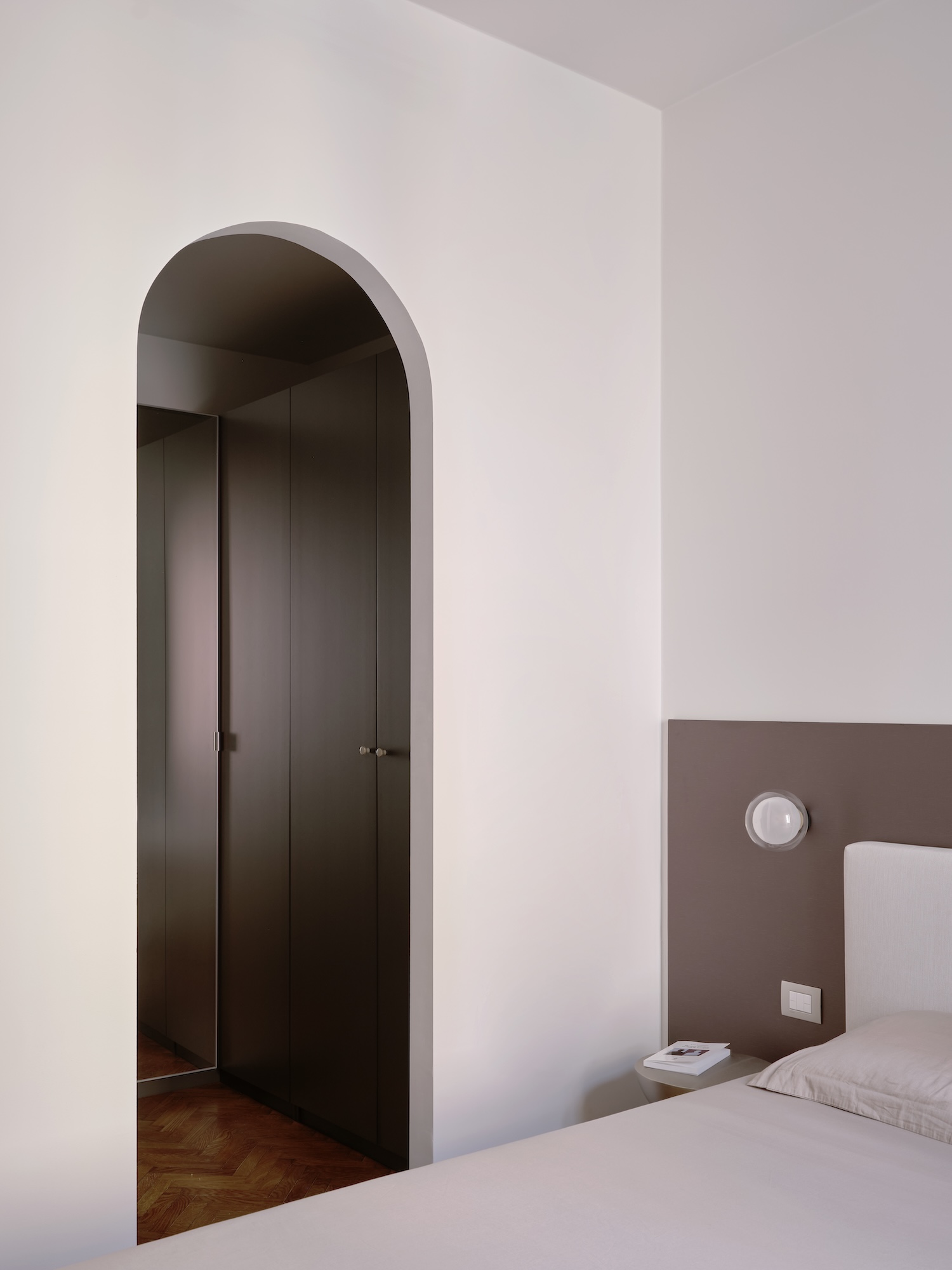
Casa in Casoretto is a minimalist apartment located in Milan, Italy, designed by studio parterre. This 75-square-meter three-room residence in a 1950s building serves as home for architect Flavio Terracciano and his wife Francesca, demonstrating how contemporary interventions can transform modest urban apartments through measured material choices and spatial strategies that create visual complexity within constrained footprints.
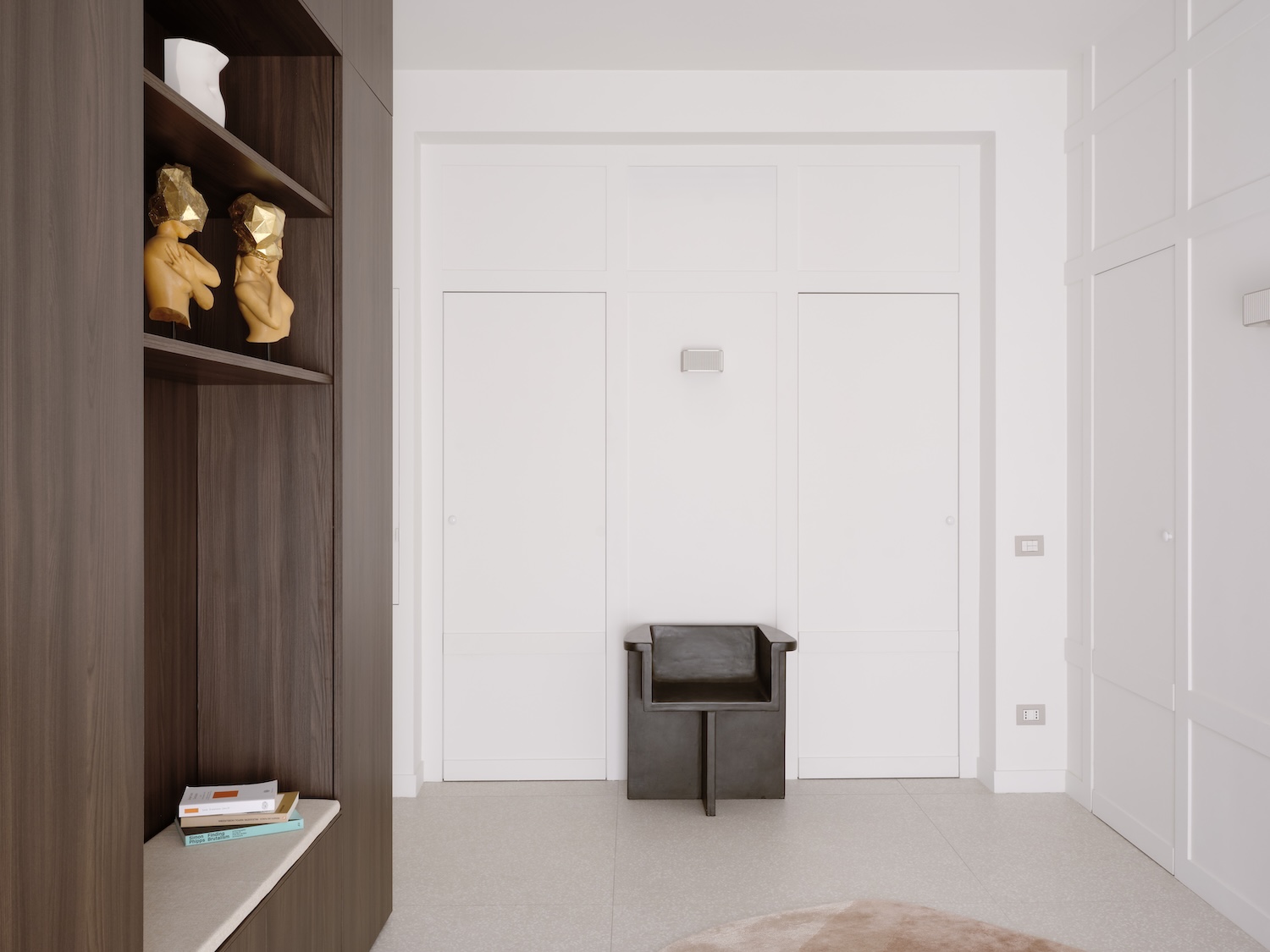
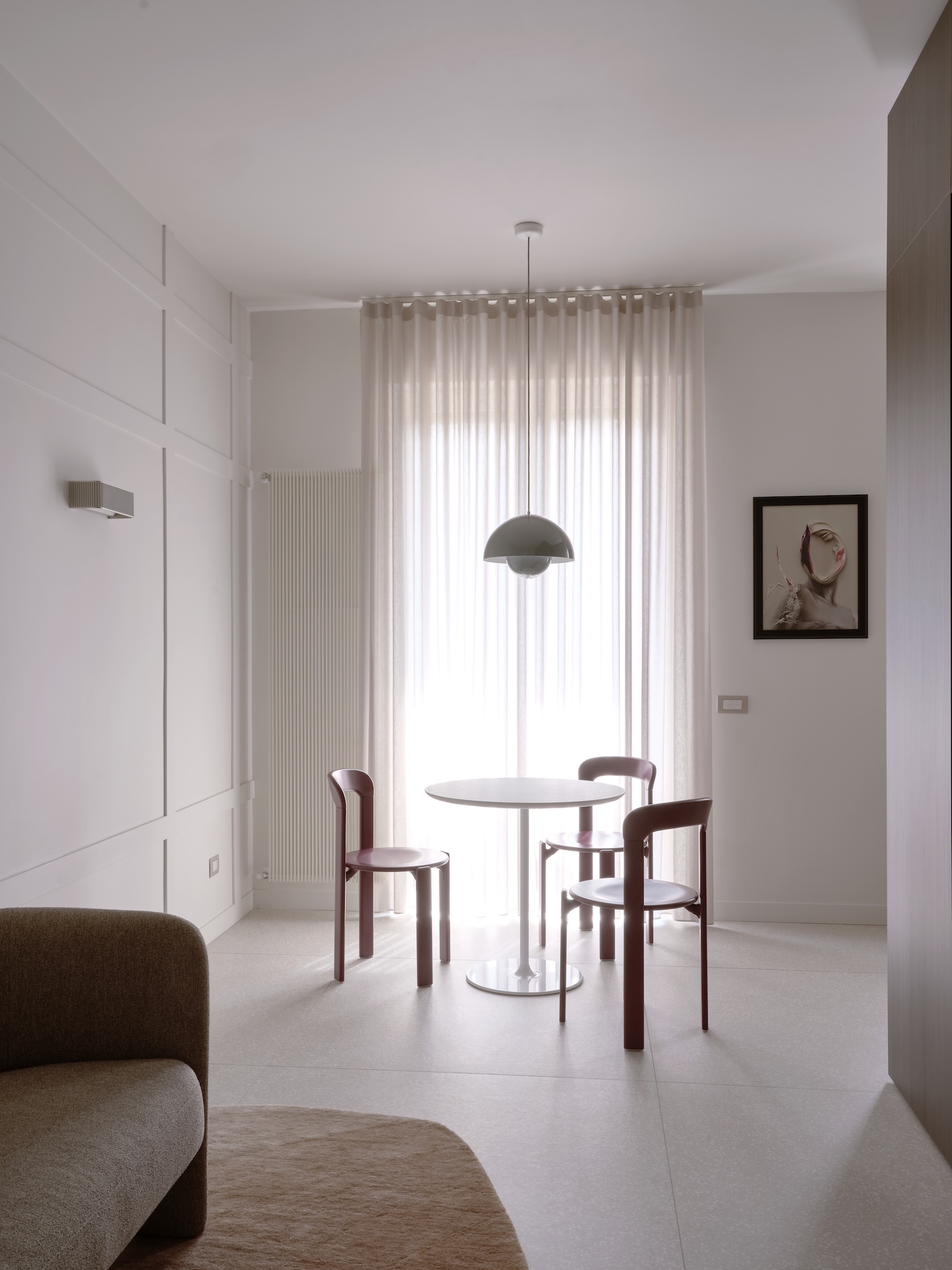
The full-height dark wood volume designed and built by Arrital functions as the project’s organizational anchor, separating living and kitchen areas while providing storage, display surfaces, and built-in seating. This multifunctional element demonstrates how custom millwork can maximize spatial efficiency in compact apartments while creating architectural presence that distinguishes the intervention from simple furniture arrangement. The structure’s dual orientation addresses both social display through open shelving for sculptural works by Marcello Silvestre and practical concealment of kitchen functions.
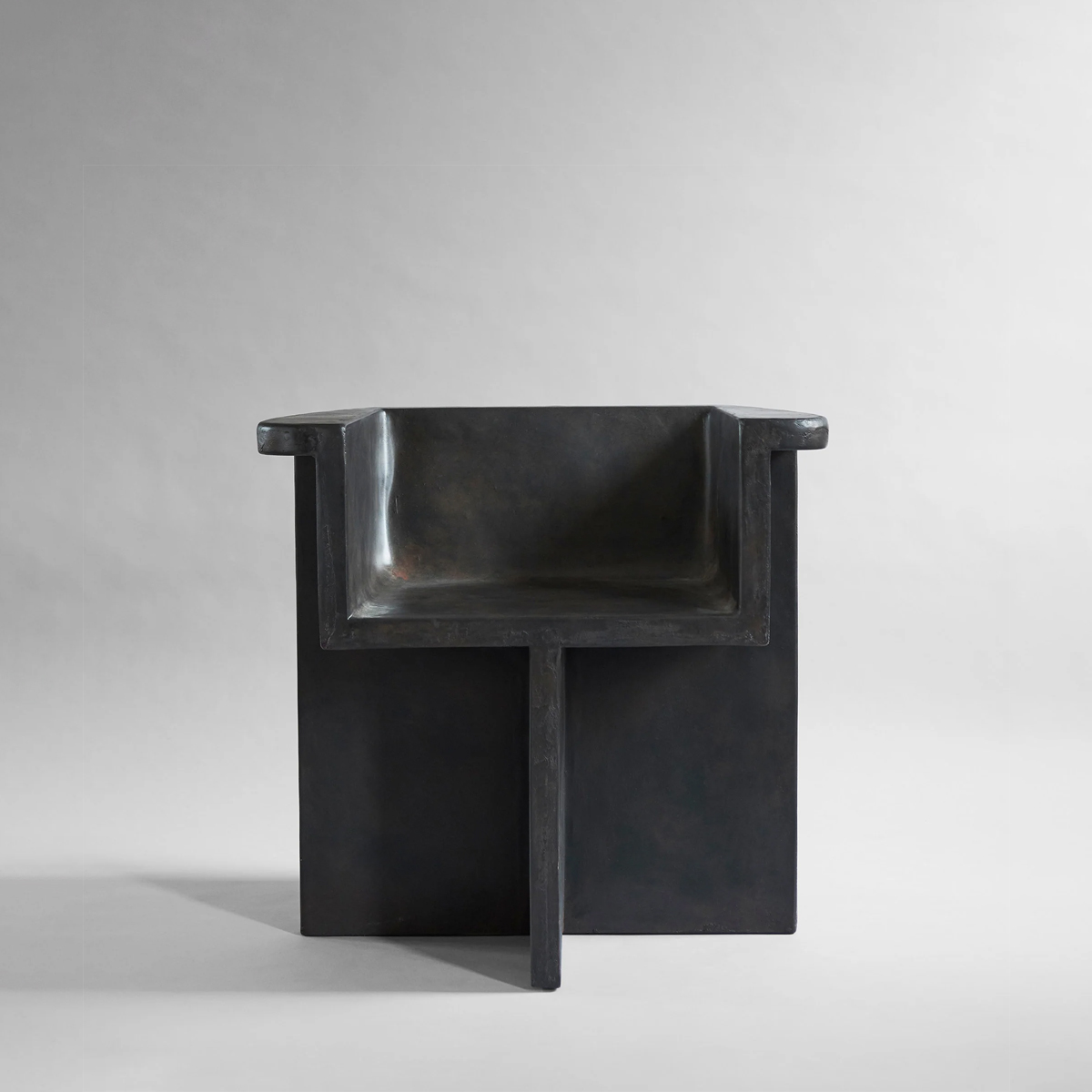
The living area establishes neutral tonal foundation punctuated by chromatic accents through furniture selection including the Cali sofa by Ditre Italia and Brutus armchair by 101 Copenhagen grounded by Jaipur Rugs carpet. This layered approach to color creates visual interest while maintaining the restrained character central to the design language. The dining arrangement combines Arper’s circular Dizzie table with HAY’s Rey chairs under &Tradition’s FlowerPot pendant, demonstrating how contemporary Scandinavian and Italian design can coexist within unified spatial frameworks.
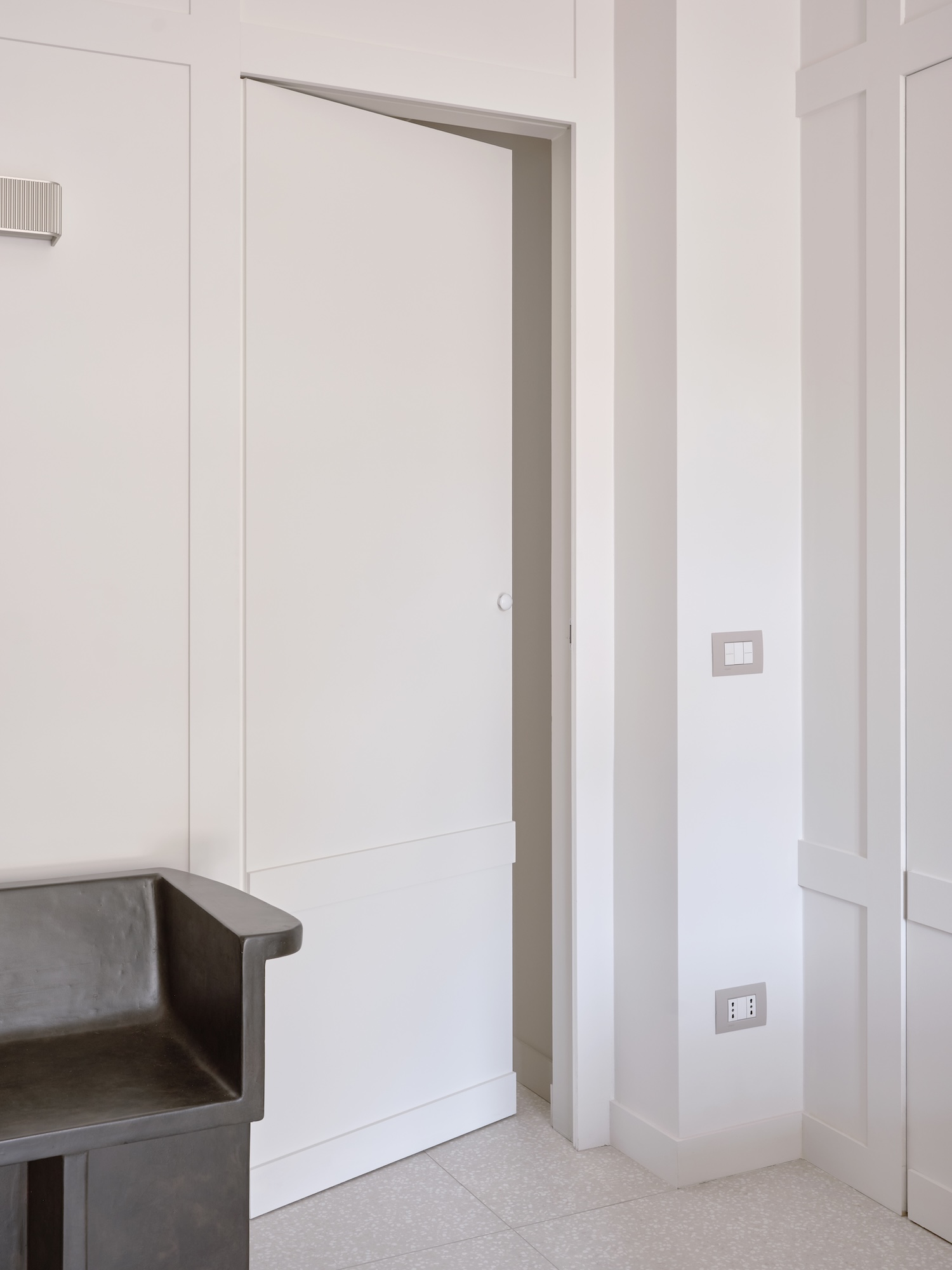
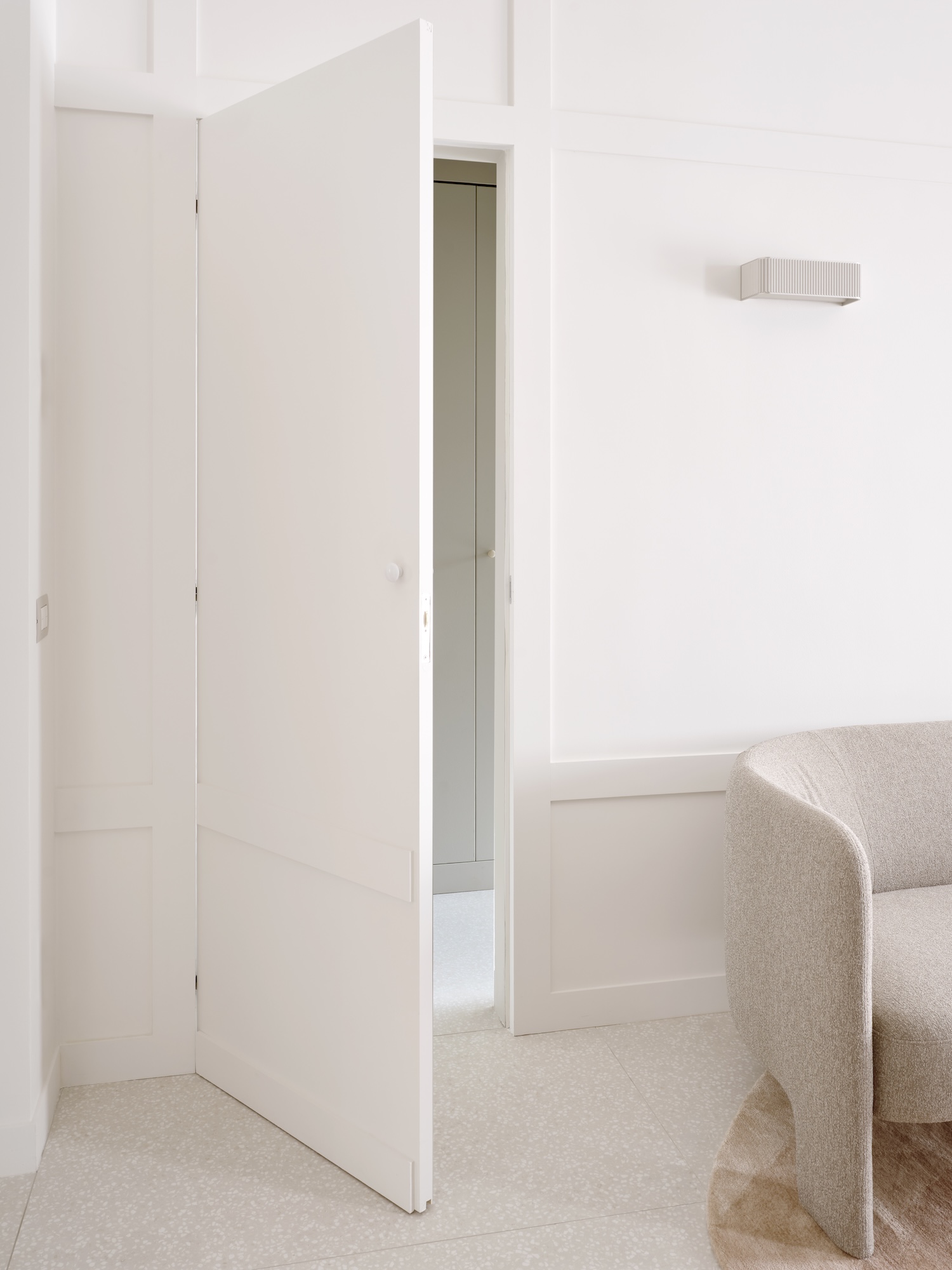
Geometric wall paneling throughout the living room structures space while concealing three flush doors leading to private areas, creating clean surfaces that maintain visual continuity. This strategy demonstrates how storage and circulation can be integrated architecturally rather than appearing as afterthought additions that compromise spatial coherence in compact floor plans.
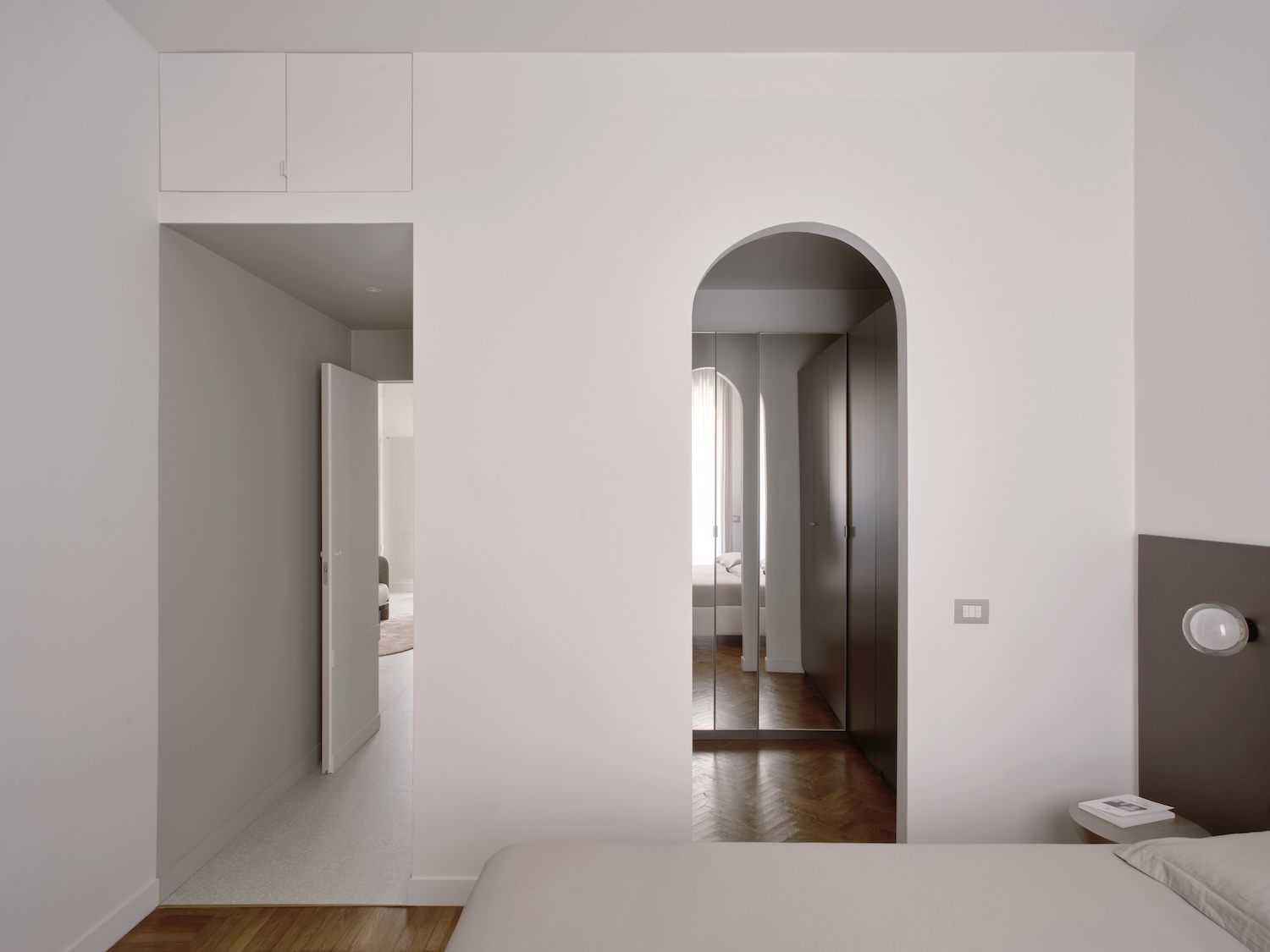
The chromatic progression deepening through successive rooms creates atmospheric shifts that distinguish functional zones without requiring architectural barriers. The anteroom transitions to the main bathroom where fluted glass partitions provide visual thresholds to the walk-in shower enhanced by Ragno’s Glacé tiles coordinating with adjacent terrazzo surfaces. This material continuity extends the apartment’s tonal consistency while acknowledging different functional requirements.