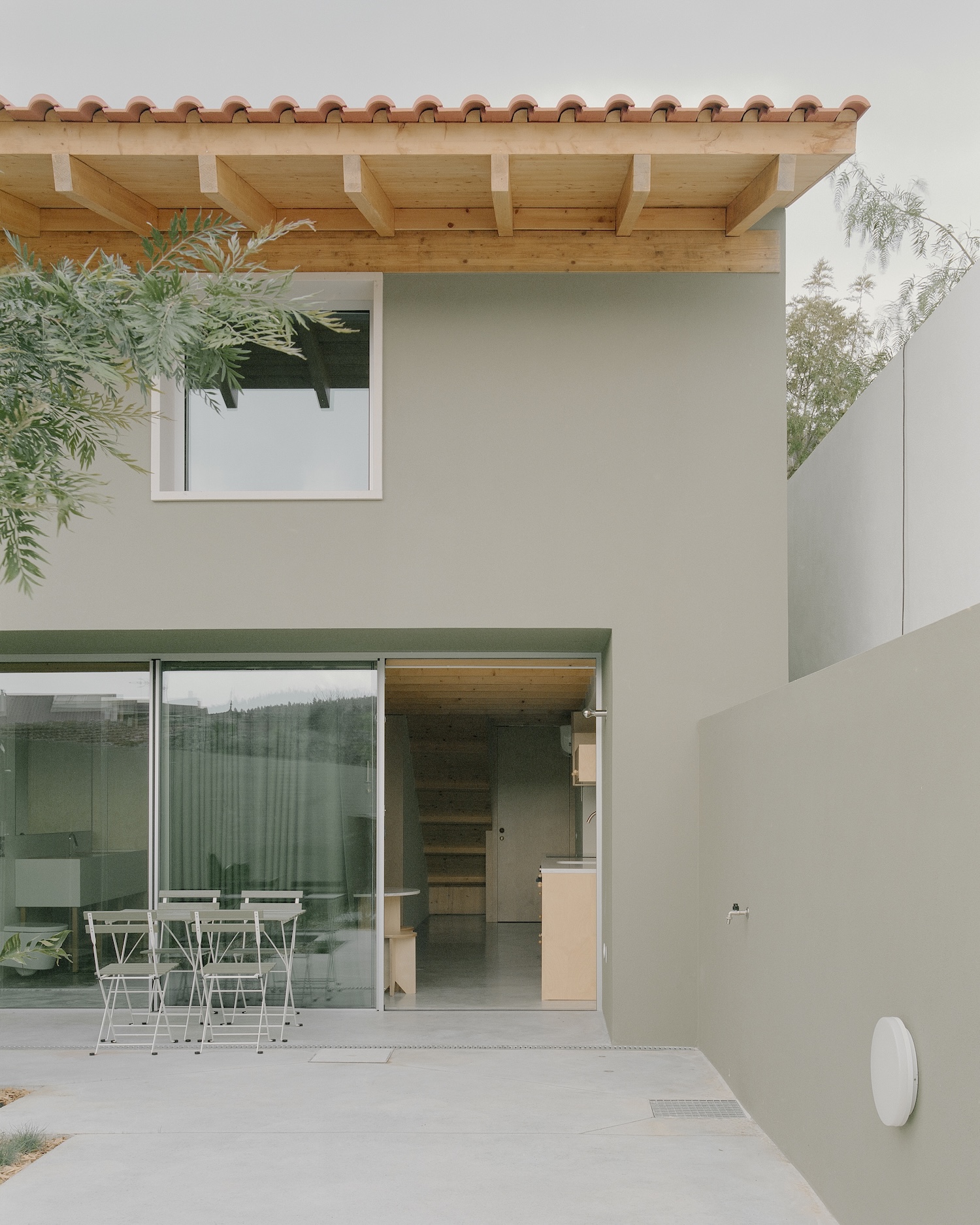
Casa Verde Gago is a minimalist home located in Ansião, Portugal, designed by Bruno Dias Arquitectura. Standing at the intersection of Gago Street, one encounters a façade that tells a story of Portuguese architectural evolution – a green-painted surface that both honors and gently challenges tradition. Like the carefully curated patina on a well-loved piece of furniture, Casa Verde Gago’s renovation demonstrates how thoughtful design can preserve cultural memory while creating spaces for contemporary life.
The building’s verdant exterior serves as more than mere decoration. It draws from a distinctly Portuguese architectural vocabulary – the rich palette of traditional home colors – while subtly announcing its contemporary reimagining. This chromatic choice exemplifies what architectural historian Kenneth Frampton termed “critical regionalism,” where local building traditions inform modern interventions without falling into mere nostalgia.
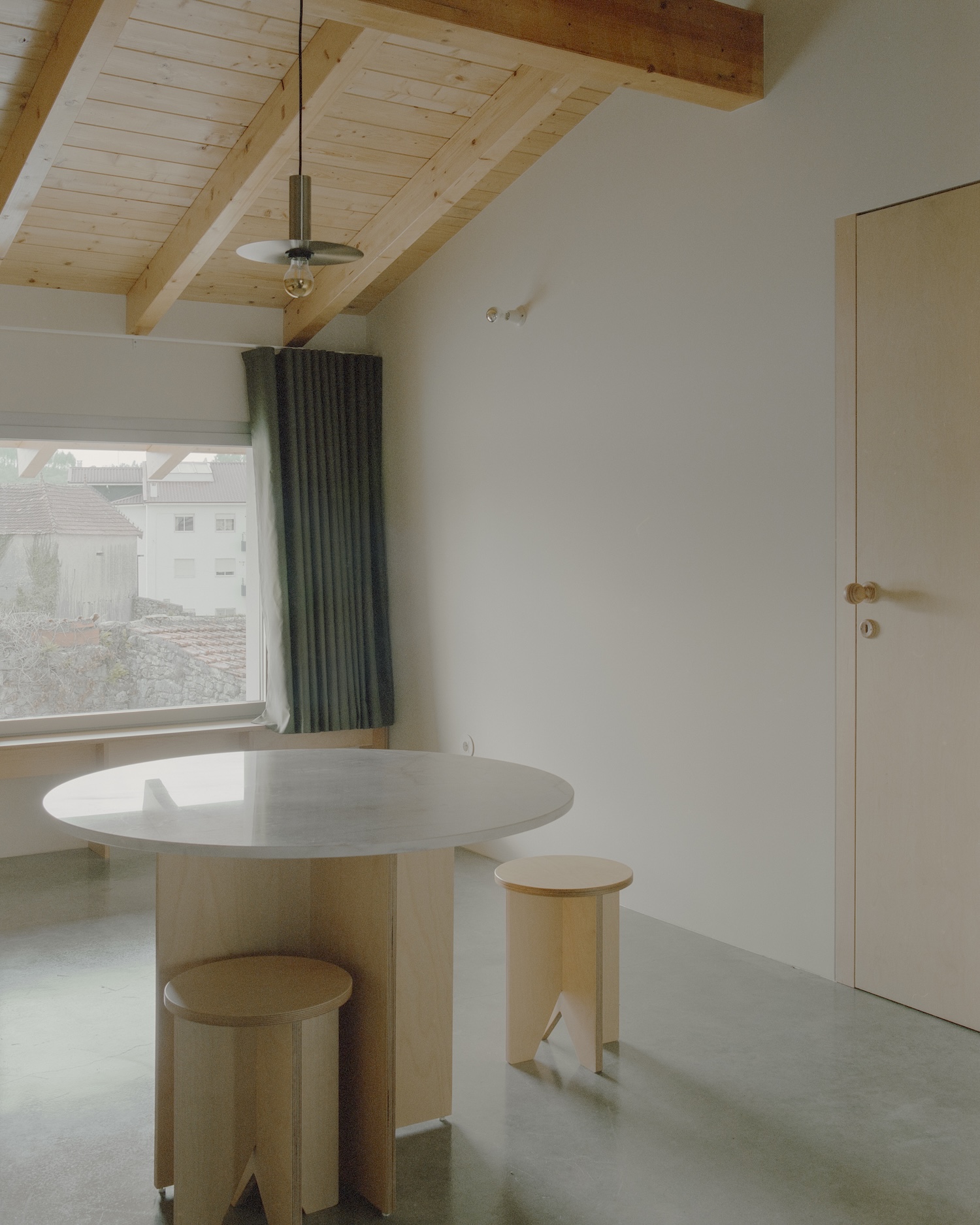
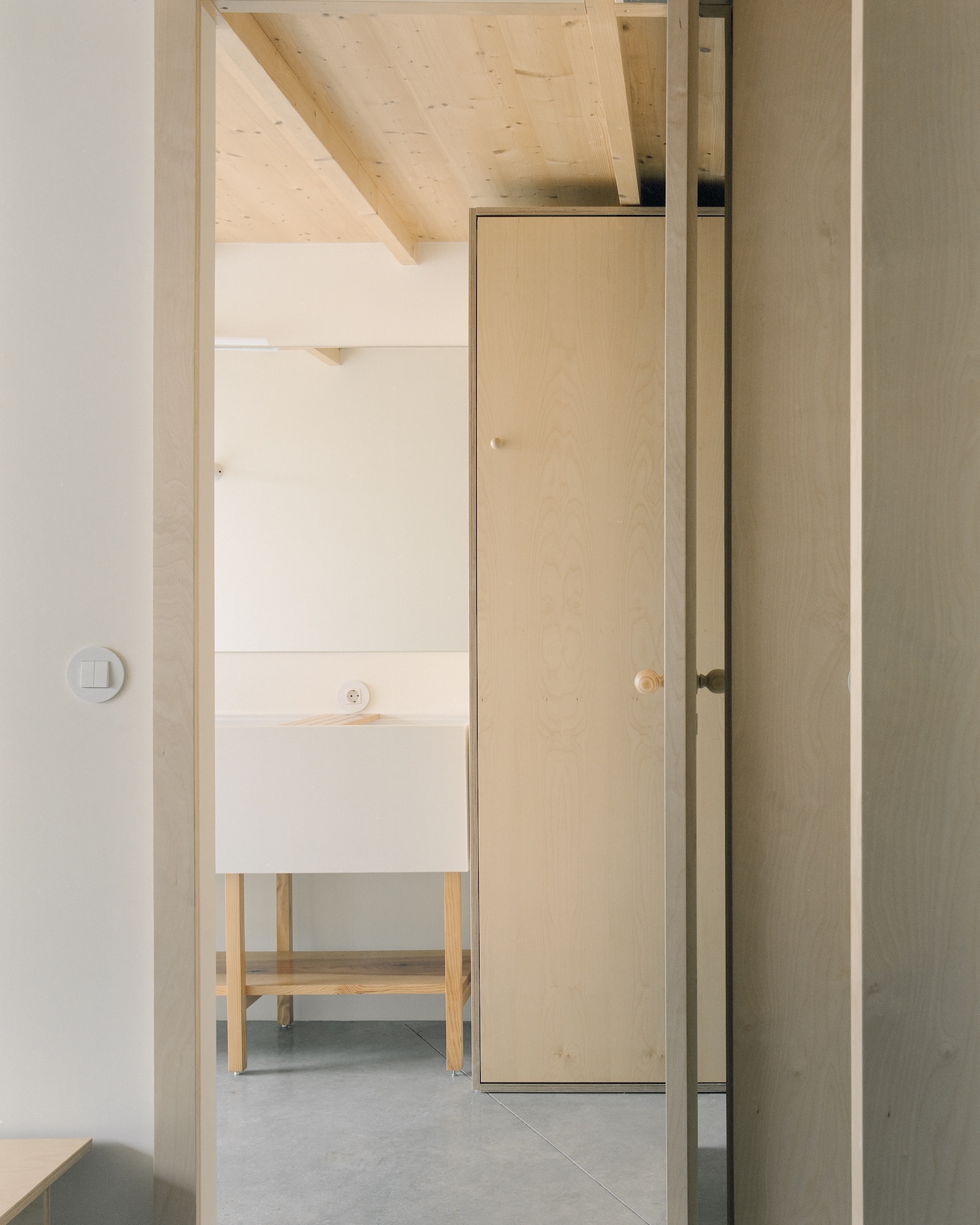
The project’s sophisticated handling of wood elements particularly rewards close attention. While timber construction has long been fundamental to Portuguese residential architecture, here it has been reinterpreted with deliberate visual tension. The wooden elements maintain a dialogue with historical precedent while introducing subtle contemporary variations in their detailing and deployment. This creates what might be called a productive dissonance – one that respects the street’s architectural rhythm while quietly asserting its own temporal identity.
Perhaps the most revealing transformation occurs in the former wine cellar, now reimagined as a social patio. This spatial conversion speaks to shifting patterns of domestic life, where what was once a utilitarian storage space becomes a carefully choreographed outdoor room. The introduction of a water feature and minimalist landscaping creates a contemplative atmosphere that mediates between the building’s historical shell and contemporary patterns of living.
The interior programming – two one-bedroom apartments separated by a vertical circulation core – demonstrates how historical structures can be adapted to modern density requirements without compromising spatial quality. Each unit maintains its own identity while sharing in the building’s overall material and conceptual narrative.
What makes Casa Verde Gago particularly successful is how it navigates multiple timeframes simultaneously. It preserves the essential character of Ansião’s historic center while creating spaces that respond to contemporary needs. The renovation doesn’t merely conserve or modernize – it creates a new architectural synthesis that feels both grounded in its context and oriented toward the future.