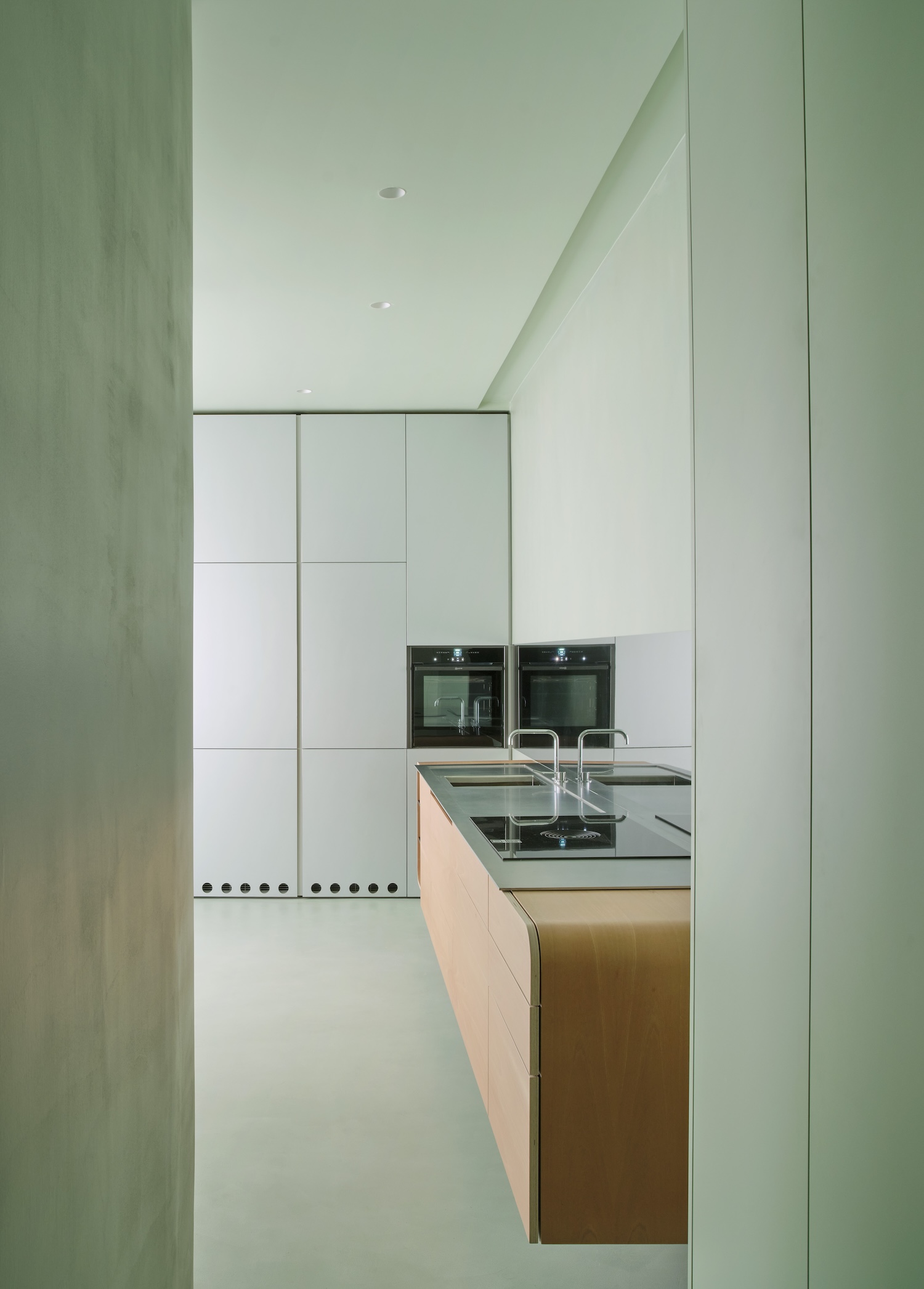
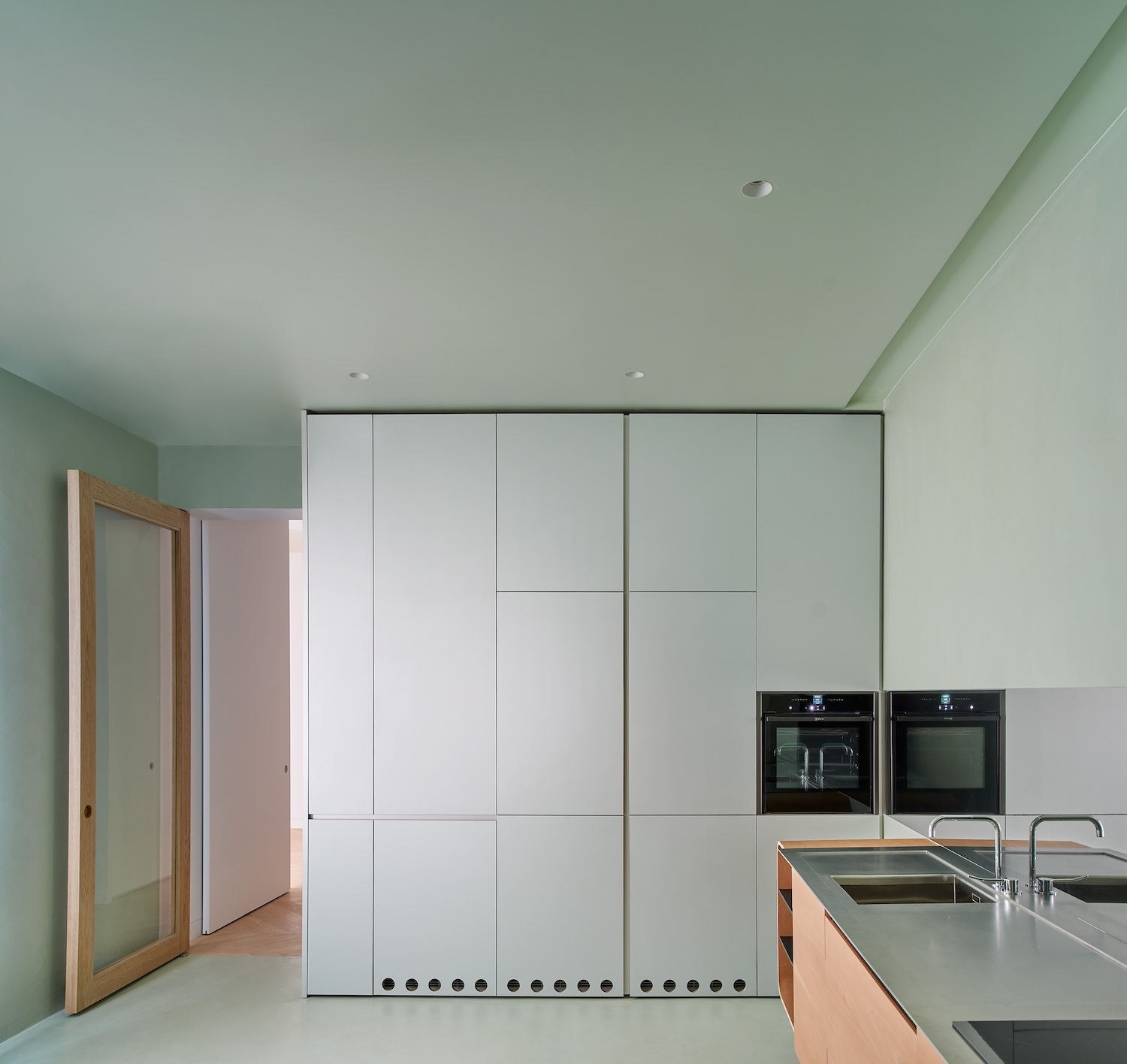
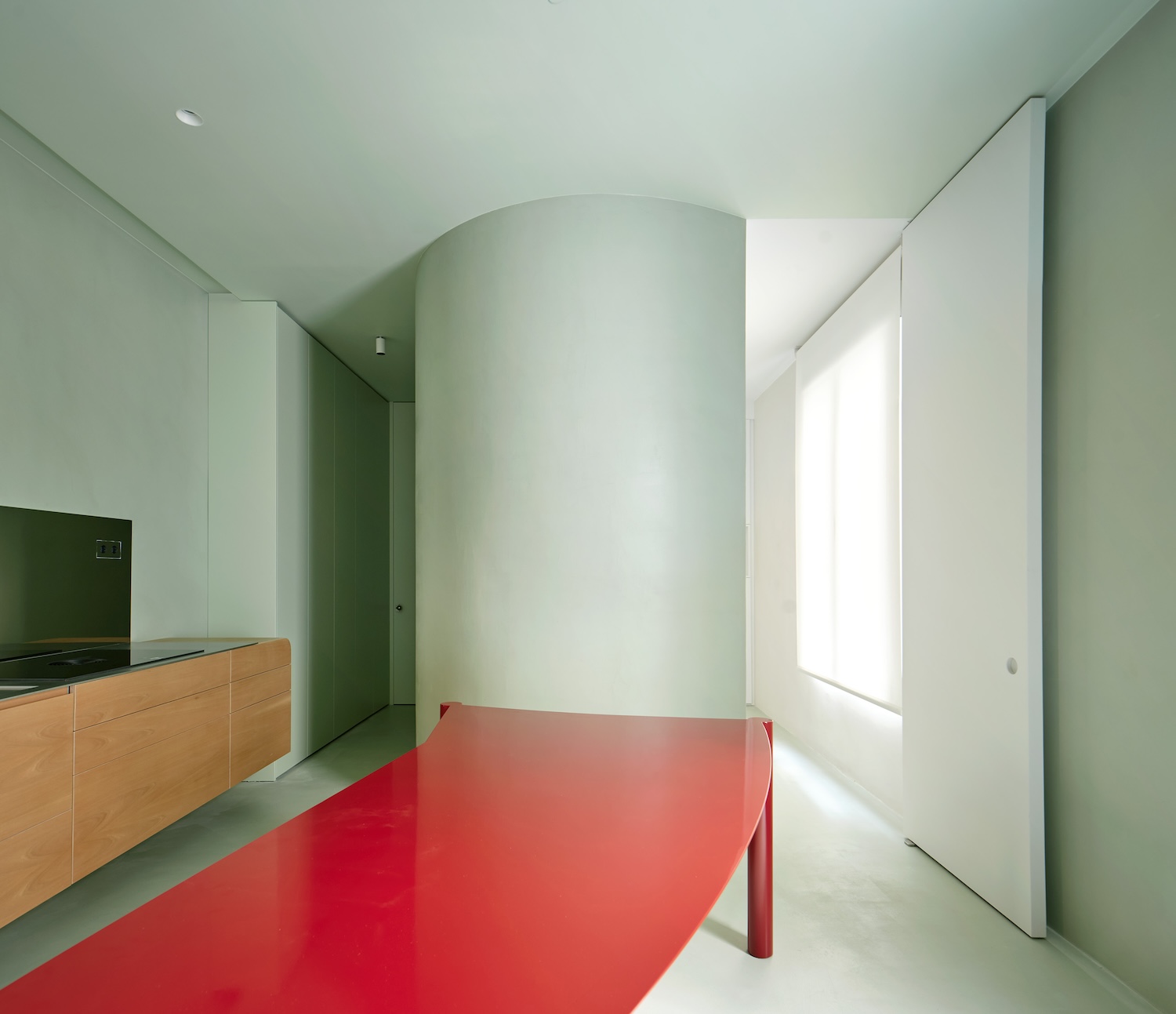
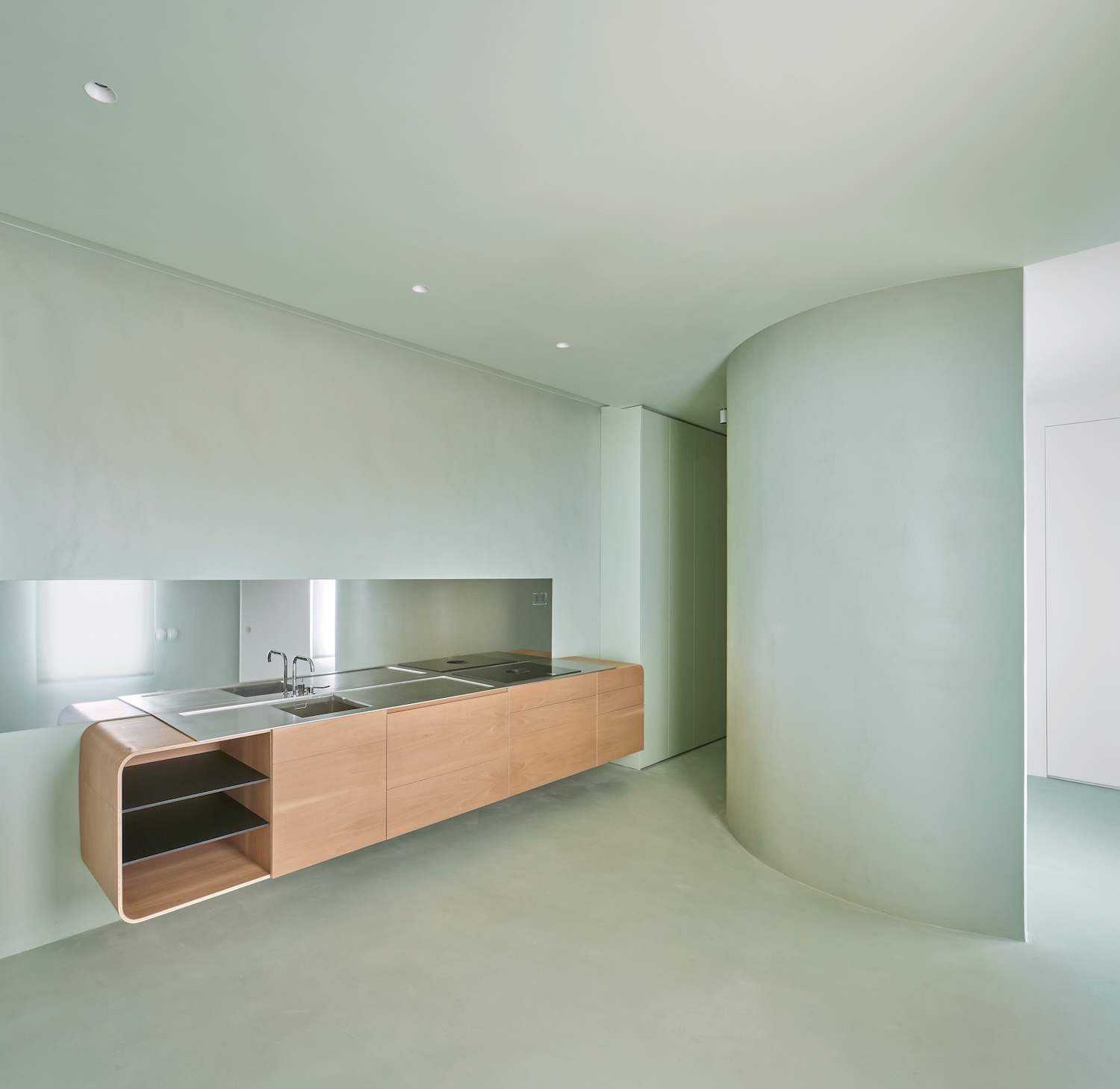
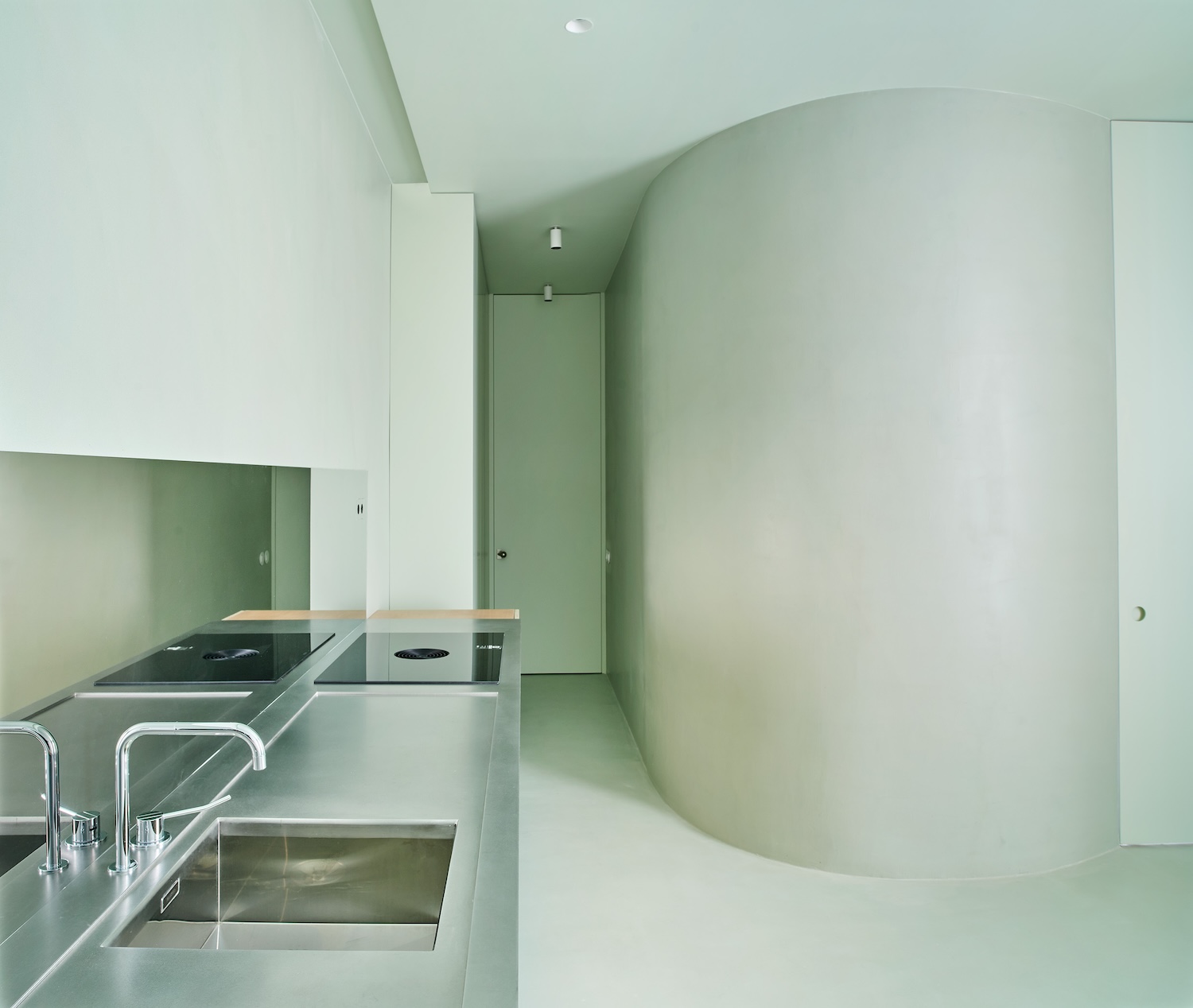
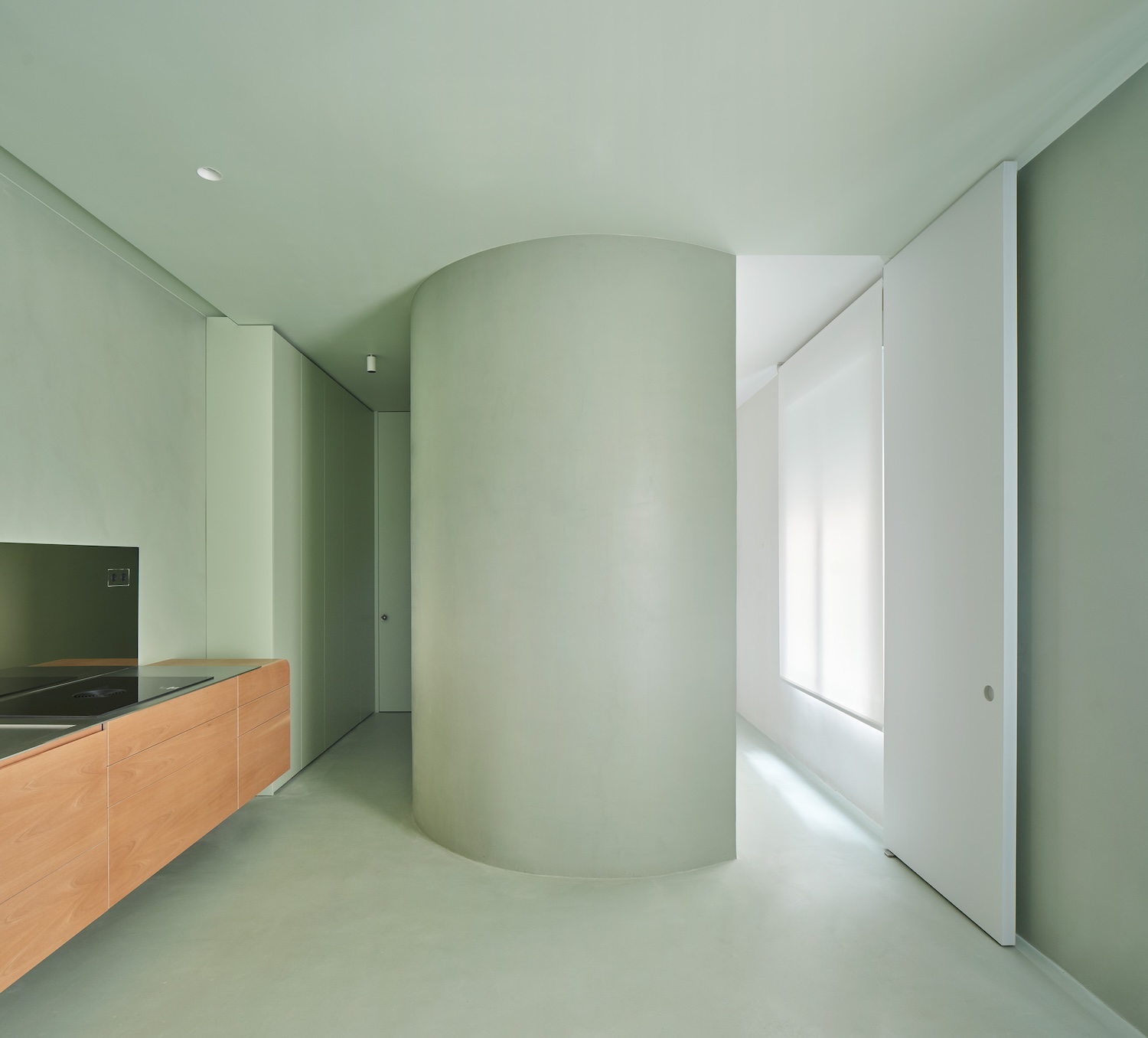
CASAMILC is a minimal home located in Madrid, Spain, designed by Lucas y Hernández-Gil. Narrow streets twist organically through centuries of history as a late eighteenth-century residential building stands as both witness and participant in the city’s architectural dialogue. Overlooking a small square adjacent to a convent, this structure embodies Madrid’s classic residential archetype—the very template that would later shape the nineteenth-century Castro expansion.
What strikes one immediately about this renovation is not merely its preservation of historic elements, but the thoughtful conversation it establishes between past and present. The architects have approached the space with reverence for its structural DNA—the brick load-bearing walls, timber framing arranged in parallel bays, and the characteristic facade with its ordered rhythm of vertical openings and wooden joinery balconies—while simultaneously introducing contemporary interventions that breathe new life into the historic shell.
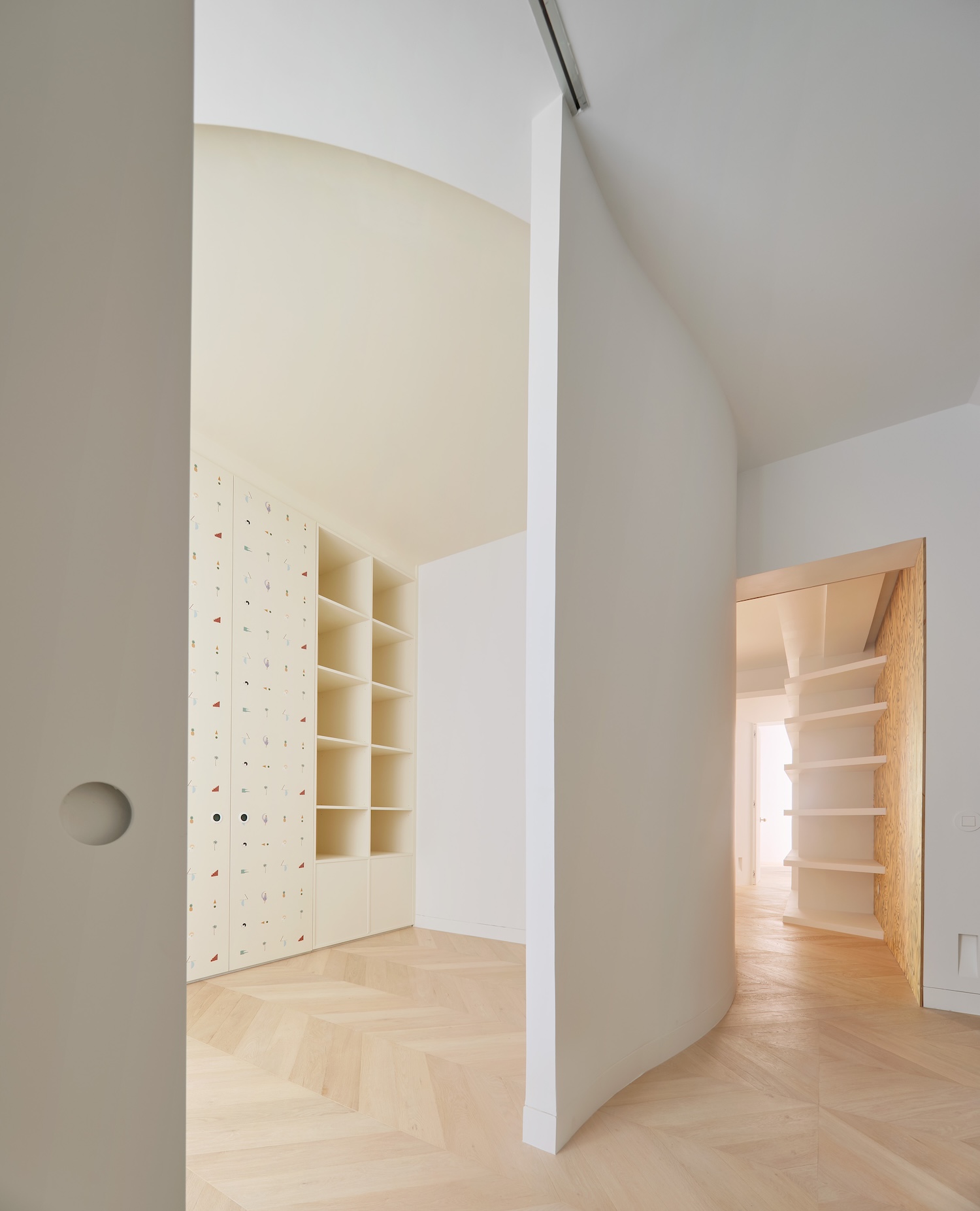
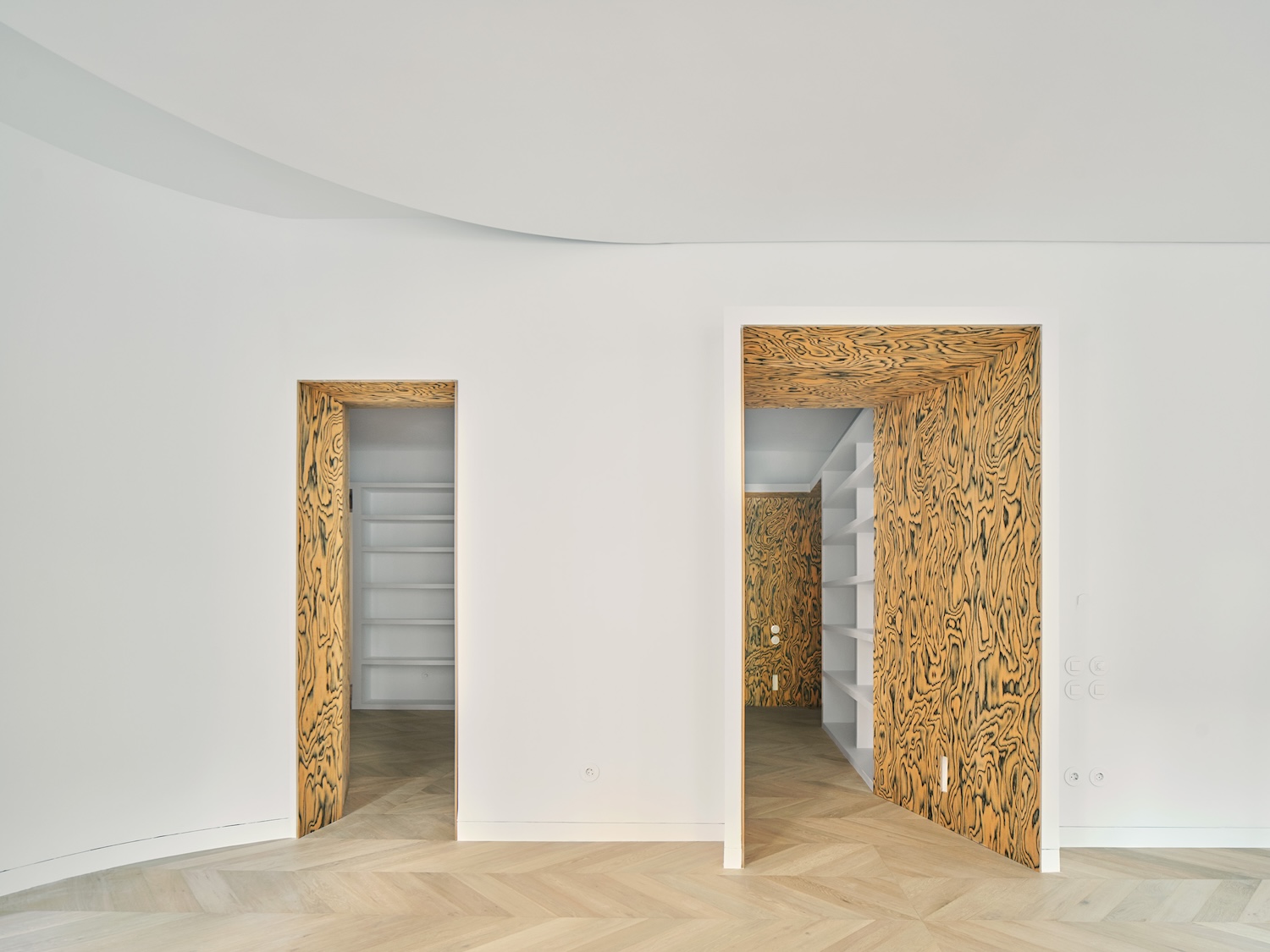
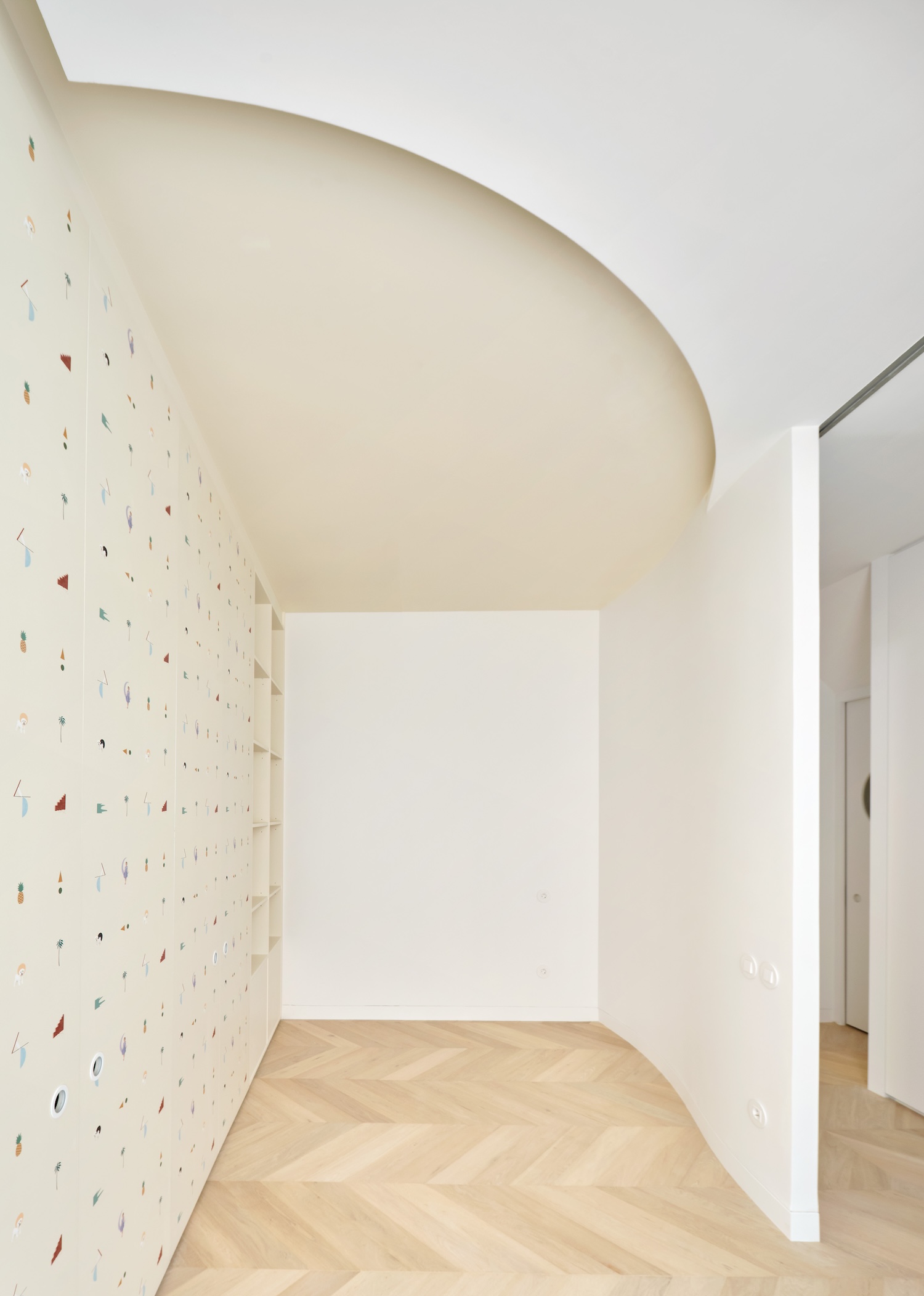
The heart of this transformation is the library, a masterful spatial pivot that greets visitors upon entry and orchestrates the flow between private and public realms. This isn’t merely a functional division but a conceptual one: the night areas retreat toward the inner courtyard’s intimate light, while day spaces engage with the street and square beyond. The library thus becomes not just a repository of books but of transitions, mediating between interior and exterior, night and day, past and present.
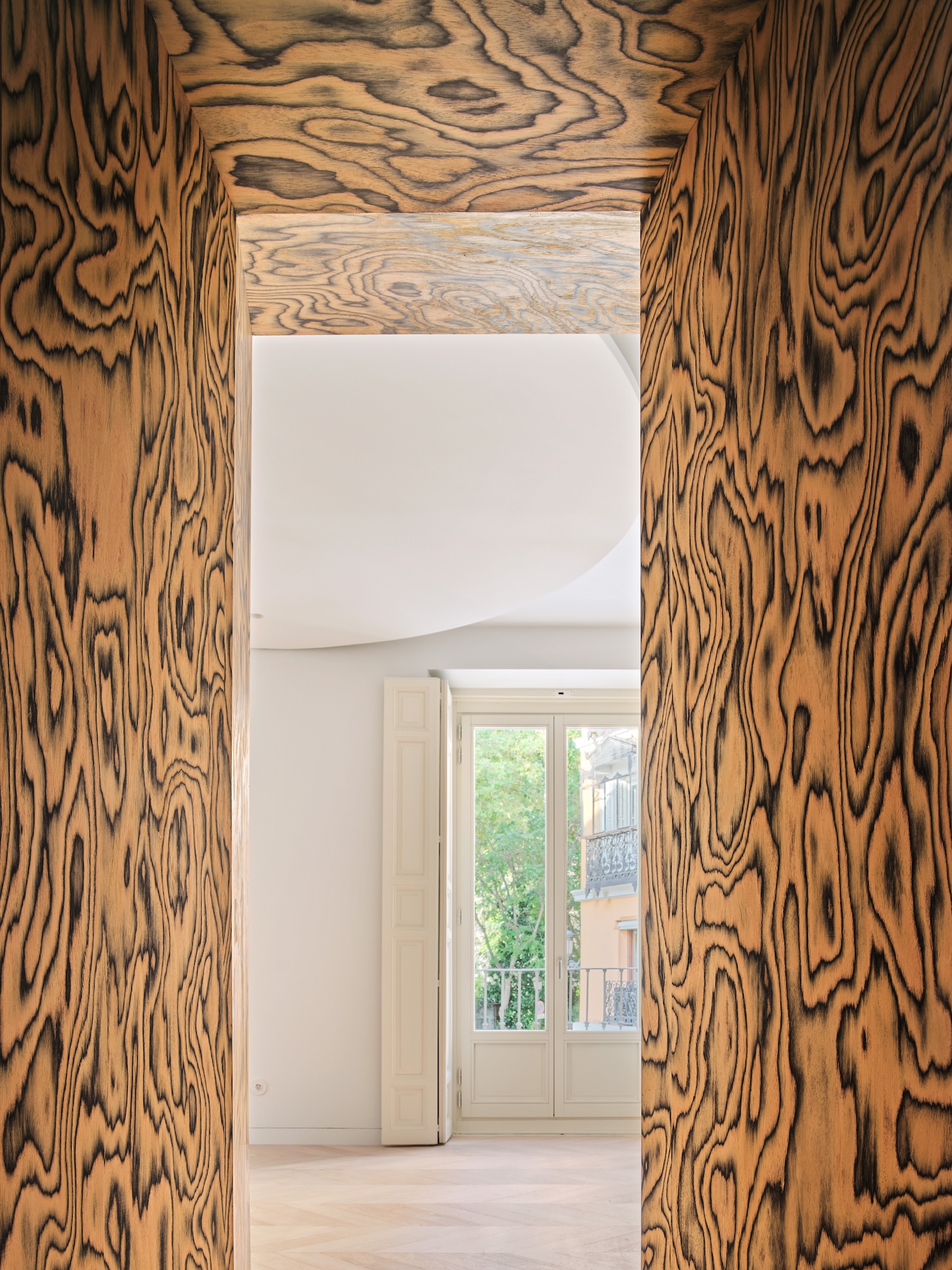
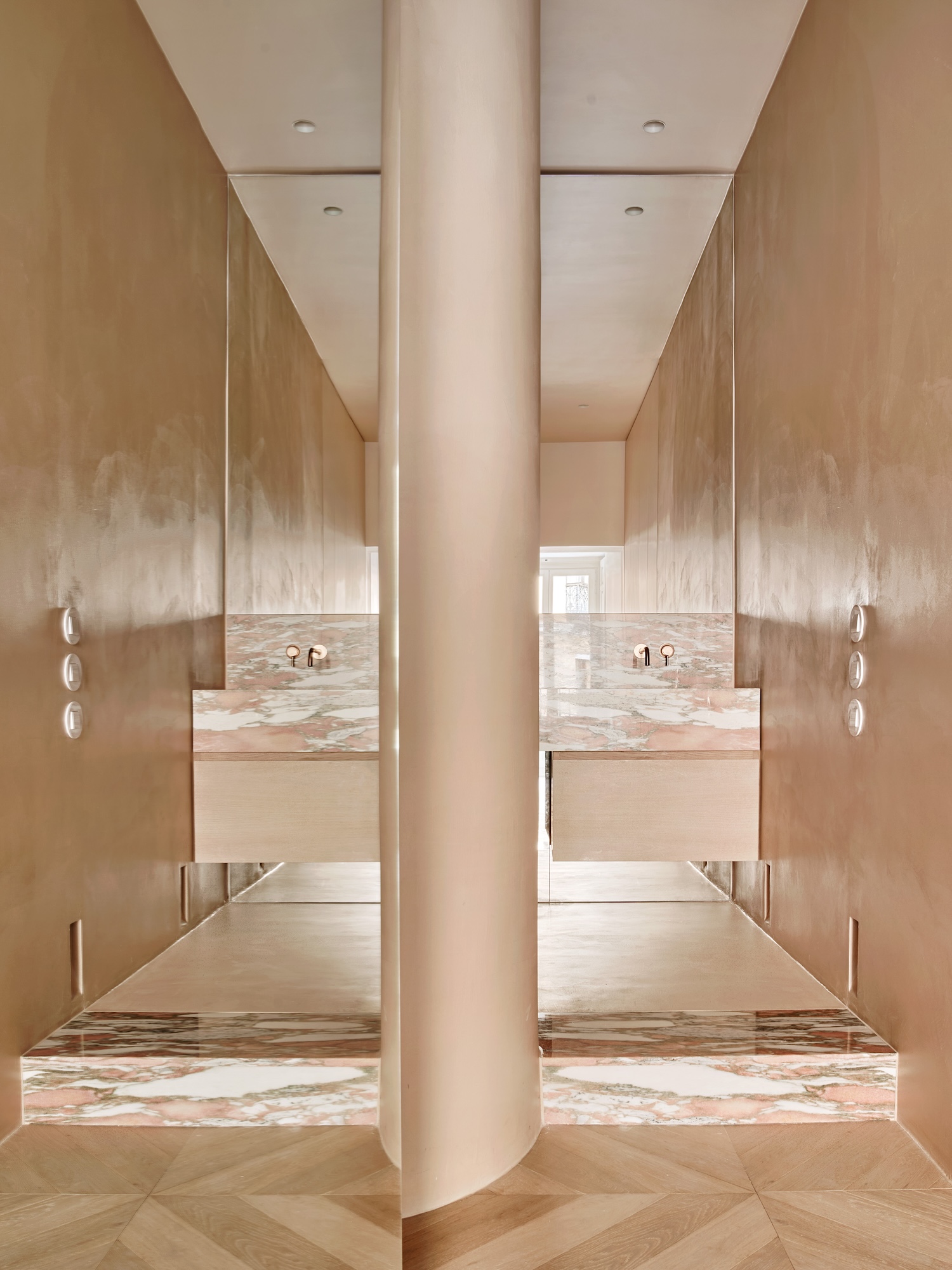
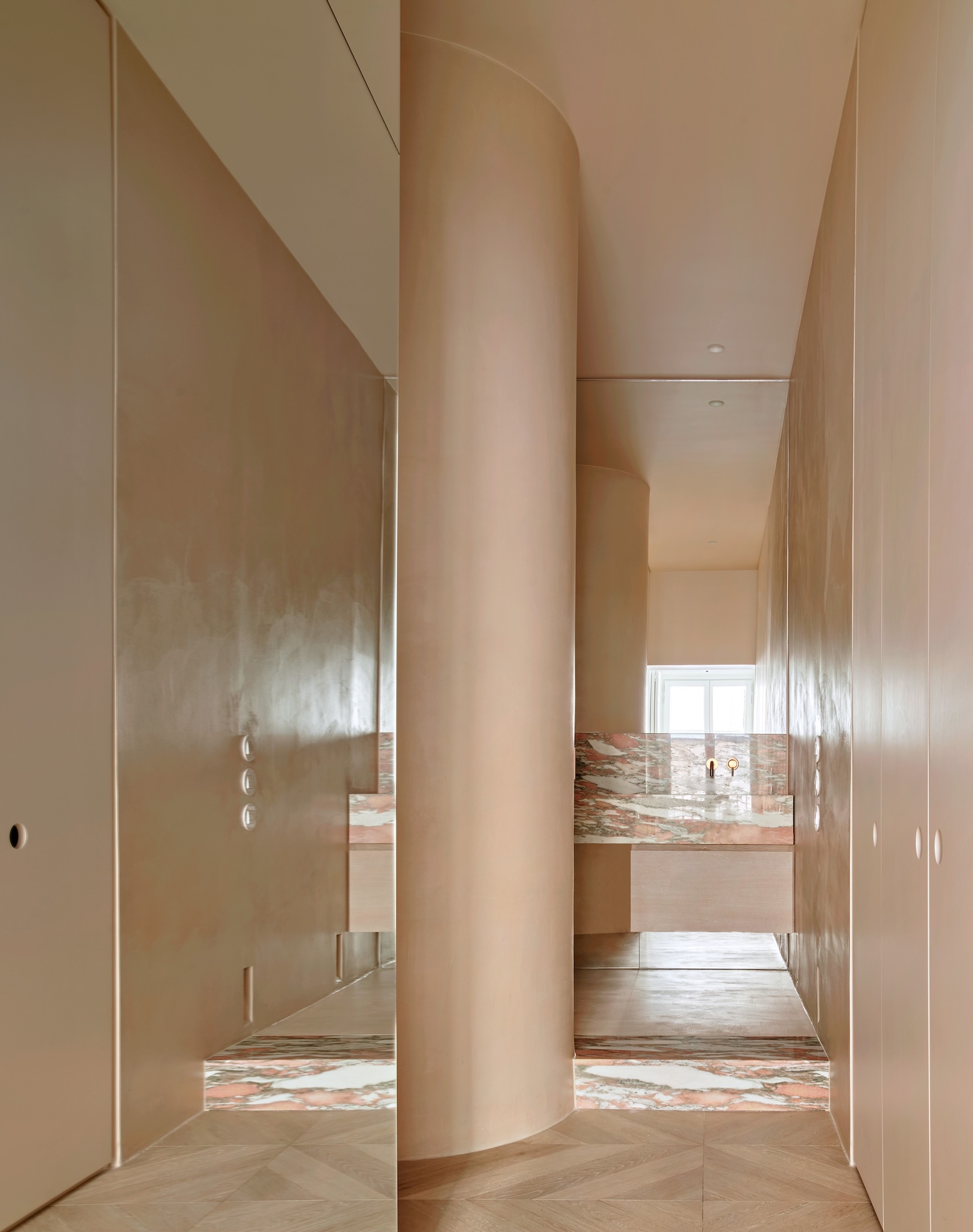
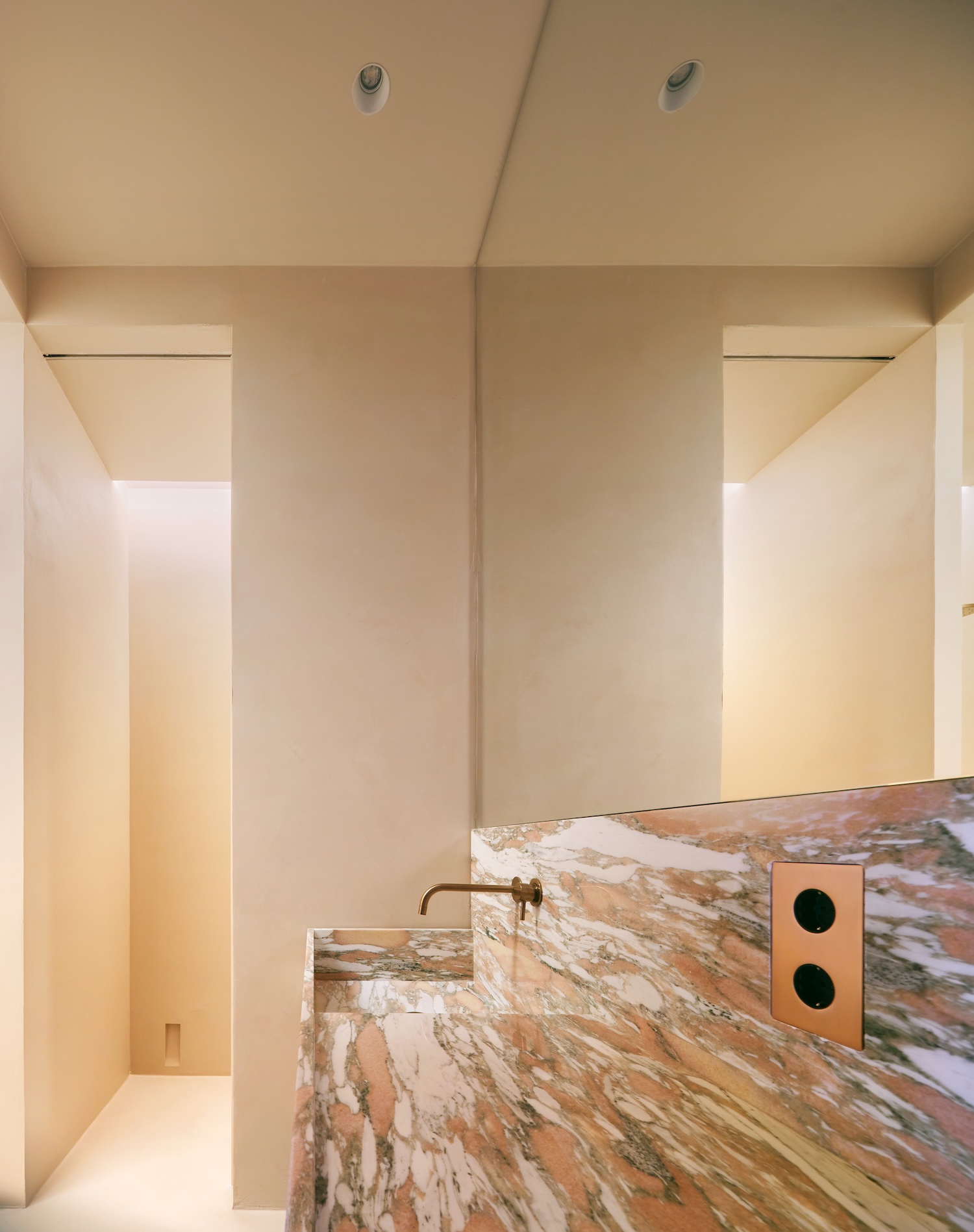
Materials play a crucial role in this dialogue. The wooden flooring and classic-inspired joinery anchor the space in tradition, while contemporary textures and patterns—particularly in the curved and folding shapes that mark transitions—introduce elements of surprise and modernity. This material conversation continues in the bathrooms and kitchen, where continuous surfaces alternate with metal details and Portuguese pink marble. The marble brings what the architects describe as a “certain classical solemnity,” deliberately juxtaposed against sharp colors and unexpected elements that energize the spaces.