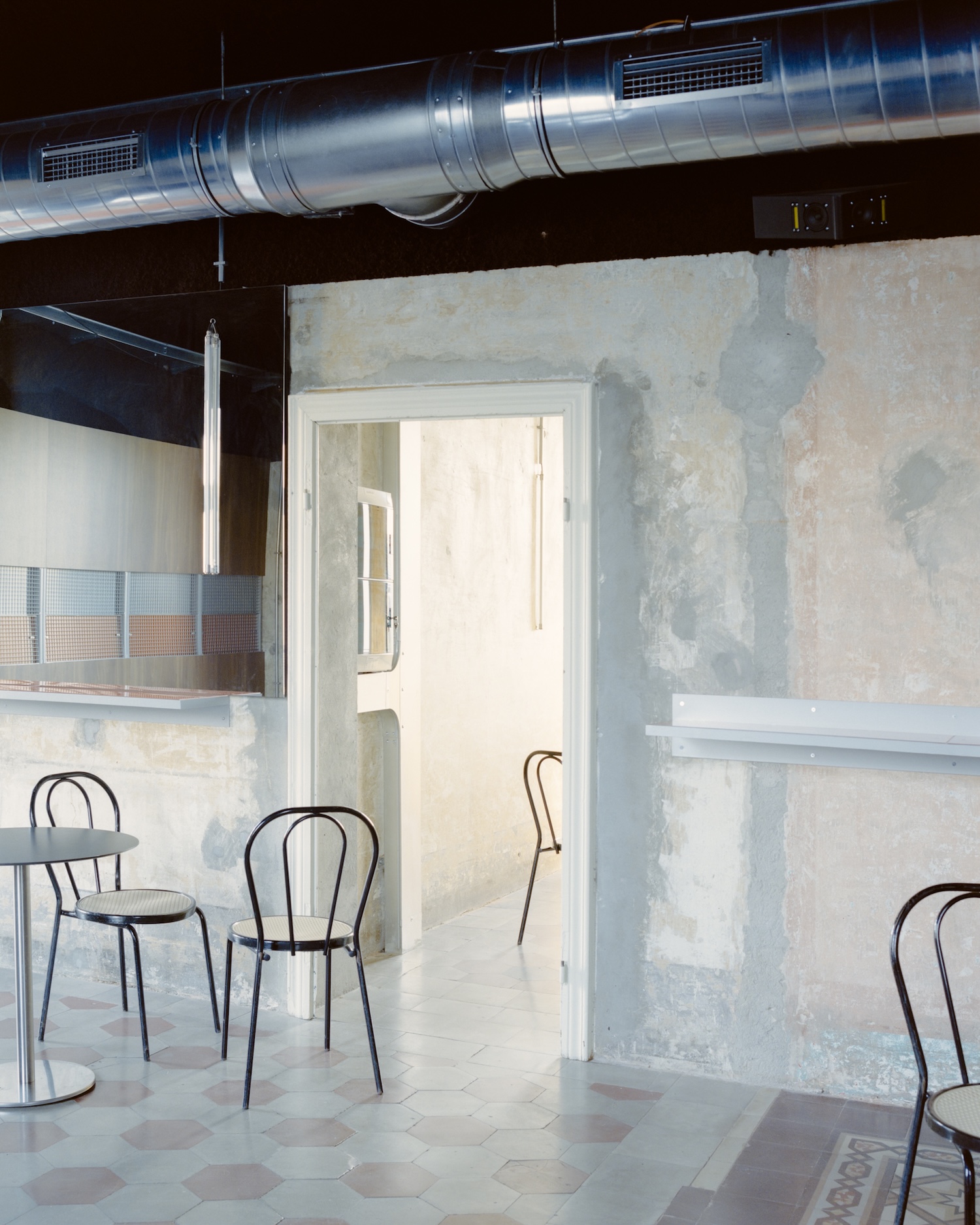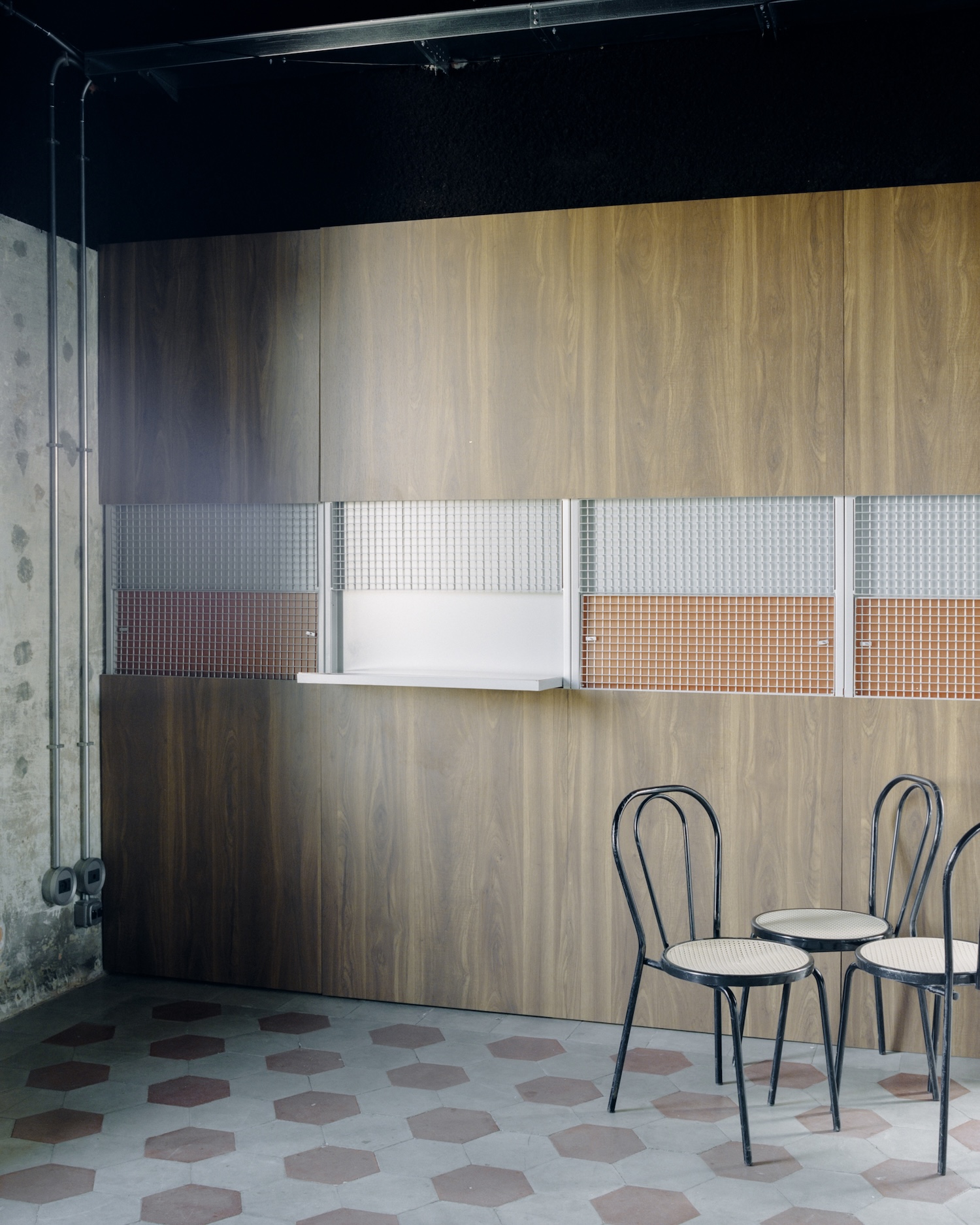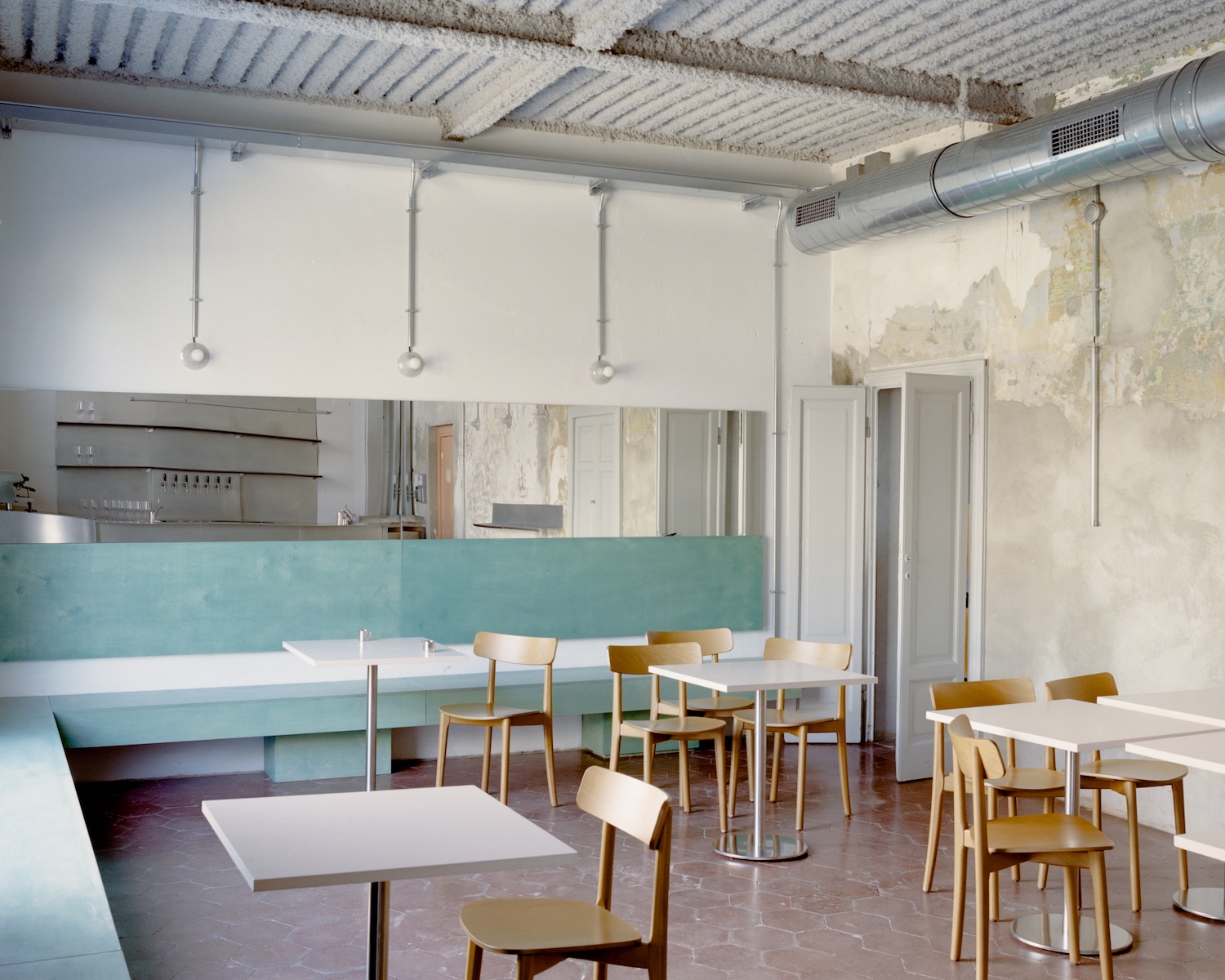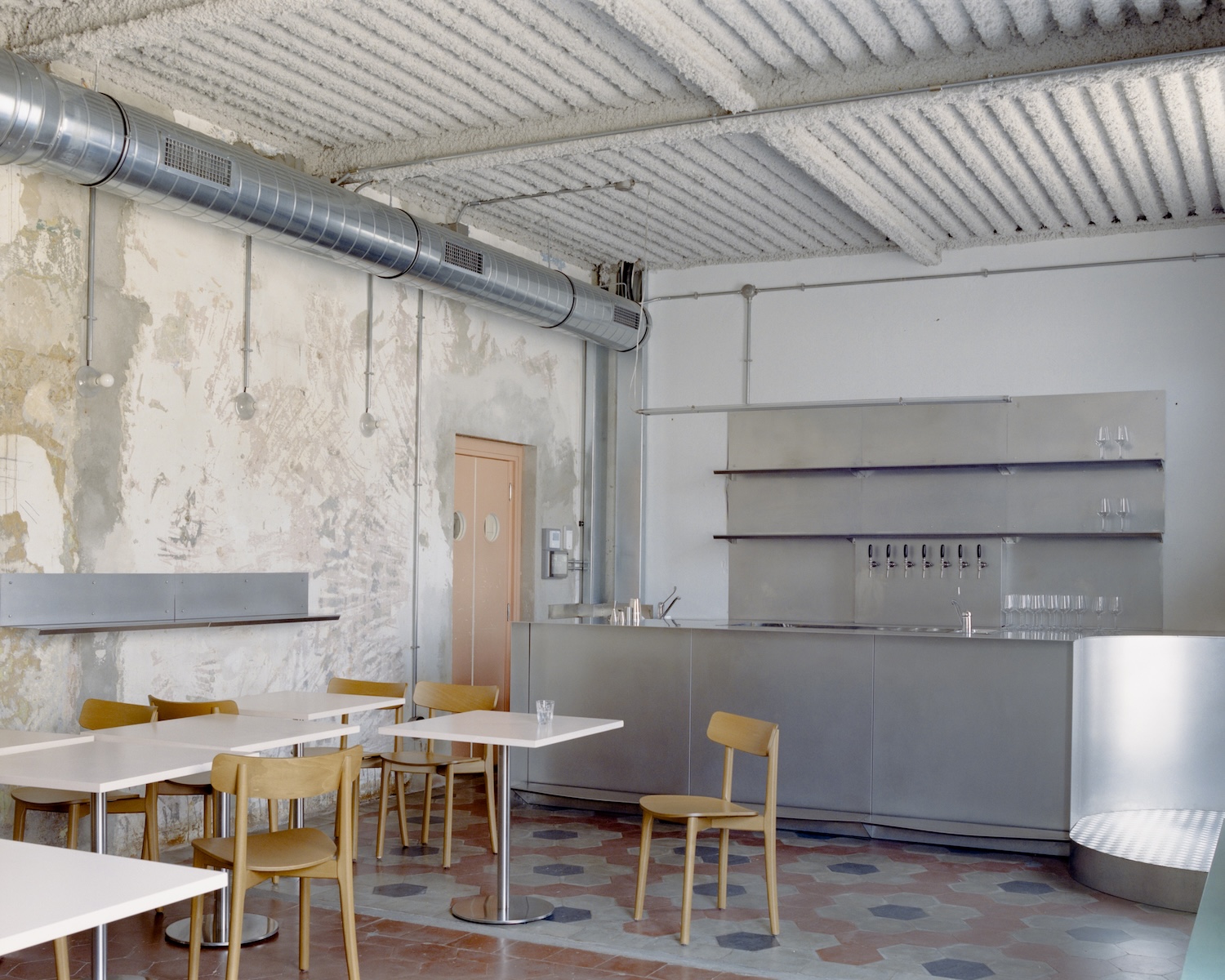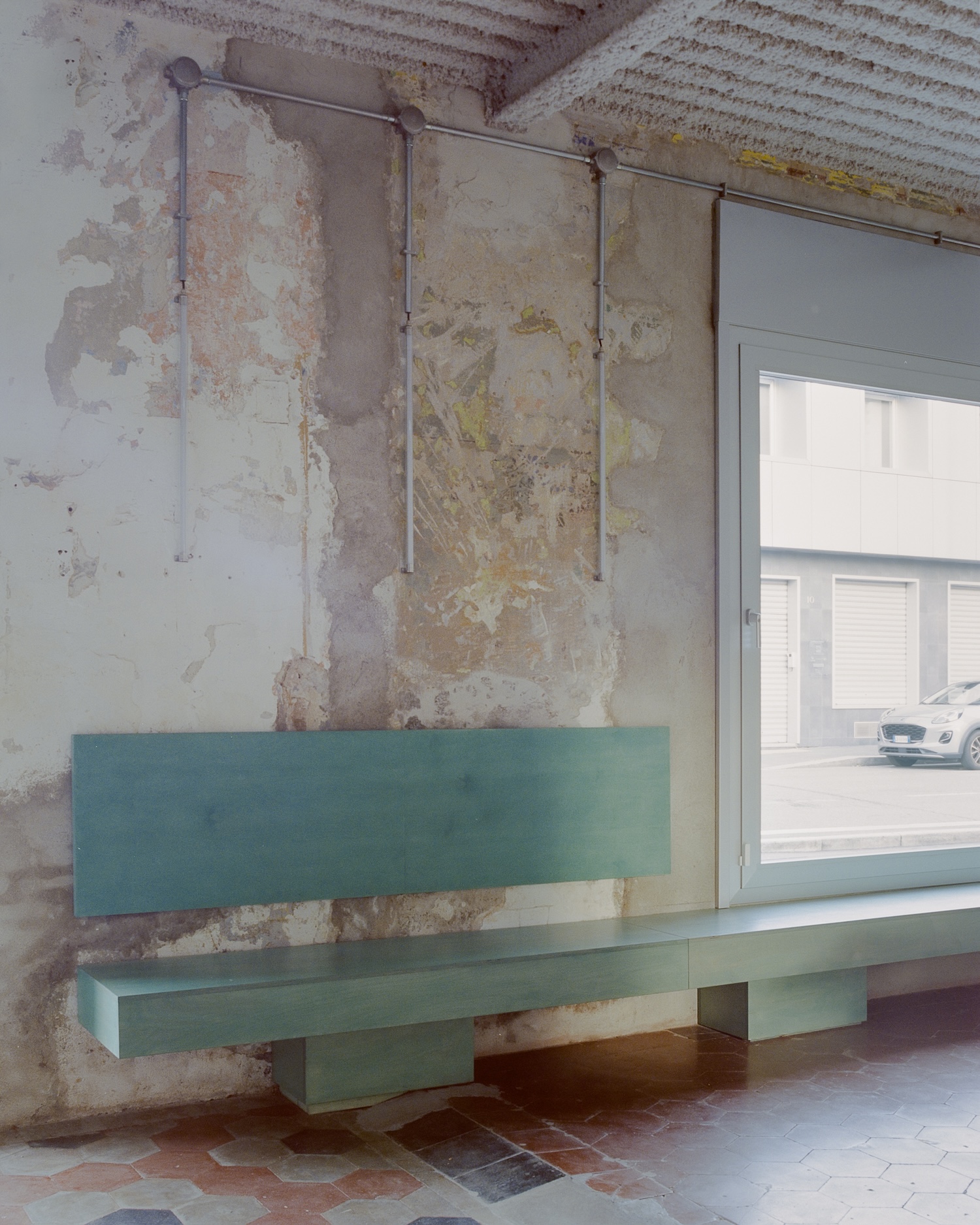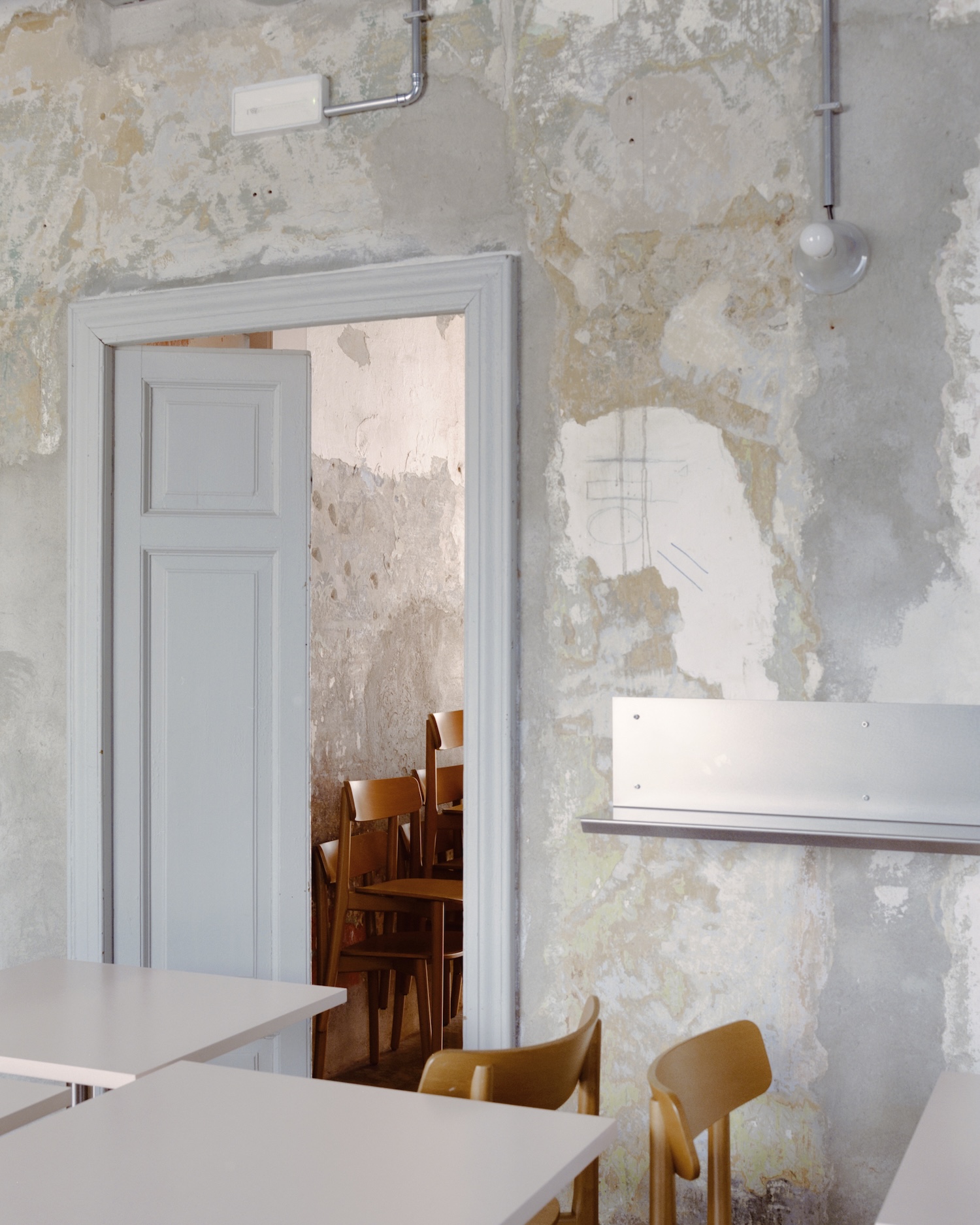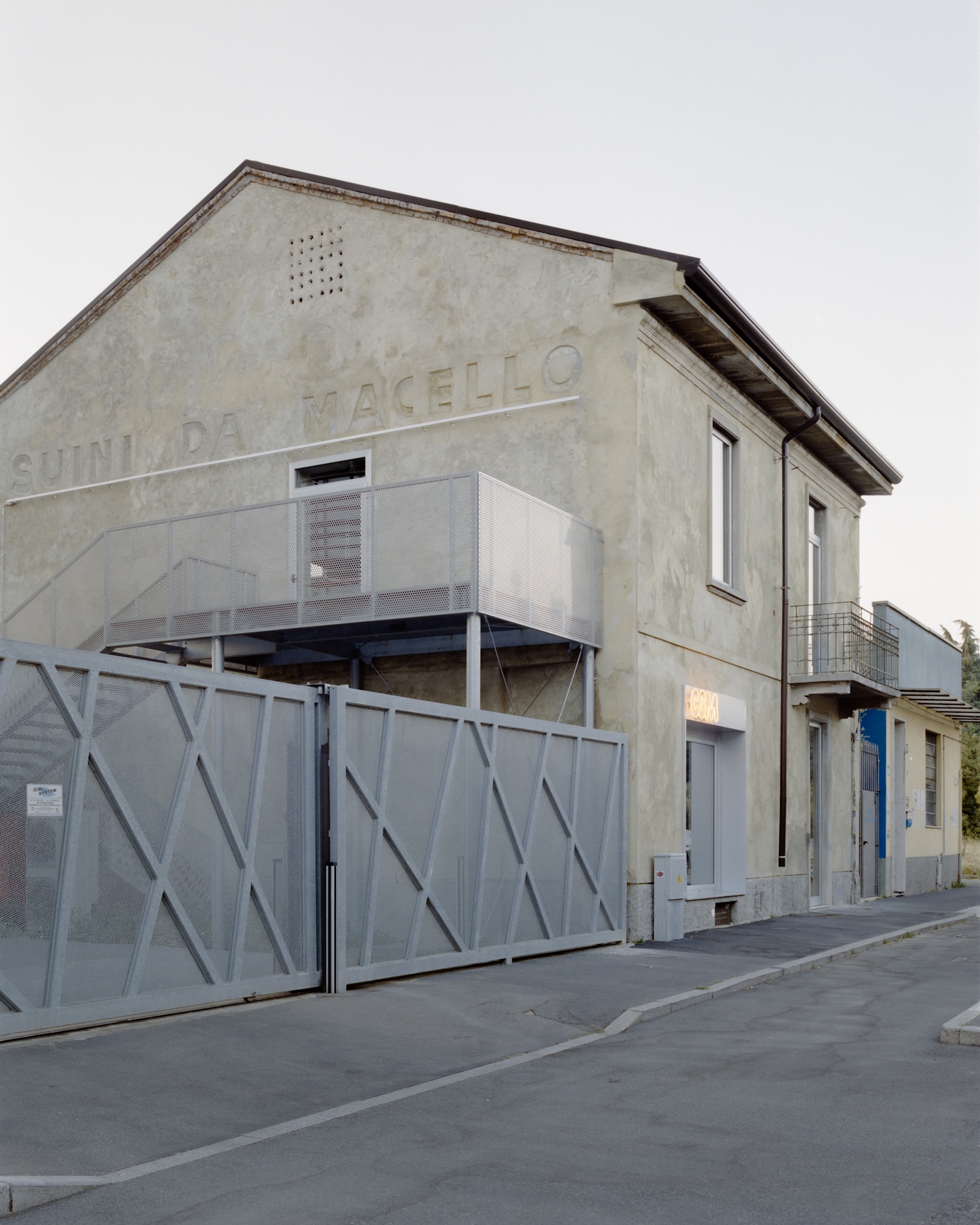
CGM Milano is a minimalist club located in Milan, Italy, designed by co.arch studio. This early 20th-century villa in the Certosa District – a northwest Milan area undergoing major regeneration promoted by RealStep and now Milan’s most vibrant gastronomic hub – has served many functions over time: a slaughterhouse, a squat, and a forgotten fragment of the city. Today it is Club Giovanile Milano, a space that brings together dining, a listening bar, and live music through a project that preserves the historic character while highlighting it through openly contemporary interventions.
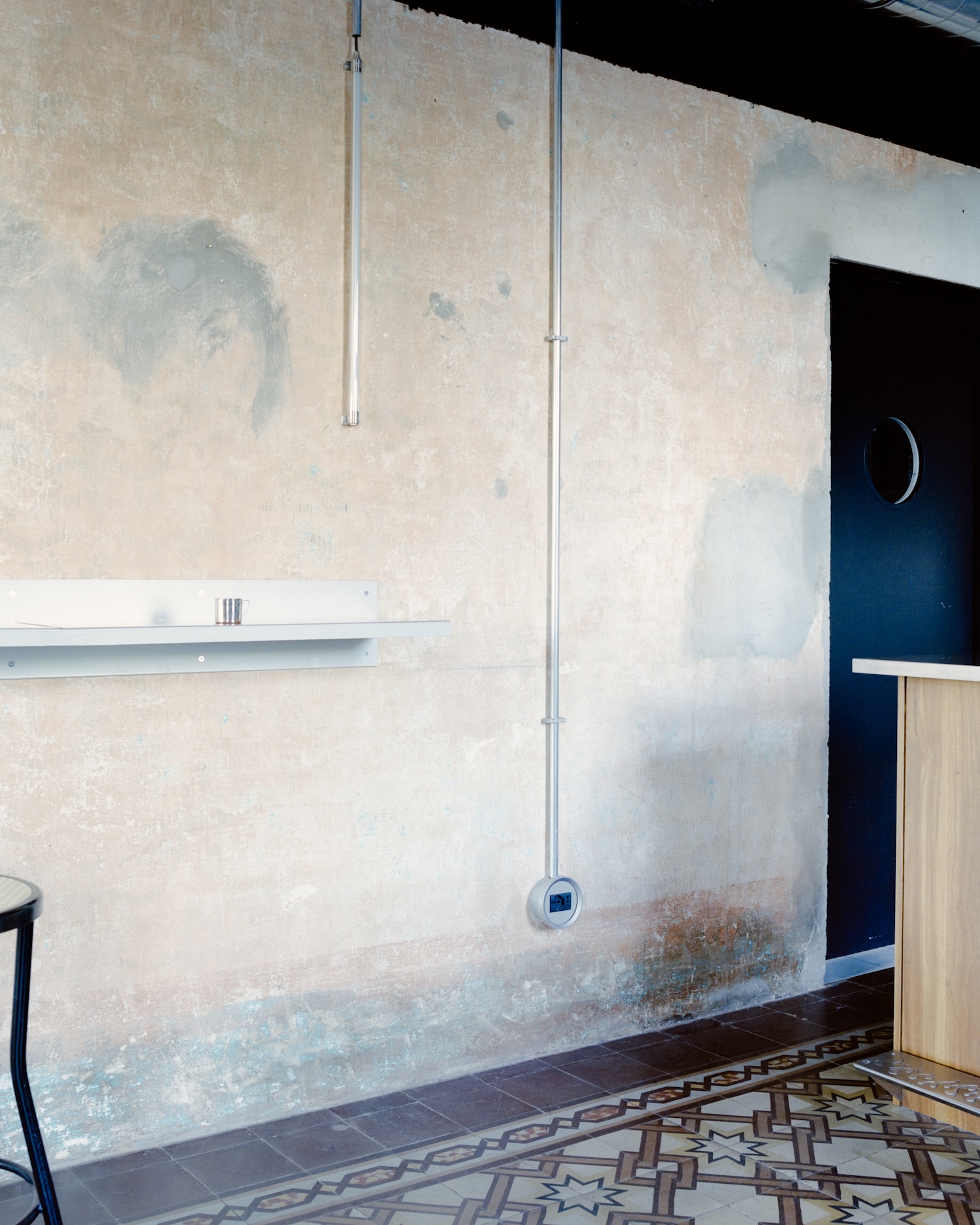
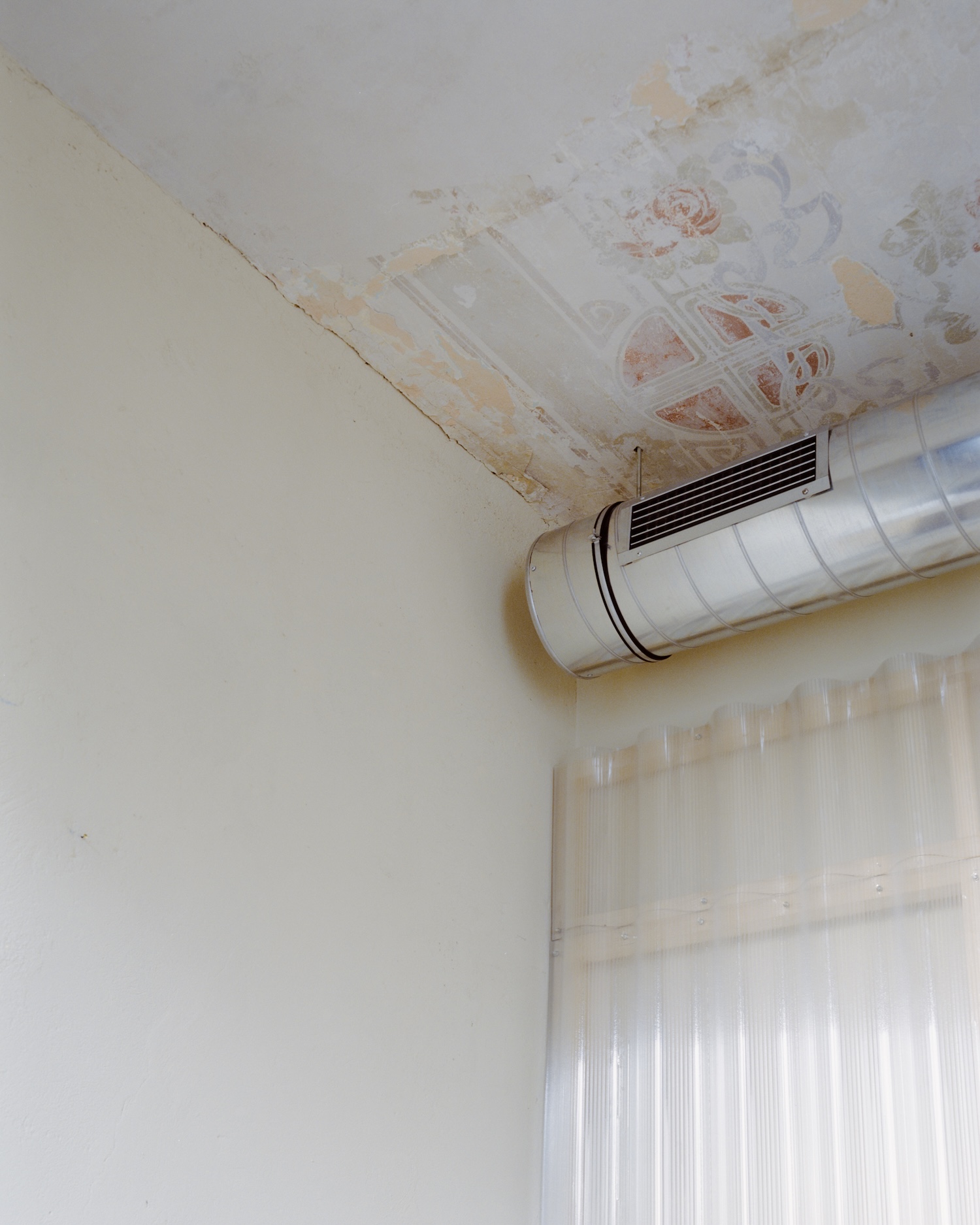
The original materials including cement tiles, stuccoes, and period lettering were carefully restored. Yet the building systems, deliberately left exposed, cut across ceilings and walls like metallic veins, evoking an industrial, Dadaist, and cyberpunk aesthetic. The references range from Terry Gilliam’s Brazil to Akira to retro-futuristic dystopias and visionary imaginaries, demonstrating how architectural renovation can embrace multiple cultural influences to create a layered spatial narrative beyond a single historical period or design movement.
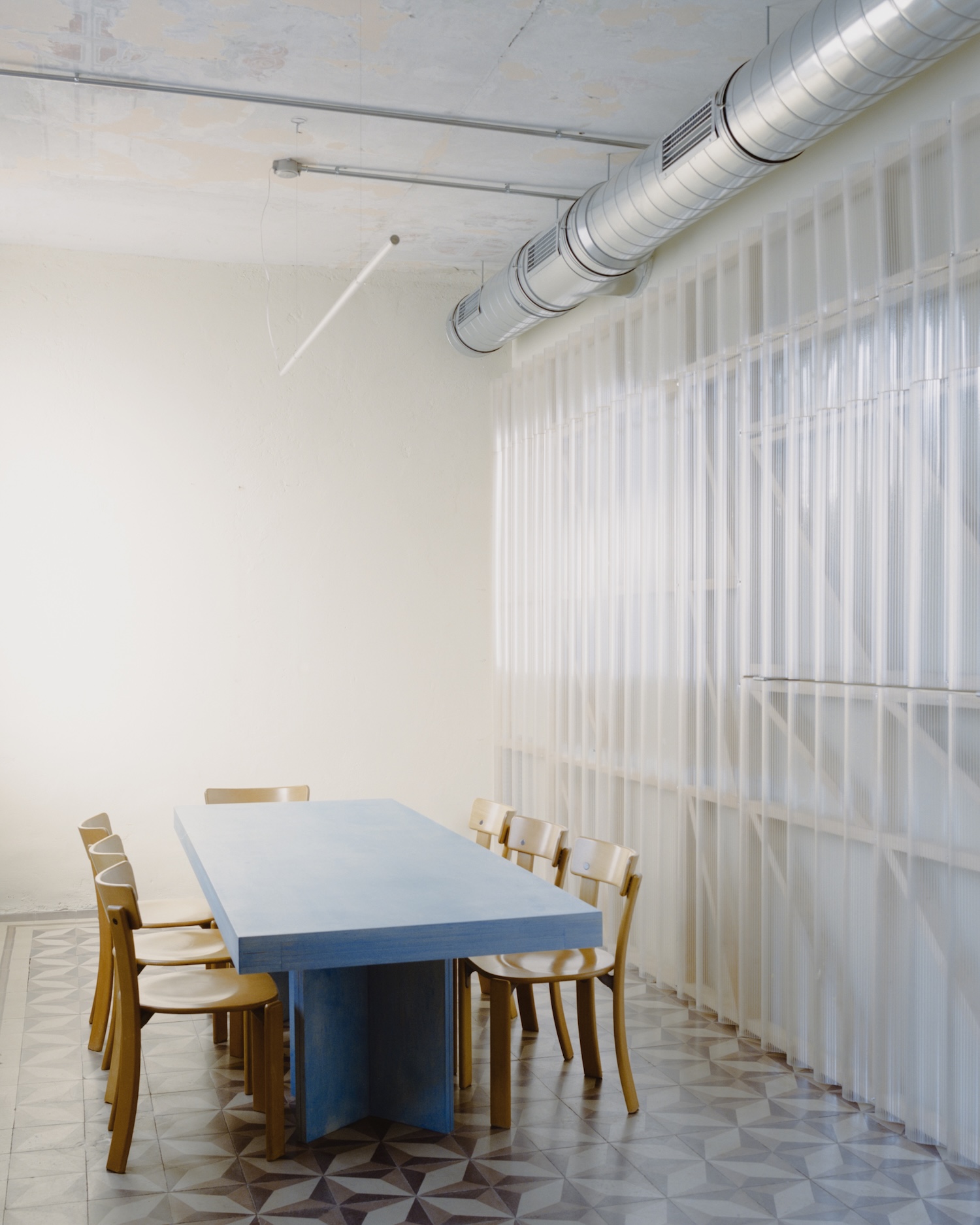
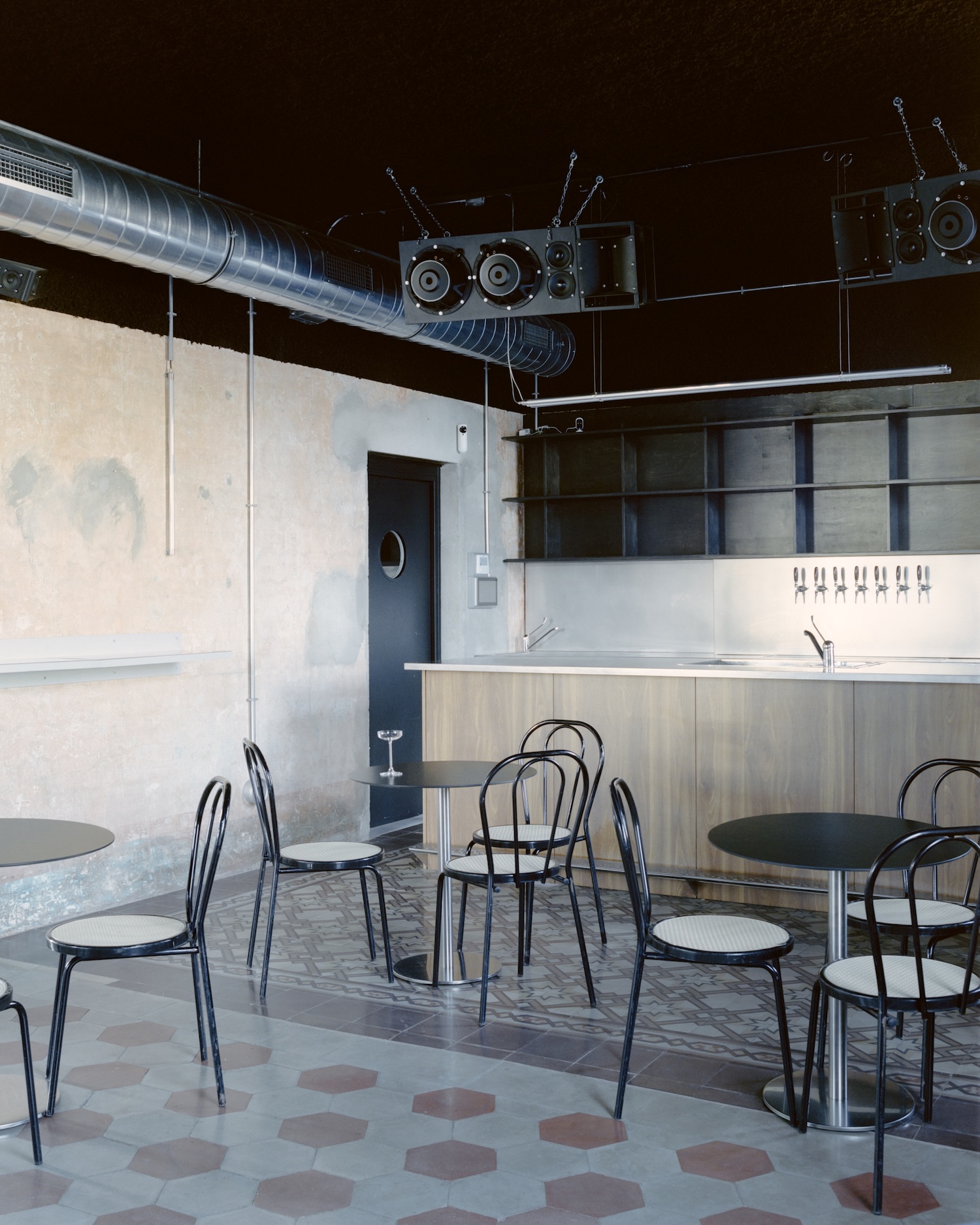
The Genuit exposed steel ducts become more than a technical solution – they are a design device capable of layering the narrative and adding a new skin to the walls. The metal reflects, interrupts, and converses with the irregular surfaces, underlining the temporal gap between past and present. This approach demonstrates how mechanical systems that are typically concealed can become expressive architectural elements when strategic exposure reveals their formal and spatial qualities rather than treating infrastructure as a necessary but visually problematic building component.
Inside, two large halls host live music and dedicated listening sessions. The acoustics, fine-tuned by Labirinti Acustici, intertwine with interiors designed by Ots – Off the Shelf, balancing technical precision with creative freedom. By day it functions as a restaurant and listening bar, while by night it transforms into an urban stage. This demonstrates flexible programming where a single space serves varied functions through lighting, sound system, and furniture reconfiguration appropriate for hospitality venues requiring financial viability through diverse revenue streams.