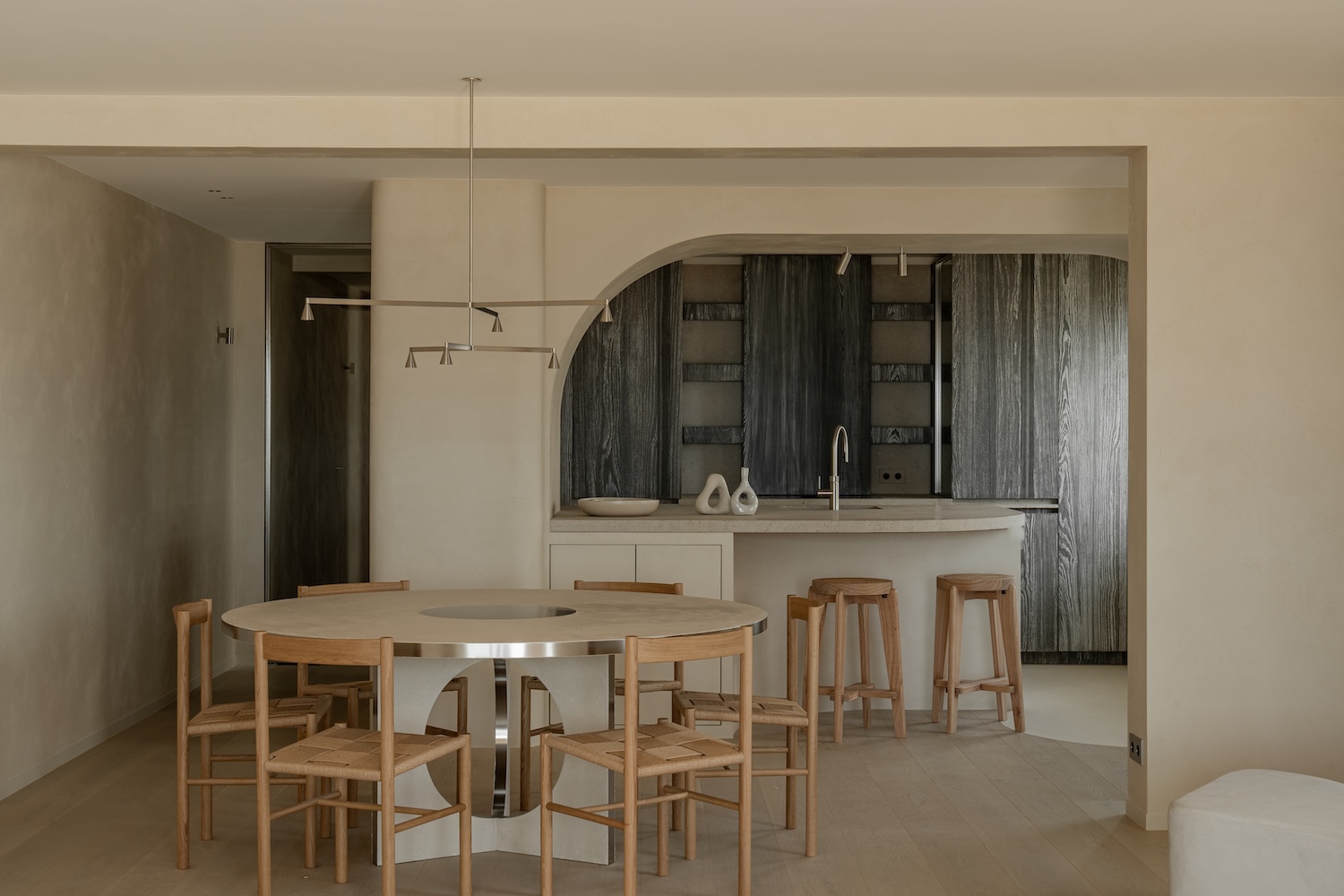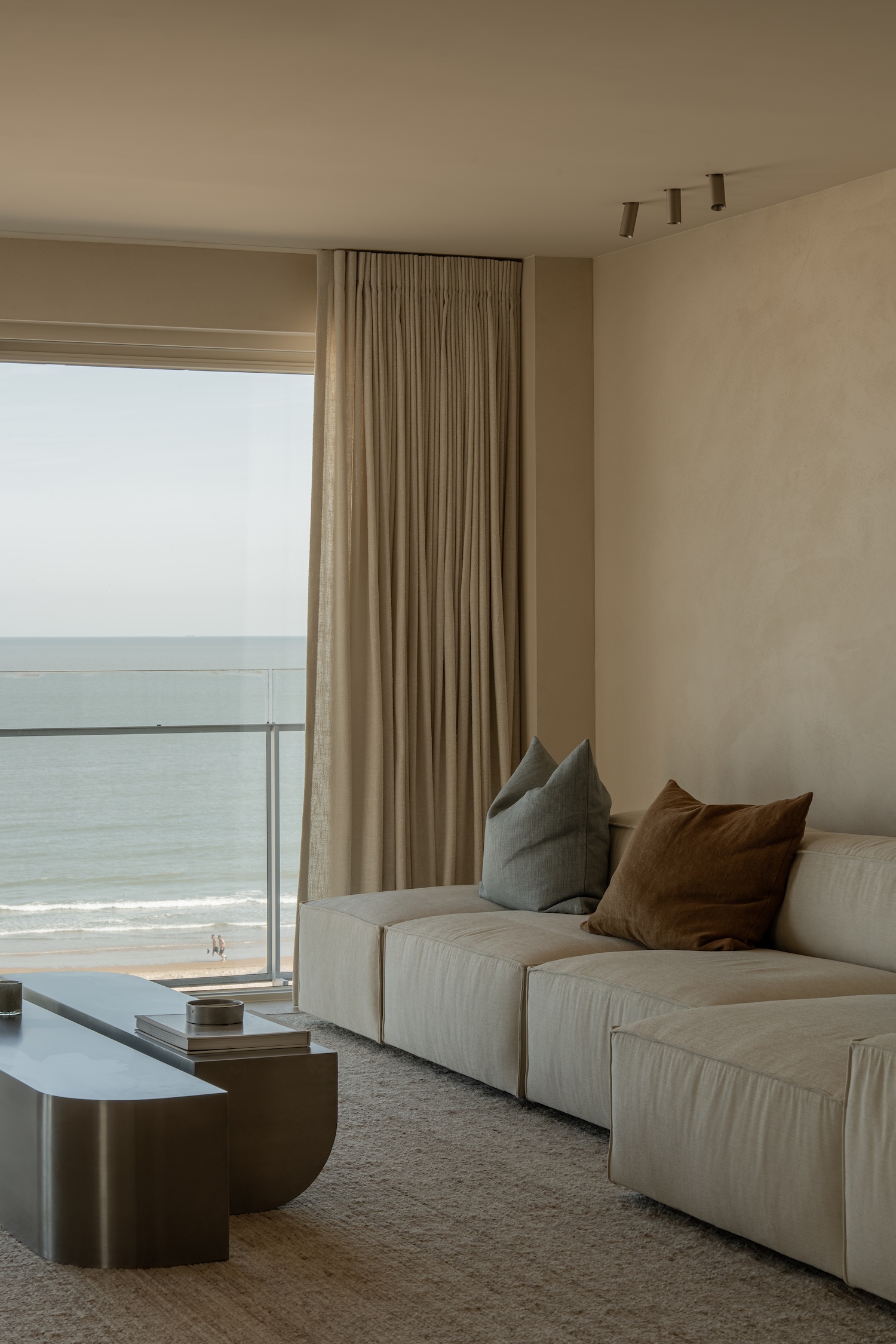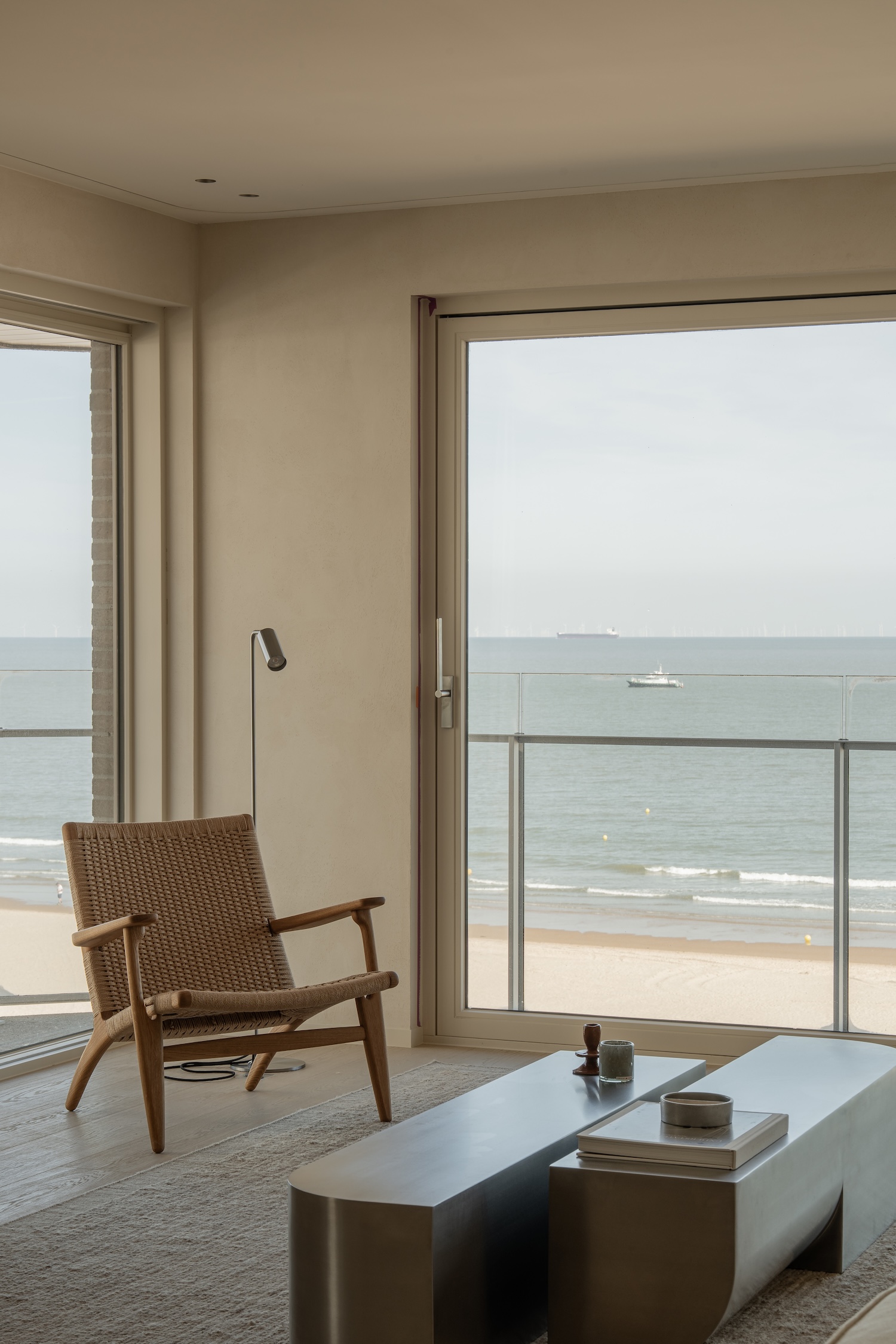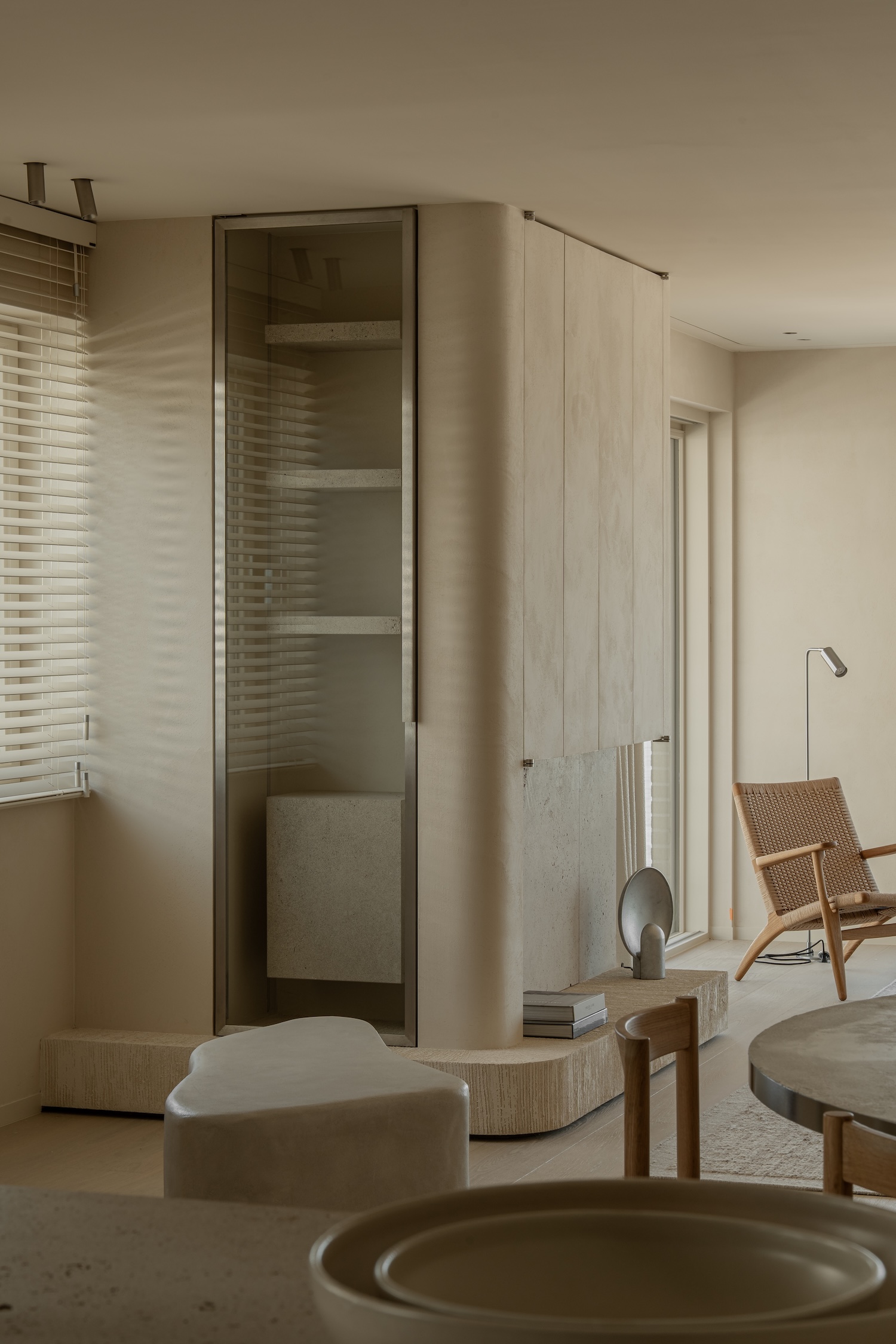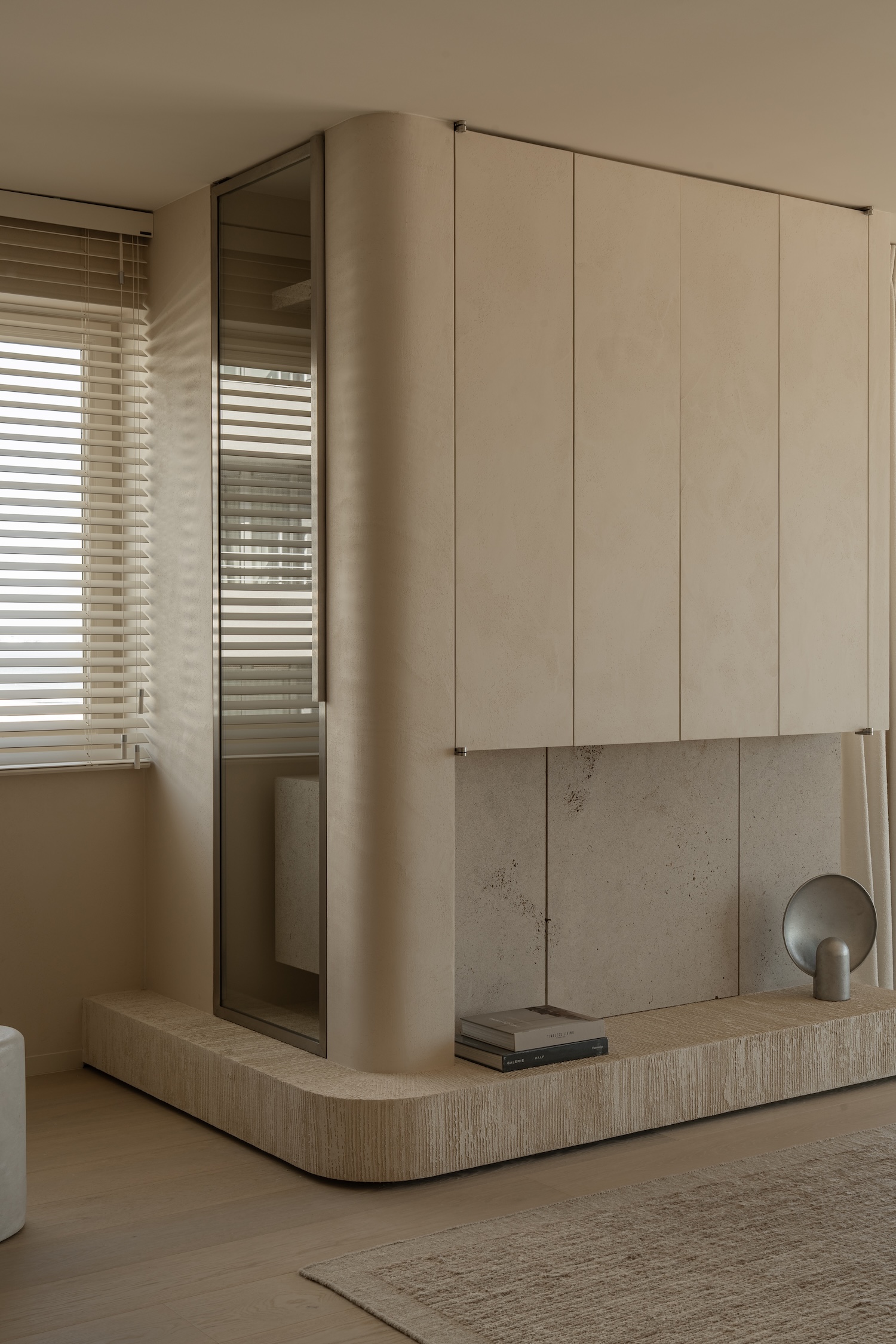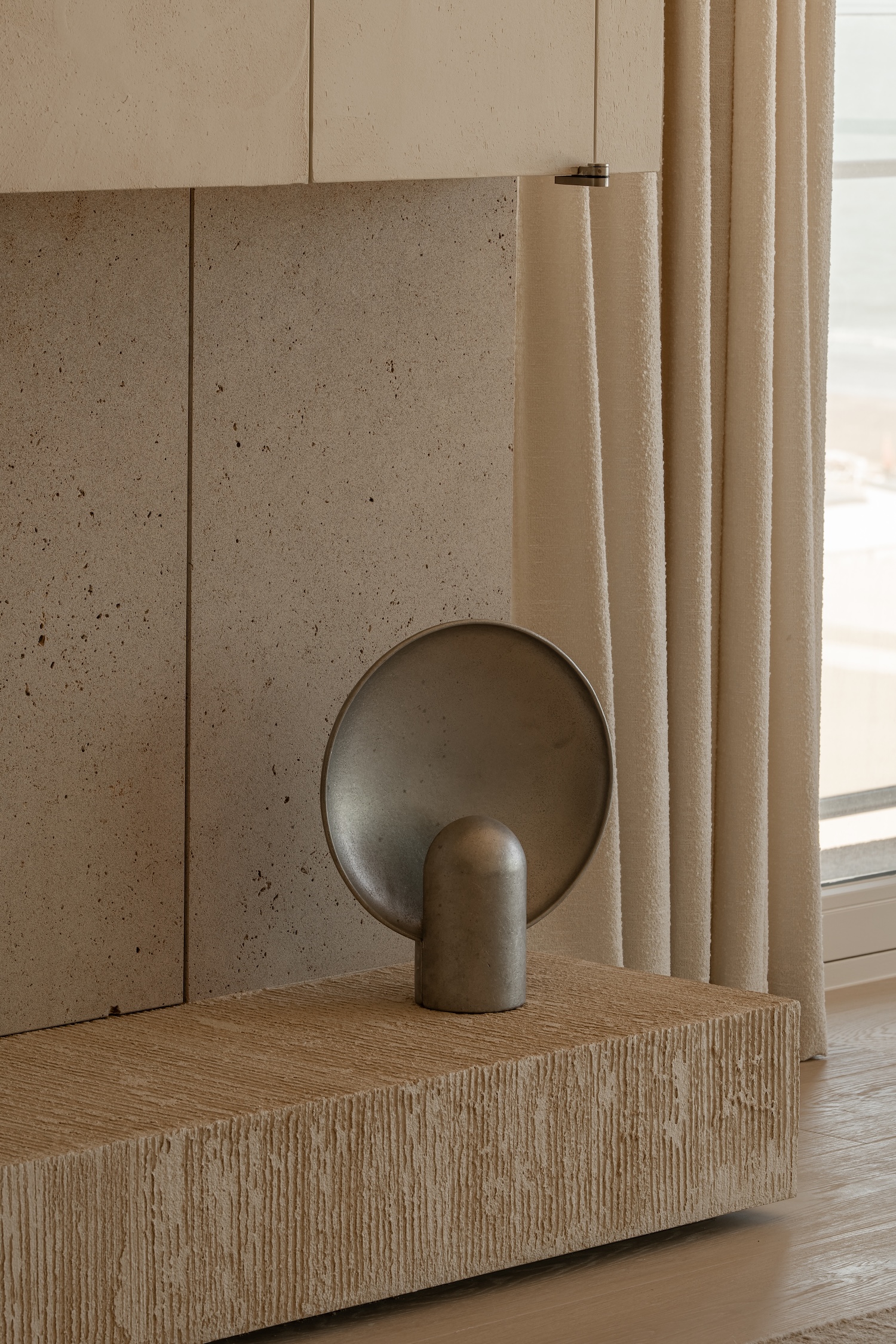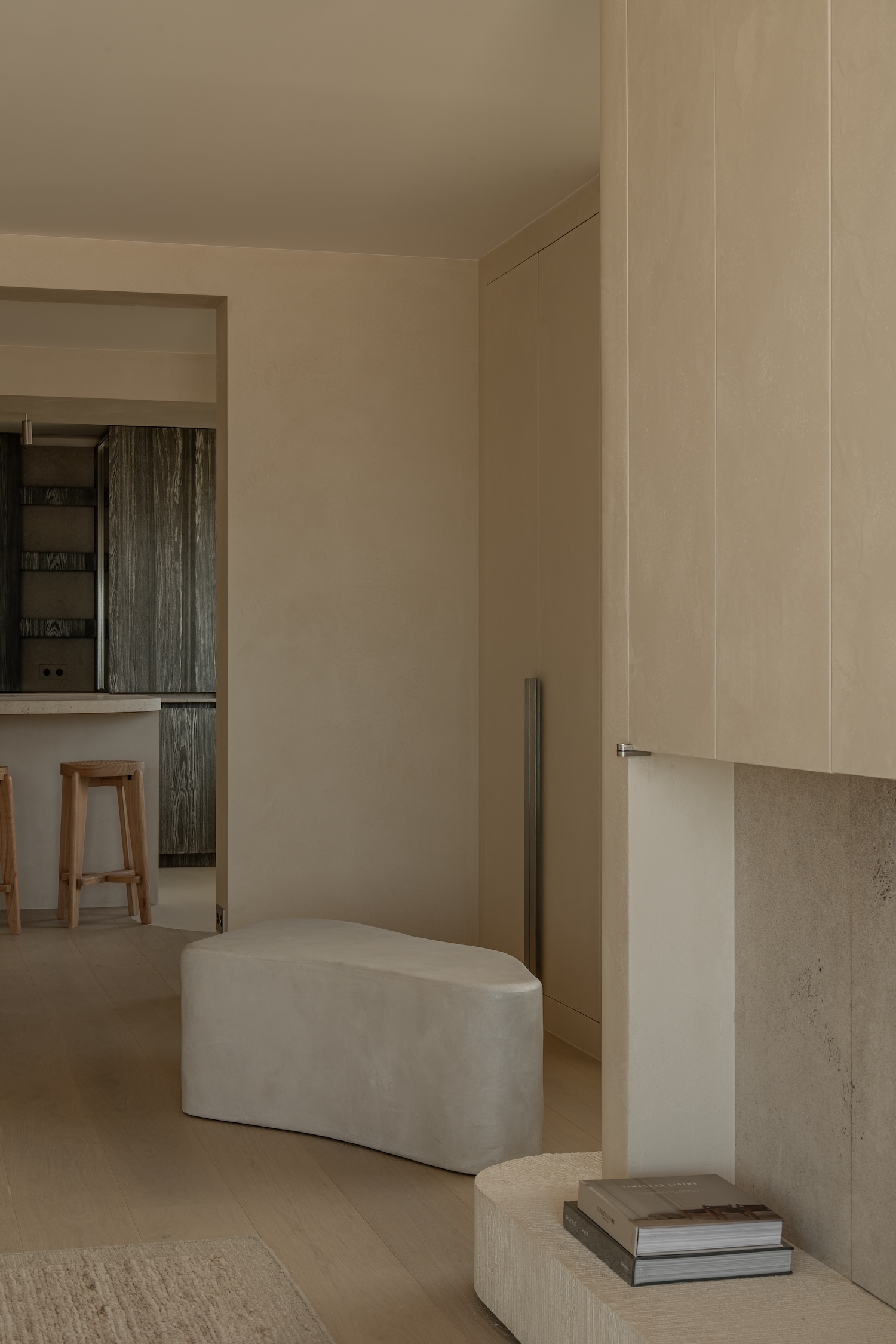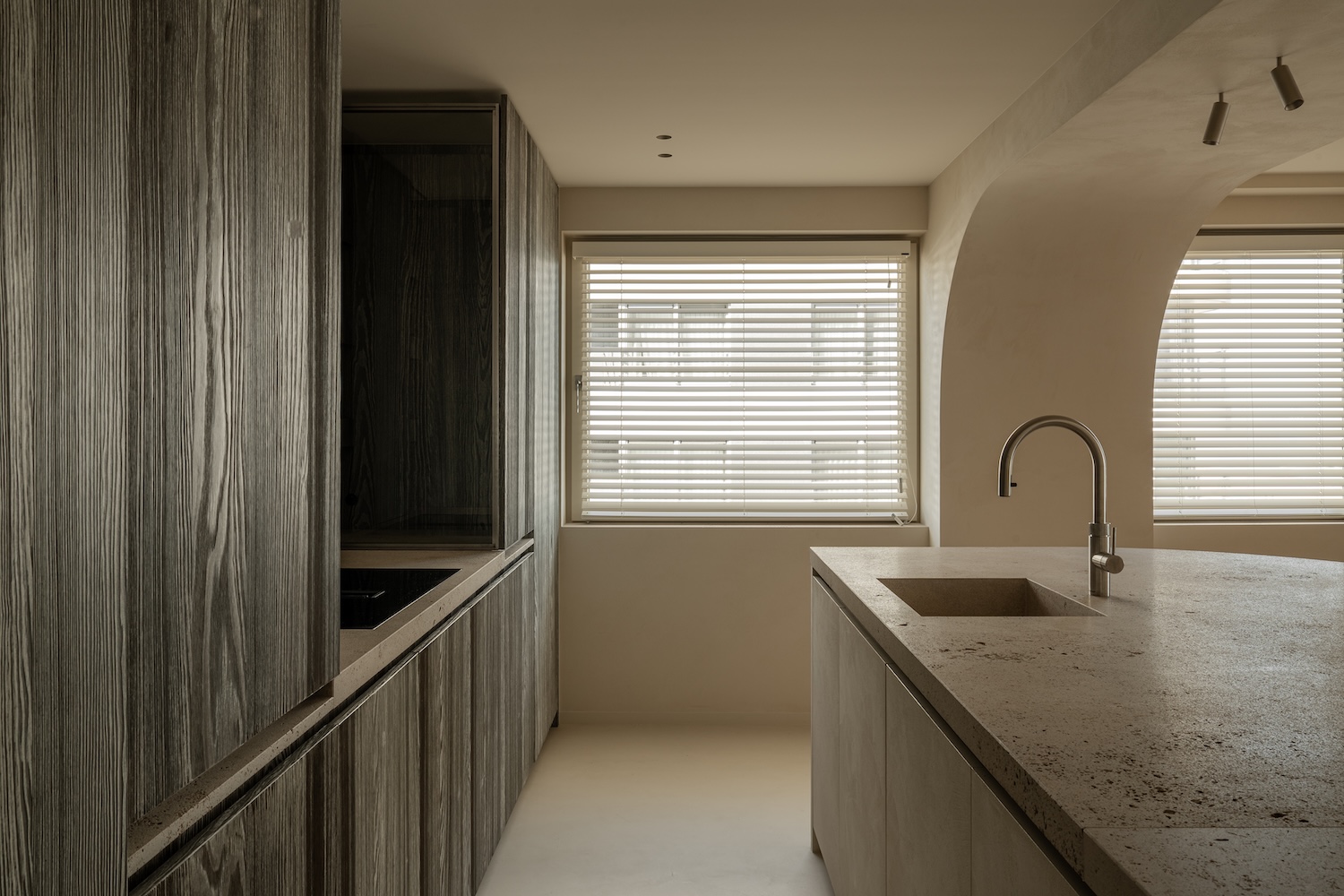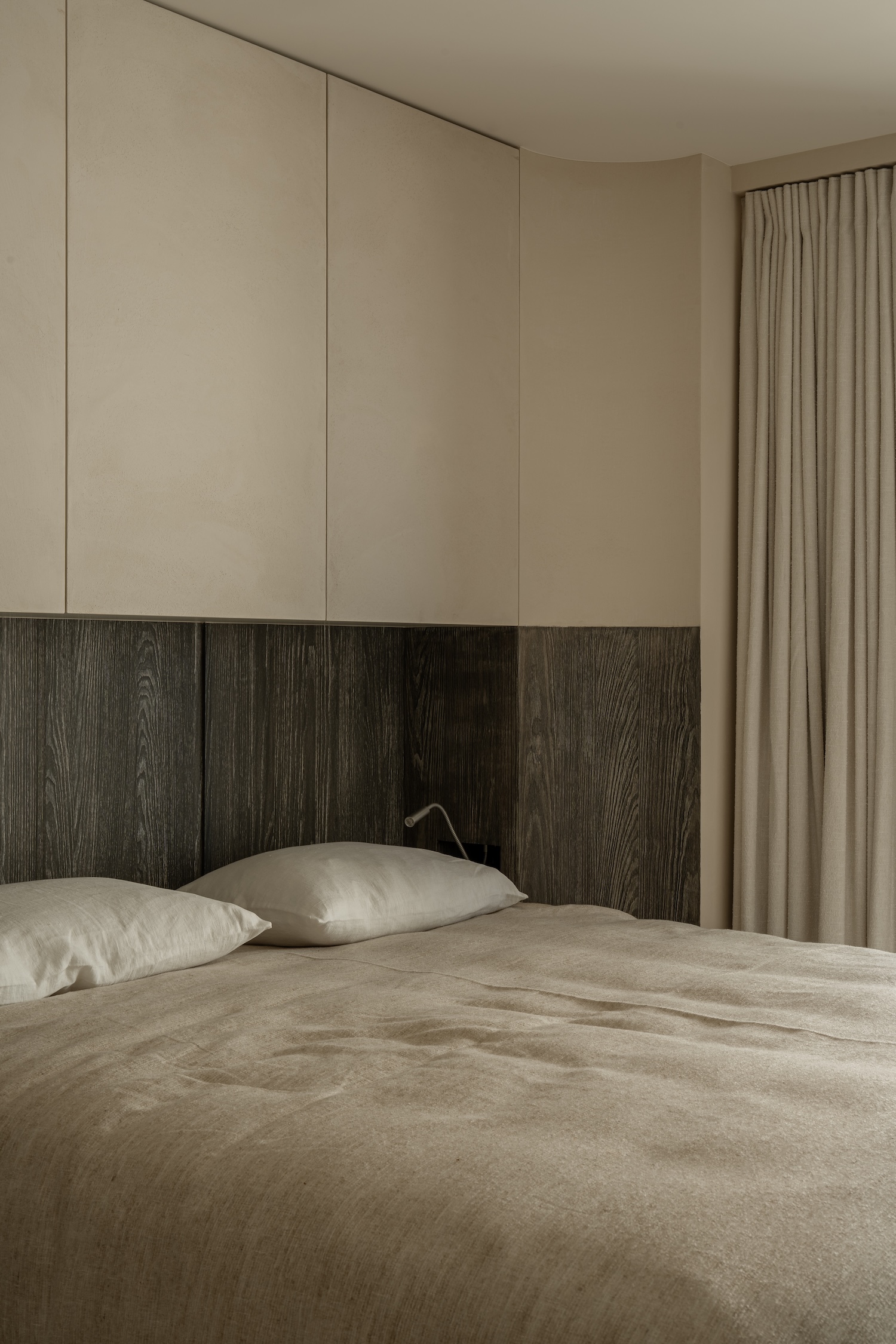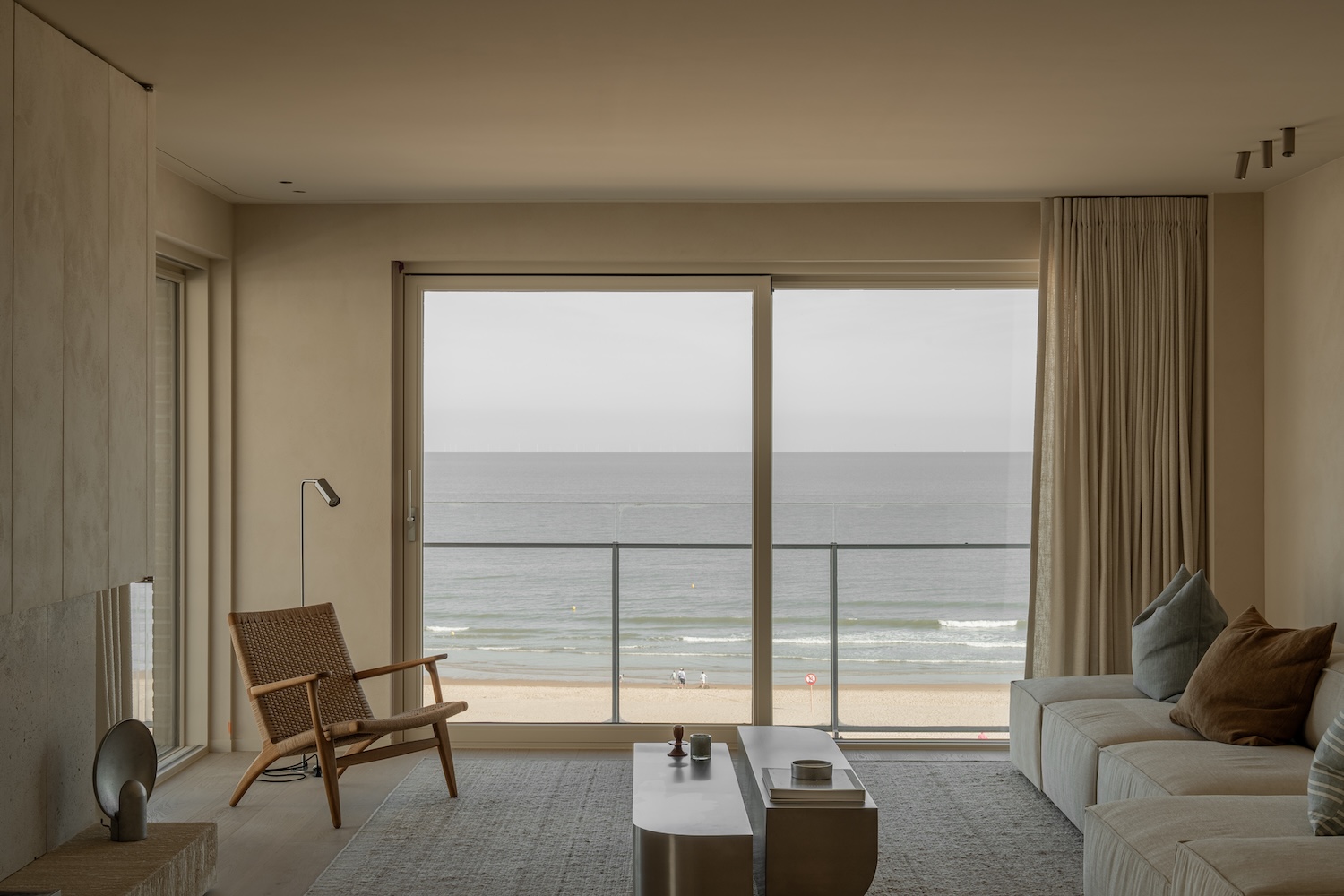
Claridge is a minimalist home located on the Belgian coast, designed by Julie De Vos – OIA concepts, and developed in close collaboration with Unidevelop Projects. When confronted with the ungainly reality of existing low-hanging pipes, the design team chose not to mask or minimize these infrastructural intrusions but to choreograph them into a new architectural language. The pipes became the conductors of a spatial symphony, their necessary routes inspiring gentle, rounded transitions that flow like tidal currents through the interior. Here lies the deeper craft insight: true design mastery reveals itself not in the absence of constraints but in their elegant transformation into organizing principles.
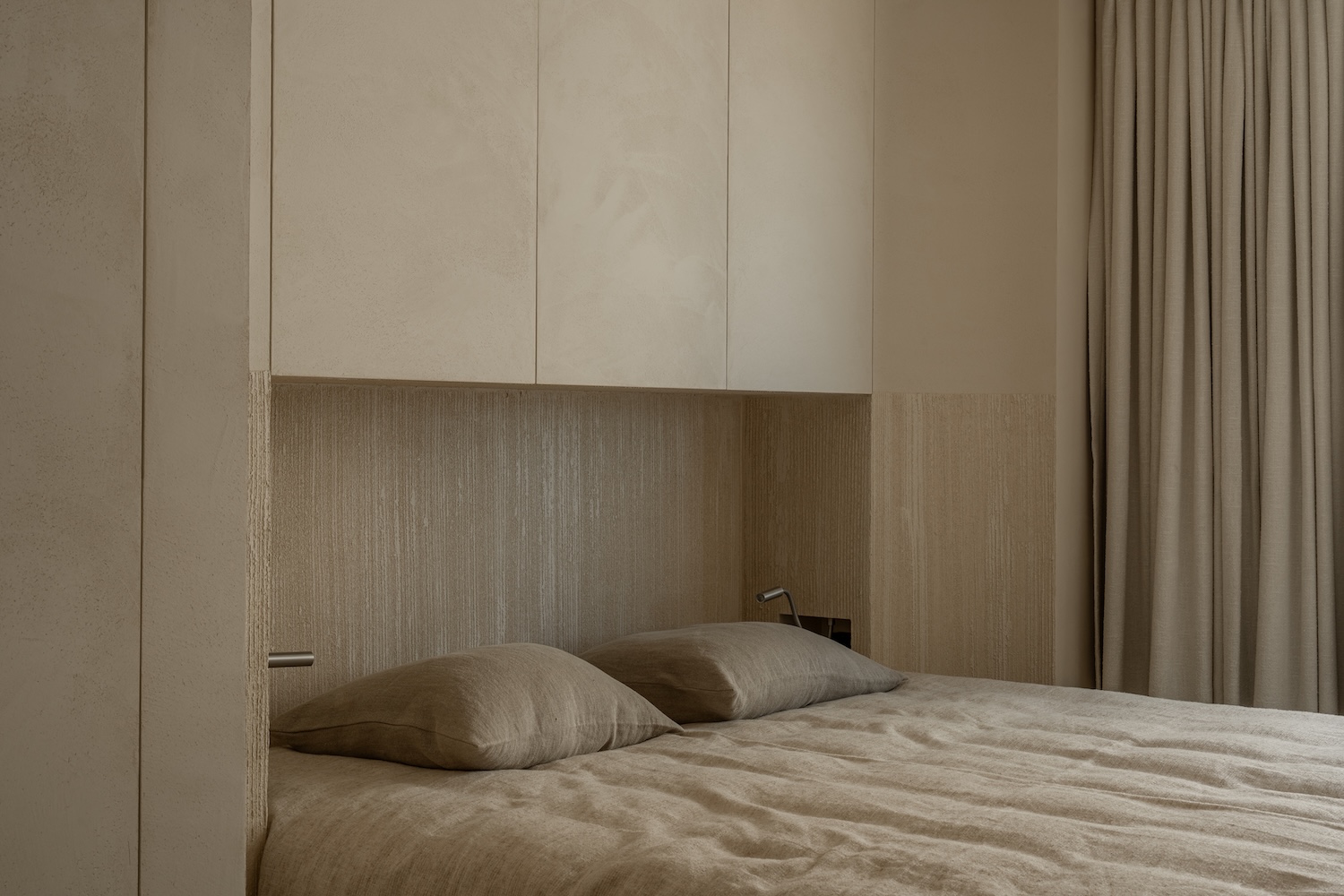
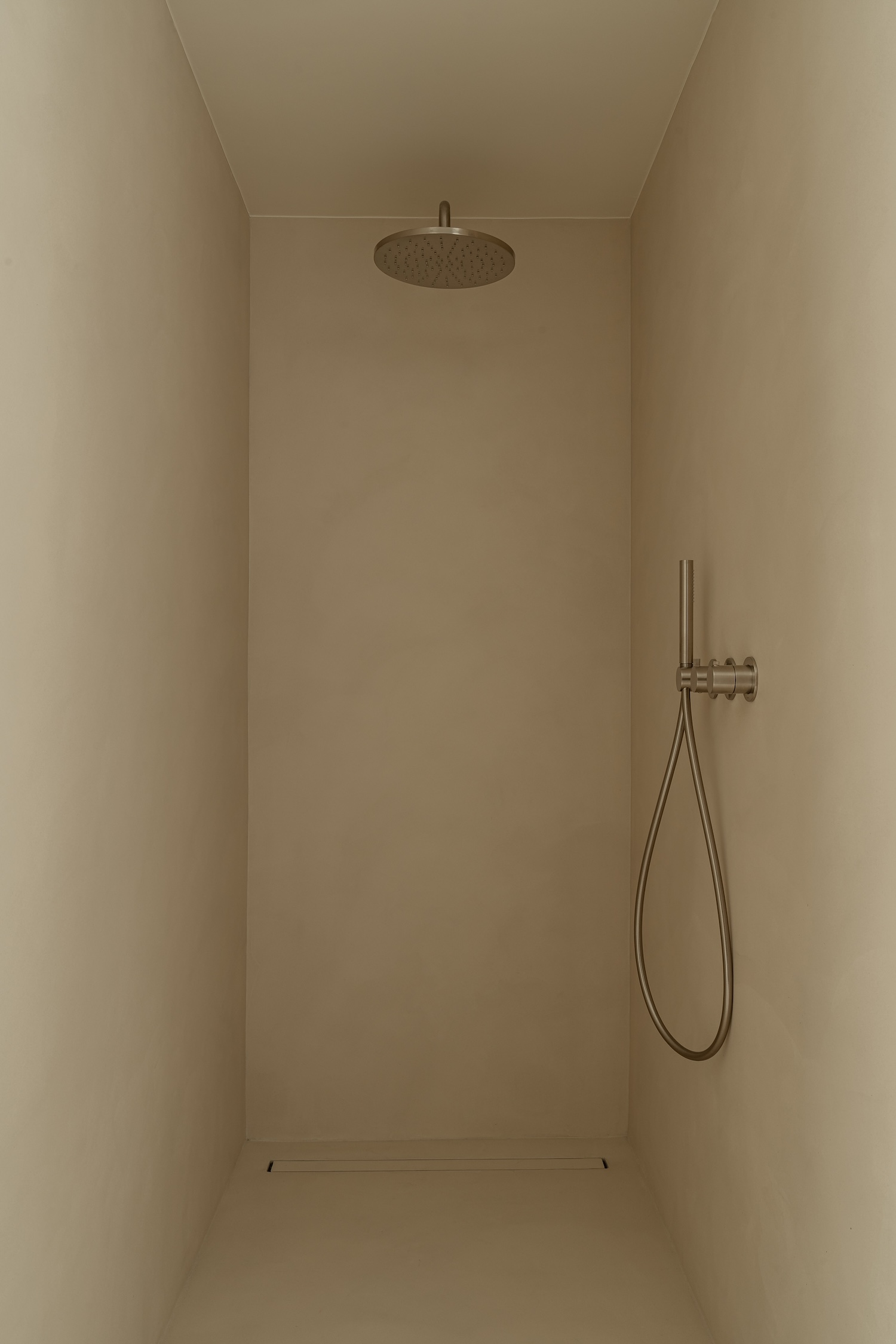
The material palette speaks to this same philosophy of considered restraint. Sandblasted and hand-brushed larch wood carries the memory of its making in every grain line, the soft patina achieved through patient labor rather than artificial aging. Against this warm timber, travertine surfaces emerge with their characteristic cloudiness, stone that holds light rather than reflecting it sharply. The poured floors follow the arcs of the architecture like frozen water, their seamless curves eliminating the harsh geometry that might otherwise fragment the space.
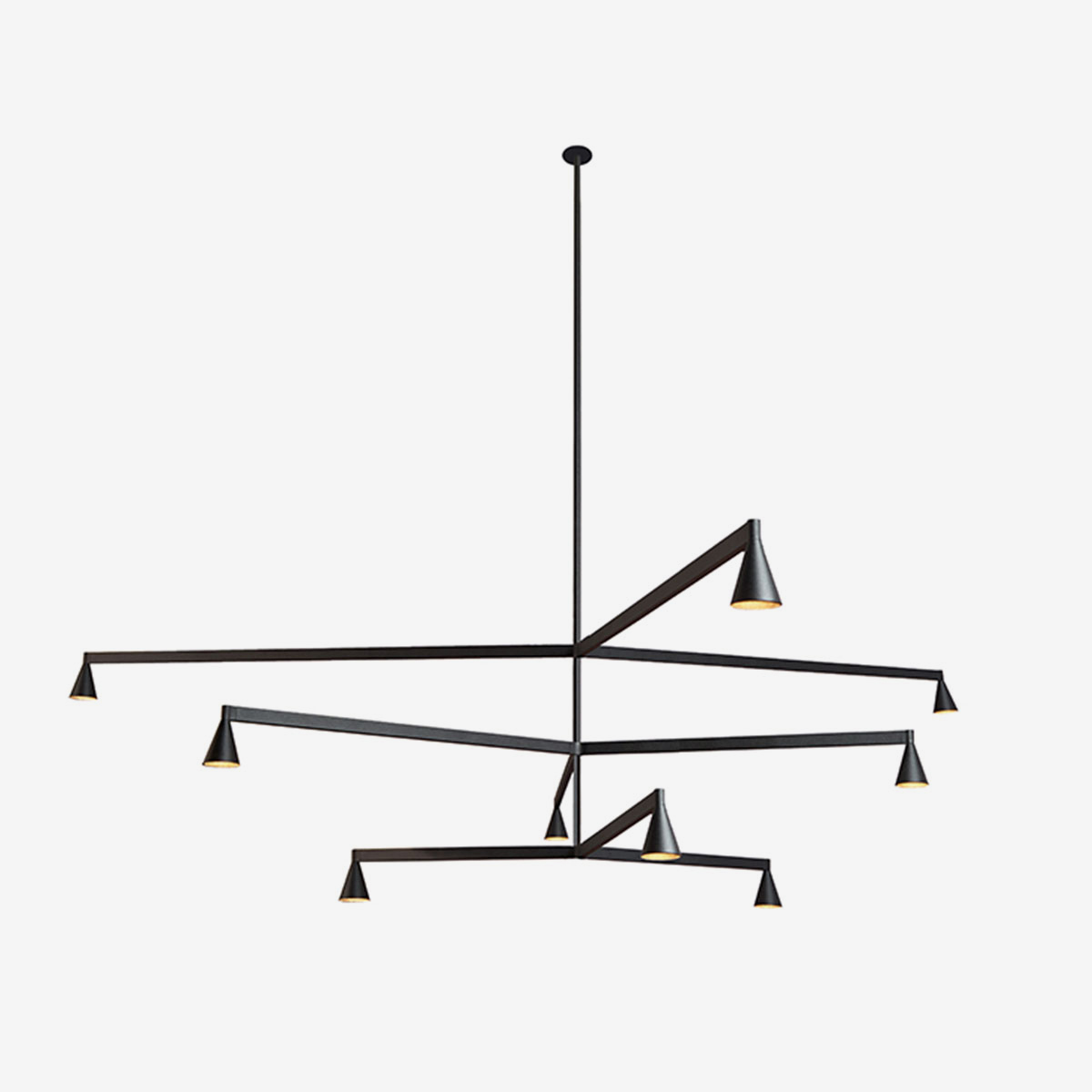
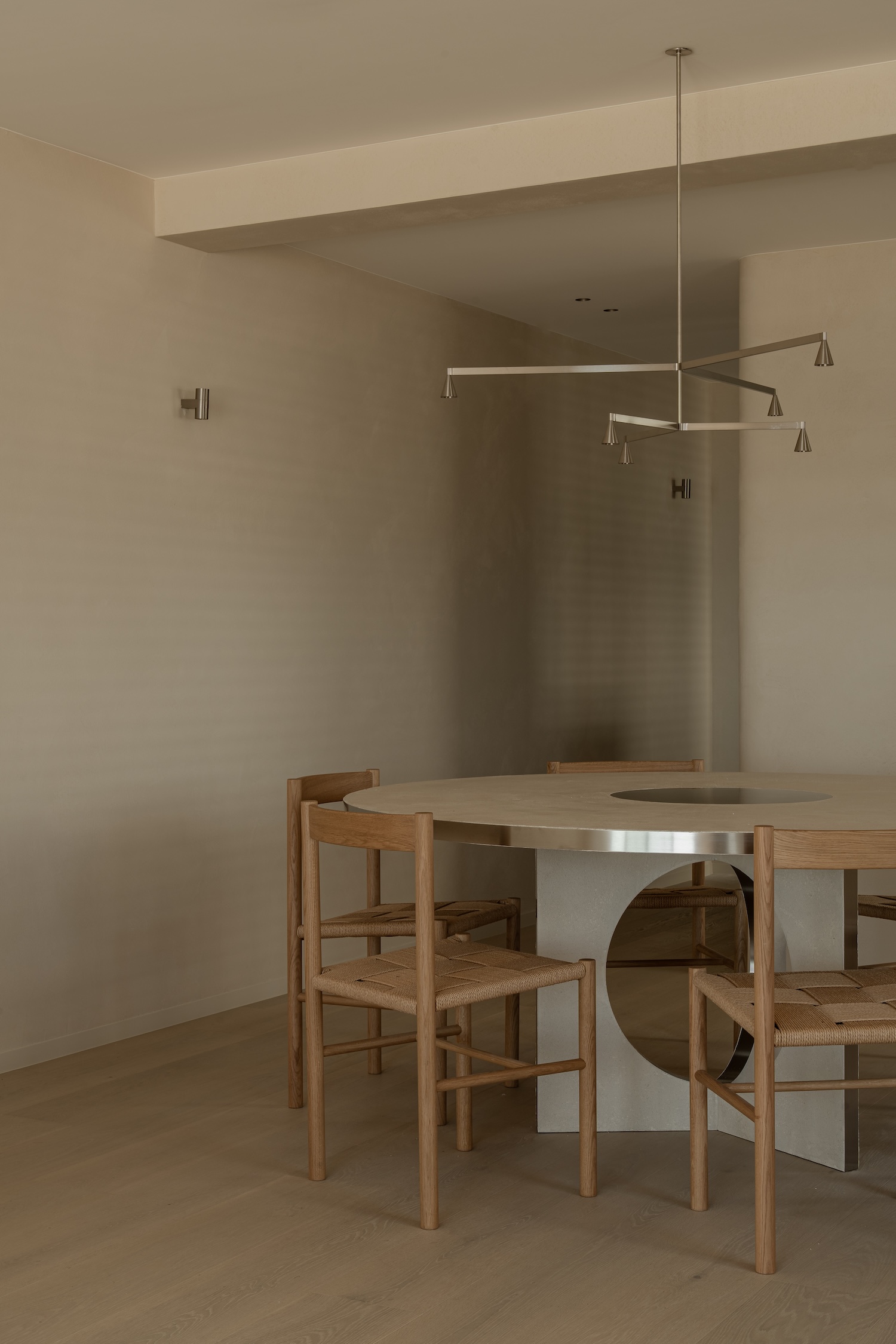
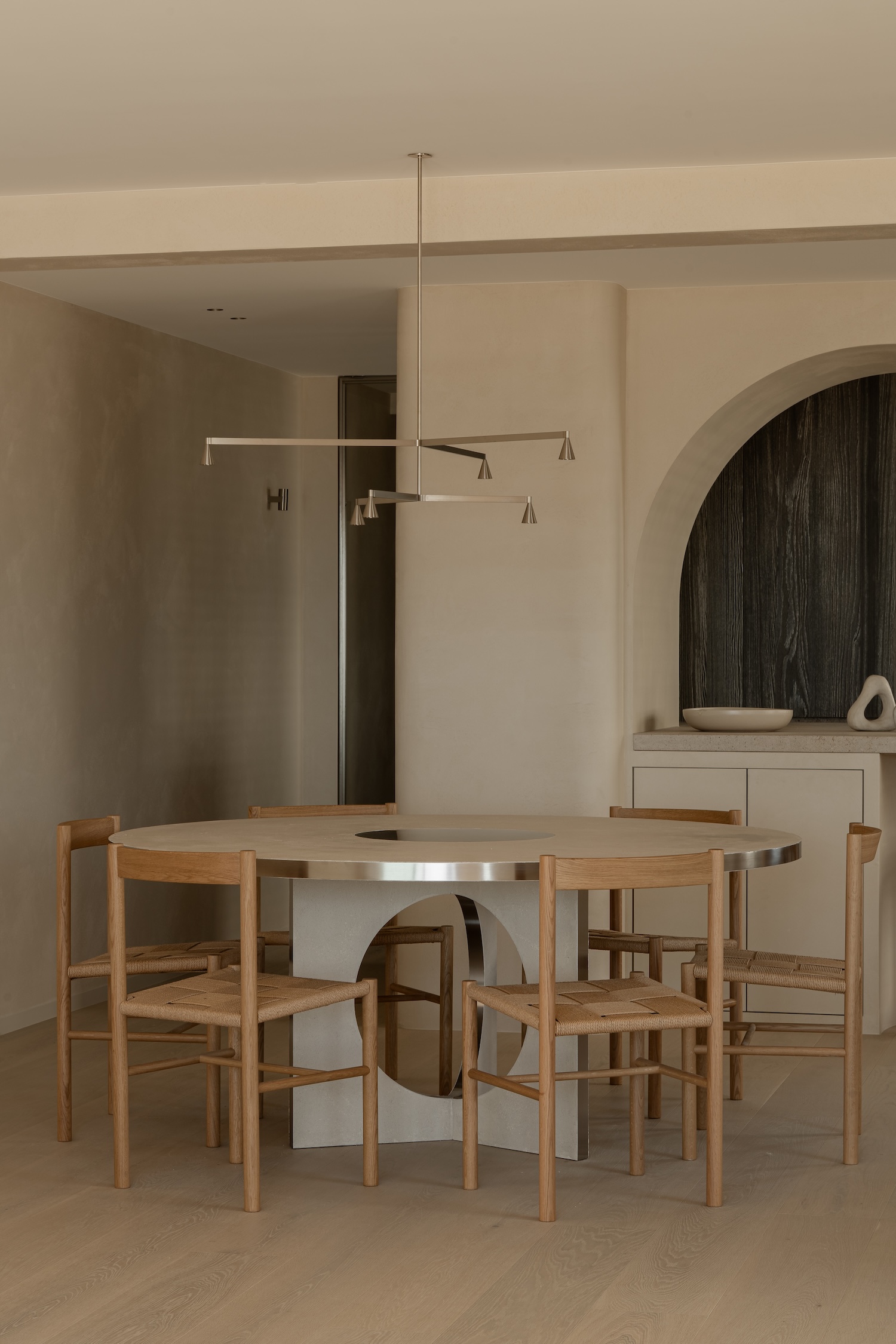
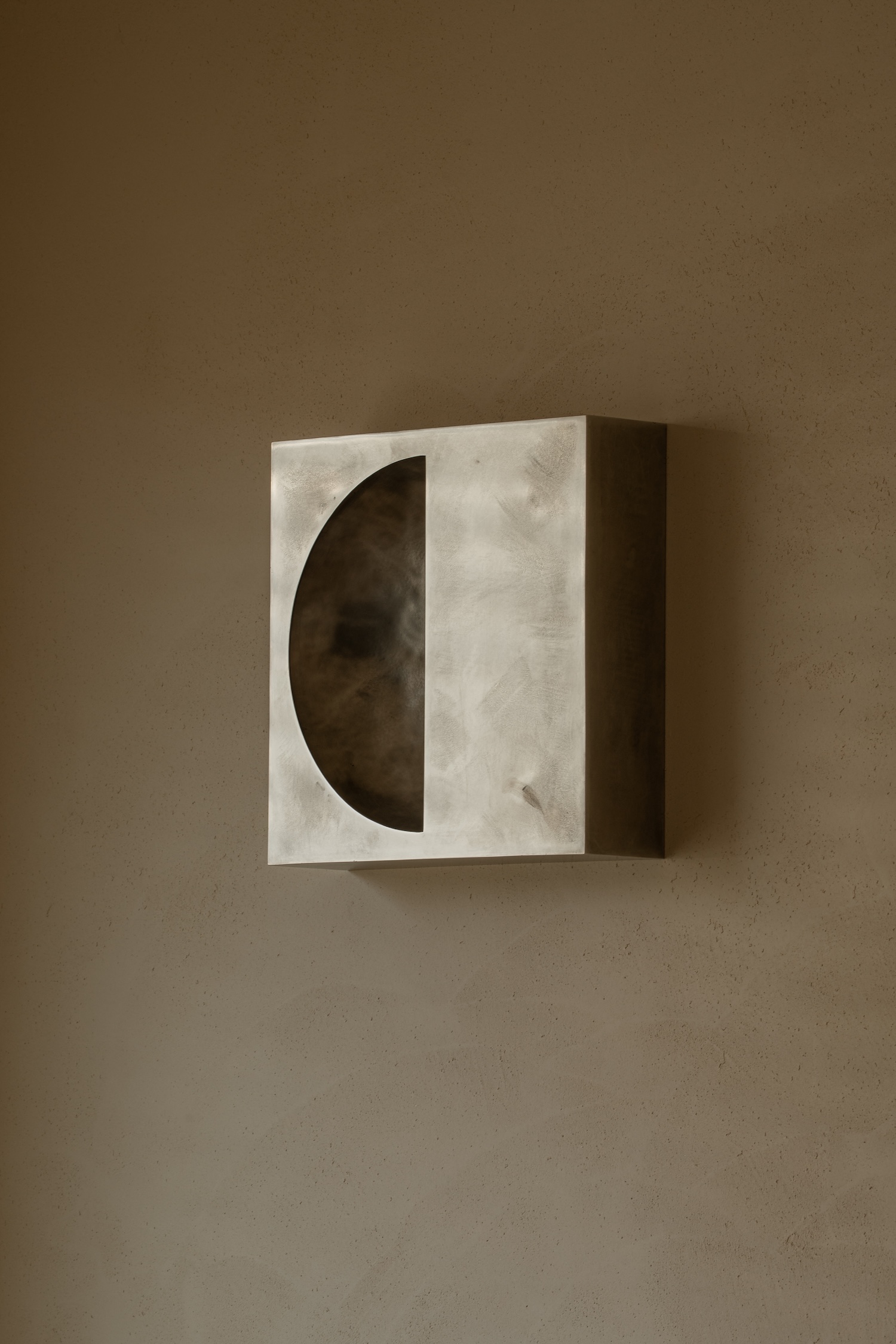
The lighting scheme continues this narrative of restrained precision through Trizo21 fixtures that embody Bruno Van Meenen’s founding philosophy of modesty paired with perfectionism. Since establishing his company in 2001, Van Meenen has championed architectural lighting stripped of unnecessary frills, believing that like a camera lens, the material quality of each fitting determines the sharpness and clarity of its luminous output. The solid aluminum and brass constructions integrate seamlessly into Claridge’s curved vocabulary, their technical excellence serving the space rather than announcing itself.
Stainless steel threads through the project as both material anchor and conceptual binding agent. From door detailing to the custom dining table, its brushed surface maintains consistency while avoiding the cold sterility often associated with the material. The steel here possesses what might be called tactile intelligence – surfaces that invite touch rather than repel it, edges that guide the hand rather than cut it.
The bespoke dining table stands as the project’s material manifesto. Its brushed stainless steel edge creates a horizon line between the industrial precision of its metal boundary and the gestural freedom of its hand-painted surface. This is furniture as landscape – simultaneously functional object and spatial organizer, its proportions calibrated to the room’s curved rhythms while maintaining the intimate scale necessary for daily ritual.