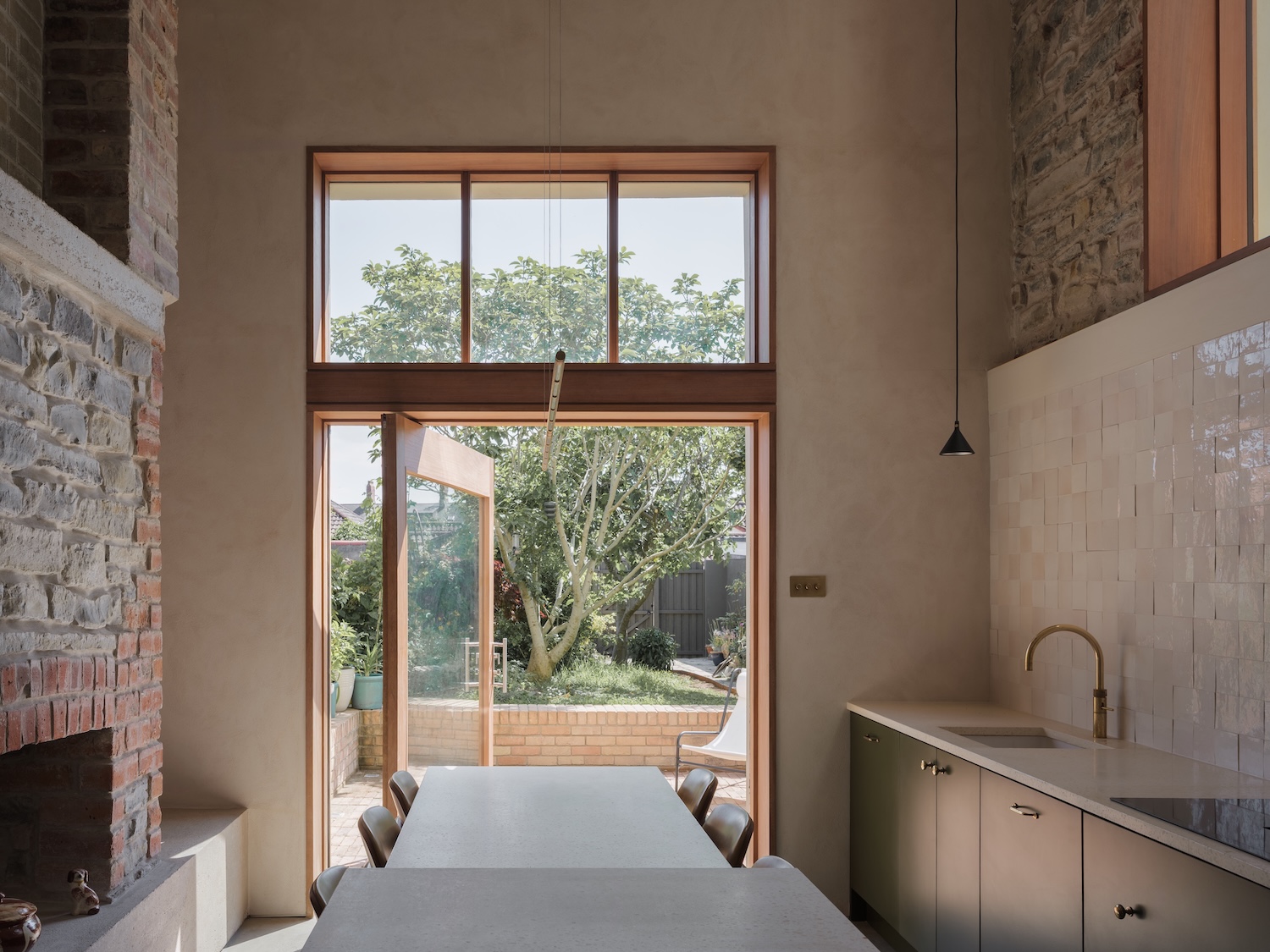
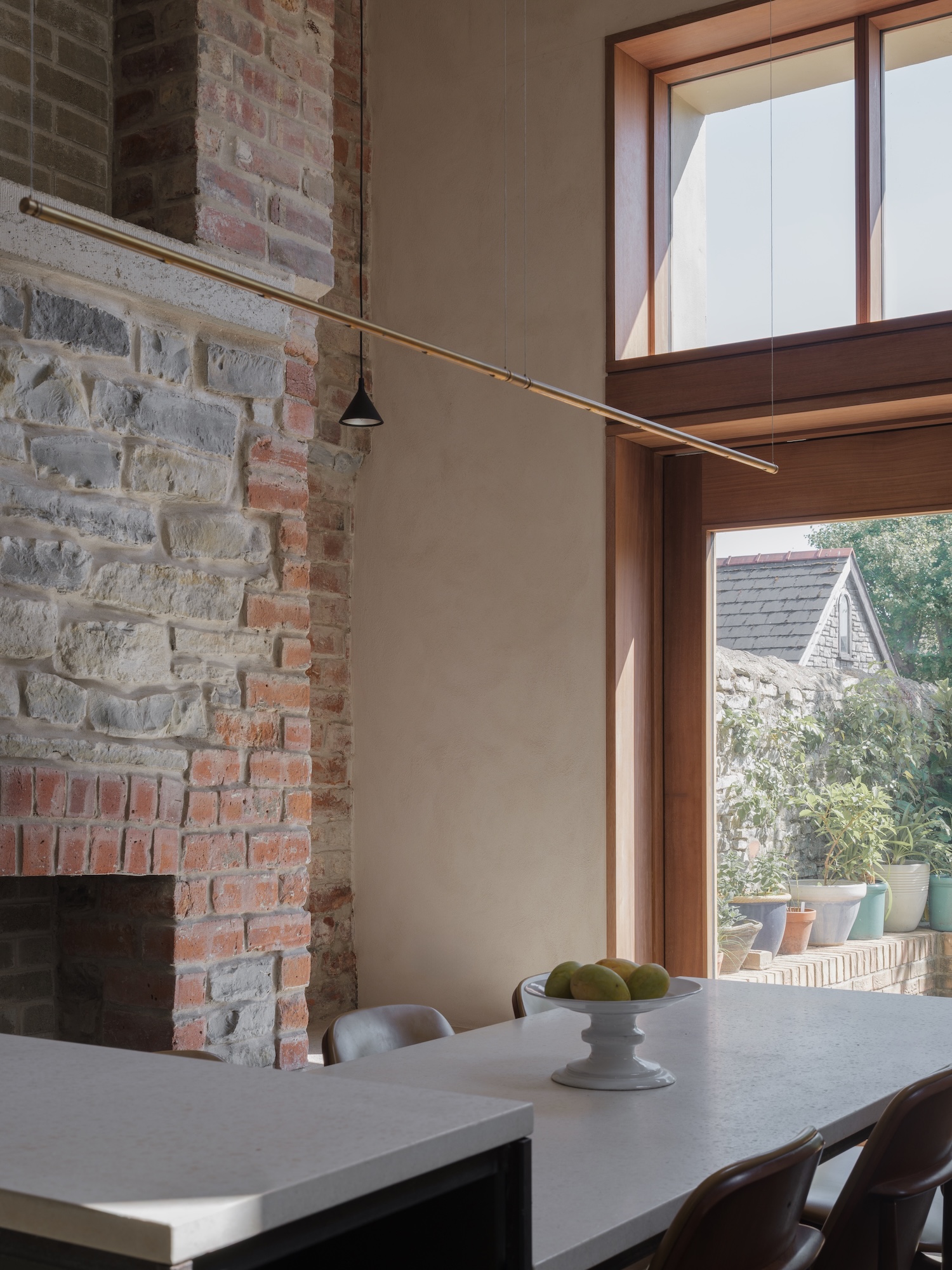
Clive Place is a minimalist residence located in Penarth, United Kingdom, designed by Benjamin Hale. This substantial Victorian terrace house within Penarth Conservation Area demonstrates how restoration can preserve building character while creating calm coherent home addressing original layout deficiencies. The house arranged over four floors had ground floor entirely detached from garden, resolved by removing rear floor section and relocating kitchen to basement creating generous double-height room.
This gesture brings drama sense to home heart where descending iroko-lined stair becomes quiet theatre moment while long ground-floor hallway views offer glimpses down into space and out toward garden. The spatial reorganization demonstrates how vertical connection can transform previously isolated levels establishing visual and physical relationships between non-adjacent floors, particularly valuable in narrow Victorian terrace plans where limited floor plate dimensions restrict horizontal spatial variety requiring creative vertical strategies.
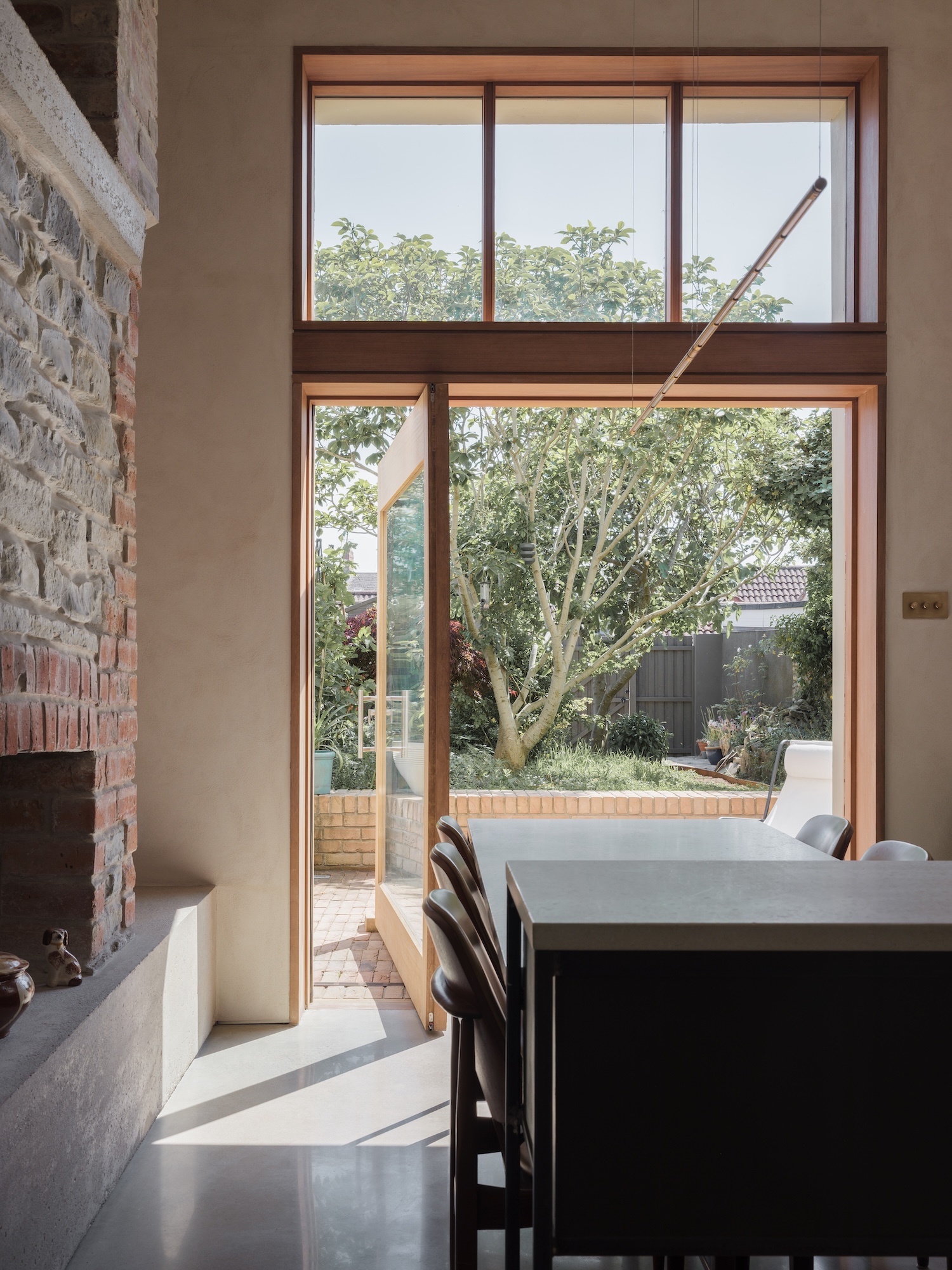
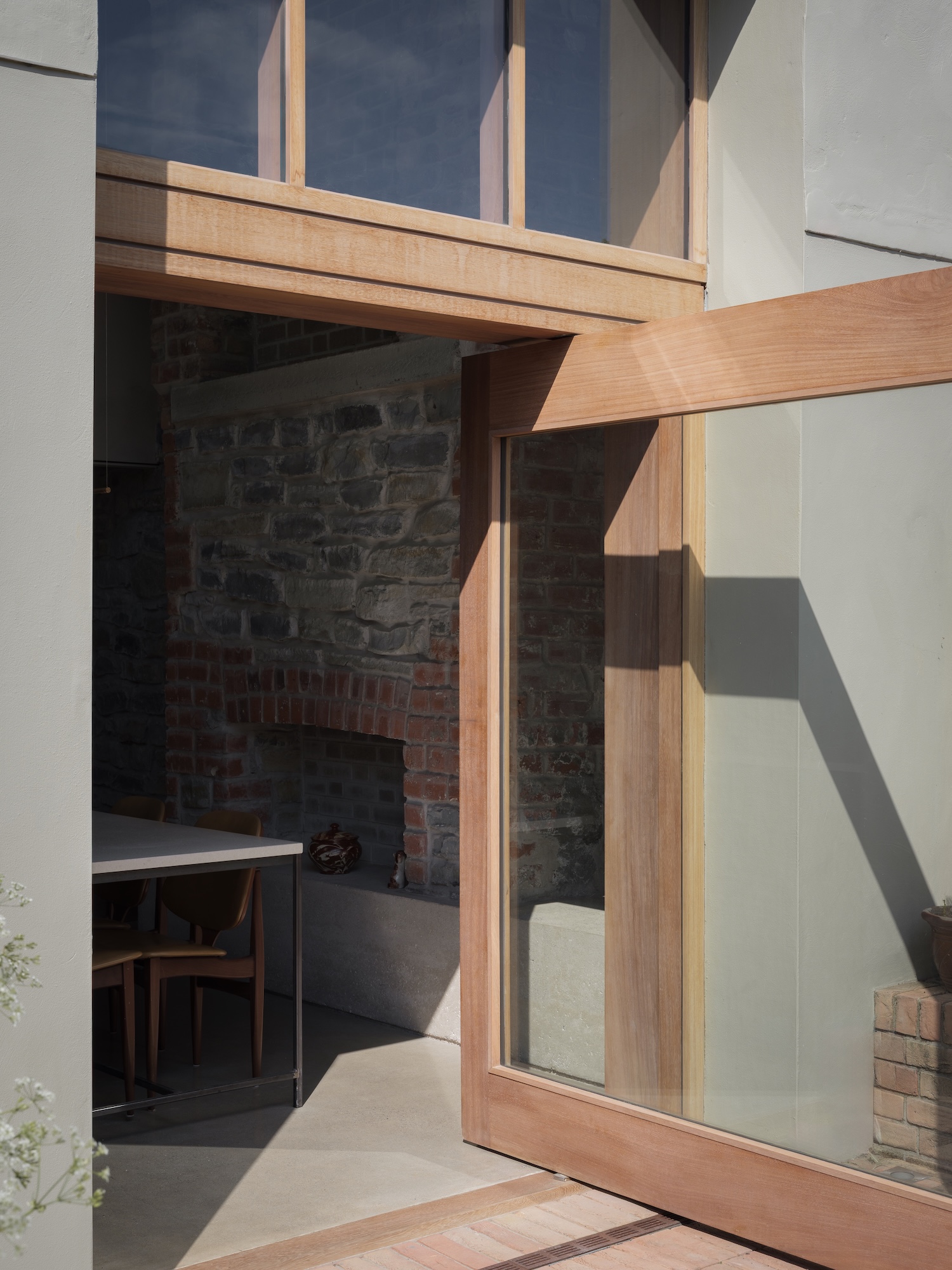
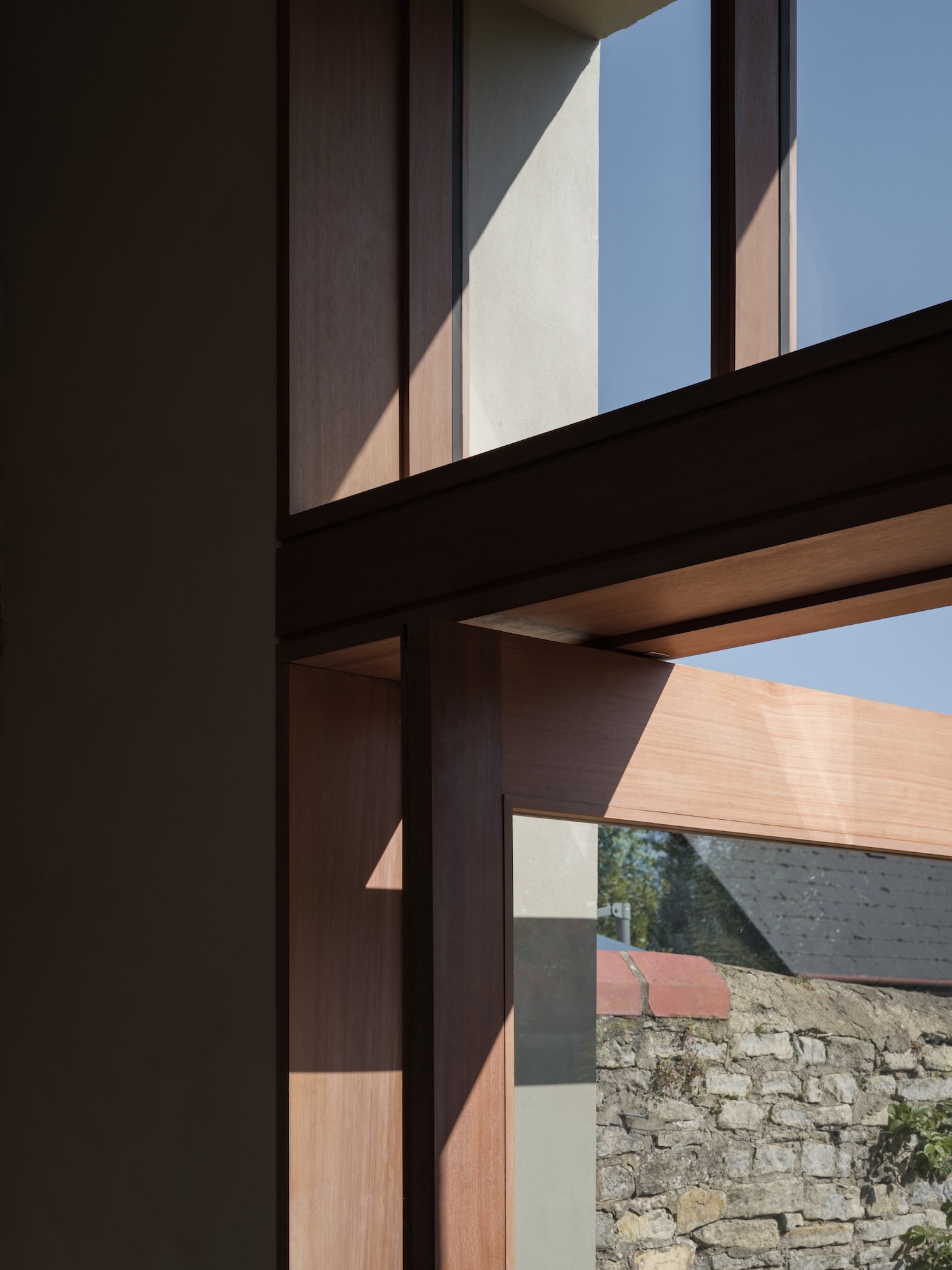
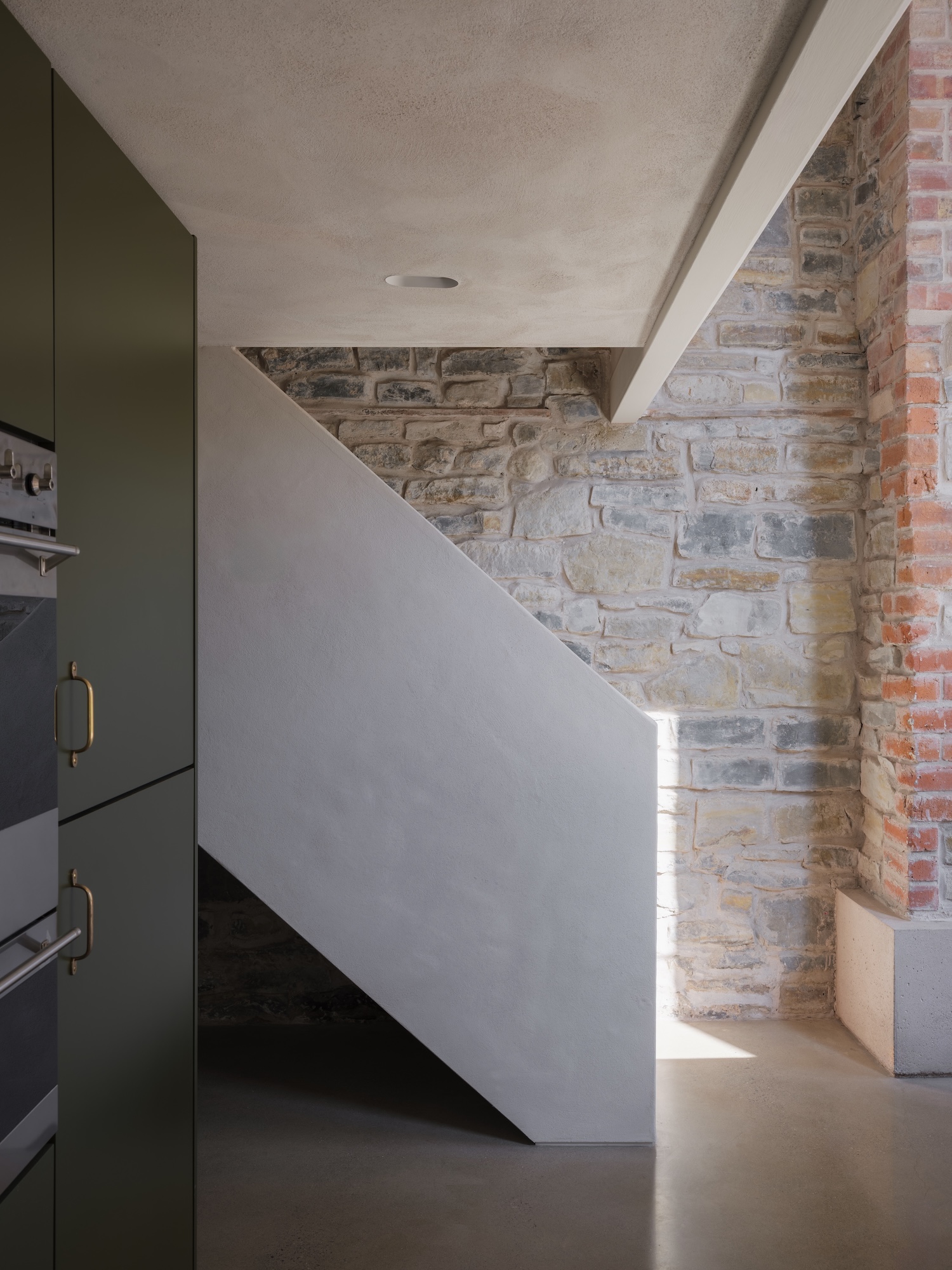
New openings carefully placed bring daylight into house at measured moments gently filtering light and introducing calm sense. The natural material palette including warm iroko joinery, lime plaster, and honed concrete sits comfortably alongside retained stone walls and red brick paving. Light and texture central to clients’ brief receive handling with restraint and clarity, demonstrating how material selection can support specific atmospheric goals where tactile surfaces and controlled illumination create contemplative domestic environments rather than dramatic spatial statements.
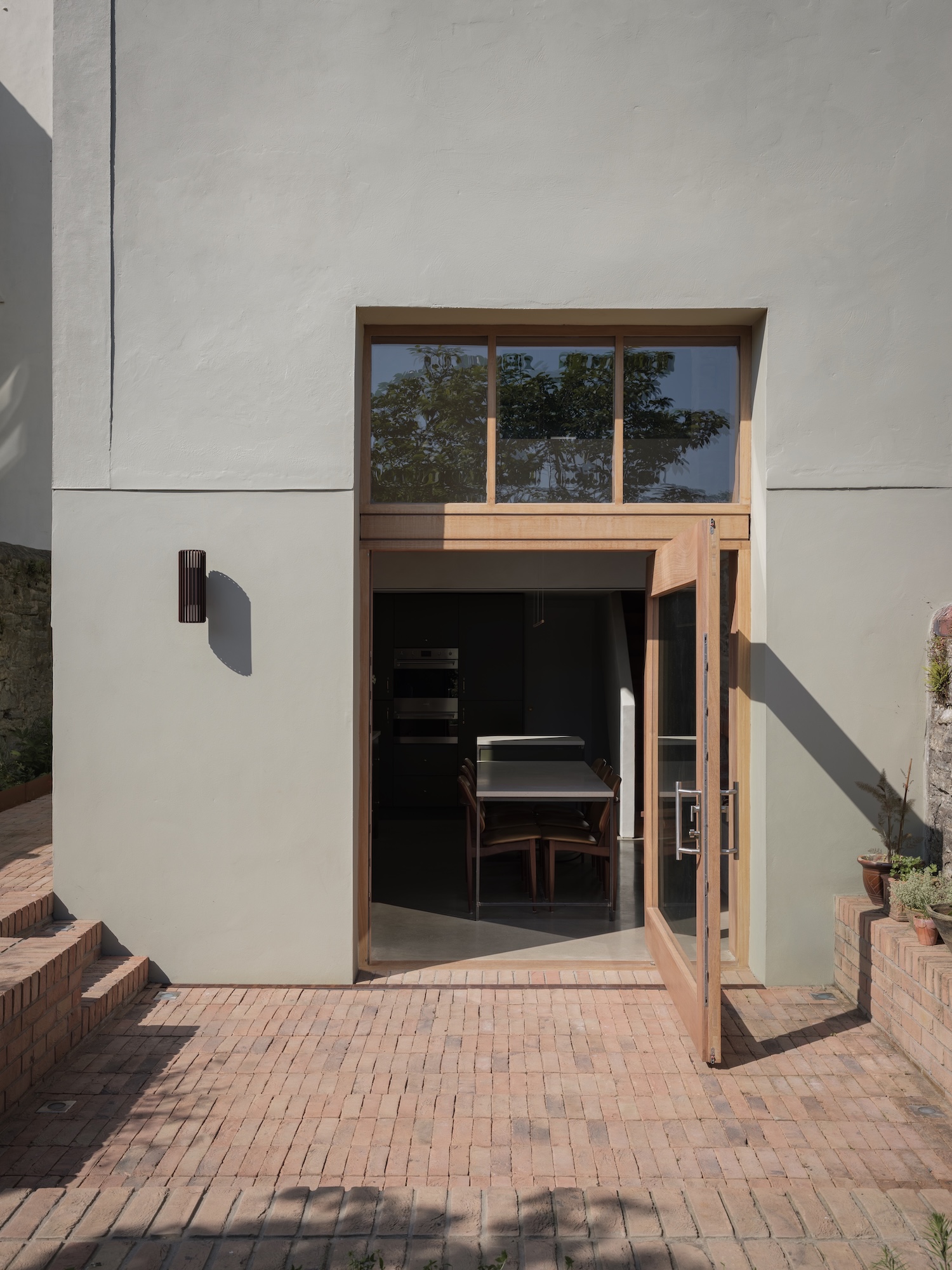
Bespoke oversized iroko pivot door opens onto sunken terrace framing fig tree just beyond. When opened, terrace and garden become part of room extending living space outward, demonstrating how threshold elements can establish flexible spatial boundaries where interior-exterior relationships shift seasonally and daily based on weather and occupancy patterns. The sunken terrace creates level transition addressing typical Victorian terrace condition where ground floors sit elevated above garden grade requiring steps that might otherwise create awkward connections.
Materials used in main living areas echo throughout house with subtle timber combinations, soft colors, and natural textures creating quiet spaces for resting, reading, and sleeping. This material consistency demonstrates how restrained palette deployed consistently can establish spatial coherence preventing fragmentation that might occur when different rooms receive unrelated treatments, particularly important in multi-story residences where vertical circulation connects varied functional zones.