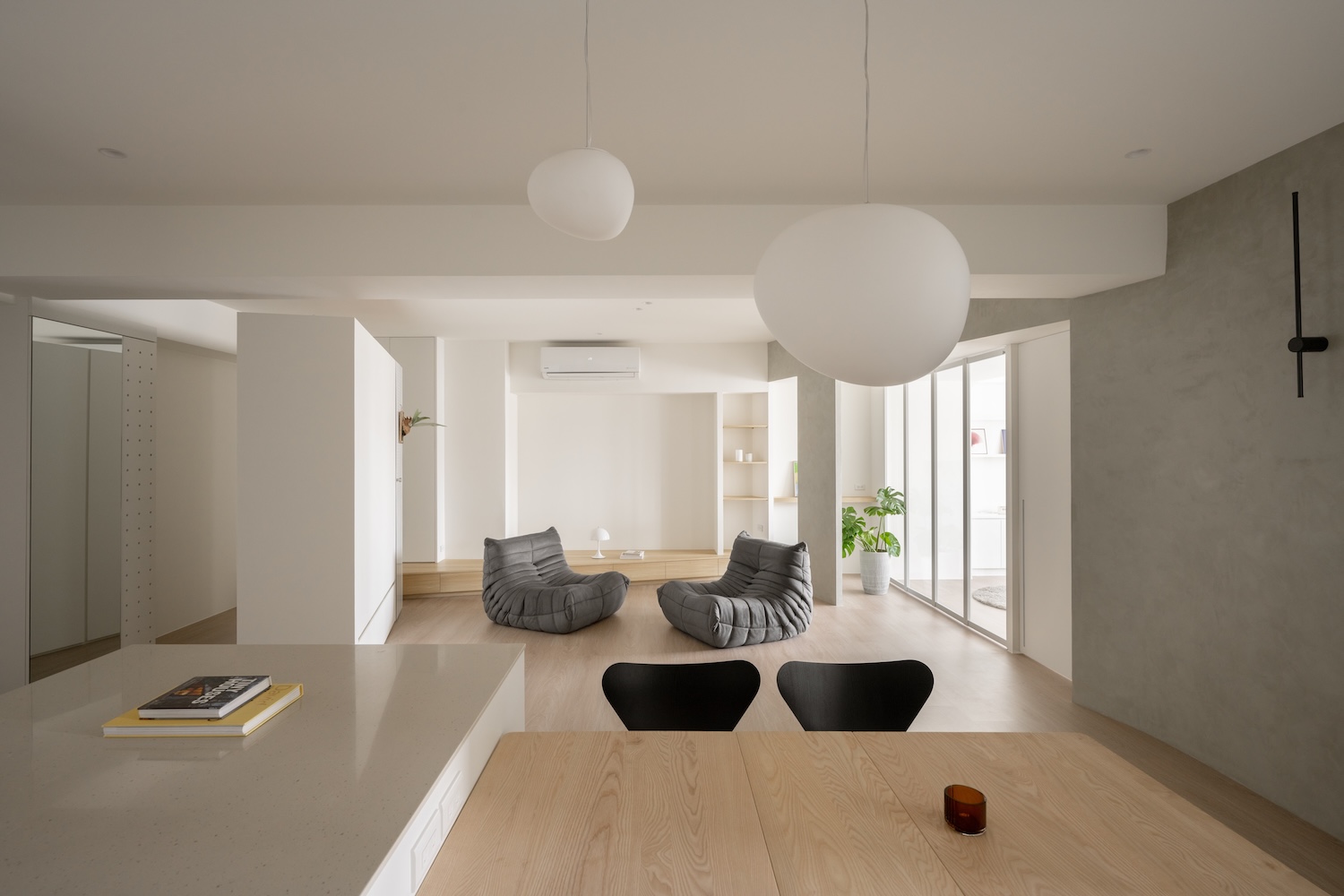
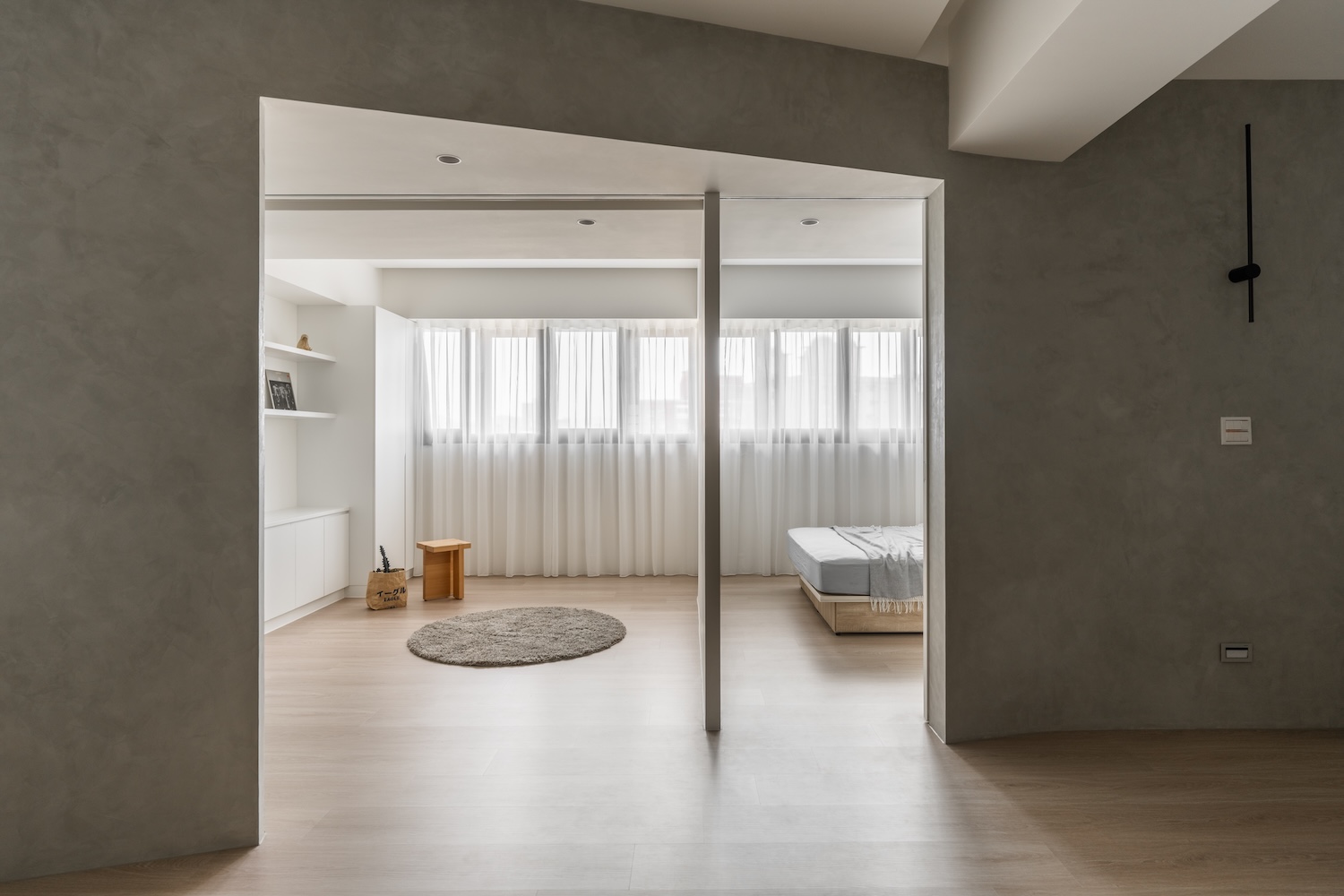
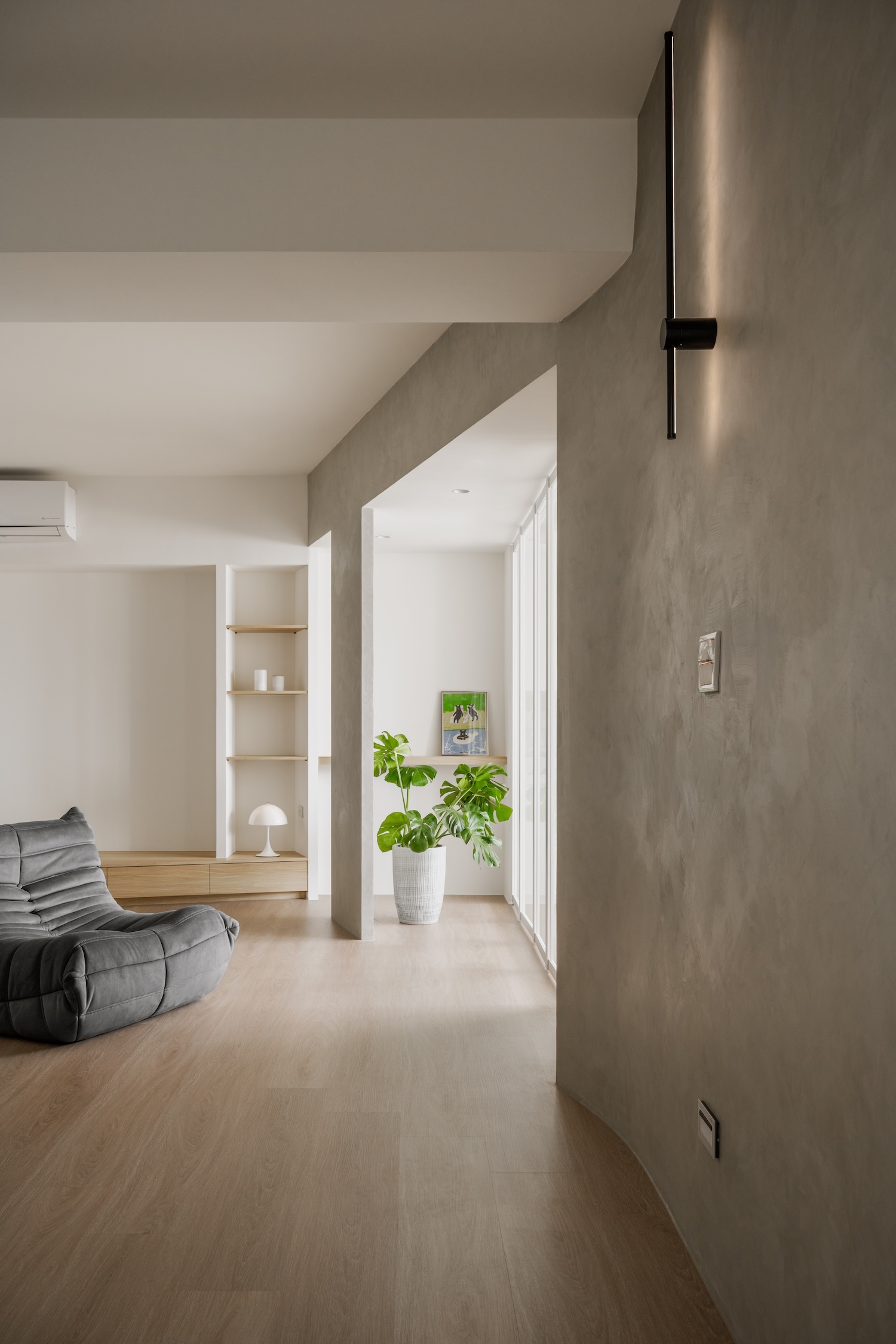
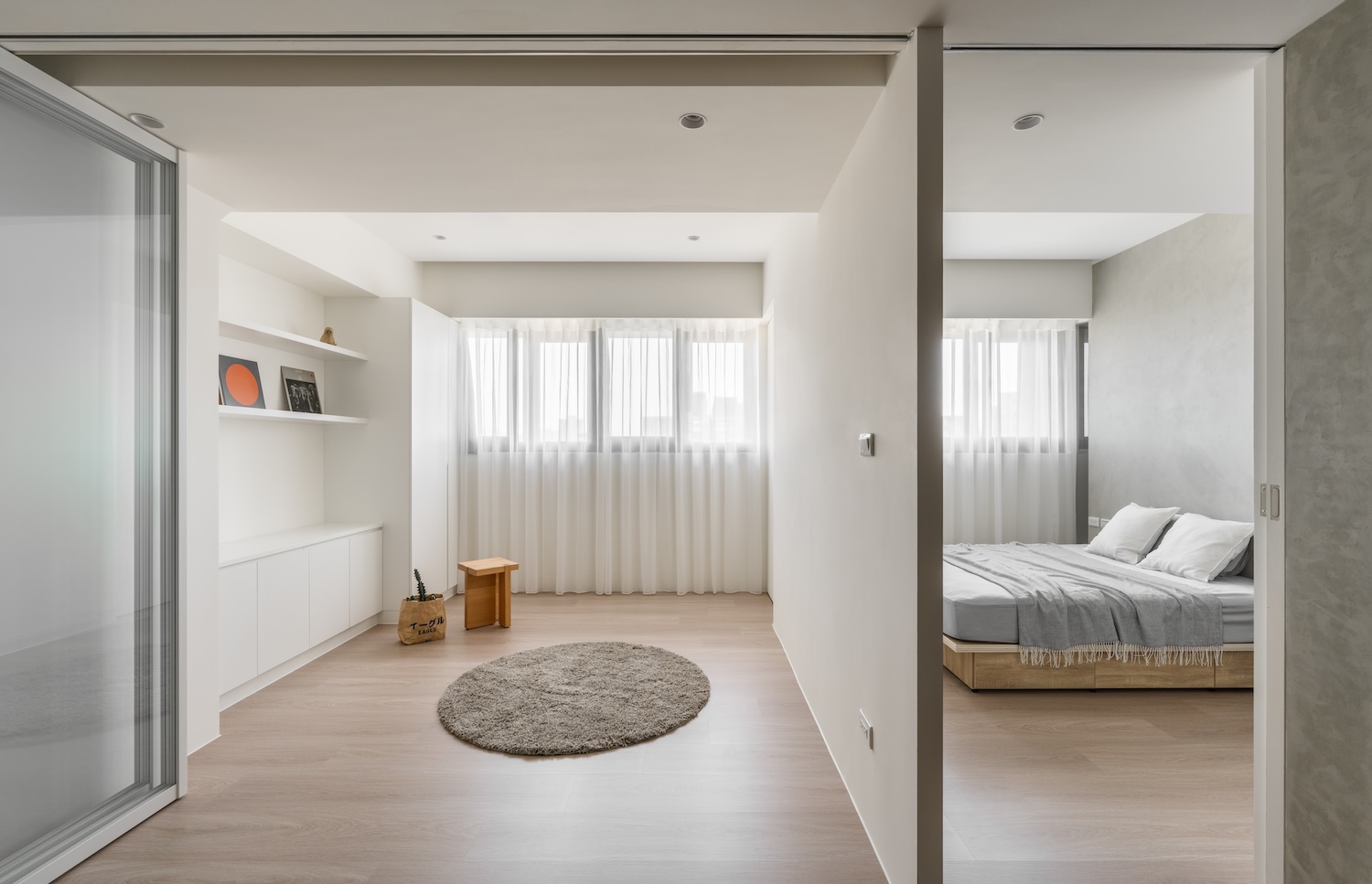
Cloister Studio is a minimalist home located in Taipei, Taiwan, designed by Wang Yi Yun of Shan Shan Chuan Design. The studio’s “slashed geometry” speaks to a design philosophy that embraces controlled disruption. These diagonal cuts through traditional orthogonal space recall the deconstructivist experiments of the 1980s, yet serve a more intimate purpose. Where architects like Daniel Libeskind used angular geometries to destabilize and provoke, Cloister Studio employs them to create what designer residential spaces have long struggled to achieve – genuine flexibility without sacrificing coherence.
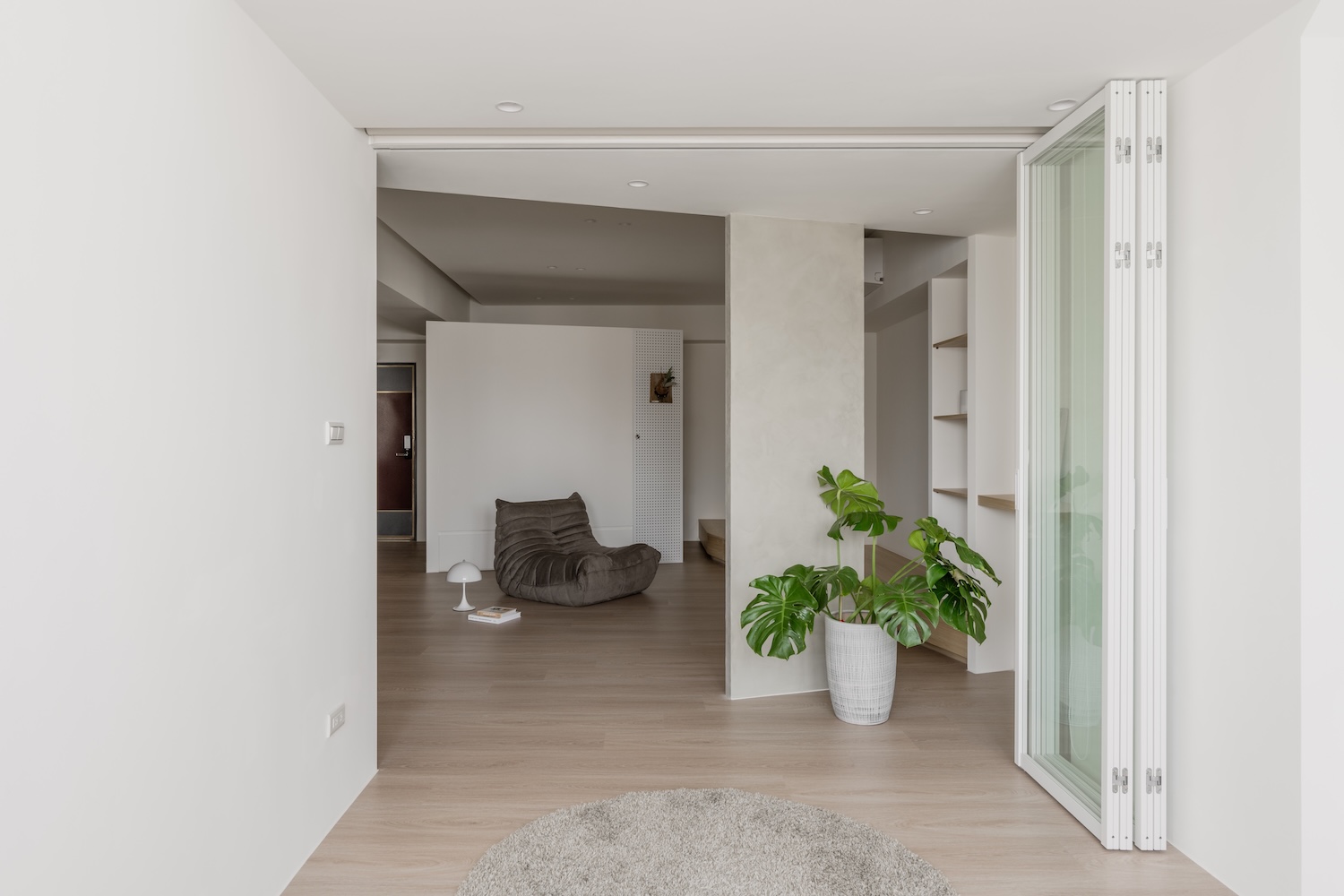
The sliding door system functions as the project’s circulatory heart, transforming rigid room divisions into permeable membranes. This approach echoes Japanese residential traditions, where shoji screens have long enabled spatial transformation, but updates the concept for hybrid work-life demands. The transparent folding doors in the workspace particularly demonstrate this evolution – they maintain visual connection while acoustically separating focused work from domestic life, a desk becoming both private office and part of the home’s visual continuum.
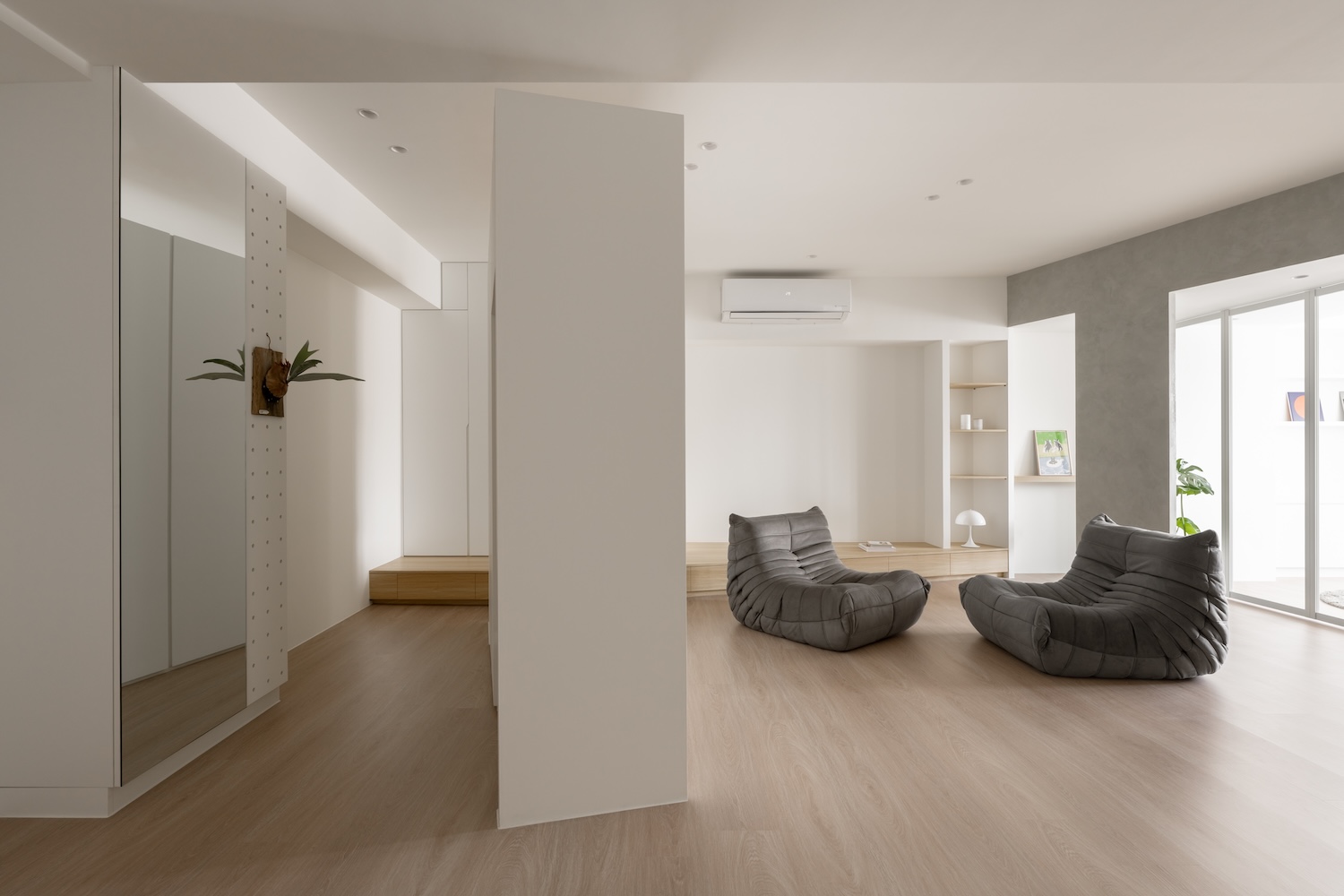
Material choices reinforce this careful balance between openness and definition. The warm wood veneer provides tactile grounding against concrete grey tones, creating what might be called “soft brutalism” – the industrial palette humanized through natural textures. The perforated metal doors exemplify this duality, functioning simultaneously as storage solution and living wall for plants, blurring boundaries between built and grown environments.
The detached TV cabinet represents perhaps the project’s most subtle yet significant move. By separating this element from the ceiling plane, the designers preserve spatial flow while acknowledging contemporary life’s relationship with technology. The cabinet becomes furniture rather than architecture, maintaining the room’s essential character while accommodating necessary functions.