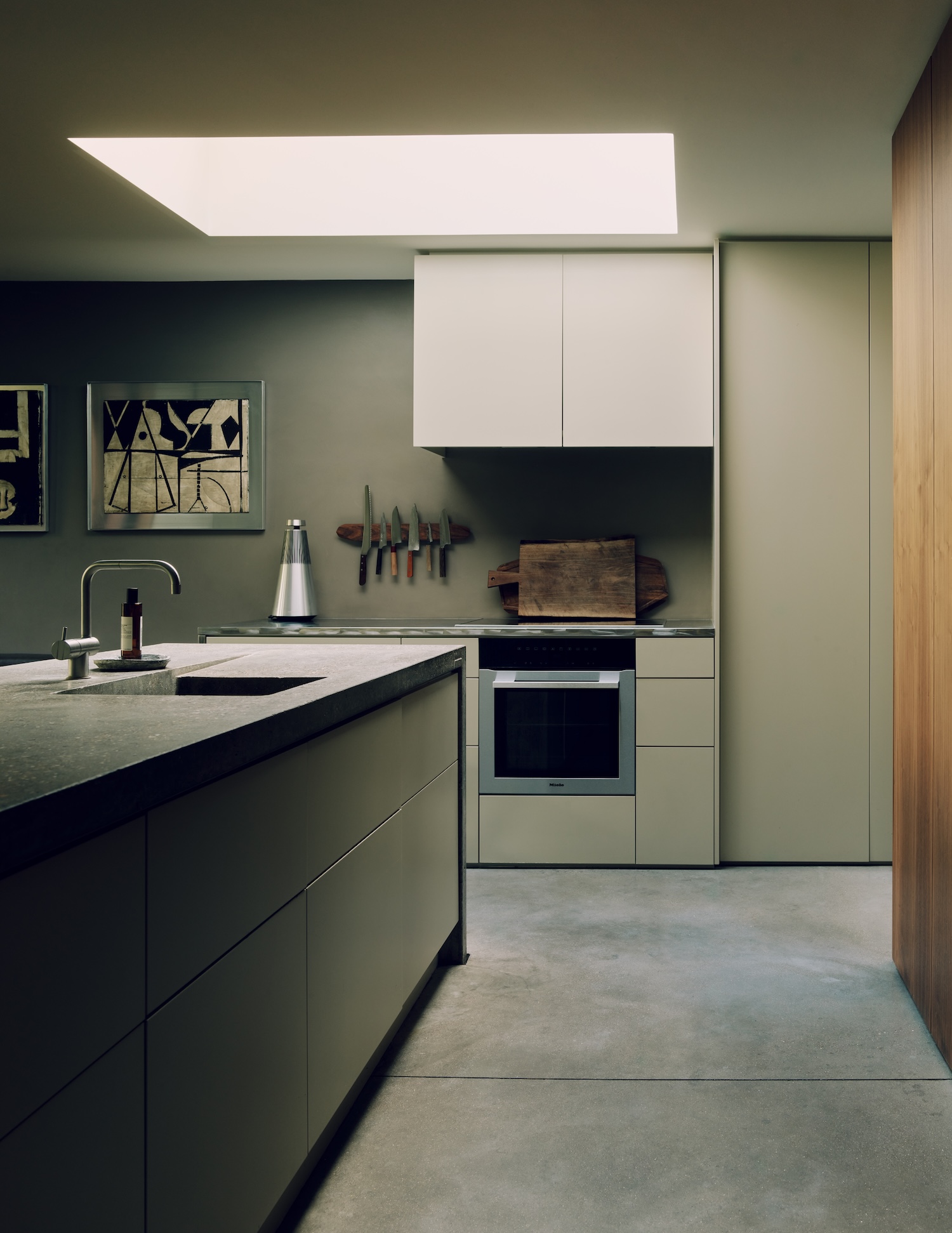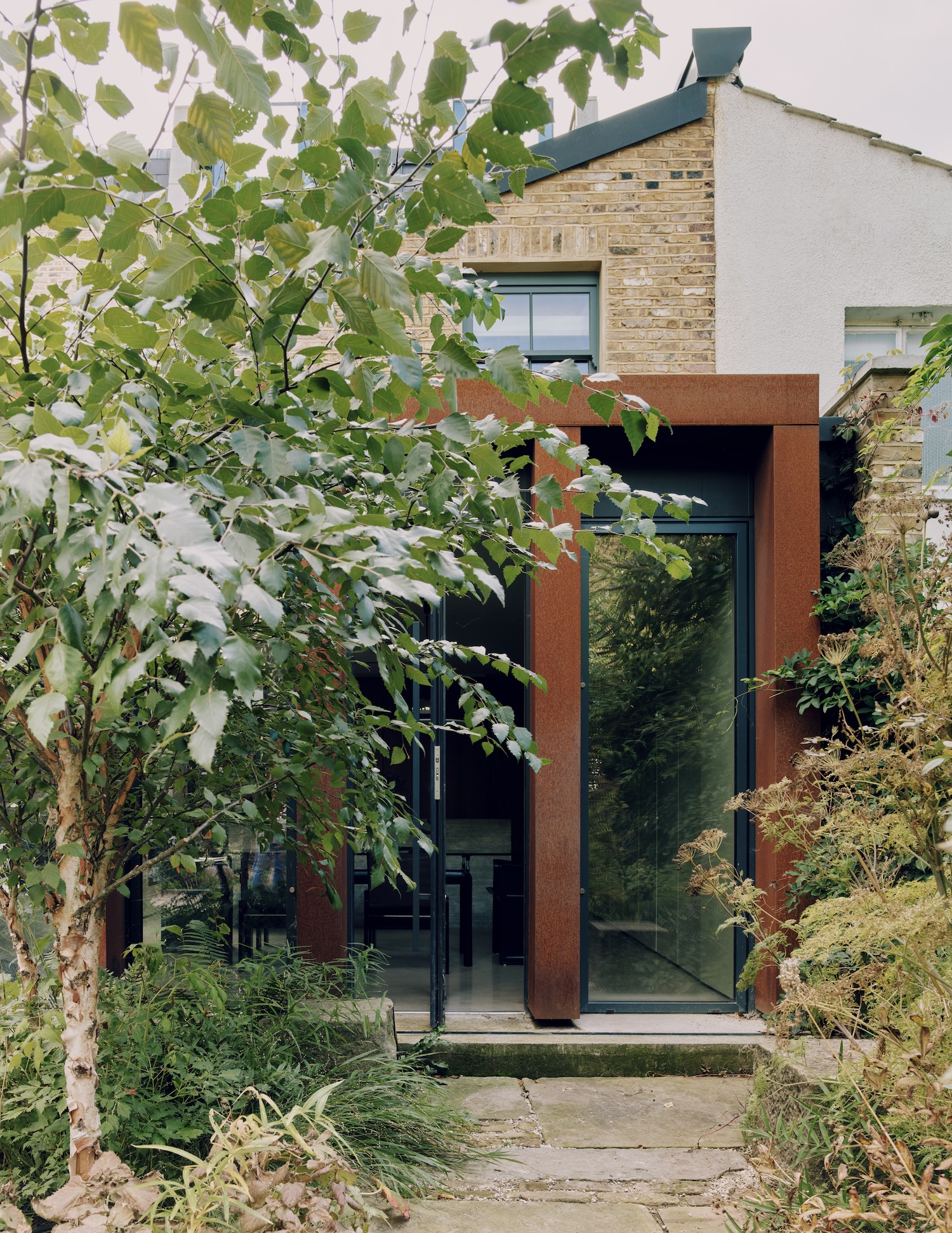
Max Radford hand-textured the stainless-steel kitchen counters left by an earlier renovation of Darville Road, a late-Victorian family home in Stoke Newington, London, United Kingdom. Atomik Architecture had already carried out extensive structural work on the property, and the owners asked Radford for an interior that was contemporary, edgy, and somewhat raw, avoiding standard decorating choices.
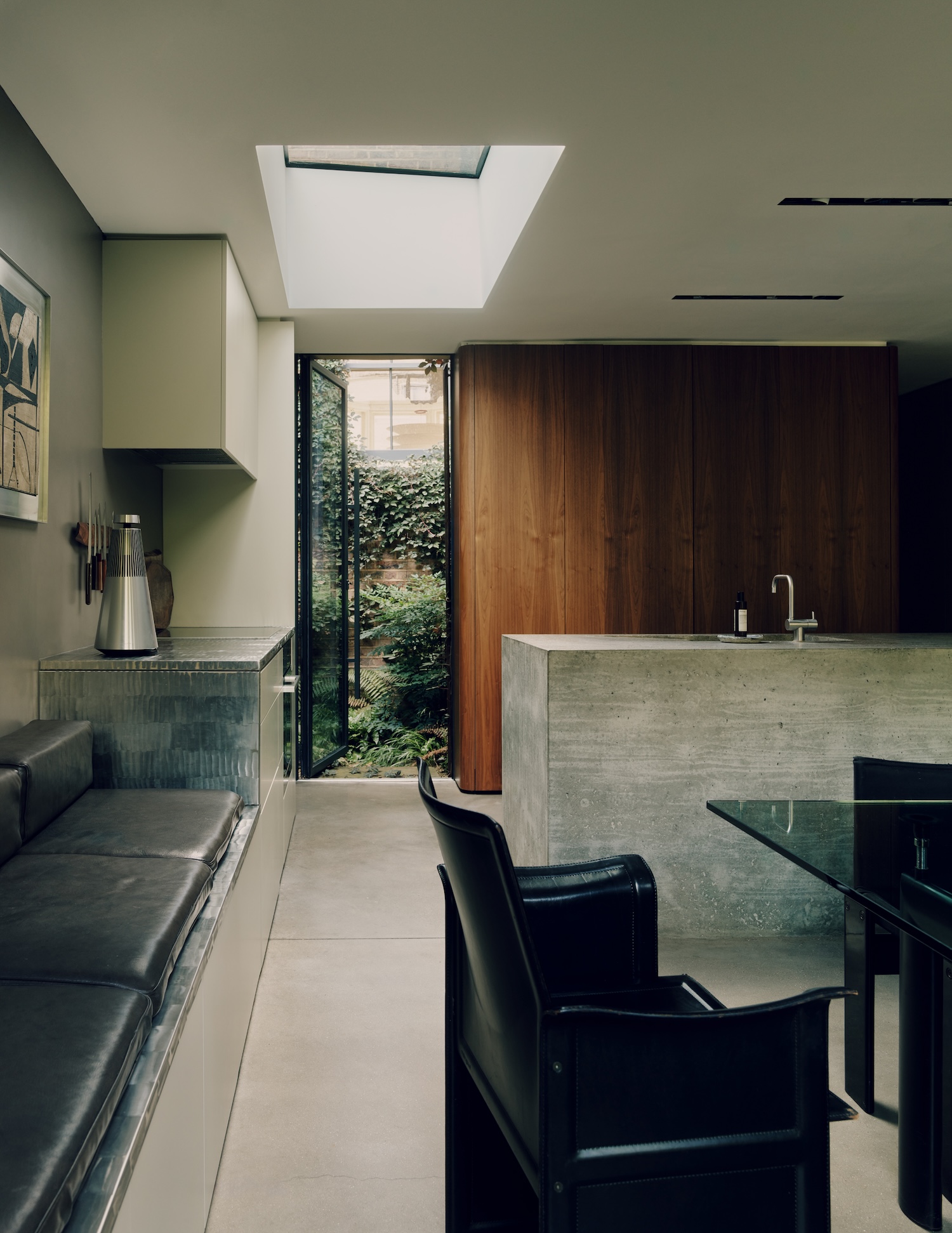
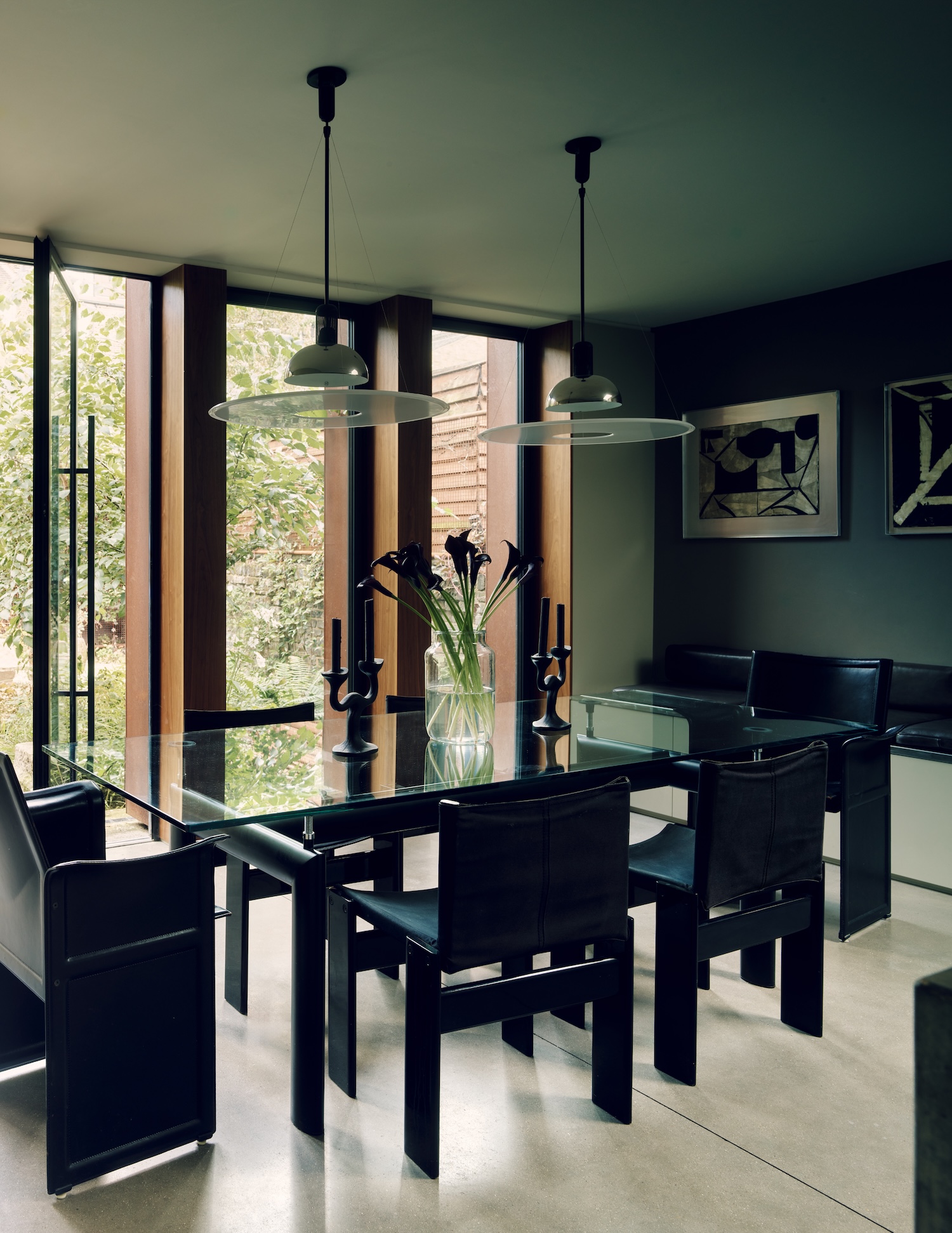
Working the steel by hand breaks up its mirror-like reflection and gives the scratches of daily cooking a surface to disappear into. The dining area follows the same approach of adapting what was already there. The built-in seating stayed in place and was reupholstered in Howe leather.
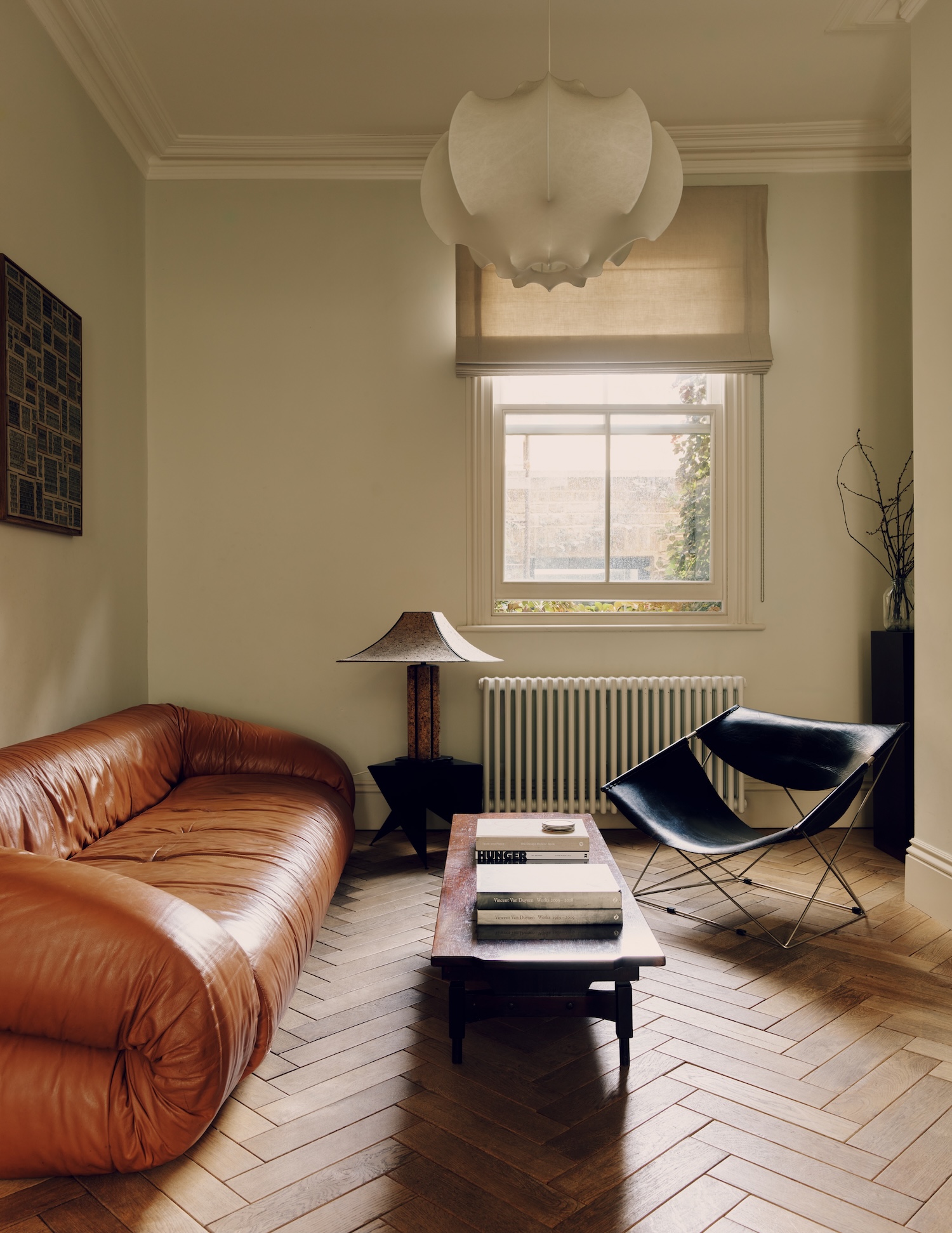
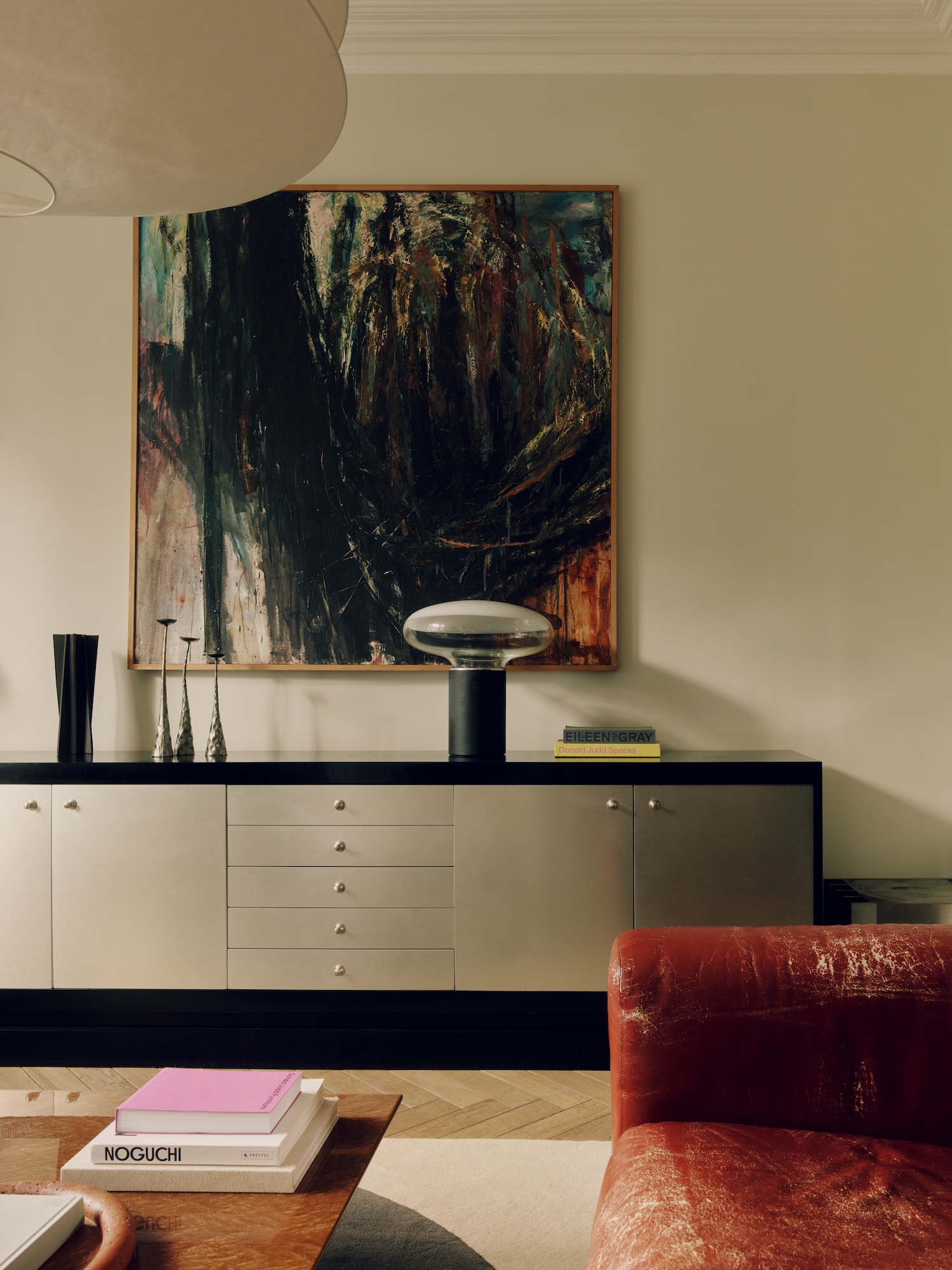
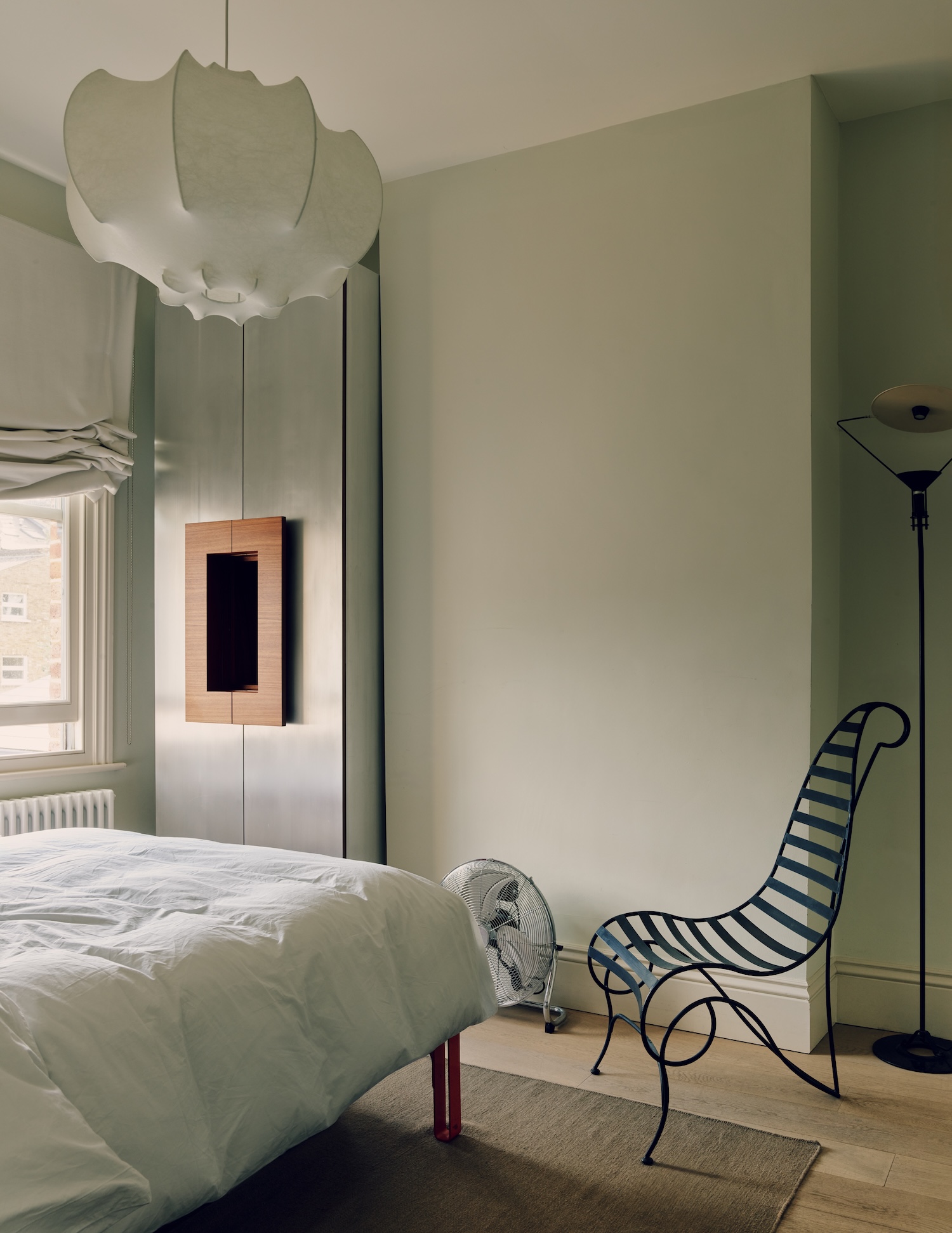
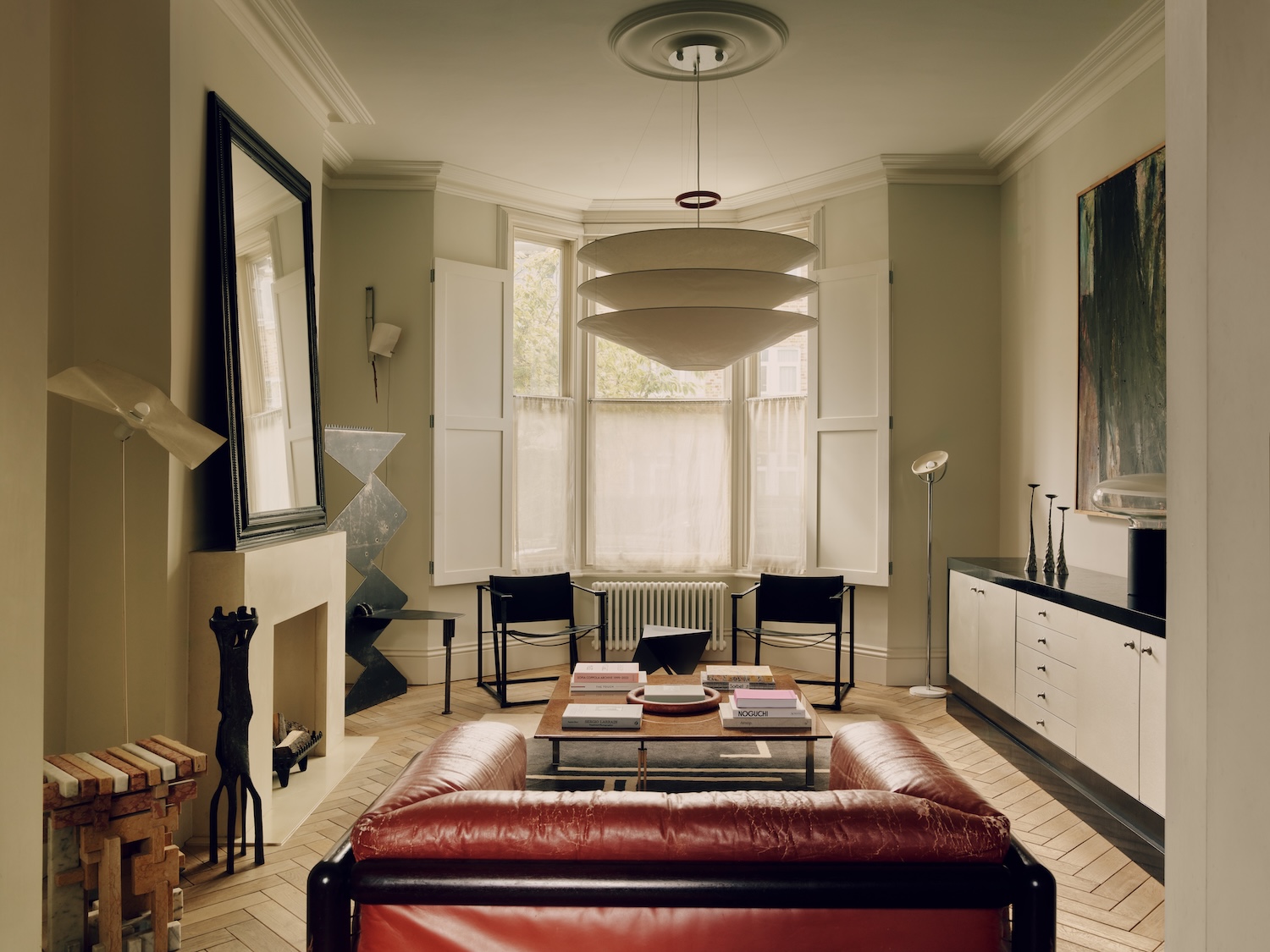
Radford previously worked under Max Rollitt and Hollie Bowden and runs Max Radford Gallery. He furnished the house the way a gallerist would, setting 20th-century modernist pieces beside new commissions from independent British designers. In the living spaces, a vintage Anfibio sofa by Alessandro Becchi, designed to unfold into a bed, sits with Pierre Paulin’s F675 Butterfly lounge chair and lighting by Achille and Pier Giacomo Castiglioni. Pieces by EJR Barnes, Freddy Tuppen, and Eddie Olin appear throughout as furniture and functional fittings.
Radford’s view is that experimental design loses some of its severity inside a family house, where everyday use makes uncompromising objects easier to live with. In the entrance hall, a 1980s Geometric chandelier by Mario Botta for Artemide hangs above a radiator cover Radford designed himself.
The study is painted an enveloping cherry red that references Parisian interiors of the 1980s. It holds a vintage Wilkhahn Delta 2000 chair and an Artemide Tizio desk lamp, whose counterweighted arms hold the light at any angle without springs.
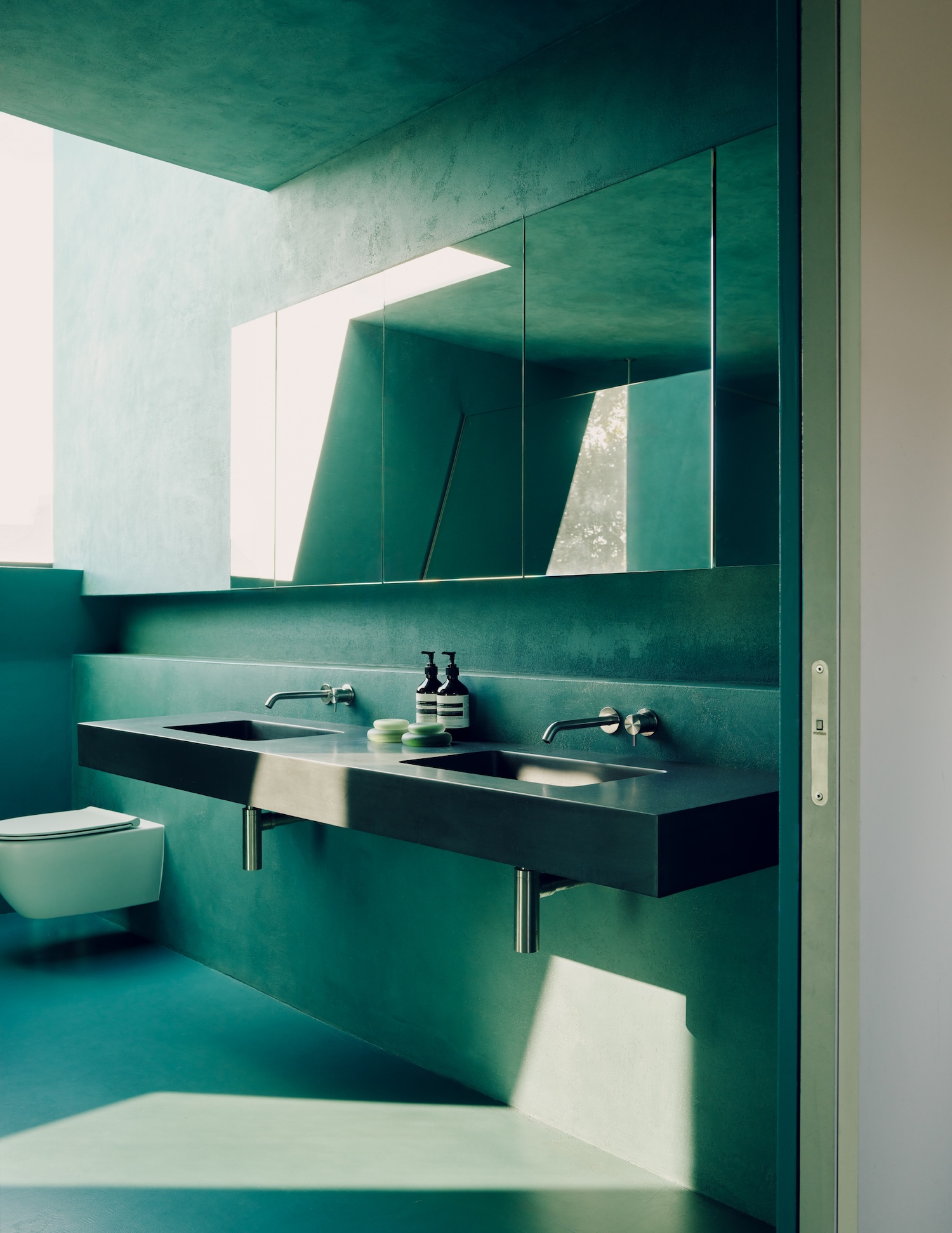
In the en suite, custom blue micro-cement covers every surface. The material goes on as a continuous troweled coat with no grout lines, so walls and floor read as one monochrome volume. The only break is a mirror Radford designed for the room.