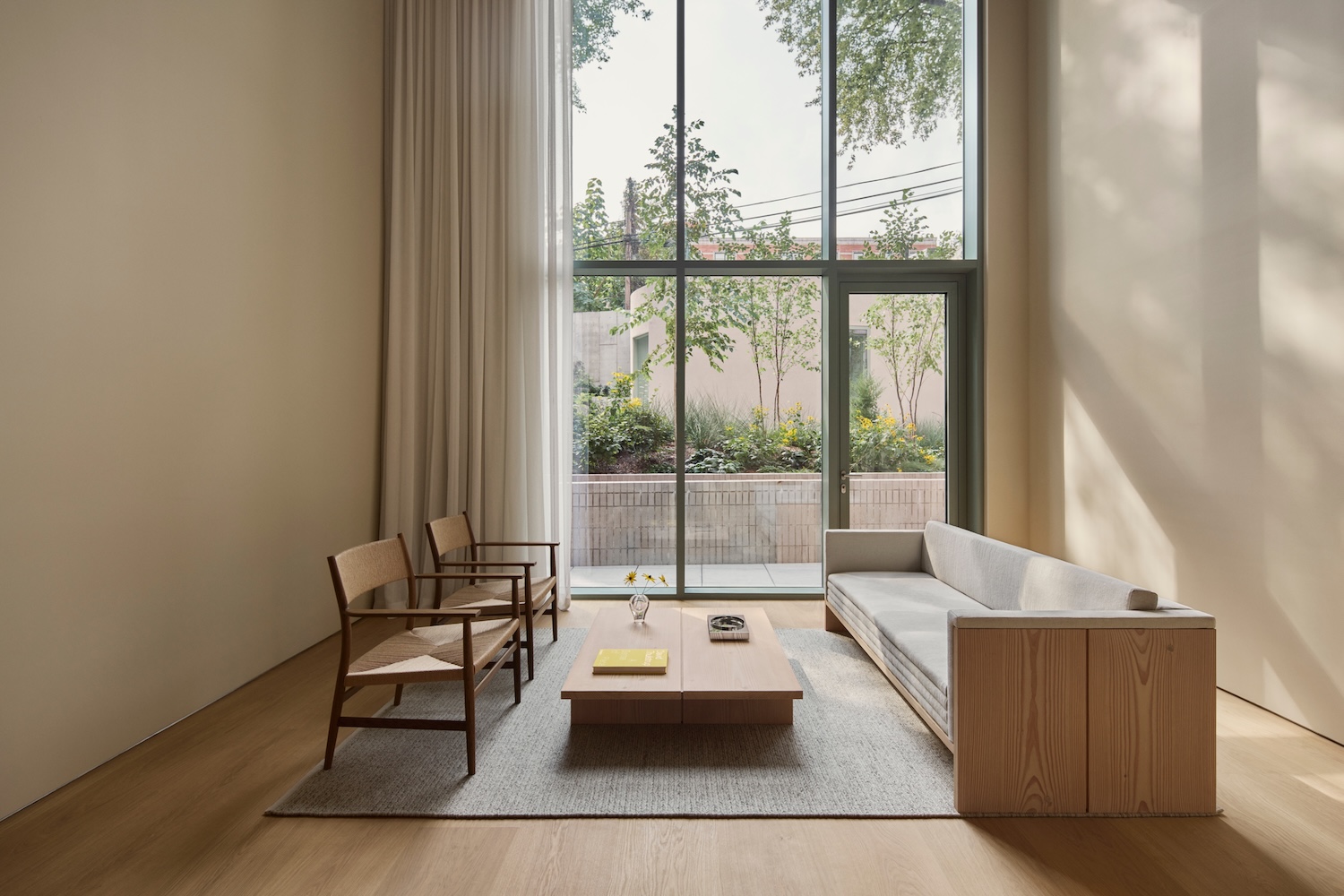
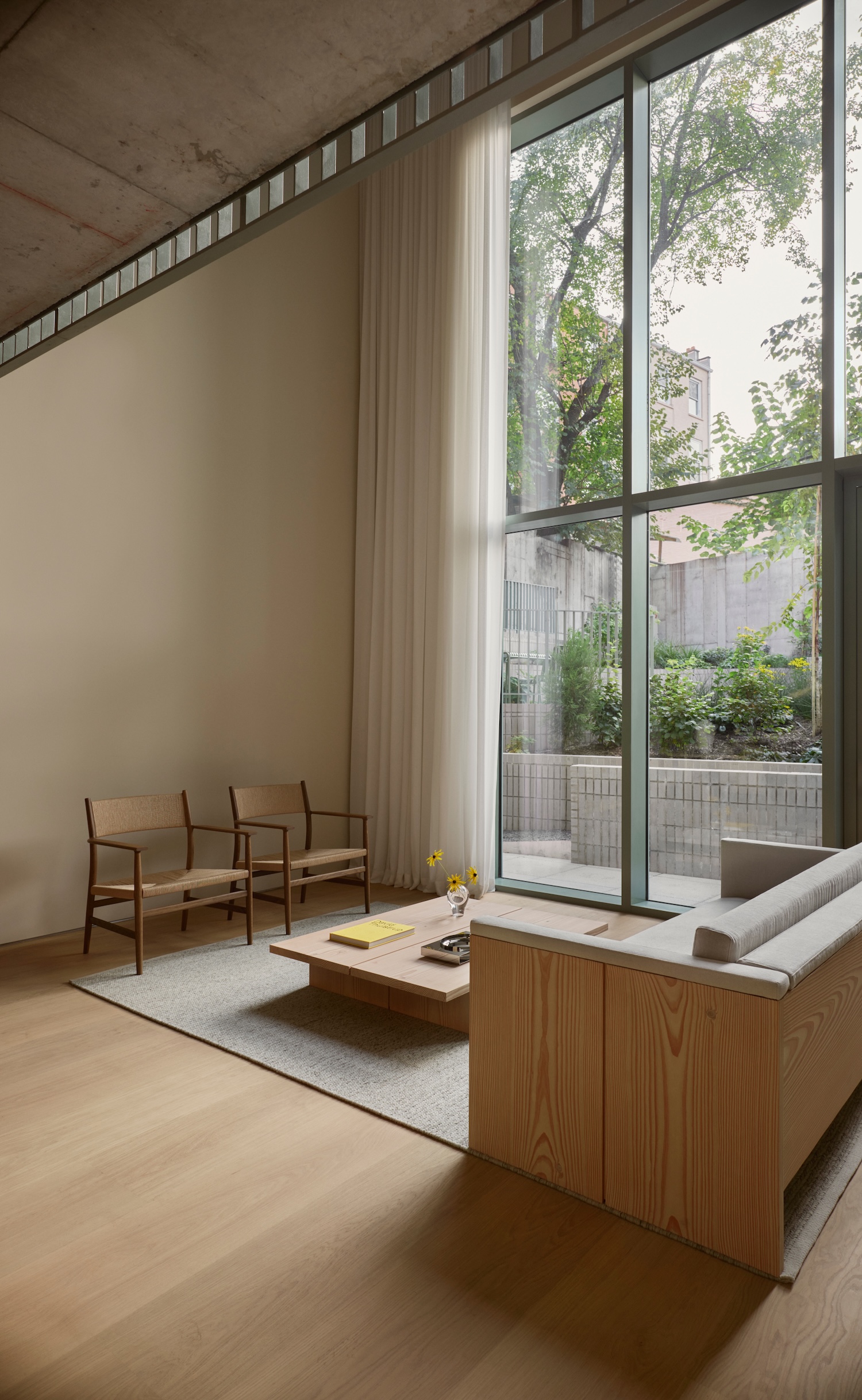
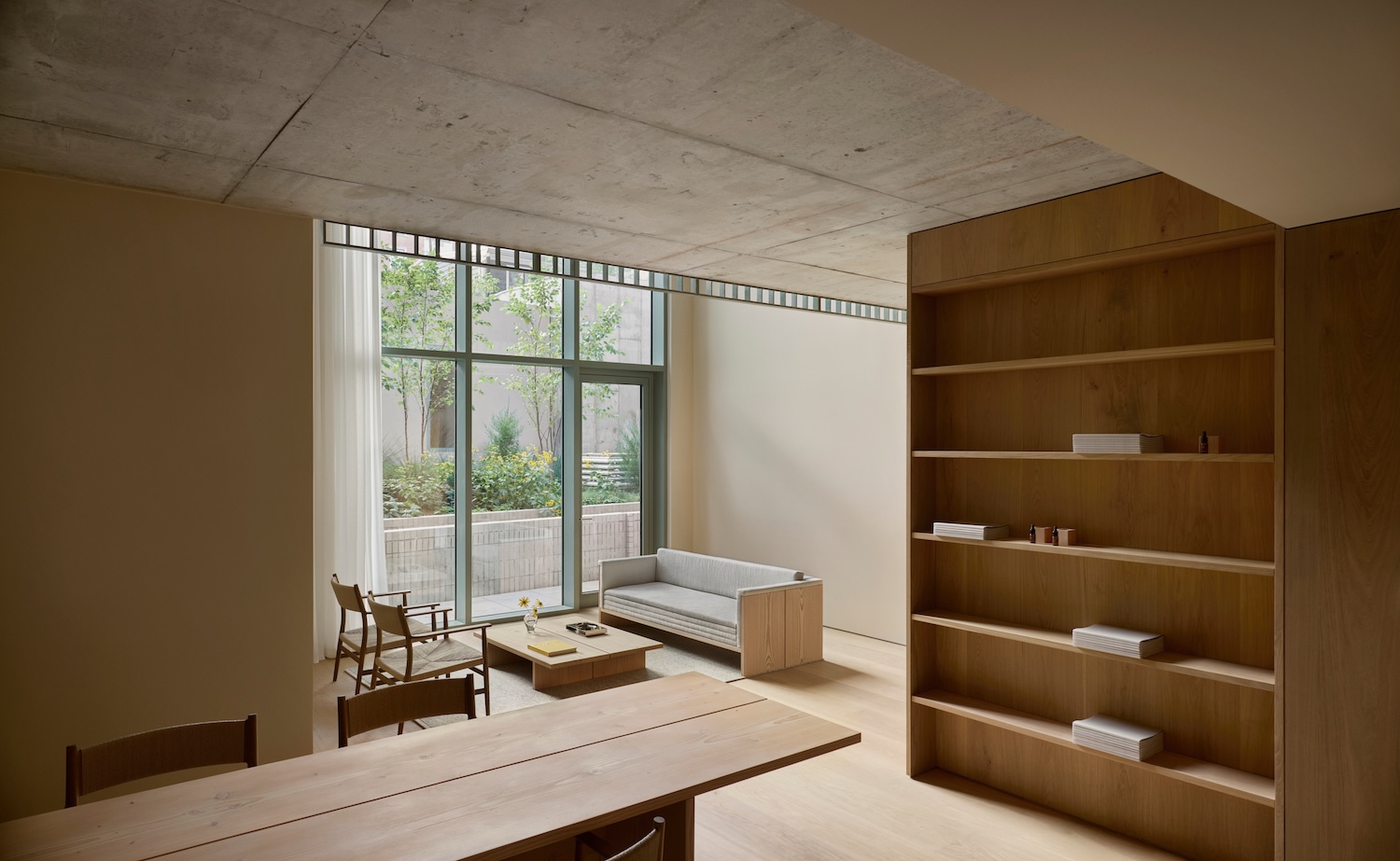
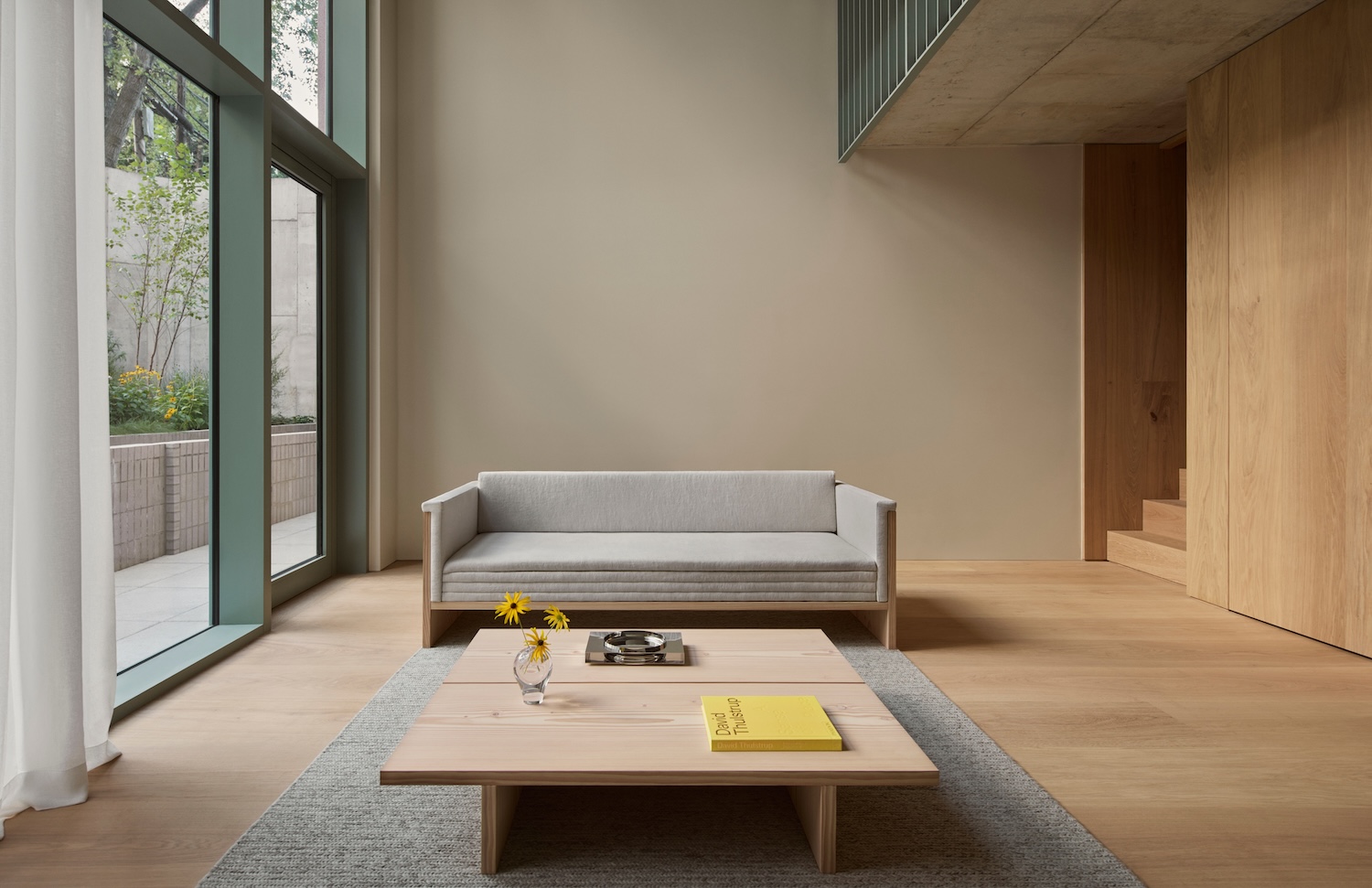
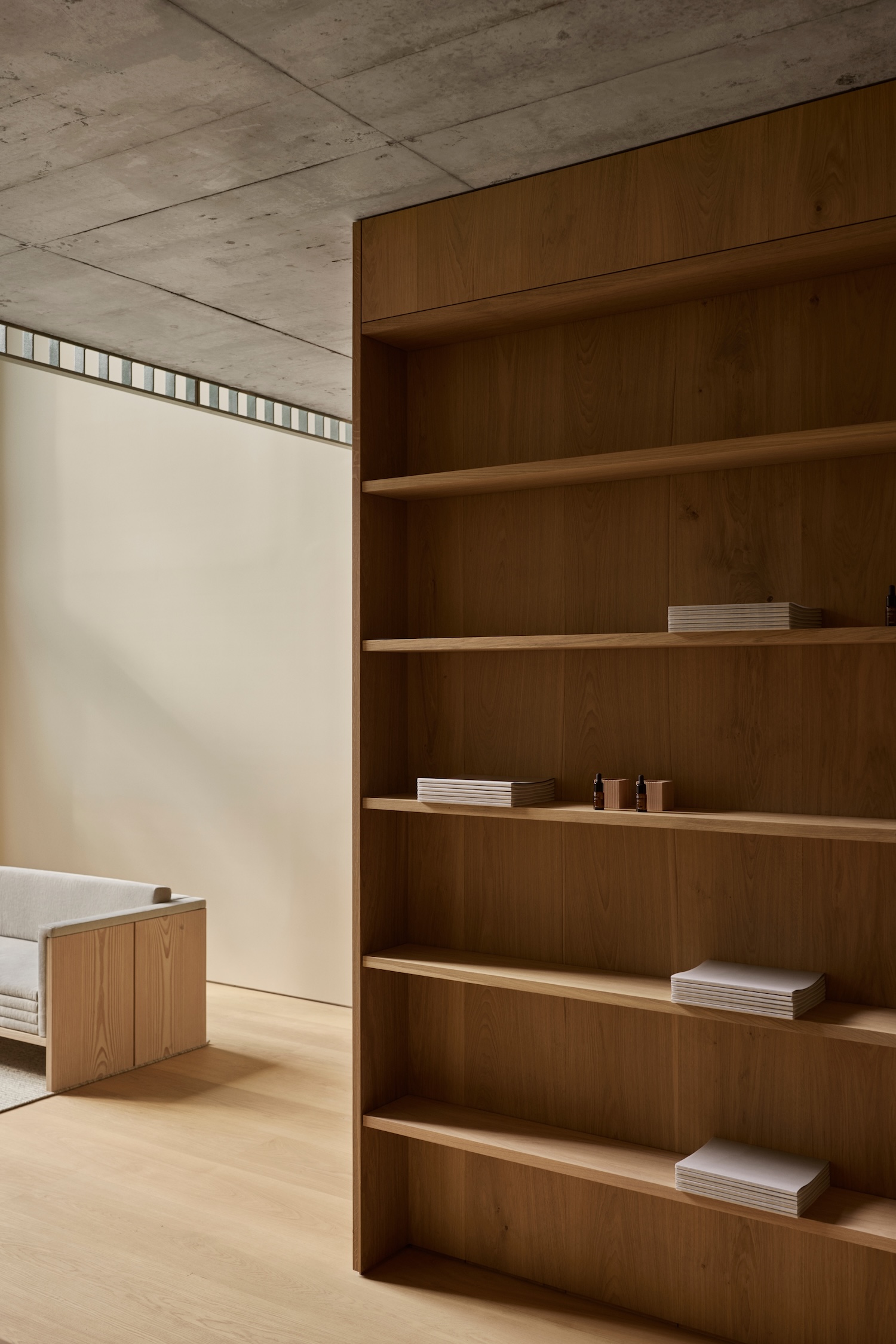
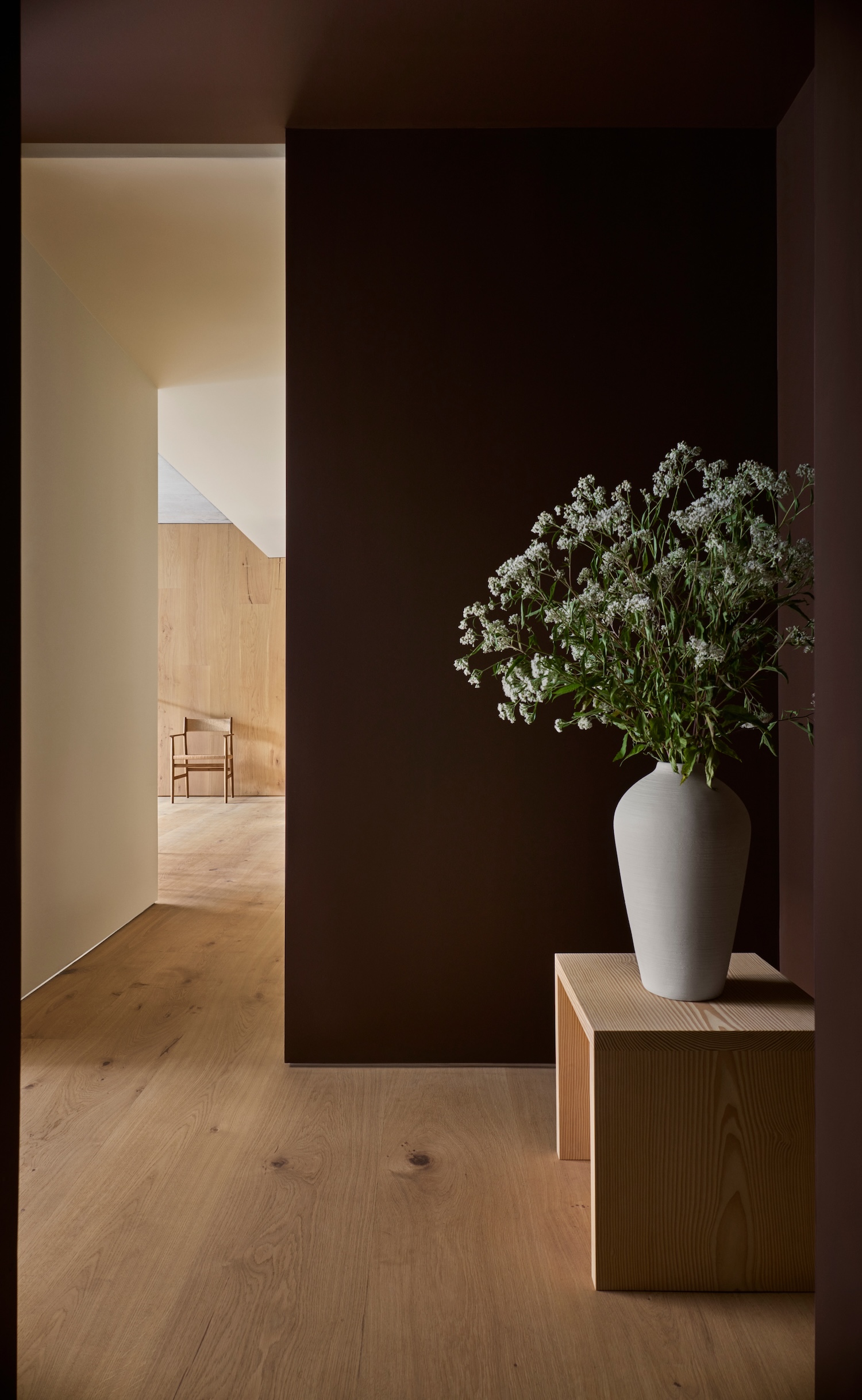
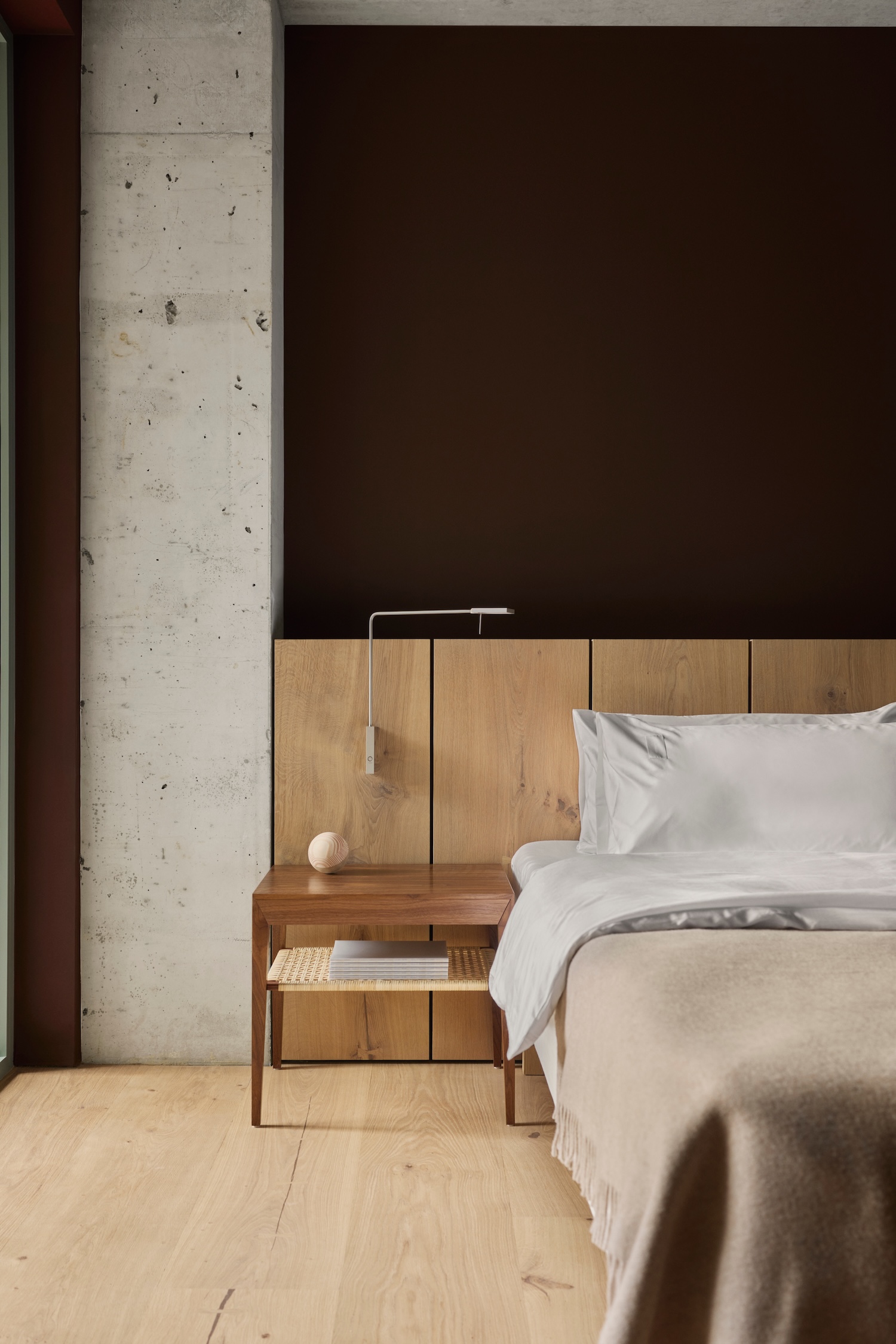
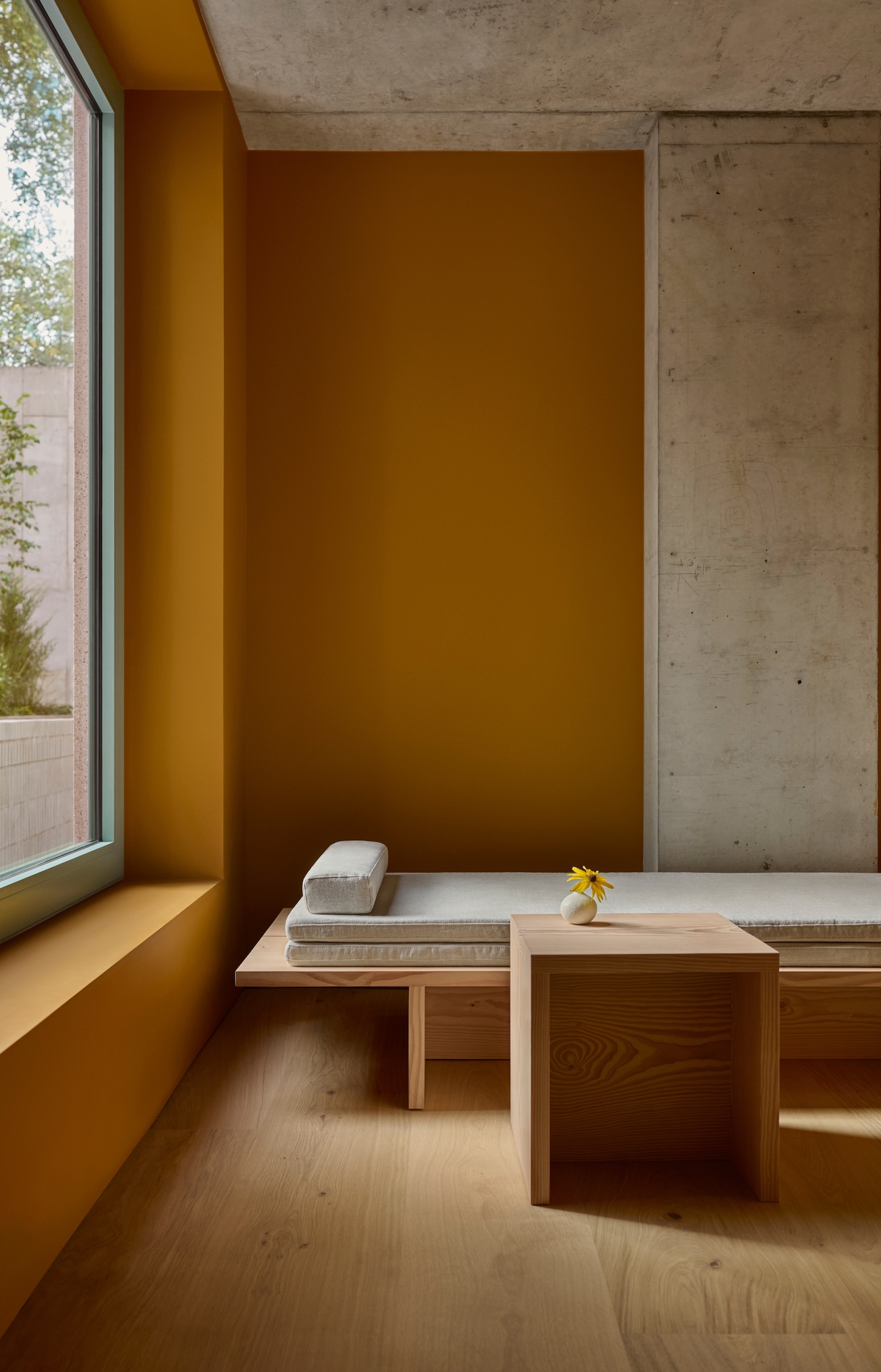
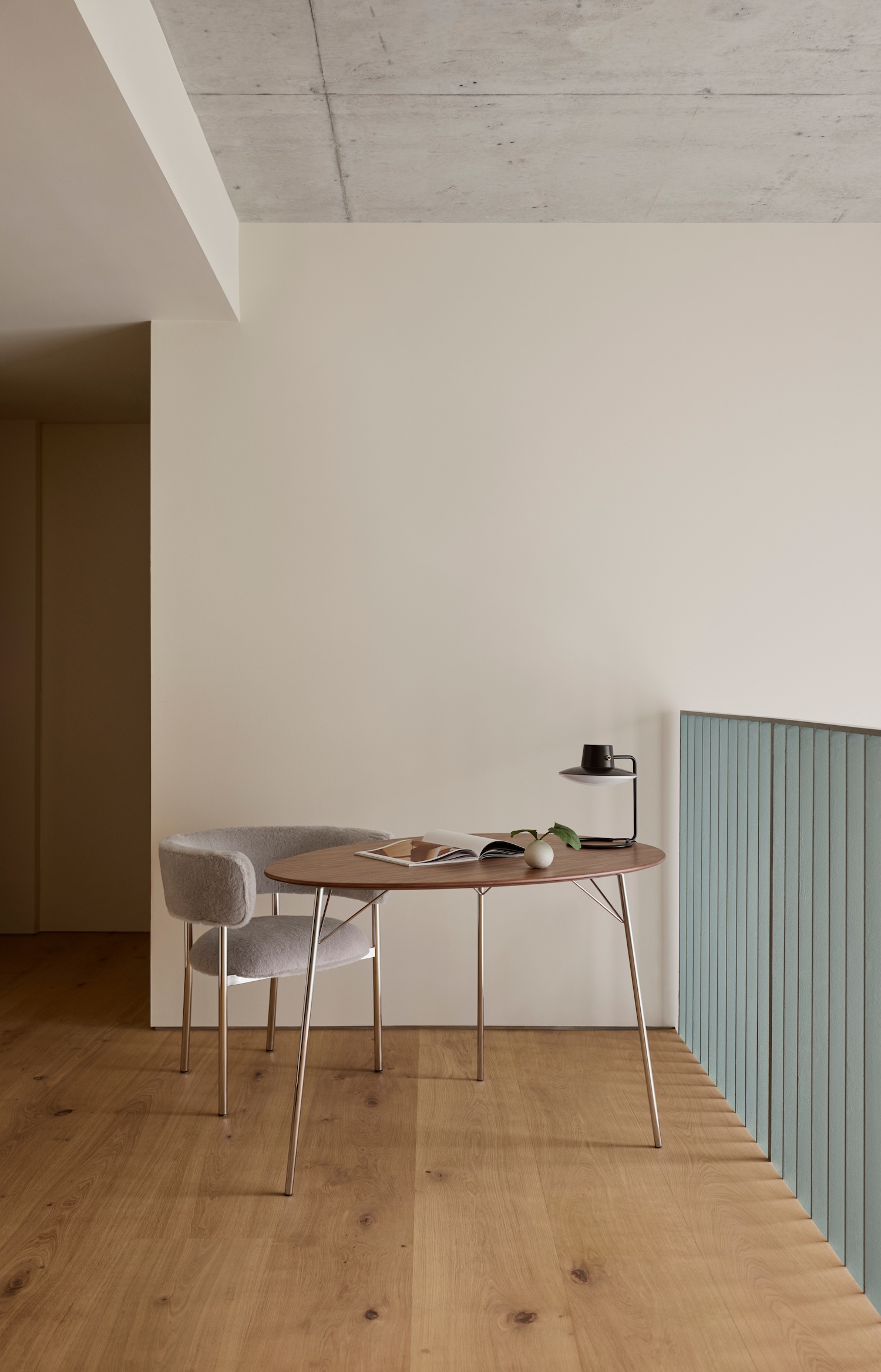
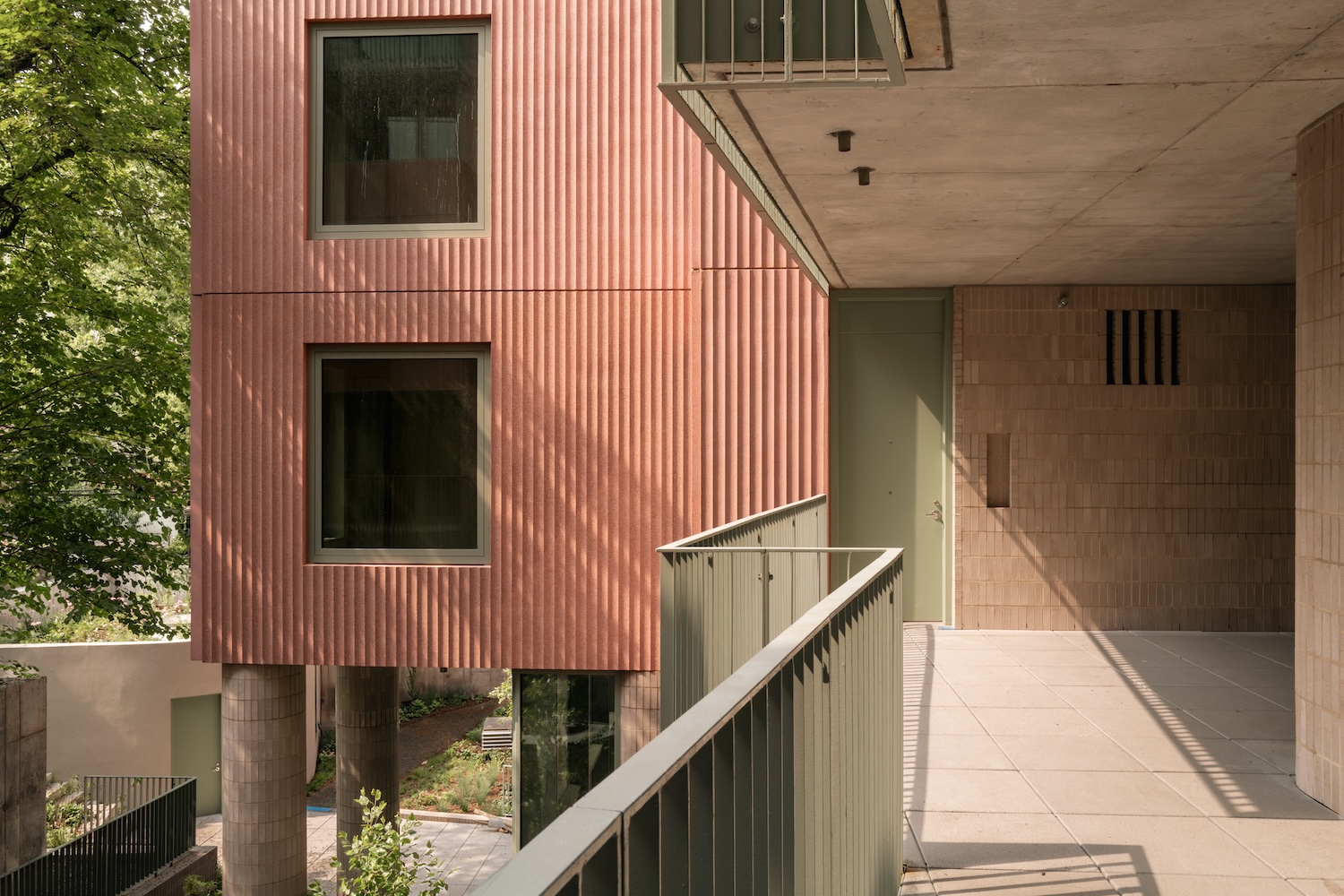
Dinesen Apartment is a minimalist apartment located in Fort Greene, Brooklyn within 144 Vanderbilt, designed by David Thulstrup. The apartment occupies the first and second floors of 144 Vanderbilt, a building by SO—IL, and developed by Tankhouse, and functions as both working residence and immersive material demonstration. This temporary intervention represents Dinesen’s first American spatial venture, extending the Danish flooring manufacturer’s apartment concept series beyond their 2024 John Pawson collaboration in Copenhagen.
The project investigates how wide-plank oak can structure domestic experience through continuity rather than contrast. Dinesen Layers Oak in the Classic variant establishes visual coherence across floors, walls, and built elements, while strategic insertions of Layers HeartOak introduce moments of arrested time through natural fissures held by butterfly joints. This material strategy reflects a broader consideration of wood as carrier of temporal depth, each plank recording decades of growth in its grain structure.
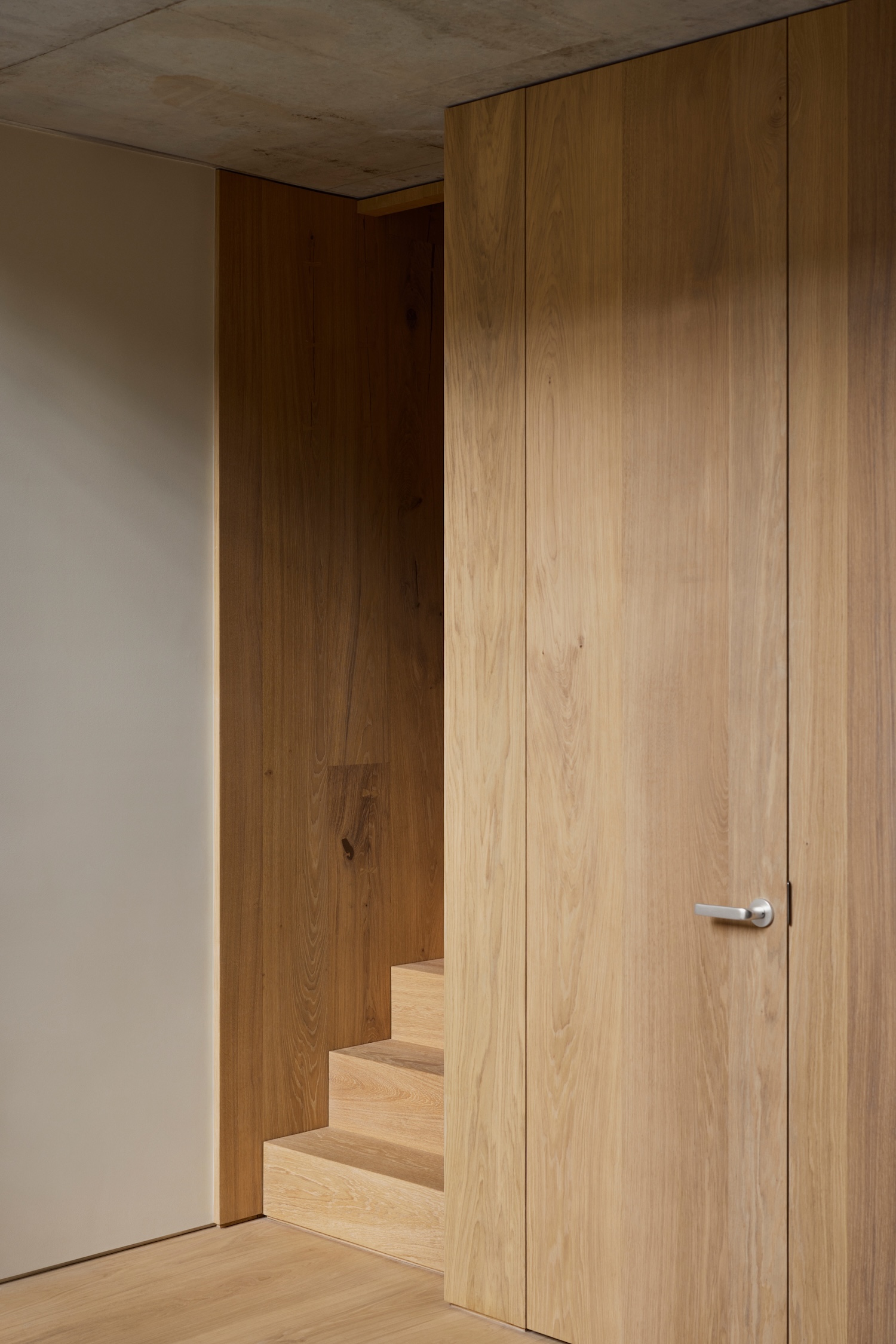
Thulstrup calibrates the apartment around sensory engagement beyond photography’s reach. His emphasis on tactile experience and embodied movement through space challenges the dominance of image-based design consumption. The half-turn staircase, executed by Danish carpentry duo Ocular, becomes a study in material transitions as visitors move between levels. Every joinery detail reinforces the sense that architectural elements and furniture occupy a shared material vocabulary rather than distinct categories.
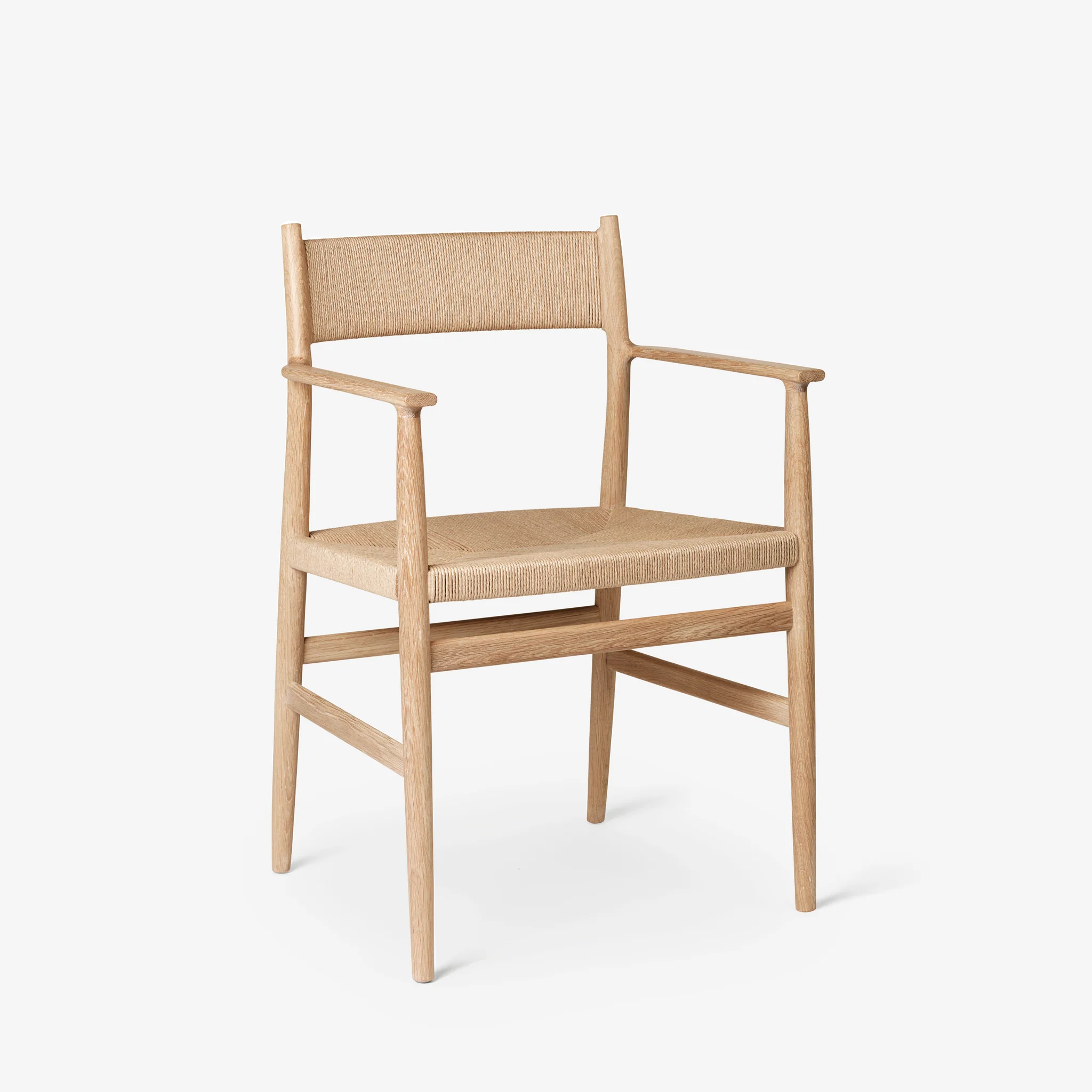
The furnishing program layers multiple design lineages without hierarchy. Thulstrup’s own Arv Collection for Brdr. Krüger appears alongside Pawson’s designs for Dinesen and vintage pieces by Arne Jacobsen and Severin Hansen, sourced through Dagmar. This temporal mixing reflects Thulstrup’s stated interest in combining contemporary, classic, and crafted elements, creating what he terms a quiet and grounded atmosphere. Levino fabric by Sahco unifies the upholstery selections, while textiles from Kvadrat and Magniberg contribute textural variation.
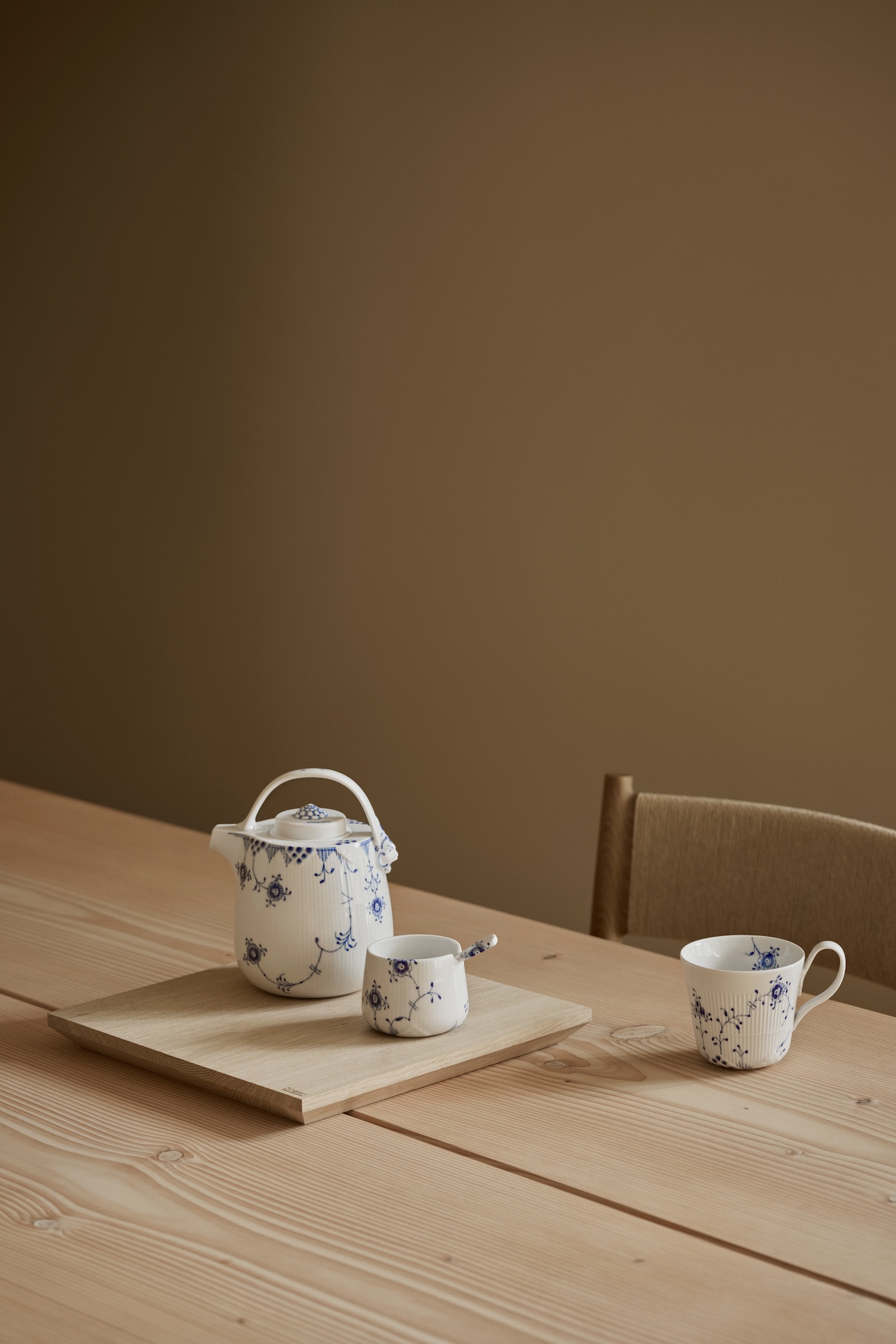
Color becomes an active architectural element through three Blēo paint specifications developed by Thulstrup. Titian, Sand, and Suede walls establish nuanced backgrounds that shift in response to natural light cycles, their pigments calibrated to complement oak’s inherent warmth. This attention to chromatic subtlety extends to smaller elements, from Penumbra hollowware by Georg Jensen to FSB door handles, each selection reinforcing material sensitivity as organizing principle.