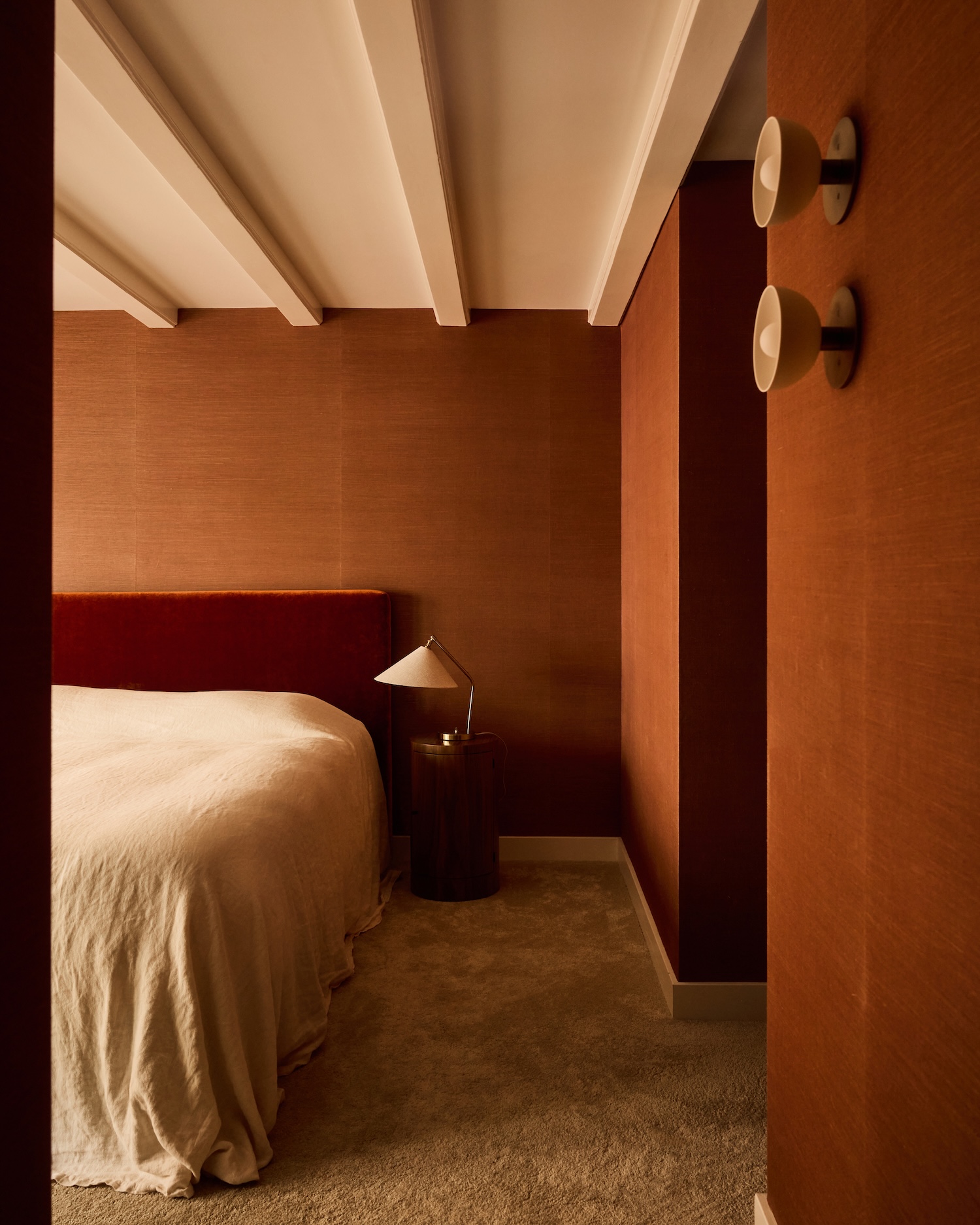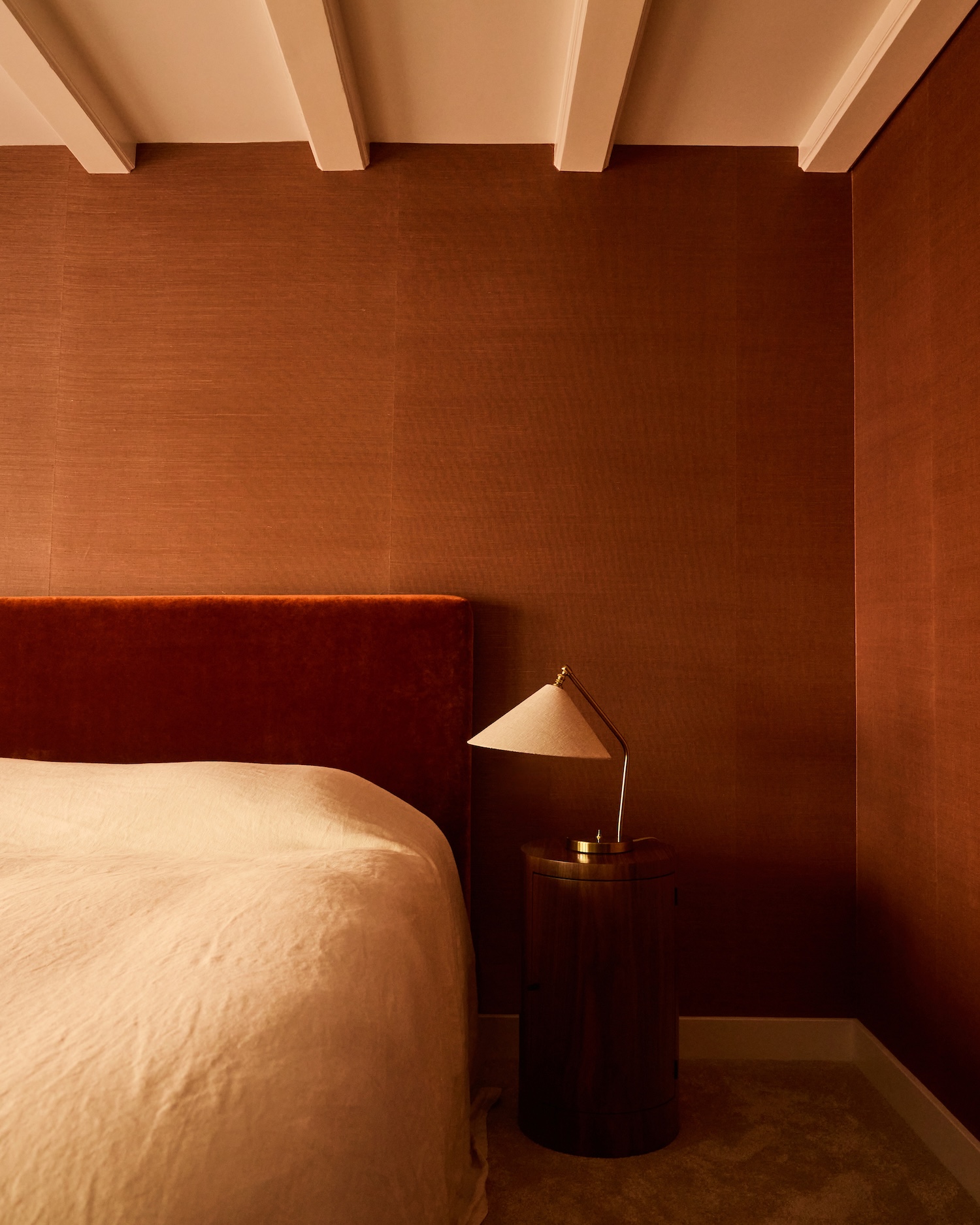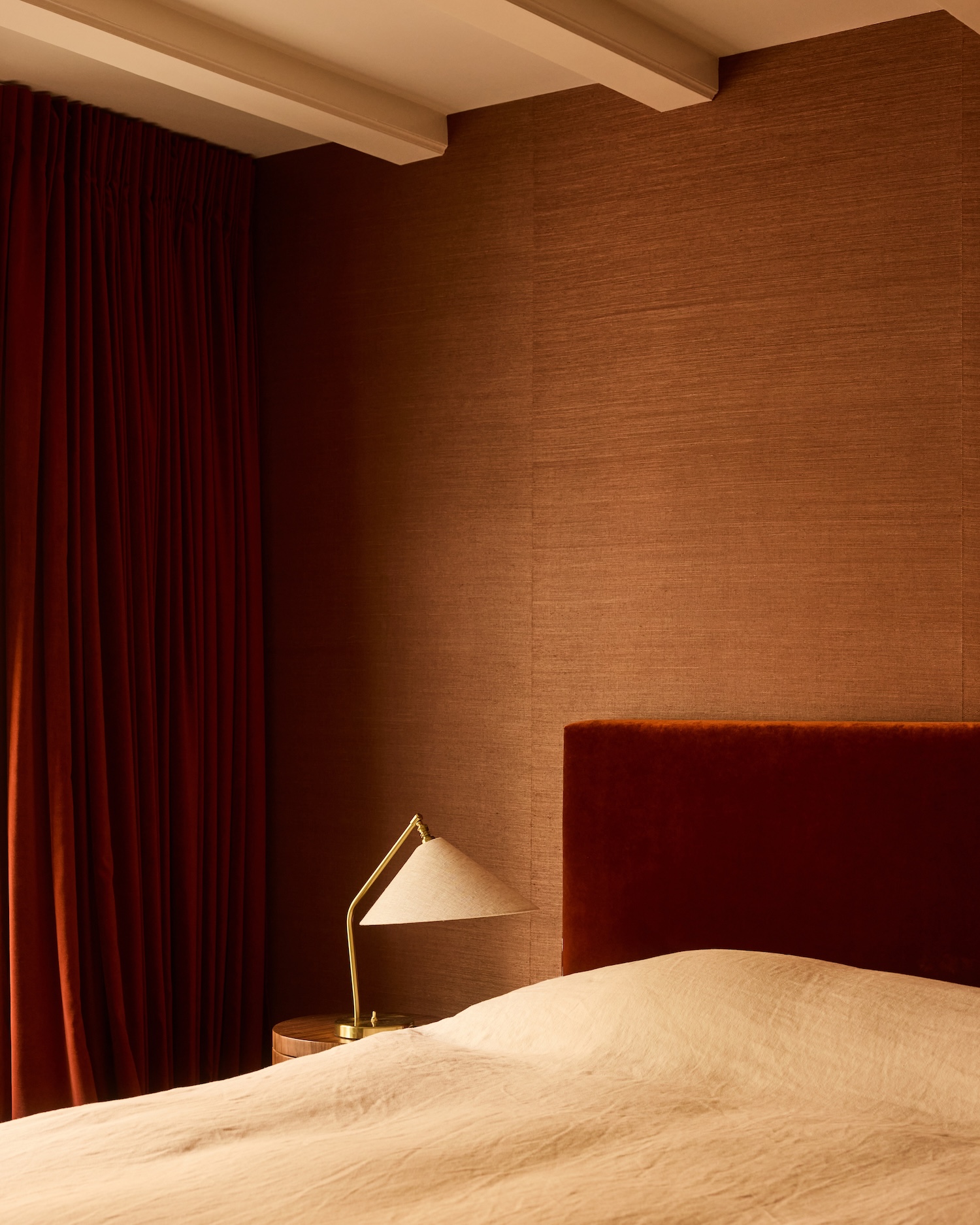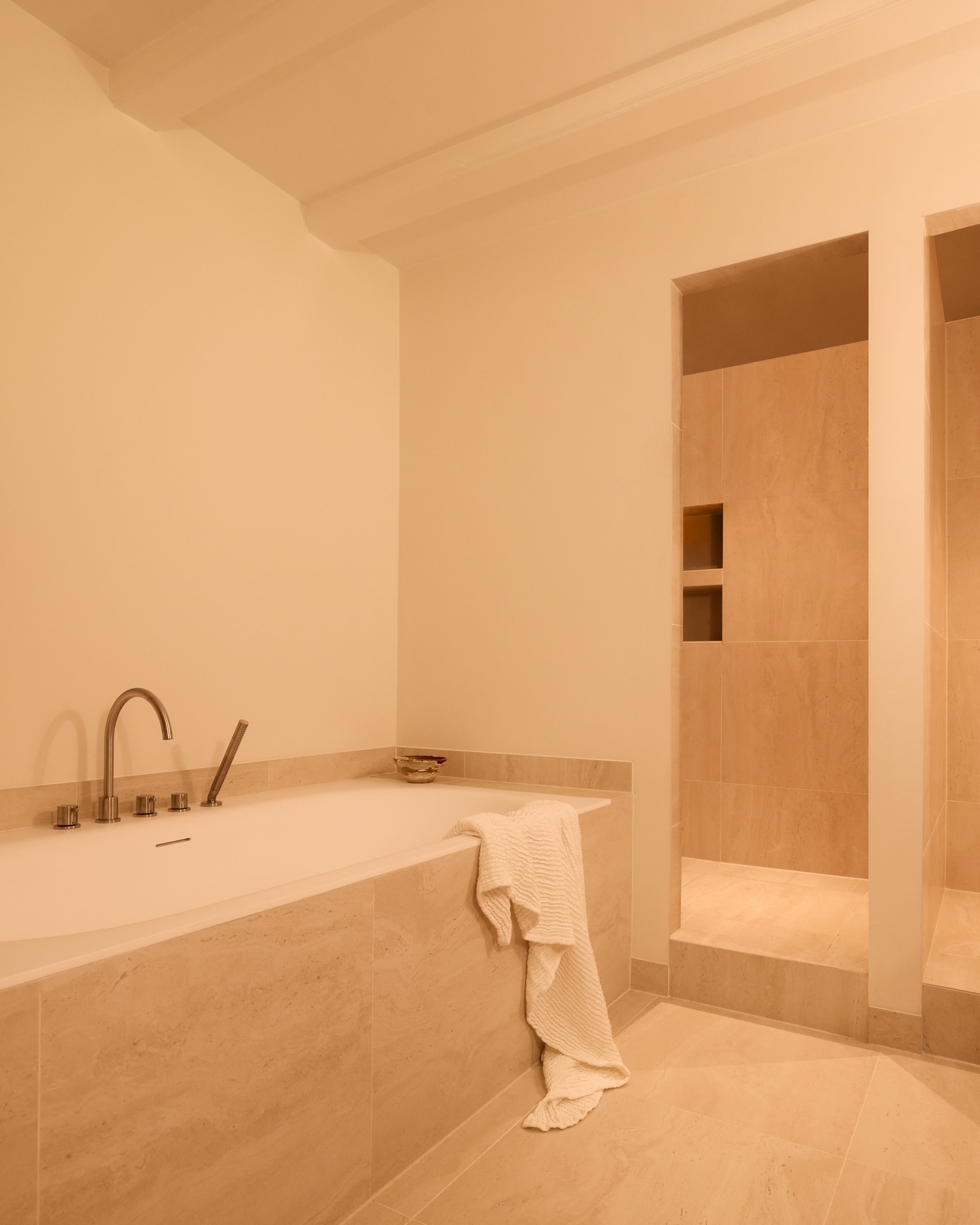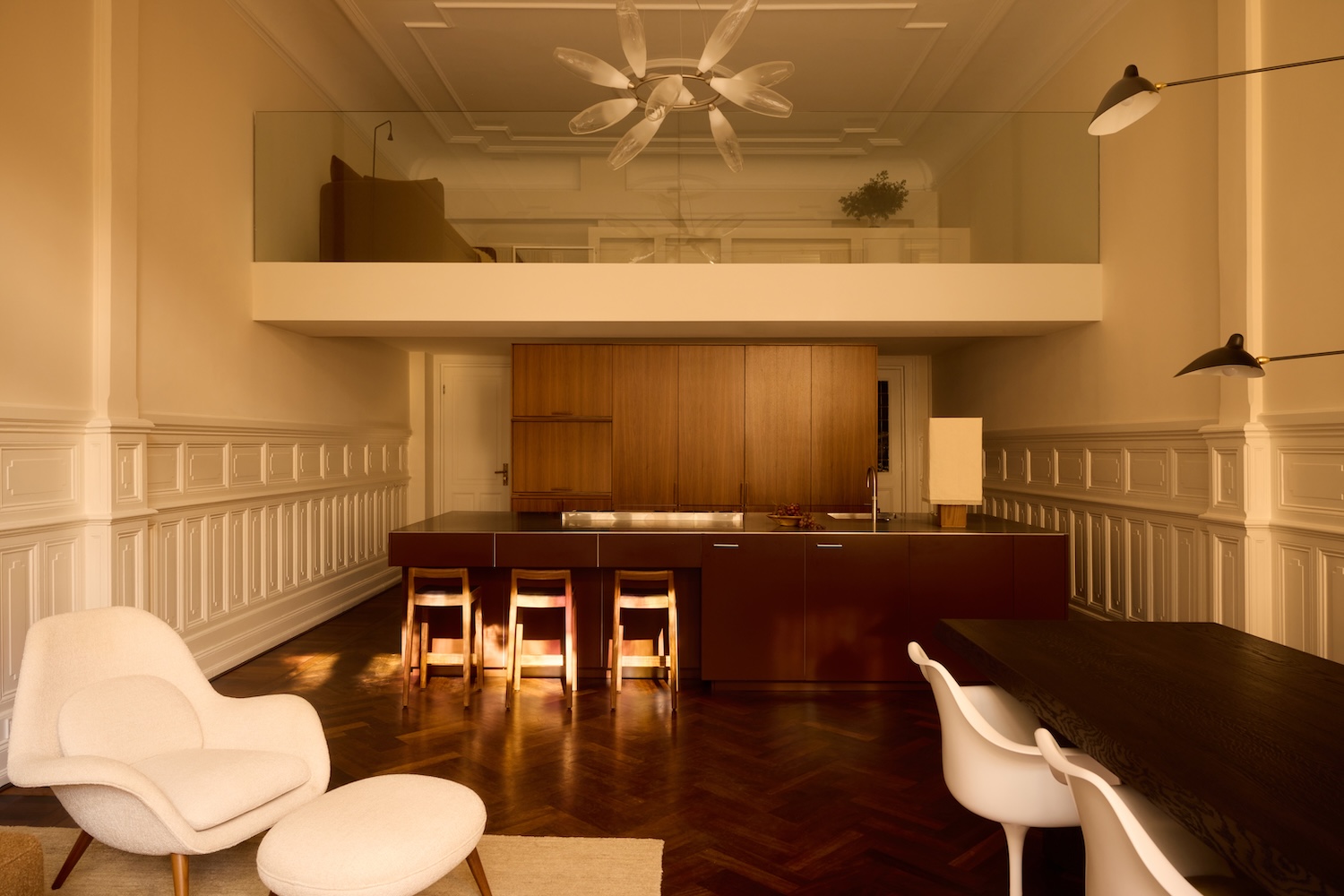
Echoes of the Studio is a minimalist residence located in Amsterdam, Netherlands, designed by Bob van Zonneveld. This historic canal house on the Prinsengracht, once a beautiful ballet studio, has been transformed into a serene and inviting retreat. After years in the countryside, the client returned to Amsterdam with their dog, seeking a home that balances the vibrancy of the city with privacy and calm, demonstrating how adaptive reuse can maintain historic building character while addressing contemporary residential requirements for urban professionals.
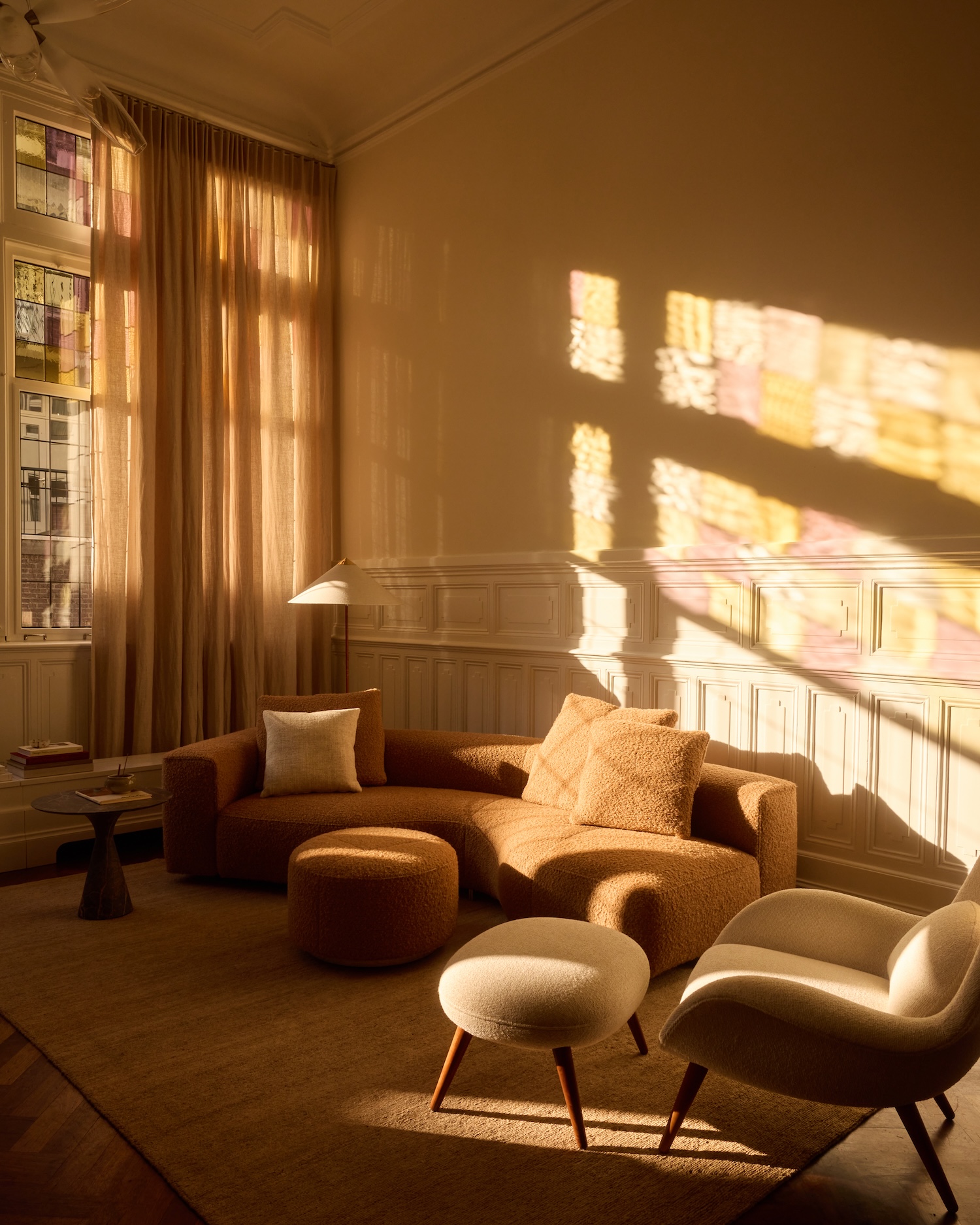
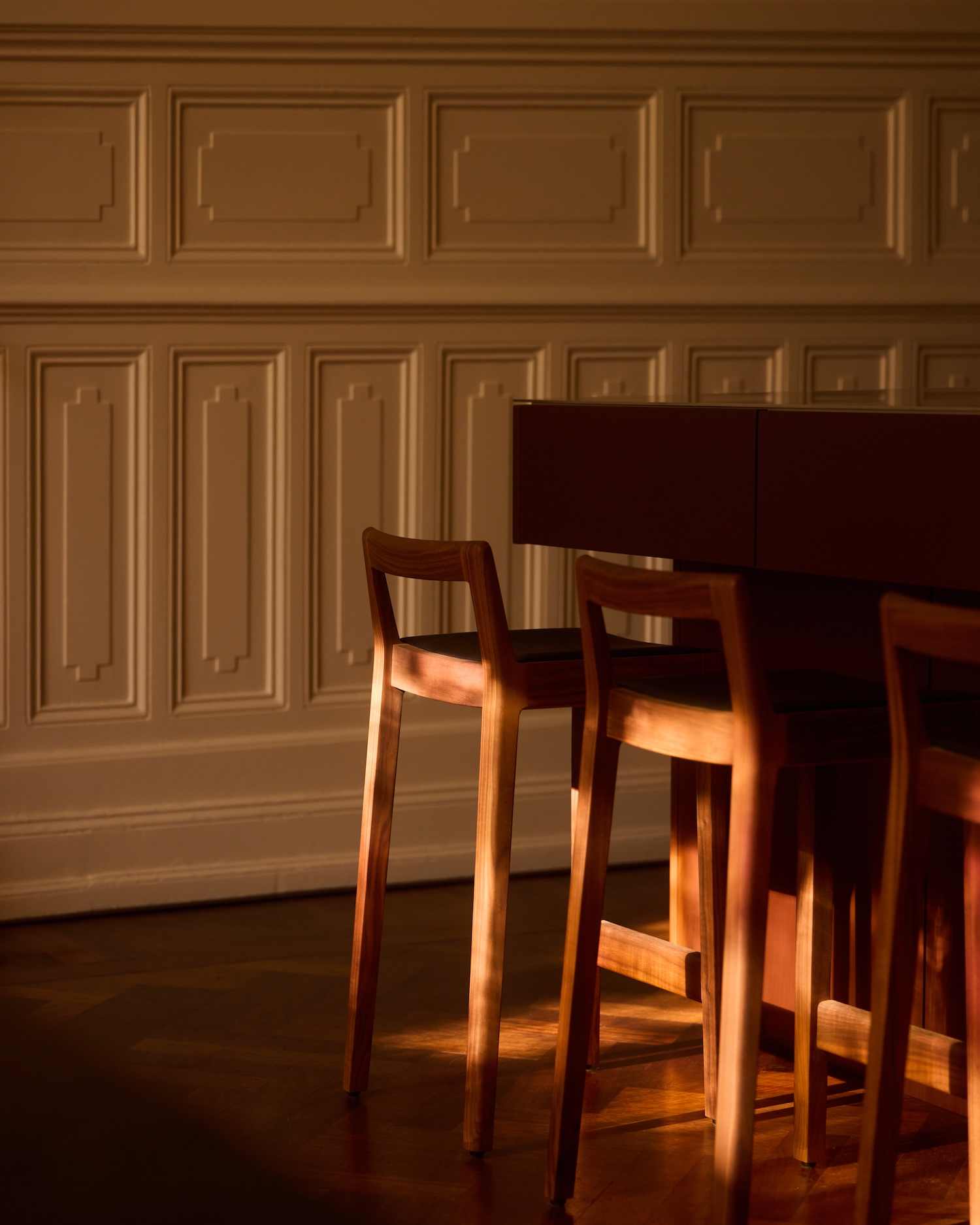
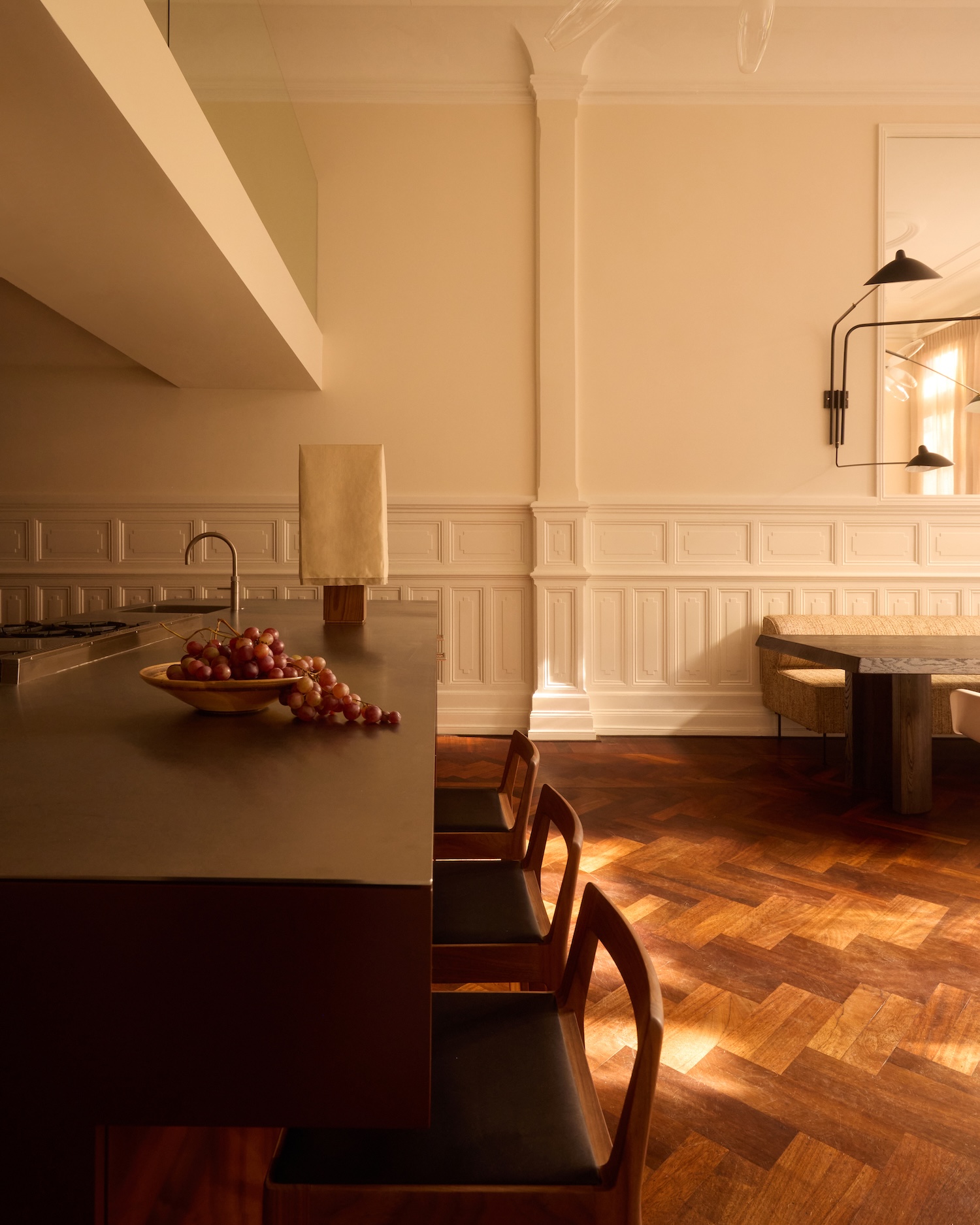
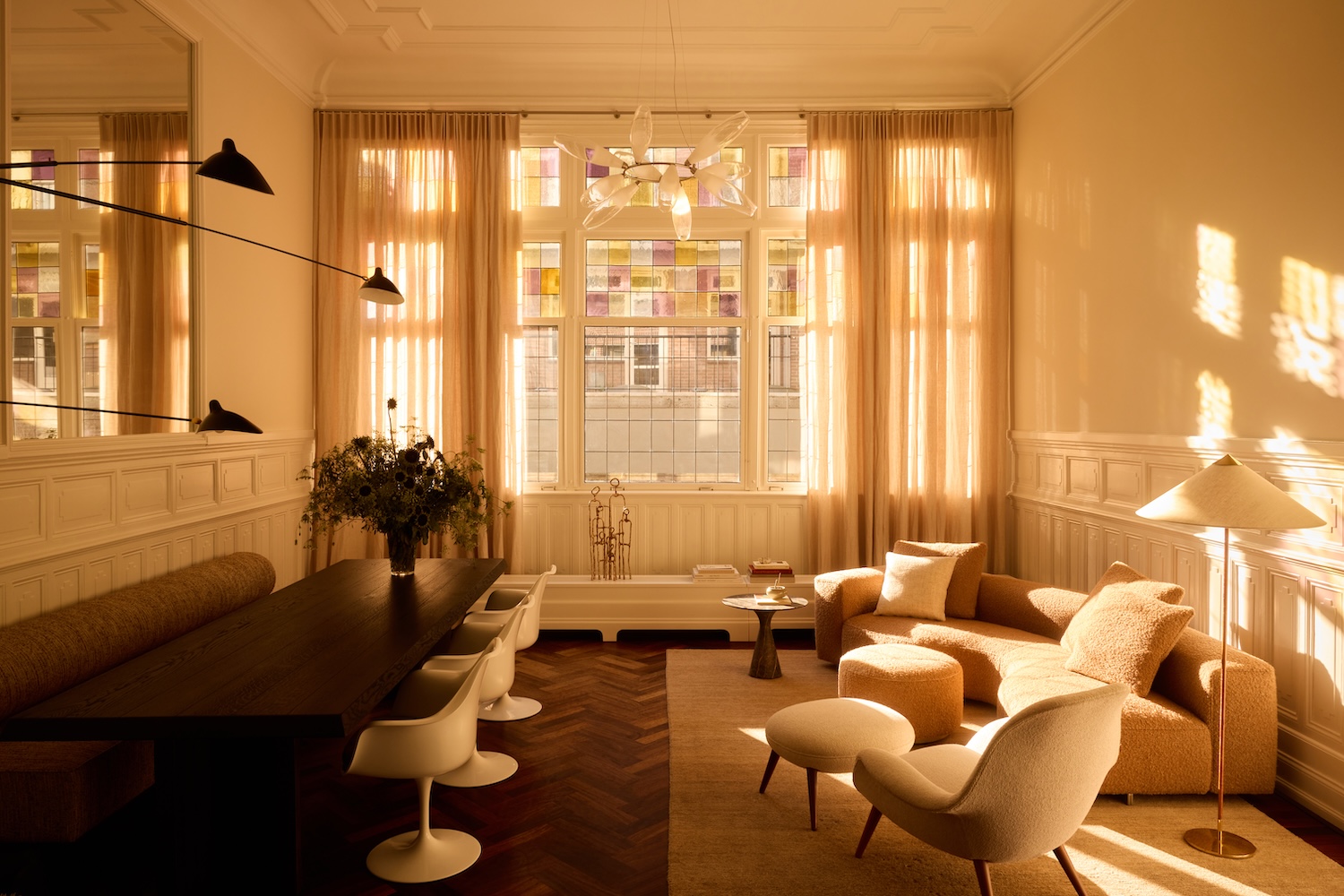
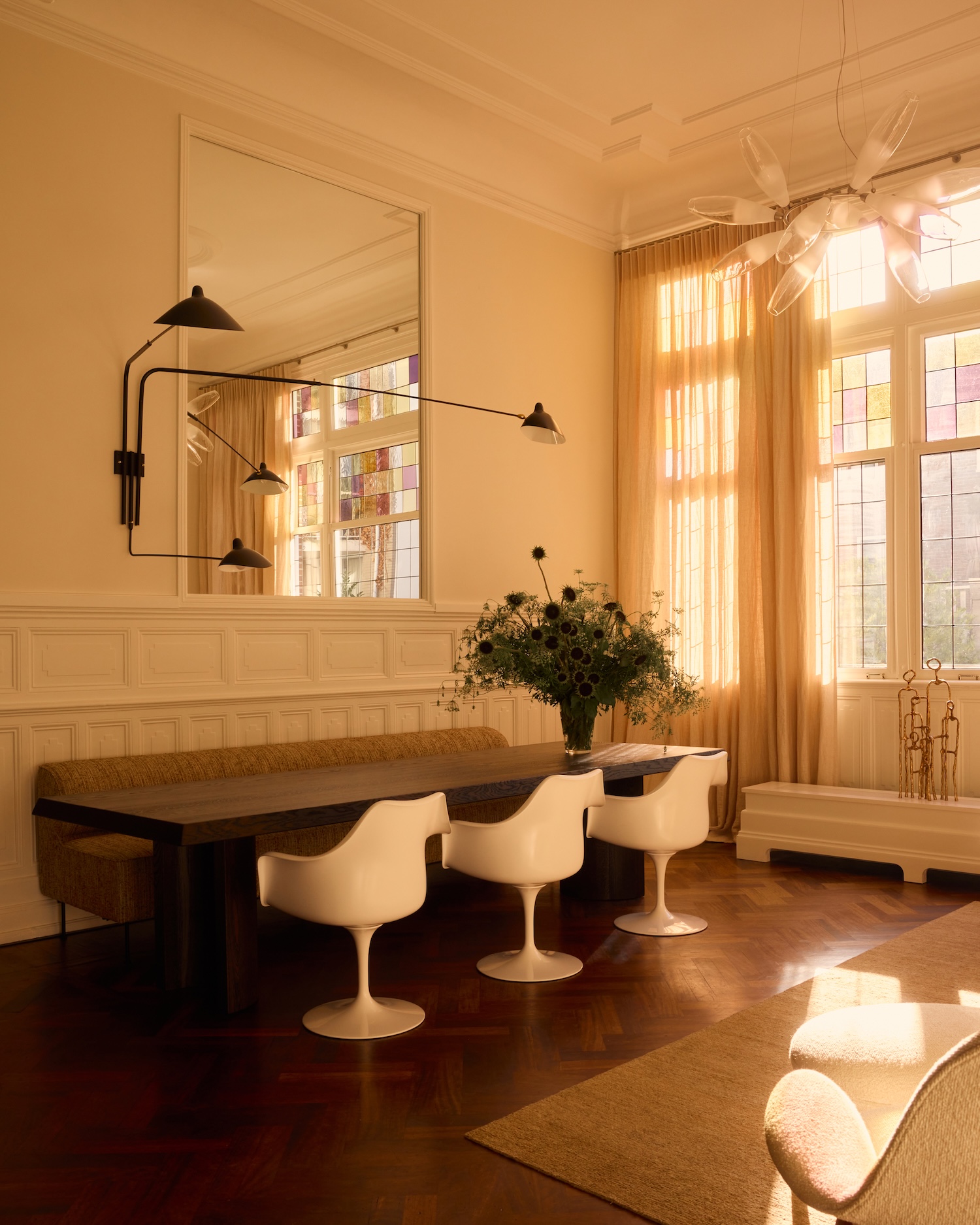
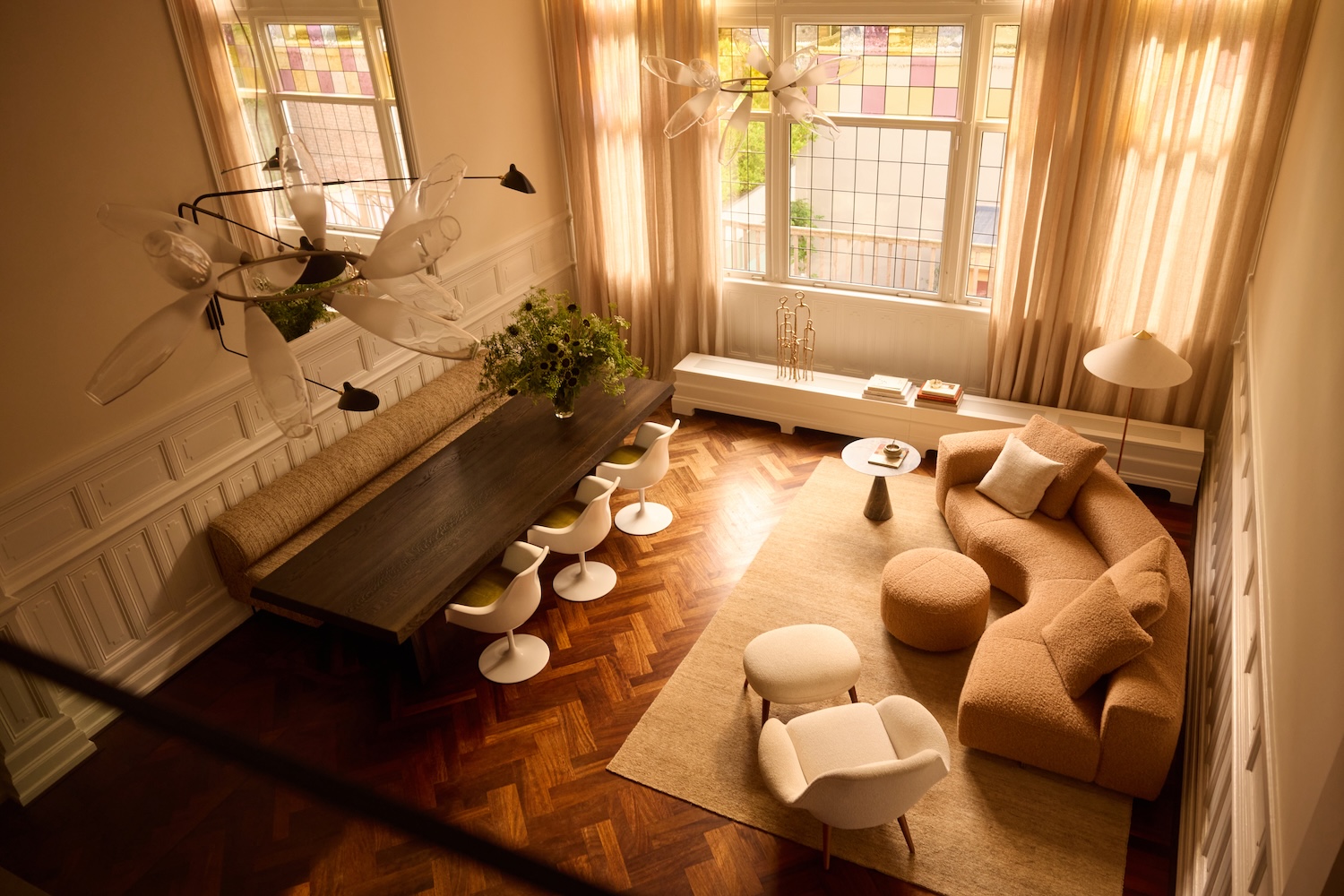
The architecture of the house, with its tall ceilings, large windows, and intricate wall paneling, plays a central role in shaping the interiors. The rear rooms, light-filled and structured, offer a quiet sanctuary while celebrating the home’s authentic details including stained glass and the restored original flooring. This preservation of period architectural features demonstrates how historic canal house renovation can honor Dutch Golden Age craftsmanship where ornamental details and material quality establish spatial character requiring sensitive contemporary interventions maintaining rather than obscuring original fabric.
By contrast, the front-facing rooms along the canal are designed more moody and intimate, turning the view into a living artwork where the light and reflections from the canal become part of the interior, creating ever-changing patterns and a dynamic interplay of atmosphere. The subtle echoes of its past as a ballet studio remain, felt in the rhythm of the spaces and the graceful flow between rooms. This differential treatment of front and rear spaces demonstrates how canal house design can respond to varied orientations where public-facing rooms embrace urban spectacle while private rear areas provide calm retreat.
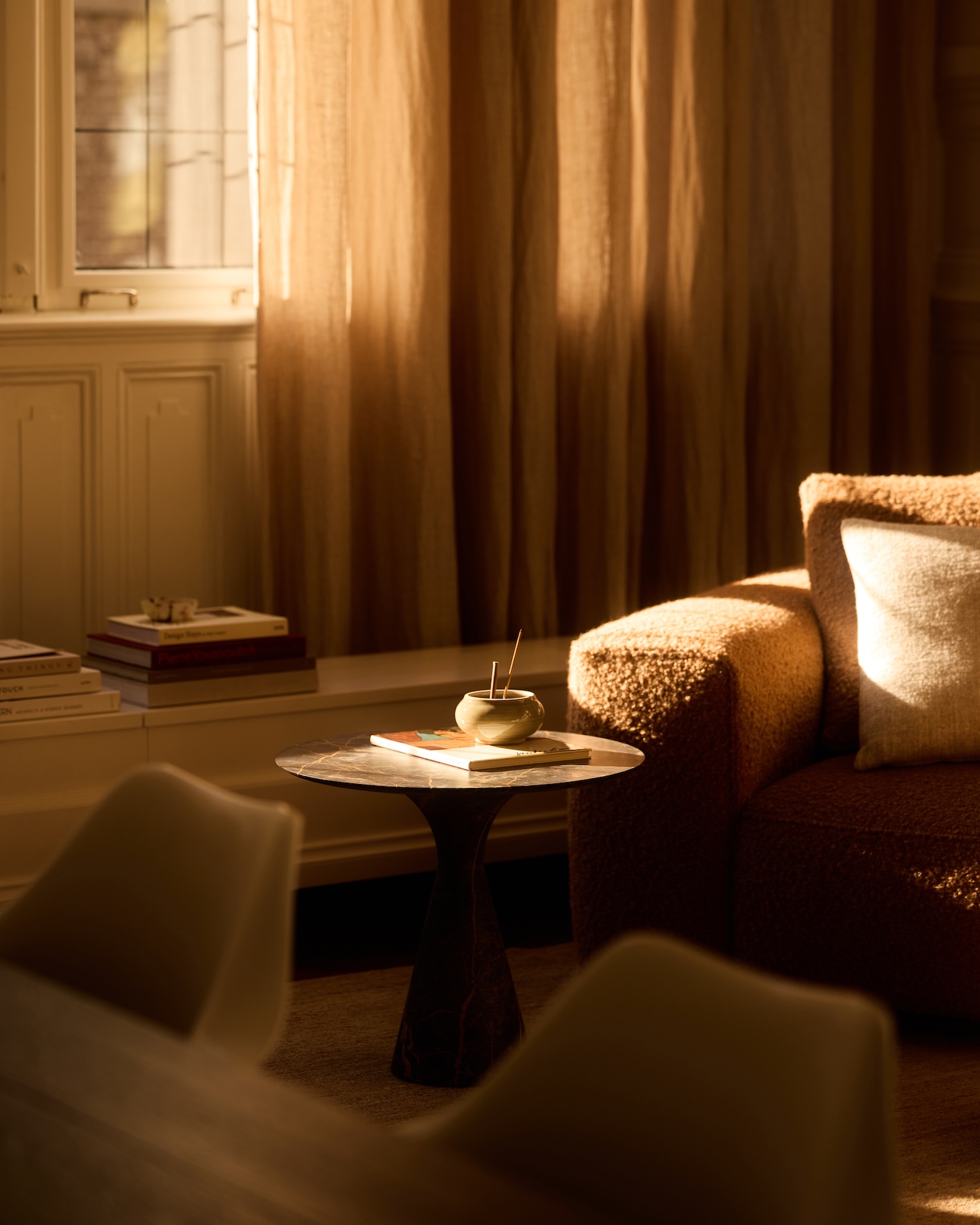
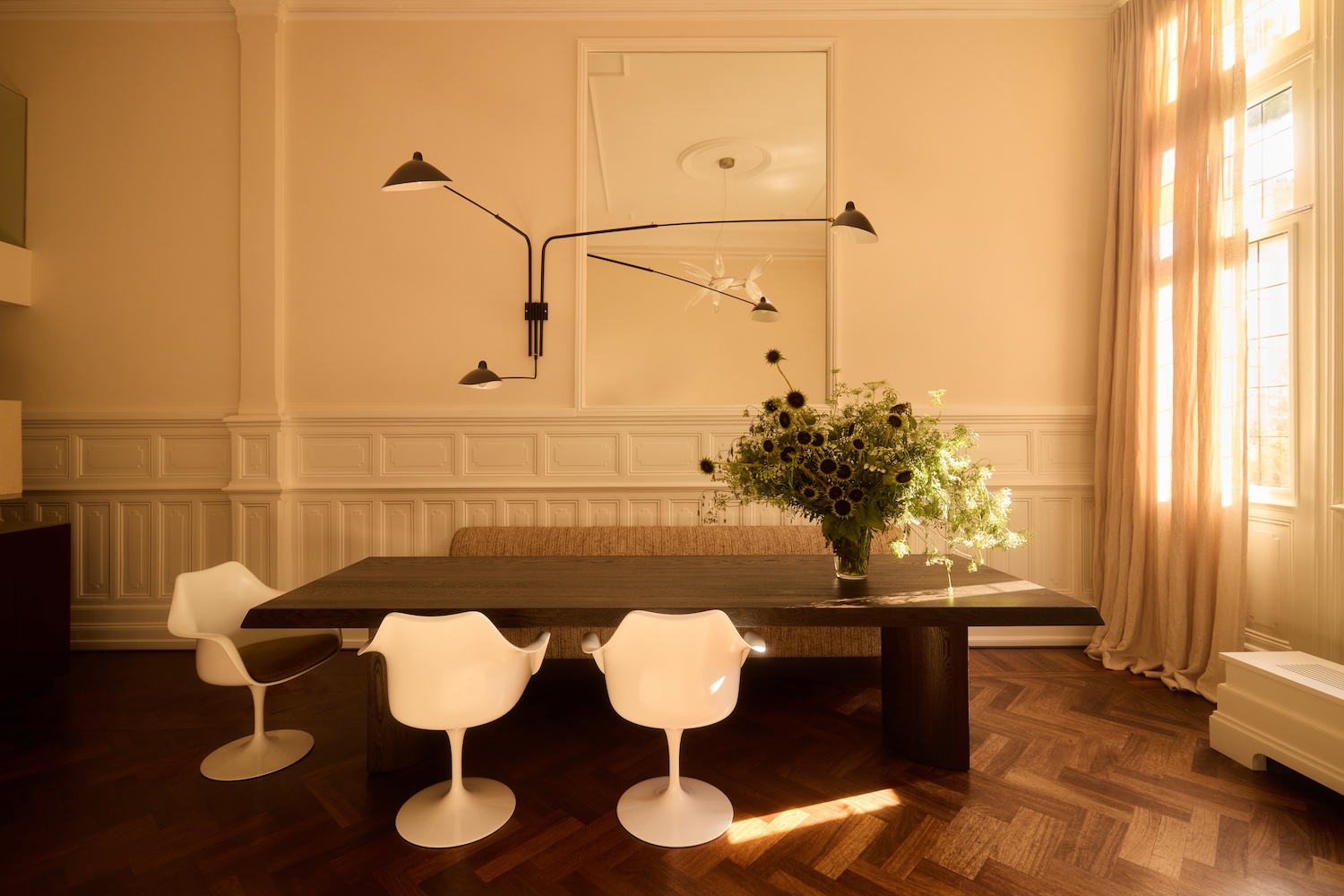
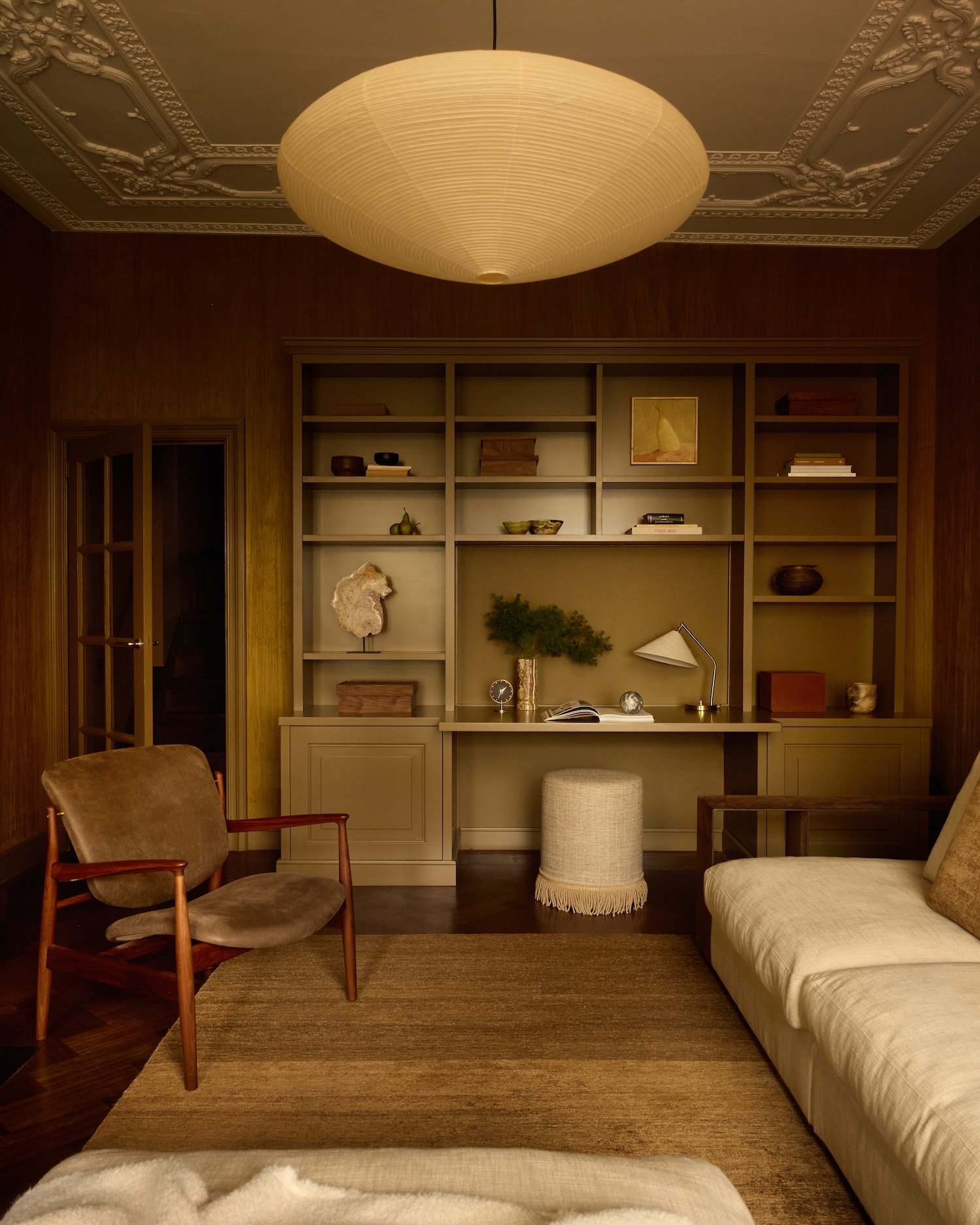
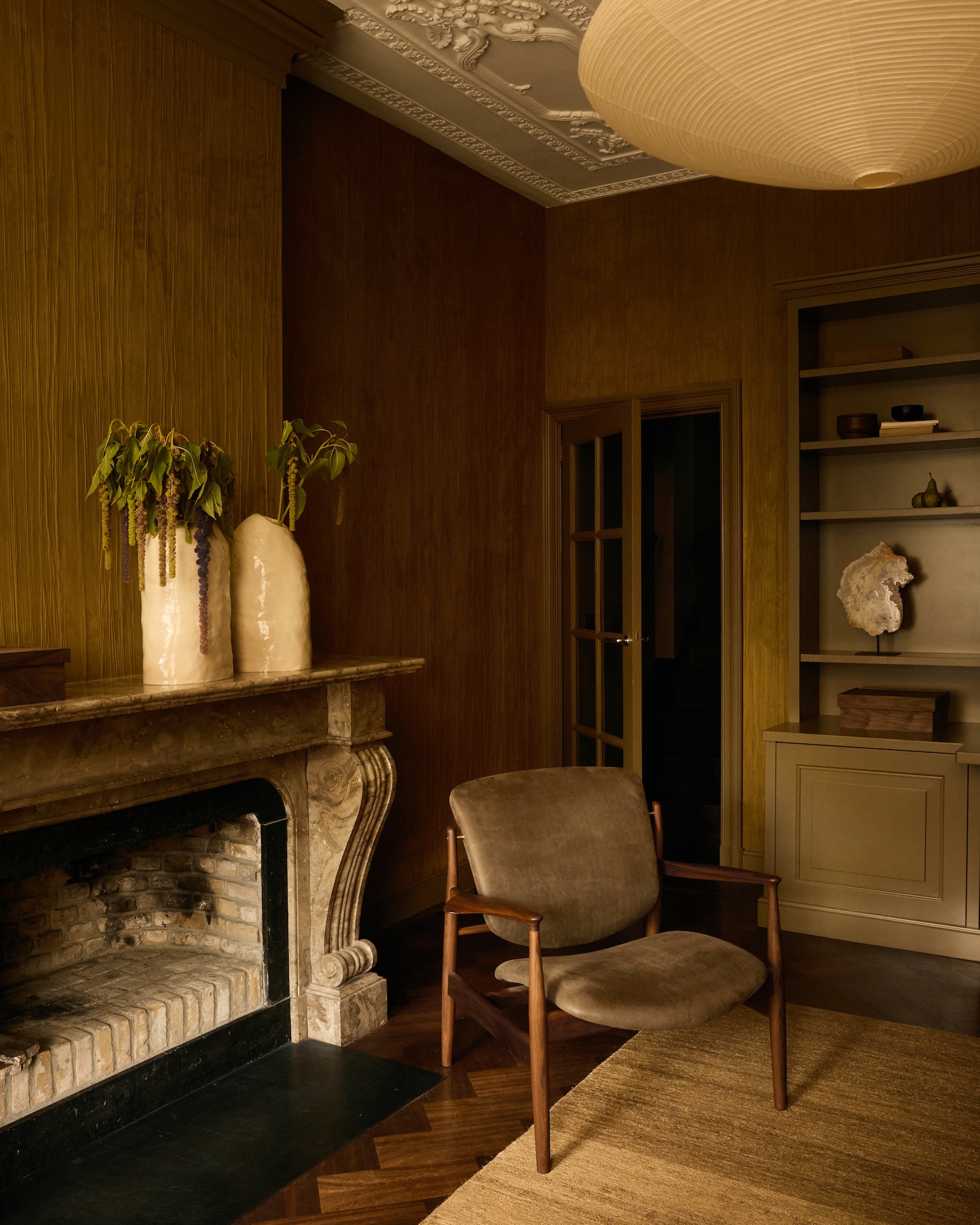
Bespoke wall treatments, soft textures, and tactile materials enhance the warm, enveloping atmosphere, perfect for evenings by the fireplace. The kitchen, positioned at the heart of the home, is both social and functional with stainless steel surfaces, deep brown lacquered cabinetry, and warm wooden accents. The dining area adapts effortlessly from long dinners to ‘work from home’ moments while the adjacent seating area invites relaxation and family gatherings, demonstrating flexible spatial planning where single zones accommodate multiple activities through furniture arrangement and material selection rather than dedicated single-purpose rooms.