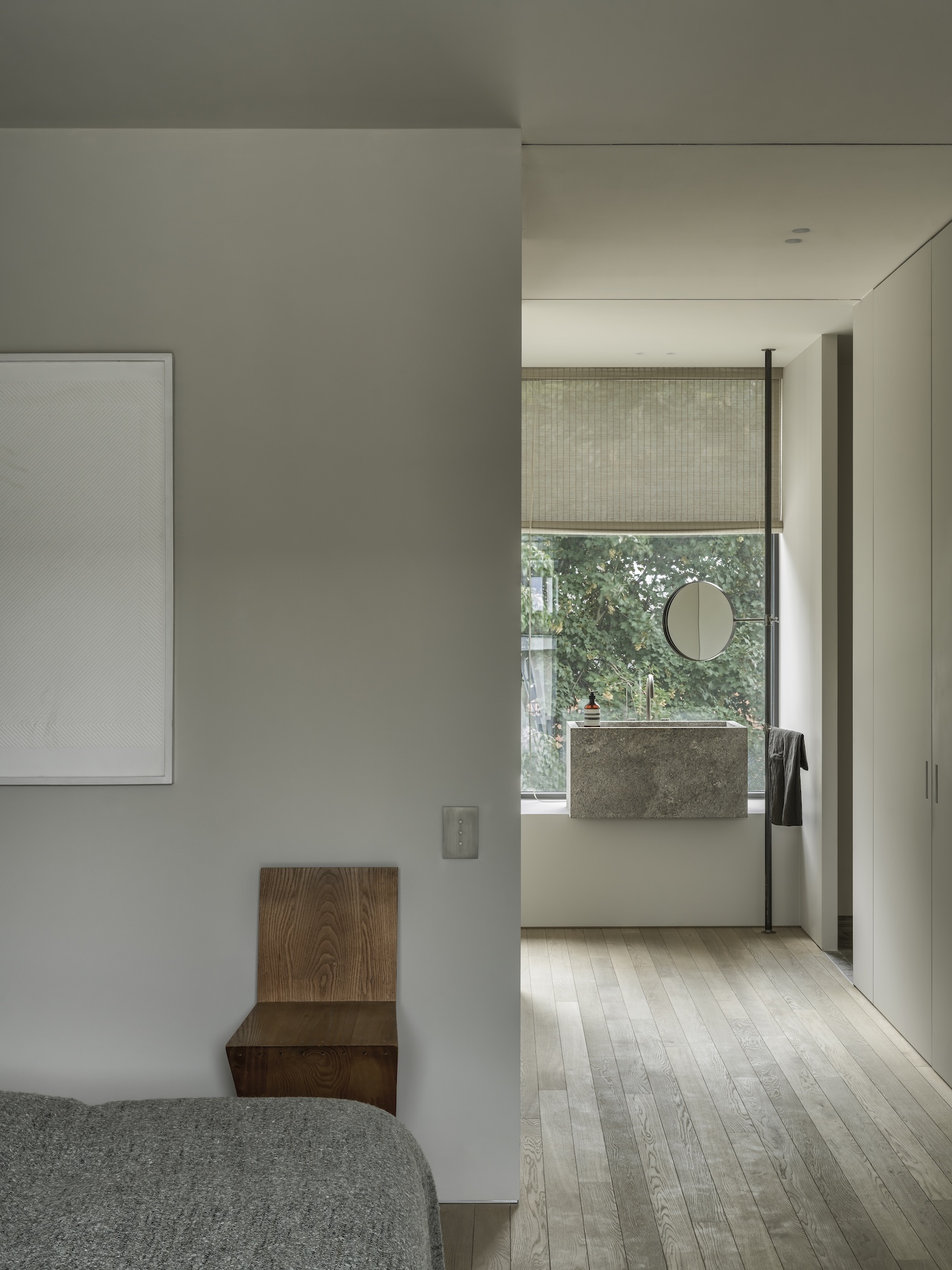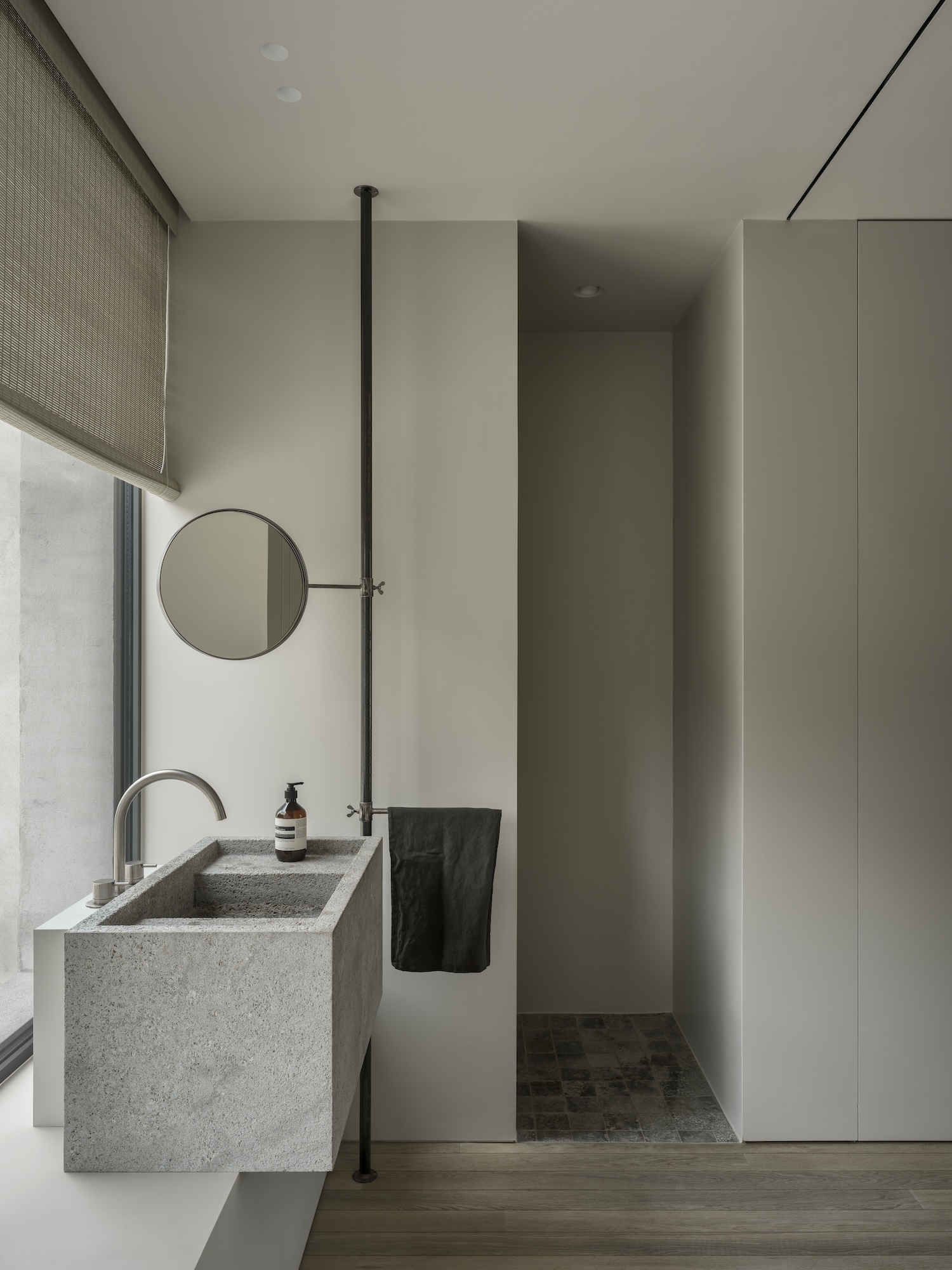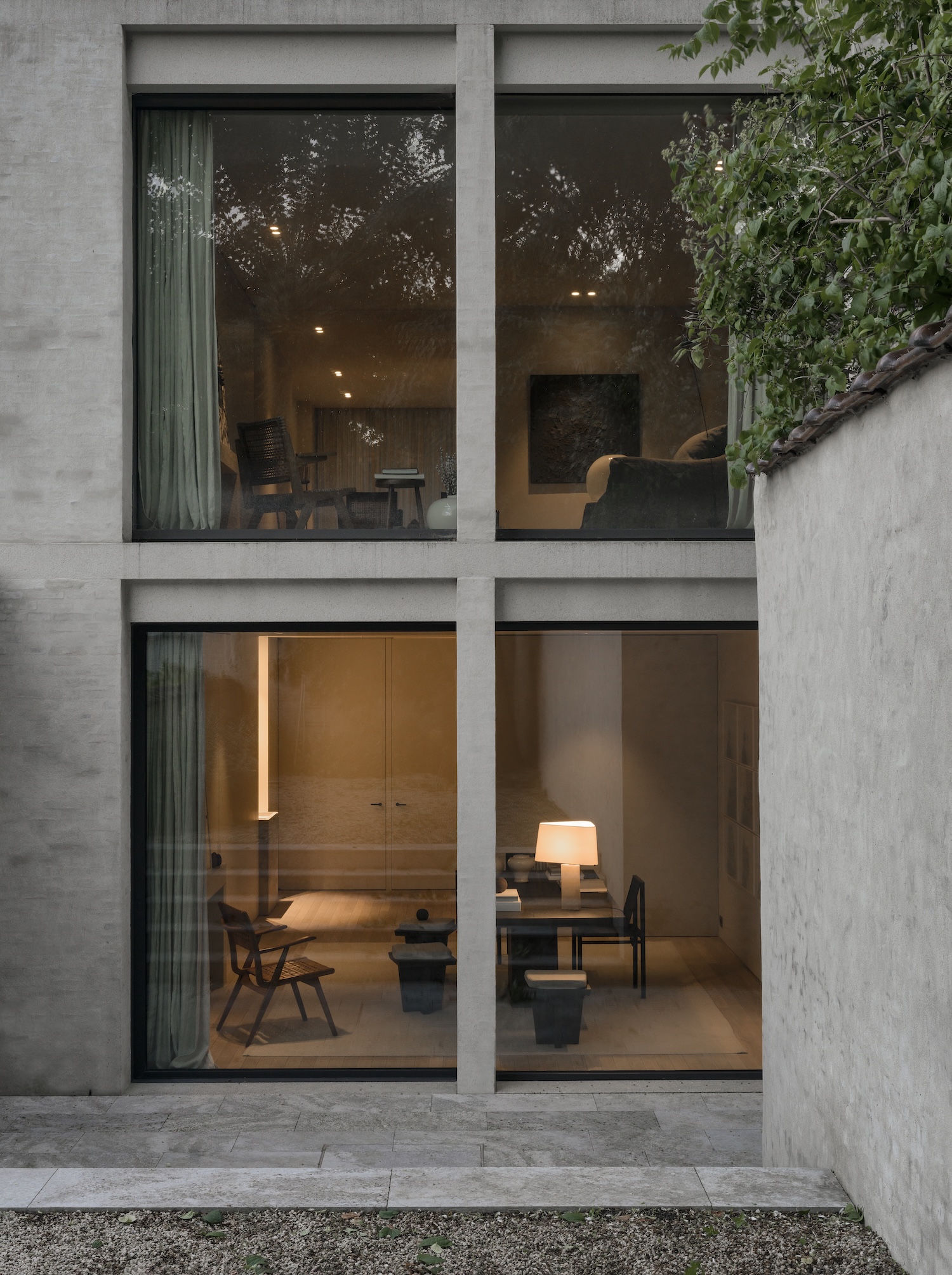
GD Townhouses is a minimalist townhouse located in Kortrijk, Belgium, designed by Merckx-Holvoet Architects. The building’s structural honesty speaks to a broader movement in contemporary European architecture that embraces material authenticity without sacrificing sophistication. The marriage of in-situ concrete with traditional brick facade creates what might be called a “material conversation” – the exposed concrete’s aggregate finish deliberately echoing the plaster’s tone, suggesting continuity rather than contrast. This approach recalls the work of Peter Zumthor, where material choices become vehicles for sensory experience rather than mere aesthetic decisions.
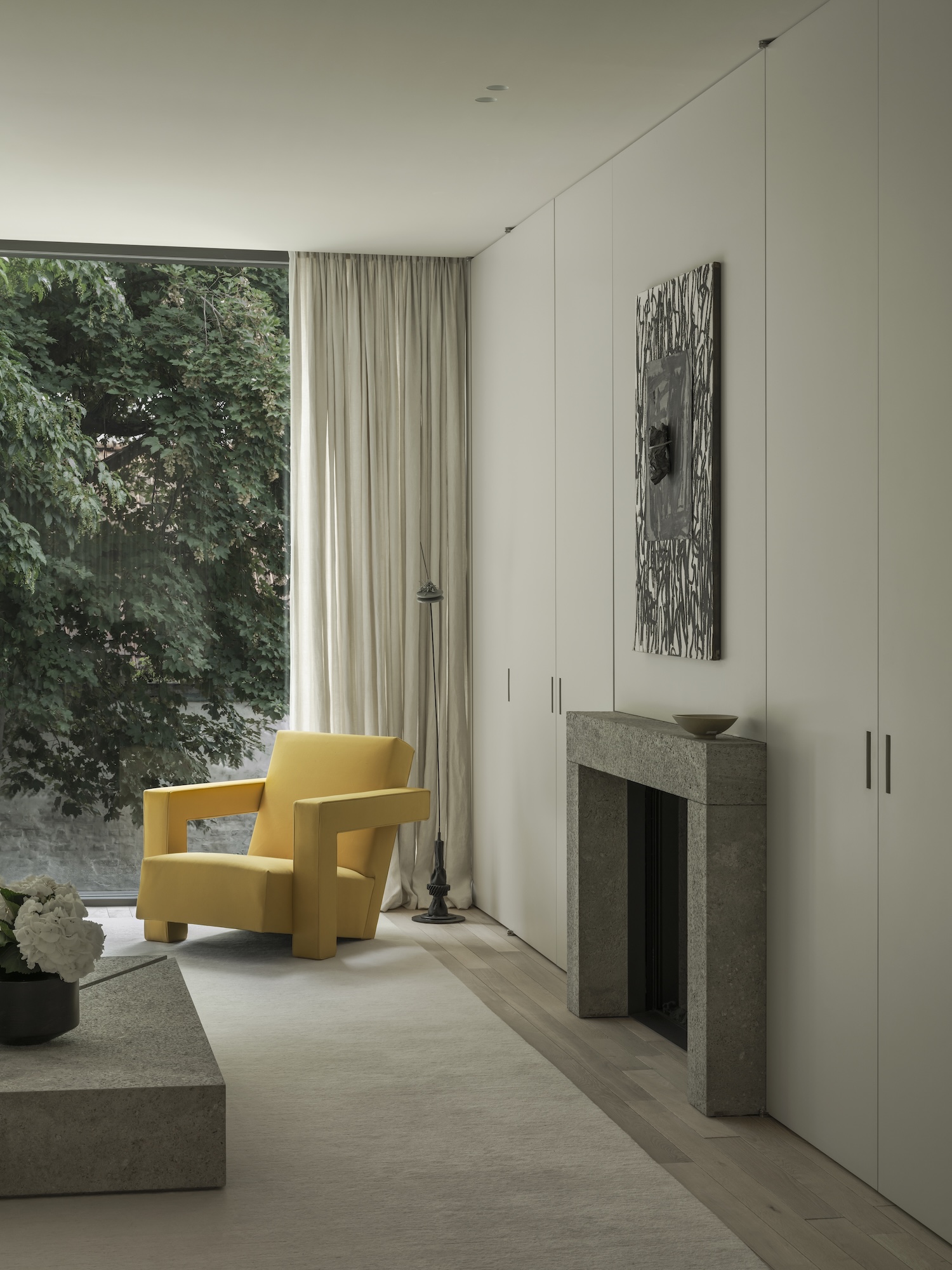
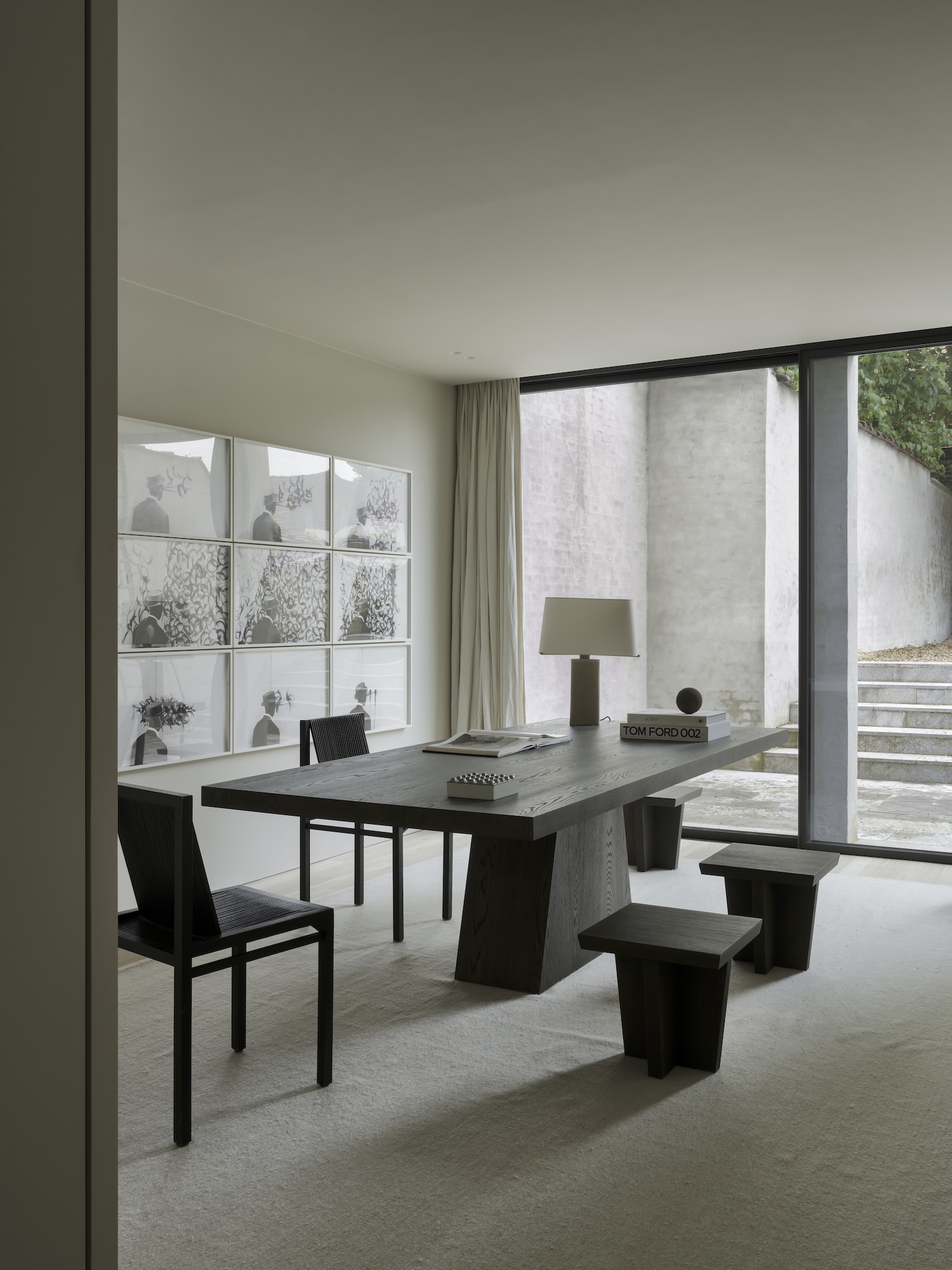
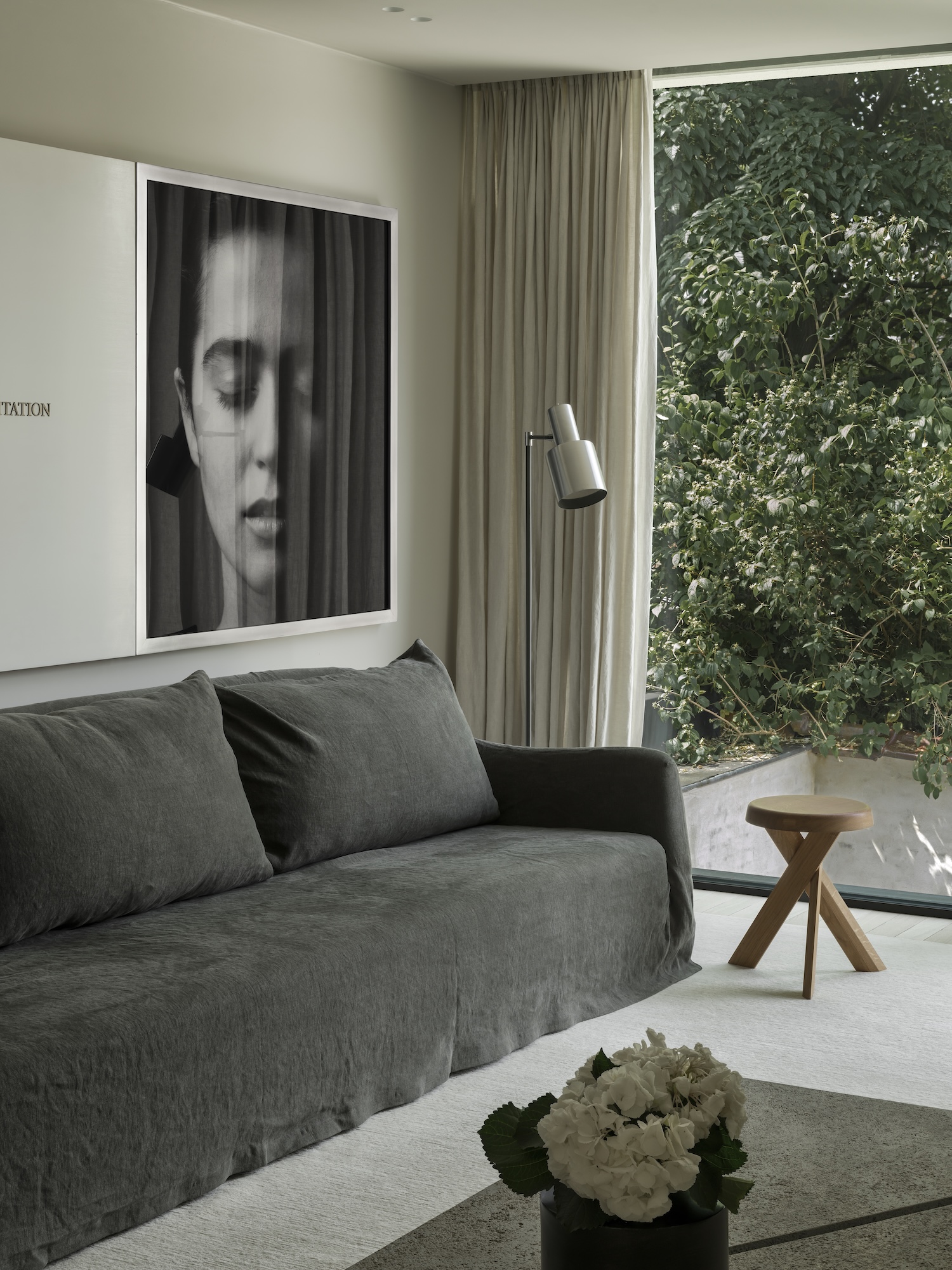
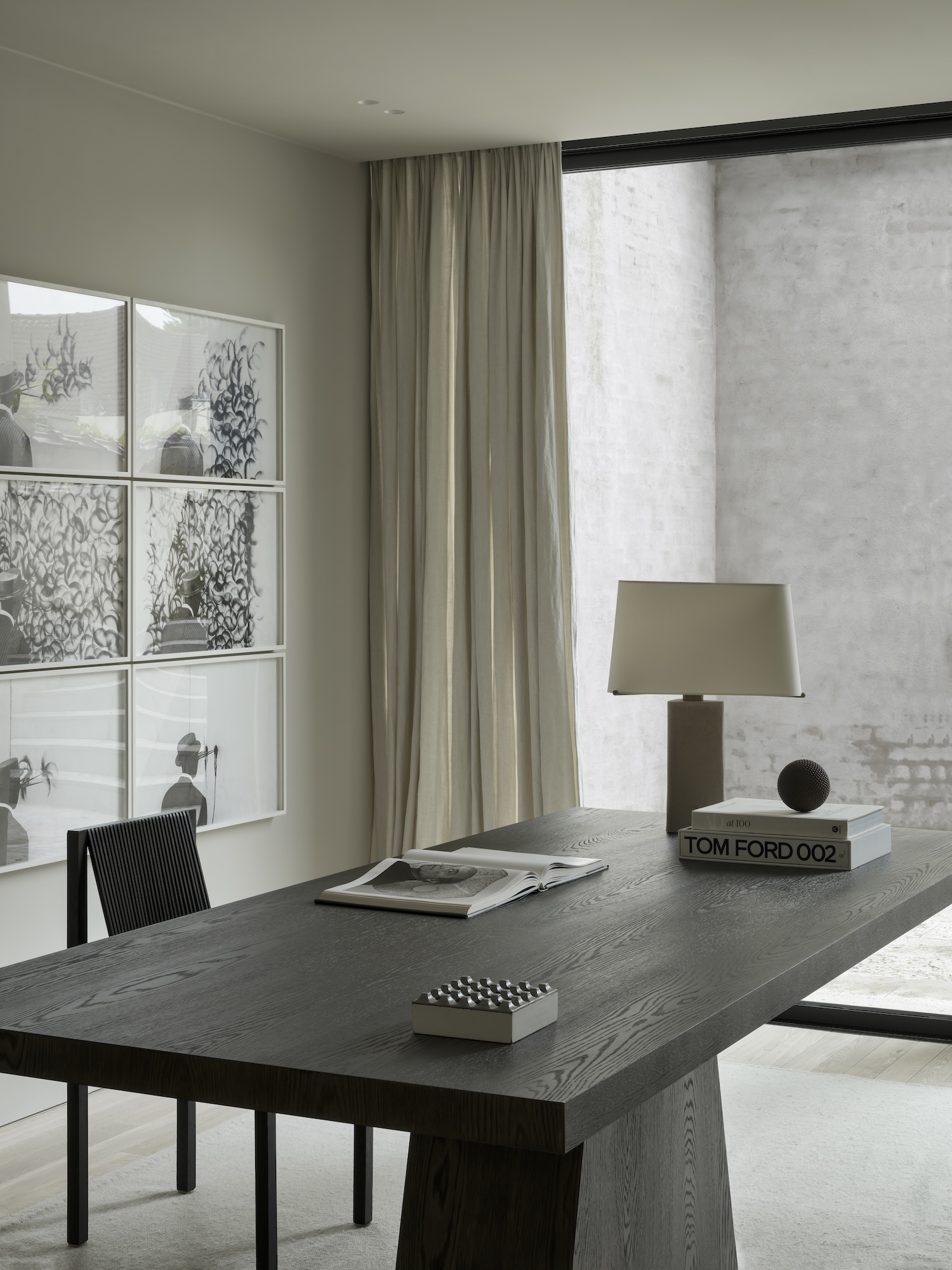
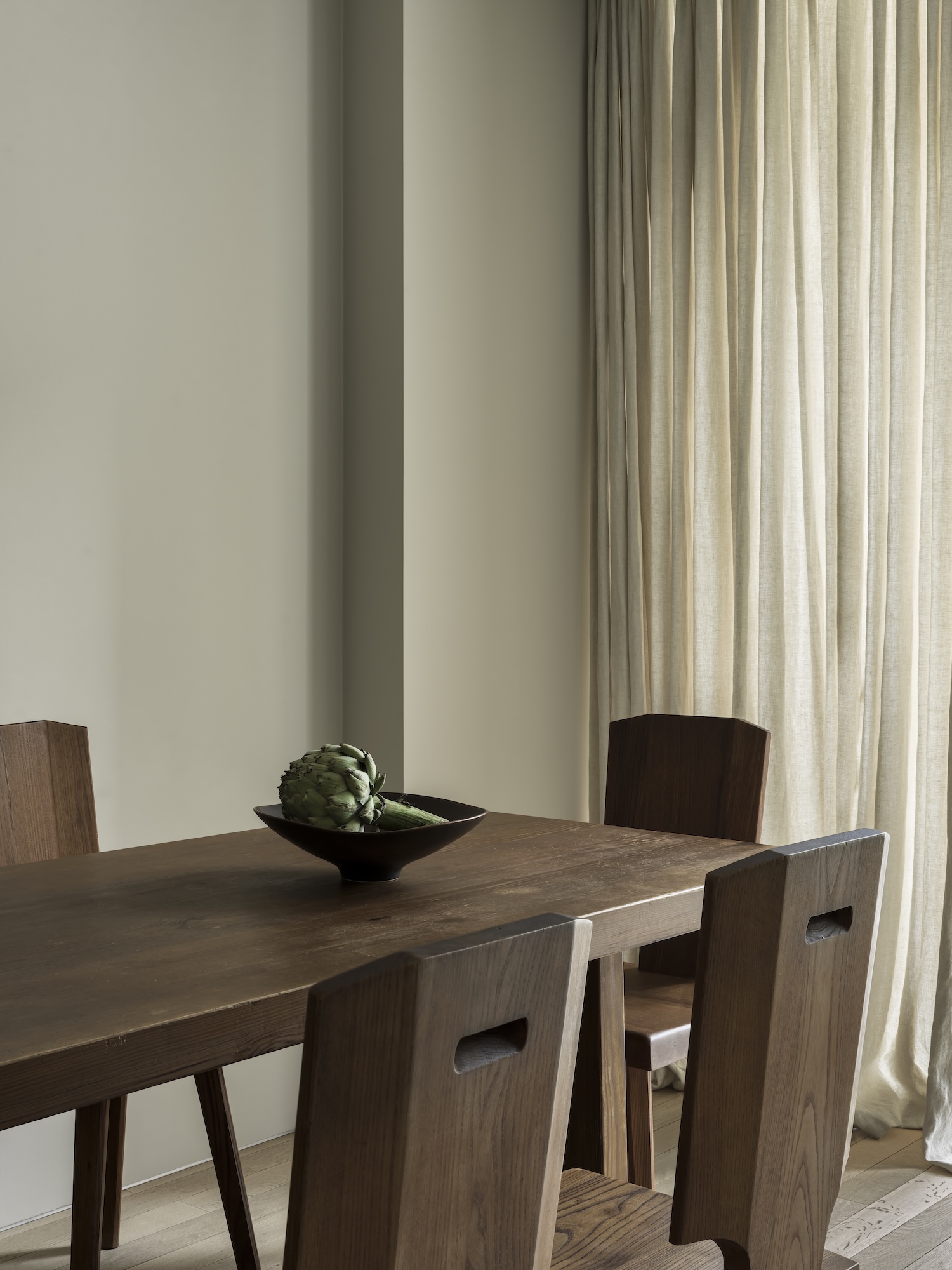
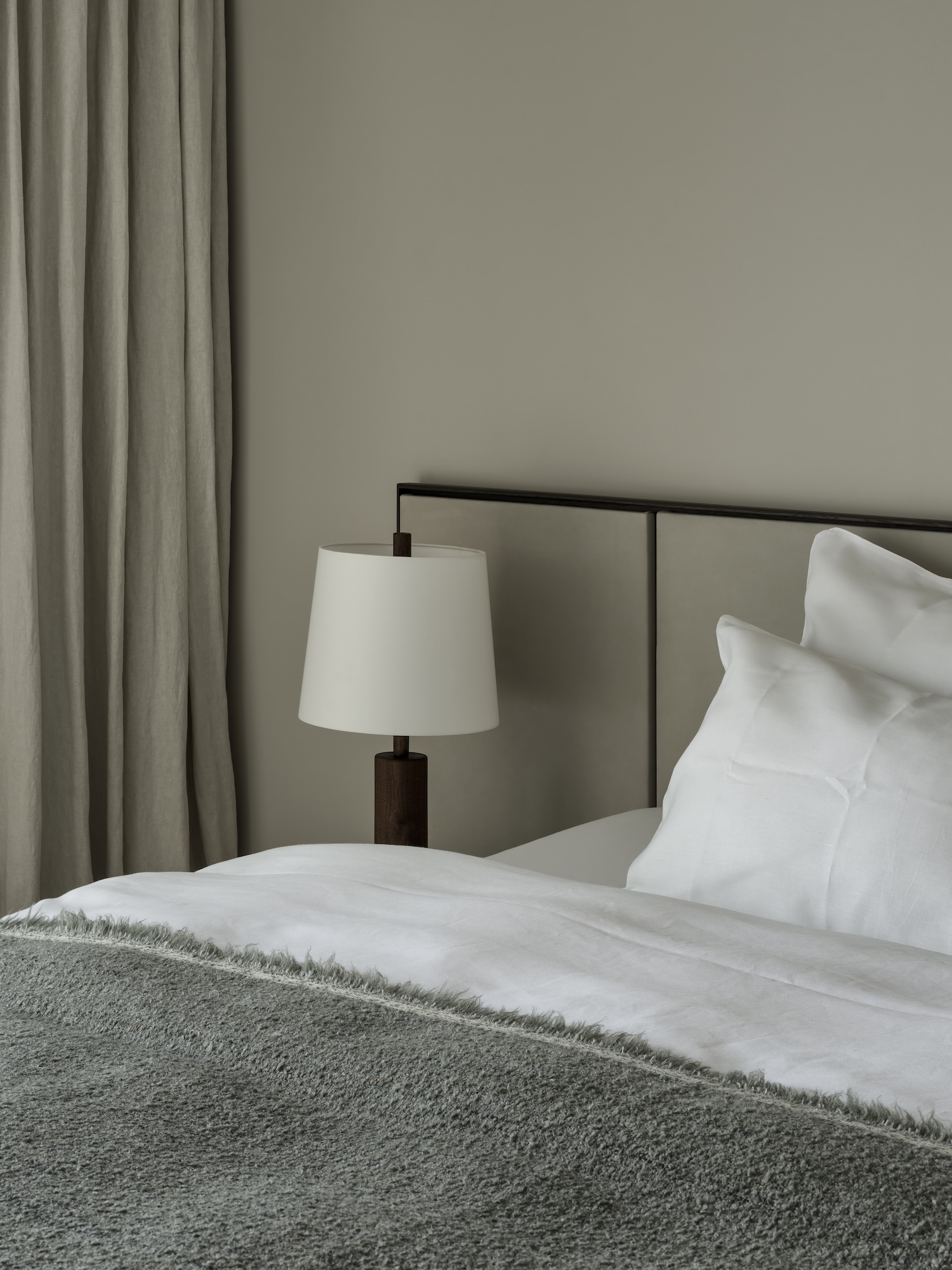
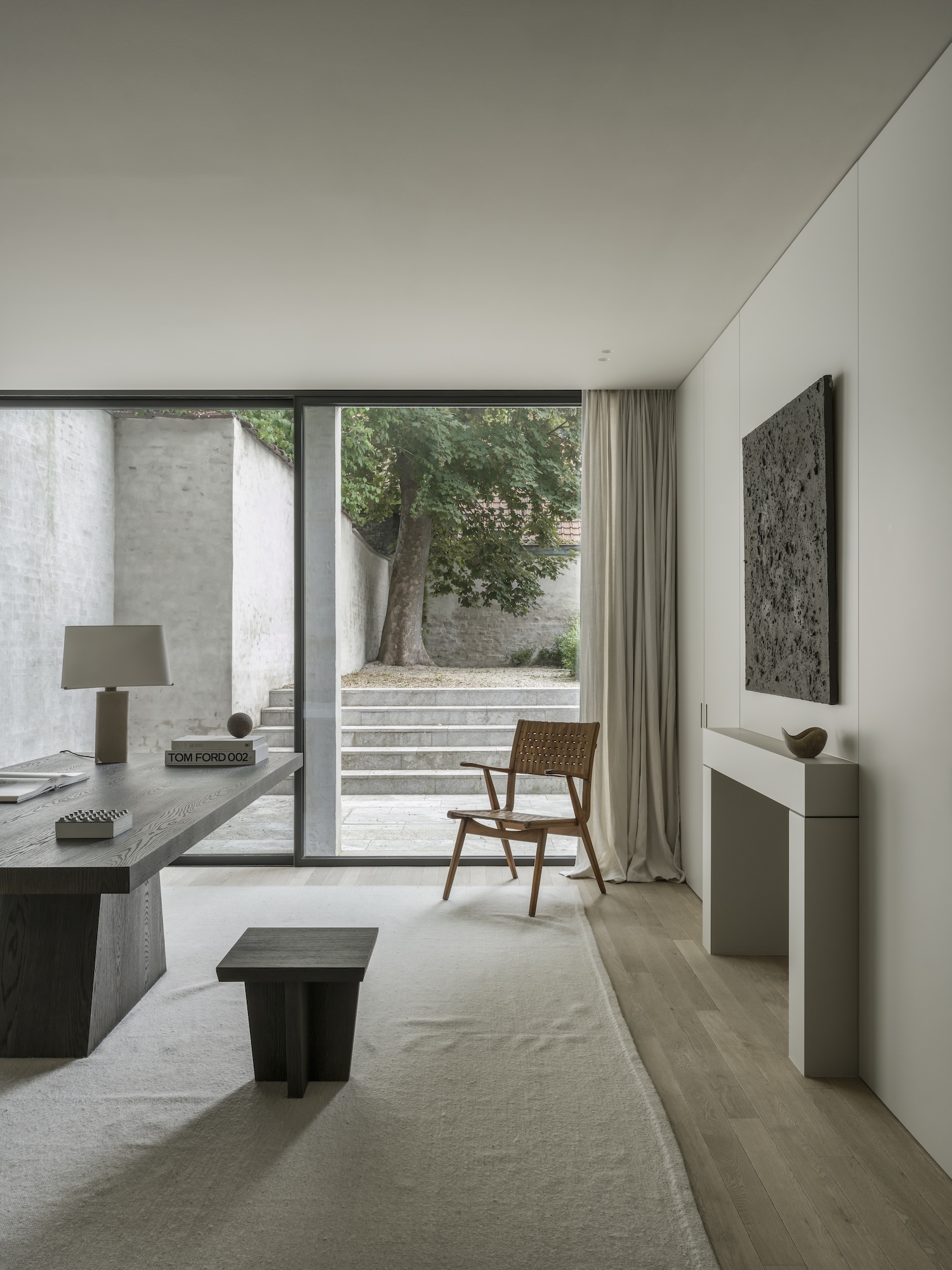
Yet it is within these spaces that the most compelling narrative unfolds. The carefully orchestrated interior reveals itself as a curated anthology of twentieth-century design thinking. Axel Einar Hjorth’s robust Swedish modernism converses with Pierre Chapo’s sculptural French organicism, while Gerrit Rietveld’s geometric precision provides counterpoint to Jo Hammerborg’s Danish lighting innovations. Each piece – from chair to floor lamp – functions not merely as furniture but as material witness to design’s evolution across decades and borders.
The selection strategy here demonstrates material empathy – the ability to see connections across time and geography through shared craft languages. Chapo’s emphasis on wood’s natural grain finds echo in the reclaimed timber elements, while Rietveld’s revolutionary approach to spatial geometry resonates with the building’s own architectural logic. The lighting by Hammerborg, with its characteristic play of brass and glass, creates atmospheric bridges between the concrete’s industrial honesty and the wood’s organic warmth.
Robin Rhode’s conceptual interventions alongside works by Jannis Kounellis and Takis suggest that the inhabitants understand their role as custodians of creative dialogue. These artistic inclusions transform the domestic space into what might be called a “living laboratory” – a place where historical design precedents inform contemporary living patterns while remaining open to future reinterpretation.