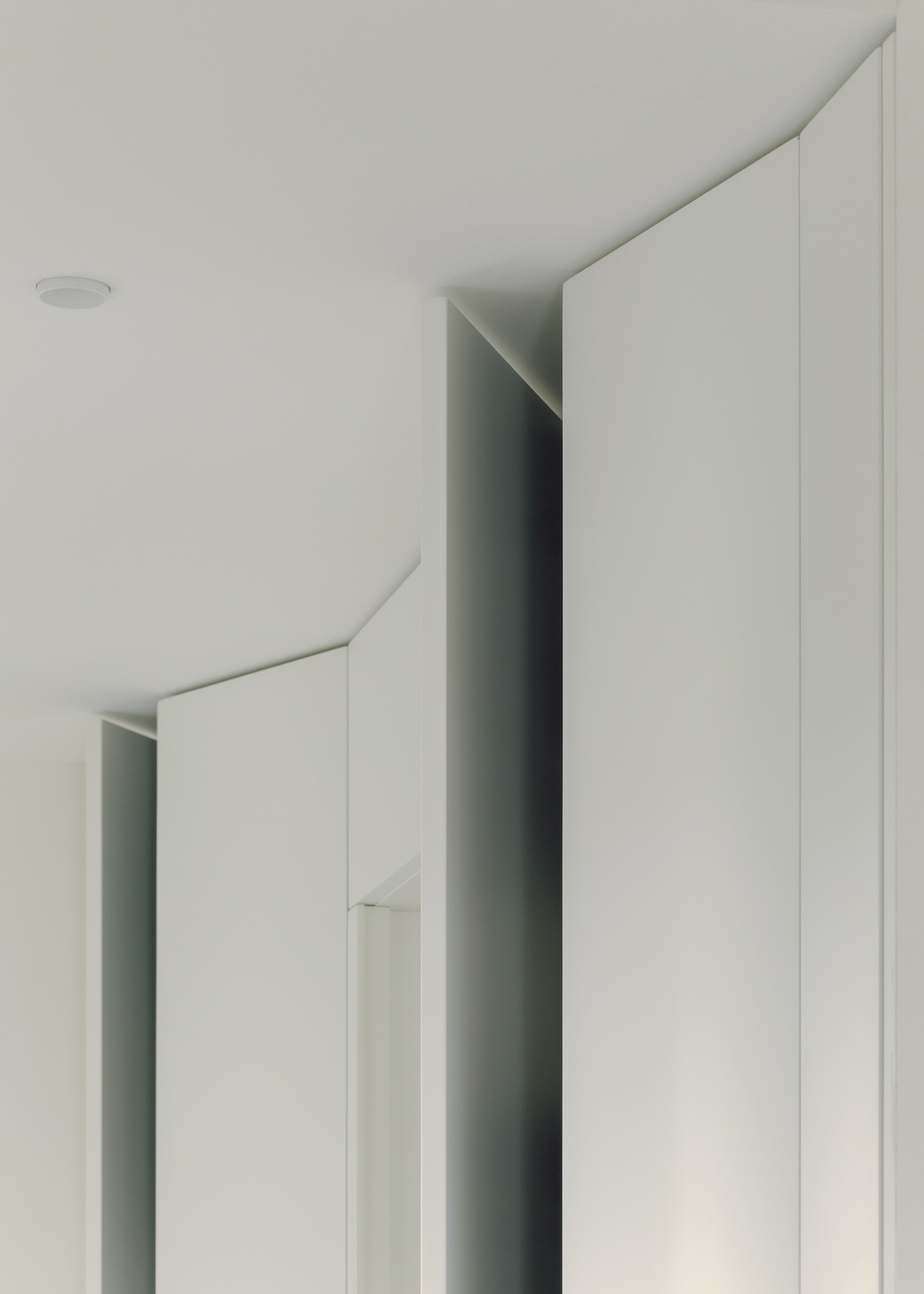
GRID is a minimal home located in Mozzo, Italy, designed by parentesi.studio. In a small, elegant detail that might escape casual notice, the renovation of this living space pivots around a deceptively simple architectural “fissure.” This deliberate break—not quite a wall, not quite an opening—becomes the central organizing principle through which the entire home unfolds. It’s a fitting metaphor for the project as a whole: a design that celebrates liminality, those threshold spaces between definite states.
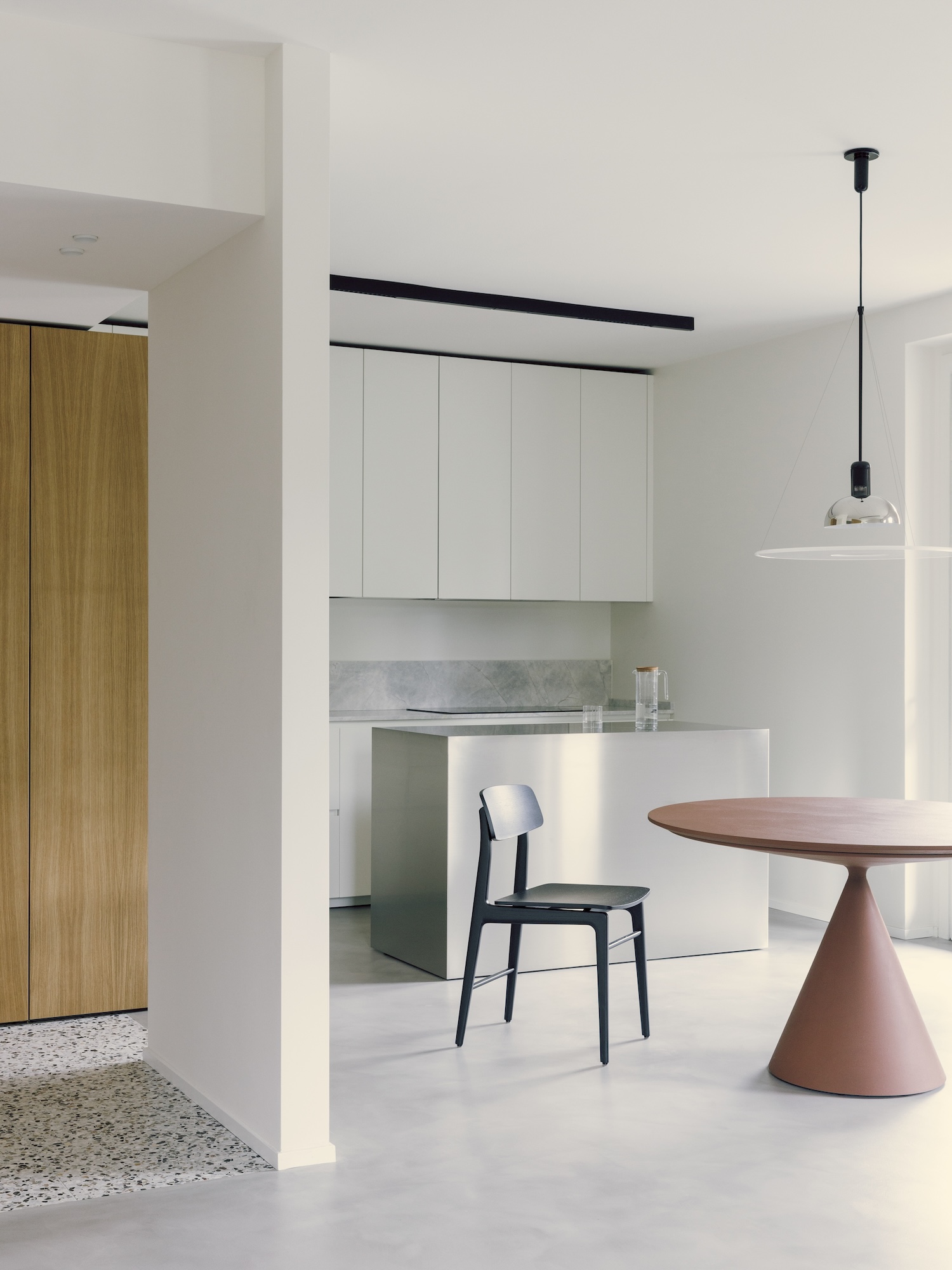
The terrazzo flooring that demarcates the entrance extends its material storytelling into the bathrooms, creating a cohesive narrative thread throughout the home. This isn’t mere decorative repetition but a considered decision that speaks to the practice of “material echoing”—a technique that gained prominence in mid-century residential architecture but is deployed here with contemporary restraint. The gridded wall tiles in the bathroom make a knowing reference to the homeowner’s graphic design background, transforming a utilitarian space into a personal signature.
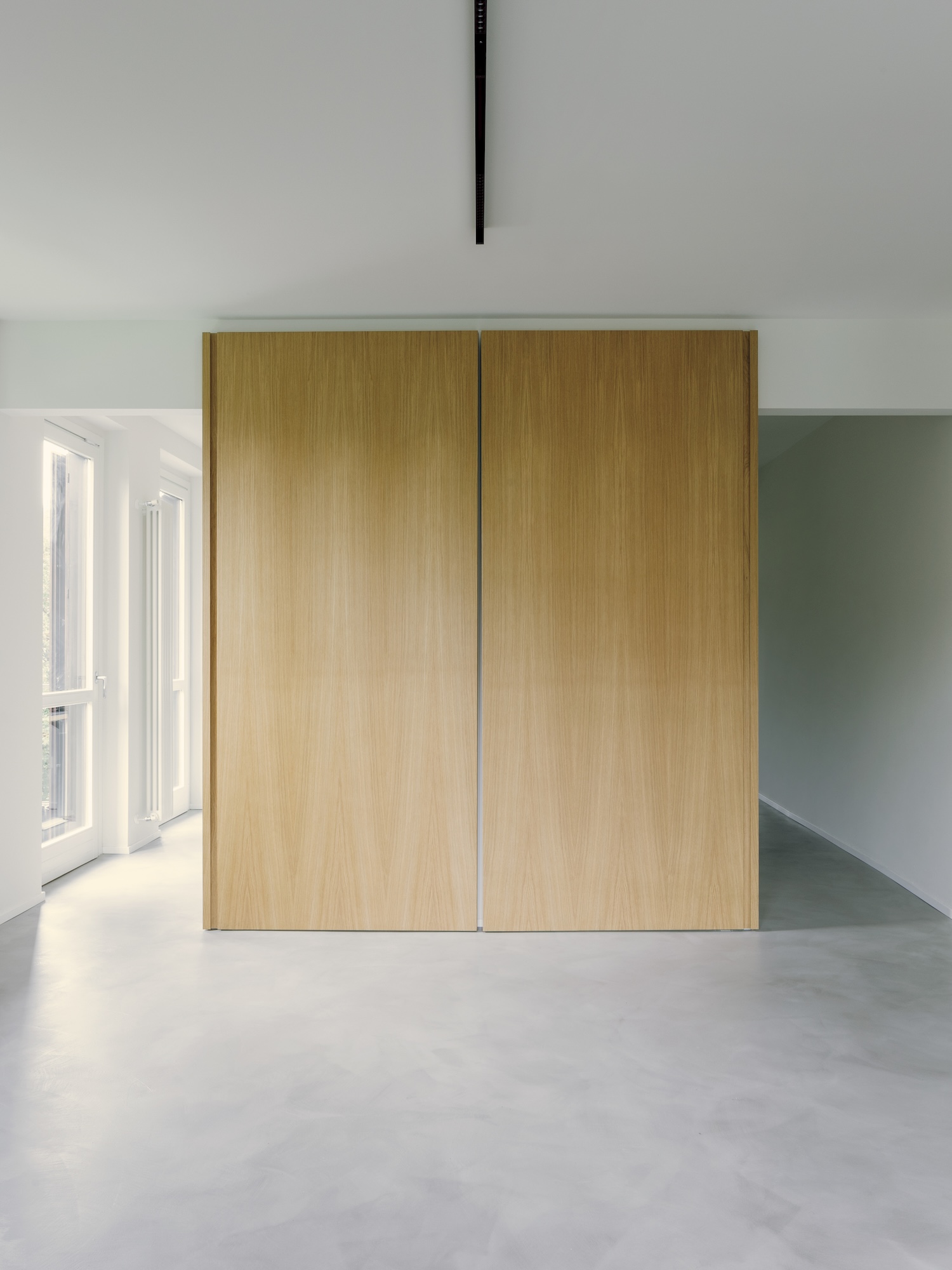
The home’s central innovation lies in its sliding wooden panel system, which deserves particular attention. Unlike traditional room dividers that merely separate, these oak panels actively transform the spatial experience when manipulated. “When opened, it creates a spatial and visual continuity,” the designers note, highlighting how this seemingly straightforward mechanism performs remarkable spatial alchemy, effectively doubling the perceived dimensions of the living areas when engaged.
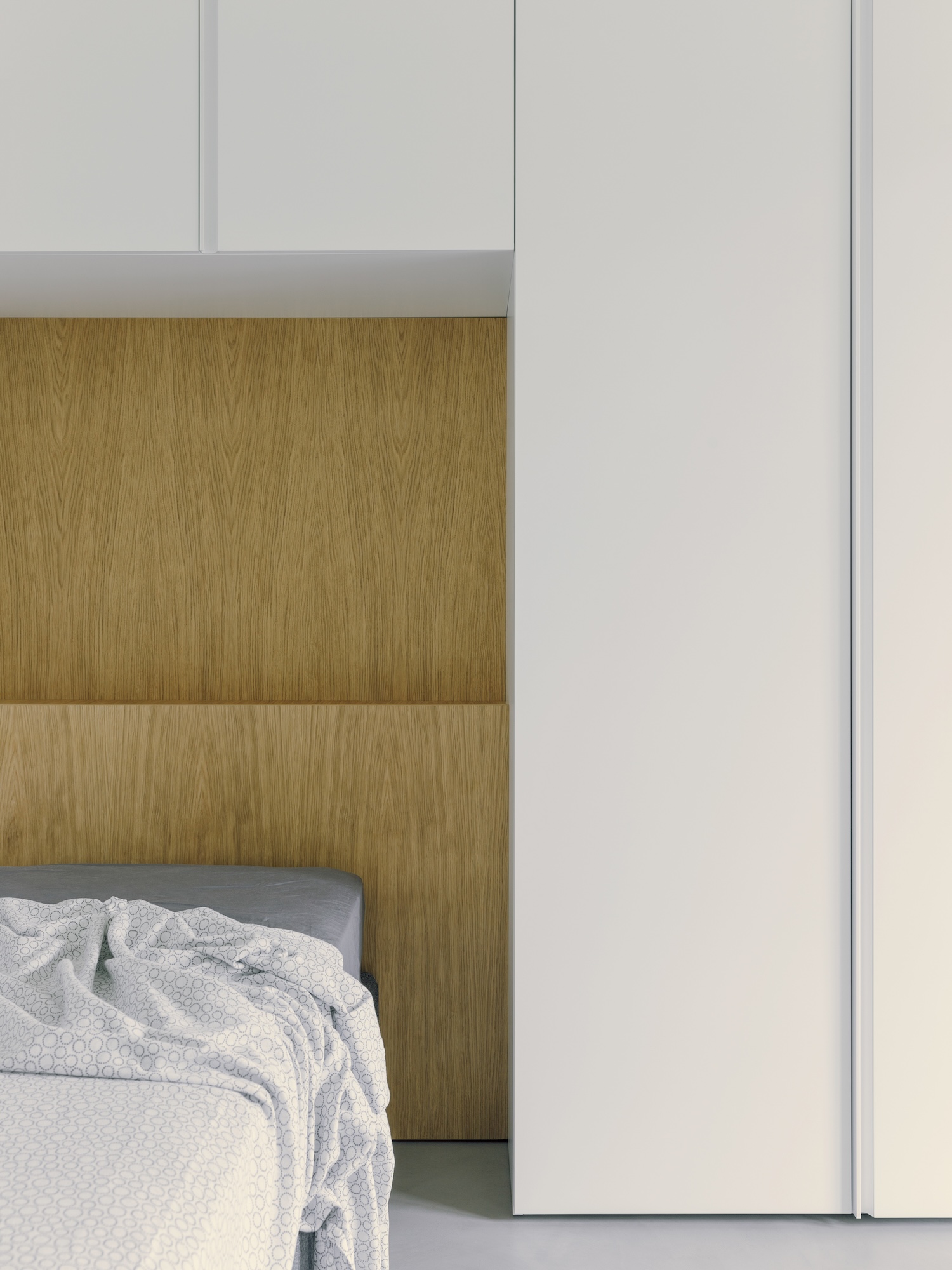
The custom furnishings represent a fascinating collaborative dimension to the project. The involvement of one homeowner’s furniture company infuses the space with pieces that blur the line between architecture and furniture—the entrance volume, for instance, functioning simultaneously as partition, storage, and transitional marker. This integration recalls the holistic approach of Carlo Scarpa, whose architectural interventions similarly refused the distinction between built environment and furnishing.
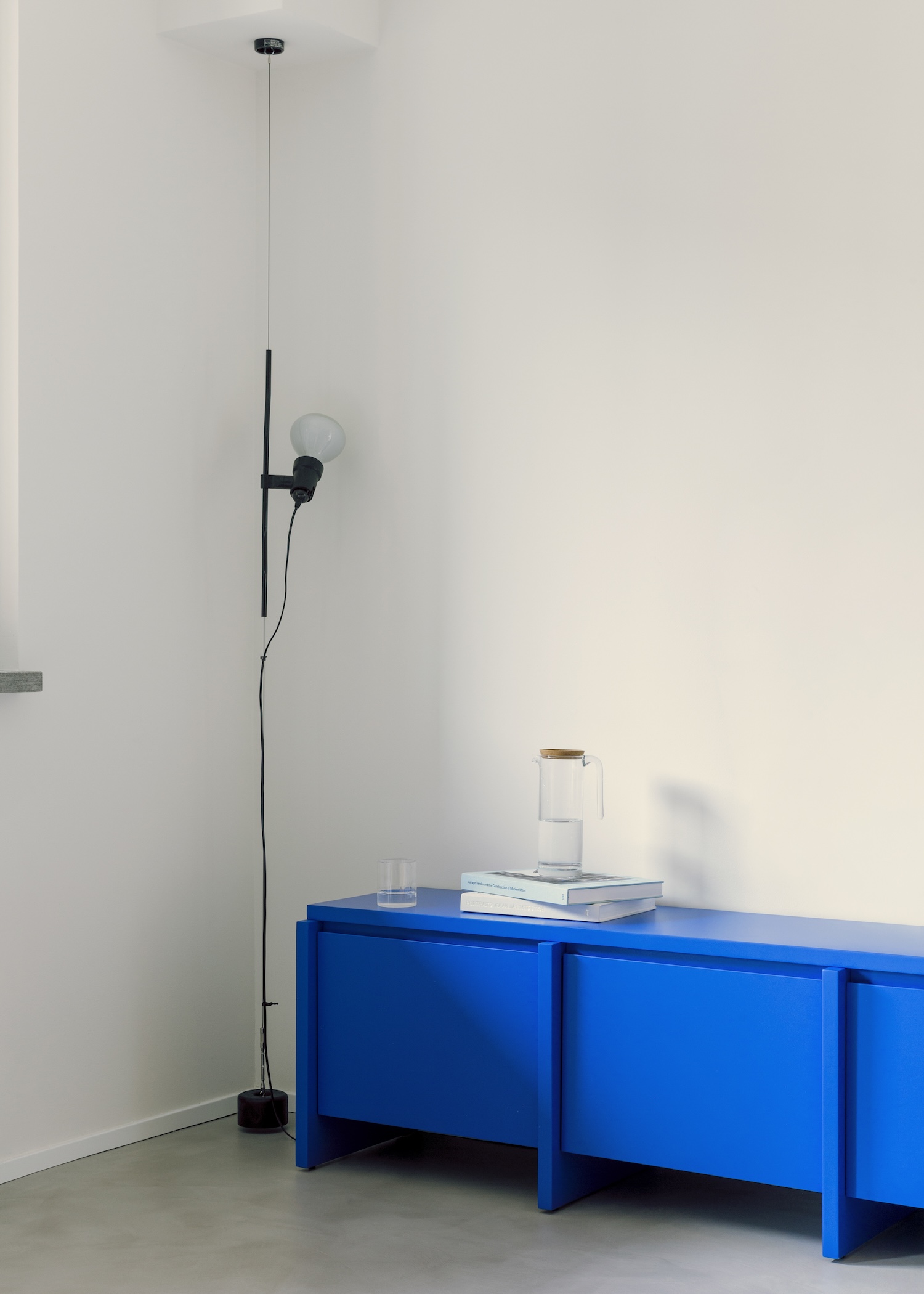
Perhaps most telling is the “bold blue volume” in the living room. This decisive chromatic statement introduces an element of playful contradiction—a momentary deviation from the otherwise restrained palette that signals the designers’ understanding that truly harmonious spaces require occasional counterpoint. This strategic disruption creates a necessary tension that animates the entire composition.