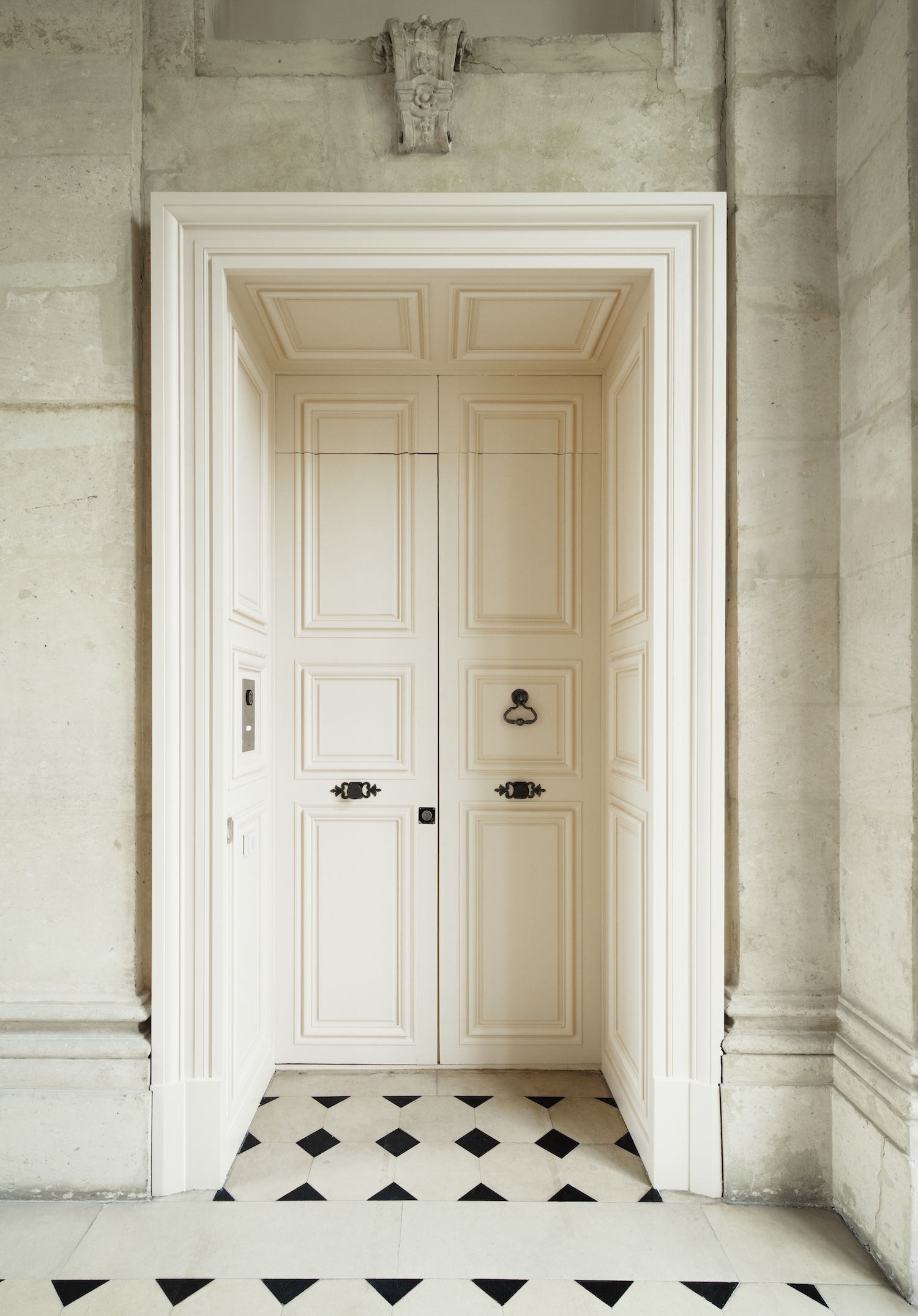
Habiter l’Art is a minimalist interdisciplinary creative residence located in Paris, France, designed by Lina Ghotmeh—Architecture. The mansion’s journey from Pierre Bullet’s 1702 creation to its current incarnation as a creative residence reveals architecture’s capacity for renewal through restraint. Ghotmeh’s approach echoes the Japanese concept of ma – the meaningful pause between elements – where removal becomes as powerful as addition. By stripping away intrusive partitions that had fragmented the interior over three centuries, she allows the building’s original bones to breathe again.
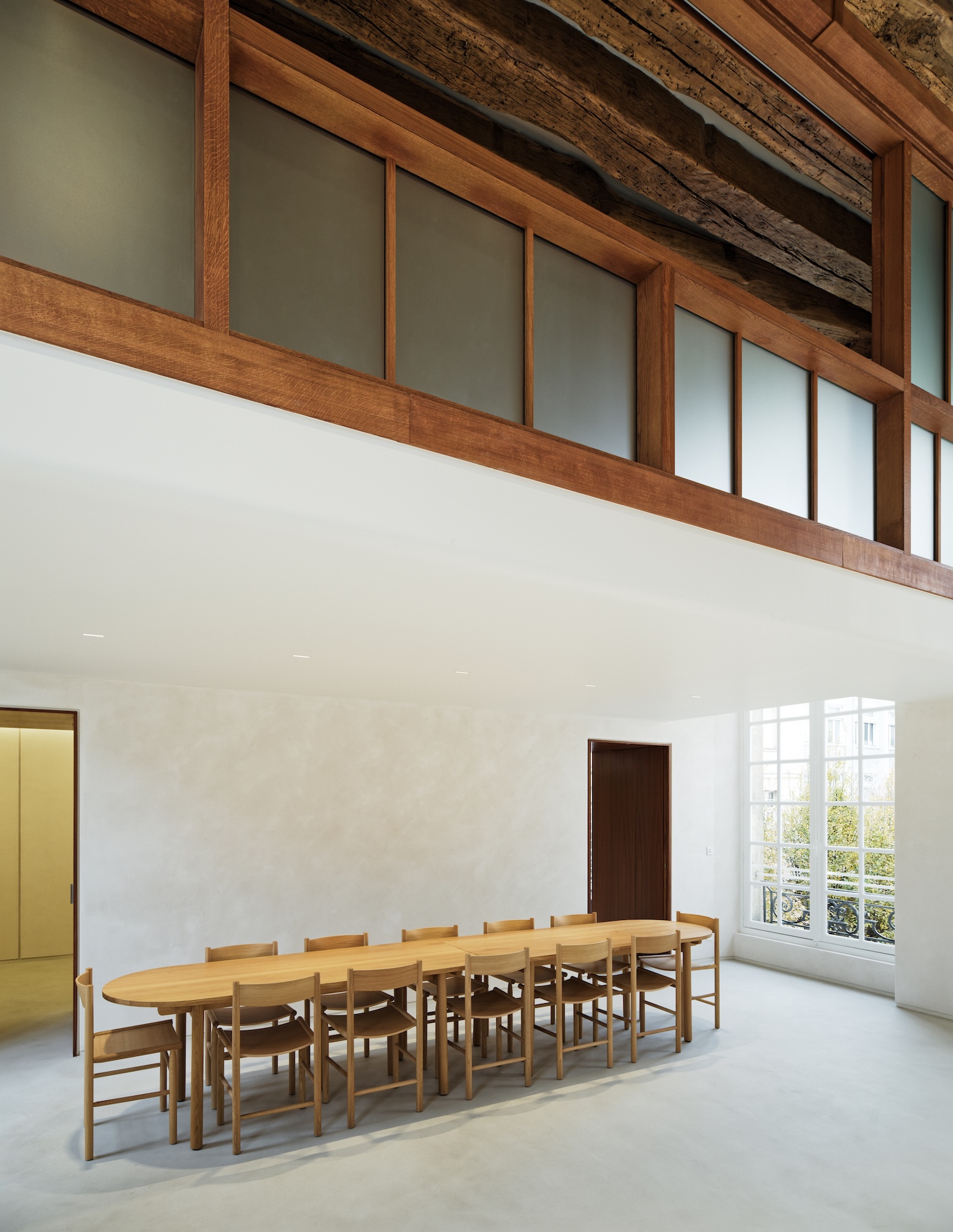
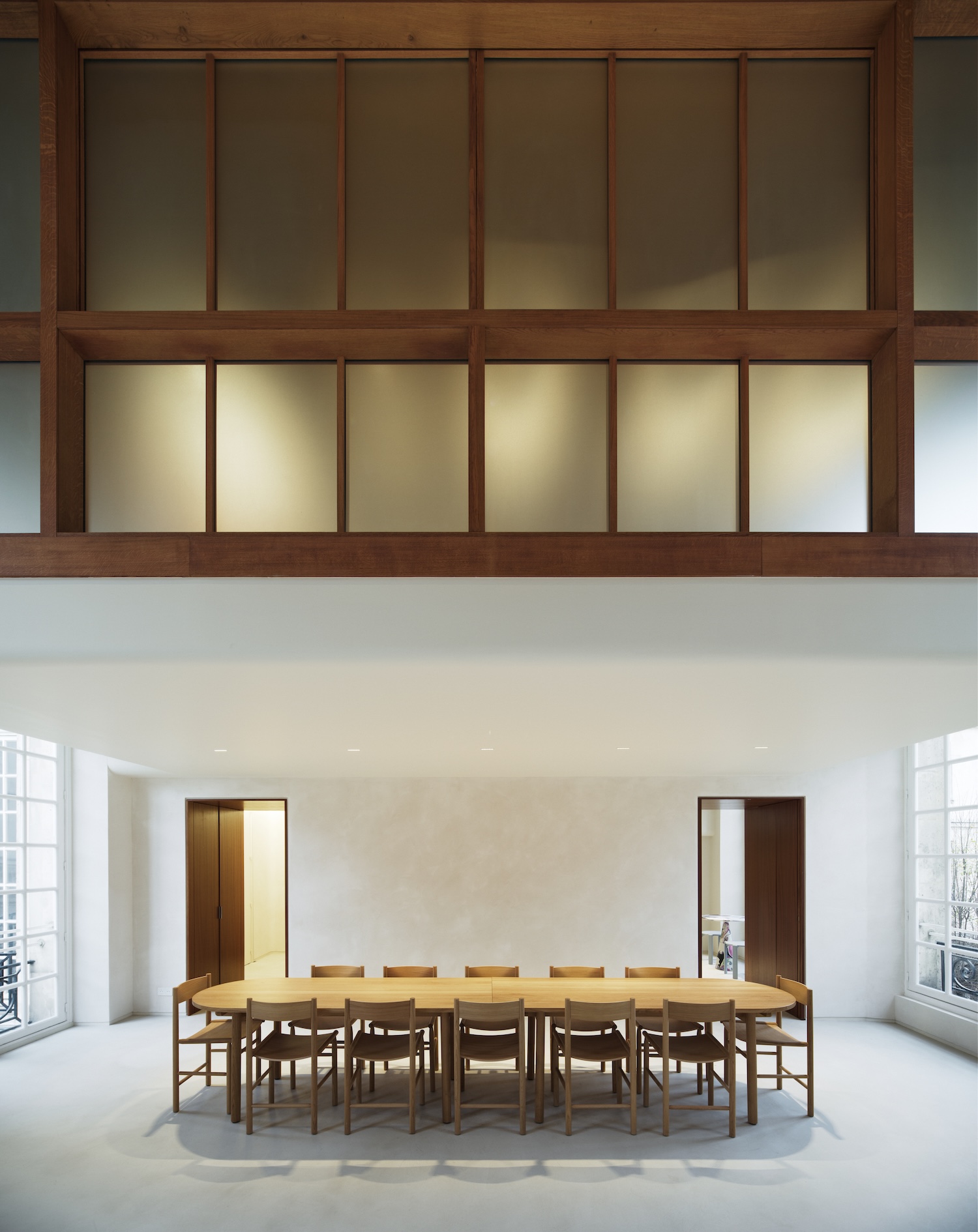
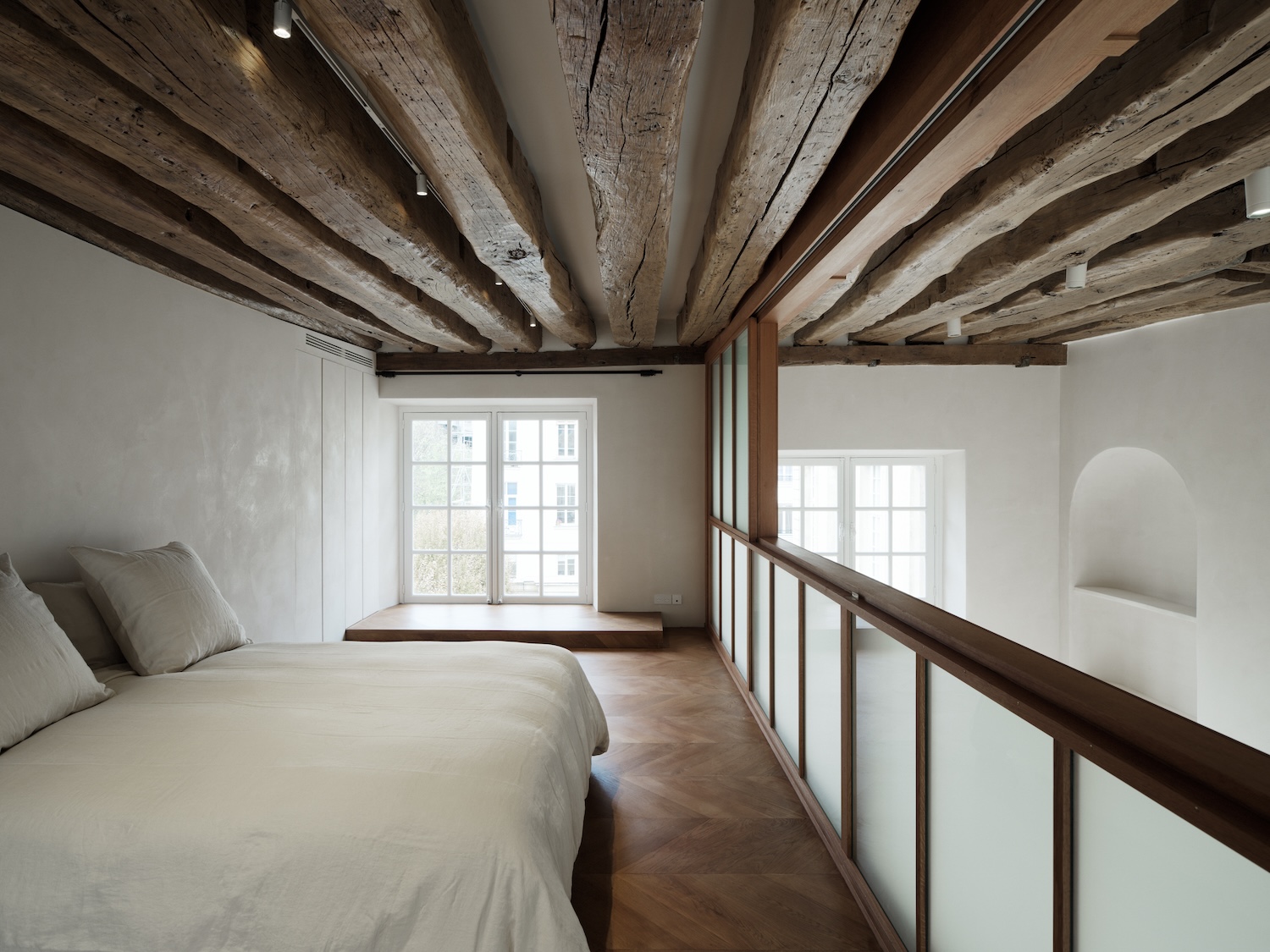
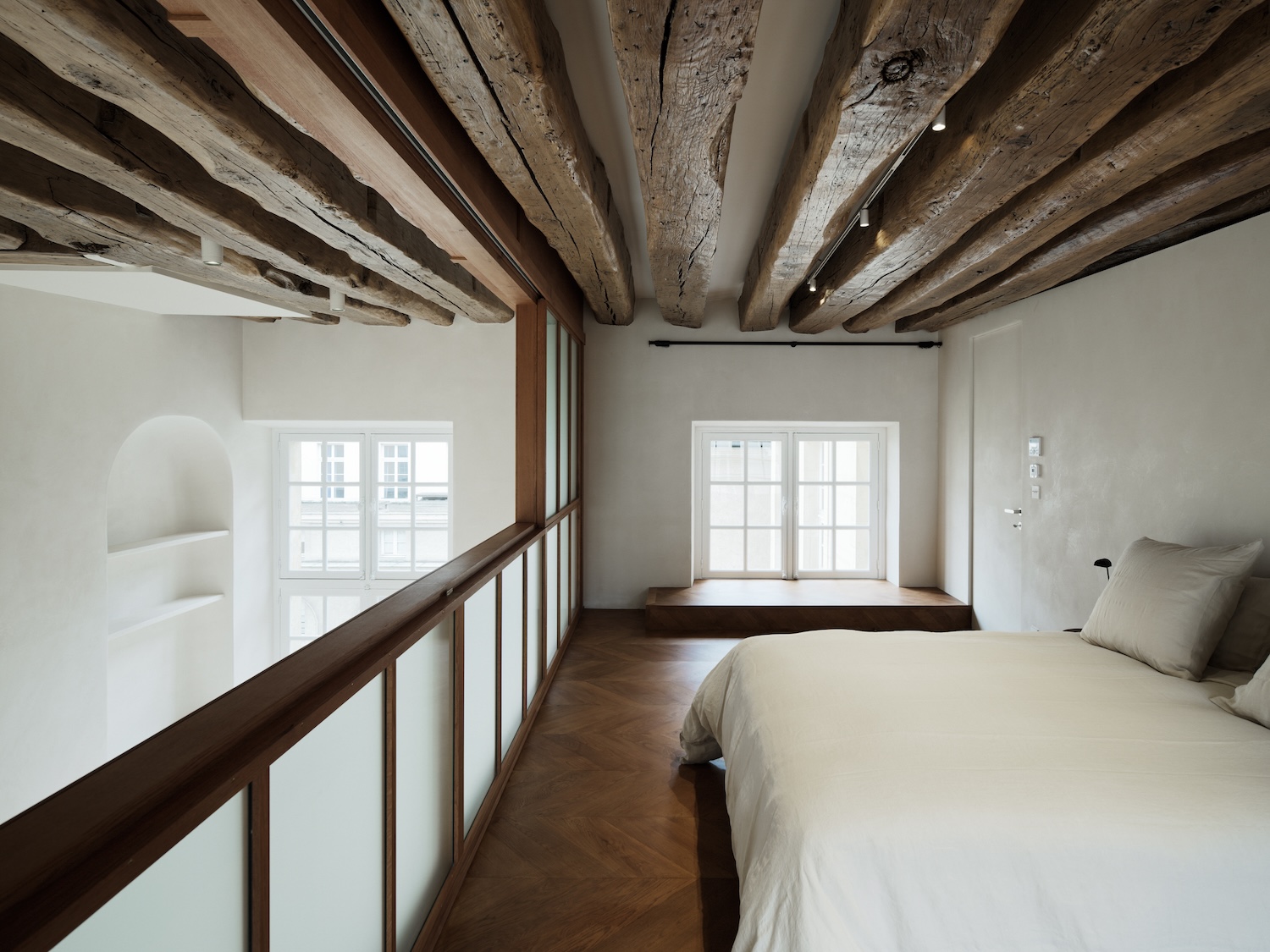
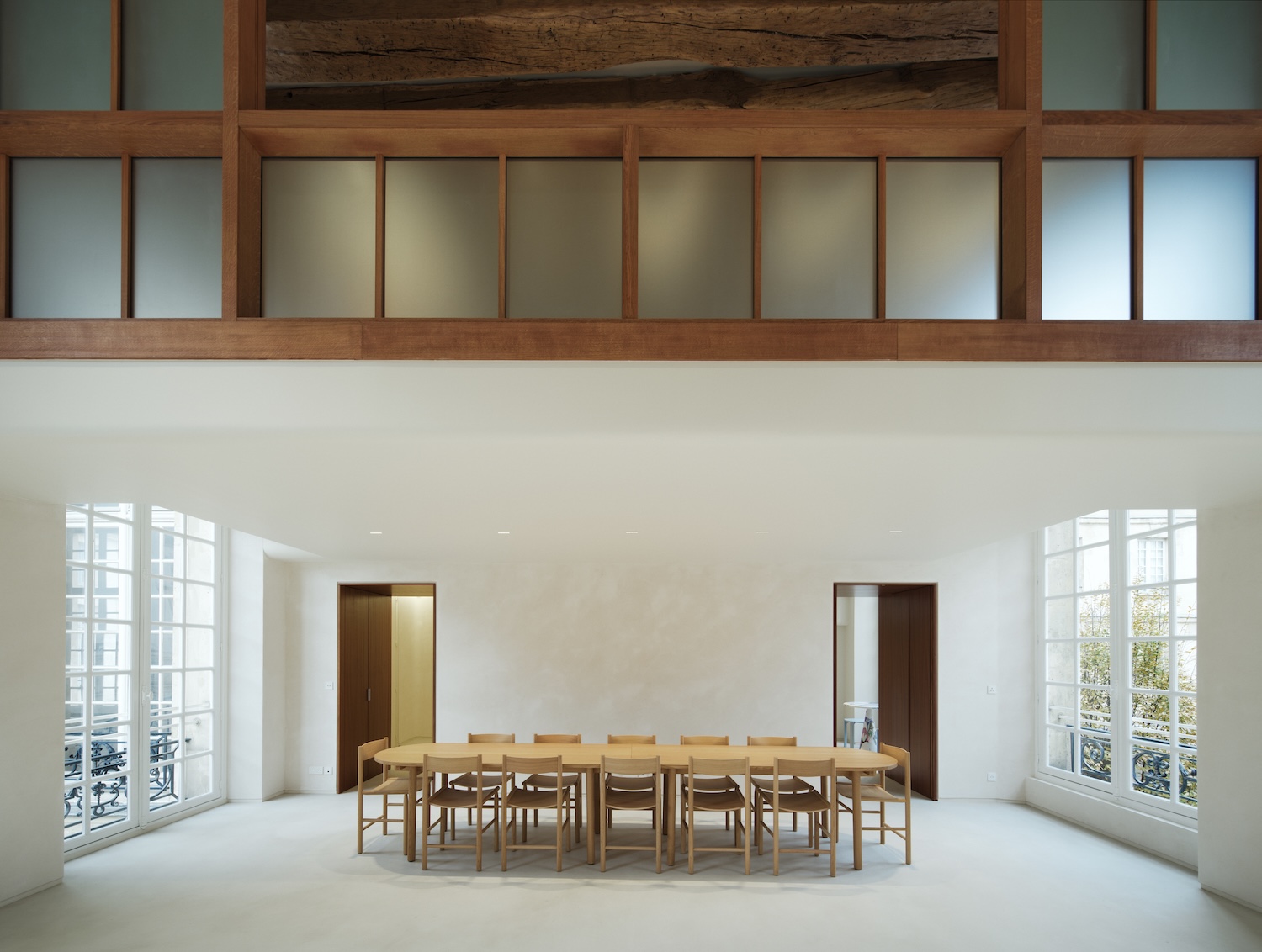
The restored double-height salon exemplifies this philosophy of revelation over imposition. Where previous interventions had subdivided and diminished, Ghotmeh creates vertical drama through strategic subtraction. The mezzanine’s operable interior windows function as architectural punctuation marks, framing views and conversations while maintaining the grand gesture of the original volume. This careful choreography transforms what might have been a simple restoration into a sophisticated meditation on historical continuity.
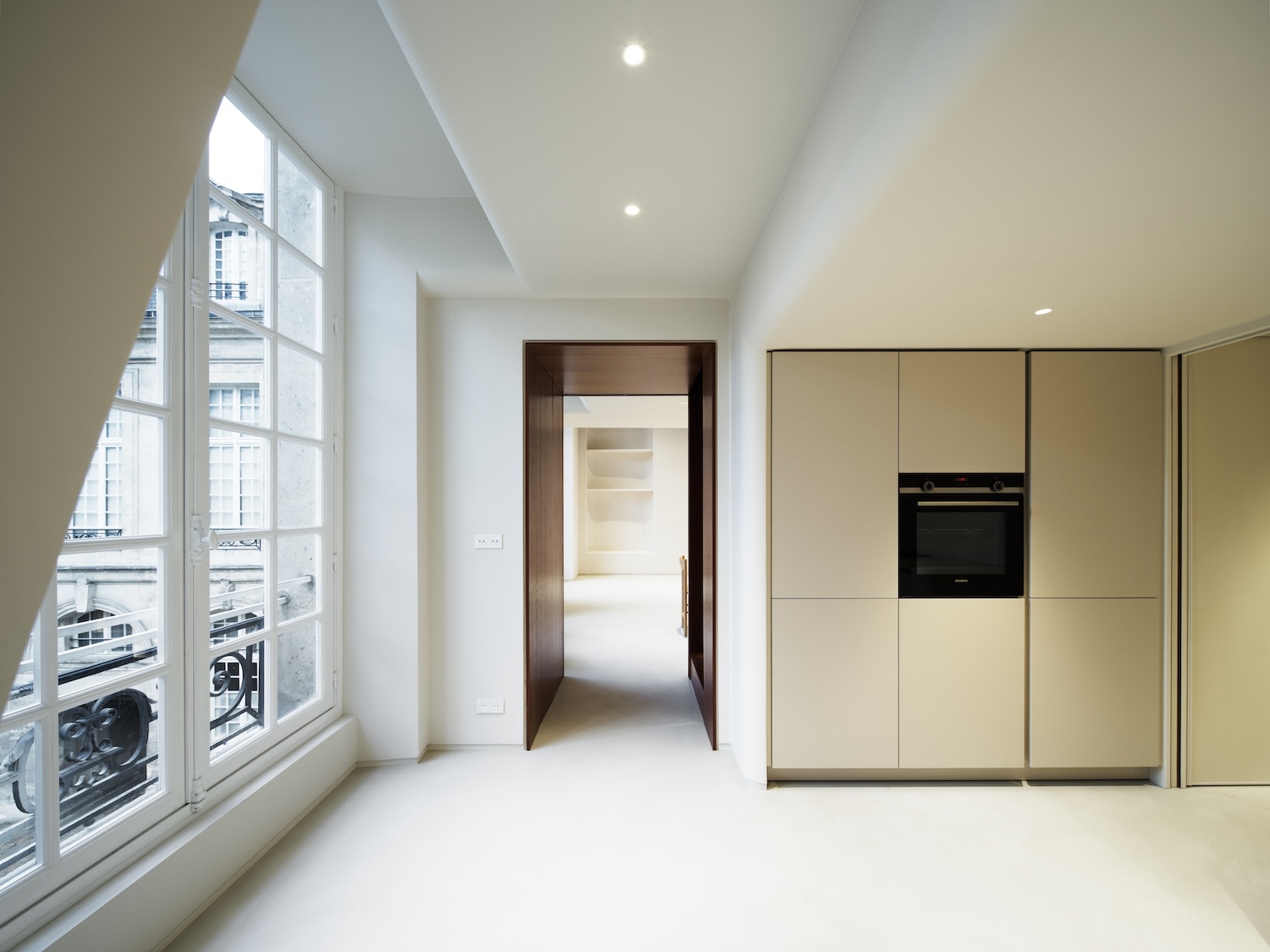
Materiality speaks with quiet authority throughout the residence. Soft curves and tactile surfaces reference the building’s historic fabric without pastiche, while finely crafted niches – carved directly into the party wall – evoke the mansion’s original “cabinet of curiosities.” These architectural gestures demonstrate how contemporary intervention can honor historical precedent while establishing its own vocabulary. The niches, in particular, suggest display possibilities that connect to the broader tradition of French collecting culture, from royal cabinets to contemporary art installations.
Light functions as both medium and message in Ghotmeh’s hands. The “opalescent and open” facade communicating with the void over the living area represents a sophisticated understanding of how illumination shapes perception. This treatment recalls the work of 18th-century architects like Claude-Nicolas Ledoux, who understood light as architecture’s most powerful tool, while anticipating contemporary concerns about wellness and environmental psychology.