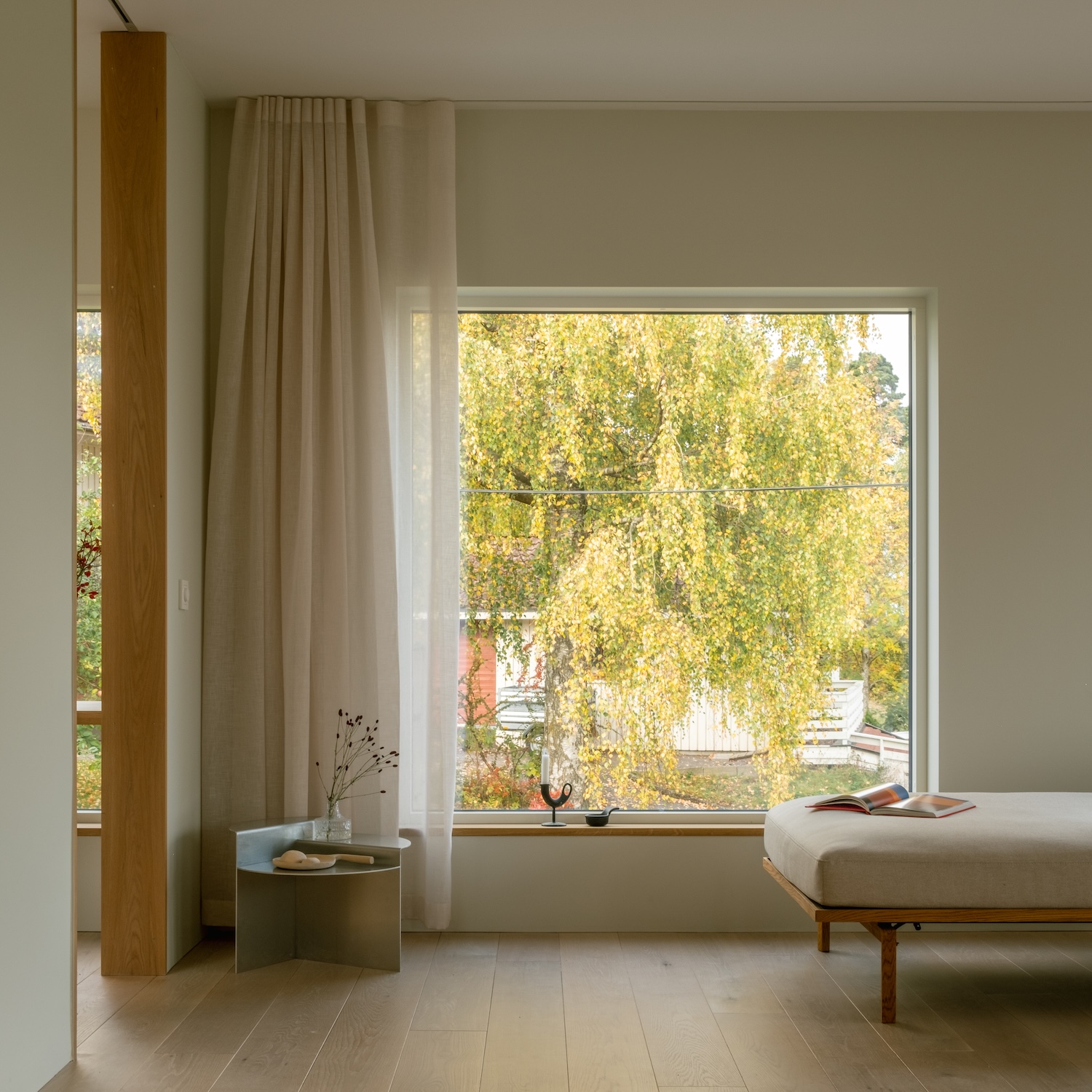
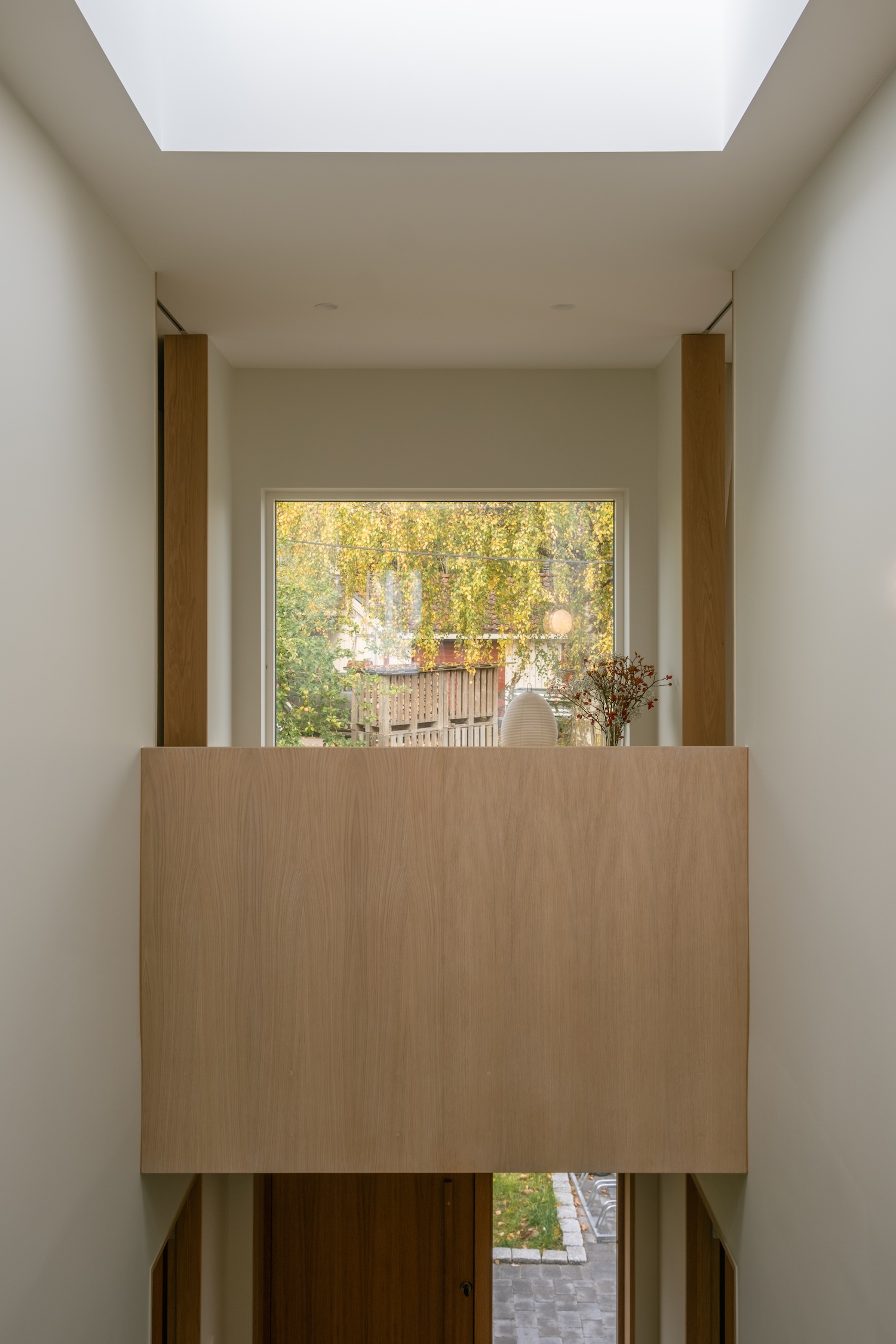
House at Nøtterøy is a minimal home located in Nøtterøy, Norway, designed by KOHT Arkitekter. The house reveals its intentions gradually, much like examining a finely made cabinet where each joint and surface speaks to both function and philosophy. The exterior’s green-painted timber cladding establishes an immediate dialogue with its neighbor, demonstrating how contemporary design can acknowledge context without surrendering identity. Those six square windows, seemingly modest from the street, operate as carefully calibrated instruments of light and view – each one a deliberate frame for the changing seasons beyond.
What distinguishes this project is its embrace of what might be called productive limitation. The compact footprint, born from site constraints and budget realities, becomes the very engine of spatial innovation. The architects have responded by creating what Kazuo Shinohara termed “fissure space” – that central double-height void that refuses singular definition, serving simultaneously as entrance, workspace, and living area. This kind of multifunctional thinking recalls the Japanese concept of ma, where space gains meaning through use rather than prescription.
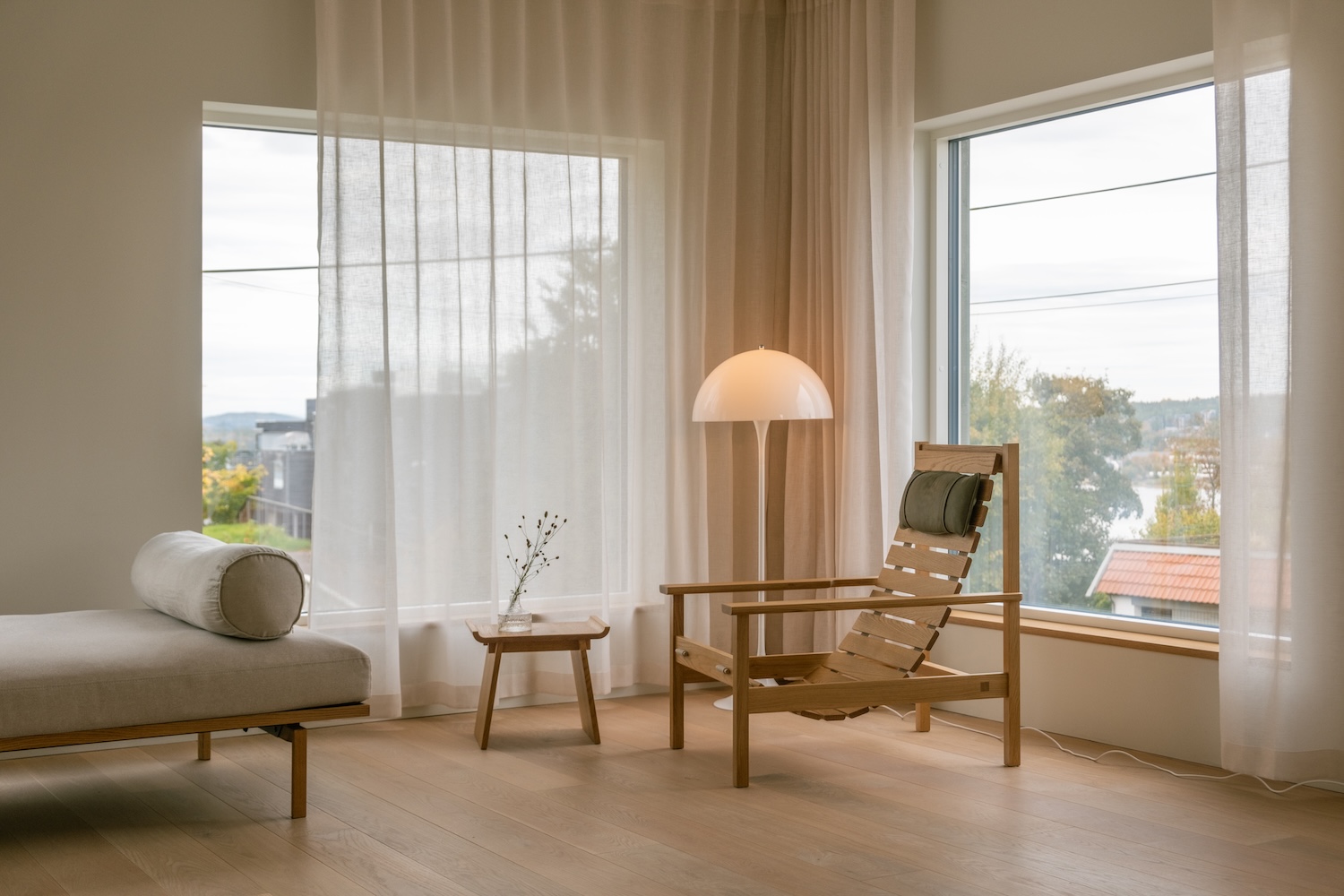
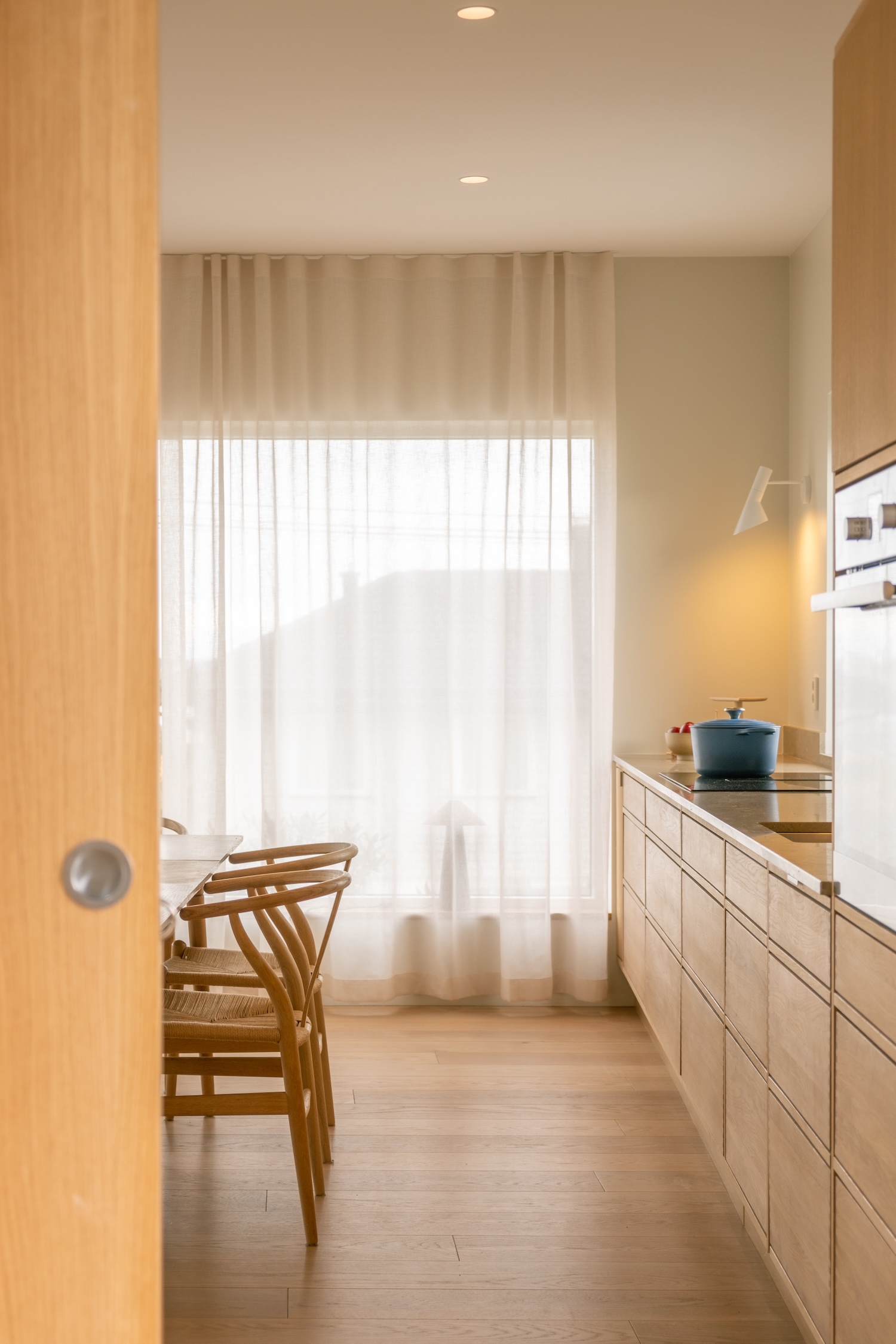
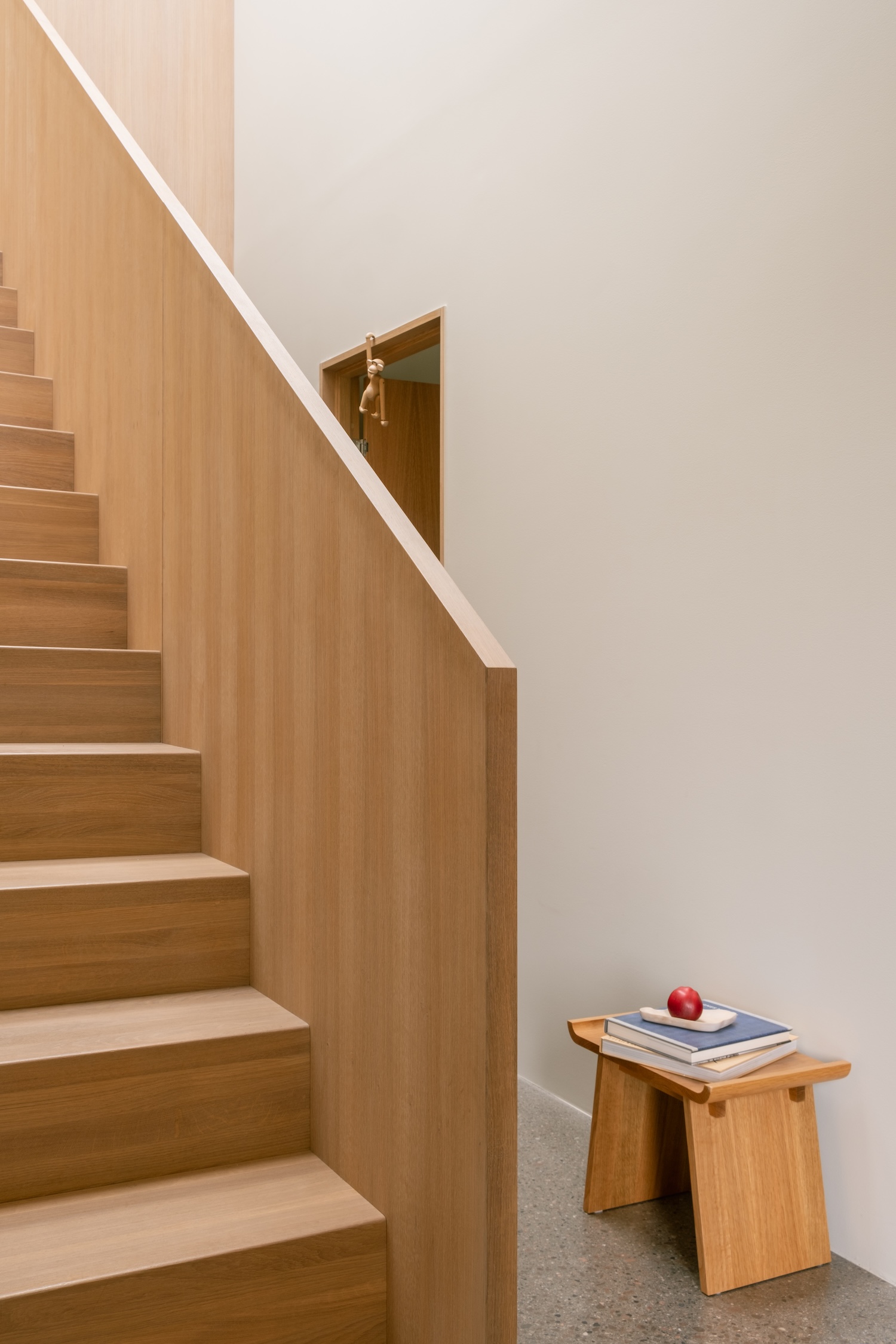
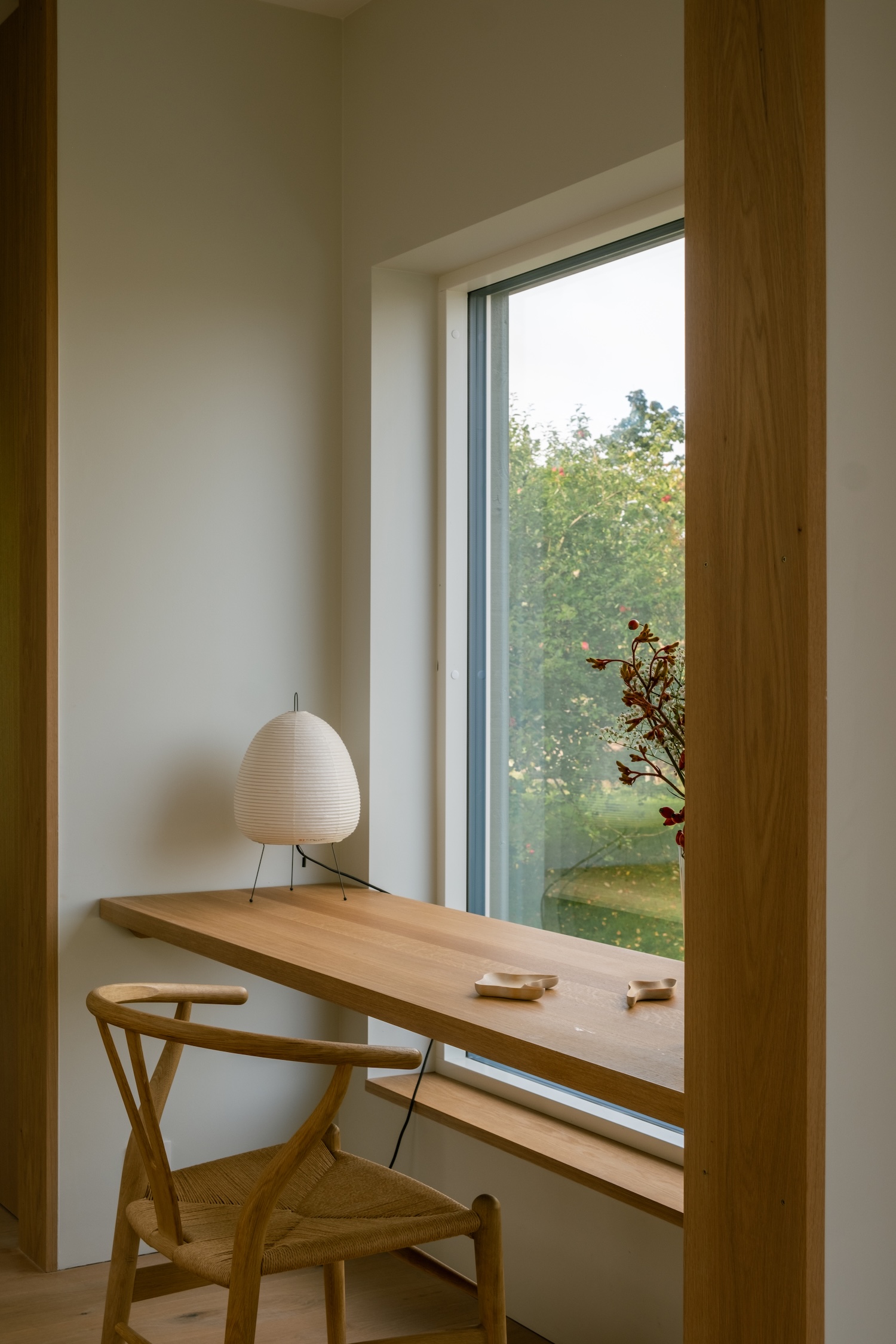
The material palette reads like a manifesto for restraint. Oak flooring flows uninterrupted across the main level, creating what amounts to a single, continuous surface – a table for living that accommodates the full spectrum of domestic activity. The limestone bathroom tiles provide punctuation rather than disruption, while the polished concrete below, embedded with local aggregate, grounds the composition literally and figuratively. This is not minimalism as aesthetic pose but as practical poetry, where every material earns its place through both beauty and purpose.
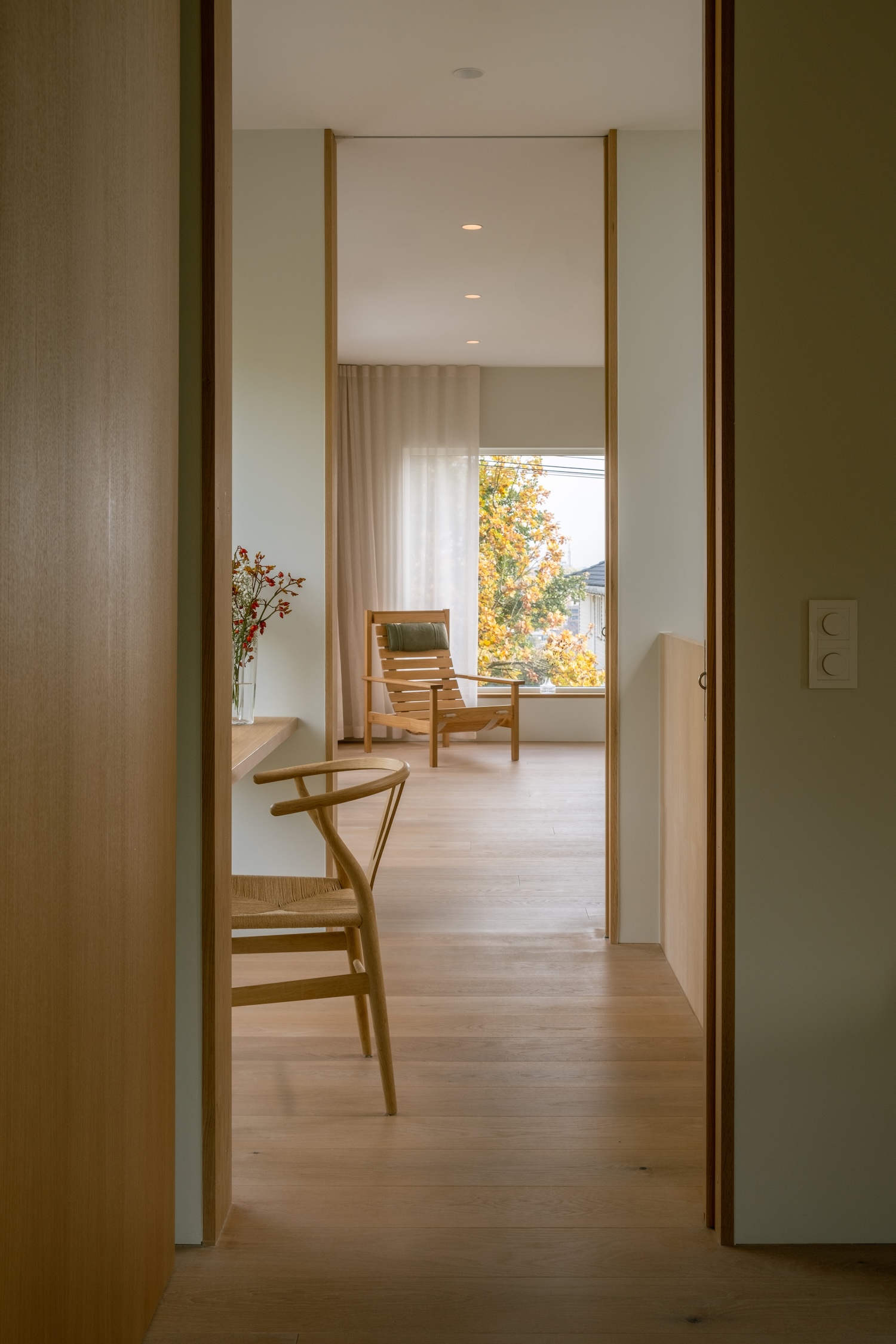
The four full-height sliding oak doors that define the upper level deserve particular attention. Operating at the maximum height the manufacturer could supply (2.65 meters), they transform the act of enclosure into something approaching ritual. When closed, they create intimate chambers; when open, they dissolve into the oak-lined openings, maintaining visual continuity while providing functional flexibility. This is furniture thinking applied to architecture – the understanding that the best designs adapt to their users rather than demanding adaptation from them.