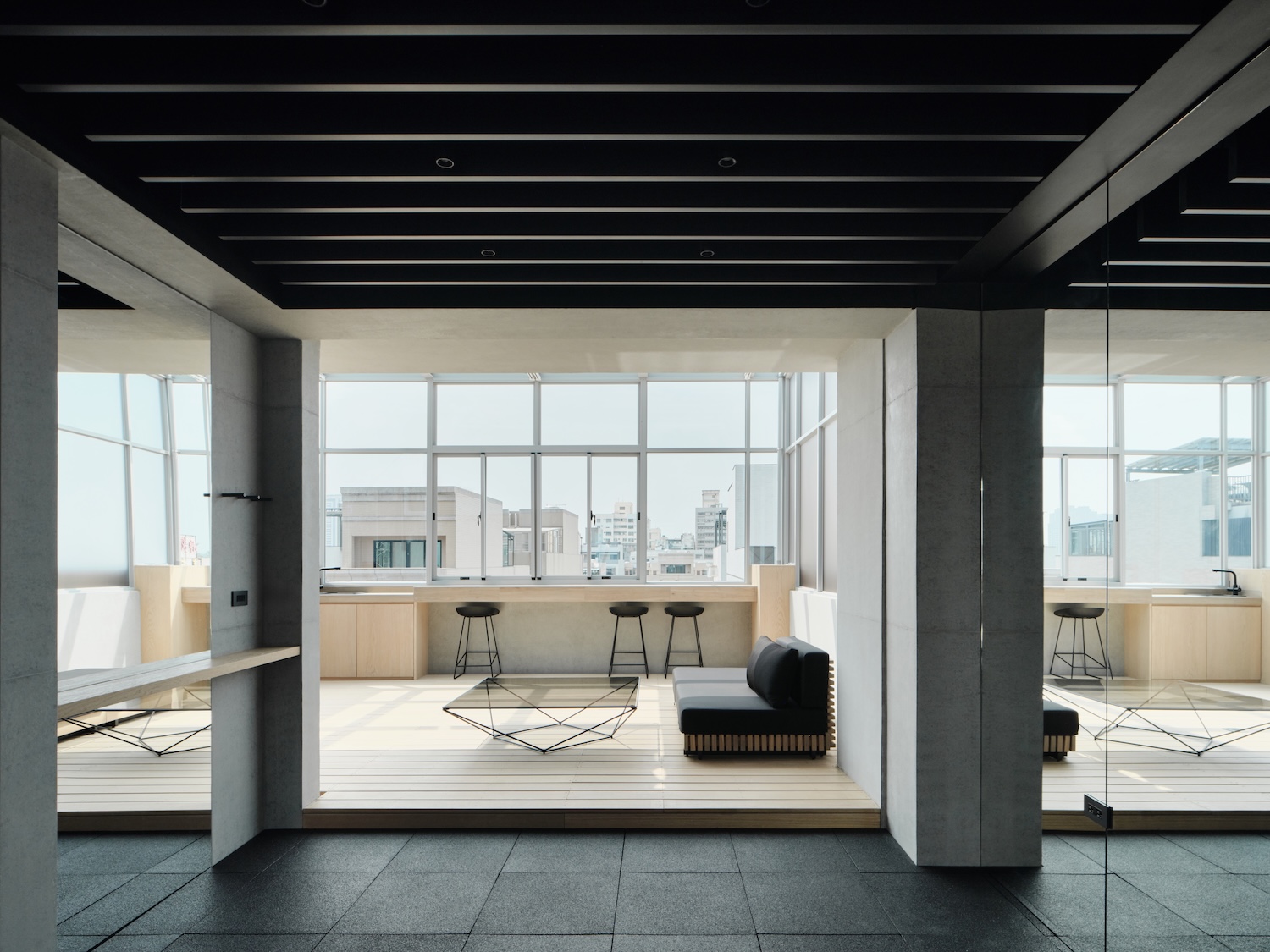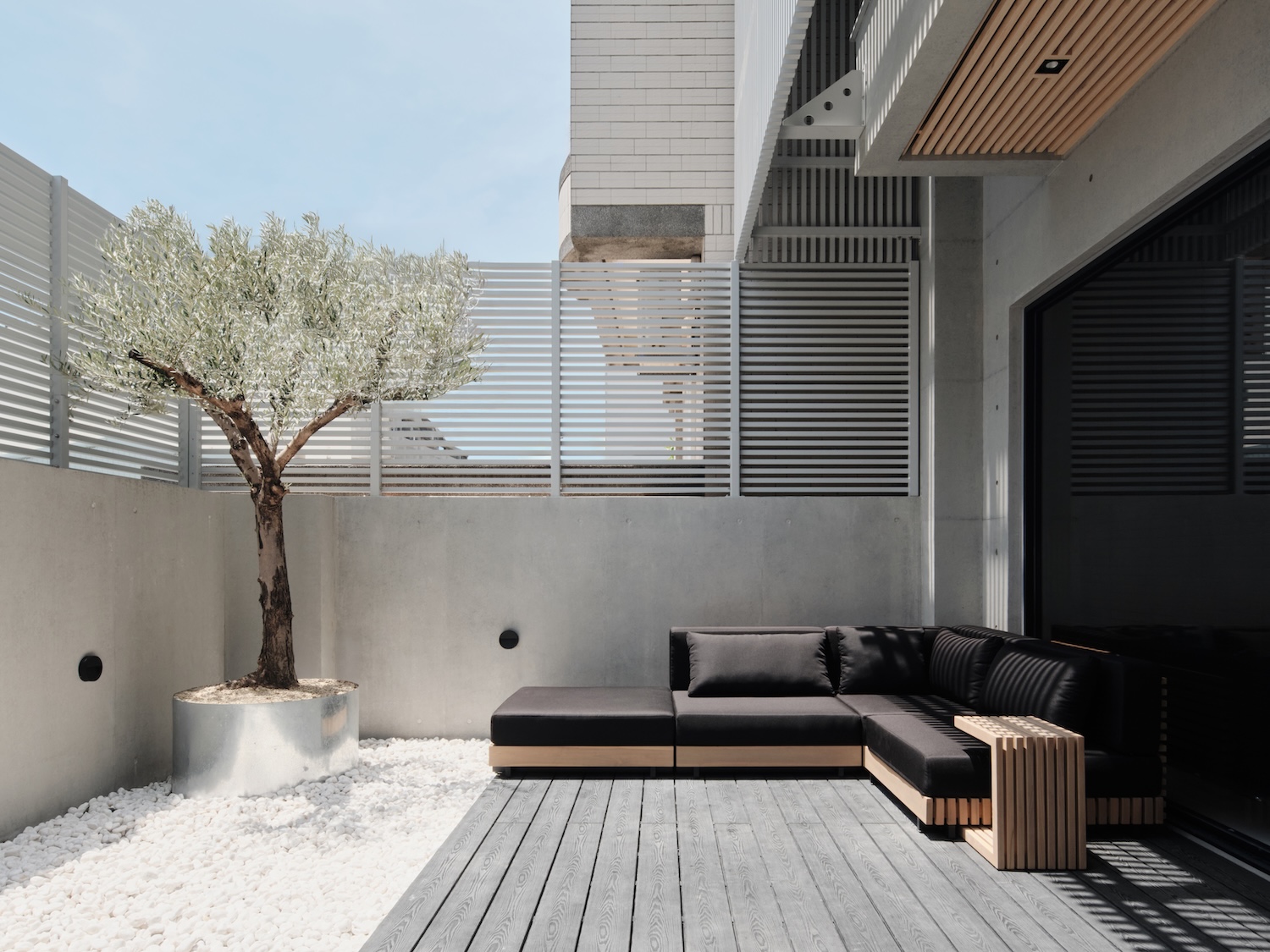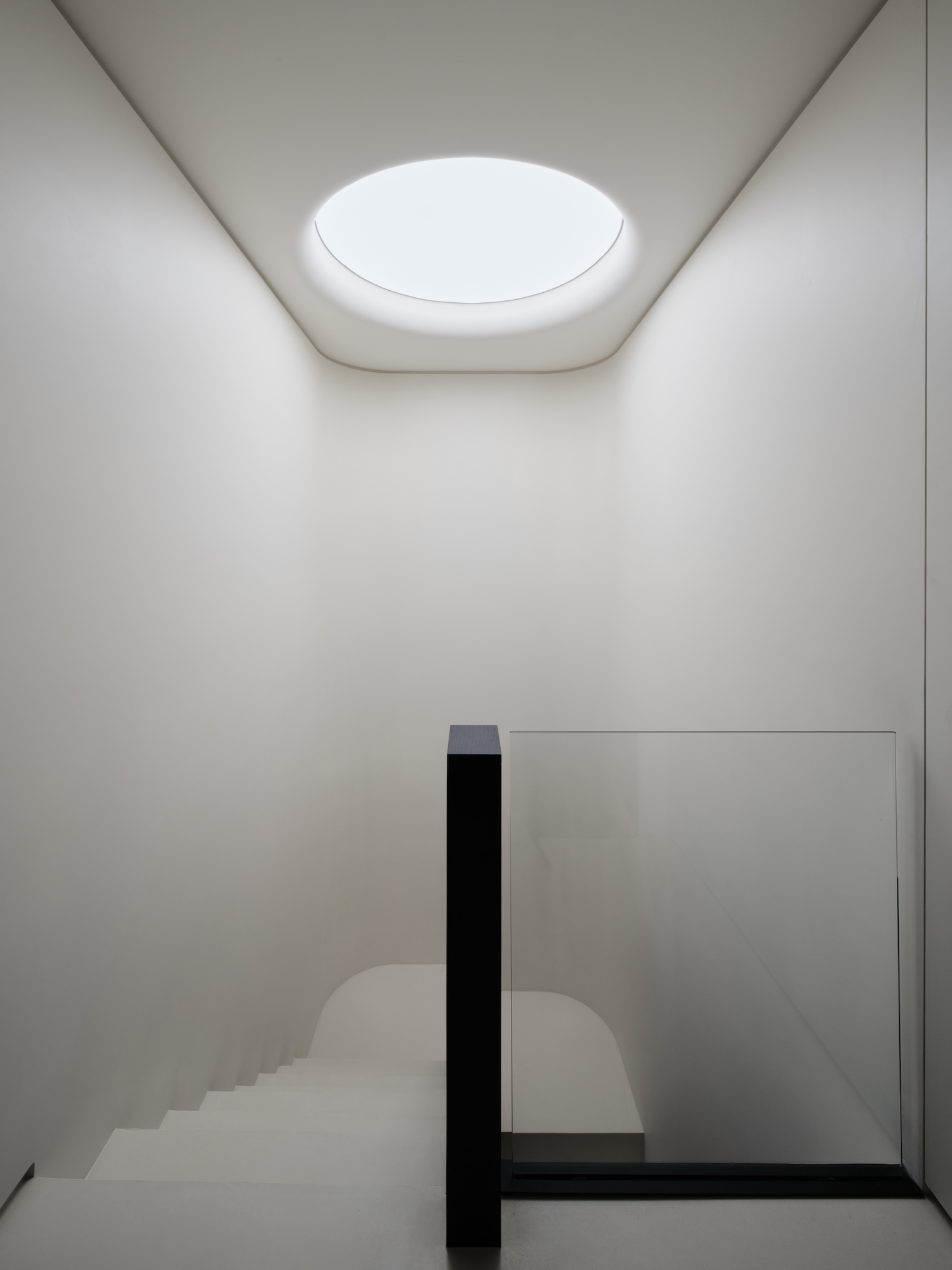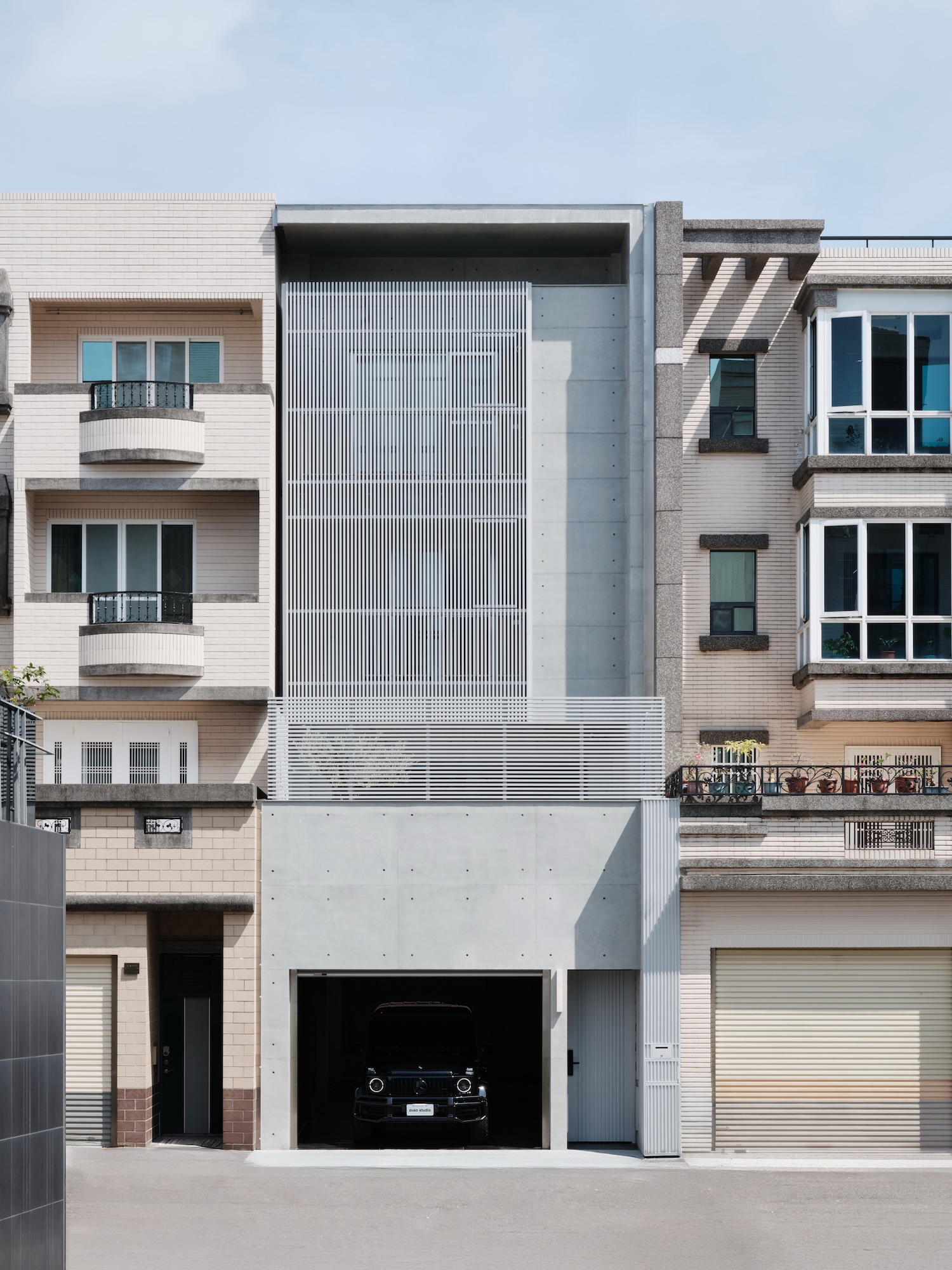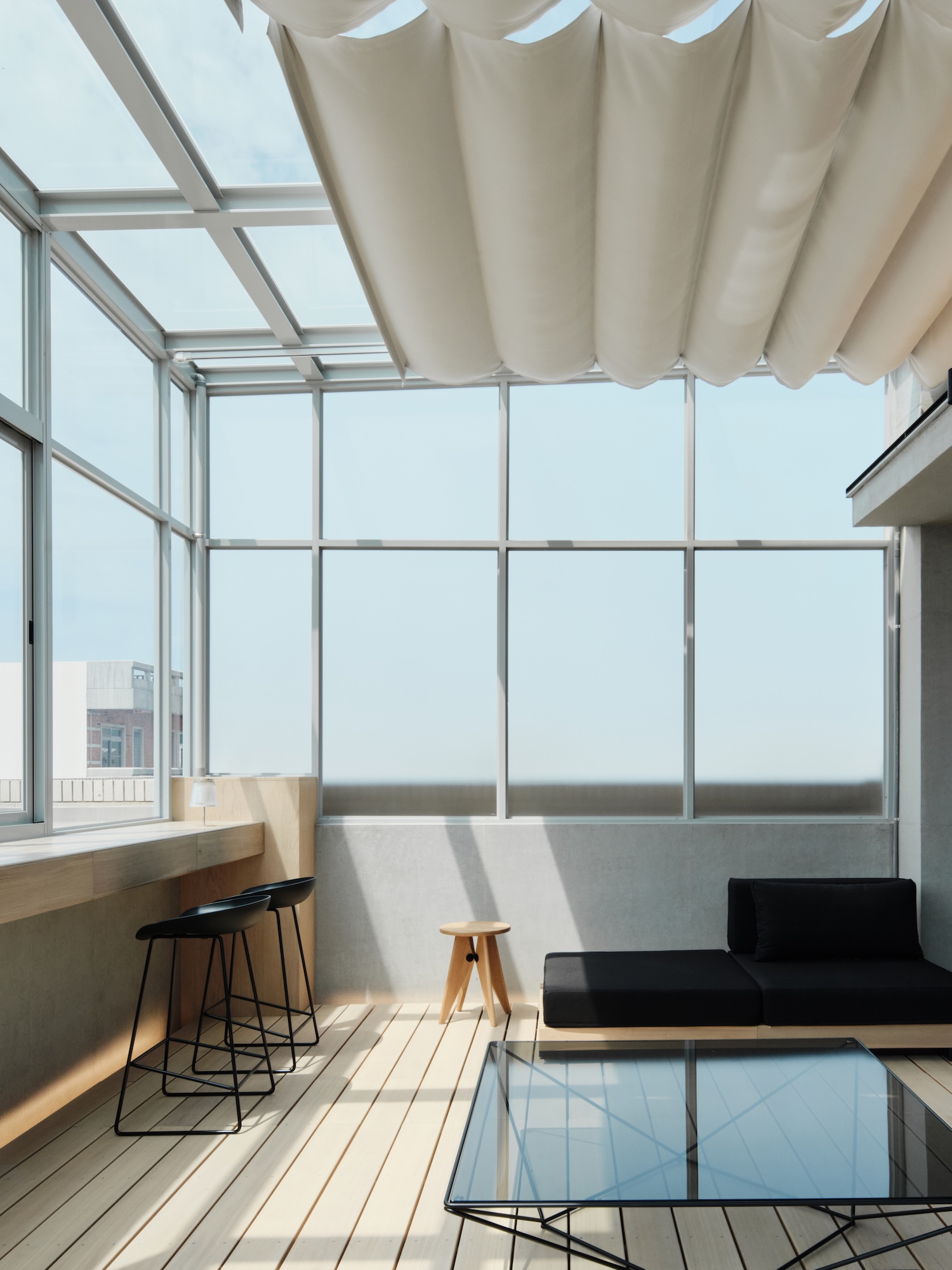
House Kuo is a minimalist residence located in Tainan, Taiwan, designed by Zuso Studio. The narrow townhouse typology presents one of domestic architecture’s most persistent challenges: how to animate a deep, compressed plan when daylight is confined to opposing ends. Zuso Studio’s response to this condition refuses the obvious solution of punching additional openings or introducing skylights as isolated gestures. Instead, the practice reconceives light itself as a structural principle – one that organizes circulation, modulates material experience, and ultimately determines how the home is inhabited.
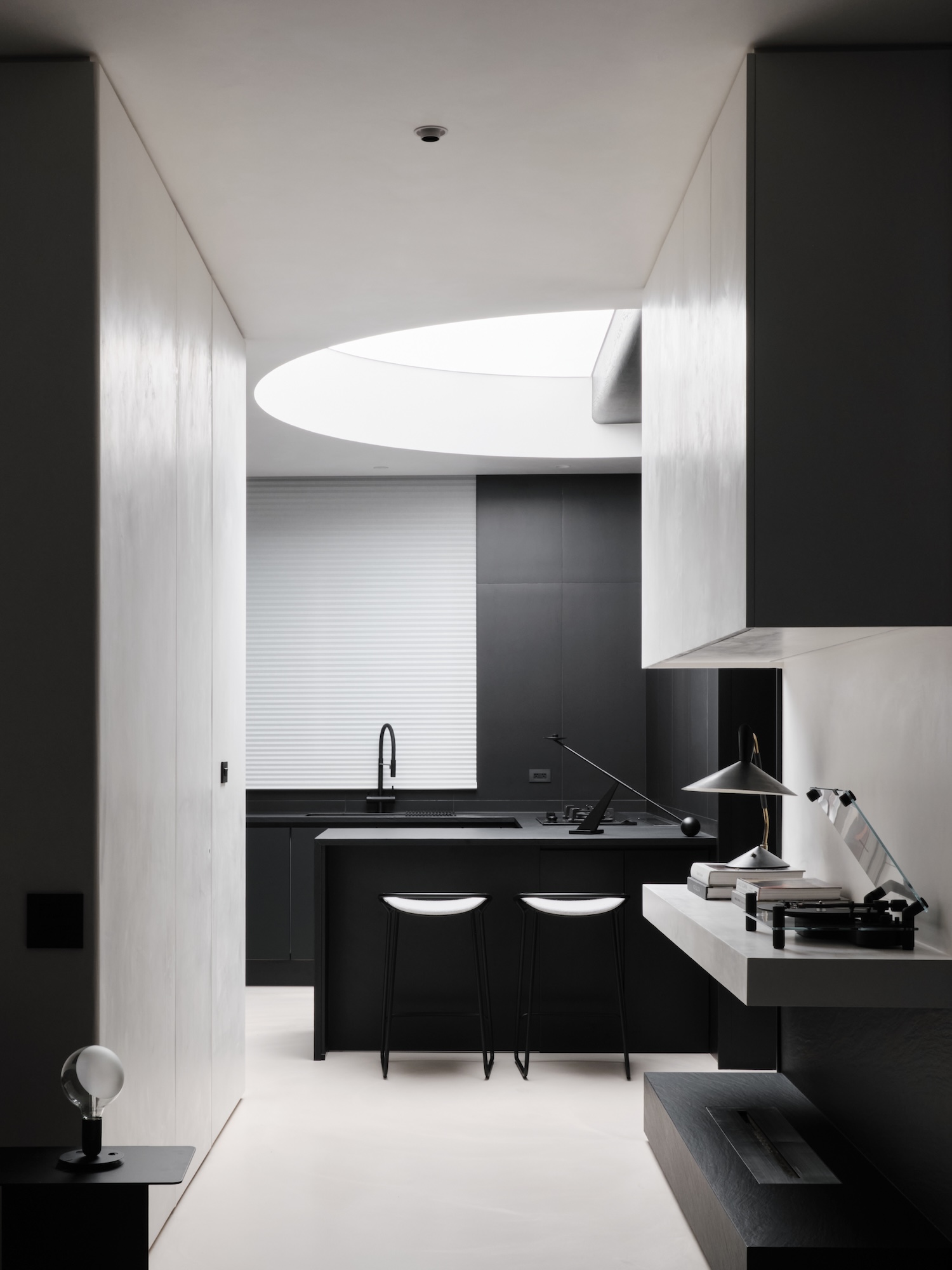
The plan’s party walls on both sides create a darkness gradient that deepens toward the center, a condition familiar across dense Asian urban contexts where the shophouse and townhouse traditions have long grappled with the same constraint. What distinguishes this project is the shift from treating light as something to be distributed evenly to understanding it as something to be choreographed. Ceiling height variations and curved surfaces create pressure differentials within the spatial sequence, drawing illumination inward rather than simply admitting it. The effect recalls Tadao Ando’s treatment of light as an active material in his concrete architecture – though where Ando creates drama through contrast, Zuso pursues continuity and settledness.
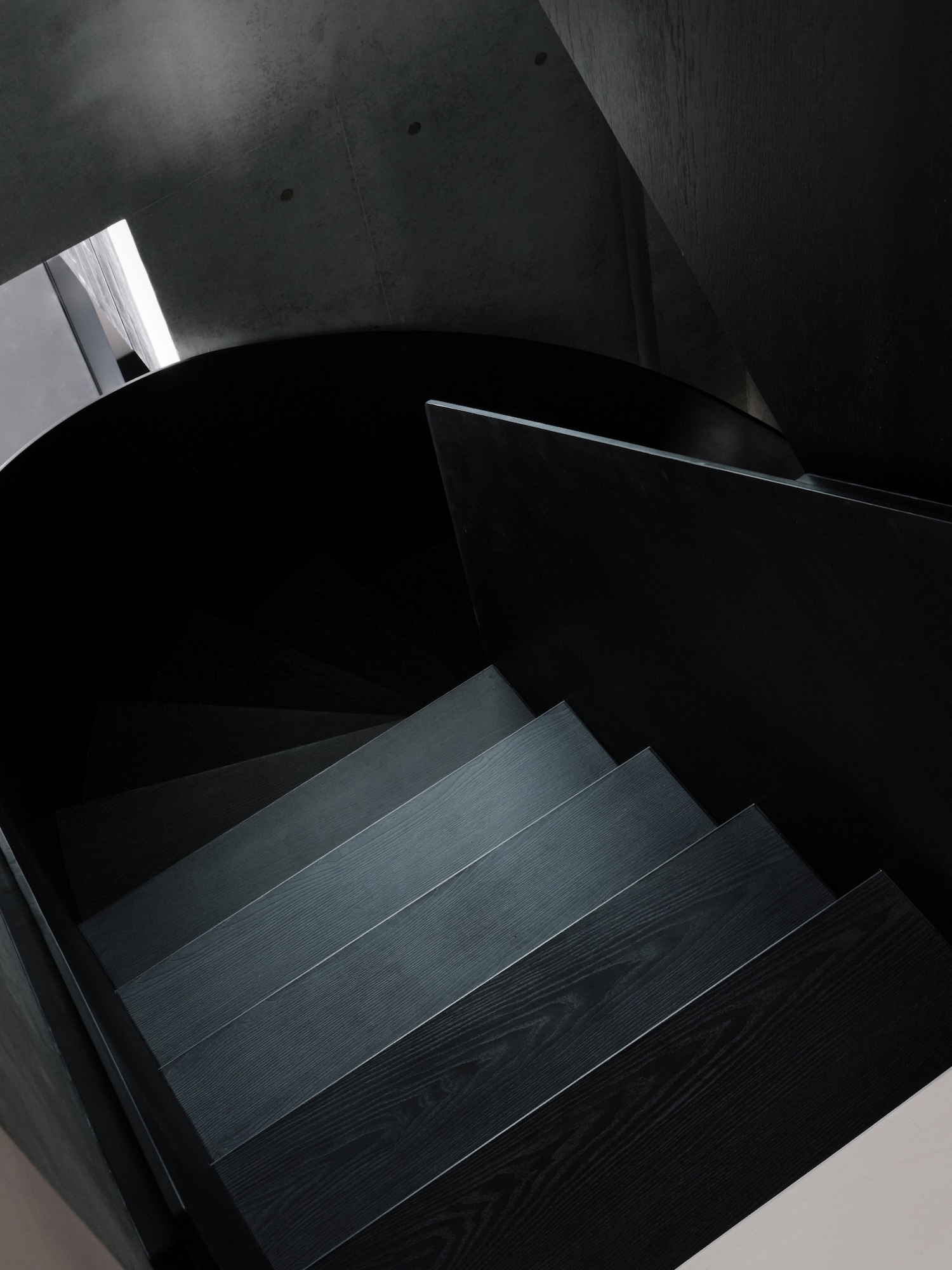
The staircase anchors this strategy. Positioned to mediate between vertical light movement and horizontal spatial experience, it functions less as infrastructure and more as a spatial instrument – a form that simultaneously channels daylight downward and connects the domestic levels into a coherent atmosphere. Glass partitions extend this logic laterally, allowing light to travel across rooms without the visual interruption of opaque boundaries.
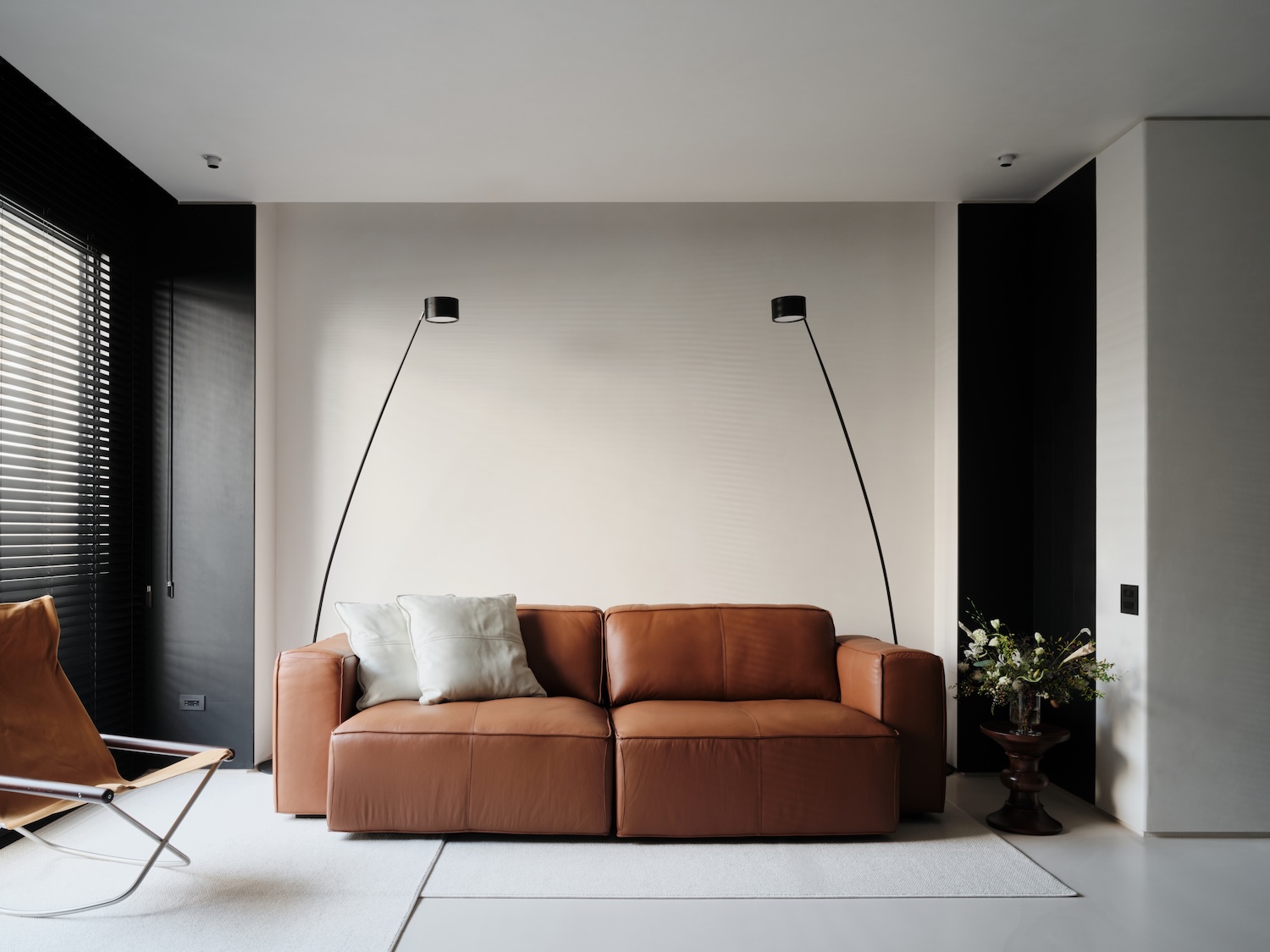
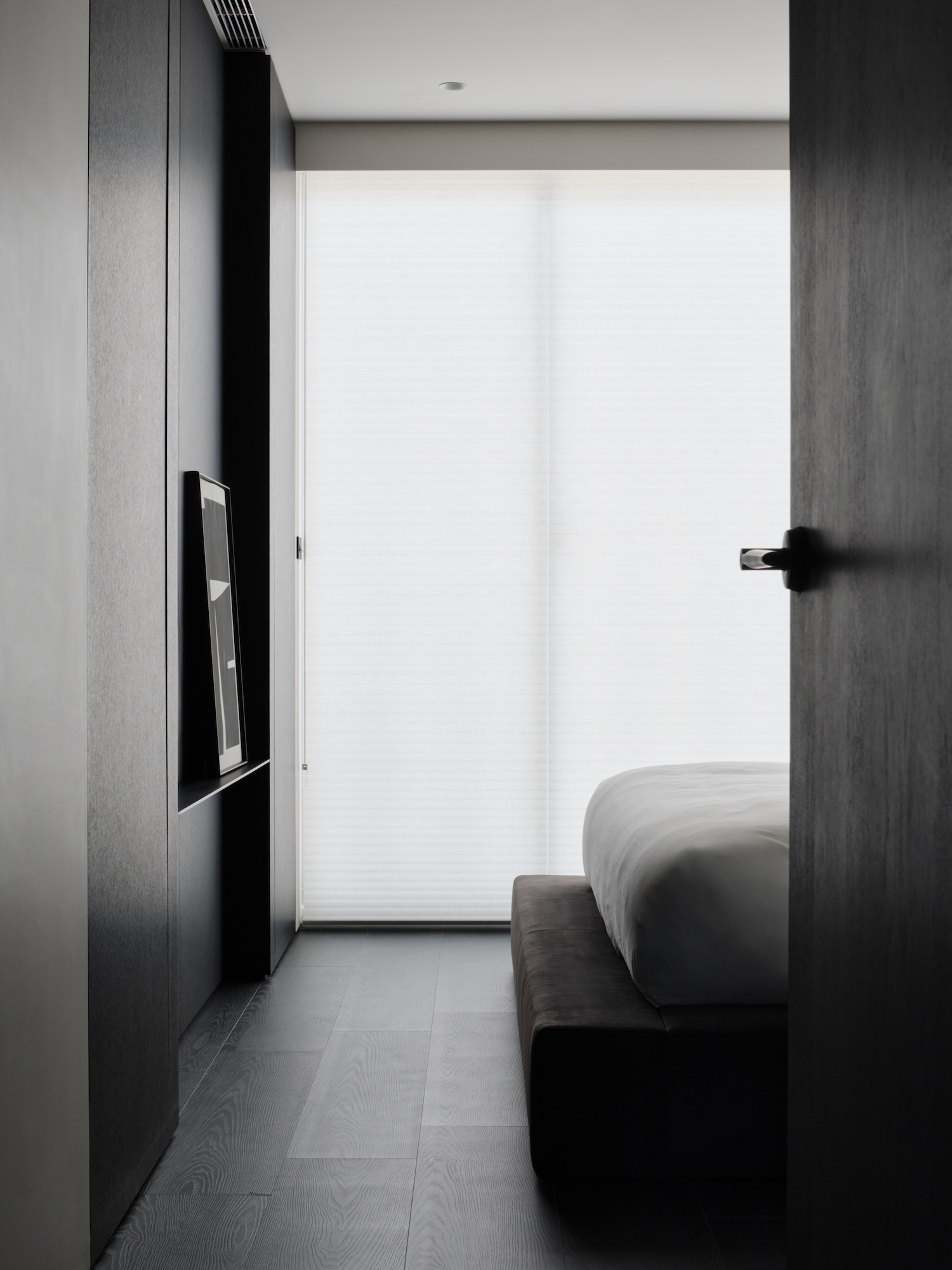
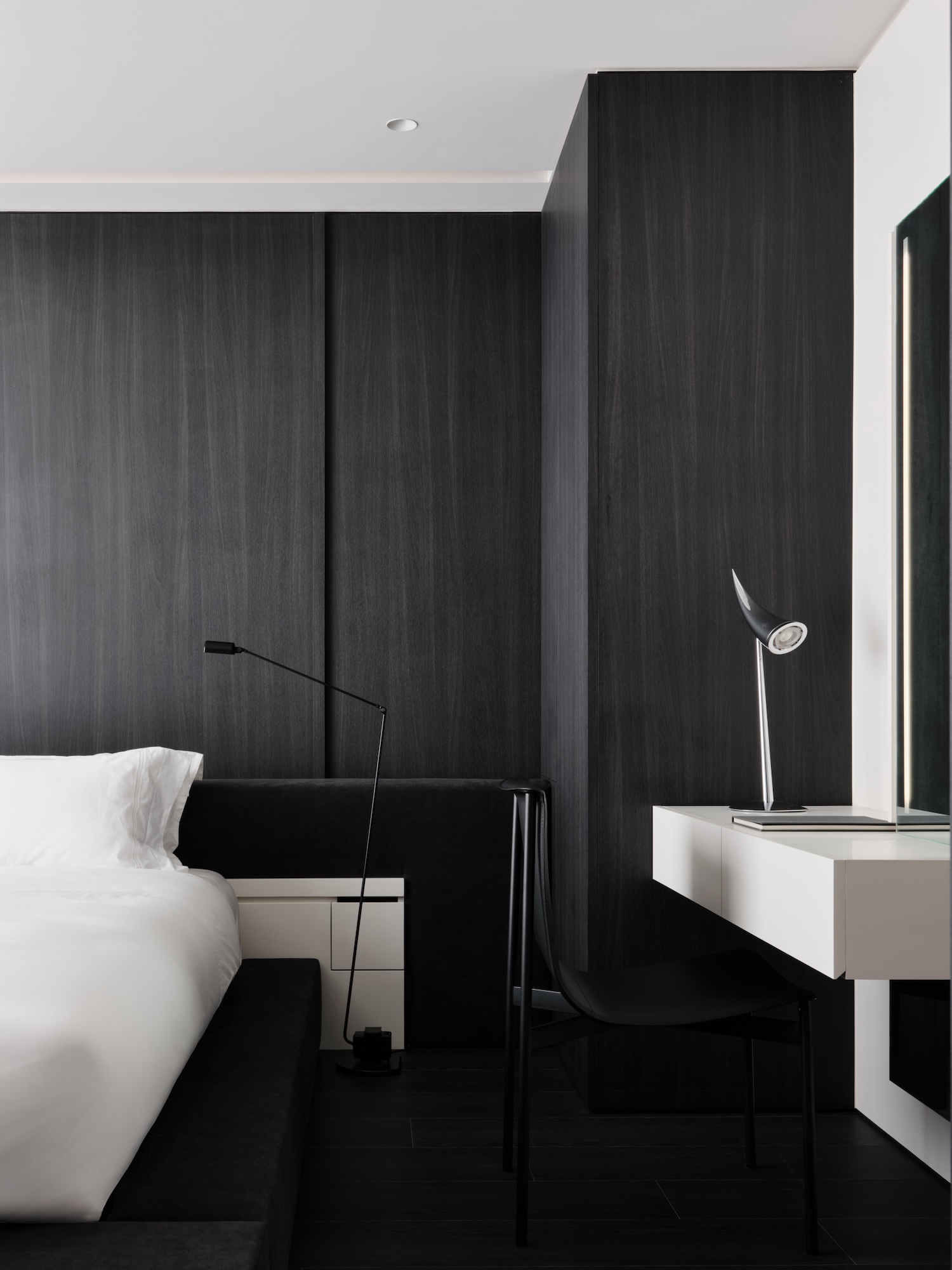
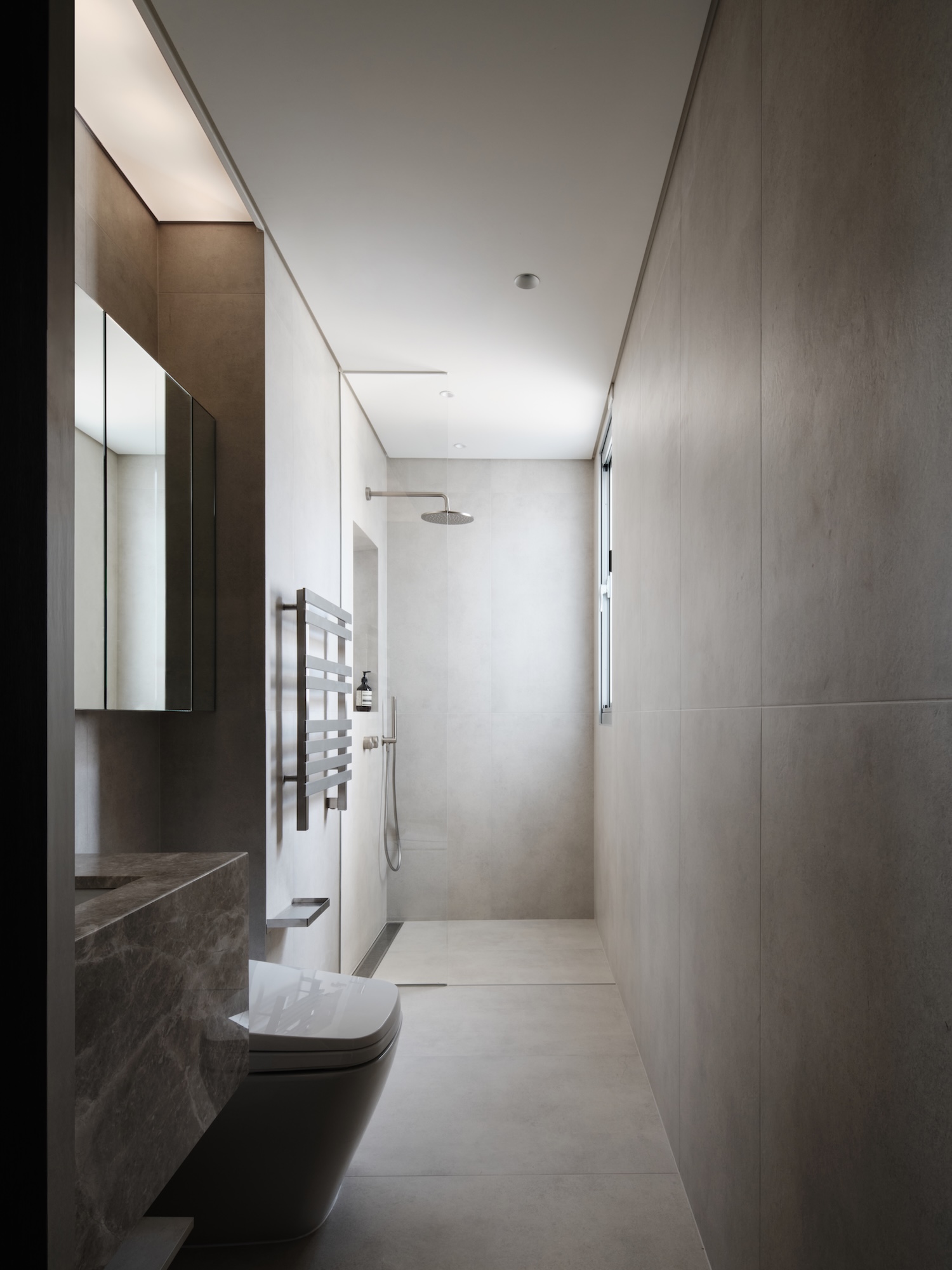
Surfaces that receive frequent tactile contact – door handles, handrails, cabinetry edges – are chosen for warmth and texture, reinforcing the grounded quality the client sought. At the deepest points of the plan, dark-toned surfaces absorb rather than reflect incoming light, preventing the sharp terminations that would otherwise create a sense of compression. The result is a light that settles rather than performs, which places the project within a current of contemporary Japanese and Taiwanese residential practice where restraint and atmosphere matter more than spatial drama.