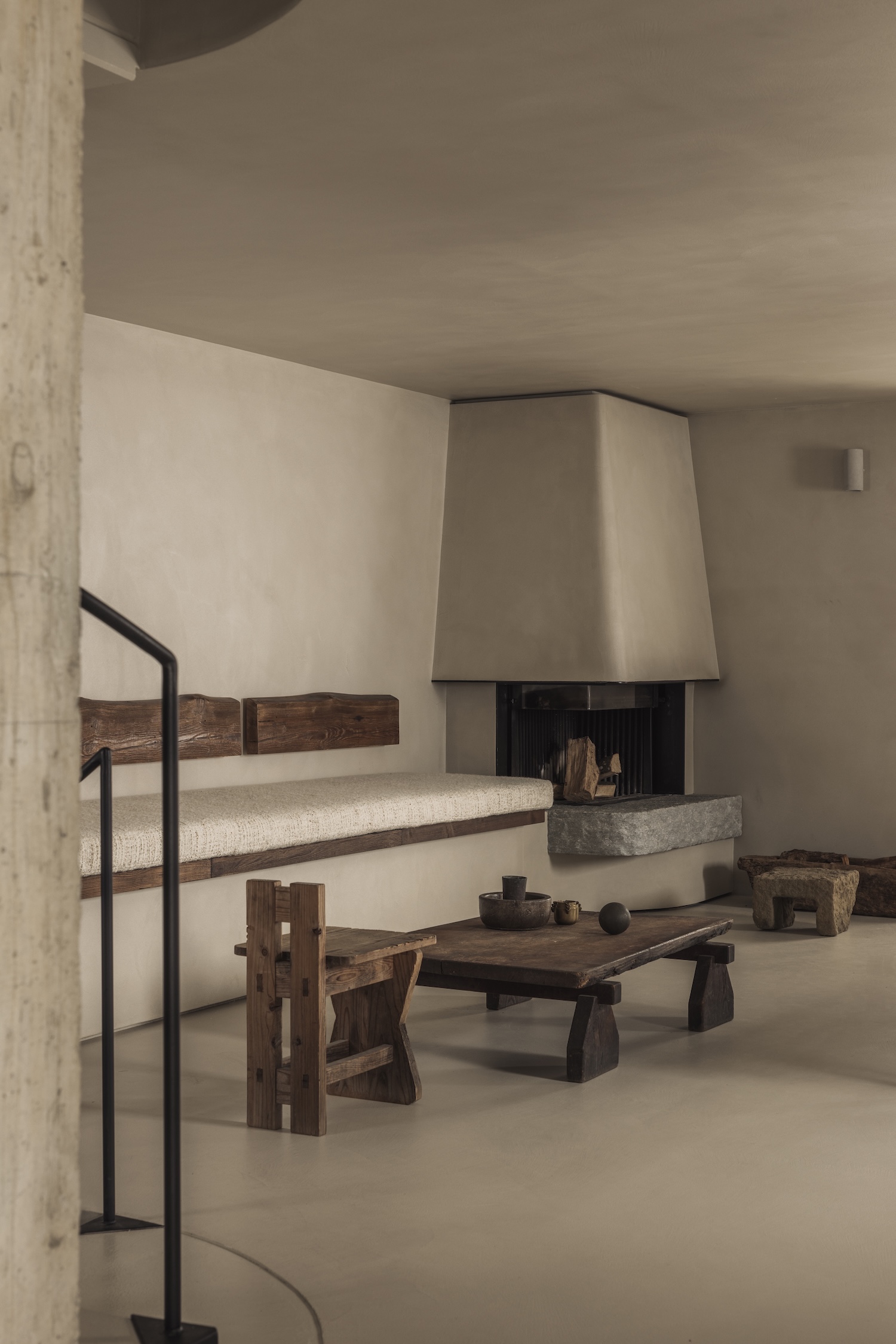
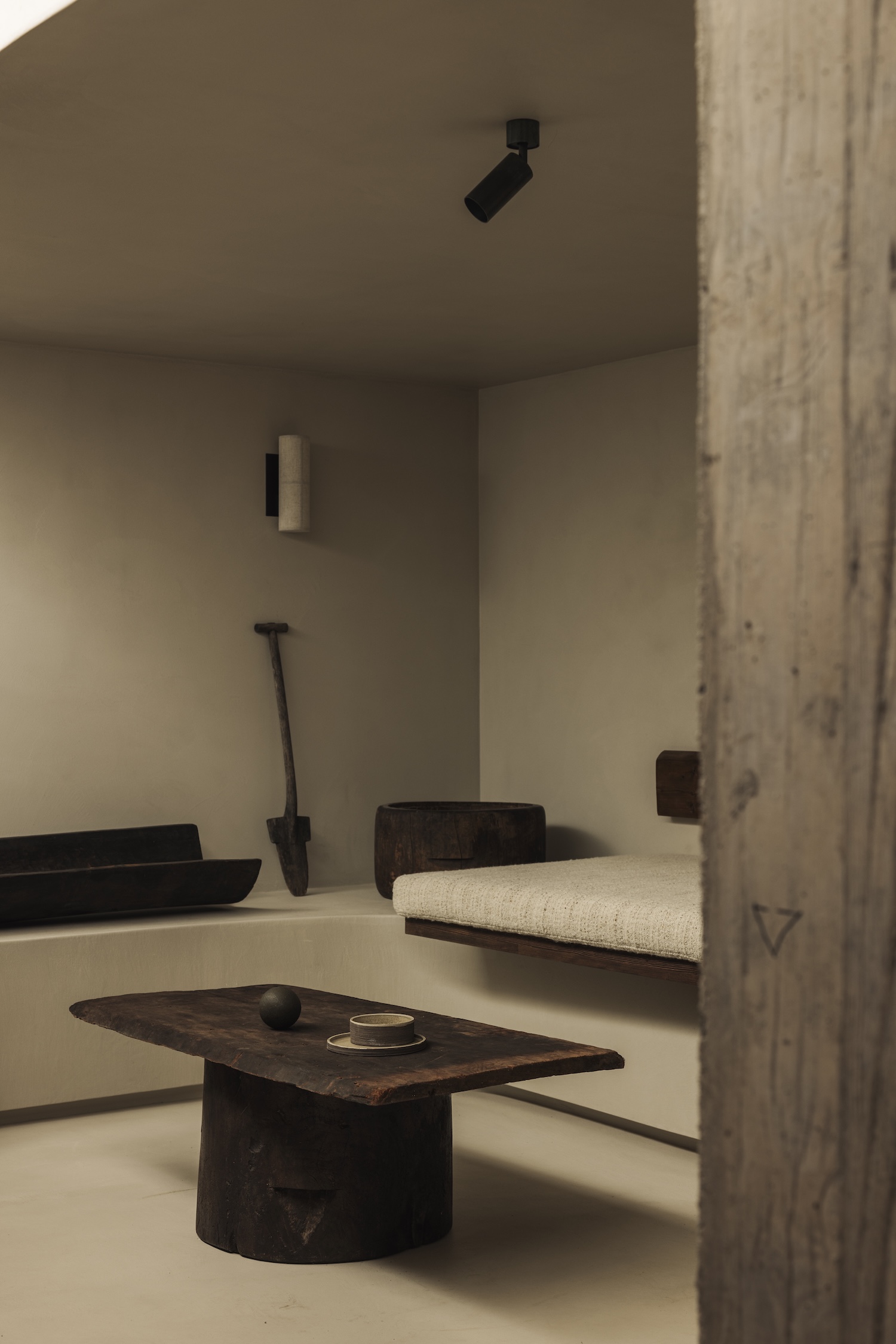
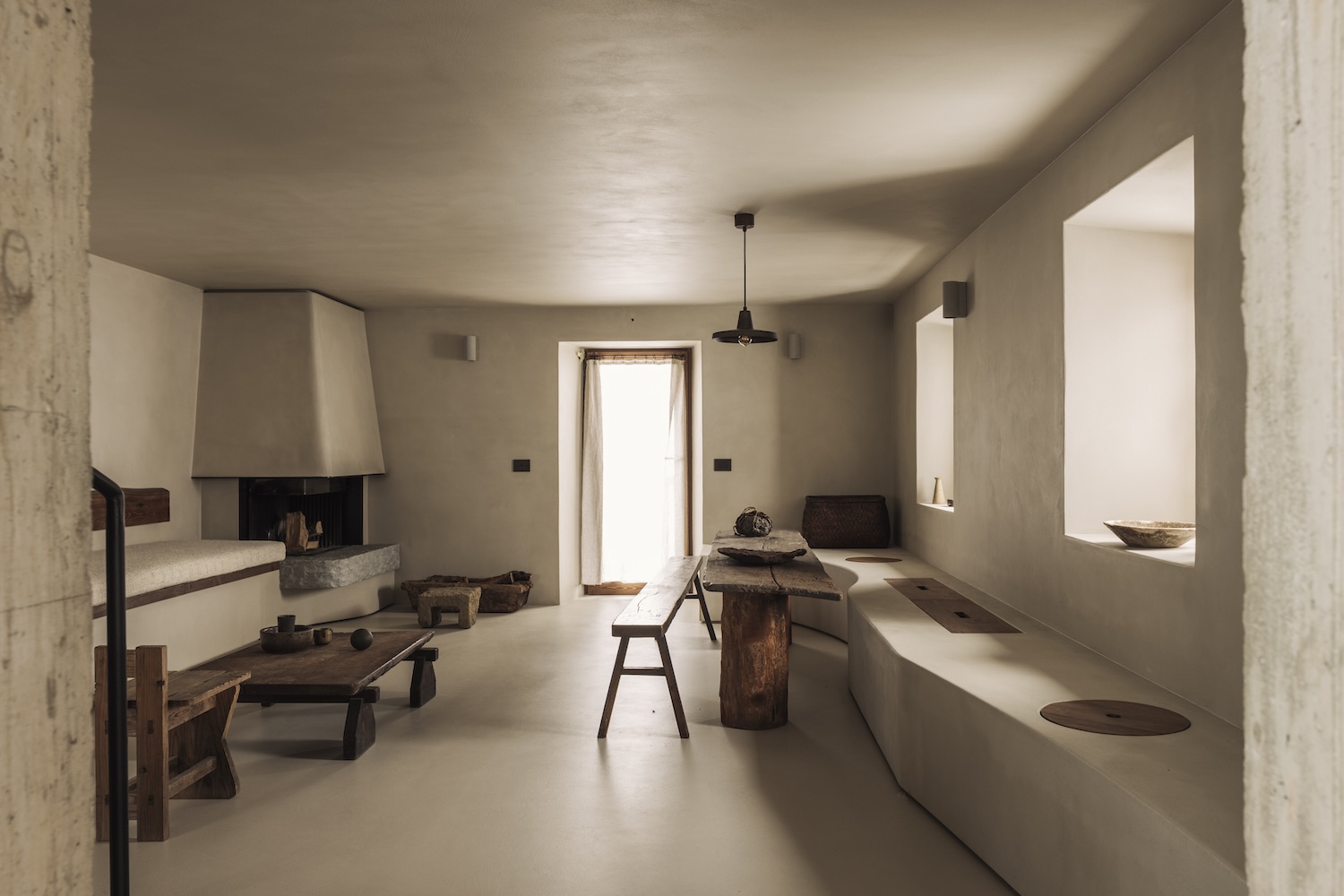
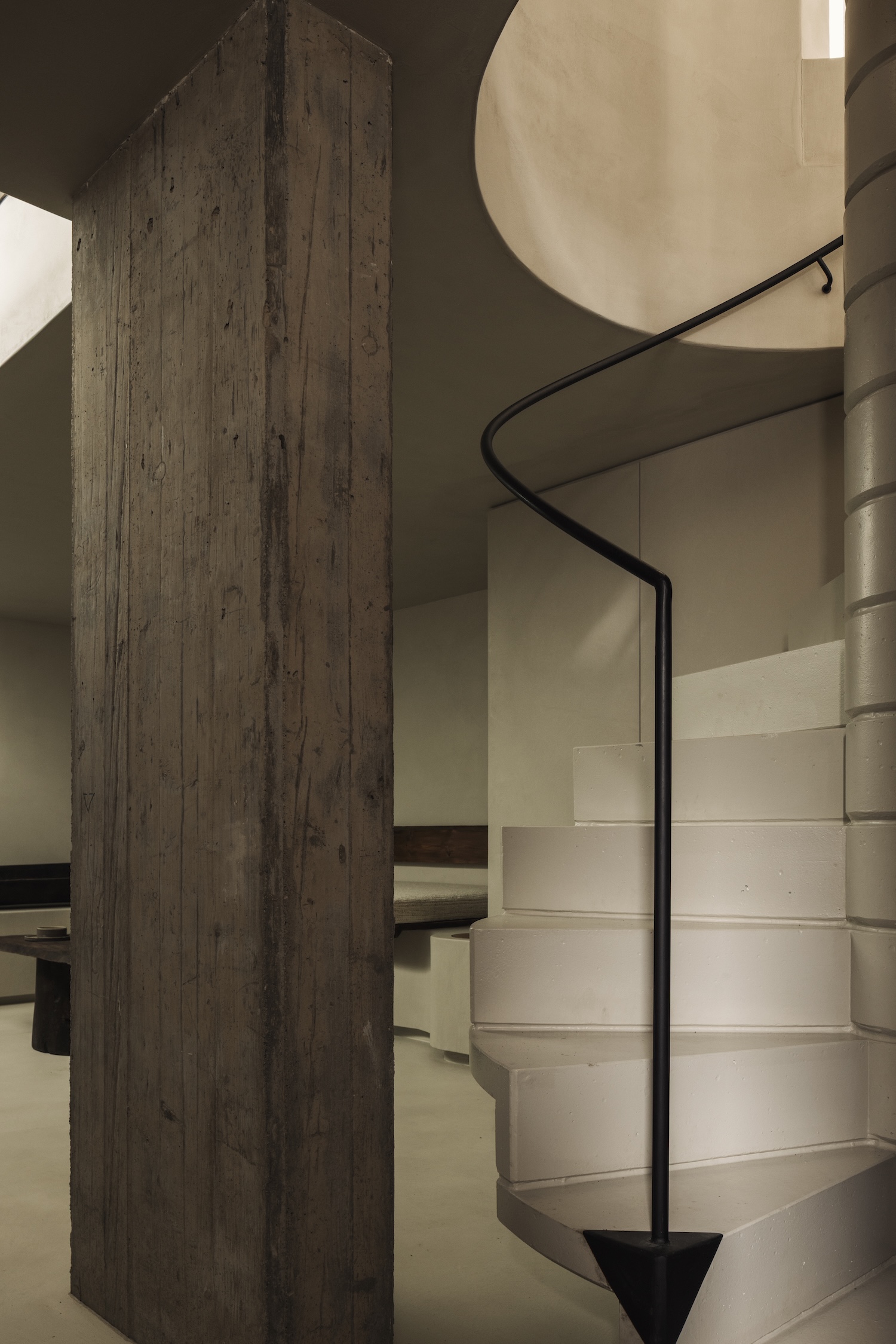
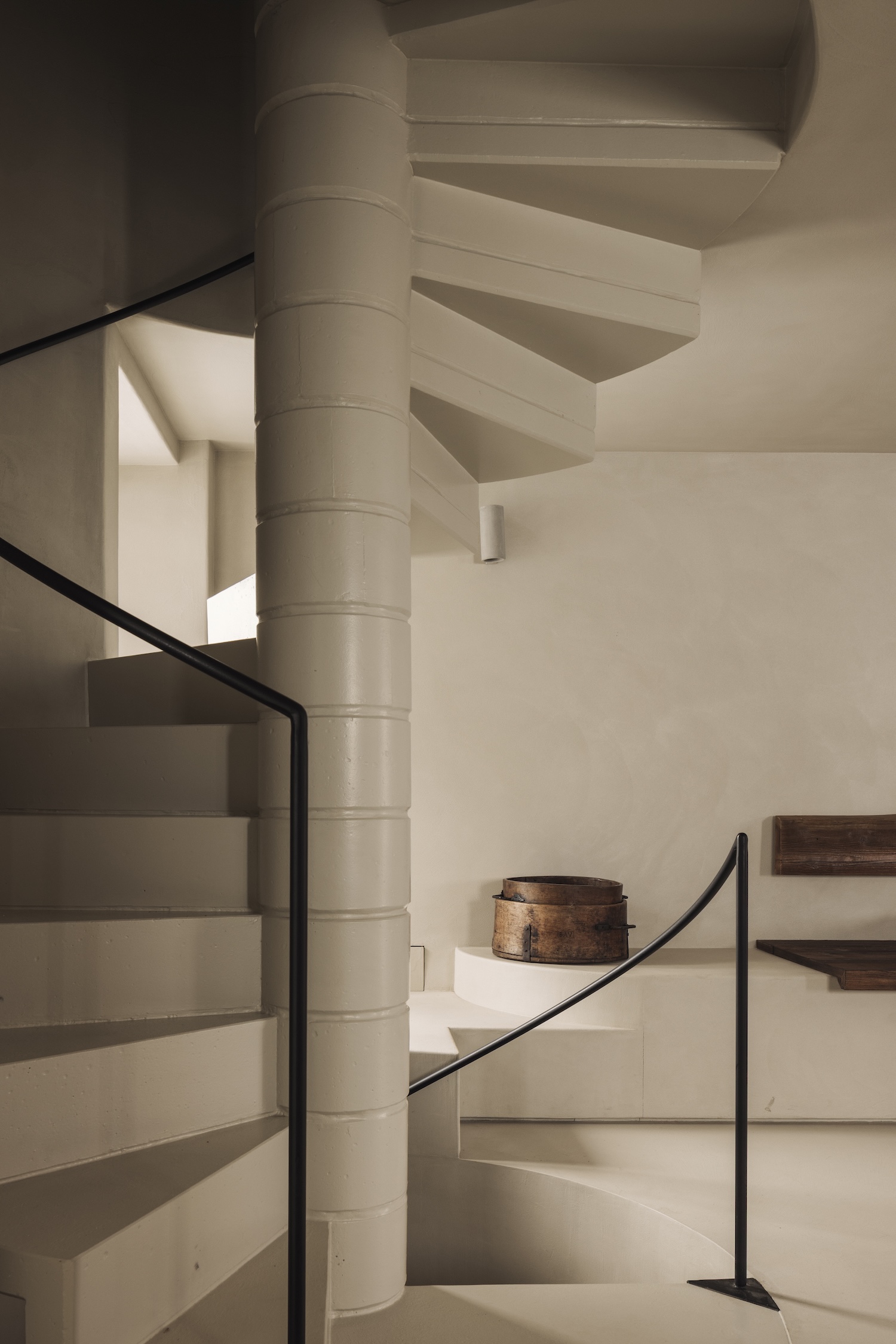
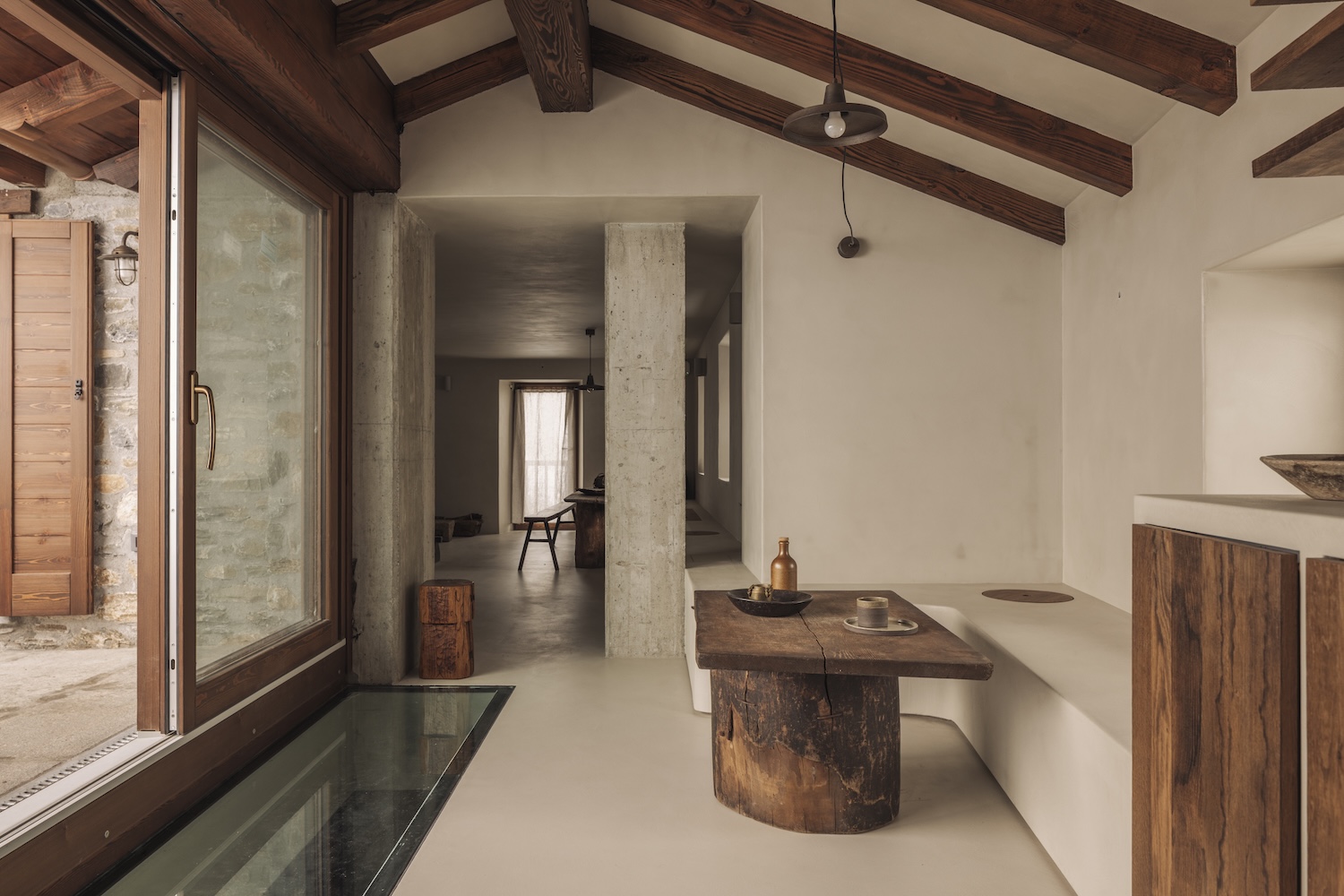
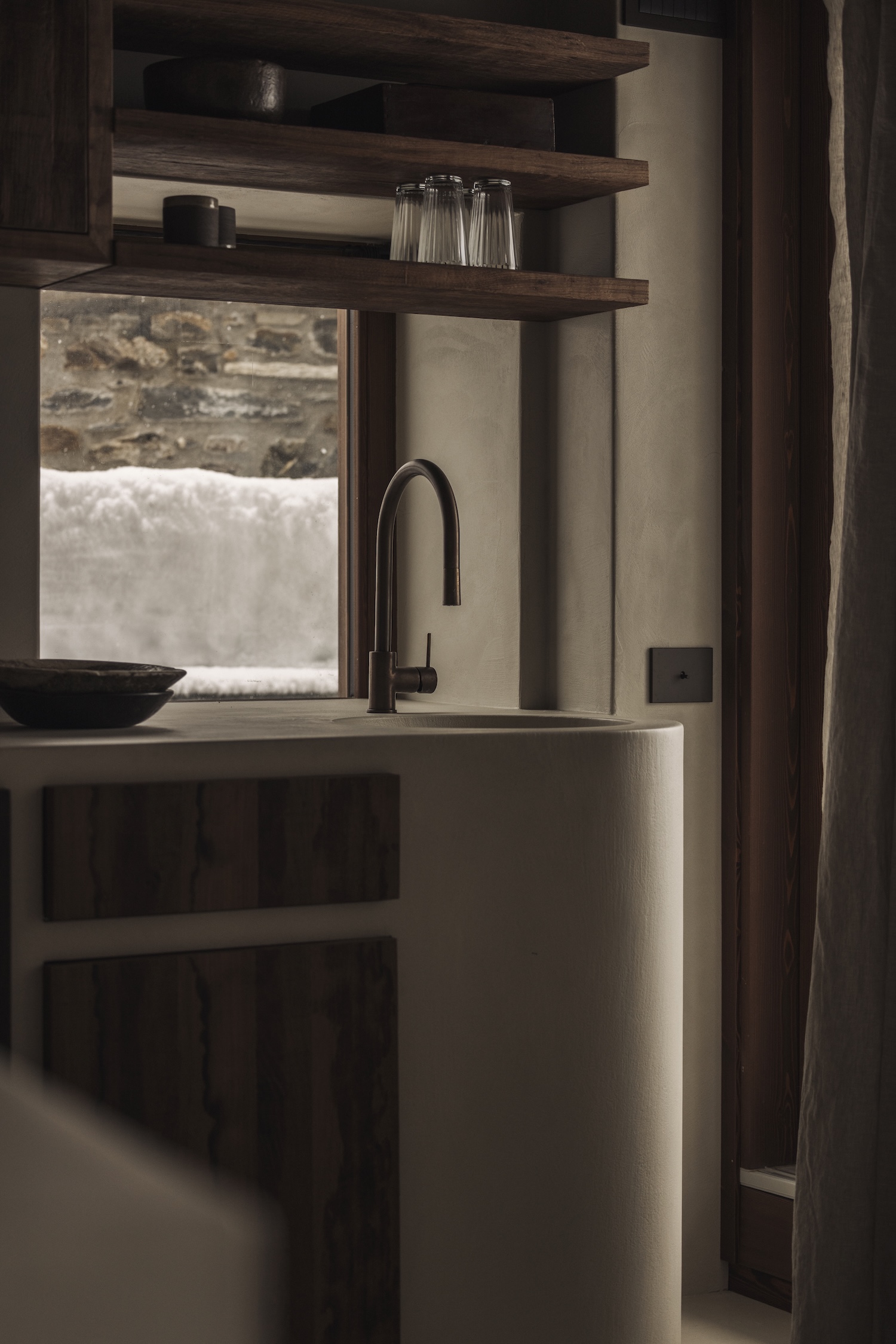
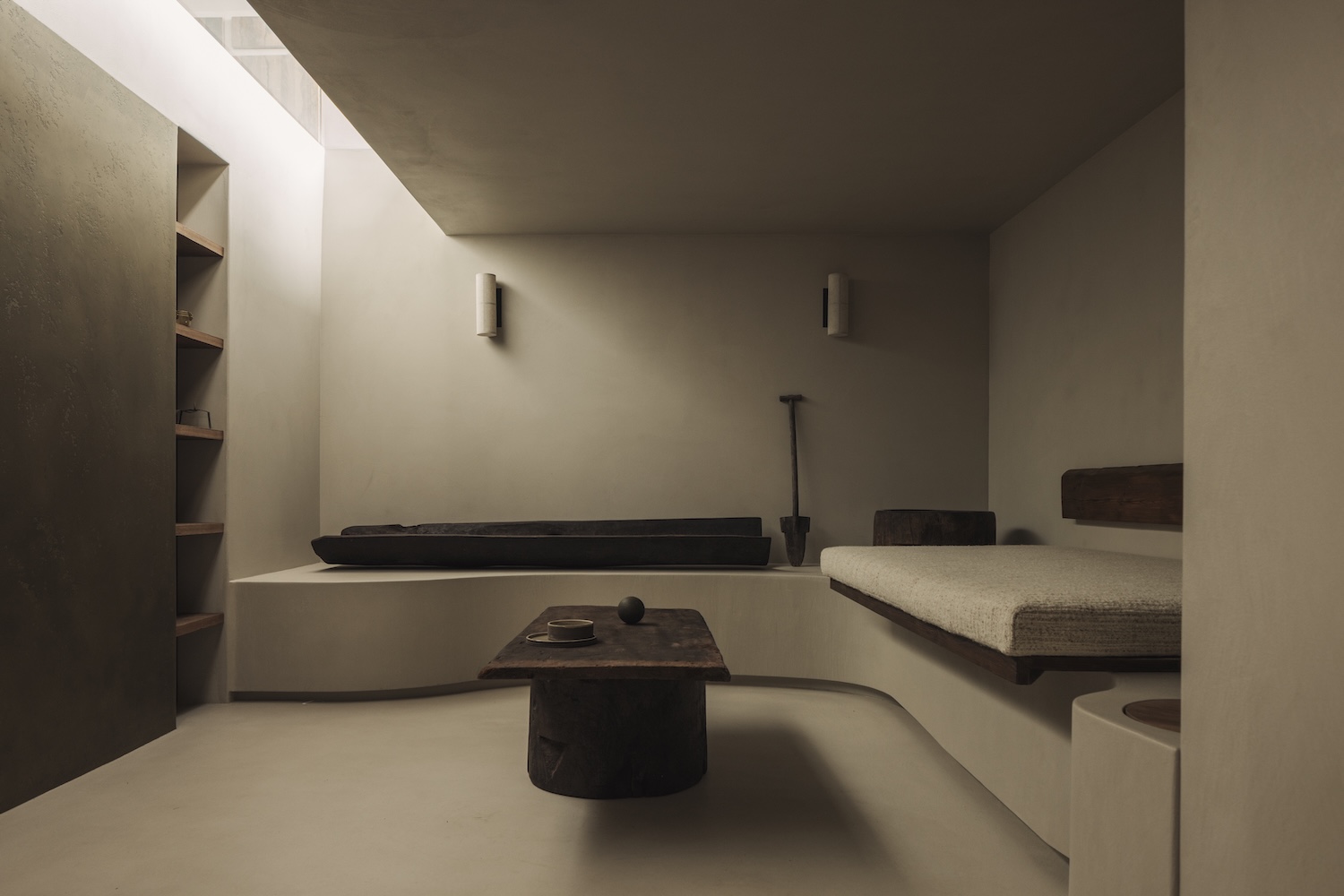
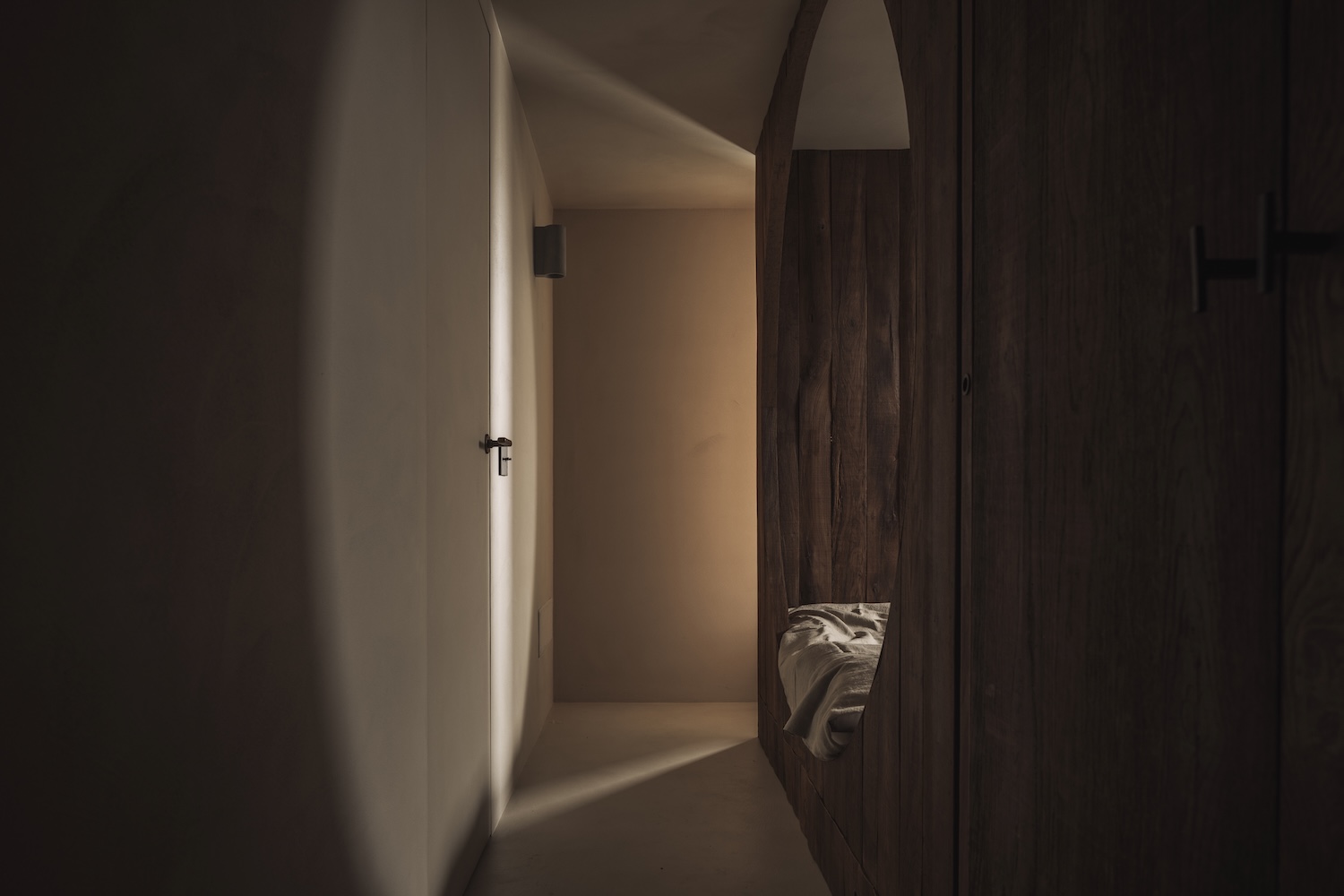
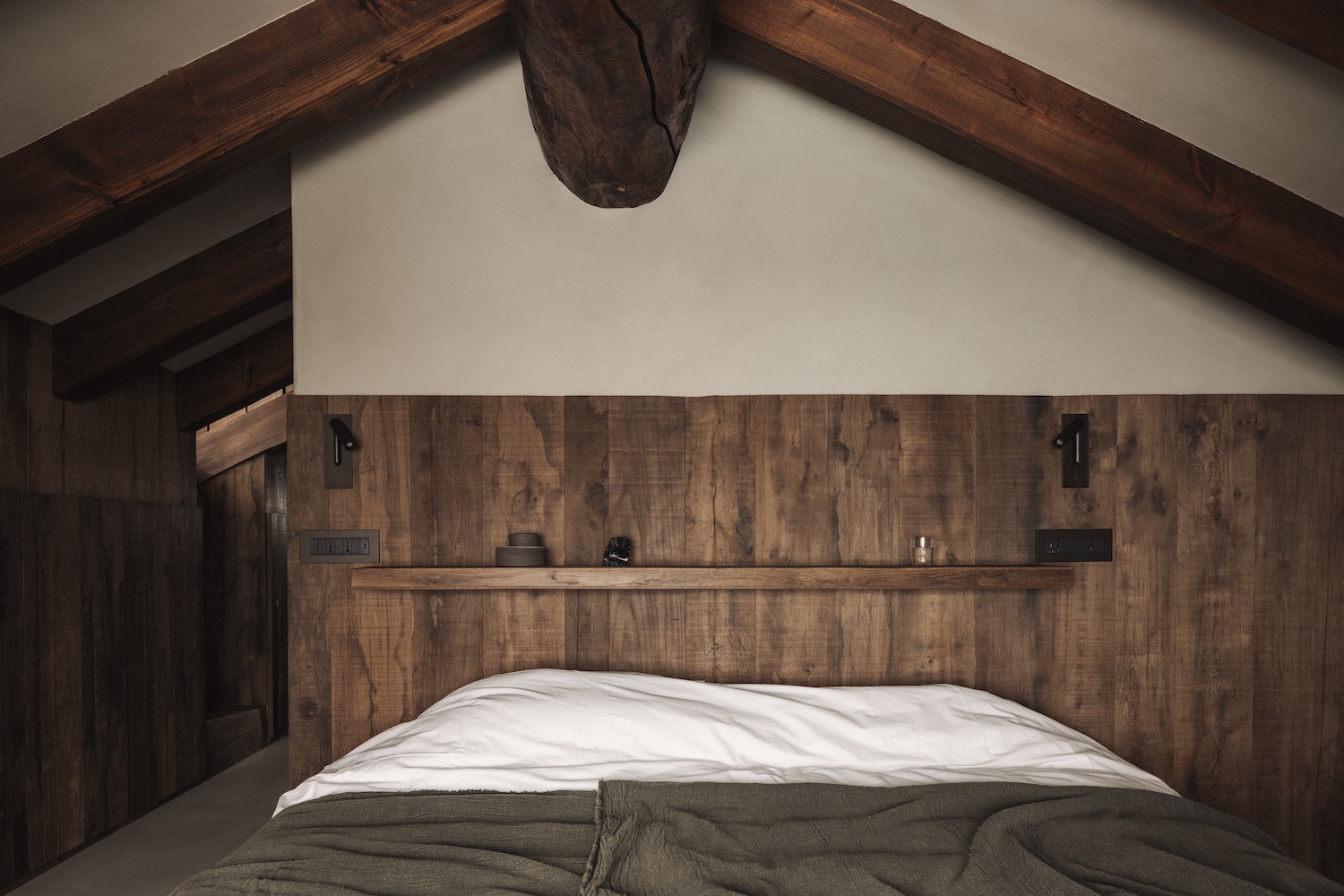
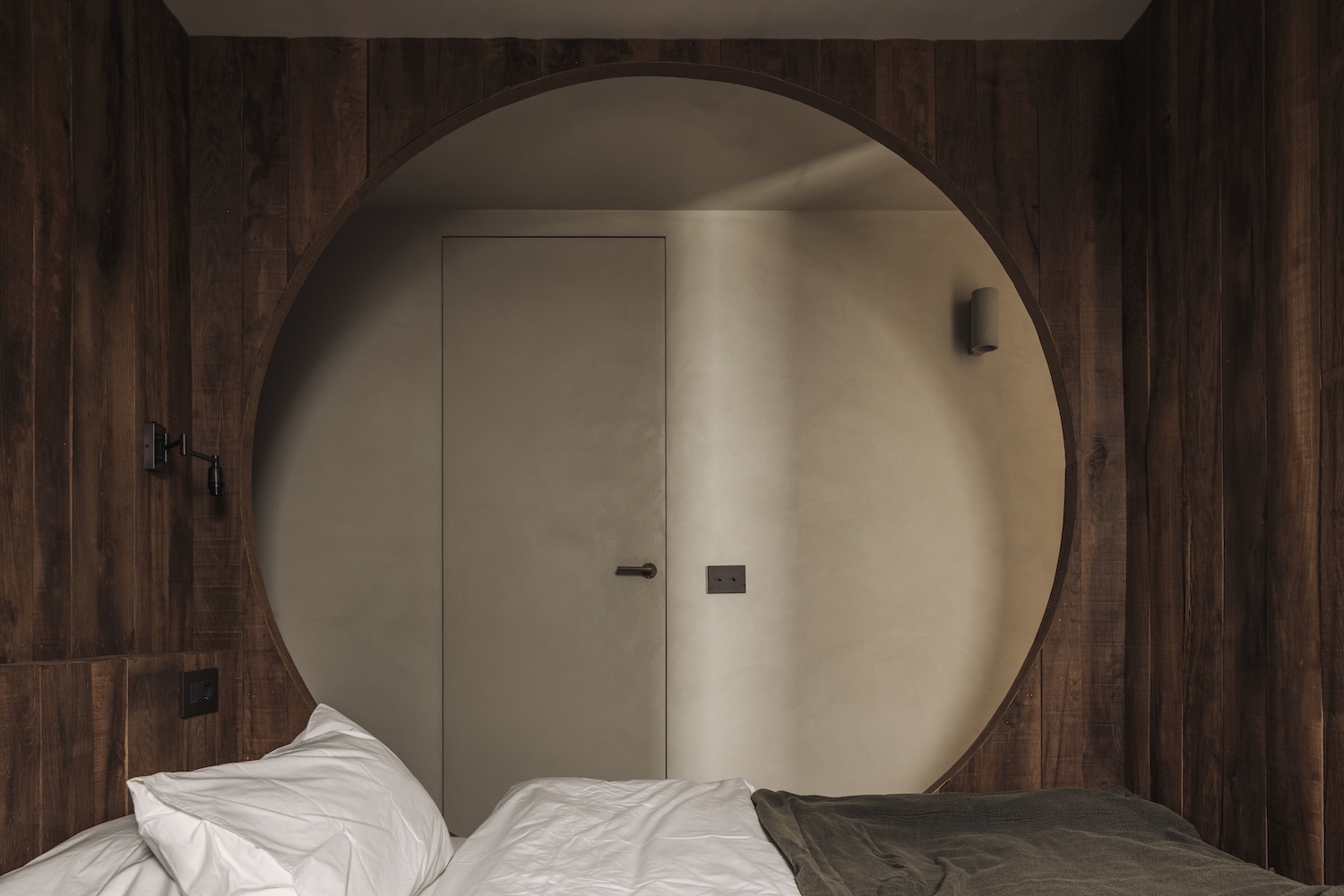
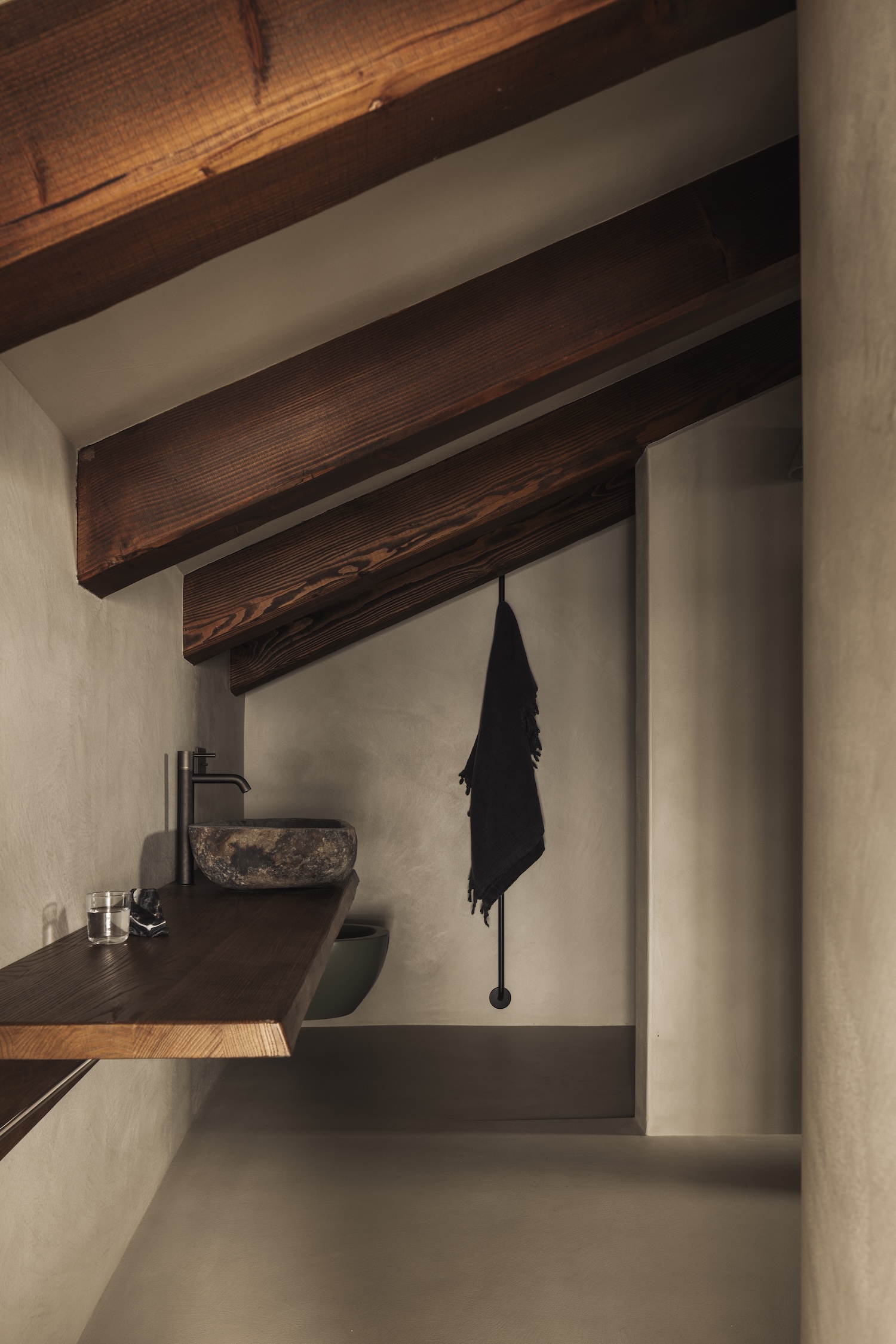
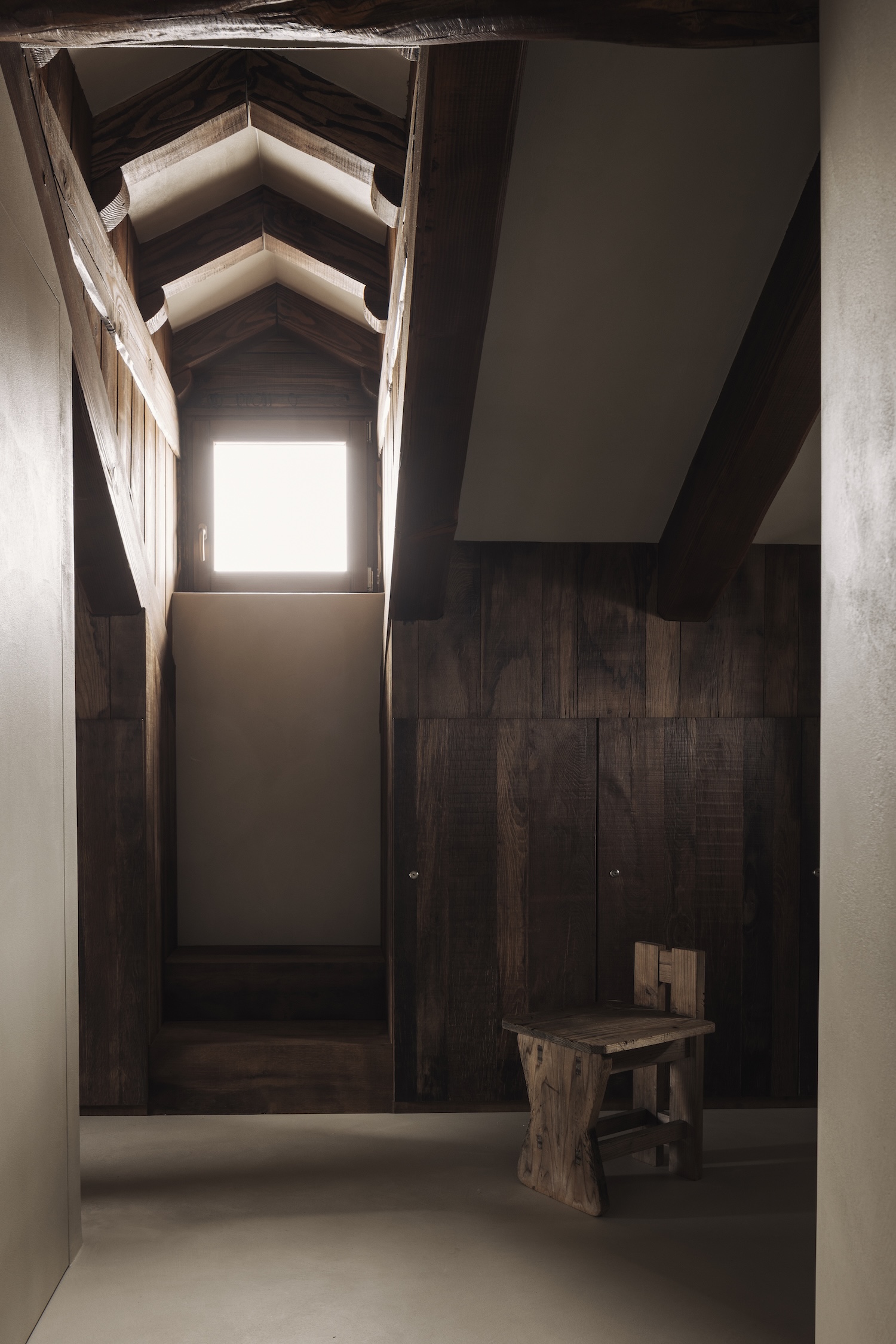
House Montagna is a minimalist chalet located in Courmayeur, Italy, designed by Maison Osaïn. The transformation of historic mountain architecture requires a delicate negotiation between preservation and contemporary living standards. In alpine regions where building traditions emerged from practical responses to extreme weather and limited materials, renovations must honor these vernacular logics while accommodating modern expectations of comfort and spatial flow. House Montagna demonstrates how a compact chalet footprint—approximately 150 square meters of living space—can support a refined domestic program when interventions prioritize material honesty and careful spatial editing over expansive gestures.
Maison Osaïn, the Belgian collective founded by architect Thomas Maria Verschuren and designer Ann Butaye, approaches renovation as a form of material stewardship rather than wholesale transformation. Their methodology involves acquiring characterful structures and orchestrating comprehensive renovations through networks of local craftspeople and artisans. This collaborative model ensures that technical knowledge specific to regional building practices remains embedded in the work. The result reads less as imported aesthetic and more as contemporary evolution of alpine building culture.
The interior palette draws from the material traditions of mountain construction—exposed timber, stone surfaces, textural plasters—but deploys them with restraint that borders on ascetic. Spatial compression, rather than being concealed, becomes a defining quality. Rooms maintain intimate scales while strategic sightlines toward Mont Blanc and the surrounding slopes extend visual territory beyond the building envelope. This interplay between enclosure and prospect creates a rhythm of compression and release that animates the compact plan.
Natural materials appear in their most direct states. Wood surfaces retain visible grain and subtle irregularities that register the material’s organic origins. Stone work acknowledges regional quarrying traditions while contemporary detailing—thin profiles, precise joints—signals present-day craftsmanship standards. The collective’s commitment to circular material flows and local sourcing means finishes carry embedded narratives about regional ecology and building economies.