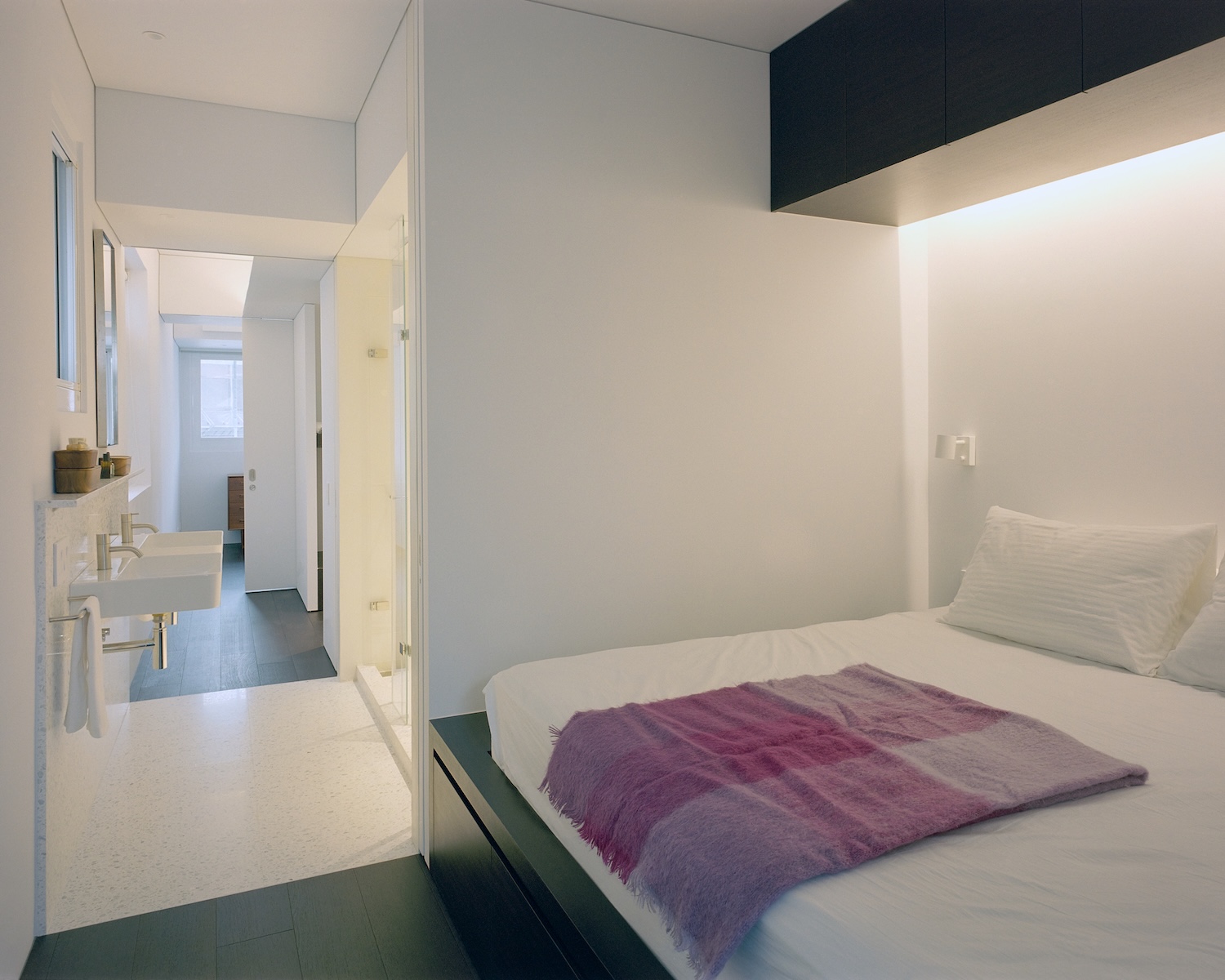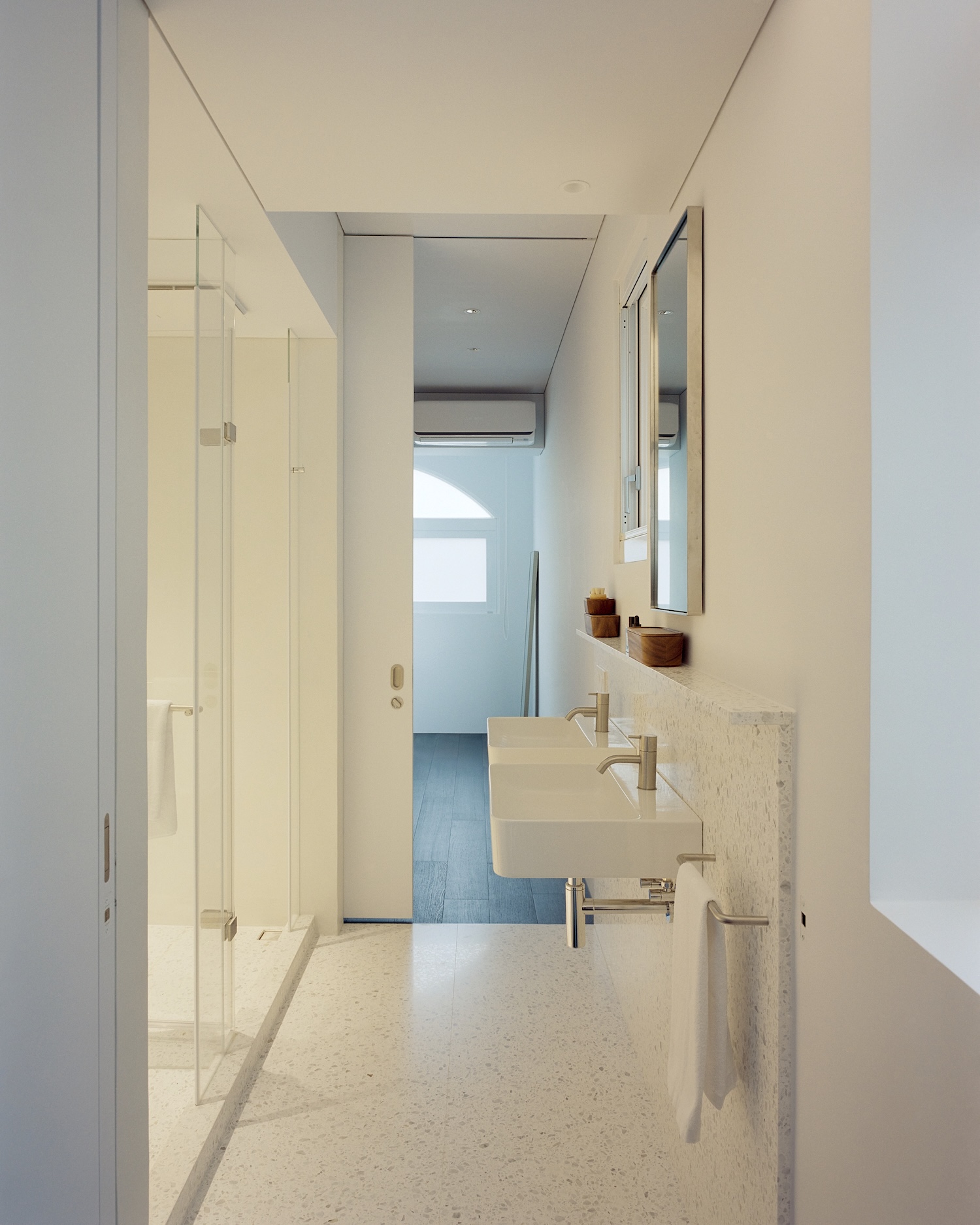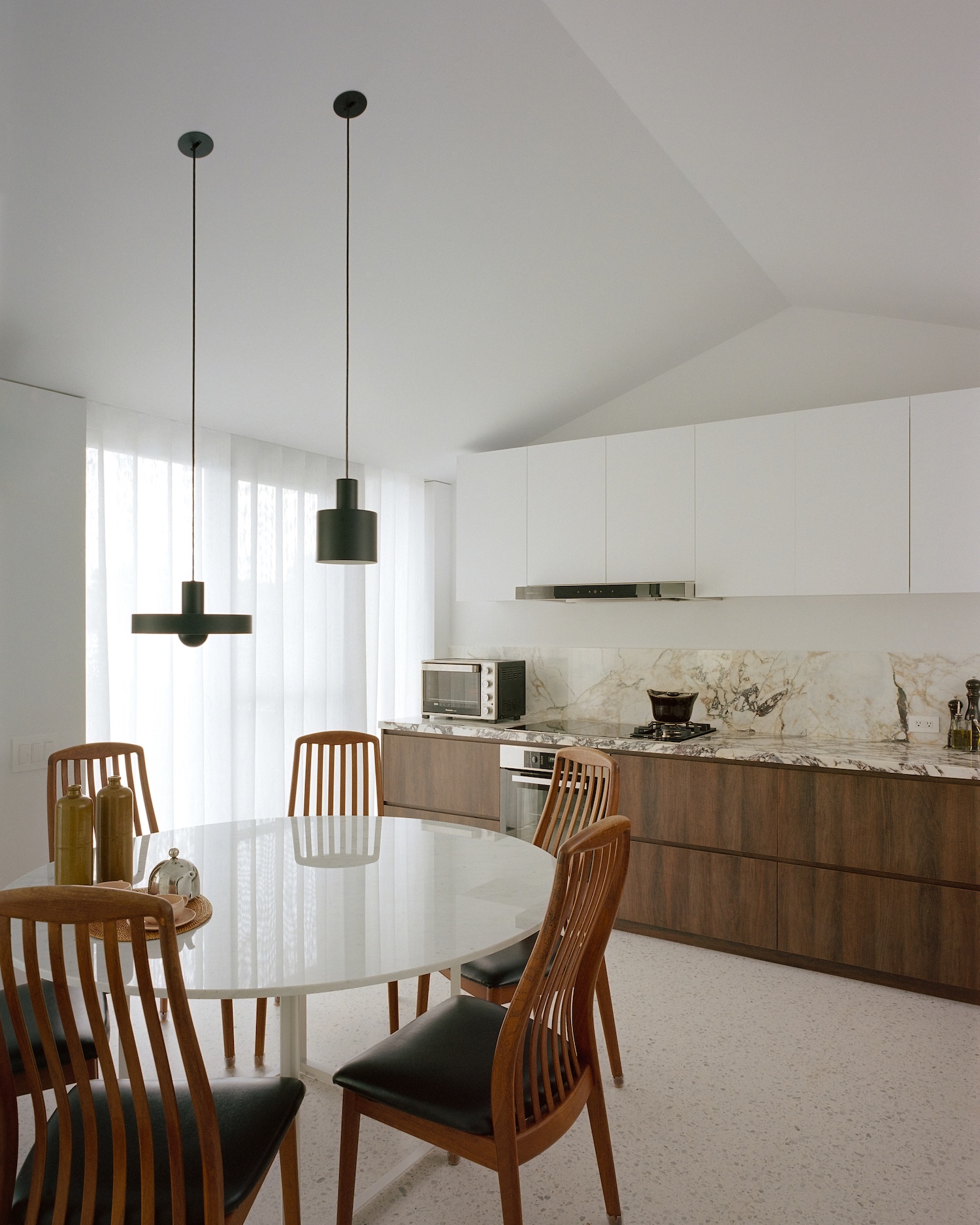
House of Atrium is a minimalist apartment located in Taipei, Taiwan, designed by LILI ARCHITECTURE. Taipei’s four and five story walk-ups went up fast through the 1970s and 1980s, and they carry a built-in defect, deep floor plates lit only from two narrow ends, leaving the middle of every unit in permanent dusk. Chia-Yu Li and Chien-Chun Liu took on one of these top-floor units along with the small rooftop structure above it, the sort of add-on that constitutes Taipei’s most familiar piece of informal architecture. Instead of treating that roof as storage, they cut vertically through the slab and made the link between the two levels the organizing act of the entire 194 square meter renovation.
Tadao Ando gave up a third of a narrow Osaka row house to an open courtyard in 1976, on the argument that light and air were worth more than square footage. The reasoning at House of Atrium runs vertically rather than laterally. The void carved through the floor plate does double duty as stairwell and lightwell, pulling daylight down into the study and living den below and holding the two floors in one continuous volume of air. Kyoto machiya used the tsuboniwa the same way, a small interior court inserted not for outlook but for ventilation and borrowed sky.
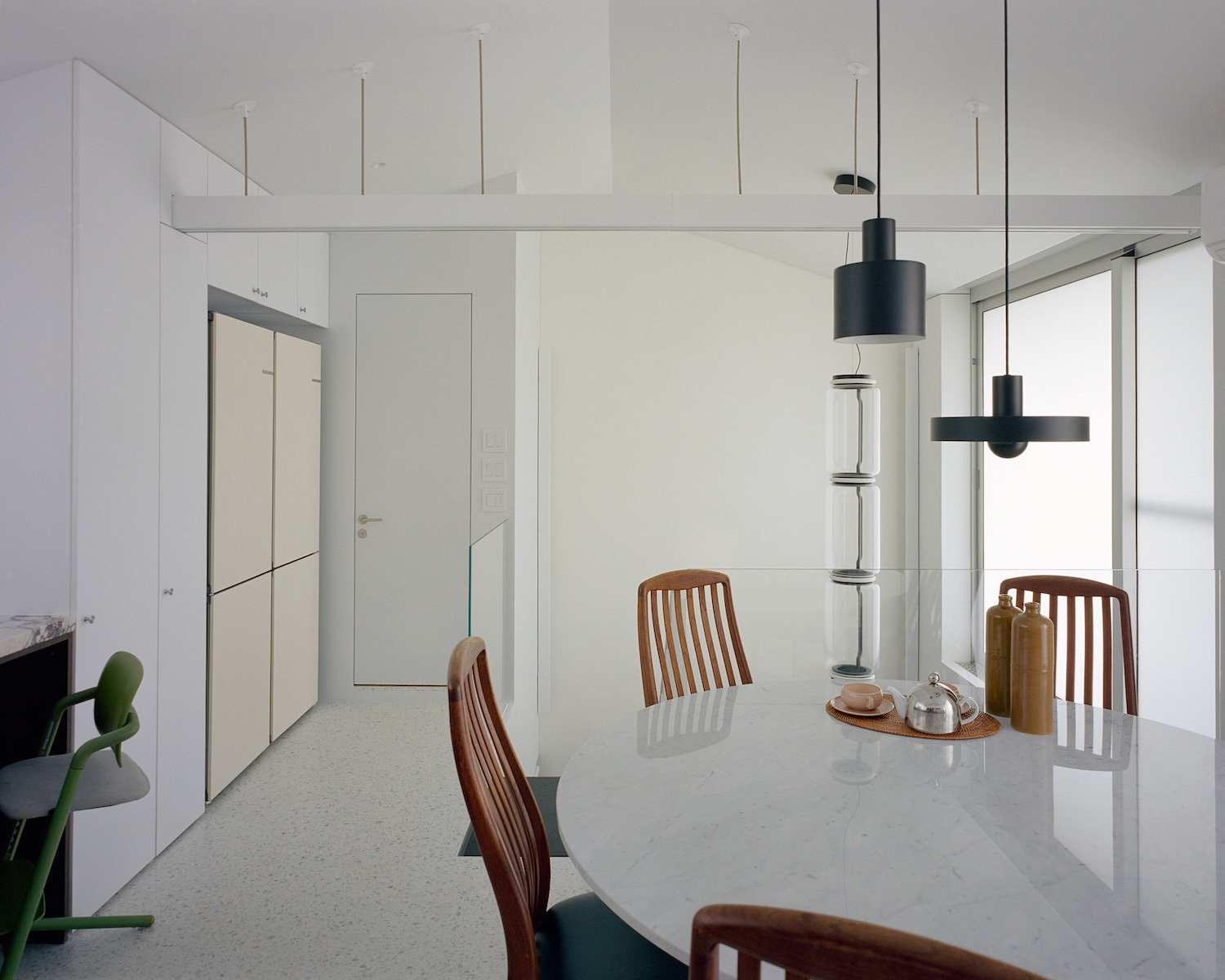
Moving the kitchen and dining upstairs beside the terrace inverts the usual apartment hierarchy and puts the social program at the daylight source. Interior and exterior finish floors align at a single plane, and two full-height windows complete the erasure. That flush threshold carries more weight than it appears to. A step down to a terrace reads as leaving the house, while a continuous plane reads as the room simply carrying on.
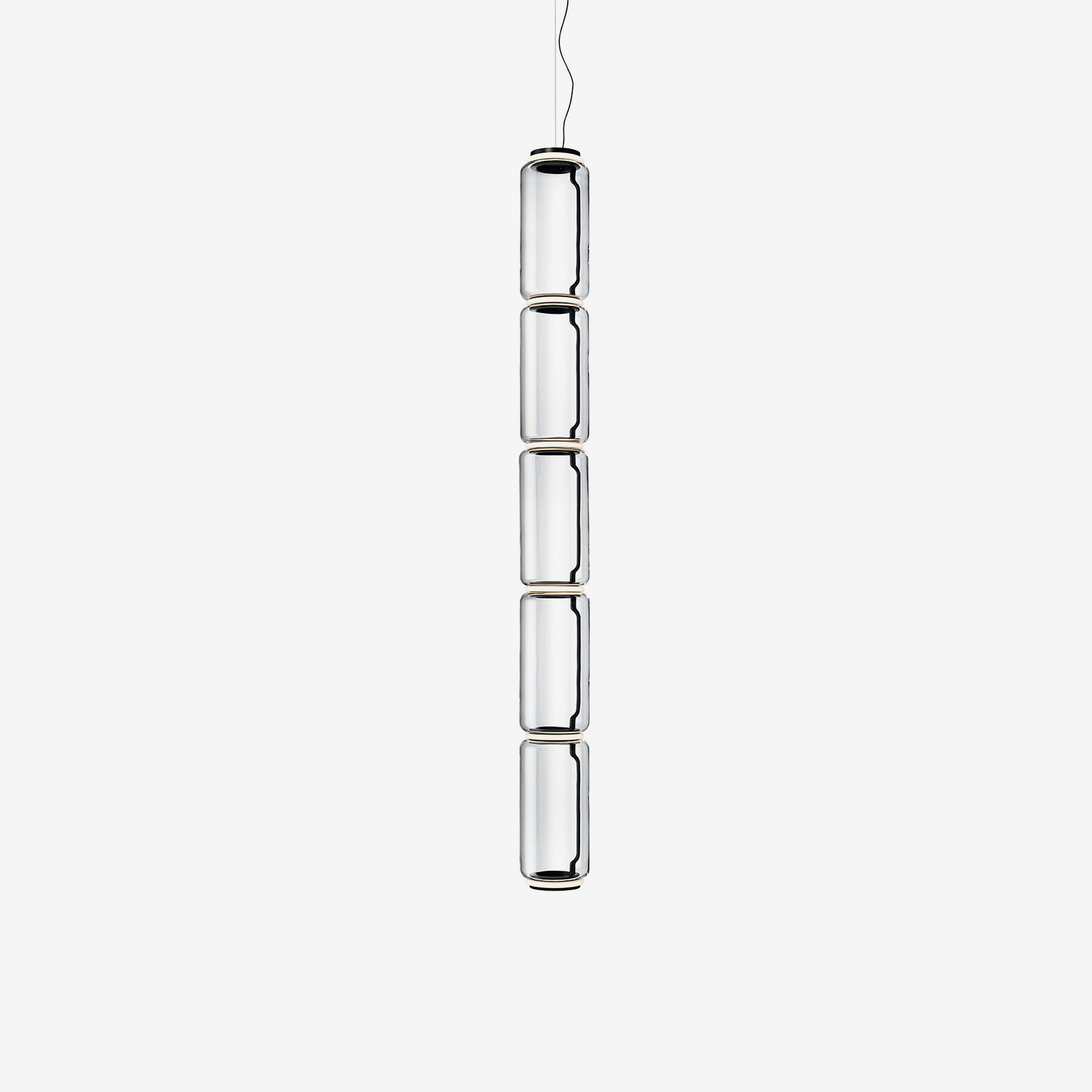
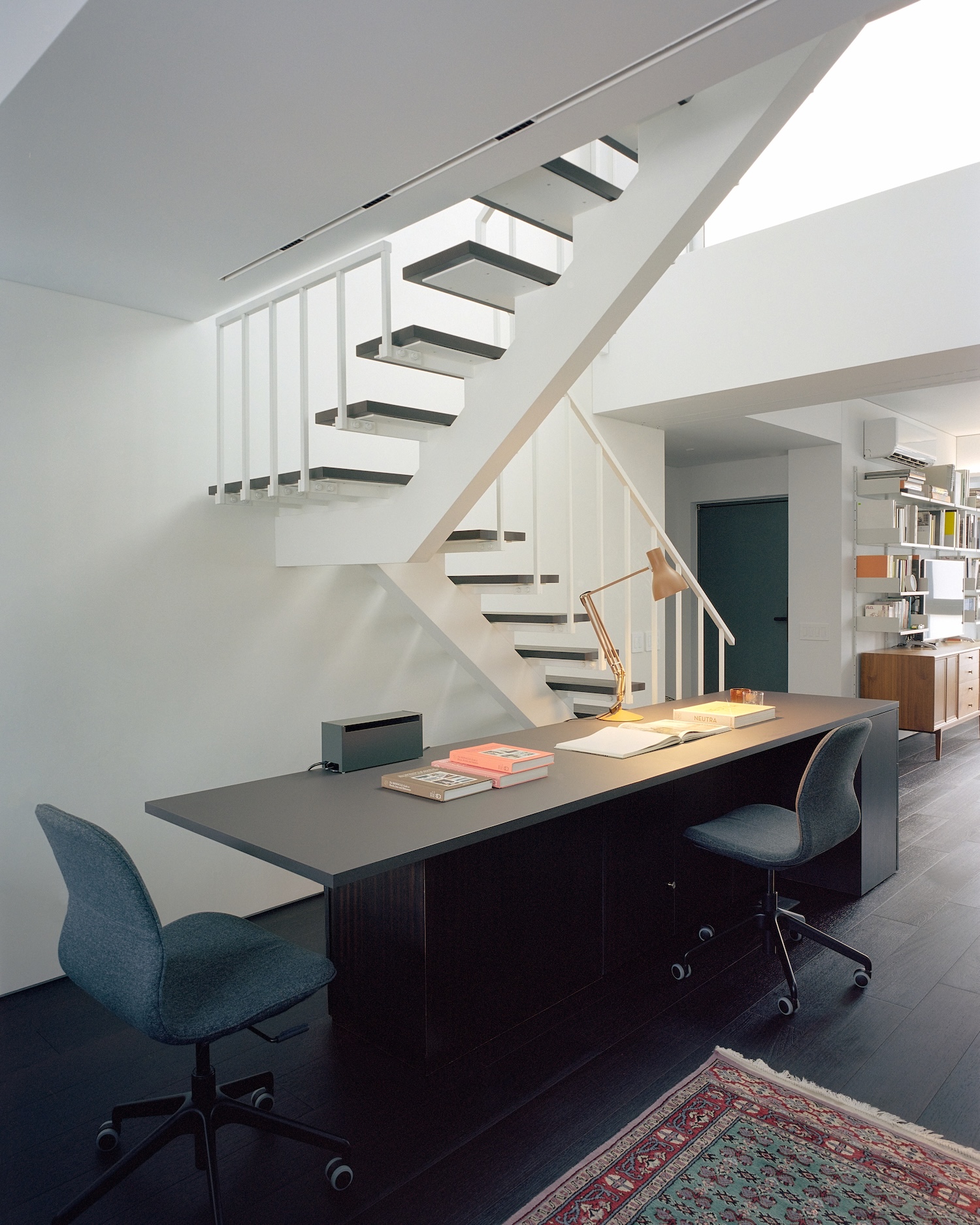
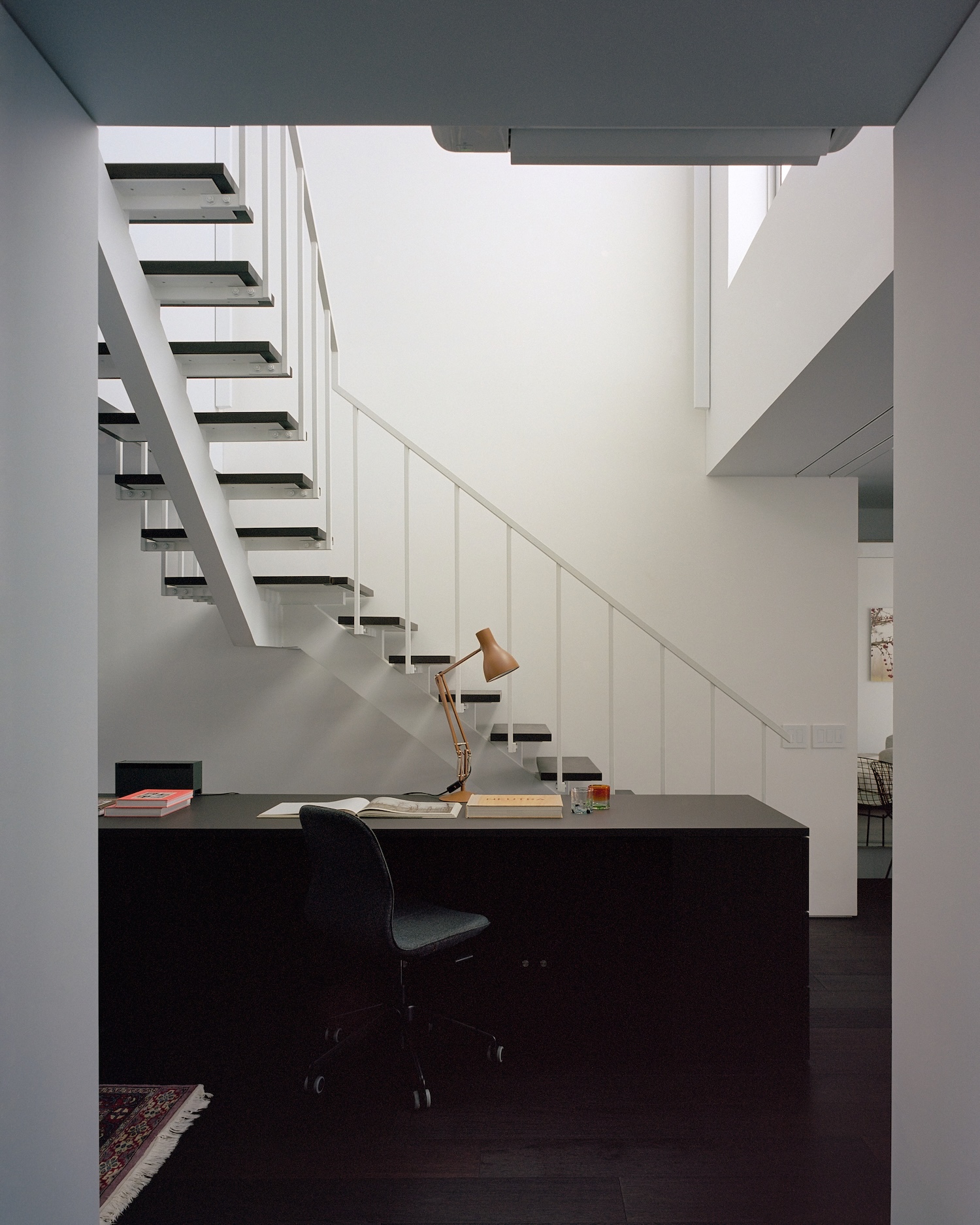
The staircase stands free of every surrounding wall, carried on one white powder-coated stringer centered beneath the solid wood treads. Mono-stringer construction reduces structure to a single spine, and the tension between the dark timber and the white steel turns what could be a utility into a graphic object suspended in the well. A contemporary glass pendant hangs alongside it in the double-height plaster void, giving the vertical shaft a warmth that raw daylight alone would not supply.