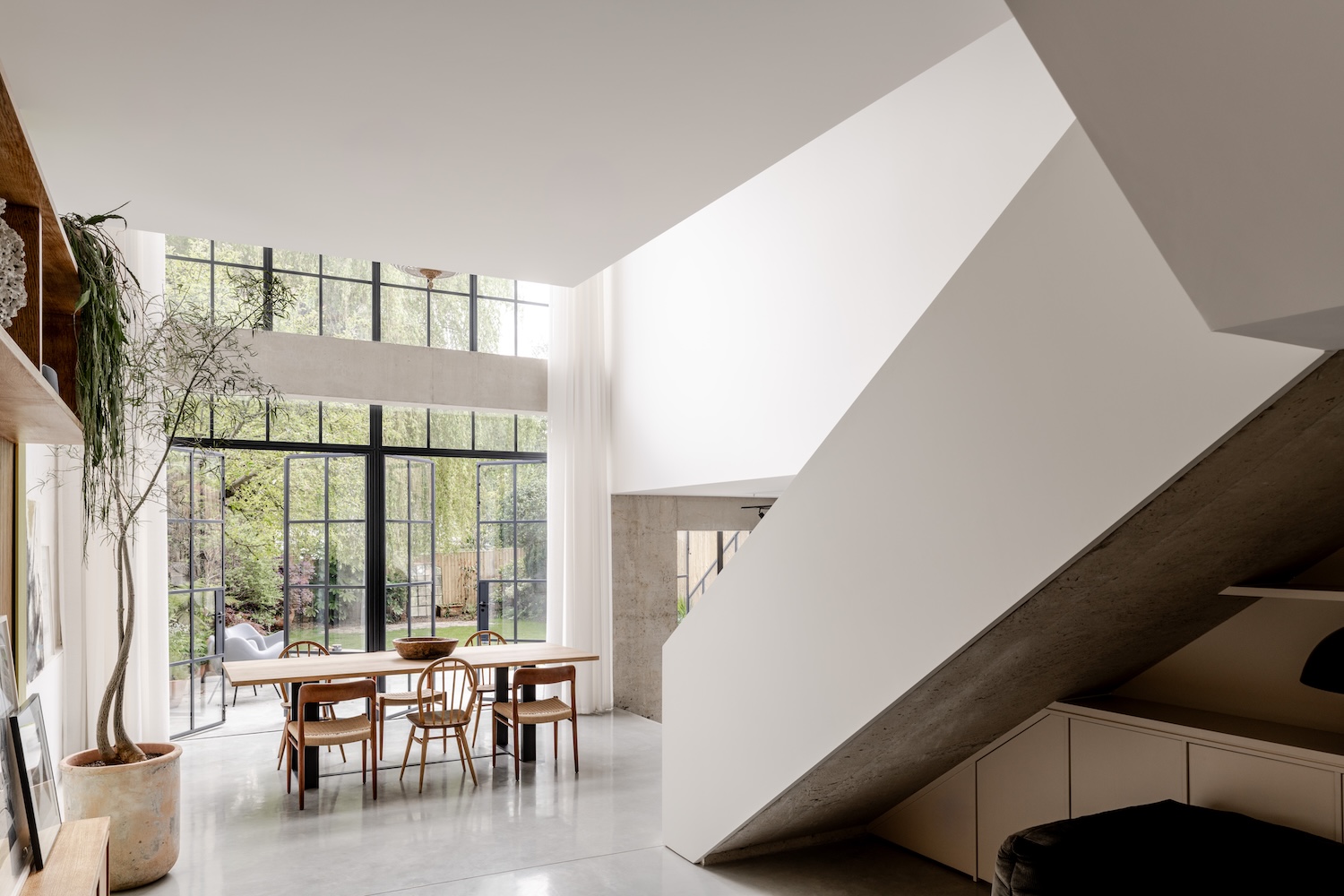
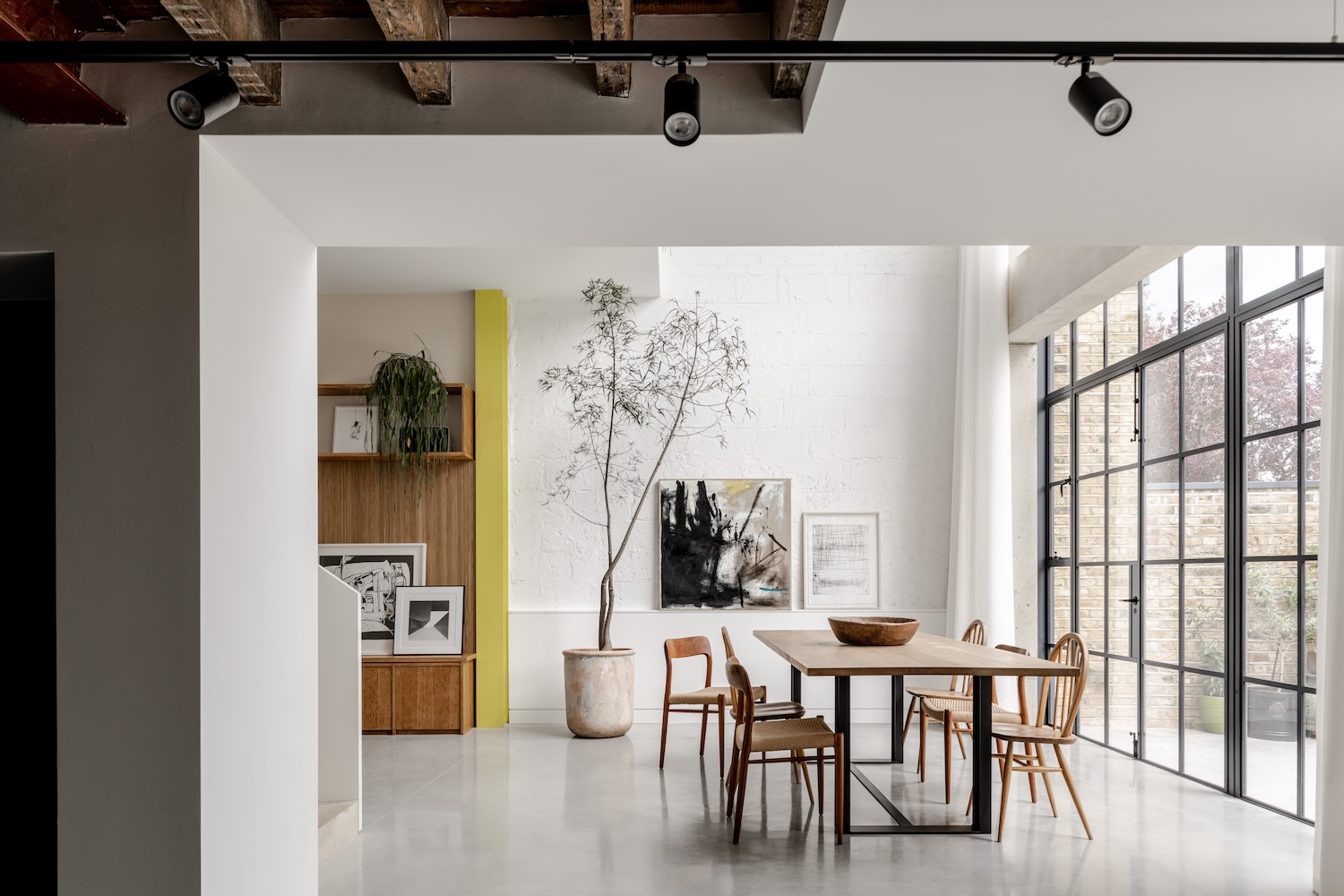
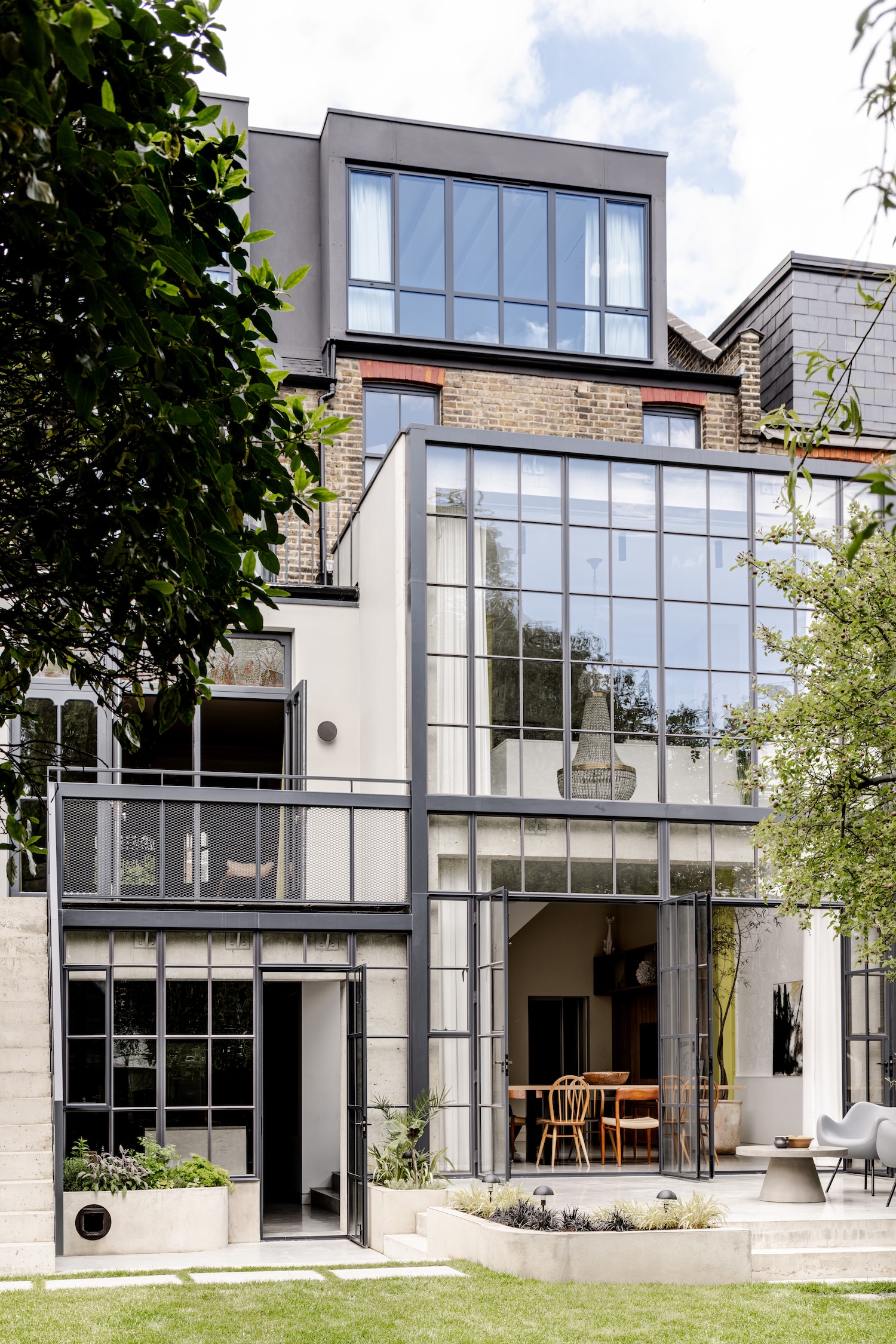
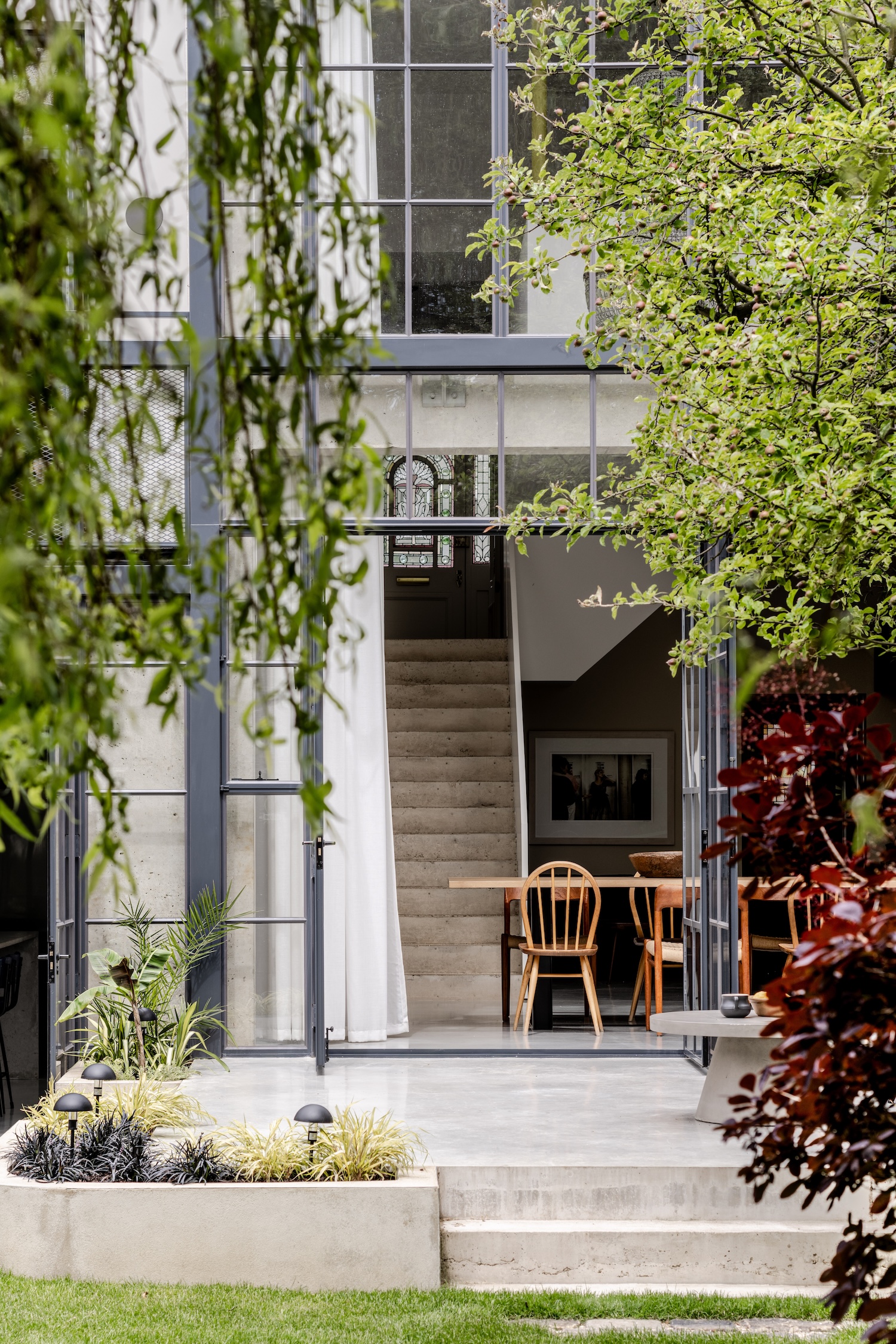
House of Panes is a minimalist home located in London, United Kingdom, designed by Matthew Giles Architects. The project takes its name from the element that does the most architectural work: a slender steel-framed glazing system that wraps the rear of an Edwardian terrace in Muswell Hill. Matthew Giles Architects looked to Alexandra Palace, the conservation area’s defining nineteenth-century landmark, and borrowed the logic of its intricate roof structure, translating that historic filigree into a contemporary exoskeleton. The slimline frames carry across the dormer windows as well, so the steel reads as a single architectural language stretched over the entire elevation rather than a bolted-on addition. High-performance double glazing folds thermal efficiency into the gesture, proving that period reference and building physics can occupy the same detail.
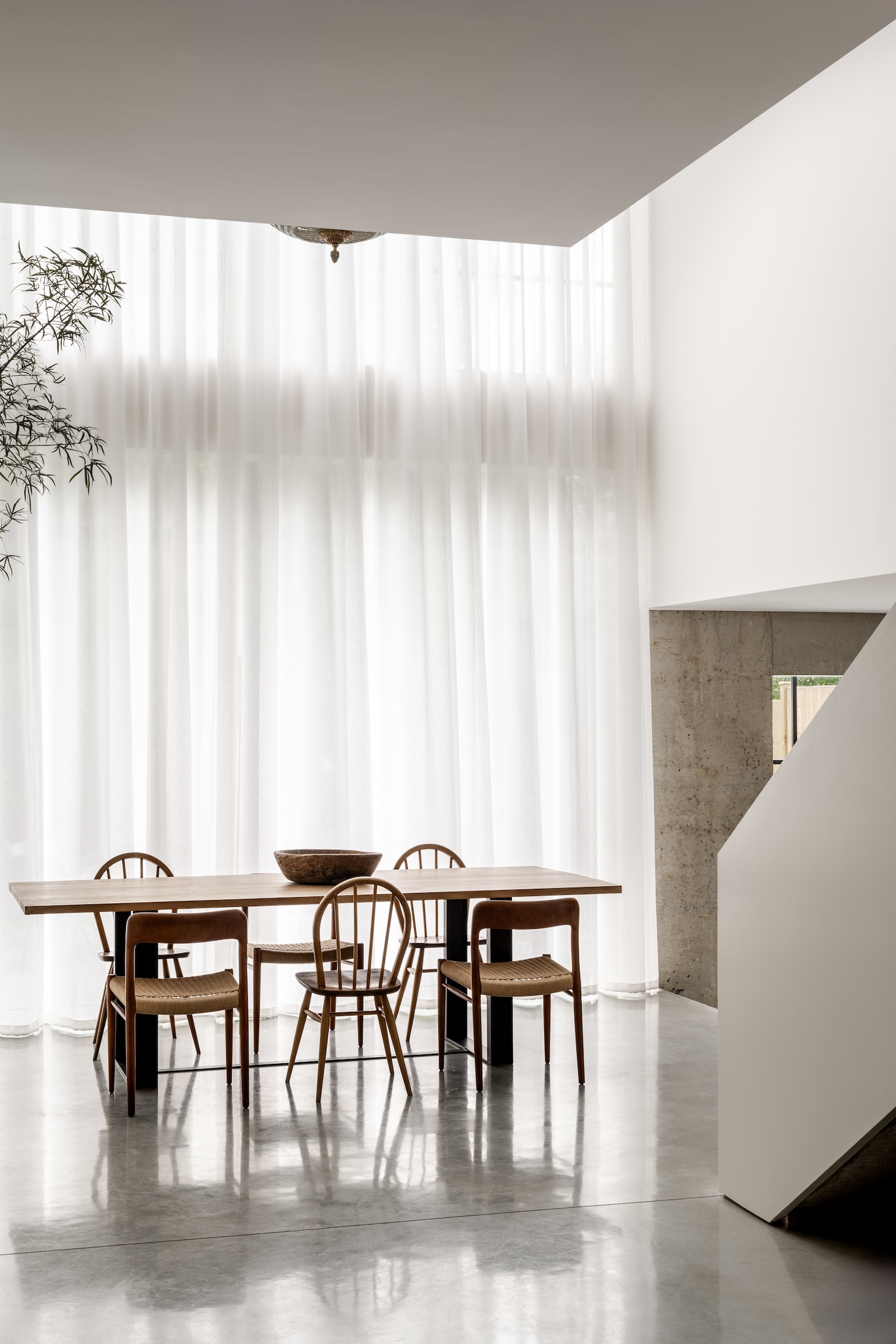
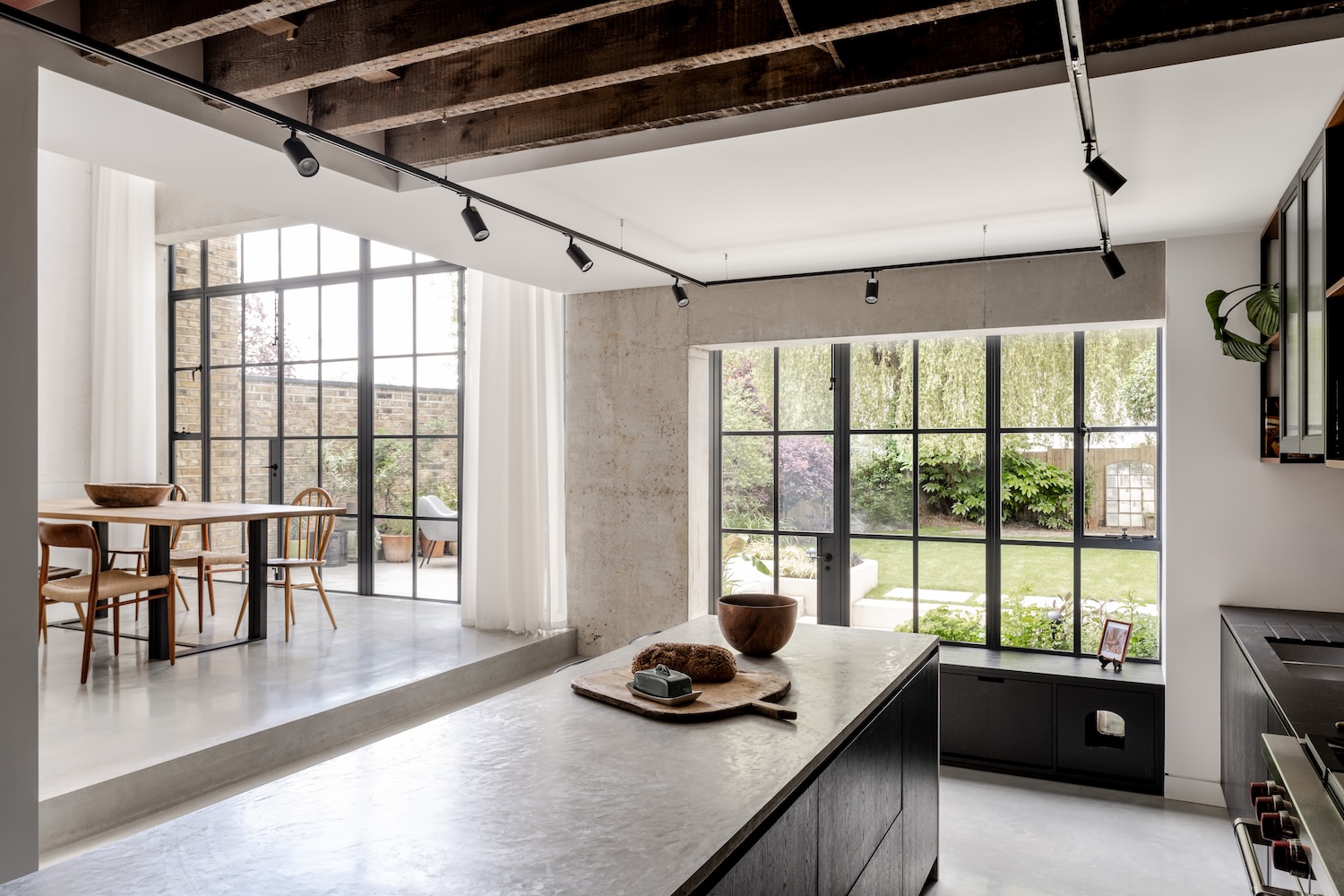
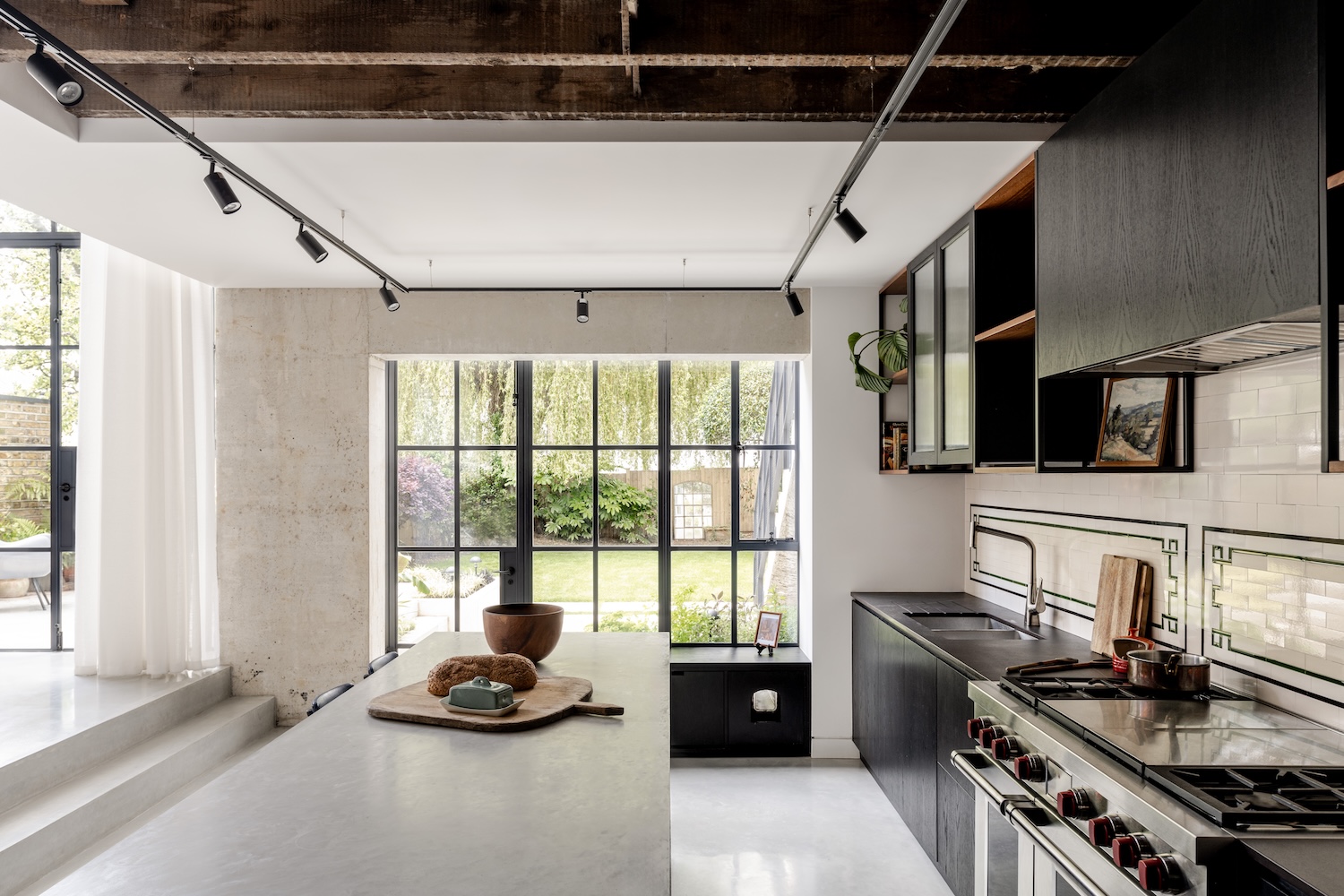
Where the glazing supplies refinement, raw concrete supplies weight. The clients asked for an exposed, industrial character, and the practice answered with a double-height rear extension framed in board-marked concrete. The pairing of textured concrete and Crittall glazing sets up a deliberate dialogue between robustness and transparency, with soft curtains softening the volume so it never tips into severity. Inside, the open-plan living and dining space sits beneath floor-to-ceiling glass that frames the garden’s willow tree as a fixed focal point, a quiet acknowledgment that the brief began with a tree before it became a building.
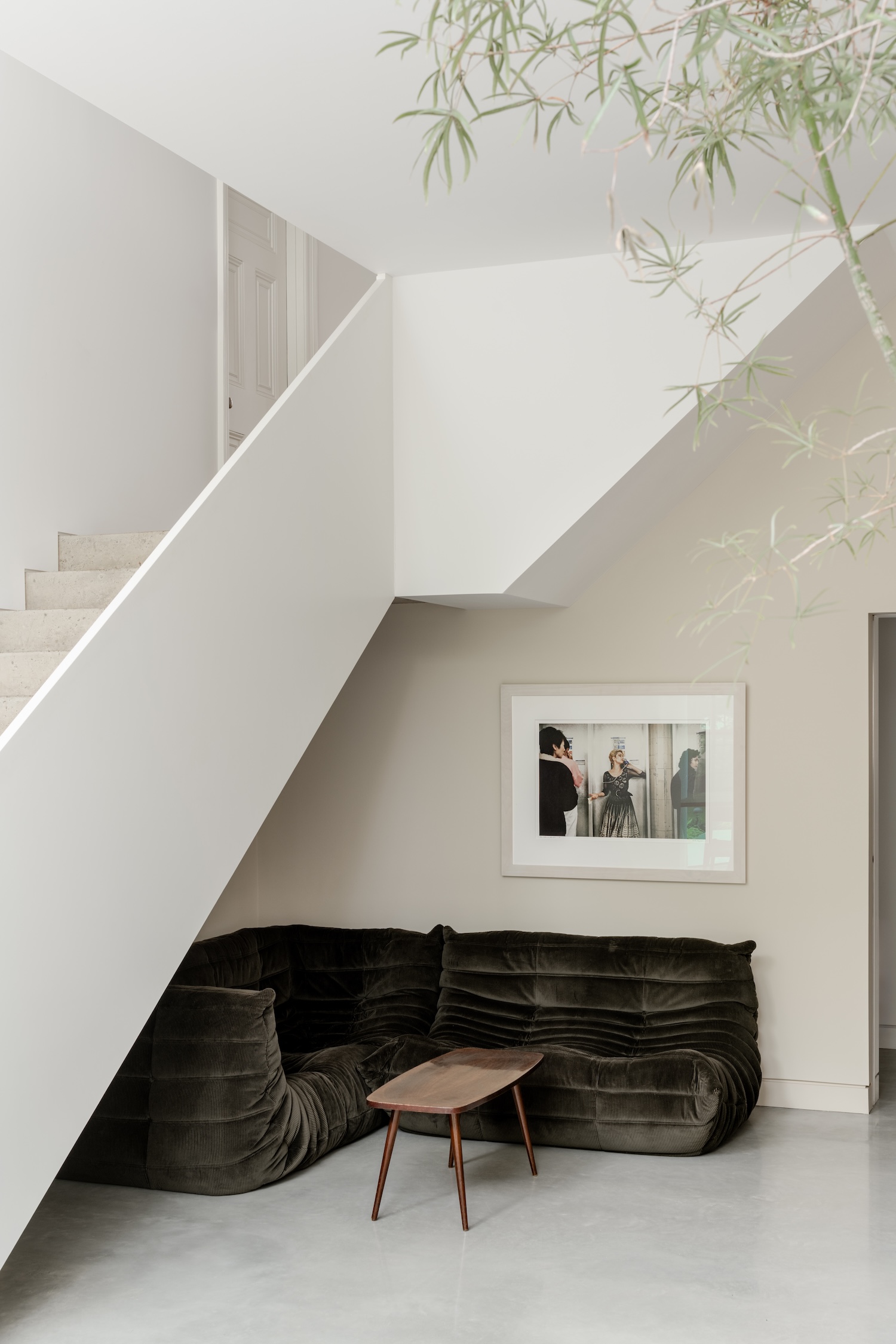
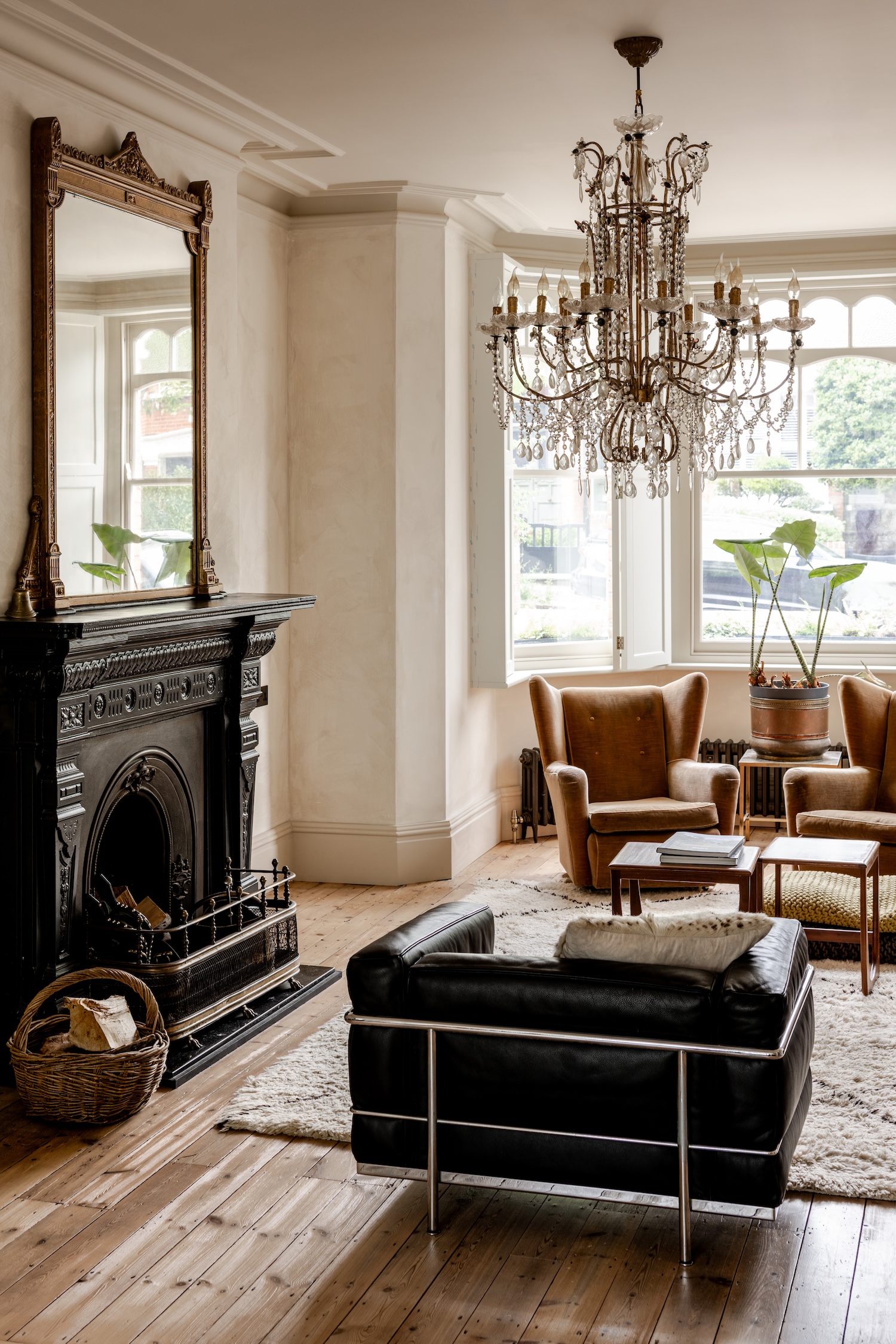
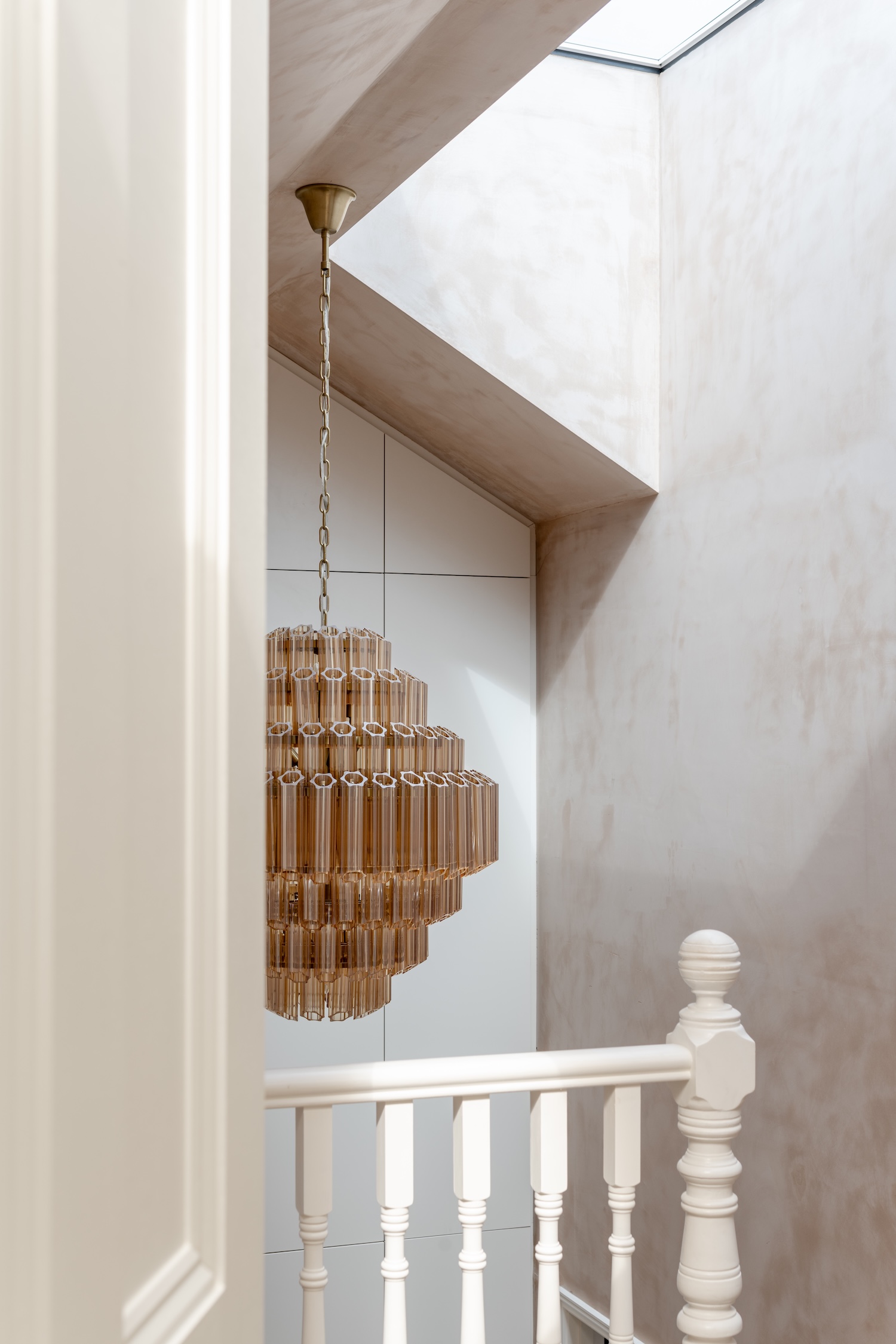
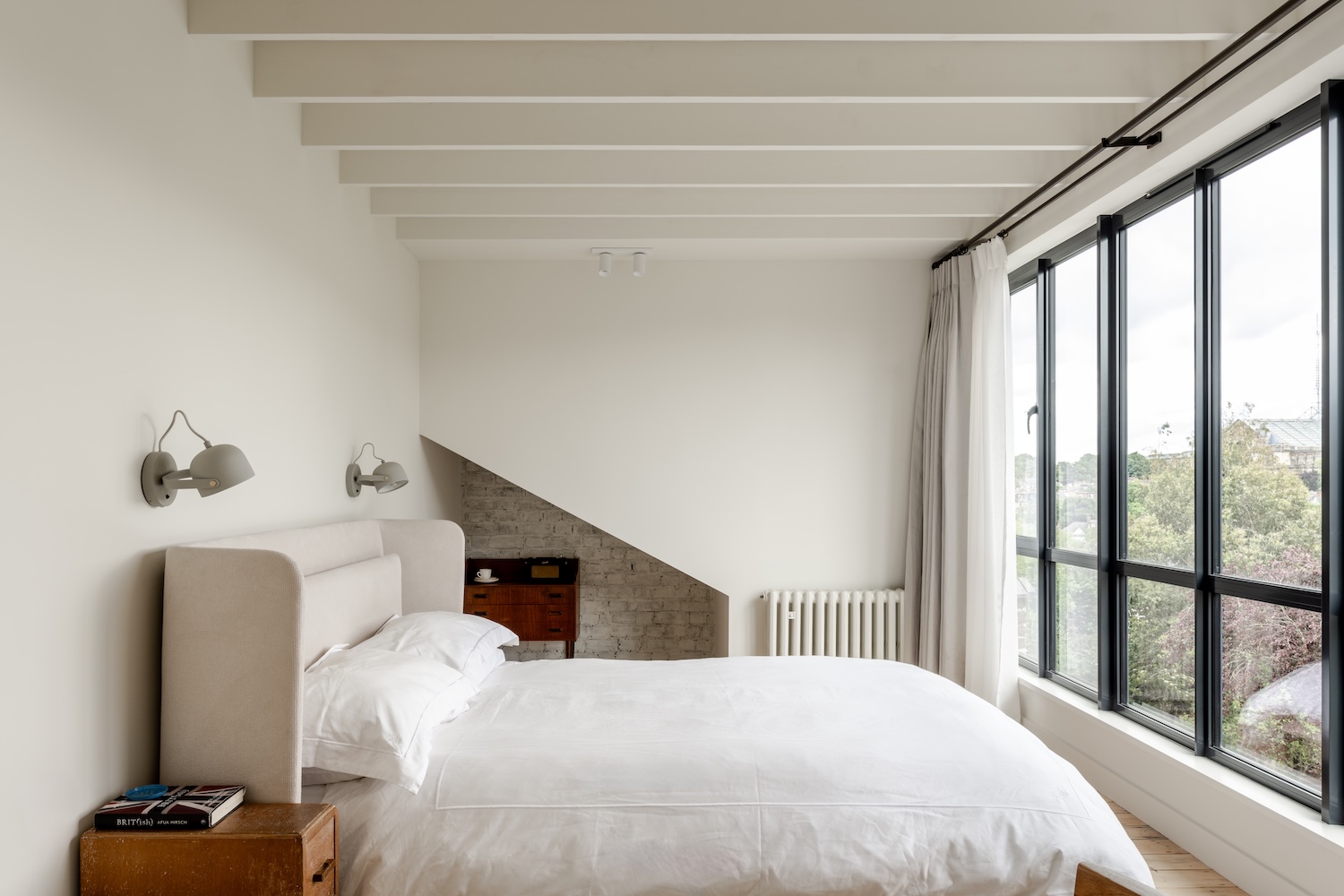
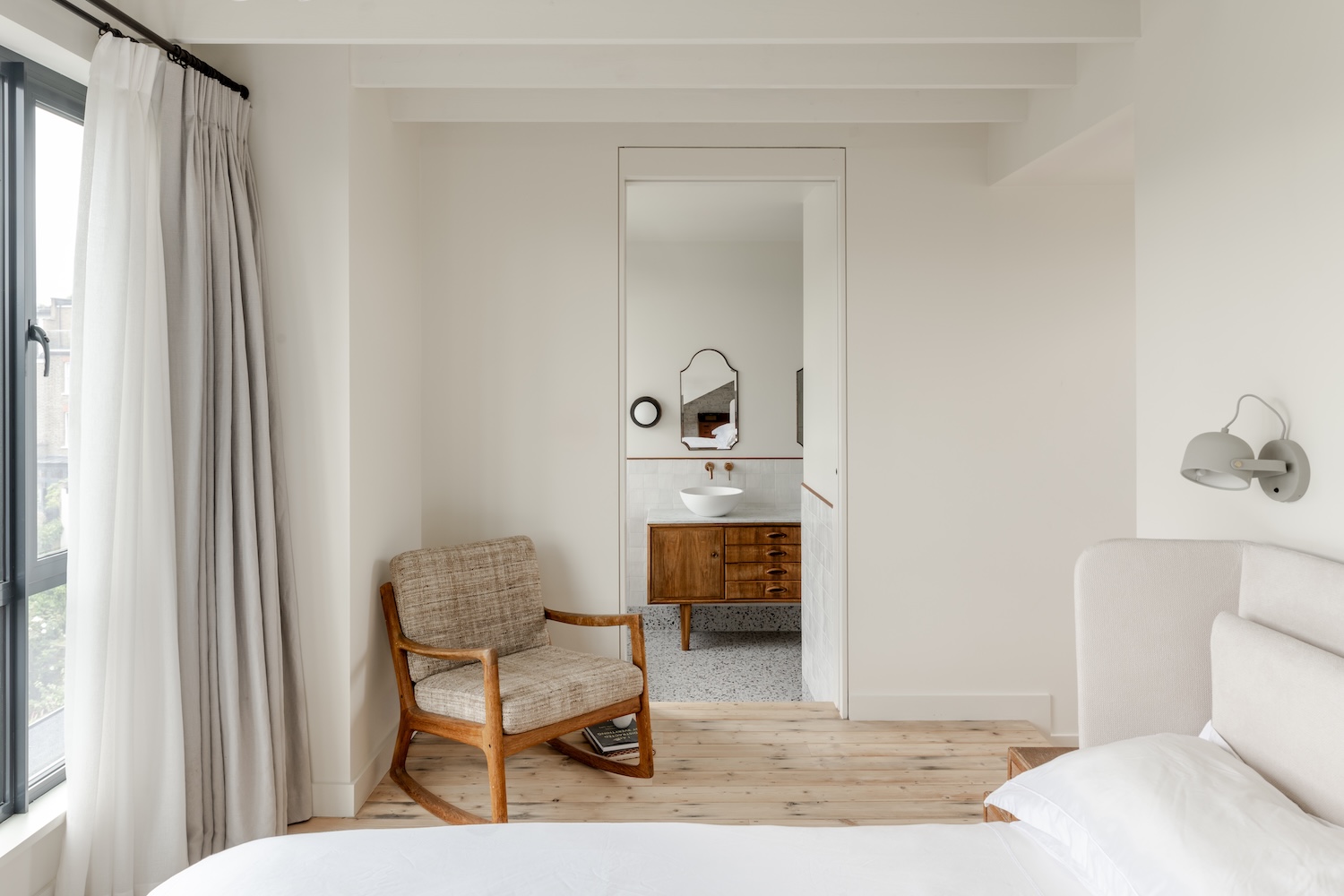
The restraint of the palette is doing conceptual work. Crisp white walls recede so that retained Edwardian features, original timber beams, cornicing, and tiled floors hold their ground against the new concrete and steel. The architects describe the result as a palimpsest, a surface where earlier marks remain legible beneath later ones, and the term is earned rather than decorative. The approach recalls Carlo Scarpa’s interventions at Castelvecchio, where new insertions are kept distinct from the medieval fabric precisely so the seam between eras stays visible. House of Panes operates on the same principle, letting period and present read as separate layers that share one section.