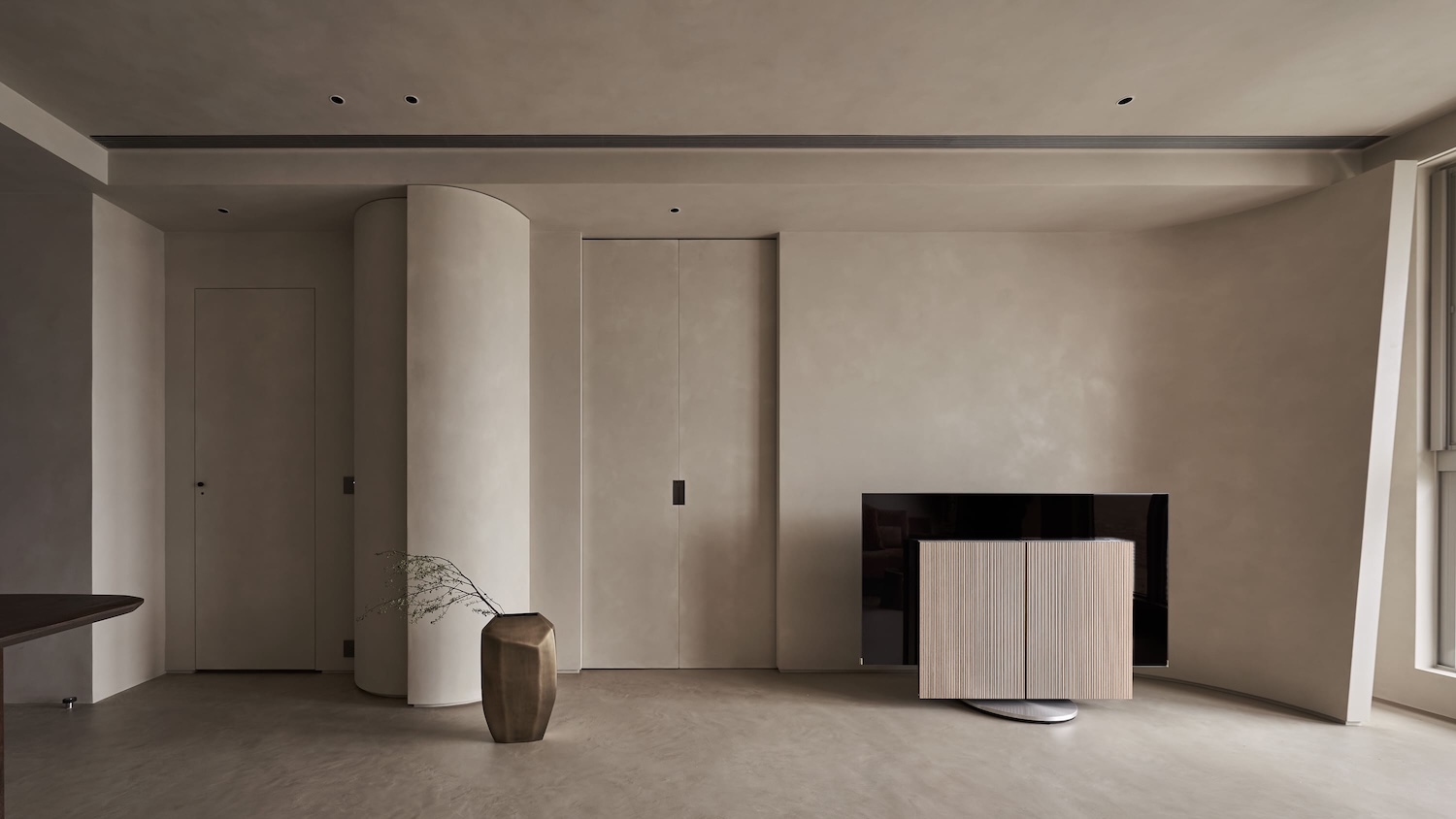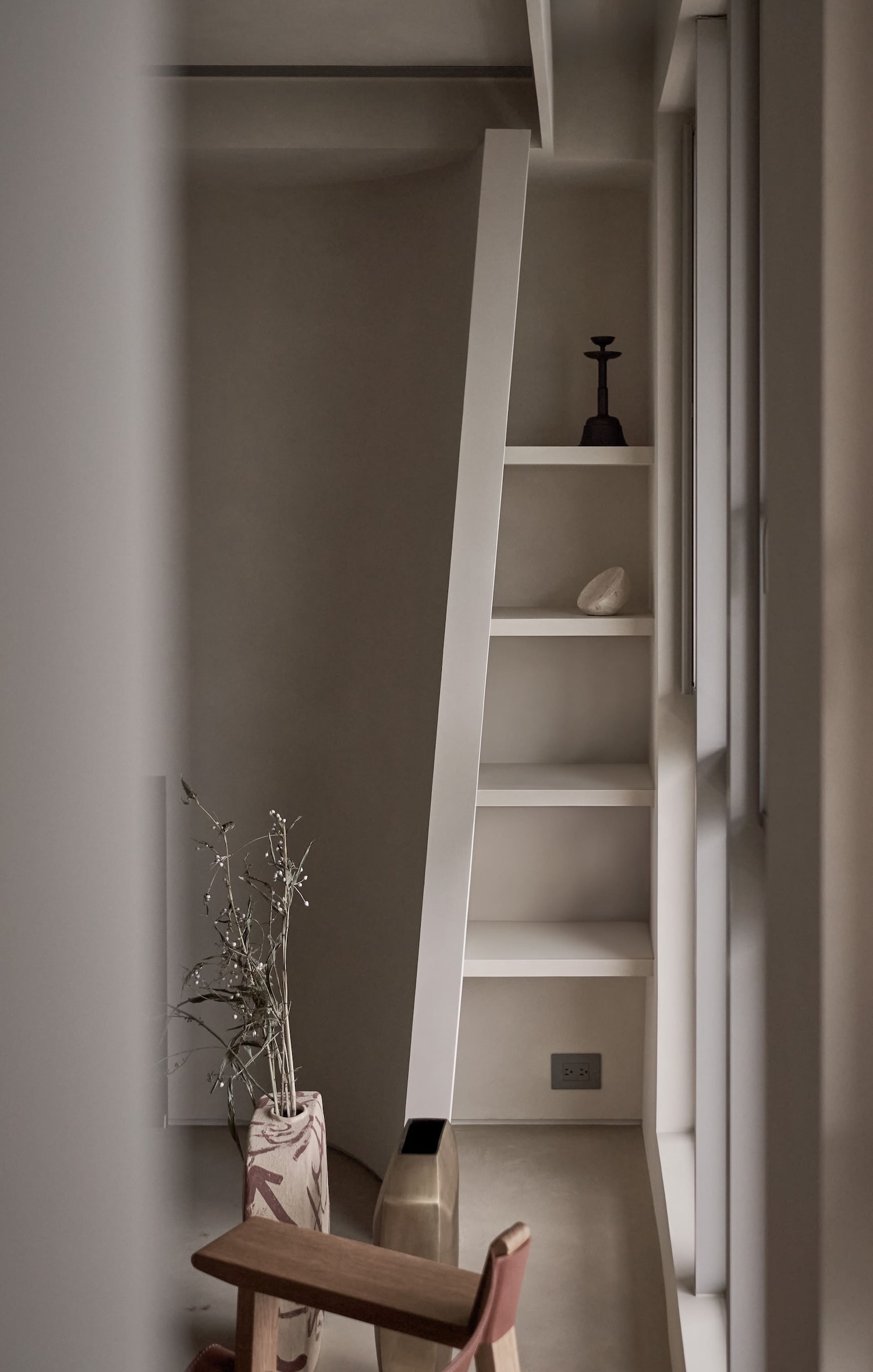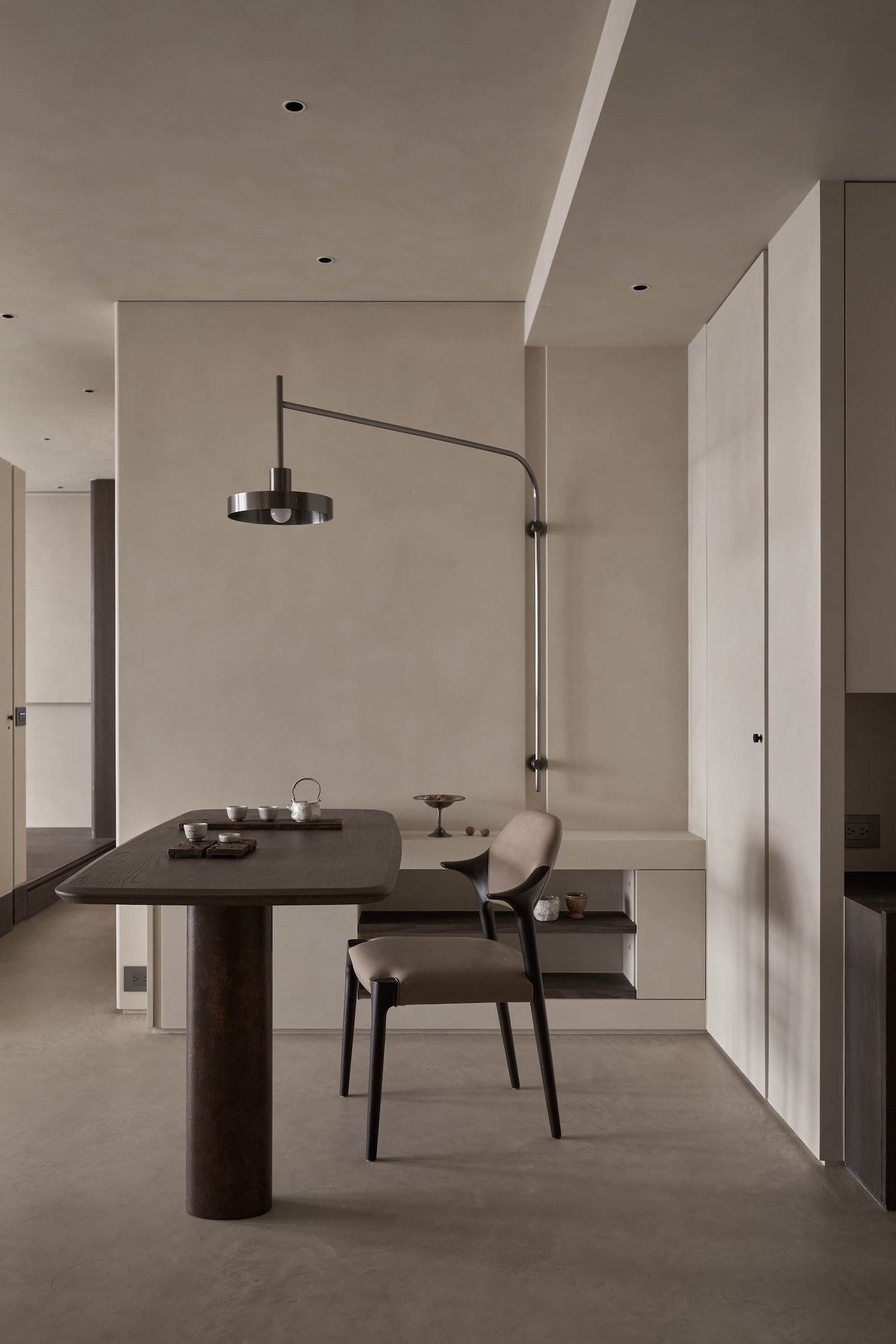
Inner Shaping is a minimal apartment located in Taipei, Taiwan, designed by Rulersdesign. The designer’s radical intervention strips away the conventional three-room layout, replacing it with what might best be understood as a “1.5-room configuration” – a bold departure that transforms necessity into poetry. By elevating portions of the floor and introducing strategic gaps where walls typically meet ceilings, the space achieves something remarkable: it becomes simultaneously intimate and expansive, private yet visually connected.
This approach recalls the revolutionary spatial experiments of Japanese architect Sou Fujimoto, whose “House N” similarly employed layered boundaries to create nested intimacies. Yet here, the technique serves a distinctly contemporary purpose – enabling a young art collector to live within their collection rather than merely alongside it. The elevated sleeping area, accessible without doors or conventional thresholds, transforms the bedroom into a viewing platform, a domestic equivalent of the museum mezzanine.
The material palette reinforces this gallery-like sensibility through deliberate restraint. Mineral paint unifies surfaces, creating the continuous white cube aesthetic familiar from contemporary art spaces. Yet the application of “blending techniques” – where cabinet forms emerge seamlessly from walls and the dining table appears to grow organically from its niche – represents a sophisticated evolution of minimalist principles. These aren’t simply white walls; they’re sculptural surfaces that accommodate function without compromising their artistic integrity.
Consider the central cabinet installation, supported by semicircular columns and accessible from both living and dining areas. This dual-function design exemplifies how the project transcends mere space-saving strategies to become something more philosophically ambitious. By embedding storage within the wall itself, the designers eliminate the visual disruption typically caused by freestanding furniture, allowing artworks to claim primary attention.
The concealed sliding doors represent perhaps the most ingenious aspect of the spatial strategy. When privacy becomes necessary, these hidden panels emerge from recessed wall cavities, instantly reconfiguring public and private zones. This flexibility reflects contemporary urban living’s demand for spaces that can adapt to multiple social configurations – from solitary contemplation to intimate entertaining.