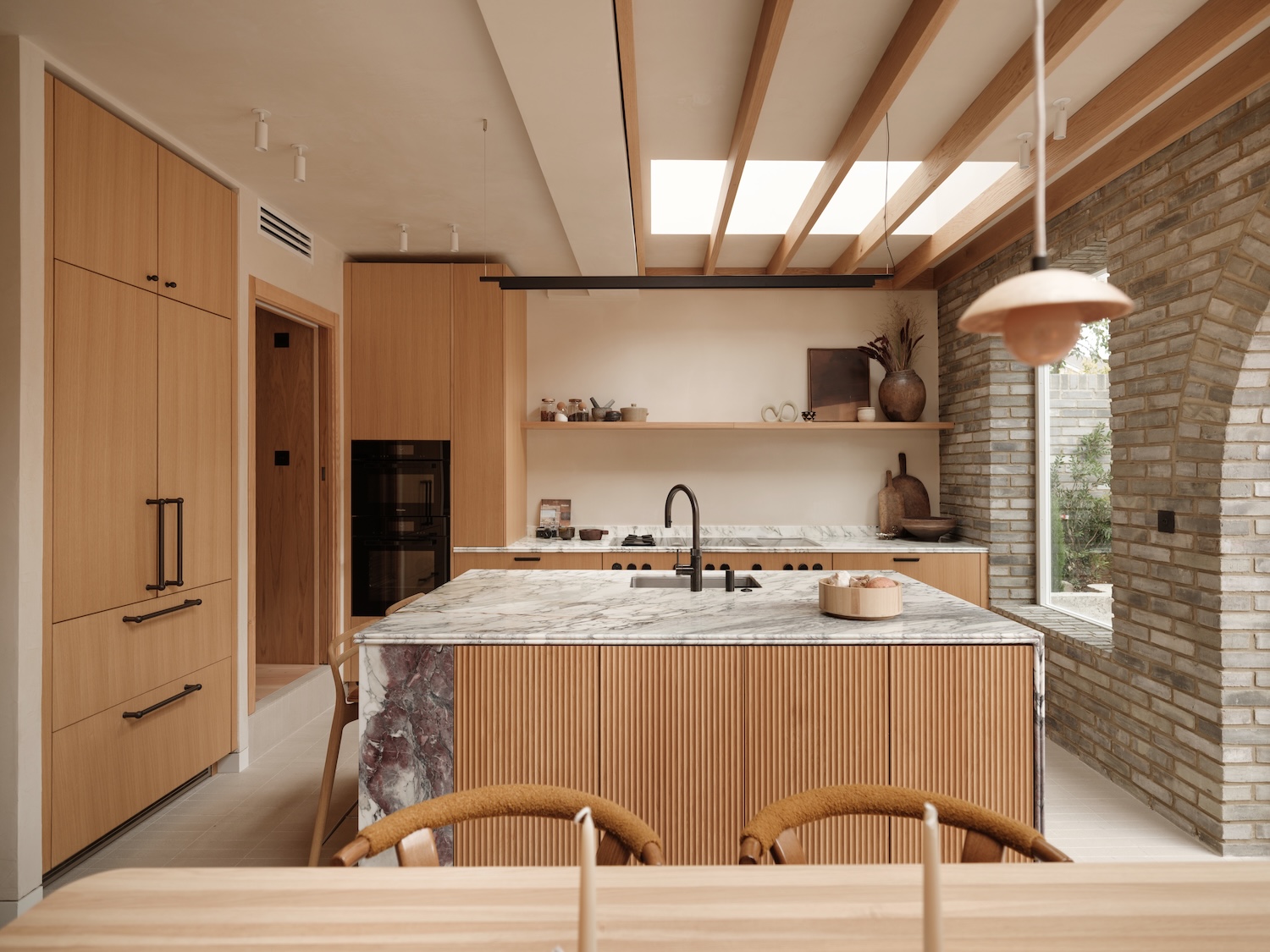
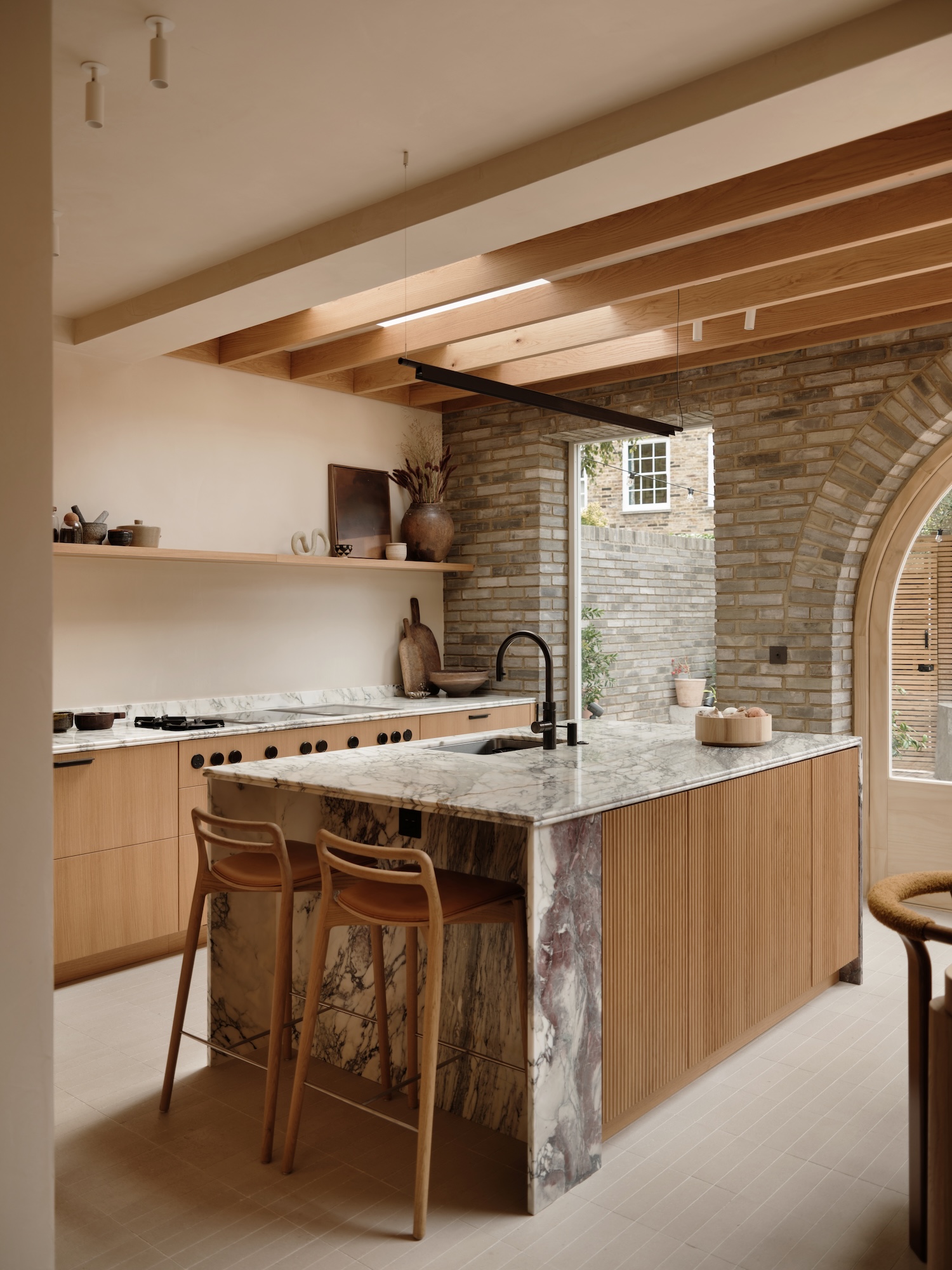
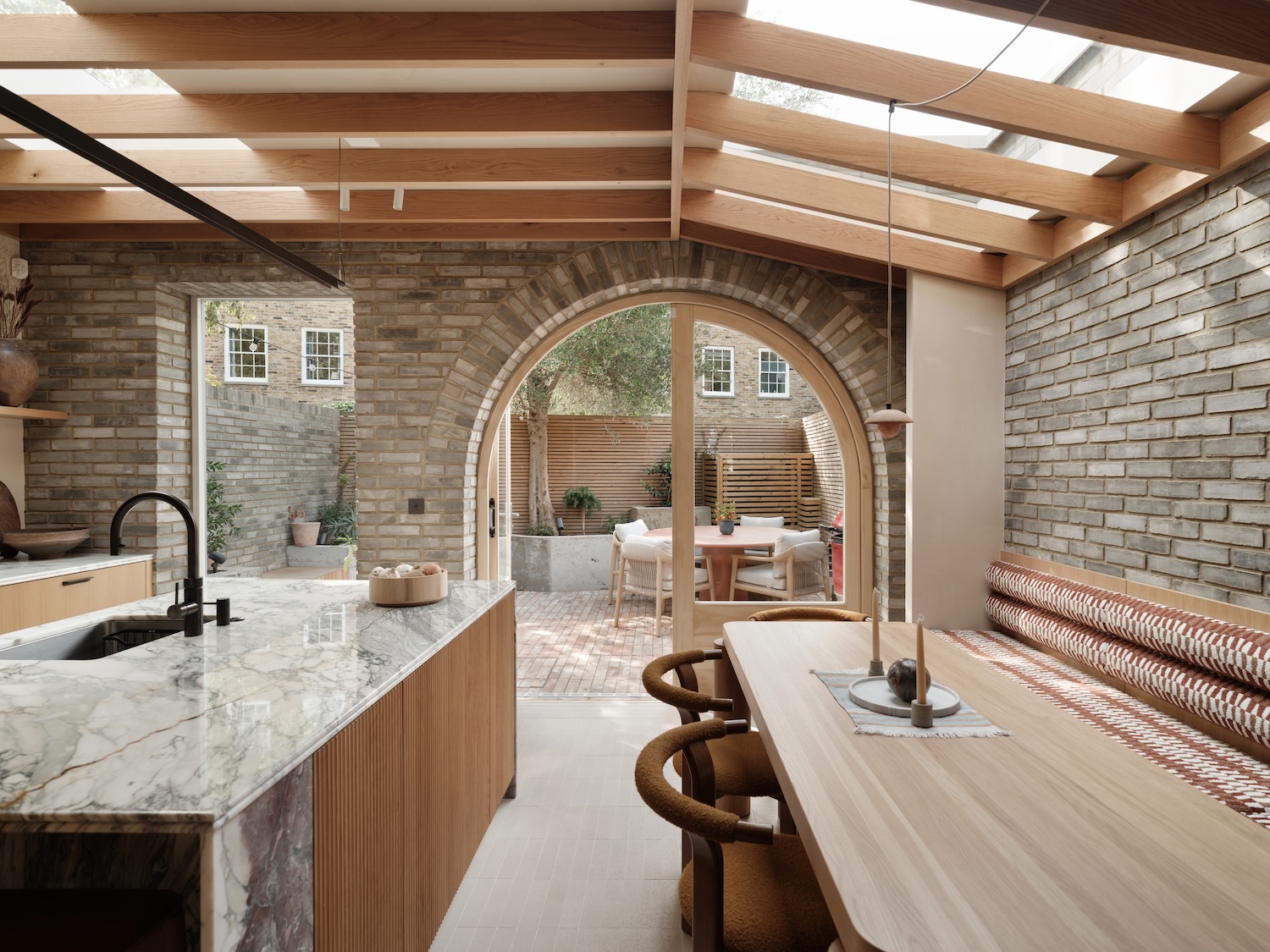
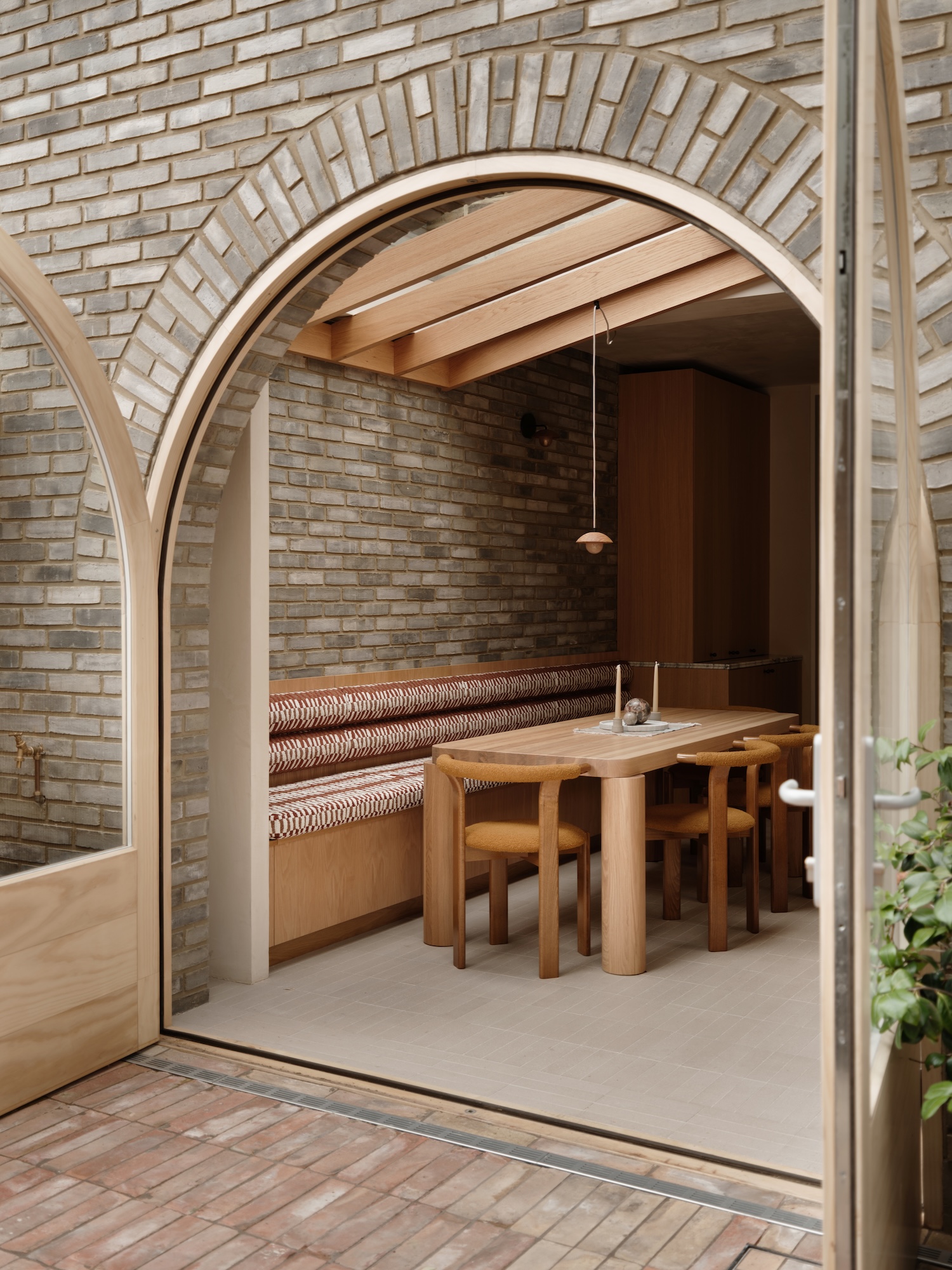
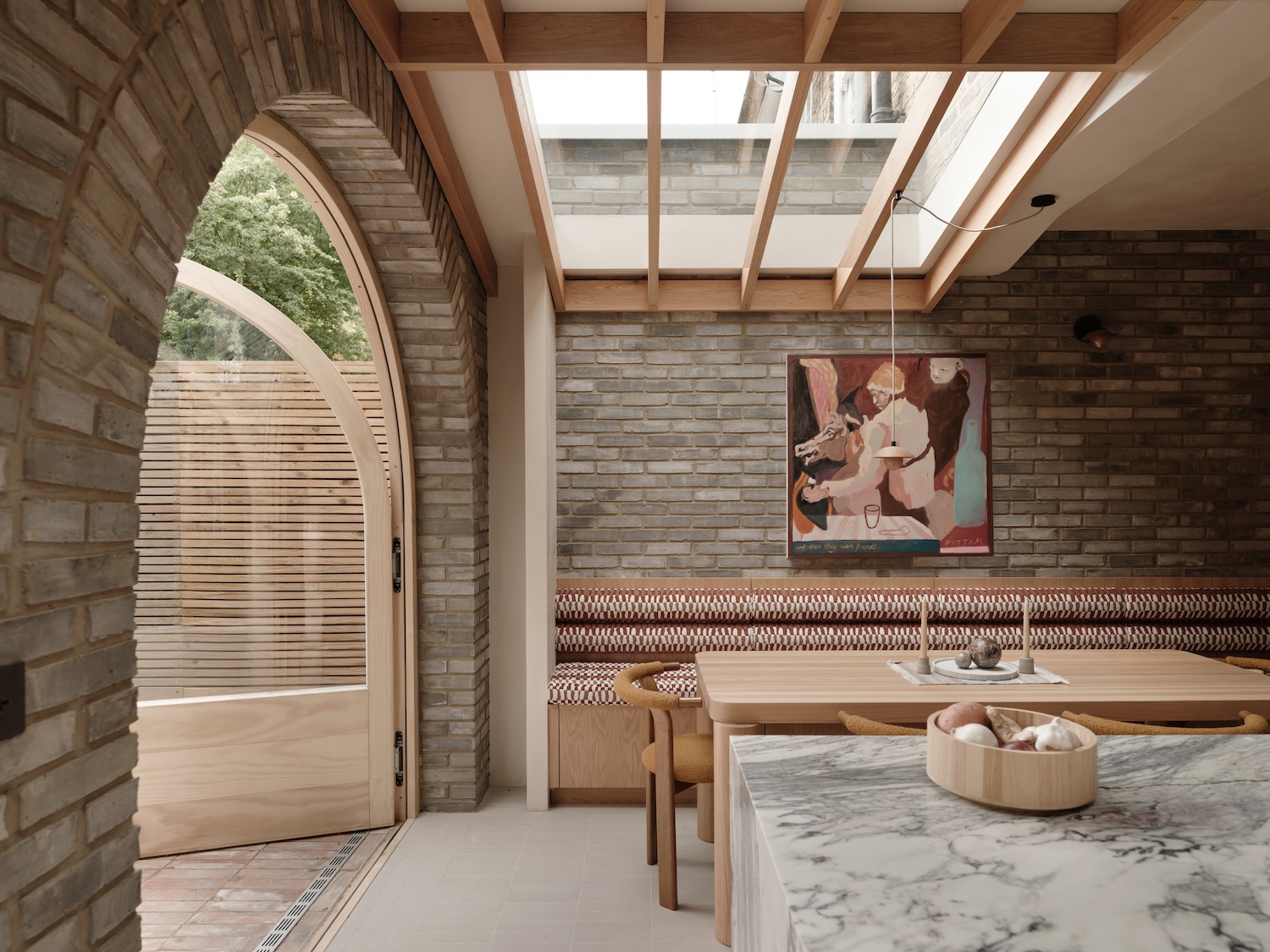
Islington House is a minimalist residence located in London, United Kingdom, designed by Hamish Vincent Design and Architecture for London. Georgian architecture typically demands reverence for its original proportions – an approach that can trap contemporary living in historical constraints. This Canonbury Conservation Area property offered something different: the external dignity of a Neo Georgian terrace with none of the listing restrictions that would prevent transformation. For clients drawn to period aesthetics but requiring modern spatial flow, the house became an exercise in selective preservation and strategic intervention.
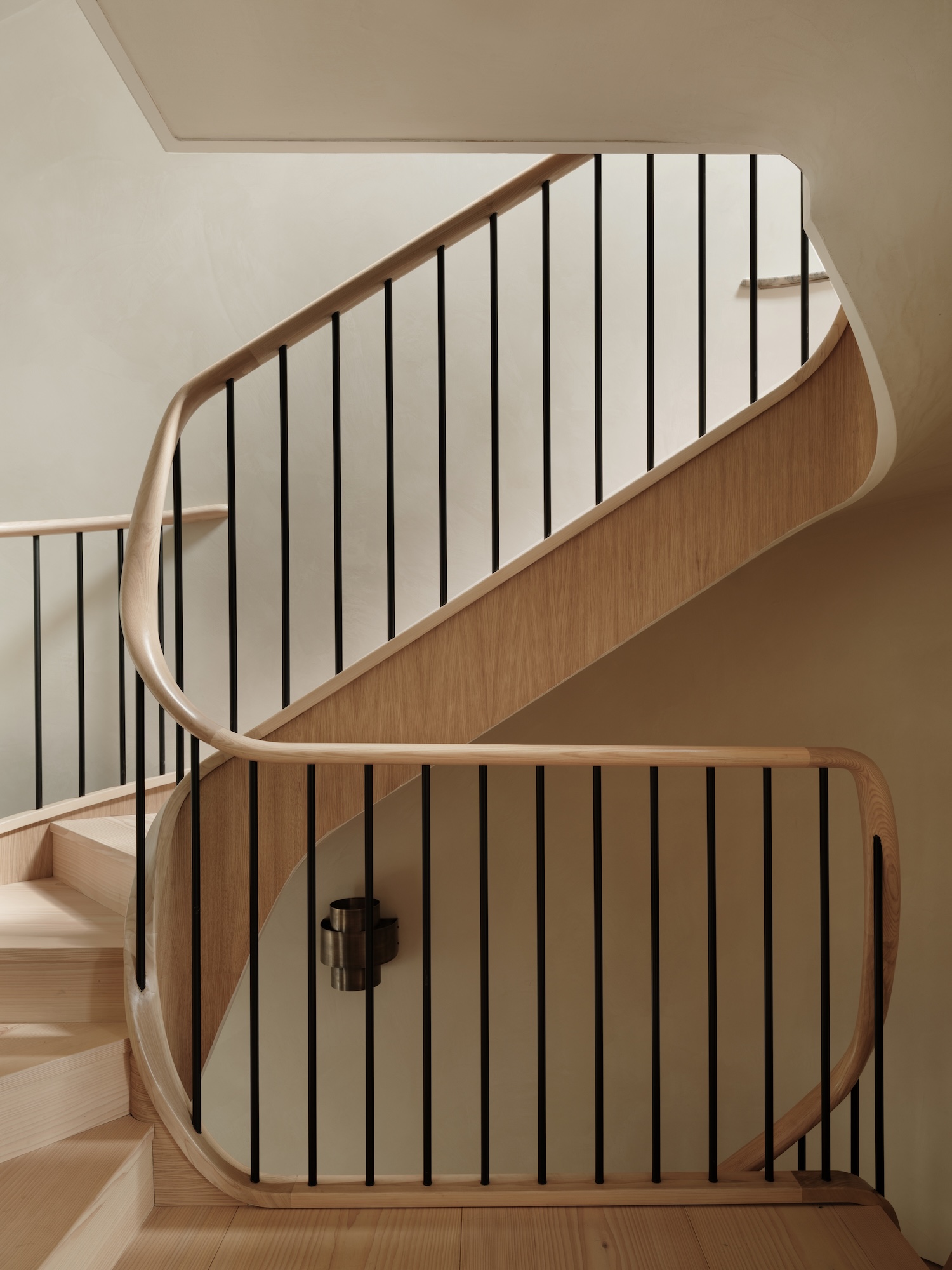
The design hinges on a single bold move – repositioning the staircase to carve out a three-story void that fundamentally alters how light and sight lines move through the home. Rather than hugging a wall as staircases in terraced houses traditionally do, this cantilevered element sweeps upward in a sculptural arc, its douglas fir treads and stone detailing anchoring the vertical progression. The gesture recalls the grand staircases of Georgian country estates, scaled to suit the proportions of an urban terrace while creating the spatial generosity those originals provided.
Clayworks lime plaster wraps the walls in a surface that breathes – both literally and visually. The material’s subtle texture catches light differently throughout the day, creating movement across planes that might otherwise feel static. This choice extends beyond aesthetics into building science: lime plaster regulates humidity and allows moisture vapor to pass through walls, contributing to interior air quality in ways modern gypsum products cannot match. The decision aligns with a broader material palette – solid oak, douglas fir, natural stone, brick – that privileges durability and patina over industrial finishes.
The ground floor transformation required technical precision to achieve what appears effortless. Dropping and adjusting floor levels throughout allowed the design team to maintain the existing roofline while creating acceptable ceiling heights on all three levels, a constraint typical of post-war terraces where roof pitches were often economically minimal. The manipulation opened up enough vertical space for the principal bedroom ensuite on the first floor to wrap around the staircase’s outer curve, incorporating a steam shower within what had been tight, compartmentalized rooms.