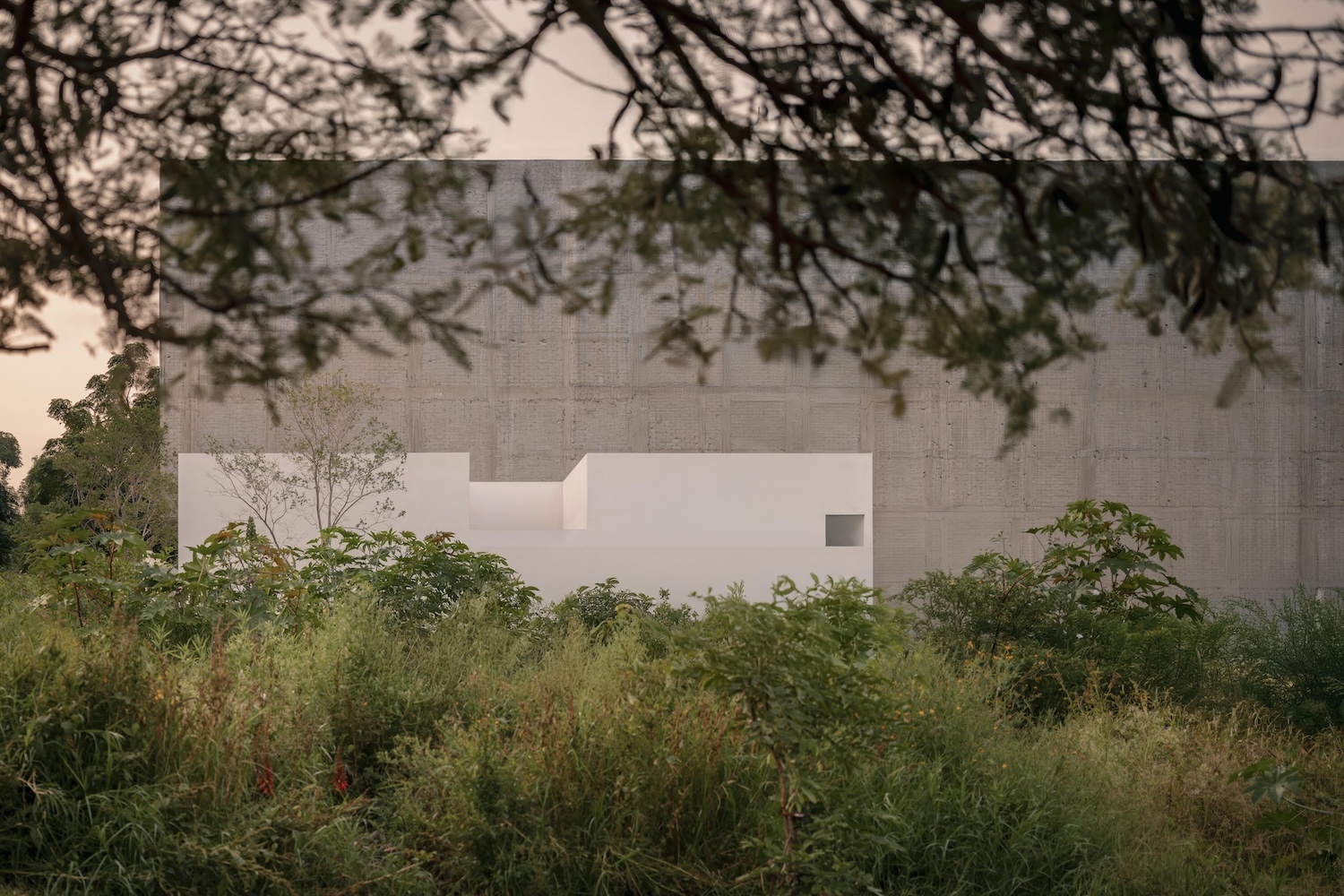
Kehai House is a minimalist residence located in Morelia, Mexico, designed by HW Studio. The project begins with a paradox that any architect will recognize: designing for others is clarifying work, but designing for oneself strips away every professional shelter. With a constrained budget and no client to satisfy, each decision had to earn its presence on strictly personal terms. The result is a house shaped less by formal ambition than by a long, slow immersion in Zen philosophy and Japanese spatial culture – a private reckoning made habitable.
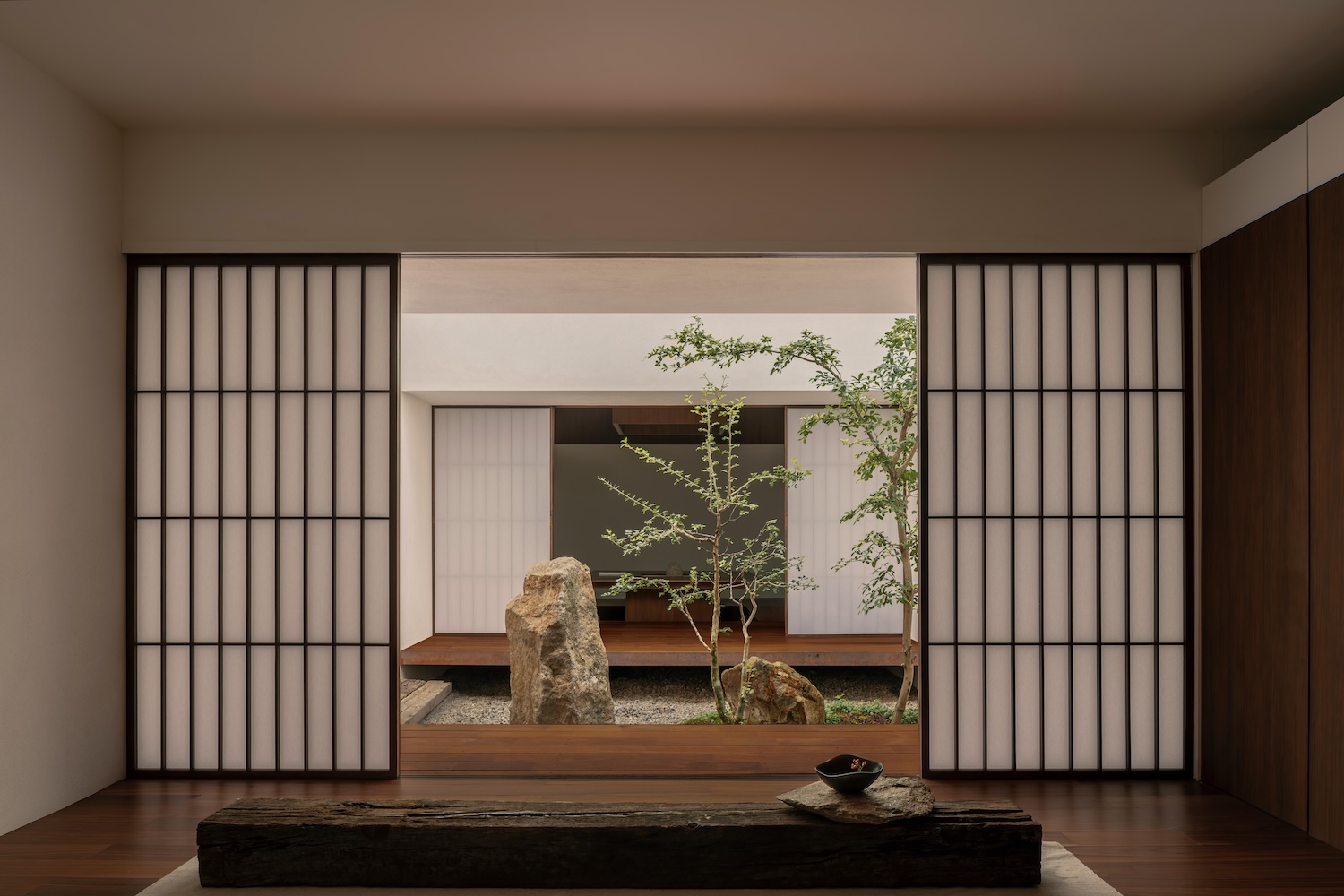
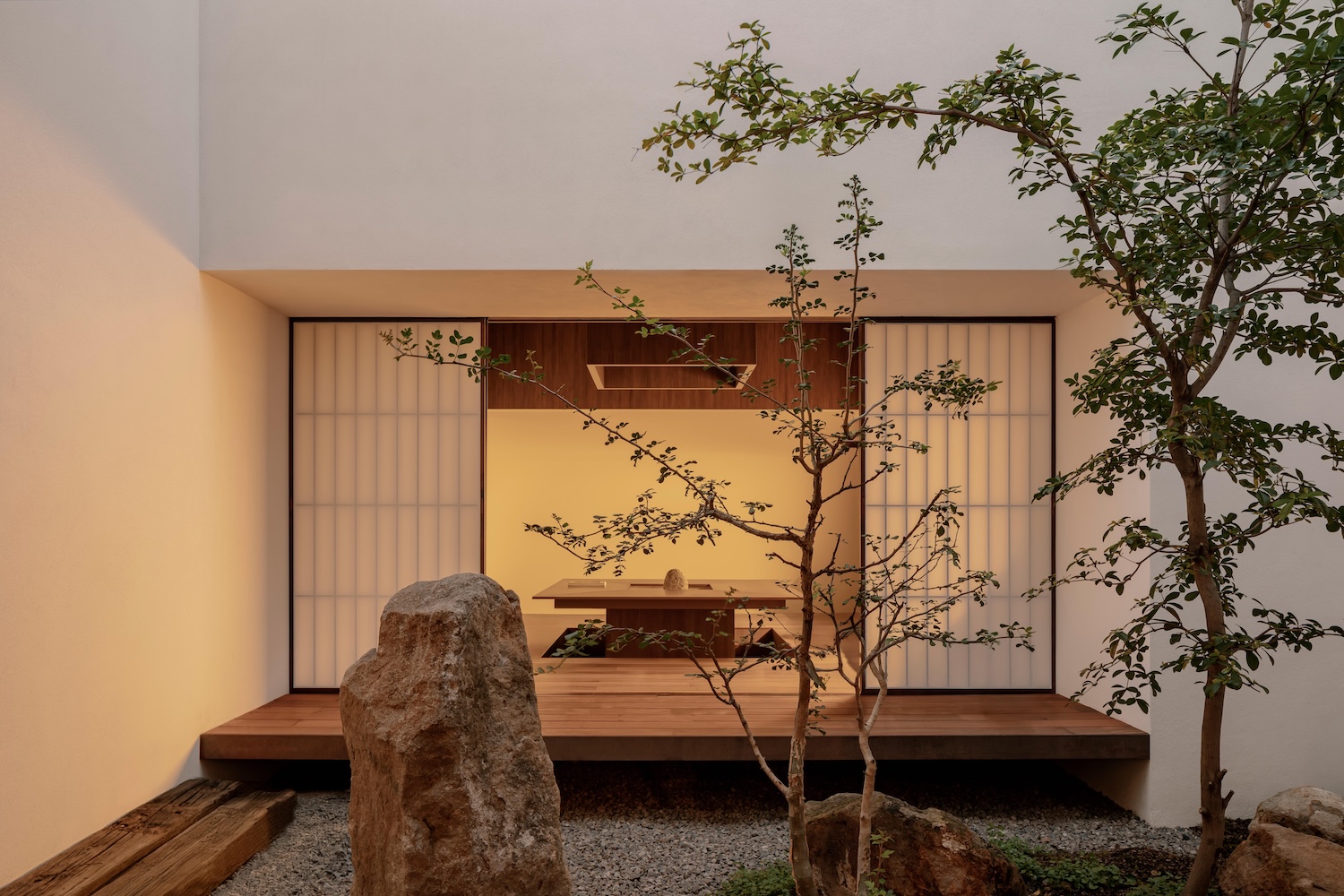
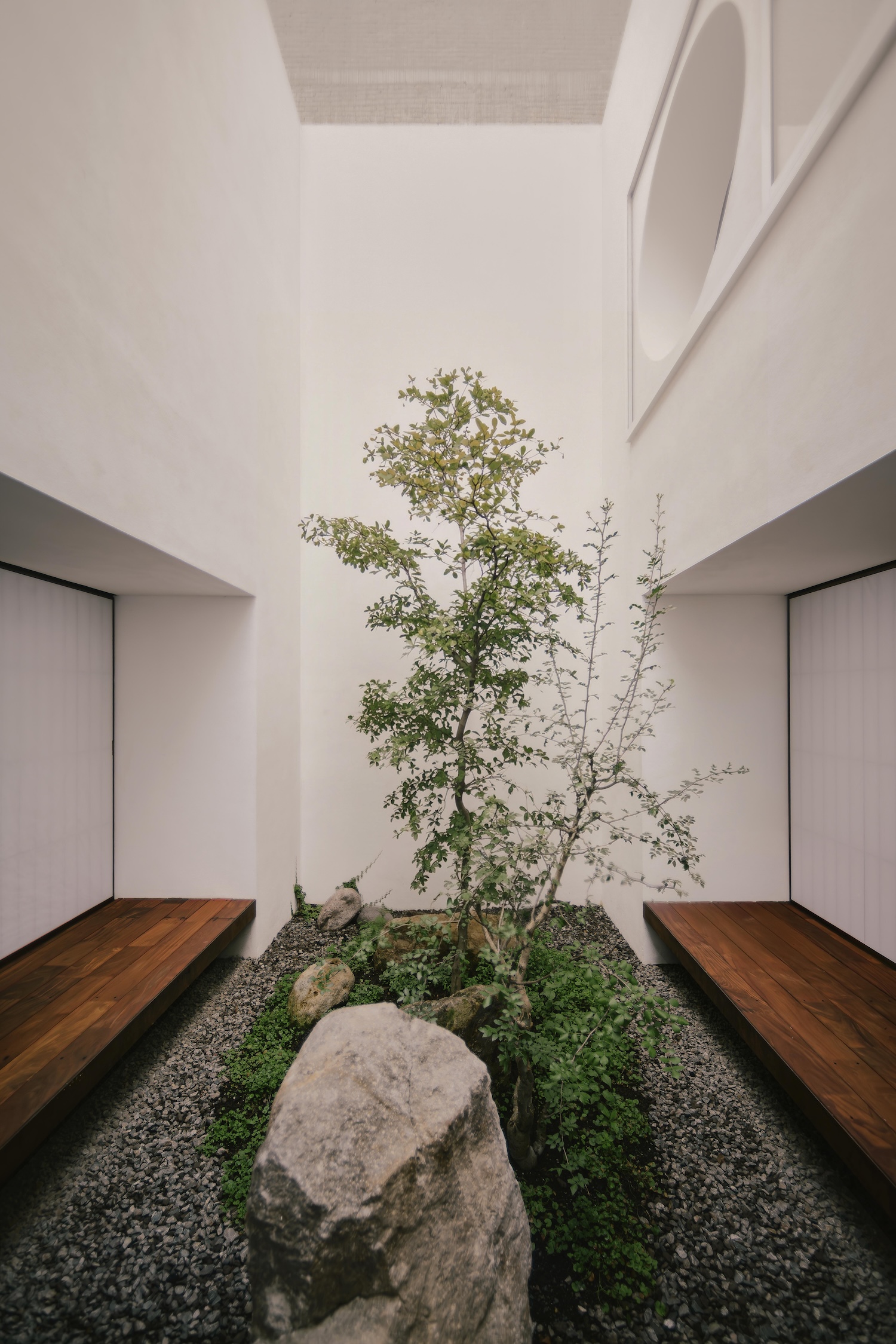
From the street, Kehai House reads as a closed box, quiet and opaque in the urban fabric of Morelia. Crossing the threshold reverses that reading entirely. The house does not enclose so much as hold: at its center sits a karesansui-style stone garden that neither decorates nor divides, but organizes. Carefully arranged grey gravel and two elevated timber platforms structure the whole interior as a series of spaces orbiting stillness. The reference to Kyoto temple gardens is direct and unambiguous, though HW Studio deploys it with material restraint rather than reproduction.
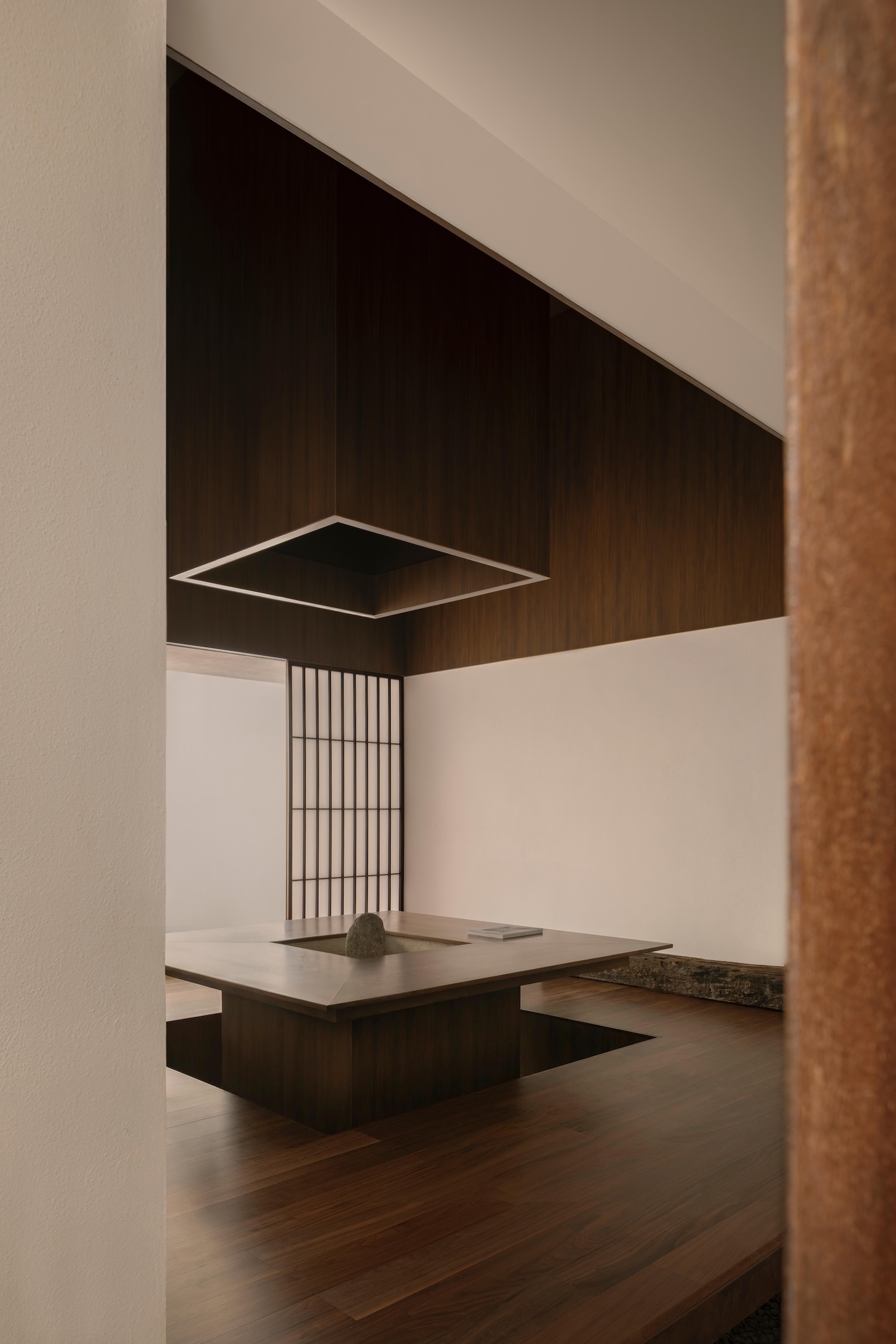
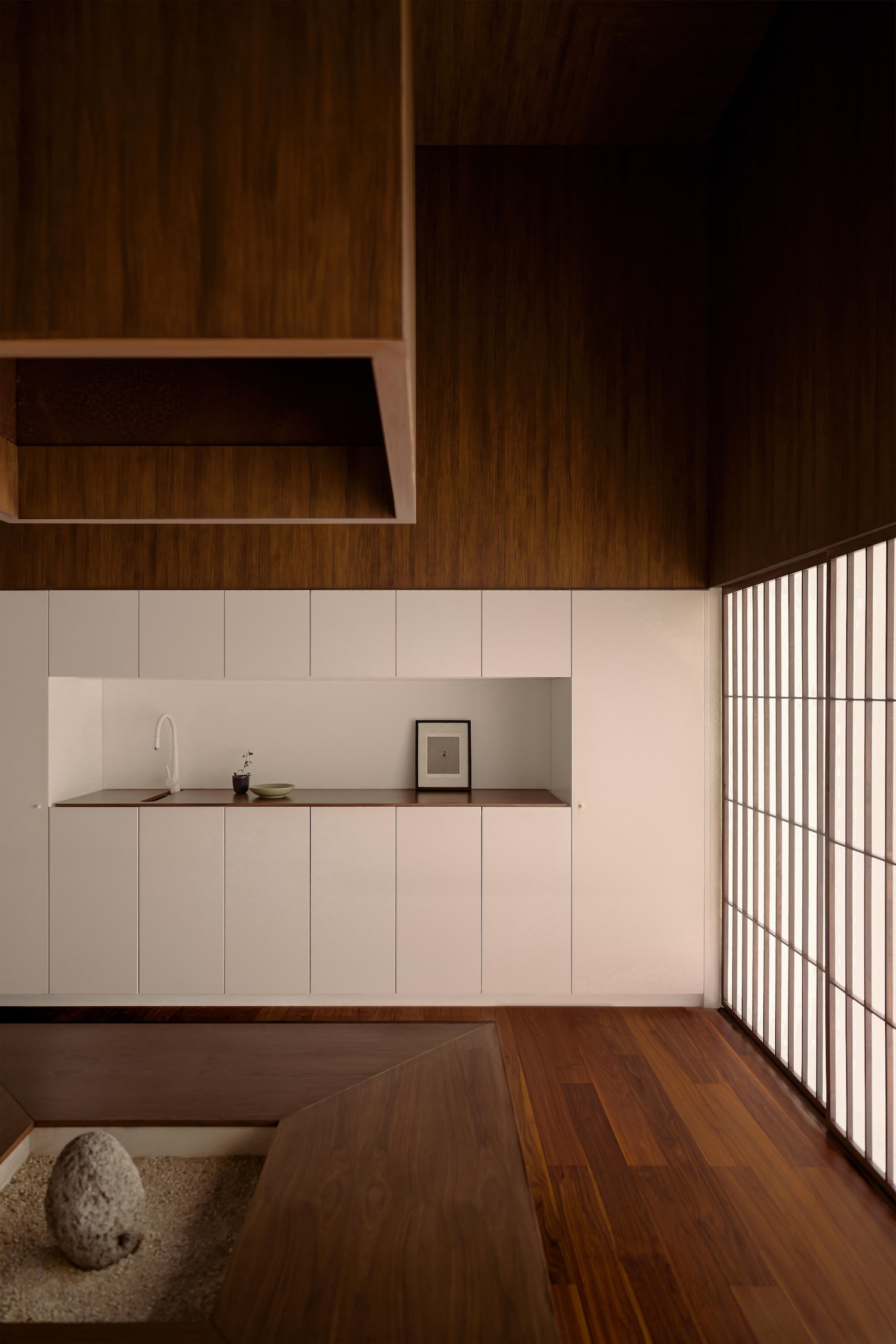
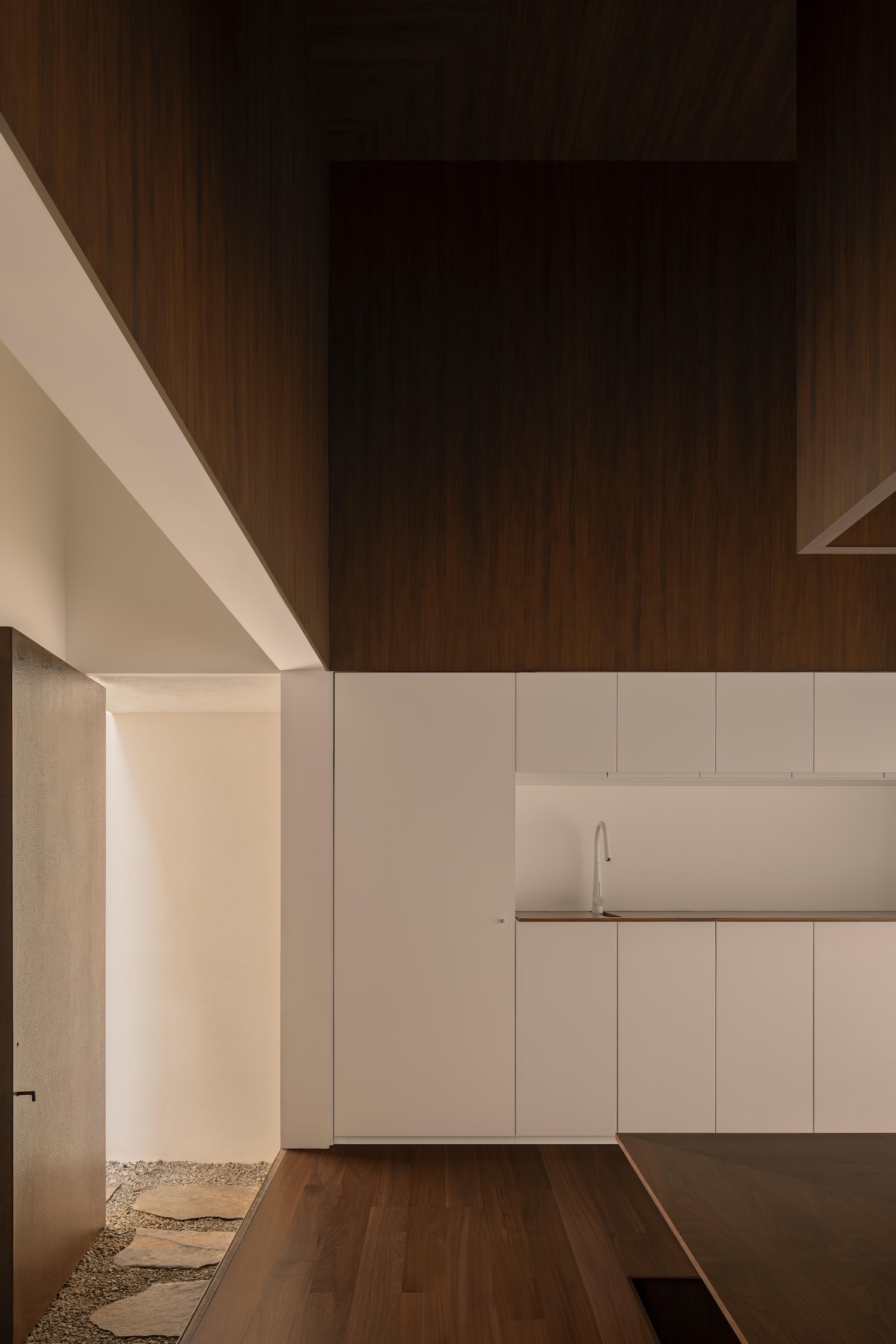
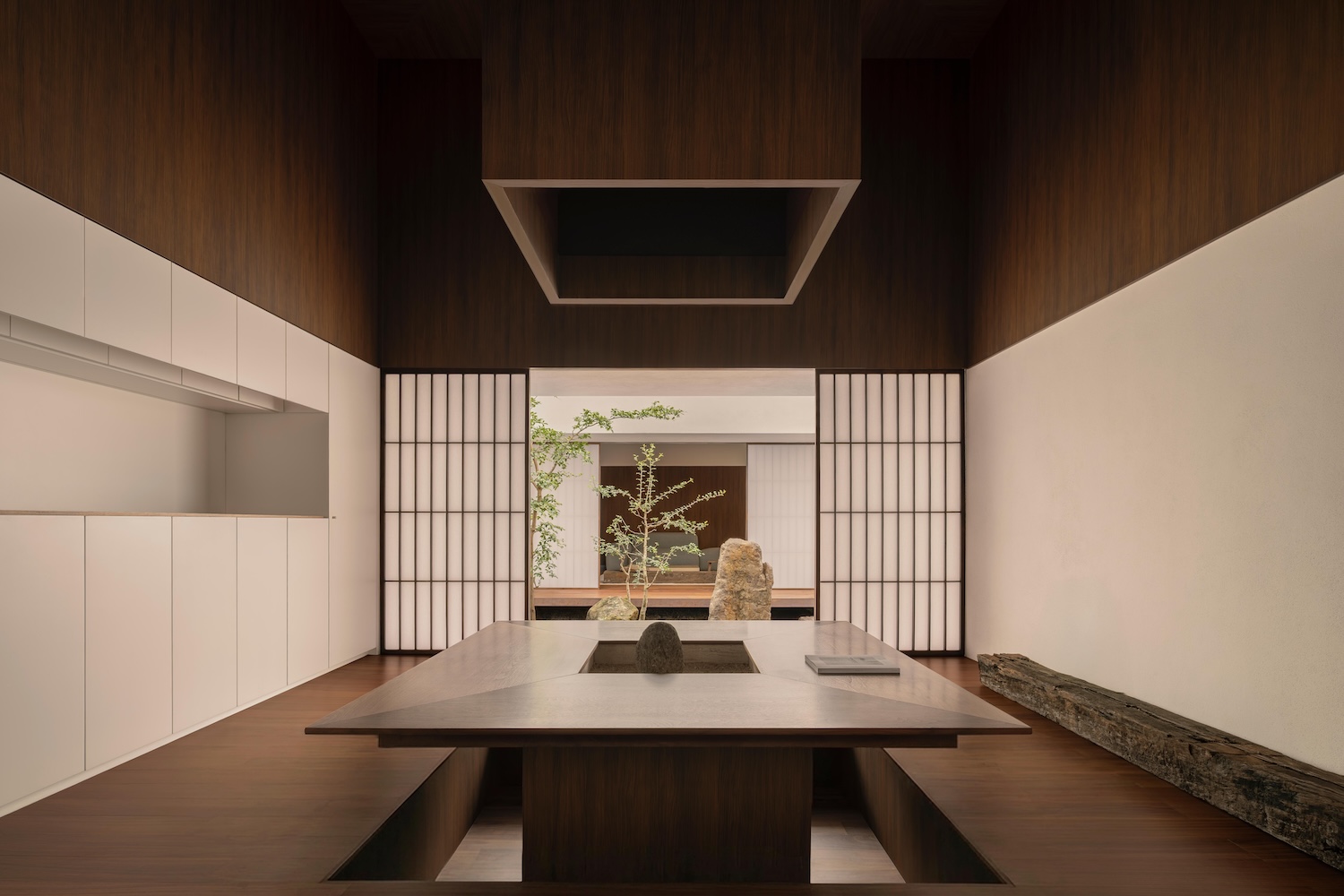
The spatial logic flowing outward from that garden resists conventional circulation. A double-height kitchen and dining volume anchors one side, its hood designed with an almost infrastructural seriousness – not as a sculptural gesture, but as a practical acknowledgment that urban supply lines are fragile. On the other side, a contemplative living room where large stones rest on the floor like islands. Between these two zones, there is no covered passage. In rain, you either wait or get wet. This is not an oversight; it is the position. The architecture does not insulate occupants from weather but makes them negotiate it, restoring the kind of low-level attentiveness that most residential design smooths away entirely.
Shoji screens with rice paper control the boundary between interior and garden. Their function is perceptual as much as practical – light passing through them loses urgency, softening into something that registers more as duration than illumination. The effect is close to what Junichiro Tanizaki described in In Praise of Shadows: shadow treated not as the absence of light but as its most cultivated form.
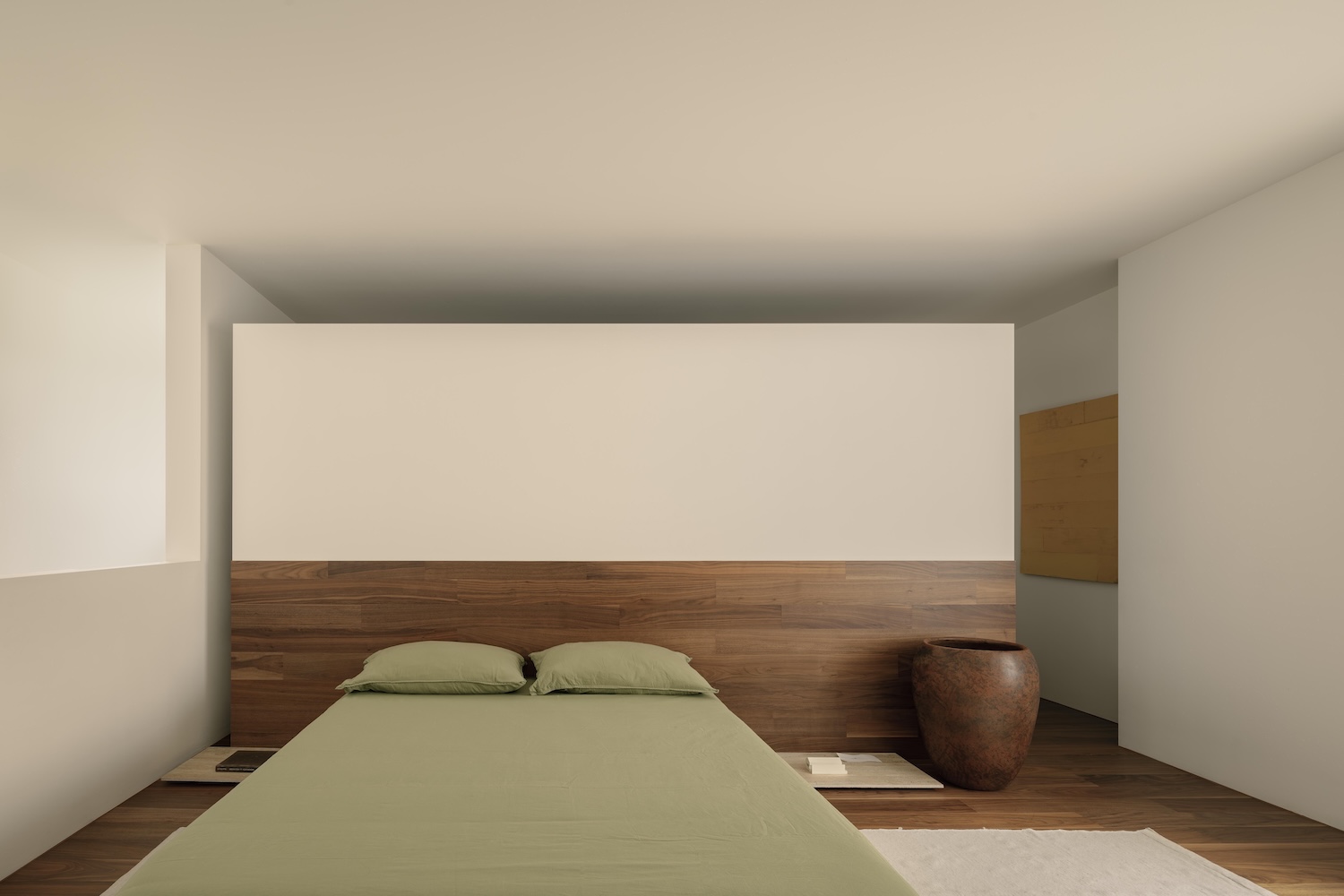
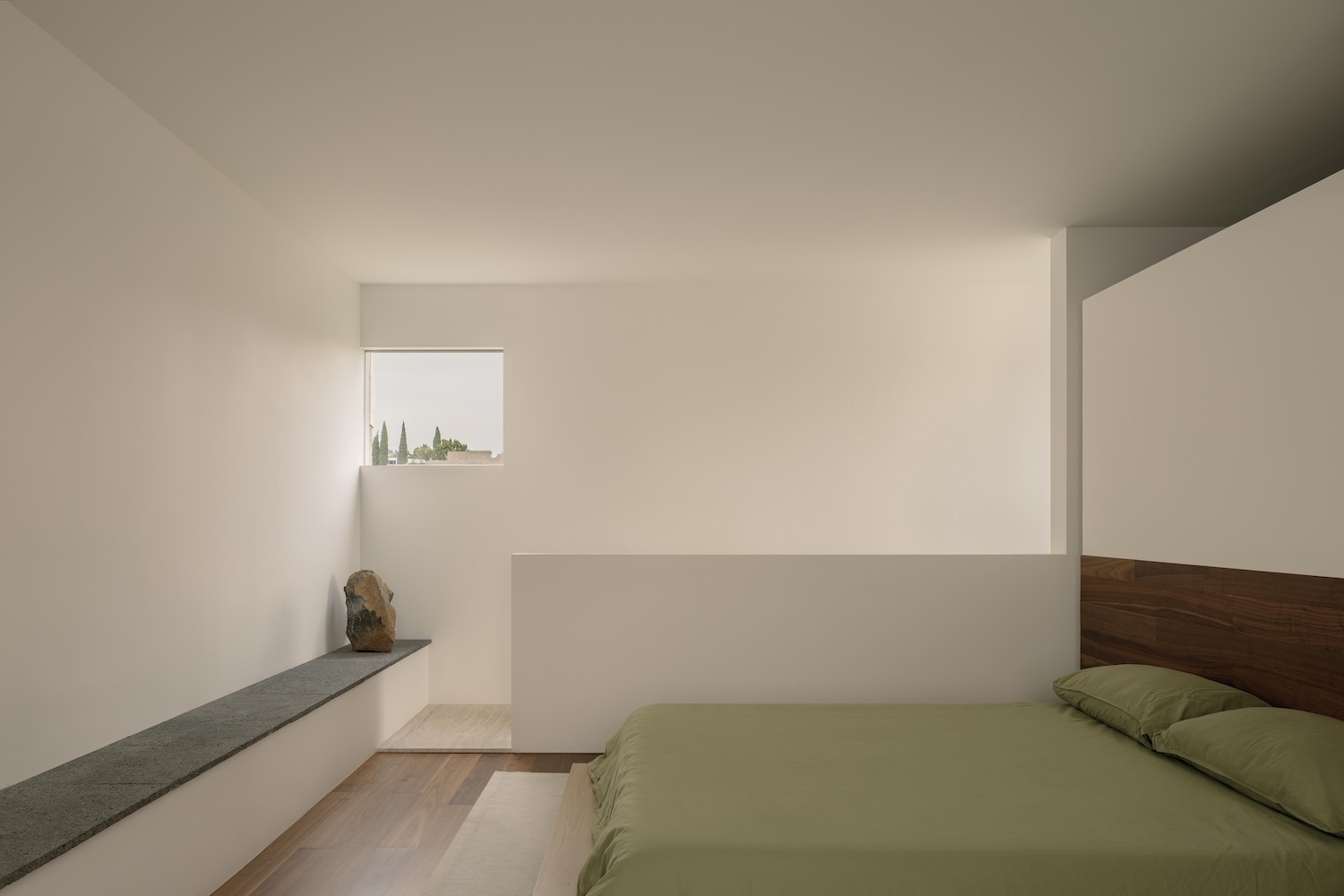
The bedroom sits above, compressed and intimate, with a single circular aperture directed at a tree planted at the garden’s center. Three small windows elsewhere in the house orient toward specific views – a mountain, a neighboring pine – while the remainder of the envelope remains closed. The entrance descends rather than ascends, a gesture that reads as both practical (the natural rock provided stable foundation without expensive earthworks) and ceremonial. Entering the house requires a literal lowering of the body, which HW Studio frames as an analogue to the humility encoded in passing through a torii gate.