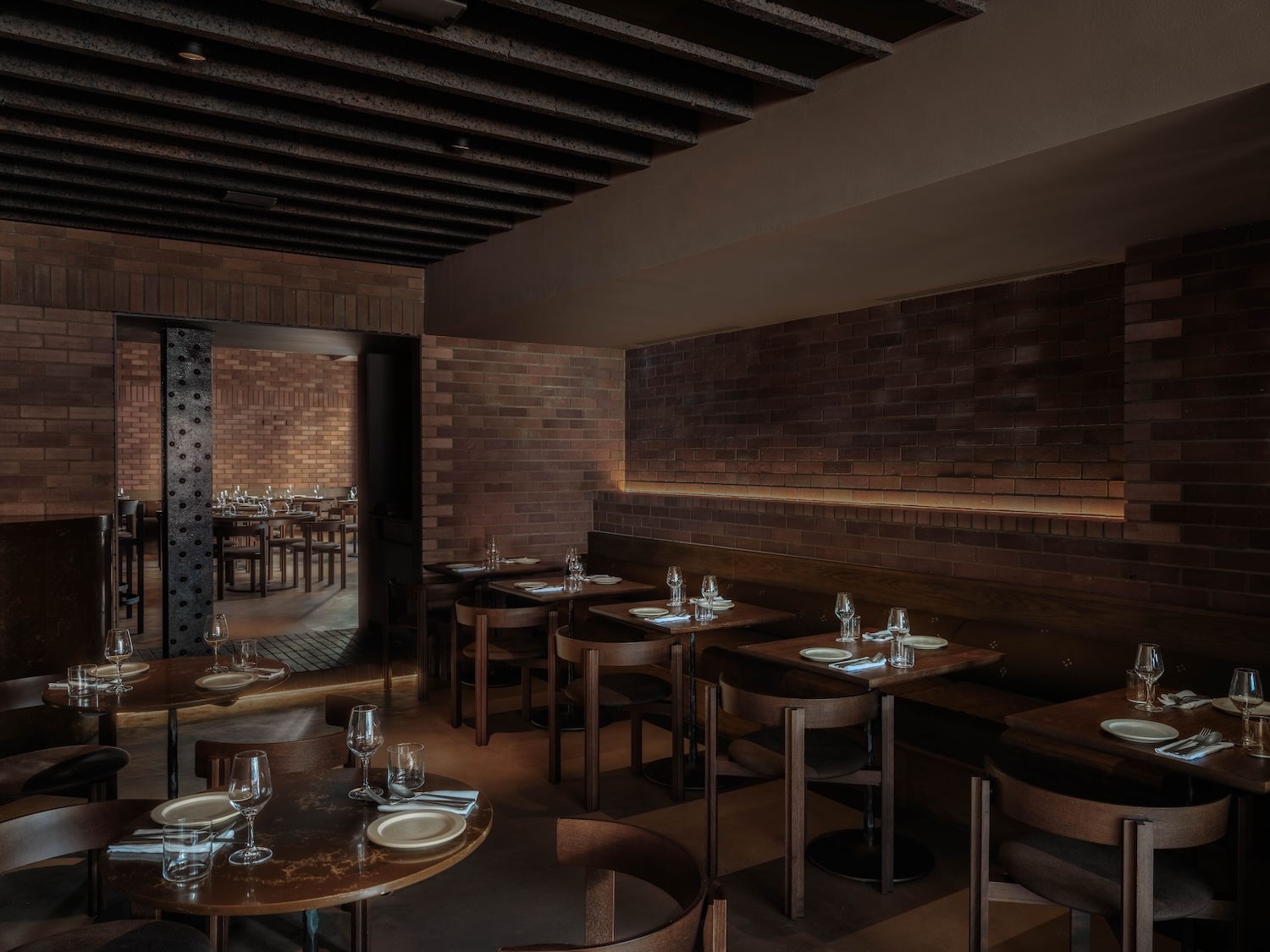
KID is a minimalist restaurant by the London-based architecture and interior design practice, BOX 9. Located in a Victorian corner building in London’s Soho neighborhood, the restaurant is the latest venture from chef Sertaç Dirik and restaurateur David Carter, bringing together contemporary Turkish cooking with an interior that draws from the architectural history of Soho and the traditional craftsmanship of Central Anatolia.
Throughout KID, BOX 9 uses architectural interventions, recycled materials, and contemporary craftsmanship to connect the building’s history with the restaurant’s culinary identity.
Founded in 2007 by Lou Davies and Caroline Hunter, BOX 9 has worked with Carter for more than a decade on restaurants including SMOKESTAK, Manteca, OMA, and AGORA. For KID, the studio was tasked with creating a setting for Dirik’s first independent restaurant, following his work at his family’s acclaimed Mangal II in East London. His Turkish heritage and memories of family cooking became important references for the design, particularly the relationship between food, hospitality, and the spaces in which people gather.
Occupying approximately 3,300 square feet across two floors, the project combines two former commercial units into a restaurant accommodating around 120 guests. BOX 9 undertook significant architectural alterations to the 1897 building, including new street-facing entrances and shopfronts that reference the proportions of Soho’s historic architecture. Visitors enter from Bateman Street through an oversized door that opens directly toward the restaurant’s central grill, which serves as the focal point of the main dining room. Banquette seating, smaller dining tables, and counter seating are arranged around the open kitchen, allowing guests to observe the cooking process.
Brick is the defining material throughout the interior, connecting the building’s Victorian origins with architectural references from Turkey. BOX 9 worked with Kenoteq’s K-BRIQ, an unfired brick manufactured using at least 90 percent recycled construction and demolition waste, with significantly lower carbon emissions than conventional fired brick. The material is used extensively across the restaurant, forming curved partitions, recessed openings, and architectural details that give the interior its distinctive character. A sculptural brick staircase connects the main dining area to the lower level, while a private wine room accommodates 14 guests within curved brick walls beneath a domed ceiling.
The material palette extends to cabinetry and joinery made from PaperStone, a surface produced using recycled paper, alongside deep green Pyrolave volcanic stone tabletops in the wine room. Cork ceiling elements provide acoustic treatment, while reclaimed textiles by Arc of Joan introduce burnt terracotta and moss-green tones to the upholstery. The fabrics incorporate hand-embroidered details referencing traditional Turkish kilims, adding another layer of craftsmanship to the otherwise restrained interior.
A large mobile by Turkish artist Selin Acikel hangs above the staircase, constructed from recycled bronze, steel, and iron. The commissioned work references the cultural importance of the shared table in Turkish hospitality, connecting the restaurant’s contemporary interior with the traditions that inform Dirik’s cooking.


