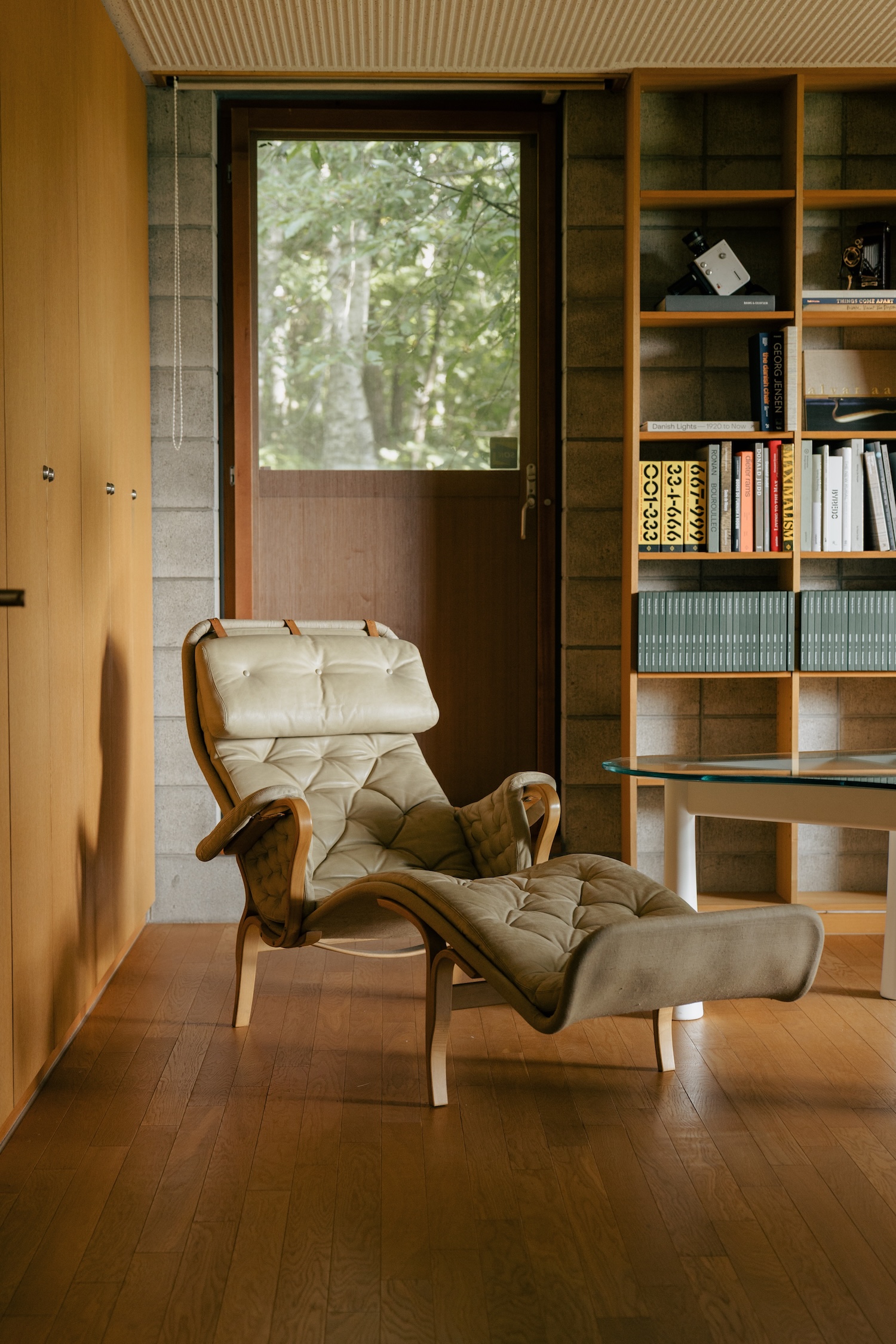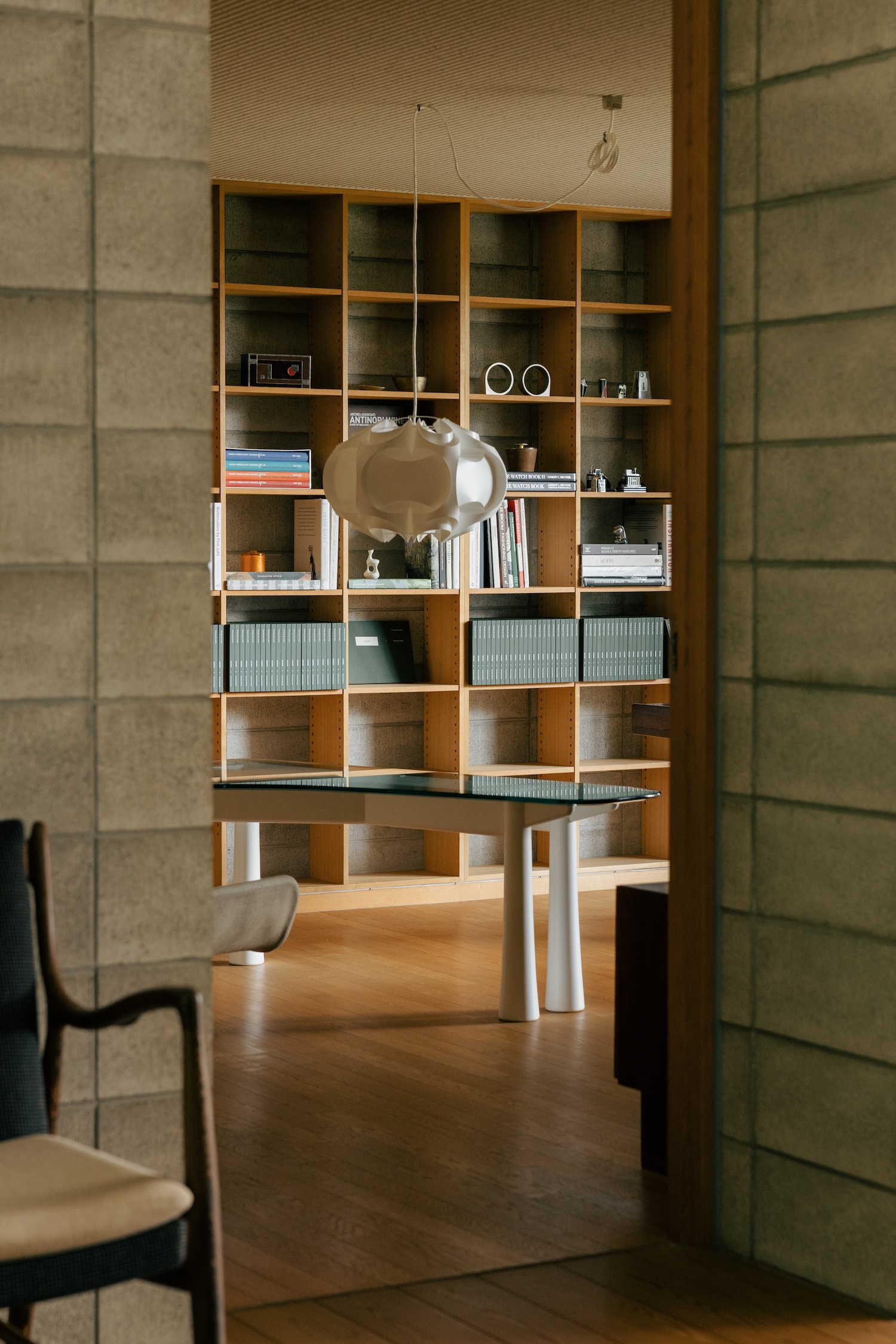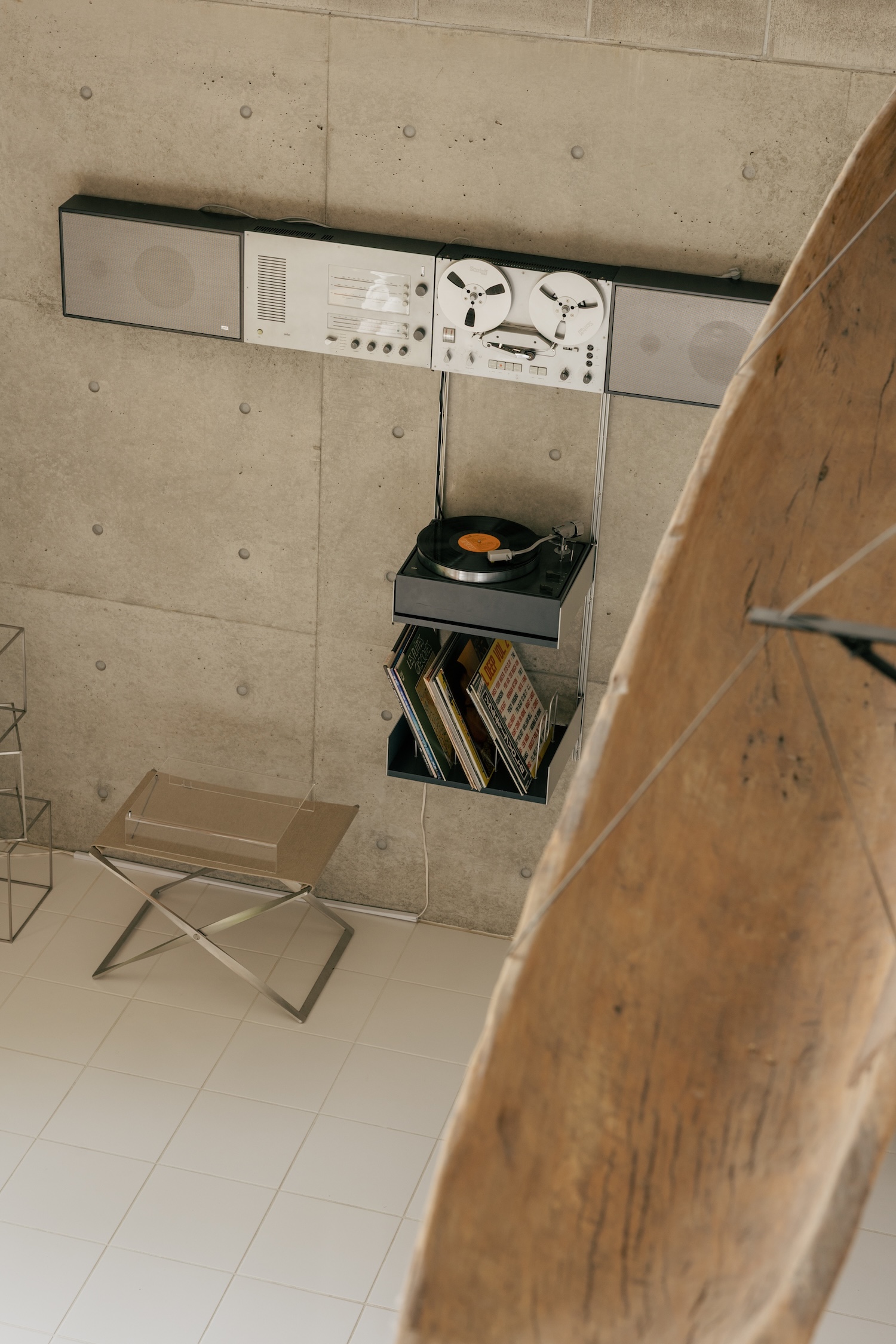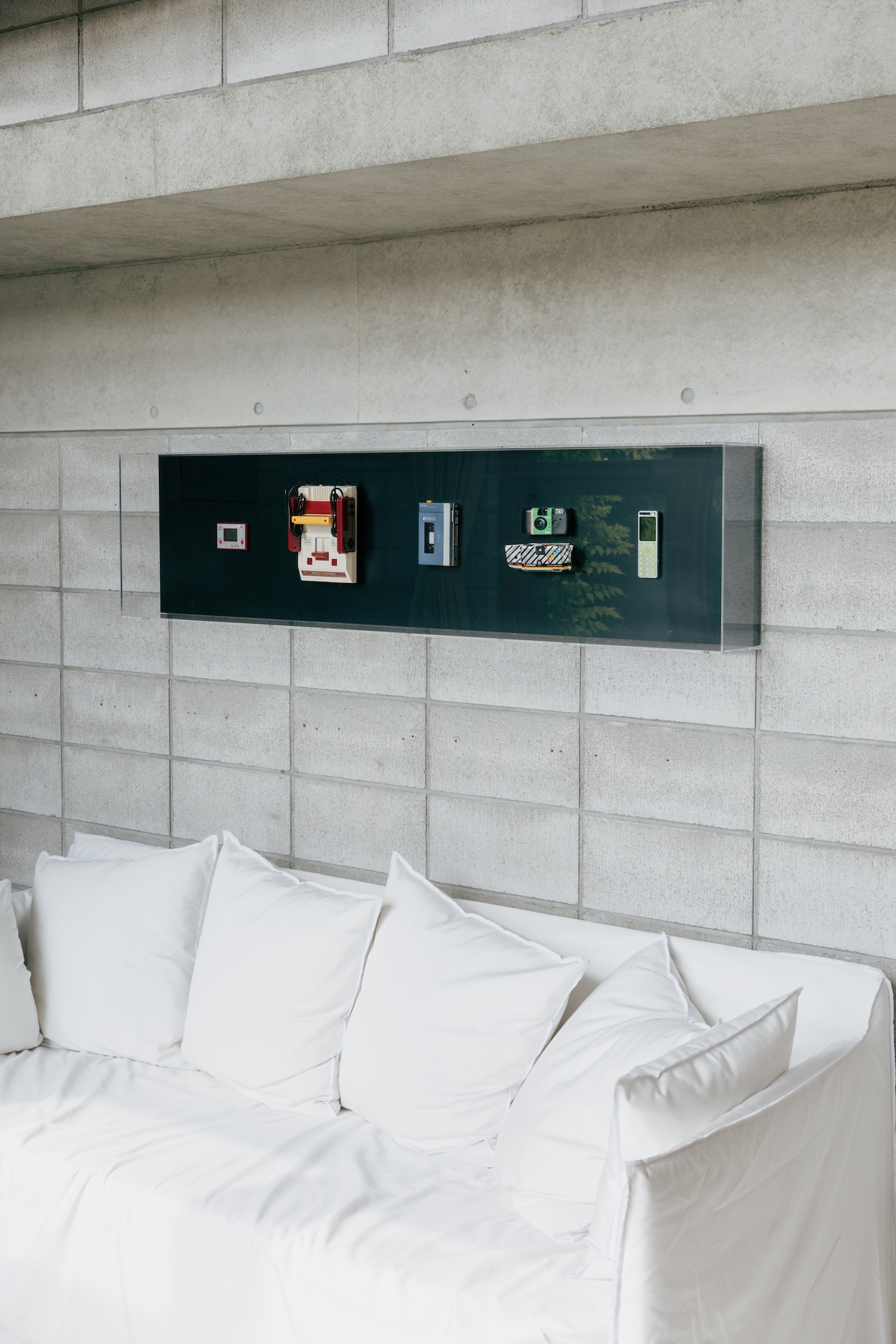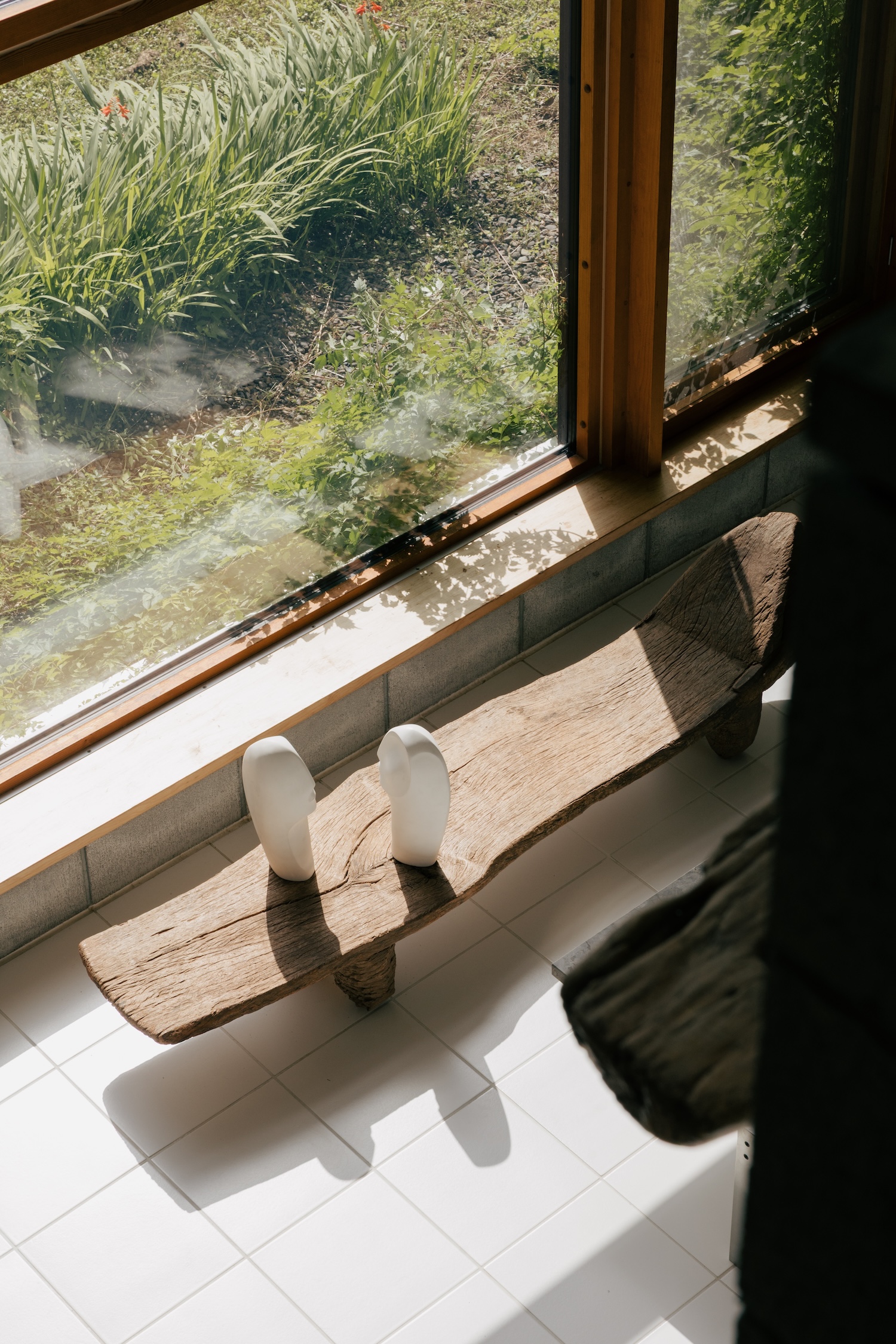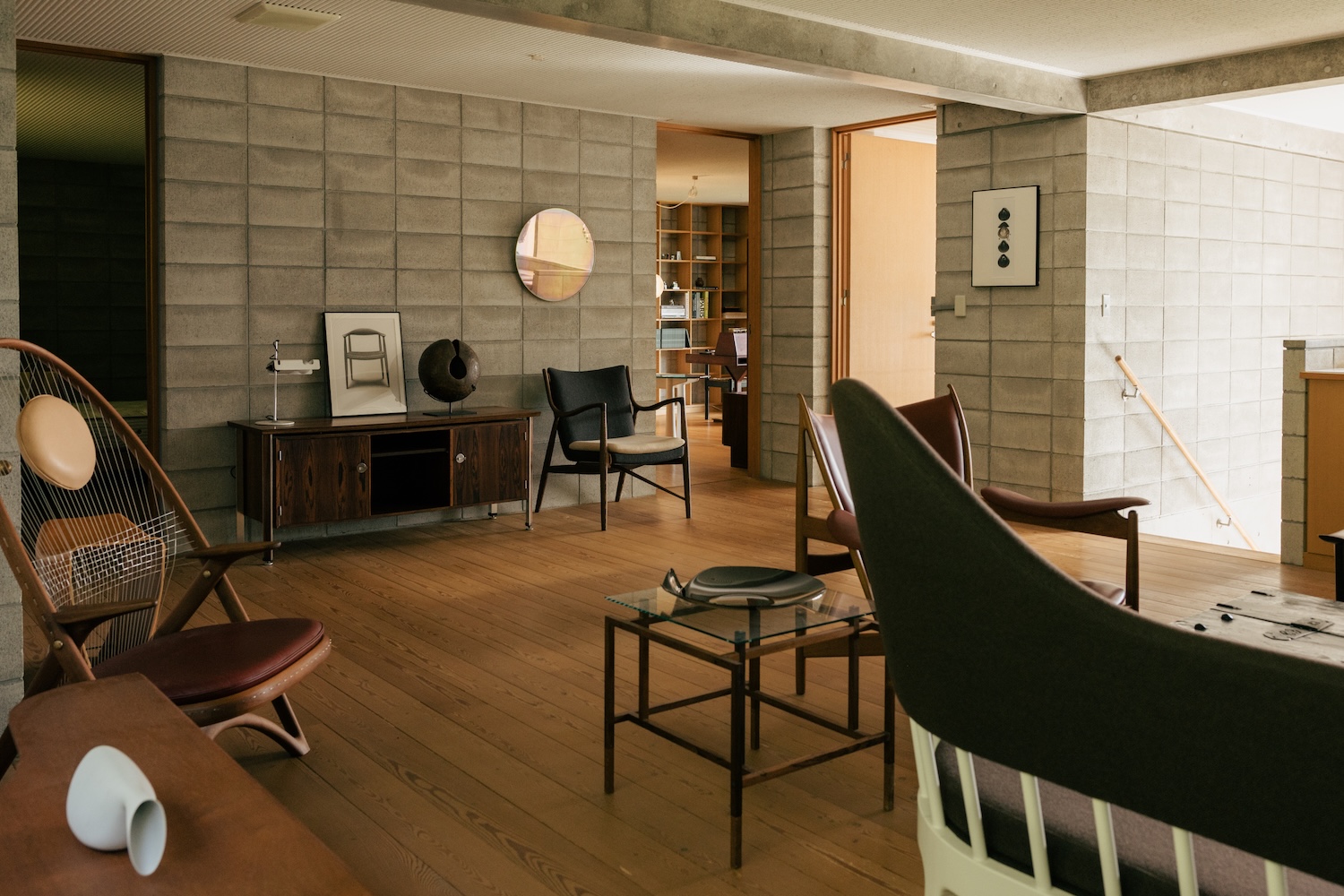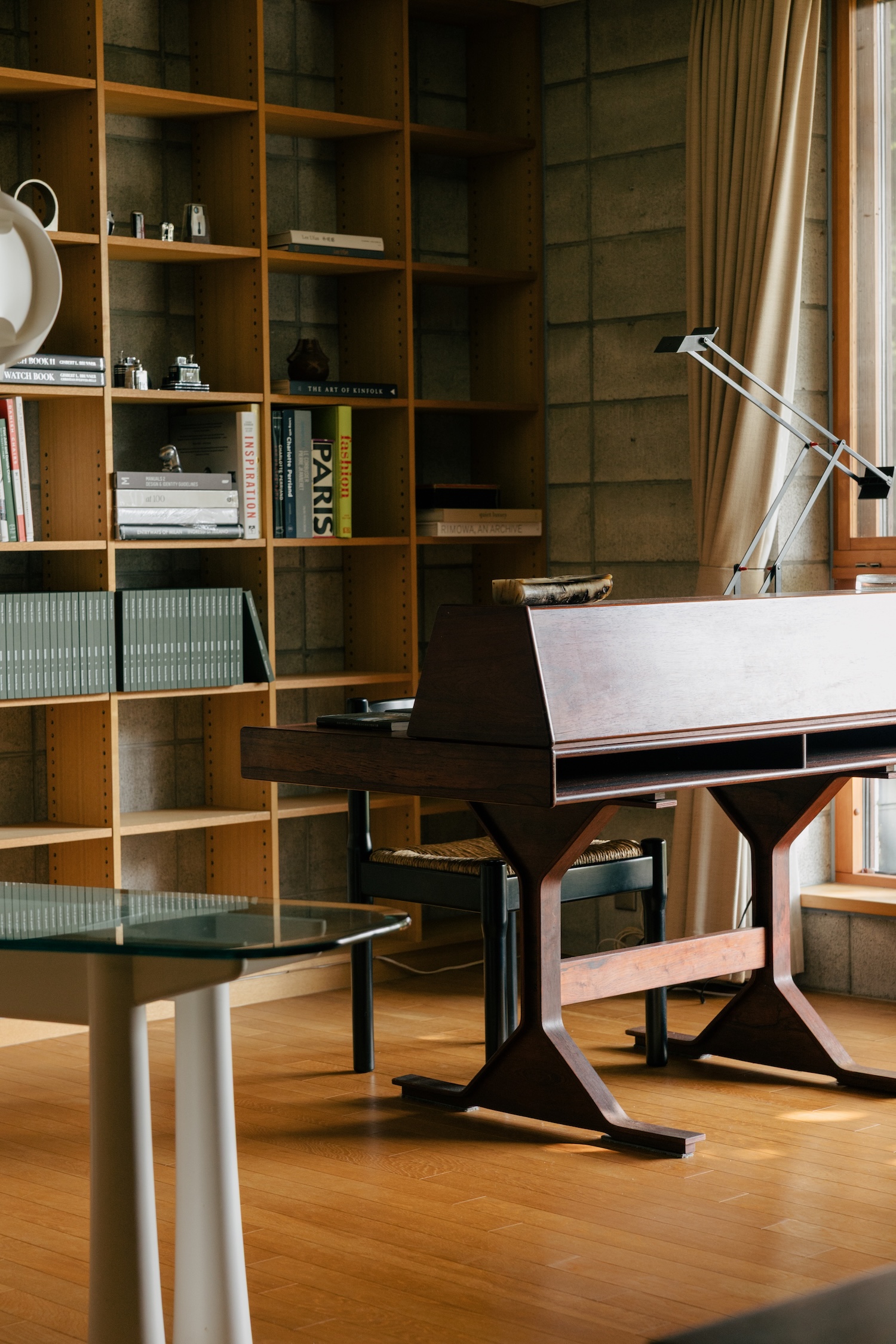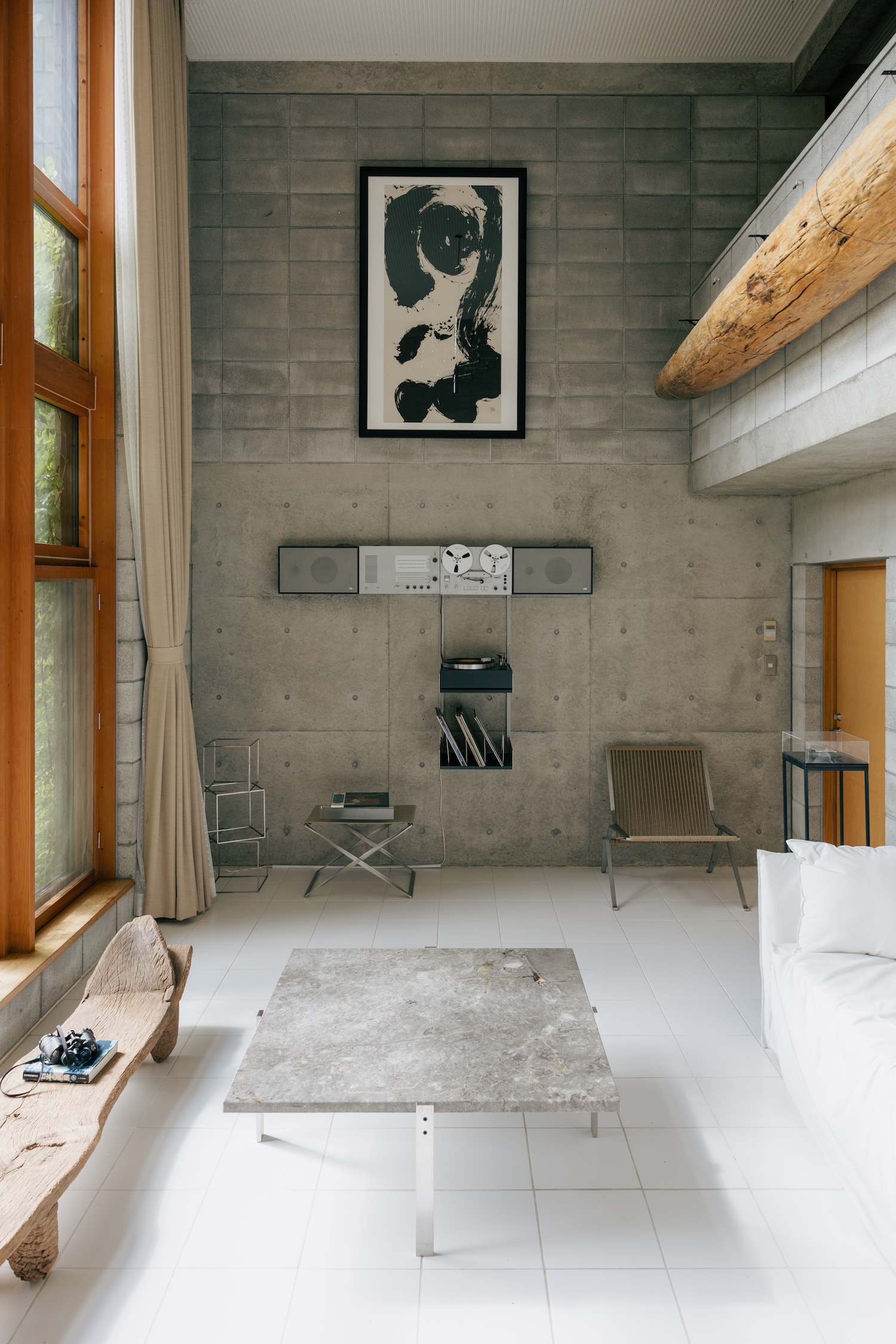
For 23 years, the chair researcher Noritsugu Oda lived among the objects he studied. His former residence in Higashikawa, a town in Hokkaido, Japan, sits inside a private forest. It has been taken over by the Tokyo design studio KIGENZEN, which is opening it to the public as KIGENZEN HOUSE, a Living Design Museum.
Oda began collecting in 1980, and his holdings now run to roughly 40,000 pieces of furniture, lighting, objects, and books. The best-known part of that work already has a public home in the same town. The Oda Collection, owned by Higashikawa, is on permanent display at Sentopia, a civic complex partly housed in the former Higashikawa elementary school. More than 8,000 chairs, tables, lamps, and pieces of tableware are shown there in gallery conditions.
The house gives the collection a second, domestic setting. The pieces are no longer read as specimens in a study collection. They sit in the rooms of a house Oda lived in for more than two decades, inside the forest that surrounds it. KIGENZEN describes the project as a combination of furniture, daily life, land, and philosophy.
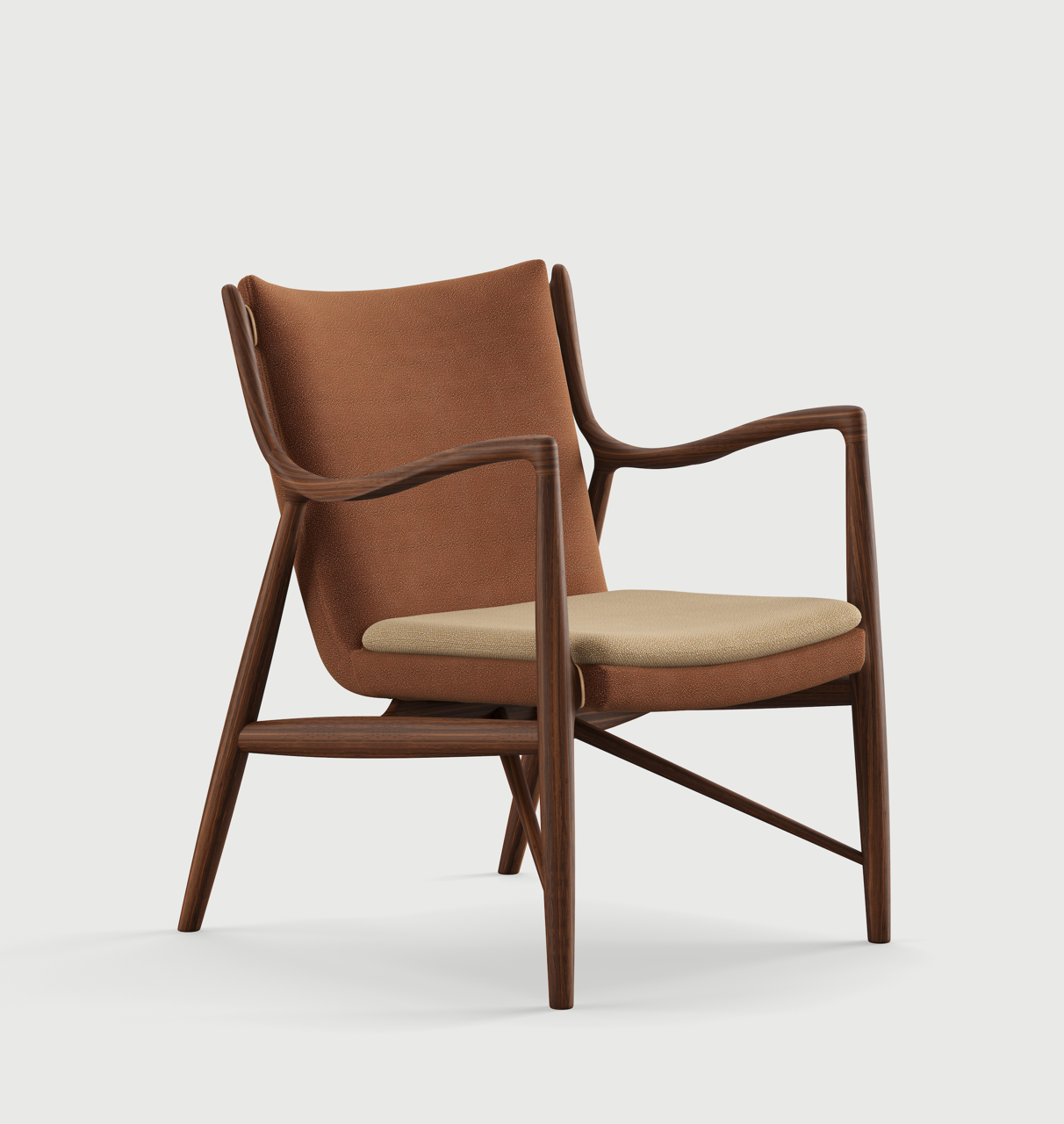
The studio did not freeze the interiors as Oda left them. It curated the house with its own collection, placing KIGENZEN pieces alongside the philosophy and aesthetics Oda developed over four decades of collecting. Classic Nordic furniture gathered from around the world shares the rooms with African and Asian folk crafts, antiques, and ordinary household tools. A mass-produced utensil and a canonical chair are presented on the same footing.
KIGENZEN was founded in 2023 by Masa Onaga and Mayuko Aizawa. Aizawa spent about two decades as the Japanese representative of Fritz Hansen, working on brand management and on introducing Nordic design philosophy to Japan. Onaga works across language and form, analyzing the cultural background of the objects and brands she designs for. The studio’s other recent work includes a book on Poul Kjærholm that traces how his handling of structure, material, and space resonates with Japanese aesthetics. That same line of research runs through the Nordic furniture in Oda’s former home.